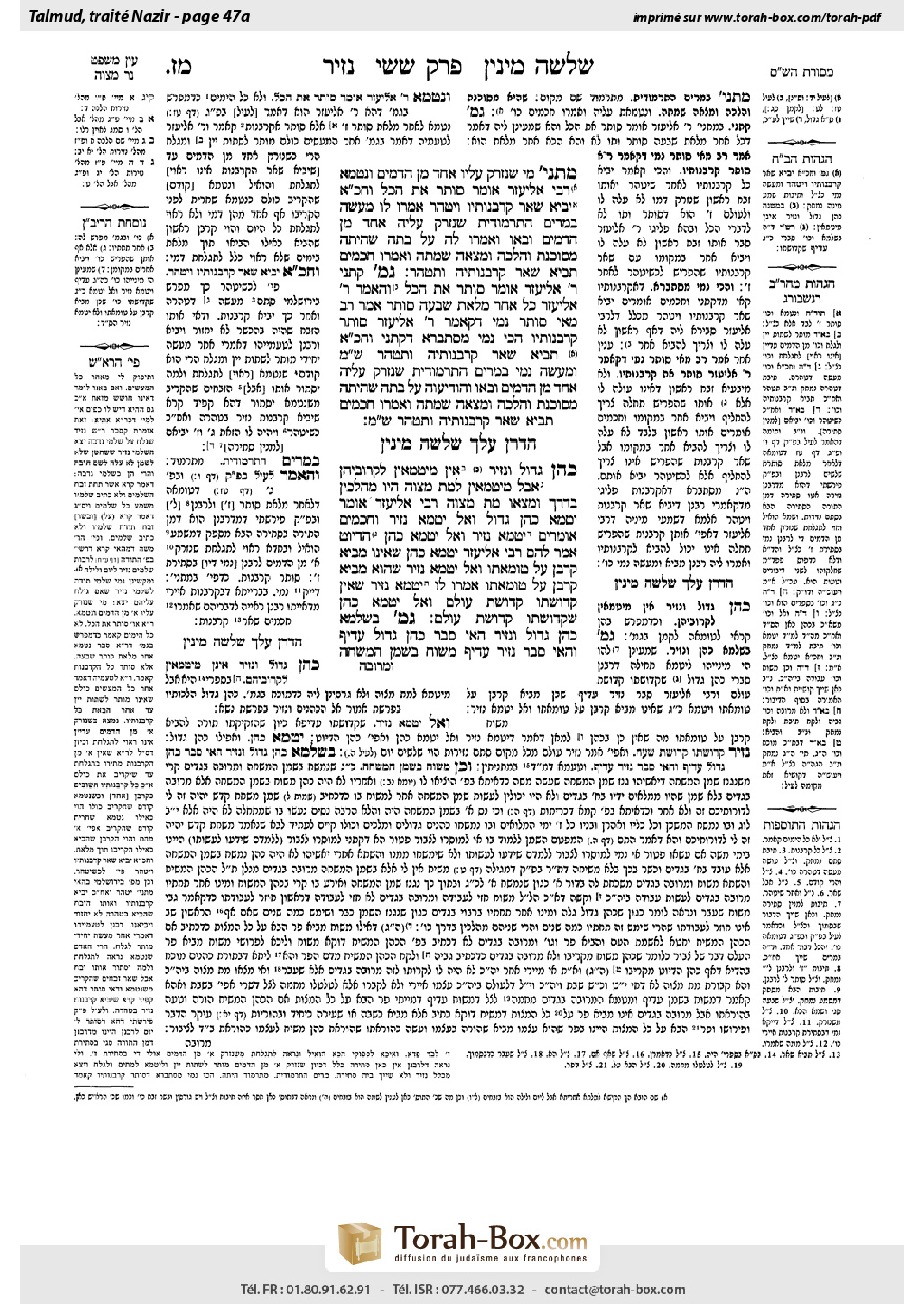
Nazir 47a: Talmud study for Daf Yomi
Daf Yomi is the daily study of one Talmud folio. Explore 37 tractates with scans, Hebrew text, Sefaria English and AI-generated French translations where annotated.
Passage selection and English or AI-generated French translation are available where the scan has annotations. Daf Study is independent of Torah-Box and Sefaria.
Browse Nazir · נזיר · All tractatesNazir 47a text and translations
This page of Nazir includes the Aramaic text, an English translation and an AI-generated French translation, alongside the scan above.
נזיר מ״ז א · Aramaic and Hebrew text
מַתְנִי׳ מִי שֶׁנִּזְרַק עָלָיו אֶחָד מִן הַדָּמִים וְנִטְמָא, רַבִּי אֱלִיעֶזֶר אוֹמֵר: סוֹתֵר אֶת הַכֹּל. וַחֲכָמִים אוֹמְרִים: יָבִיא שְׁאָר קׇרְבְּנוֹתָיו וְיִטְהָר. אָמְרוּ לוֹ: מַעֲשֶׂה בְּמִרְיָם הַתַּרְמוֹדִית שֶׁנִּזְרַק עָלֶיהָ אֶחָד מִן הַדָּמִים, וּבָאוּ וְאָמְרוּ לָהּ עַל בִּתָּהּ שֶׁהָיְתָה מְסוּכֶּנֶת, וְהָלְכָה וּמָצְאָה שֶׁמֵּתָה. וְאָמְרוּ חֲכָמִים: תָּבִיא שְׁאָר קׇרְבְּנוֹתֶיהָ וְתִטְהָר.
גְּמָ׳ קָתָנֵי, רַבִּי אֱלִיעֶזֶר אוֹמֵר: סוֹתֵר אֶת הַכֹּל. וְהָאָמַר רַבִּי אֱלִיעֶזֶר: כׇּל אַחַר מְלֹאת שִׁבְעָה סוֹתֵר! אָמַר רַב: מַאי ״סוֹתֵר״ נָמֵי דְּקָאָמַר רַבִּי אֱלִיעֶזֶר — סוֹתֵר קׇרְבְּנוֹתָיו.
הָכִי נָמֵי מִסְתַּבְּרָא, דְּקָתָנֵי: וַחֲכָמִים אוֹמְרִים תָּבִיא שְׁאָר קׇרְבְּנוֹתֶיהָ וְתִטְהָר, שְׁמַע מִינַּהּ.
וּמַעֲשֶׂה נָמֵי בְּמִרְיָם הַתַּרְמוֹדִית שֶׁנְּזָרֵק עָלֶיהָ אֶחָד מִן הַדָּמִים, וּבָאוּ וְהוֹדִיעוּהָ עַל בִּתָּהּ שֶׁהָיְתָה מְסוּכֶּנֶת, וְהָלְכָה וּמָצְאָה שֶׁמֵּתָה, וְאָמְרוּ חֲכָמִים: תָּבִיא שְׁאָר קׇרְבְּנוֹתֶיהָ וְתִטְהָר. שְׁמַע מִינַּהּ.
הַדְרָן עֲלָךְ שְׁלֹשָׁה מִינִין
כֹּהֵן גָּדוֹל וְנָזִיר אֵין מִיטַּמְּאִין לִקְרוֹבֵיהֶן, אֲבָל מִיטַּמְּאִין לְמֵת מִצְוָה. הָיוּ מְהַלְּכִין בַּדֶּרֶךְ וּמָצְאוּ מֵת מִצְוָה — רַבִּי אֱלִיעֶזֶר אוֹמֵר: יִטַּמֵּא כֹּהֵן גָּדוֹל, וְאַל יִטַּמֵּא נָזִיר. וַחֲכָמִים אוֹמְרִים: יִטַּמֵּא נָזִיר, וְאַל יִטַּמֵּא כֹּהֵן הֶדְיוֹט.
אָמַר לָהֶם רַבִּי אֱלִיעֶזֶר: יִטַּמֵּא כֹּהֵן — שֶׁאֵינוֹ מֵבִיא קׇרְבָּן עַל טוּמְאָתוֹ, וְאַל יִטַּמֵּא נָזִיר — שֶׁהוּא מֵבִיא קׇרְבָּן עַל טוּמְאָתוֹ. אָמְרוּ לוֹ: יִטַּמֵּא נָזִיר — שֶׁאֵין קְדוּשָּׁתוֹ קְדוּשַּׁת עוֹלָם, וְאַל יִטַּמֵּא כֹּהֵן — שֶׁקְּדוּשָּׁתוֹ קְדוּשַּׁת עוֹלָם.
גְּמָ׳ בִּשְׁלָמָא כֹּהֵן גָּדוֹל וְנָזִיר, הַאי סָבַר: כֹּהֵן גָּדוֹל עָדִיף, וְהַאי סָבַר: נָזִיר עָדִיף.
מָשׁוּחַ בְּשֶׁמֶן הַמִּשְׁחָה
Nazir 47a · English translation
MISHNA: With regard to one on whose behalf the blood of one of his nazirite offerings was sprinkled on the altar, and he became ritually impure before bringing the rest of his offerings, Rabbi Eliezer says: His impurity negates the entire tally, and he remains a nazirite. And the Rabbis say: Let him bring the rest of his offerings and be purified. The Rabbis said to Rabbi Eliezer: An incident occurred involving Miriam of Tarmod who was a nazirite, that the blood of one of her offerings was sprinkled on her behalf, and they came and told her that her daughter was mortally ill. And she went and found that her daughter was dead, and thereby contracted impurity. And the Rabbis said: Let her bring the rest of her offerings and be purified.
GEMARA: It is taught in the mishna: Rabbi Eliezer says that this negates the entire tally. The Gemara asks: But didn’t Rabbi Eliezer say (16b): With regard to any nazirite who became ritually impure after the completion of his term, this negates only seven days. Rav said: What does: Negates, that Rabbi Eliezer said in the mishna here mean? It means that his impurity negates all his offerings. Rabbi Eliezer did not mean that the nazirite must count his entire term of naziriteship afresh; rather, he must bring all his offerings a second time, including the one whose blood was sprinkled before he became impure.
The Gemara comments: So too, it is reasonable that this is the meaning of Rabbi Eliezer’s statement, as the mishna later teaches: And the Rabbis said: Let her bring the rest of her offerings and be purified. Learn from here that they disagree only with regard to the offerings, but not the naziriteship itself.
The Gemara cites the rest of the mishna, which also indicates that the tanna’im disagree with regard to the offerings. And an incident also occurred involving Miriam of Tarmod, that the blood of one of her offerings was sprinkled on her behalf, and they came and notified her that her daughter was mortally ill. And she went and found that her daughter was dead, and thereby contracted impurity. And the Rabbis said: Let her bring the rest of her offerings and be purified. The Gemara concludes: Indeed, learn from the mishna that this is so.
MISHNA: A High Priest and a nazirite may not become ritually impure even to bury their deceased relatives. However, they become impure to bury a corpse with no one to bury it [met mitzva]. If one of them comes across the corpse of a Jew, and there is nobody else available to bury it, he must bury the body. If a High Priest and a nazirite were walking along the way and they found a met mitzva, and one of them can tend to the burial by himself, Rabbi Eliezer says: Let the High Priest become impure, and do not let the nazirite become impure. And the Rabbis say: Let the nazirite become impure, and do not let even a common priest become impure.
Rabbi Eliezer said to the Rabbis: It is preferable to let the priest become impure, as he does not bring an offering for his impurity, and do not let the nazirite become impure, as he brings an offering for his impurity. The Rabbis said to him: On the contrary, let the nazirite become impure, as his sanctity is not permanent, and do not let a priest become impure, as his sanctity is permanent.
GEMARA: In light of the mishna’s dispute between Rabbi Eliezer and the Rabbis, the Gemara compares the status of various individuals. Granted, with regard to a High Priest and a nazirite, one can explain the dispute as follows. This Sage, the Rabbis, holds that it is preferable that a High Priest remain ritually pure, as his sanctity is permanent. And this Sage, Rabbi Eliezer, holds that it is preferable that a nazirite remain ritually pure, as he is obligated to bring an offering for his impurity.
Additionally, if the two walking together were a High Priest anointed with the anointing oil, as was performed during the First Temple period,
Nazir 47a · Traduction française (IA)
MICHNA : Si le sang de l’un des sacrifices d’un naziréen a été aspergé sur l’autel en sa faveur, puis qu’il devient rituellement impur avant d’avoir apporté le reste de ses sacrifices, Rabbi Eliezer dit : Son impureté annule tout le décompte, et il demeure naziréen. Les Sages disent : Qu’il apporte le reste de ses sacrifices et se purifie. Les Sages dirent à Rabbi Eliezer : Un incident s’est produit concernant Myriam de Tarmod, qui était naziréenne : le sang de l’un de ses sacrifices avait été aspergé en sa faveur, lorsqu’on vint lui annoncer que sa fille était à l’agonie. Elle se rendit auprès d’elle et constata que sa fille était morte ; elle contracta ainsi l’impureté. Les Sages dirent : Qu’elle apporte le reste de ses sacrifices et se purifie.
GUEMARA : La Michna enseigne que Rabbi Eliezer dit que cela annule tout le décompte. La Guemara demande : Pourtant, Rabbi Eliezer n’a-t-il pas dit (16b) que, pour tout naziréen devenu rituellement impur après l’achèvement de son terme, cela n’annule que sept jours ? Rav dit : Que signifie « annule », dans la déclaration de Rabbi Eliezer dans la Michna ici ? Cela signifie que son impureté annule tous ses sacrifices. Rabbi Eliezer ne voulait pas dire que le naziréen doit recommencer à compter toute sa période de naziréat ; il doit plutôt apporter une seconde fois tous ses sacrifices, y compris celui dont le sang avait été aspergé avant qu’il ne devienne impur.
La Guemara fait remarquer : Il est également raisonnable que telle soit la signification de la déclaration de Rabbi Eliezer, car la Michna enseigne ensuite : « Et les Sages dirent : Qu’elle apporte le reste de ses sacrifices et se purifie. » On en déduit qu’ils ne sont en désaccord qu’au sujet des sacrifices, et non du naziréat lui-même.
La Guemara cite la suite de la Michna, qui indique elle aussi que les tannaïm sont en désaccord au sujet des sacrifices. Un incident s’est également produit concernant Myriam de Tarmod : le sang de l’un de ses sacrifices avait été aspergé en sa faveur, lorsqu’on vint lui annoncer que sa fille était à l’agonie. Elle se rendit auprès d’elle et constata que sa fille était morte ; elle contracta ainsi l’impureté. Les Sages dirent : « Qu’elle apporte le reste de ses sacrifices et se purifie. » La Guemara conclut : On déduit bien de la Michna qu’il en est ainsi.
MICHNA : Un grand prêtre et un naziréen ne peuvent pas devenir rituellement impurs, même pour enterrer leurs proches décédés. Toutefois, ils deviennent impurs pour enterrer un cadavre que personne ne peut enterrer [met mitsva]. Si l’un d’eux rencontre le cadavre d’un Juif et qu’il n’y a personne d’autre pour l’enterrer, il doit l’ensevelir. Si un grand prêtre et un naziréen cheminaient ensemble et qu’ils trouvent un met mitsva, et que l’un d’eux puisse s’occuper seul de l’enterrement, Rabbi Eliezer dit : Que le grand prêtre devienne impur, et que le naziréen ne devienne pas impur. Les Sages disent : Que le naziréen devienne impur, et qu’un prêtre ordinaire ne devienne pas impur, pas même lui.
Rabbi Eliezer dit aux Sages : Il vaut mieux que le prêtre devienne impur, puisqu’il n’apporte pas de sacrifice pour son impureté ; et que le naziréen ne devienne pas impur, puisqu’il apporte un sacrifice pour son impureté. Les Sages lui dirent : Au contraire, que le naziréen devienne impur, car sa sainteté n’est pas permanente, et qu’un prêtre ne devienne pas impur, car sa sainteté est permanente.
GUEMARA : À la lumière du désaccord entre Rabbi Eliezer et les Sages dans la Michna, la Guemara compare le statut de différentes personnes. Certes, au sujet d’un grand prêtre et d’un naziréen, on peut expliquer le désaccord ainsi : les Sages estiment qu’il vaut mieux que le grand prêtre demeure rituellement pur, car sa sainteté est permanente. Rabbi Eliezer, quant à lui, estime qu’il vaut mieux que le naziréen demeure rituellement pur, car il est tenu d’apporter un sacrifice pour son impureté.
De plus, si les deux hommes qui cheminaient ensemble étaient un grand prêtre oint avec l’huile d’onction, comme cela se faisait à l’époque du Premier Temple,
Traduction française générée par IA à partir de l’édition anglaise de Sefaria. Vérifie toujours un passage avec le texte source.
Text from Sefaria: William Davidson Edition - Vocalized Aramaic (CC BY NC); William Davidson Edition - English (CC BY NC).