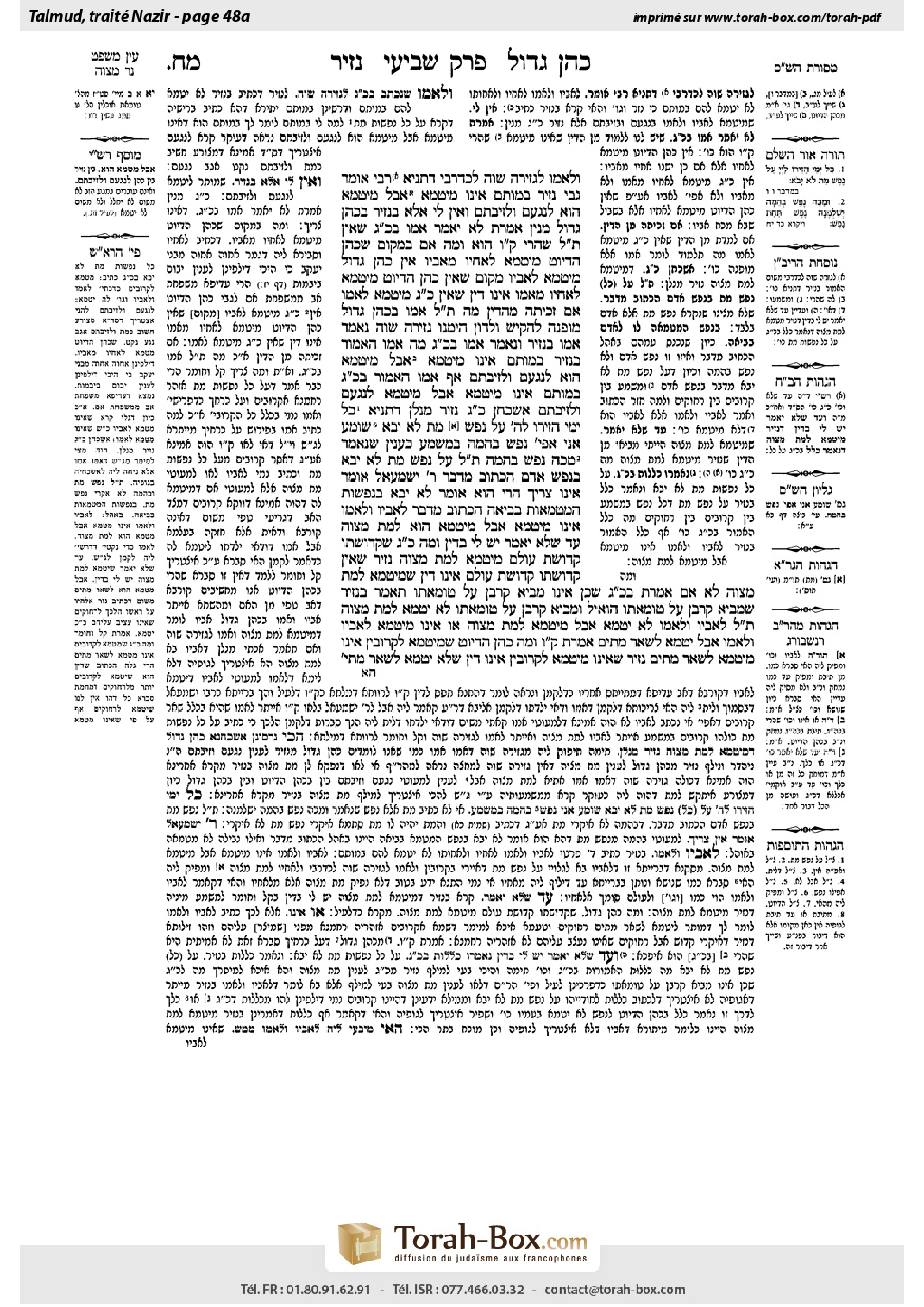
Nazir 48a: Talmud study for Daf Yomi
Daf Yomi is the daily study of one Talmud folio. Explore 37 tractates with scans, Hebrew text, Sefaria English and AI-generated French translations where annotated.
Passage selection and English or AI-generated French translation are available where the scan has annotations. Daf Study is independent of Torah-Box and Sefaria.
Browse Nazir · נזיר · All tractatesNazir 48a text and translations
This page of Nazir includes the Aramaic text, an English translation and an AI-generated French translation, alongside the scan above.
נזיר מ״ח א · Aramaic and Hebrew text
״וּלְאִמּוֹ״ — לִגְזֵירָה שָׁוָה, לְכִדְרַבִּי. דְּתַנְיָא, רַבִּי אוֹמֵר: גַּבֵּי נָזִיר ״בְּמוֹתָם״ אֵינוֹ מִיטַּמֵּא, אֲבָל מִיטַּמֵּא הוּא לְנִגְעָם וּלְזִיבָתָם. וְאֵין לִי אֶלָּא בְּנָזִיר, בְּכֹהֵן גָּדוֹל מִנַּיִן?
אָמַרְתָּ: לֹא יֵאָמֵר ״אִמּוֹ״ בְּכֹהֵן גָּדוֹל, שֶׁאֵין תַּלְמוּד לוֹמַר, שֶׁהֲרֵי קַל וָחוֹמֶר הוּא: וּמָה אִם בְּמָקוֹם שֶׁכֹּהֵן הֶדְיוֹט מִיטַּמֵּא לְאָחִיו מֵאָבִיו — אֵין כֹּהֵן גָּדוֹל מִיטַּמֵּא לְאָבִיו, מָקוֹם שֶׁאֵין כֹּהֵן הֶדְיוֹט מִיטַּמֵּא לְאָחִיו מֵאִמּוֹ — אֵינוֹ דִּין שֶׁאֵין כֹּהֵן גָּדוֹל מִיטַּמֵּא לְאִמּוֹ?
אִם זָכִיתָה מֵהַדִּין, מָה תַּלְמוּד לוֹמַר ״אִמּוֹ״ בְּכֹהֵן גָּדוֹל? מוּפְנֶה לְהַקִּישׁ וְלָדוּן הֵימֶנּוּ גְּזֵירָה שָׁוָה: נֶאֱמַר ״אִמּוֹ״ בְּנָזִיר, וְנֶאֱמַר ״אִמּוֹ״ בְּכֹהֵן גָּדוֹל,
מָה ״אִמּוֹ״ הָאָמוּר בְּנָזִיר — בְּמוֹתָם אֵינוֹ מִיטַּמֵּא אֲבָל מִיטַּמֵּא הוּא לְנִגְעָם וּלְזִיבָתָם, אַף ״אִמּוֹ״ הָאָמוּר בְּכֹהֵן גָּדוֹל — בְּמוֹתָם אֵינוֹ מִיטַּמֵּא אֲבָל מִיטַּמֵּא לְנִגְעָם וּלְזִיבָתָם.
אַשְׁכְּחַן כֹּהֵן גָּדוֹל. נָזִיר מְנָלַן? דְּתַנְיָא: ״כׇּל יְמֵי הַזִּירוֹ לַה׳ עַל נֶפֶשׁ מֵת לֹא יָבֹא״,
שׁוֹמֵעַ אֲנִי אֲפִילּוּ נֶפֶשׁ בְּהֵמָה בַּמַּשְׁמָע, כְּעִנְיָן שֶׁנֶּאֱמַר ״מַכֵּה נֶפֶשׁ בְּהֵמָה״, תַּלְמוּד לוֹמַר: ״עַל נֶפֶשׁ מֵת לֹא יָבֹא״, בְּנֶפֶשׁ אָדָם הַכָּתוּב מְדַבֵּר. רַבִּי יִשְׁמָעֵאל אוֹמֵר: אֵינוֹ צָרִיךְ, הֲרֵי הוּא אוֹמֵר ״לֹא יָבֹא״ — בִּנְפָשׁוֹת הַמְטַמְּאוֹת בְּבִיאָה הַכָּתוּב מְדַבֵּר.
״לְאָבִיו וּלְאִמּוֹ״ אֵינוֹ מִיטַּמֵּא, אֲבָל מִיטַּמֵּא הוּא לְמֵת מִצְוָה.
עַד שֶׁלֹּא יֵאָמֵר, יֵשׁ לִי בַּדִּין: וּמָה כֹּהֵן גָּדוֹל שֶׁקְּדוּשָּׁתוֹ קְדוּשַּׁת עוֹלָם, מִיטַּמֵּא לְמֵת מִצְוָה, נָזִיר שֶׁאֵין קְדוּשָּׁתוֹ קְדוּשַּׁת עוֹלָם — אֵינוֹ דִּין שֶׁמִּיטַּמֵּא לְמֵת מִצְוָה?
לֹא: אִם אָמַרְתָּ בְּכֹהֵן גָּדוֹל, שֶׁכֵּן אֵינוֹ מֵבִיא קׇרְבָּן עַל טוּמְאָתוֹ, תֹּאמַר בְּנָזִיר, שֶׁמֵּבִיא קׇרְבָּן עַל טוּמְאָתוֹ. הוֹאִיל וּמֵבִיא קׇרְבָּן עַל טוּמְאָתוֹ לֹא יִטַּמֵּא לְמֵת מִצְוָה? תַּלְמוּד לוֹמַר: ״לְאָבִיו וּלְאִמּוֹ לֹא יִטַּמָּא״, אֲבָל מִיטַּמֵּא לְמֵת מִצְוָה.
אוֹ: אֵינוֹ מִיטַּמֵּא לְאָבִיו וּלְאִמּוֹ, אֲבָל יִטַּמֵּא לִשְׁאָר מֵתִים! אָמַרְתָּ קַל וָחוֹמֶר: וּמָה כֹּהֵן הֶדְיוֹט, שֶׁמִּיטַּמֵּא לִקְרוֹבִין — אֵינוֹ מִיטַּמֵּא לִשְׁאָר מֵתִים, נָזִיר, שֶׁאֵינוֹ מִיטַּמֵּא לִקְרוֹבִין — אֵינוֹ דִּין שֶׁלֹּא יִטַּמֵּא לִשְׁאָר מֵתִים?
Nazir 48a · English translation
The phrase “or for his mother” serves as a verbal analogy, in accordance with the opinion of Rabbi Yehuda HaNasi, as it is taught in a baraita: Rabbi Yehuda HaNasi says: It states with regard to a nazirite: “He shall not become defiled for them when they die” (Numbers 6:7), which indicates: It is only when his relatives die that he may not become impure for them. However, he may become impure for their leprosy and for their emission of a zav, i.e., a nazirite is not forbidden to contract those forms of ritual impurity. And I have derived only that this halakha applies to a nazirite, the subject of this verse. From where do I derive that this applies to a High Priest as well?
You can say as follows: The verse need not say “his mother” with regard to a High Priest, as there is no need for the verse to state this, since this halakha is derived a fortiori: And if in a case where a common priest becomes impure to bury his paternal brother, a High Priest may not become impure even to bury his father, then in a case where a common priest may not become impure to bury his maternal brother, who is not considered a relative with regard to impurity, is it not logical that a High Priest may not become impure to bury his mother herself?
And if you have successfully derived this halakha from the a fortiori inference, what is the meaning when the verse states “his mother” with regard to a High Priest? It is free to teach a novel halakha, and one can compare and learn a verbal analogy from it as follows: It is stated “his mother” with regard to a nazirite (Numbers 6:7), and it is stated “his mother” with regard to a High Priest (Leviticus 21:11).
The Gemara explains: Just as the phrase “his mother” stated with regard to a nazirite teaches that in his parents’ death he may not become impure to bury them but he may become impure for their leprosy and for their emission of a zav, as a nazirite is not prohibited from contracting these impurities, so too, the phrase “his mother” stated with regard to a High Priest means that in his parents’ death he may not become impure, but he may become impure for their leprosy and for their emission of a zav.
The Gemara clarifies: We found a source for the halakha that a High Priest must become impure for a met mitzva; from where do we derive that a nazirite is likewise obligated? As it is taught in a baraita that it is stated with regard to a nazirite: “All the days that he consecrated himself to the Lord he shall not come near to a dead body [nefesh met]” (Numbers 6:6).
I would derive from this verse that a nazirite is prohibited from coming near all bodies, including even the body of an animal, similar to that which is stated: “And he who smites the body [nefesh] of an animal” (Leviticus 24:18). Therefore, the verse states: “He shall not come near to a dead body,” employing the dual term nefesh met, which indicates that the verse is speaking of the body of a person. Rabbi Yishmael says: This exposition is unnecessary, as the verse states: “He shall not come near,” indicating that the verse is speaking only of bodies that render people and items ritually impure through going in, i.e., entering. In other words, the verse is referring solely to corpses. Entering into a tent in which the corpse is contained renders one impure. By contrast, an animal carcass imparts impurity only by means of contact and carrying.
In any case, once it has been derived that a nazirite is prohibited from becoming impure to bury any person, both relatives and non-relatives, the passage “he shall not become defiled for his father, or for his mother” (Numbers 6:7) is available to teach another halakha, that it is for only them that a nazirite may not become impure, but he may become impure to bury a met mitzva.
The baraita asks: Even if the verse had not stated this halakha, I have a way of deriving it by right, i.e., logically, with an a fortiori inference: And if a High Priest, whose sanctity is permanent, may become ritually impure to bury a met mitzva, then in the case of a nazirite, whose sanctity is not permanent, is it not logical that he may become impure to bury a met mitzva as well?
The baraita rejects this inference: No; if you say that this is true with regard to a High Priest, who does not bring an offering for his impurity, shall you also say that this is the case with regard to a nazirite, who does bring an offering for his impurity? Since a nazirite brings an offering for his impurity, perhaps he should not become impure to bury a met mitzva? Therefore, the verse states: “He shall not become defiled for his father, or for his mother” (Numbers 6:7). However, he does become impure to bury a met mitzva.
The baraita suggests: Or perhaps one should expound this verse differently: He may not become impure to bury his father or for his mother; however, he may become impure to bury other dead people. The Gemara rejects this suggestion: You can say that this argument can be refuted a fortiori: And if a common priest, who becomes impure to bury his relatives, nevertheless may not become impure to bury other dead people (see Leviticus 21:1–2), then in the case of a nazirite, who may not become impure to bury his relatives, is it not logical that also he should not become impure to bury other dead people?
Nazir 48a · Traduction française (IA)
L’expression « ou pour sa mère » sert de base à une analogie verbale, conformément à l’opinion de Rabbi Yehuda HaNasi, comme l’enseigne une baraïta : Rabbi Yehuda HaNasi dit : Il est écrit au sujet du nazir : « Il ne se rendra pas impur à leur contact lorsqu’ils mourront » (Nombres 6:7), ce qui indique que c’est uniquement lorsque ses proches meurent qu’il ne peut pas se rendre impur à leur contact. En revanche, il peut se rendre impur à cause de leur lèpre et de leur écoulement de zav ; autrement dit, il n’est pas interdit à un nazir de contracter ces formes d’impureté rituelle. Or, je n’ai déduit cette halakha que pour le nazir, le sujet de ce verset. D’où déduis-je qu’elle s’applique également au grand prêtre ?
On peut répondre ainsi : il n’est pas nécessaire que le verset mentionne « sa mère » au sujet du grand prêtre, car cette halakha se déduit a fortiori : si, lorsqu’un prêtre ordinaire se rend impur pour enterrer son frère paternel, un grand prêtre ne peut pas se rendre impur, même pour enterrer son père, alors, lorsqu’un prêtre ordinaire ne peut pas se rendre impur pour enterrer son frère maternel, qui n’est pas considéré comme un proche en matière d’impureté, n’est-il pas logique qu’un grand prêtre ne puisse pas se rendre impur pour enterrer sa mère elle-même ?
Et si cette halakha a été déduite par raisonnement a fortiori, que signifie alors la mention de « sa mère » au sujet du grand prêtre ? Elle est superflue et permet d’enseigner une nouvelle halakha ; on peut donc en tirer une analogie verbale de la manière suivante : l’expression « sa mère » apparaît au sujet du nazir (Nombres 6:7), et l’expression « sa mère » apparaît au sujet du grand prêtre (Lévitique 21:11).
La Guemara explique : de même que l’expression « sa mère », mentionnée au sujet du nazir, enseigne qu’à la mort de ses parents, il ne peut pas se rendre impur pour les enterrer, mais qu’il peut se rendre impur à cause de leur lèpre et de leur écoulement de zav, puisqu’il n’est pas interdit au nazir de contracter ces impuretés, de même l’expression « sa mère », mentionnée au sujet du grand prêtre, signifie qu’à la mort de ses parents, il ne peut pas se rendre impur, mais qu’il peut se rendre impur à cause de leur lèpre et de leur écoulement de zav.
La Guemara précise : nous avons trouvé une source établissant qu’un grand prêtre doit se rendre impur pour un met mitsva ; d’où déduisons-nous qu’un nazir y est également obligé ? Car une baraïta enseigne qu’il est écrit au sujet du nazir : « Tous les jours où il s’est consacré au Seigneur, il ne s’approchera pas d’un mort [nefesh met] » (Nombres 6:6).
J’aurais déduit de ce verset qu’il est interdit au nazir de s’approcher de tous les corps, y compris celui d’un animal, comme dans le verset : « Celui qui frappe le corps [nefesh] d’un animal » (Lévitique 24:18). C’est pourquoi le verset précise : « Il ne s’approchera pas d’un mort », en employant les deux termes nefesh met, ce qui indique qu’il parle du corps d’un être humain. Rabbi Yishmael dit : Cette interprétation n’est pas nécessaire, car le verset précise : « Il ne s’approchera pas », indiquant qu’il ne parle que des corps qui rendent les personnes et les objets rituellement impurs par l’entrée, c’est-à-dire lorsqu’on pénètre dans un lieu où ils se trouvent. Autrement dit, le verset fait uniquement référence aux cadavres. Entrer dans une tente où se trouve un cadavre rend impur. En revanche, une carcasse animale ne transmet l’impureté que par contact ou par portage.
Quoi qu’il en soit, dès lors qu’il a été établi qu’il est interdit au nazir de se rendre impur pour enterrer qui que ce soit, proche ou non, le passage « il ne se rendra pas impur pour son père ni pour sa mère » (Nombres 6:7) est disponible pour enseigner une autre halakha : le nazir ne peut se rendre impur que pour eux, mais il peut se rendre impur pour enterrer un met mitsva.
La baraïta demande : même si le verset n’avait pas énoncé cette halakha, je pourrais la déduire par raisonnement, au moyen d’un raisonnement a fortiori : si un grand prêtre, dont la sainteté est permanente, peut se rendre impur pour enterrer un met mitsva, n’est-il pas logique qu’un nazir, dont la sainteté n’est pas permanente, puisse lui aussi se rendre impur pour enterrer un met mitsva ?
La baraïta rejette ce raisonnement : Non. Si l’on peut dire cela d’un grand prêtre, qui n’apporte pas de sacrifice pour son impureté, peut-on en dire autant d’un nazir, qui apporte un sacrifice pour son impureté ? Puisque le nazir apporte un sacrifice pour son impureté, peut-être ne devrait-il pas se rendre impur pour enterrer un met mitsva. C’est pourquoi le verset précise : « Il ne se rendra pas impur pour son père ni pour sa mère » (Nombres 6:7). Cependant, il se rend bien impur pour enterrer un met mitsva.
La baraïta suggère : ou peut-être faut-il interpréter ce verset autrement : il ne peut pas se rendre impur pour enterrer son père ni sa mère ; en revanche, il peut se rendre impur pour enterrer d’autres morts. La Guemara rejette cette suggestion : on peut réfuter cet argument par un raisonnement a fortiori : si un prêtre ordinaire, qui se rend impur pour enterrer ses proches, ne peut néanmoins pas se rendre impur pour enterrer d’autres morts (voir Lévitique 21:1–2), n’est-il pas logique qu’un nazir, qui ne peut pas se rendre impur pour enterrer ses proches, ne puisse pas non plus se rendre impur pour enterrer d’autres morts ?
Traduction française générée par IA à partir de l’édition anglaise de Sefaria. Vérifie toujours un passage avec le texte source.
Text from Sefaria: William Davidson Edition - Vocalized Aramaic (CC BY NC); William Davidson Edition - English (CC BY NC).