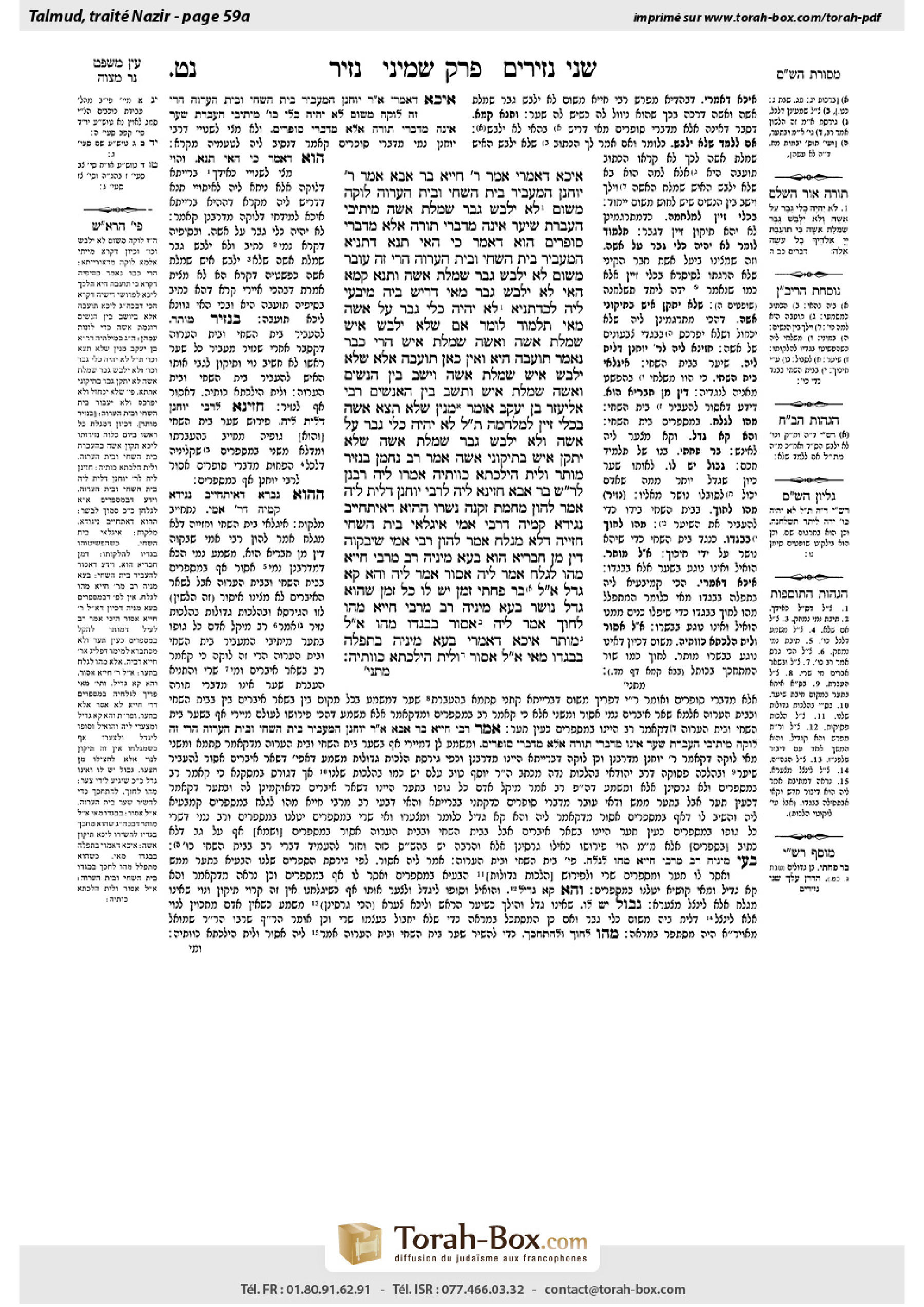
Nazir 59a: Talmud study for Daf Yomi
Daf Yomi is the daily study of one Talmud folio. Explore 37 tractates with scans, Hebrew text, Sefaria English and AI-generated French translations where annotated.
Passage selection and English or AI-generated French translation are available where the scan has annotations. Daf Study is independent of Torah-Box and Sefaria.
Browse Nazir · נזיר · All tractatesNazir 59a text and translations
This page of Nazir includes the Aramaic text, an English translation and an AI-generated French translation, alongside the scan above.
נזיר נ״ט א · Aramaic and Hebrew text
אִיכָּא דְּאָמְרִי: אָמַר רַבִּי חִיָּיא בַּר אַבָּא אָמַר רַבִּי יוֹחָנָן: הַמַּעֲבִיר בֵּית הַשֶּׁחִי וּבֵית הָעֶרְוָה לוֹקֶה מִשּׁוּם ״לֹא יִלְבַּשׁ גֶּבֶר שִׂמְלַת אִשָּׁה״. מֵיתִיבִי: הַעֲבָרַת שֵׂיעָר אֵינָהּ מִדִּבְרֵי תוֹרָה אֶלָּא מִדִּבְרֵי סוֹפְרִים. הוּא דְּאָמַר כִּי הַאי תַּנָּא, דְּתַנְיָא: הַמַּעֲבִיר בֵּית הַשֶּׁחִי וּבֵית הָעֶרְוָה הֲרֵי זֶה עוֹבֵר מִשּׁוּם ״לֹא יִלְבַּשׁ גֶּבֶר שִׂמְלַת אִשָּׁה״.
וְתַנָּא קַמָּא, הַאי ״לֹא יִלְבַּשׁ גֶּבֶר״, מַאי דָּרֵישׁ בֵּיהּ? מִיבְּעֵי לֵיהּ לְכִדְתַנְיָא: ״לֹא יִהְיֶה כְלִי גֶבֶר עַל אִשָּׁה״. מַאי תַּלְמוּד לוֹמַר? אִם שֶׁלֹּא יִלְבַּשׁ אִישׁ שִׂמְלַת אִשָּׁה וְאִשָּׁה שִׂמְלַת אִישׁ, הֲרֵי כְּבָר נֶאֱמַר ״תּוֹעֵבָה הִיא״, וְאֵין כָּאן תּוֹעֵבָה.
אֶלָּא שֶׁלֹּא יִלְבַּשׁ אִישׁ שִׂמְלַת אִשָּׁה וְיֵשֵׁב בֵּין הַנָּשִׁים, וְאִשָּׁה שִׂמְלַת אִישׁ וְתֵשֵׁב בֵּין הָאֲנָשִׁים. רַבִּי אֱלִיעֶזֶר בֶּן יַעֲקֹב אוֹמֵר: מִנַּיִן שֶׁלֹּא תֵּצֵא אִשָּׁה בִּכְלֵי זַיִין לְמִלְחָמָה — תַּלְמוּד לוֹמַר: ״לֹא יִהְיֶה כְלִי גֶבֶר עַל אִשָּׁה וְלֹא יִלְבַּשׁ גֶּבֶר שִׂמְלַת אִשָּׁה״, שֶׁלֹּא יִתַּקֵּן אִישׁ בְּתִיקּוּנֵי אִשָּׁה.
אָמַר רַב נַחְמָן: בְּנָזִיר מוּתָּר. וְלֵית הִילְכְתָא כְּווֹתֵיהּ. אֲמַרוּ לֵיהּ רַבָּנַן לְרַבִּי שִׁמְעוֹן בַּר אַבָּא: חֲזֵינָא לֵיהּ לְרַבִּי יוֹחָנָן דְּלֵית לֵיהּ! אֲמַר לְהוֹן: מֵחֲמַת זִקְנָה נָשְׁרוּ.
הָהוּא דְּאִיתְחַיַּיב נְגִידָא קַמֵּיהּ דְּרַבִּי אַמֵּי. אִיגַּלַּאי בֵּית הַשֶּׁחִי, חַזְיֵיהּ דְּלָא מְגַלַּח, אֲמַר לְהוֹן רַבִּי אַמֵּי: שִׁיבְקוּהּ, דֵּין מִן חַבְרַיָּא הוּא.
בְּעָא מִינֵּיהּ רַב מֵרַבִּי חִיָּיא: מַהוּ לְגַלֵּחַ? אֲמַר לֵיהּ: אָסוּר. אֲמַר לֵיהּ וְהָא קָא גָדֵל! אֲמַר לֵיהּ: בַּר פַּחֲתֵי, זְמַן יֵשׁ לוֹ, כׇּל זְמַן שֶׁהוּא גָּדֵל — נוֹשֵׁר.
בְּעָא מִינֵּיהּ רַב מֵרַבִּי חִיָּיא: מַהוּ לָחוֹךְ? אֲמַר לֵיהּ: אָסוּר. בְּבִגְדוֹ, מַהוּ? אֲמַר לֵיהּ: מוּתָּר. אִיכָּא דְּאָמְרִי, בְּעָא מִינֵּיהּ: בִּתְפִלָּה בְּבִגְדוֹ, מַאי? אֲמַר לֵיהּ: אָסוּר. וְלֵית הִילְכְתָא כְּווֹתֵיהּ.
Nazir 59a · English translation
Some say a different version of this statement: Rabbi Ḥiyya bar Abba said that Rabbi Yoḥanan said: A man who removes the hair of the armpit or the pubic hair is flogged, due to the prohibition: “A man shall not put on a woman’s garment” (Deuteronomy 22:5). The Gemara raises an objection from a baraita: The removal of hair is not prohibited by Torah law but by rabbinic law. How then does Rabbi Yoḥanan say that he is flogged, which by definition is a punishment for individuals who have transgressed a Torah law? The Gemara answers: It was he who said this halakha in accordance with the opinion of that tanna, as it is taught in a baraita: A man who removes the hair of the armpit or the pubic hair violates the prohibition of: “A man shall not put on a woman’s garment.”
The Gemara asks: And what does the first tanna, who holds that the prohibition is by rabbinic law, learn from this verse: “A man shall not put on a woman’s garment”? The Gemara answers: He requires it for that which is taught in the baraita, where it states: “A woman shall not wear that which pertains to a man, and a man shall not put on a woman’s garment, for whoever does these things is an abomination to the Lord your God” (Deuteronomy 22:5). What is the meaning when the verse states this? If it teaches only that a man may not put on a woman’s garment, and a woman may not wear a man’s garment, it is already stated in explanation of this prohibition that “it is an abomination to the Lord your God,” and there is no abomination here in the mere act of wearing a garment.
Rather, it means that a man may not wear a woman’s garment and thereby go and sit among the women; and a woman may not wear a man’s garment and sit among the men. Rabbi Eliezer ben Ya’akov says: From where is it derived that a woman may not go out with weapons to war? The verse states: “A woman shall not wear that which pertains to a man, and a man shall not put on a woman’s garment,” which indicates that a man may not adorn himself with the cosmetics and ornaments of a woman, and similarly a woman may not go out with weapons to war, as those are for the use of males. Rabbi Yoḥanan’s ruling follows this opinion.
§ Rav Naḥman said: For a nazirite, it is permitted to shave armpit hair. The Gemara comments: And the halakha is not in accordance with his opinion. The Gemara reports that the Sages said to Rabbi Shimon bar Abba: We have observed that Rabbi Yoḥanan does not have armpit hairs, despite his own ruling that it is prohibited to shave them. He said to them: They fell out due to old age.
The Gemara relates: There was a certain person who committed a transgression and was found liable to receive lashes before Rabbi Ami. When they removed his clothes to flog him, his armpit was exposed, and Rabbi Ami saw that he had not shaved his armpit hair. Rabbi Ami said to his attendants: Leave him; this is one of those who are meticulous in observance of mitzvot. We can see this is so, as he is particular about prohibitions that ordinary people do not observe.
Rav raised a dilemma before Rabbi Ḥiyya: What is the halakha with regard to shaving armpit hair? He said to him: It is prohibited. Rav said to him: But it grows and is uncomfortable. Rabbi Ḥiyya said to him: Son of nobles [bar paḥtei], this hair has a limited time. Whenever a hair grows too long it falls out, and therefore there is no concern that one’s armpit hair will become too long.
Rav raised another dilemma before Rabbi Ḥiyya: What is the halakha with regard to rubbing armpit hair and thereby removing it manually? Rabbi Ḥiyya said to him: It is prohibited. Rav continued to ask: What is the halakha with regard to rubbing armpit hair indirectly with one’s garment? Rabbi Ḥiyya said to him: It is permitted. Some say that this was not Rav’s question; rather, he raised the following dilemma before him: What is the halakha with regard to rubbing the armpit with one’s garment during prayer? Rabbi Ḥiyya said to him: It is prohibited. The Gemara comments: And the halakha is not in accordance with his opinion in this case.
Nazir 59a · Traduction française (IA)
Certains rapportent une autre version de cette déclaration : Rabbi Ḥiyya bar Abba a dit au nom de Rabbi Yoḥanan : Un homme qui s’épile les aisselles ou le pubis est passible de flagellation, en raison de l’interdiction : « Un homme ne portera pas un vêtement de femme » (Deutéronome 22,5). La Guemara soulève une objection à partir d’une baraïta : l’épilation n’est pas interdite par la Torah, mais par la loi rabbinique. Comment Rabbi Yoḥanan peut-il donc dire que cet homme est passible de flagellation, peine qui, par définition, est infligée à ceux qui ont transgressé une loi de la Torah ? La Guemara répond : Il a énoncé cette halakha conformément à l’opinion de ce tanna, comme on l’enseigne dans une baraïta : Un homme qui s’épile les aisselles ou le pubis transgresse l’interdiction : « Un homme ne portera pas un vêtement de femme. »
La Guemara demande : Que déduit de ce verset le premier tanna, qui considère que l’interdiction relève de la loi rabbinique : « Un homme ne portera pas un vêtement de femme » ? La Guemara répond : Il en a besoin pour ce qui est enseigné dans la baraïta, où il est dit : « Une femme ne portera pas ce qui appartient à un homme, et un homme ne portera pas un vêtement de femme, car quiconque fait ces choses est une abomination pour l’Éternel ton Dieu » (Deutéronome 22,5). Que signifie cette précision du verset ? S’il enseigne seulement qu’un homme ne peut porter un vêtement de femme et qu’une femme ne peut porter un vêtement d’homme, il est déjà dit, pour expliquer cette interdiction, que « c’est une abomination pour l’Éternel ton Dieu » ; or, le simple fait de porter un vêtement n’est pas une abomination.
Cela signifie plutôt qu’un homme ne peut porter un vêtement de femme pour aller s’asseoir parmi les femmes, et qu’une femme ne peut porter un vêtement d’homme pour s’asseoir parmi les hommes. Rabbi Eliezer ben Ya’akov dit : D’où déduit-on qu’une femme ne peut partir à la guerre avec des armes ? Le verset dit : « Une femme ne portera pas ce qui appartient à un homme, et un homme ne portera pas un vêtement de femme » ; cela indique qu’un homme ne peut se parer des cosmétiques et des ornements d’une femme. De même, une femme ne peut partir à la guerre avec des armes, car celles-ci sont destinées aux hommes. La décision de Rabbi Yoḥanan suit cette opinion.
§ Rav Naḥman a dit : Il est permis à un nazir de s’épiler les aisselles. La Guemara fait remarquer que la halakha ne suit pas son opinion. La Guemara rapporte que les Sages dirent à Rabbi Shimon bar Abba : Nous avons remarqué que Rabbi Yoḥanan n’a pas de poils aux aisselles, bien qu’il ait lui-même statué qu’il est interdit de les épiler. Il leur répondit : Ils sont tombés à cause de la vieillesse.
La Guemara rapporte : Un homme avait commis une transgression et avait été condamné à recevoir la flagellation devant Rabbi Ami. Lorsqu’on lui retira ses vêtements pour le fouetter, son aisselle fut découverte, et Rabbi Ami vit qu’il ne s’était pas épilé les poils des aisselles. Rabbi Ami dit à ses assistants : Laissez-le ; il fait partie de ceux qui observent les mitsvot avec scrupule. Nous voyons bien que c’est le cas, car il prête attention à des interdictions que les gens ordinaires ne respectent pas.
Rav posa à Rabbi Ḥiyya la question suivante : Quelle est la halakha concernant l’épilation des poils des aisselles ? Il lui répondit : C’est interdit. Rav lui dit : Mais ils poussent et sont gênants. Rabbi Ḥiyya lui répondit : Fils de nobles [bar paḥtei], ces poils ont une durée limitée. Dès qu’un poil devient trop long, il tombe ; il n’y a donc pas lieu de craindre que les poils des aisselles deviennent trop longs.
Rav posa une autre question à Rabbi Ḥiyya : Quelle est la halakha concernant le fait de frotter les poils des aisselles et de les retirer ainsi manuellement ? Rabbi Ḥiyya lui répondit : C’est interdit. Rav poursuivit : Quelle est la halakha concernant le fait de frotter indirectement les poils des aisselles avec son vêtement ? Rabbi Ḥiyya lui répondit : C’est permis. Certains disent que telle n’était pas la question de Rav ; il lui posa plutôt la question suivante : Quelle est la halakha concernant le fait de se frotter l’aisselle avec son vêtement pendant la prière ? Rabbi Ḥiyya lui répondit : C’est interdit. La Guemara fait remarquer que, dans ce cas, la halakha ne suit pas son opinion.
Traduction française générée par IA à partir de l’édition anglaise de Sefaria. Vérifie toujours un passage avec le texte source.
Text from Sefaria: William Davidson Edition - Vocalized Aramaic (CC BY NC); William Davidson Edition - English (CC BY NC).