Nedarim 15a: Talmud study for Daf Yomi
Daf Yomi is the daily study of one Talmud folio. Explore 37 tractates with scans, Hebrew text, Sefaria English and AI-generated French translations where annotated.
Passage selection and English or AI-generated French translation are available where the scan has annotations. Daf Study is independent of Torah-Box and Sefaria.
Browse Nedarim · נדרים · All tractatesNedarim 15a text and translations
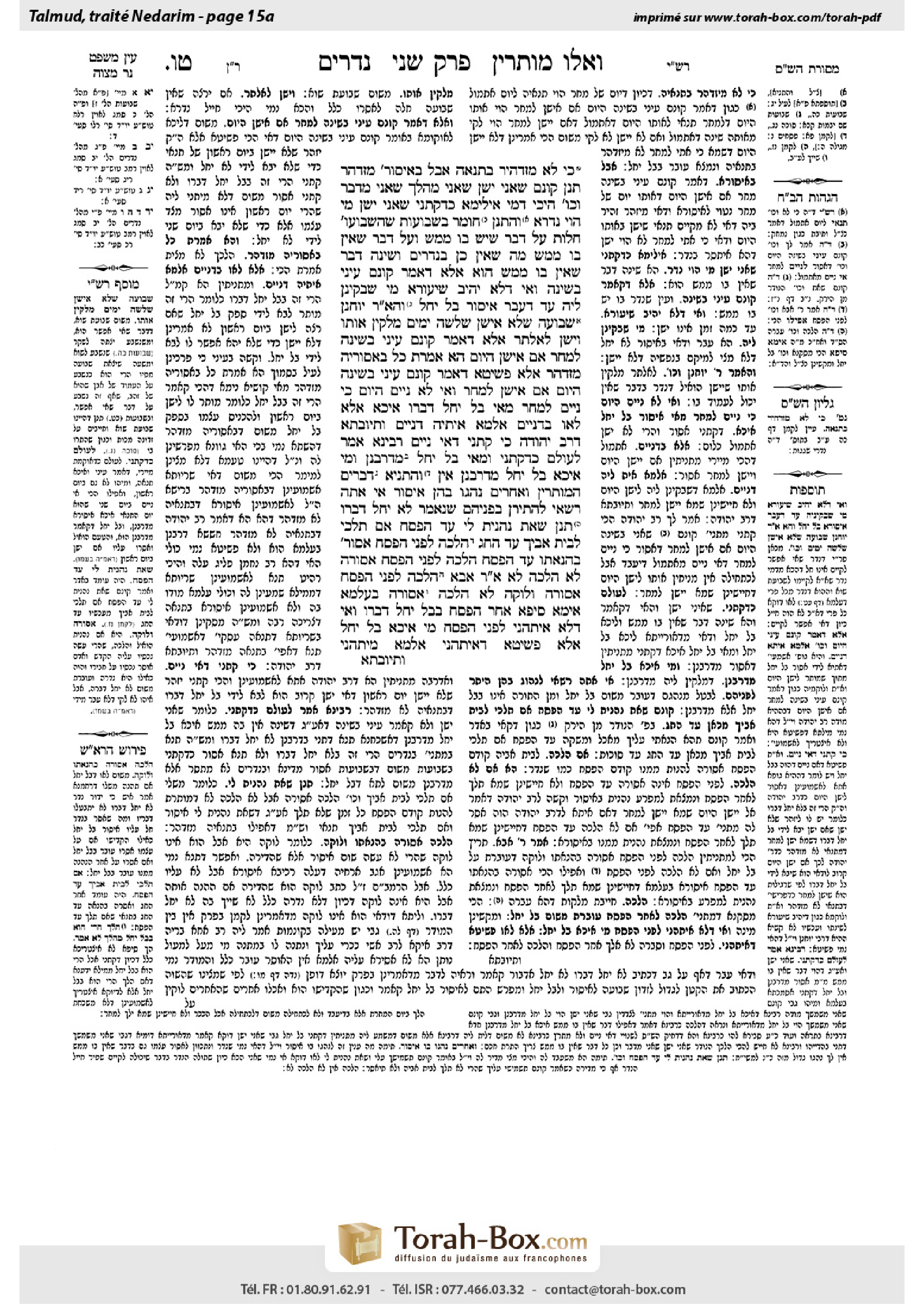
This page of Nedarim includes the Aramaic text, an English translation and an AI-generated French translation, alongside the scan above.
נדרים י״ה א · Aramaic and Hebrew text
כִּי לָא מִזְדְּהַיר — בִּתְנָאָה, אֲבָל בְּאִיסּוּרָא — מִזְדְּהַר.
תְּנַן: קֻוֽנָּם שֶׁאֲנִי יָשֵׁן, שֶׁאֲנִי מְהַלֵּךְ, שֶׁאֲנִי מְדַבֵּר וְכוּ׳. הֵיכִי דָמֵי? אִילֵּימָא כִּדְקָתָנֵי, ״שֶׁאֲנִי יָשֵׁן״ מִי הָוֵי נִדְרָא? וְהָתְנַן: חוֹמֶר בַּשְּׁבוּעוֹת, שֶׁהַשְּׁבוּעוֹת חָלוֹת עַל דָּבָר שֶׁיֵּשׁ בּוֹ מַמָּשׁ וְעַל דָּבָר שֶׁאֵין בּוֹ מַמָּשׁ, מַה שֶּׁאֵין כֵּן בַּנְּדָרִים. וְשֵׁינָה דָּבָר שֶׁאֵין בּוֹ מַמָּשׁ הוּא! אֶלָּא דְּאָמַר: ״קֻוֽנָּם עֵינַי בְּשֵׁינָה״.
וְאִי דְּלָא יָהֵיב שִׁיעוּרָא, מִי שָׁבְקִינַן לֵיהּ עַד דְּעָבַר אִיסּוּר ״בַּל יַחֵל״? וְהָאָמַר רַבִּי יוֹחָנָן: ״שְׁבוּעָה שֶׁלֹּא אִישַׁן שְׁלֹשָׁה יָמִים״ — מַלְקִין אוֹתוֹ וְיָשֵׁן לְאַלְתַּר!
אֶלָּא דַּאֲמַר ״קֻוֽנָּם עֵינַי בְּשֵׁינָה לְמָחָר אִם אִישַׁן הַיּוֹם״. הָא אָמְרַתְּ כׇּל בְּאִסּוּרֵיהּ, מִזְדְּהַר?
אֶלָּא פְּשִׁיטָא דְּאָמַר ״קֻוֽנָּם עֵינַי בְּשֵׁינָה הַיּוֹם אִם אִישַׁן לְמָחָר״. וְאִי לָא נָיֵים הַיּוֹם, כִּי נָיֵים לְמָחָר מַאי ״בַּל יַחֵל דְּבָרוֹ״ אִיכָּא? אֶלָּא לָאו בִּדְנָיֵים. אַלְמָא אִיתֵיהּ דְּנָיֵים. וּתְיוּבְתָּא דְרַב יְהוּדָה!
כִּי קָתָנֵי, דְּאִי נָיֵים.
רָבִינָא אָמַר: לְעוֹלָם כִּדְקָתָנֵי וּמַאי ״בַּל יַחֵל״ — מִדְּרַבָּנַן.
וּמִי אִיכָּא ״בַּל יַחֵל״ מִדְּרַבָּנַן? אִין, וְהָתַנְיָא: דְּבָרִים הַמּוּתָּרִין וַאֲחֵרִים נָהֲגוּ בָּהֶן אִיסּוּר — אִי אַתָּה רַשַּׁאי לְהַתִּירָן בִּפְנֵיהֶם, שֶׁנֶּאֱמַר: ״לֹא יַחֵל דְּבָרוֹ״.
תְּנַן: ״שֶׁאַתְּ נֶהֱנֵית לִי עַד הַפֶּסַח אִם תֵּלְכִי לְבֵית אָבִיךְ עַד הֶחָג״, הָלְכָה לִפְנֵי הַפֶּסַח — אֲסוּרָה בַּהֲנָאָתוֹ עַד הַפֶּסַח.
הָלְכָה לִפְנֵי הַפֶּסַח — אֲסוּרָה, לֹא הָלְכָה — לָא!
אָמַר רַבִּי אַבָּא: הָלְכָה לִפְנֵי הַפֶּסַח — אֲסוּרָה, וְלוֹקָה. לֹא הָלְכָה — אֲסוּרָה בְּעָלְמָא.
אֵימָא סֵיפָא: אַחַר הַפֶּסַח בְּ״בַל יַחֵל דְּבָרוֹ״. וְאִי דְּלָא אִיתְהֲנִי לִפְנֵי הַפֶּסַח, מִי אִיכָּא ״בַּל יַחֵל״? אֶלָּא פְּשִׁיטָא דְּאִיתְהֲנִי. אַלְמָא מִיתְהֲנֵי,
Nedarim 15a · English translation
Sleeping today is not prohibited for him. Rather, it causes sleeping to be prohibited for him tomorrow, because when one is not careful, it is only with regard to a condition. In the former case, sleeping on the second day merely fulfills the condition on which the prohibition was based, causing it to take effect retroactively. Therefore, there is concern that he will not be careful and retroactively cause a violation. However, one is careful with regard to a prohibition. In the latter case, sleeping on the second day is directly prohibited. Therefore, there is no concern that he will violate the prohibition.
The Gemara raises a difficulty with regard to the opinion of Rav Yehuda: We learned in the mishna that one who says: Sleeping is konam for me, or: Walking is konam for me, or: Speaking is konam for me, may not violate his vow. What are the circumstances? If we say that the wording of the vow is precisely as the mishna teaches, is the vow: Sleeping is konam for me, a valid vow? But didn’t we learn in a baraita: There is stringency with regard to oaths vis-à-vis vows, in that oaths apply to something that has actual substance and to something that does not have actual substance, which is not the case with regard to vows. And sleep is something that does not have actual substance, so how can a vow apply to sleep? Rather, the mishna must be referring to a case where he said: Sleeping is konam for my eyes.
The Gemara questions this interpretation: And if he did not give a measurement to the prohibition created by the vow, but rather prohibited himself from sleeping for an unlimited period of time, do we let him be until he inevitably transgresses the prohibition: He shall not profane, by falling asleep? But didn’t Rabbi Yoḥanan say that if one says: I hereby take an oath that I will not sleep for three days, the court flogs him for taking an oath in vain, and he may sleep immediately, as he is incapable of fulfilling his oath? Here too, if the prohibition has no time frame, the vow should not take effect.
Rather, the mishna must be referring to a case where one said: Sleeping is konam to my eyes tomorrow if I sleep today. The mishna rules that he may not sleep today, lest he transgress the prohibition of: He shall not profane, by sleeping tomorrow. However, didn’t you say that with regard to this vow it is agreed that he may sleep today, as one is careful with regard to any direct prohibition and will not violate the vow tomorrow? If so, why is it prohibited for him to sleep today?
Rather, it is obvious that the mishna is referring to a case where one said: Sleeping is konam to my eyes today if I sleep tomorrow. The Gemara asks: And if he does not sleep today, when he sleeps tomorrow, what transgression of: He shall not profane his word, is there? Rather, is it not with regard to a case where he slept on the first day, and therefore the mishna warns him not to sleep on the second day lest he transgress the prohibition retroactively? Apparently, there is a situation in which he sleeps on the first day. And this is a refutation of the opinion of Rav Yehuda that he may not sleep today lest he sleep tomorrow as well, thereby violating the prohibition.
The Gemara answers: When the mishna teaches that he may not sleep tomorrow, it does not mean that today he may sleep ab initio. Rather, it means that if he did sleep today he must be careful not to sleep tomorrow.
Ravina said a different answer: Actually, the mishna may be interpreted as it teaches, i.e., sleeping is konam for me. The vow does not take effect, as sleep does not have actual substance. And if so, what is the reason the mishna states that if he sleeps he is in violation of the prohibition: He shall not profane? He transgresses the prohibition by rabbinic law. Although the vow does not take effect by Torah law, the Sages prohibited him from breaking his word.
The Gemara asks: But is there a prohibition of: He shall not profane, by rabbinic law? The Gemara answers: Yes, and it is taught in a baraita: With regard to matters that are permitted, but others are accustomed to observe a prohibition with regard to them, you may not permit these matters before those people, as it is stated: “He shall not profane his word” (Numbers 30:3). If they contravene their custom they are in violation of the prohibition: He shall not profane his word, by rabbinic law, as that is similar to violating a vow.
The Gemara attempts again to raise a difficulty with regard to Rav Yehuda’s opinion. We learned in a mishna (57a) that if a man said to his wife: Deriving benefit from me until Passover is konam for you if you go to your father’s house until the following festival of Sukkot, then, if she went to her father’s house before Passover, she is prohibited from deriving benefit from him until Passover, as she violated the condition, thereby enabling the vow to take effect.
The Gemara infers: Only if she went before Passover is it prohibited for her to derive benefit from him. However, if she did not go, she is not prohibited from deriving benefit from him. Apparently, even though she can transgress the condition retroactively until Sukkot by going to her father’s house, there is no concern that she will do so. This is difficult according to Rav Yehuda, who prohibits transgression of a conditional vow that may take effect retroactively.
Rabbi Abba said that the baraita can be interpreted as follows: If she went before Passover, she is prohibited from deriving benefit from him, and if she does so she is flogged. If she did not go before Passover, it is merely prohibited for her to derive benefit from him, lest she violate the condition and cause the vow to take effect retroactively. However, she is not liable to be flogged for it, as the vow has not yet taken effect.
The Gemara counters: Say the latter clause of that mishna, which states that if she goes to her father’s house after Passover she is in violation of: He shall not profane his word. And if the mishna is referring to a case where she did not derive benefit from him before Passover, is there a transgression of: He shall not profane? Clearly the vow was not violated. Rather, it is obvious that she derived benefit from him before Passover, and therefore if she goes to her father’s house between Passover and Sukkot she violates the vow retroactively. Apparently, she may derive benefit from him, even though she can subsequently violate the vow by transgressing the condition.
Nedarim 15a · Traduction française (IA)
Dormir aujourd’hui ne lui est pas interdit. En revanche, cela rendra le sommeil interdit demain, car on ne prend pas de précautions lorsqu’il s’agit d’une condition. Dans le premier cas, dormir le deuxième jour ne fait que réaliser la condition sur laquelle reposait l’interdiction, ce qui la fait prendre effet rétroactivement. On craint donc qu’il ne prenne pas de précautions et ne provoque ainsi une transgression rétroactive. En revanche, on prend des précautions face à une interdiction. Dans le second cas, dormir le deuxième jour est directement interdit. On ne craint donc pas qu’il transgresse l’interdiction.
La Guemara soulève une difficulté concernant l’opinion de Rav Yehouda : nous avons appris dans la Michna que celui qui dit : « Dormir m’est konam », ou : « Marcher m’est konam », ou : « Parler m’est konam », ne peut pas transgresser son vœu. Dans quelles circonstances ? Si l’on suppose que le vœu est formulé exactement comme l’enseigne la Michna, un vœu tel que « Dormir m’est konam » est-il valable ? N’avons-nous pas appris dans une baraïta : les serments sont plus stricts que les vœux, en ce que les serments s’appliquent aussi bien à une chose ayant une substance concrète qu’à une chose qui n’en a pas, contrairement aux vœux ? Or le sommeil est une chose sans substance concrète ; comment un vœu peut-il donc s’appliquer au sommeil ? La Michna doit plutôt parler d’un cas où il a dit : « Dormir est konam pour mes yeux. »
La Guemara conteste cette interprétation : s’il n’a pas limité dans le temps l’interdiction créée par le vœu, mais s’est interdit de dormir pour une durée illimitée, le laisse-t-on jusqu’à ce qu’il transgresse inévitablement l’interdiction de profaner sa parole en s’endormant ? Rabbi Yoḥanan n’a-t-il pas dit que si quelqu’un déclare : « Je fais le serment de ne pas dormir pendant trois jours », le tribunal le flagelle pour avoir prêté un serment vain, et qu’il peut dormir immédiatement, puisqu’il lui est impossible de respecter son serment ? Ici aussi, si l’interdiction n’a pas de limite de durée, le vœu ne devrait pas prendre effet.
La Michna doit plutôt parler d’un cas où quelqu’un a dit : « Dormir est konam pour mes yeux demain si je dors aujourd’hui. » La Michna statue qu’il ne doit pas dormir aujourd’hui, de crainte de transgresser demain l’interdiction de profaner sa parole en dormant. Mais n’as-tu pas dit qu’il est convenu, au sujet de ce vœu, qu’il peut dormir aujourd’hui, car on prend des précautions face à toute interdiction directe et il ne transgressera pas le vœu demain ? Si tel est le cas, pourquoi lui est-il interdit de dormir aujourd’hui ?
Il est donc évident que la Michna parle d’un cas où quelqu’un a dit : « Dormir est konam pour mes yeux aujourd’hui si je dors demain. » La Guemara demande : s’il ne dort pas aujourd’hui, quelle transgression de l’interdiction « Il ne profanera pas sa parole » commet-il en dormant demain ? Ne s’agit-il pas plutôt d’un cas où il a dormi le premier jour et où la Michna l’avertit donc de ne pas dormir le deuxième jour, de crainte qu’il ne transgresse l’interdiction rétroactivement ? Il apparaît donc qu’il existe une situation où il dort le premier jour. Cela réfute l’opinion de Rav Yehouda, selon laquelle il ne doit pas dormir aujourd’hui, de peur qu’il ne dorme également demain et ne transgresse ainsi l’interdiction.
La Guemara répond : lorsque la Michna enseigne qu’il ne doit pas dormir demain, cela ne signifie pas qu’il peut dormir aujourd’hui a priori. Cela signifie plutôt que, s’il a dormi aujourd’hui, il doit veiller à ne pas dormir demain.
Ravina donne une autre réponse : en réalité, la Michna peut être interprétée selon sa formulation, à savoir : « Dormir m’est konam. » Le vœu ne prend pas effet, car le sommeil n’a pas de substance concrète. Dans ce cas, pourquoi la Michna dit-elle que s’il dort, il transgresse l’interdiction de profaner sa parole ? Il transgresse une interdiction d’origine rabbinique. Bien que le vœu ne prenne pas effet selon la Torah, les Sages lui ont interdit de manquer à sa parole.
La Guemara demande : existe-t-il une interdiction d’origine rabbinique de profaner sa parole ? La Guemara répond : oui, et cela est enseigné dans une baraïta : à propos de choses permises, mais que certaines personnes ont l’habitude de s’interdire, on ne peut pas les autoriser devant ces personnes, comme il est dit : « Il ne profanera pas sa parole » (Nombres 30:3). Si elles contreviennent à leur coutume, elles transgressent l’interdiction de profaner leur parole, d’origine rabbinique, car cela revient à transgresser un vœu.
La Guemara tente à nouveau de soulever une difficulté concernant l’opinion de Rav Yehouda. Nous avons appris dans une Michna (57a) que si un homme dit à sa femme : « Tirer profit de moi jusqu’à Pessaḥ t’est konam si tu te rends chez ton père d’ici à la prochaine fête de Soukkot », alors, si elle s’est rendue chez son père avant Pessaḥ, il lui est interdit de tirer profit de lui jusqu’à Pessaḥ, car elle a enfreint la condition, ce qui a permis au vœu de prendre effet.
La Guemara déduit que ce n’est que si elle s’est rendue chez son père avant Pessaḥ qu’il lui est interdit de tirer profit de lui. En revanche, si elle ne s’y est pas rendue, il ne lui est pas interdit d’en tirer profit. Il apparaît donc que, même si elle peut enfreindre rétroactivement la condition jusqu’à Soukkot en se rendant chez son père, on ne craint pas qu’elle le fasse. Cela pose une difficulté à Rav Yehouda, qui interdit de transgresser un vœu conditionnel susceptible de prendre effet rétroactivement.
Rabbi Abba dit que la baraïta peut être interprétée ainsi : si elle s’est rendue chez son père avant Pessaḥ, il lui est interdit de tirer profit de lui et, si elle le fait, elle est passible de flagellation. Si elle ne s’y est pas rendue avant Pessaḥ, il lui est seulement interdit de tirer profit de lui, de peur qu’elle n’enfreigne la condition et ne provoque ainsi la prise d’effet rétroactive du vœu. Toutefois, elle n’est pas passible de flagellation pour cela, car le vœu n’a pas encore pris effet.
La Guemara objecte : examinons la clause finale de cette Michna, qui dit que si elle se rend chez son père après Pessaḥ, elle transgresse l’interdiction de profaner sa parole. Et si la Michna parle d’un cas où elle n’a pas tiré profit de lui avant Pessaḥ, y a-t-il alors transgression de l’interdiction de profaner sa parole ? De toute évidence, le vœu n’a pas été transgressé. Il est donc évident qu’elle a tiré profit de lui avant Pessaḥ ; par conséquent, si elle se rend chez son père entre Pessaḥ et Soukkot, elle transgresse le vœu rétroactivement. Il apparaît donc qu’elle peut tirer profit de lui, bien qu’elle puisse ensuite transgresser le vœu en enfreignant la condition.
Traduction française générée par IA à partir de l’édition anglaise de Sefaria. Vérifie toujours un passage avec le texte source.
Text from Sefaria: William Davidson Edition - Vocalized Aramaic (CC BY NC); William Davidson Edition - English (CC BY NC).