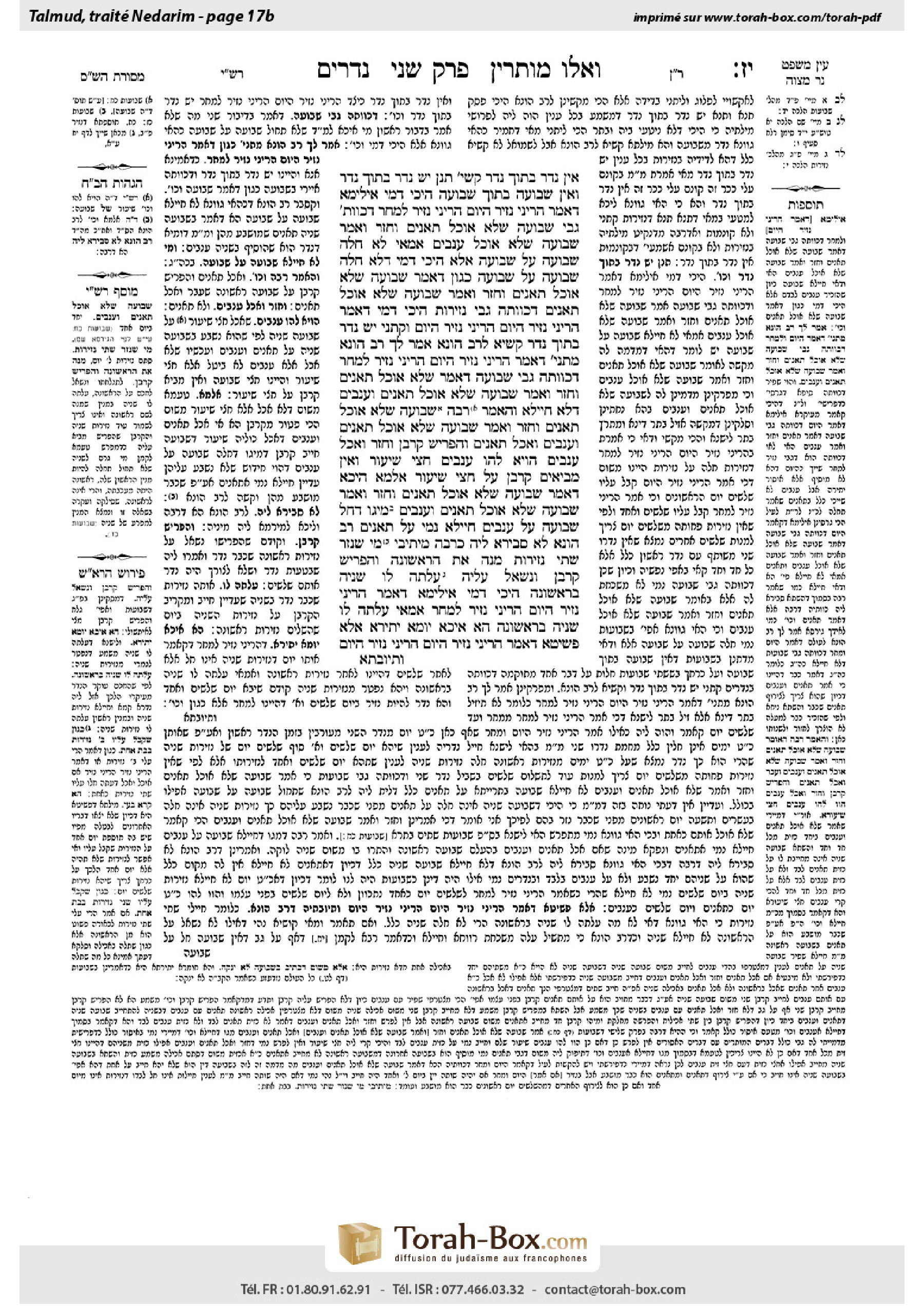
Nedarim 17b: Talmud study for Daf Yomi
Daf Yomi is the daily study of one Talmud folio. Explore 37 tractates with scans, Hebrew text, Sefaria English and AI-generated French translations where annotated.
Passage selection and English or AI-generated French translation are available where the scan has annotations. Daf Study is independent of Torah-Box and Sefaria.
Browse Nedarim · נדרים · All tractatesNedarim 17b text and translations
This page of Nedarim includes the Aramaic text, an English translation and an AI-generated French translation, alongside the scan above.
נדרים י״ז ב · Aramaic and Hebrew text
אֵין נֶדֶר בְּתוֹךְ נֶדֶר! קַשְׁיָא.
תְּנַן: יֵשׁ נֶדֶר בְּתוֹךְ נֶדֶר, וְאֵין שְׁבוּעָה בְּתוֹךְ שְׁבוּעָה. הֵיכִי דָמֵי? אִילֵימָא דְּאָמַר ״הֲרֵינִי נָזִיר הַיּוֹם, הֲרֵינִי נָזִיר לְמָחָר״, דִּכְווֹתַהּ גַּבֵּי שְׁבוּעָה: ״שֶׁלֹּא אוֹכַל תְּאֵנִים״, וְחָזַר וְאָמַר ״שְׁבוּעָה שֶׁלֹּא אוֹכַל עֲנָבִים״ — אַמַּאי לָא חָלָה שְׁבוּעָה עַל שְׁבוּעָה?
אֶלָּא הֵיכִי דָּמֵי דְּלָא חָלָה שְׁבוּעָה עַל שְׁבוּעָה, כְּגוֹן דְּאָמַר ״שְׁבוּעָה שֶׁלֹּא אוֹכַל תְּאֵנִים״, וְחָזַר וְאָמַר ״שְׁבוּעָה שֶׁלֹּא אוֹכַל תְּאֵנִים״, דִּכְווֹתַהּ גַּבֵּי נְזִירוּת הֵיכִי דָּמֵי — דְּאָמַר ״הֲרֵינִי נָזִיר הַיּוֹם, הֲרֵינִי נָזִיר הַיּוֹם״, וְקָתָנֵי יֵשׁ נֶדֶר בְּתוֹךְ נֶדֶר. קַשְׁיָא לְרַב הוּנָא!
אָמַר לְךָ רַב הוּנָא: מַתְנִיתִין דְּאָמַר ״הֲרֵינִי נָזִיר הַיּוֹם, הֲרֵינִי נָזִיר לְמָחָר״. דִּכְווֹתַהּ גַּבֵּי שְׁבוּעָה, דְּאָמַר: ״שֶׁלֹּא אוֹכַל תְּאֵנִים״, וְחָזַר וְאָמַר: ״שְׁבוּעָה שֶׁלֹּא אוֹכַל תְּאֵנִים וַעֲנָבִים״, דְּלָא חָיְילָא.
וְהָאָמַר רַבָּה: ״שְׁבוּעָה שֶׁלֹּא אוֹכַל תְּאֵנִים״, וְחָזַר וְאָמַר: ״שְׁבוּעָה שֶׁלֹּא אוֹכַל תְּאֵנִים וַעֲנָבִים״, וְאָכַל תְּאֵנִים, וְהִפְרִישׁ קׇרְבָּן, וְחָזַר וְאָכַל עֲנָבִים — הָוְיָא לְהוּ עֲנָבִים חֲצִי שִׁיעוּר, וְאֵין מְבִיאִים קׇרְבָּן עַל חֲצִי שִׁיעוּר.
אַלְמָא הֵיכָא דְּאָמַר: ״שְׁבוּעָה שֶׁלֹּא אוֹכַל תְּאֵנִים״, וְחָזַר וְאָמַר ״שְׁבוּעָה שֶׁלֹּא אוֹכַל תְּאֵנִים וַעֲנָבִים״, מִיגּוֹ דְּחָל שְׁבוּעָה עַל עֲנָבִים — חָיְילָא נָמֵי עַל תְּאֵנִים! רַב הוּנָא לָא סְבִירָא לֵיהּ כְּרַבָּה.
מֵיתִיבִי: מִי שֶׁנָּזַר שְׁתֵּי נְזִירוֹת, מָנָה אֶת הָרִאשׁוֹנָה וְהִפְרִישׁ קׇרְבָּן, וְנִשְׁאַל עָלֶיהָ, עָלְתָה לוֹ שְׁנִיָּה בָּרִאשׁוֹנָה.
הֵיכִי דָּמֵי? אִילֵימָא דְּאָמַר ״הֲרֵינִי נָזִיר הַיּוֹם, הֲרֵינִי נָזִיר לְמָחָר״ — אַמַּאי עָלְתָה לוֹ שְׁנִיָּה בָּרִאשׁוֹנָה, הָא אִיכָּא יוֹמָא יַתִּירָא? אֶלָּא פְּשִׁיטָא דְּאָמַר ״הֲרֵינִי נָזִיר הַיּוֹם, הֲרֵינִי נָזִיר הַיּוֹם״.
Nedarim 17b · English translation
in this case there is no vow within a vow. The Gemara concludes: This question is difficult, although it is not a conclusive refutation.
The Gemara raises several problems with the opinion of Rav Huna. We learned in the mishna: There is a vow within a vow, but there is no oath within an oath. What are the circumstances? If we say that the case of a vow within a vow is where one said: I am hereby a nazirite today, I am a hereby a nazirite tomorrow, that in the corresponding situation with regard to an oath within an oath, which will not take effect, is where one said: I hereby take an oath that I will not eat figs, and he then said: I hereby take an oath that I will not eat grapes, i.e., he took two separate oaths; if so, why does an additional oath not take effect where an oath was already made? It ought to take effect, as the second oath is not connected to the first one.
Rather, what are the circumstances in which a second oath does not take effect after an oath was already made? For example, where one said: I hereby take an oath that I will not eat figs, and he again said: I hereby take an oath that I will not eat figs. In the corresponding situation with regard to naziriteship, what are the circumstances? It must be a case where one said: I am hereby a nazirite today, I am a hereby a nazirite today; and the mishna teaches that in this case there is a vow within a vow. This poses a difficulty to the opinion of Rav Huna, who holds that in this case the second vow does not take effect.
The Gemara answers that Rav Huna could have said to you that the mishna is referring to a case where one said: I am hereby a nazirite today, I am hereby a nazirite tomorrow; that in the corresponding situation with regard to an oath where one said: I hereby take an oath that I will not eat figs, and then said: I hereby take an oath that I will not eat figs and grapes, the second oath does not take effect, as he had already taken an oath with regard to part of its content.
The Gemara asks: But didn’t Rabba say that if one said: I hereby take an oath that I will not eat figs, and then said: I hereby take an oath that I will not eat figs and grapes, and he subsequently ate figs, violating the oath, and he then set aside an offering for the violation of an oath on a statement, and he then ate grapes, in this case the grapes that he ate are only a half-measure of the second oath. The inclusion of both figs and grapes in the oath indicates that his intention was to prohibit himself from eating both. Since he already set aside an offering for eating the figs, he is now considered as having eaten only grapes and as having violated only half of the oath. And therefore he is not liable to bring an offering for violating the second oath, as one does not bring an offering for a half-measure.
The fact that he is exempt from bringing an offering merely because he ate a half-measure indicates that the second oath took effect. Apparently, where one said: I hereby take an oath that I will not eat figs, and then said: I hereby take an oath that I will not eat figs and grapes, since the second oath can take effect with regard to grapes, as grapes were not included in the first oath, it takes effect with regard to figs as well. This poses a problem according to the opinion of Rav Huna, who would explain the mishna as teaching that the second oath in this case does not take effect at all. The Gemara answers: This is not a problem. Rav Huna does not hold in accordance with the opinion of Rabba, as Rabba was an amora and Rav Huna’s student.
The Gemara raises an objection from a baraita: In the case of one who took two vows of naziriteship, counted the thirty days of the first term of naziriteship and set aside an offering at the end of its term, and then requested from a halakhic authority for dissolution of the vow before the offering was sacrificed, thereby rendering the offering unnecessary, the second term of naziriteship is counted for him instead of the first. He is considered as having fulfilled the second term of naziriteship during the period in which he observed the first one. Therefore, the offering that he set aside counts for the second term of naziriteship.
What are the circumstances? If we say that it is a case where he said: I am hereby a nazirite today, I am hereby a nazirite tomorrow, why is the second term of naziriteship counted for him instead of the first? Isn’t there an additional day in the second term of naziriteship that he has not yet observed, as the second thirty day term commences the day after the first thirty day period had commenced? How, then, is it possible that the second obligation was fulfilled through his observance of the first one? Rather, it is obvious that it is a case where he said: I am hereby a nazirite today, I am hereby a nazirite today,
Nedarim 17b · Traduction française (IA)
Dans ce cas, il n’y a pas de vœu à l’intérieur d’un vœu. La Guemara conclut : cette question est difficile, mais elle ne constitue pas une réfutation décisive.
La Guemara soulève plusieurs difficultés à l’encontre de l’opinion de Rav Huna. Nous avons appris dans la Michna : il y a un vœu à l’intérieur d’un vœu, mais il n’y a pas de serment à l’intérieur d’un serment. Dans quelles circonstances ? Si l’on dit que le cas d’un vœu à l’intérieur d’un vœu est celui où quelqu’un a dit : « Je suis naziréen aujourd’hui, je suis naziréen demain », alors, dans le cas correspondant d’un serment à l’intérieur d’un serment qui ne prend pas effet, il s’agirait de quelqu’un qui a dit : « Je jure que je ne mangerai pas de figues », puis : « Je jure que je ne mangerai pas de raisins », c’est-à-dire qu’il a prononcé deux serments distincts. Si tel est le cas, pourquoi un serment supplémentaire ne prend-il pas effet alors qu’un serment a déjà été prononcé ? Il devrait prendre effet, puisque le second serment n’est pas lié au premier.
Mais alors, dans quelles circonstances un second serment ne prend-il pas effet après qu’un premier serment a déjà été prononcé ? Par exemple, lorsque quelqu’un a dit : « Je jure que je ne mangerai pas de figues », puis a répété : « Je jure que je ne mangerai pas de figues. » Dans le cas correspondant du naziréat, quelles seraient les circonstances ? Il faudrait qu’il ait dit : « Je suis naziréen aujourd’hui, je suis naziréen aujourd’hui. » Or, la Michna enseigne que, dans ce cas, il y a un vœu à l’intérieur d’un vœu. Cela pose une difficulté à l’opinion de Rav Huna, qui soutient que, dans ce cas, le second vœu ne prend pas effet.
La Guemara répond que Rav Huna aurait pu te dire que la Michna parle du cas où quelqu’un a dit : « Je suis naziréen aujourd’hui, je suis naziréen demain. » Dans le cas correspondant d’un serment, quelqu’un a dit : « Je jure que je ne mangerai pas de figues », puis : « Je jure que je ne mangerai ni de figues ni de raisins » ; le second serment ne prend pas effet, puisqu’il avait déjà prononcé un serment portant sur une partie de son contenu.
La Guemara demande : Mais Rabba n’a-t-il pas dit que si quelqu’un a dit : « Je jure que je ne mangerai pas de figues », puis : « Je jure que je ne mangerai ni de figues ni de raisins », qu’il a ensuite mangé des figues, transgressant ainsi le serment, mis de côté une offrande pour avoir transgressé un serment par une déclaration, puis mangé des raisins, les raisins qu’il a mangés ne constituent alors qu’une demi-mesure au regard du second serment ? Le fait d’inclure à la fois les figues et les raisins dans le serment indique que son intention était de s’interdire de manger les deux. Puisqu’il a déjà mis de côté une offrande pour avoir mangé les figues, il est désormais considéré comme n’ayant mangé que des raisins et comme n’ayant transgressé que la moitié du serment. Il n’est donc pas tenu d’apporter une offrande pour avoir transgressé le second serment, car on n’apporte pas d’offrande pour une demi-mesure.
Le fait qu’il soit dispensé d’apporter une offrande uniquement parce qu’il a mangé une demi-mesure indique que le second serment a pris effet. Apparemment, lorsqu’un homme a dit : « Je jure que je ne mangerai pas de figues », puis : « Je jure que je ne mangerai ni de figues ni de raisins », puisque le second serment peut prendre effet en ce qui concerne les raisins, qui n’étaient pas compris dans le premier serment, il prend également effet en ce qui concerne les figues. Cela pose une difficulté selon l’opinion de Rav Huna, qui expliquerait la Michna comme enseignant que, dans ce cas, le second serment ne prend pas effet du tout. La Guemara répond : il n’y a pas là de difficulté. Rav Huna ne partage pas l’opinion de Rabba, car Rabba était un amora et un élève de Rav Huna.
La Guemara soulève une objection tirée d’une baraïta : dans le cas de quelqu’un qui a prononcé deux vœux de naziréat, compté les trente jours de son premier terme de naziréat et mis de côté une offrande à la fin de ce terme, puis demandé à une autorité halakhique de dissoudre le vœu avant que l’offrande soit sacrifiée, rendant ainsi celle-ci superflue, le second terme de naziréat est compté à sa place, en lieu et place du premier. Il est considéré comme ayant accompli le second terme de naziréat pendant la période où il a observé le premier. Par conséquent, l’offrande qu’il avait mise de côté compte pour le second terme de naziréat.
Dans quelles circonstances ? Si l’on dit qu’il s’agit du cas où il a dit : « Je suis naziréen aujourd’hui, je suis naziréen demain », pourquoi le second terme de naziréat est-il compté à sa place, en lieu et place du premier ? Le second terme de naziréat ne comporte-t-il pas un jour supplémentaire qu’il n’a pas encore observé, puisque le second terme de trente jours commence le lendemain du début de la première période de trente jours ? Comment, dès lors, est-il possible qu’il ait accompli la seconde obligation en observant la première ? Il est donc évident qu’il s’agit du cas où il a dit : « Je suis naziréen aujourd’hui, je suis naziréen aujourd’hui »,
Traduction française générée par IA à partir de l’édition anglaise de Sefaria. Vérifie toujours un passage avec le texte source.
Text from Sefaria: William Davidson Edition - Vocalized Aramaic (CC BY NC); William Davidson Edition - English (CC BY NC).