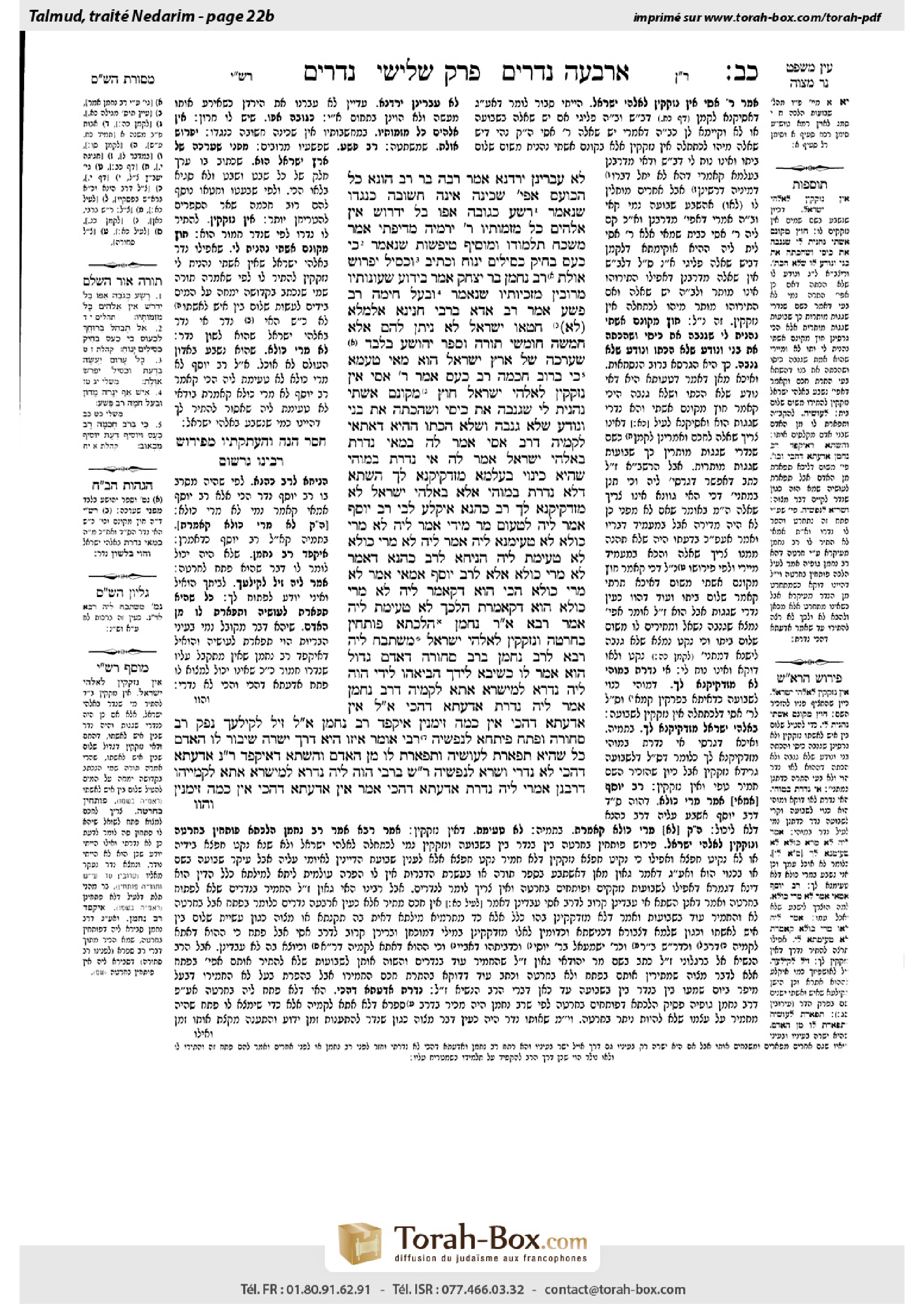
Nedarim 22b: Talmud study for Daf Yomi
Daf Yomi is the daily study of one Talmud folio. Explore 37 tractates with scans, Hebrew text, Sefaria English and AI-generated French translations where annotated.
Passage selection and English or AI-generated French translation are available where the scan has annotations. Daf Study is independent of Torah-Box and Sefaria.
Browse Nedarim · נדרים · All tractatesNedarim 22b text and translations
This page of Nedarim includes the Aramaic text, an English translation and an AI-generated French translation, alongside the scan above.
נדרים כ״ב ב · Aramaic and Hebrew text
לָא עָבְרִינַן יַרְדְּנָא.
אָמַר רַבָּה בַּר רַב הוּנָא: כׇּל הַכּוֹעֵס, אֲפִילּוּ שְׁכִינָה אֵינָהּ חֲשׁוּבָה כְּנֶגְדּוֹ, שֶׁנֶּאֱמַר: ״רָשָׁע כְּגֹבַהּ אַפּוֹ בַּל יִדְרֹשׁ אֵין אֱלֹהִים כׇּל מְזִמּוֹתָיו״. רַבִּי יִרְמְיָה מִדִּיפְתִּי אָמַר: מְשַׁכֵּחַ תַּלְמוּדוֹ וּמוֹסִיף טִיפְּשׁוּת, שֶׁנֶּאֱמַר: ״כִּי כַעַס בְּחֵיק כְּסִילִים יָנוּחַ״, וּכְתִיב: ״וּכְסִיל יִפְרֹשׂ אִוֶּלֶת״. רַב נַחְמָן בַּר יִצְחָק אָמַר: בְּיָדוּעַ שֶׁעֲוֹנוֹתָיו מְרוּבִּין מִזְּכִיּוֹתָיו, שֶׁנֶּאֱמַר: ״וּבַעַל חֵמָה רַב פָּשַׁע״.
אָמַר רַב אַדָּא בְּרַבִּי חֲנִינָא: אִלְמָלֵא (לֹא) חָטְאוּ יִשְׂרָאֵל לֹא נִיתַּן לָהֶם אֶלָּא חֲמִשָּׁה חוּמְשֵׁי תוֹרָה וְסֵפֶר יְהוֹשֻׁעַ בִּלְבַד, שֶׁעֶרְכָּהּ שֶׁל אֶרֶץ יִשְׂרָאֵל הוּא. מַאי טַעְמָא: ״כִּי בְּרֹב חׇכְמָה רׇב כָּעַס״.
אָמַר רַבִּי אַסִּי: אֵין נִזְקָקִין לֶ״אֱלֹהֵי יִשְׂרָאֵל״, חוּץ מִ״קּוּנָּם אִשְׁתִּי נֶהֱנֵית לִי שֶׁגָּנְבָה אֶת כִּיסִי וְשֶׁהִכְּתָה אֶת בְּנִי״, וְנוֹדַע שֶׁלֹּא גָּנְבָה וְשֶׁלֹּא הִכַּתּוּ.
הָהִיא דַּאֲתַאי לְקַמֵּיהּ דְּרַב אַסִּי, אָמַר לַהּ: בְּמַאי נְדַרְתְּ? בֵּ״אלֹהֵי יִשְׂרָאֵל״. אֲמַר לַהּ: אִי נְדַרְתְּ בְּ״מוֹהִי״ שֶׁהִיא כִּינּוּי בְּעָלְמָא — מִזְדְּקִיקְנָא לִךְ, הַשְׁתָּא דְּלָא נְדַרְתְּ בְּ״מוֹהִי אֶלָּא בֵּ״אלֹהֵי יִשְׂרָאֵל״, לָא מִזְדְּקִיקְנָא לִךְ.
רַב כָּהֲנָא אִיקְּלַע לְבֵי רַב יוֹסֵף, אֲמַר לֵיהּ: לִטְעוֹם מָר מִידֵּי. אֲמַר לֵיהּ: לָא מָרֵי כּוֹלָּא, לָא טָעֵימְנָא לֵיהּ. אֲמַר לֵיהּ: לָא מָרֵי כּוֹלָּא, לָא טָעֲימַתְּ לֵיהּ. הָנִיחָא לְרַב כָּהֲנָא, דְּאָמַר: ״לָא מָרֵי כּוֹלָּא״. אֶלָּא לְרַב יוֹסֵף, אַמַּאי אֲמַר ״לָא מָרֵי כּוֹלָּא״? הָכִי הוּא דְּקָאָמַר לֵיהּ: ״לָא מָרֵי כּוֹלָּא״ הוּא דְּקָאָמְרַתְּ, הִלְכָּךְ לָא טָעֲימַתְּ לֵיהּ.
אָמַר רָבָא אָמַר רַב נַחְמָן: הִלְכְתָא, פּוֹתְחִין בַּחֲרָטָה, וְנִזְקָקִין לֵ״אלֹהֵי יִשְׂרָאֵל״.
מִשְׁתַּבַּח לֵיהּ רָבָא לְרַב נַחְמָן בְּרַב סְחוֹרָה דְּאָדָם גָּדוֹל הוּא. אָמַר לוֹ: כְּשֶׁיָּבֹא לְיָדְךָ, הֲבִיאֵהוּ לְיָדִי. הֲוָה לֵיהּ נִדְרָא לְמִישְׁרֵא. אֲתָא לְקַמֵּיהּ דְּרַב נַחְמָן.
אֲמַר לֵיהּ: נְדַרְתְּ אַדַּעְתָּא דְּהָכִי? אֲמַר לֵיהּ: אִין. אַדַּעְתָּא דְּהָכִי? אִין. כַּמָּה זִימְנִין. אִיקְּפַד רַב נַחְמָן. אֲמַר לֵיהּ: זִיל לְקִילְעָךְ.
נְפַק רַב סְחוֹרָה וּפְתַח פִּיתְחָא לְנַפְשֵׁיהּ. רַבִּי אוֹמֵר: אֵיזֶה הִיא דֶּרֶךְ יְשָׁרָה שֶׁיָּבוֹר לוֹ הָאָדָם. כֹּל שֶׁהִיא תִּפְאֶרֶת לְעוֹשֶׂיהָ וְתִפְאֶרֶת לוֹ מִן הָאָדָם. וְהַשְׁתָּא דְּאִיקְּפַד רַב נַחְמָן — אַדַּעְתָּא דְּהָכִי לָא נְדַרִי. וּשְׁרָא לְנַפְשֵׁיהּ.
רַבִּי שִׁמְעוֹן בְּרַבִּי הֲוָה לֵיהּ נִדְרָא לְמִישְׁרֵא. אֲתָא לְקַמַּיְיהוּ דְּרַבָּנַן, אָמְרִי לֵיהּ: נְדַרְתְּ אַדַּעְתָּא דְּהָכִי? אָמַר: אִין. אַדַּעְתָּא דְּהָכִי? אִין. כַּמָּה זִימְנִין,
Nedarim 22b · English translation
we had not yet crossed the Jordan River, and we were still outside of Eretz Yisrael. Therefore, the curse of a heart of anger was relevant.
Rabba bar Rav Huna said: Anyone who gets angry, at that moment even the Divine Presence is not important to him, as it is stated: “The wicked, in the height of his anger says: He will not require; all his thoughts are: There is no God” (Psalms 10:4). Rabbi Yirmeya of Difti said: Anyone who gets angry forgets his learning and increases foolishness, as it is stated: “For anger rests in the bosom of fools” (Ecclesiastes 7:9), and it is written: “But a fool unfolds folly” (Proverbs 13:16). Rav Naḥman bar Yitzḥak said: With regard to one who gets angry, it is acknowledged that his sins are more numerous than his merits, as it is stated: “And a wrathful man abounds in transgression” (Proverbs 29:22).
Rav Adda, son of Rabbi Ḥanina, said: Had Israel not sinned in earlier times they would have been given the five books of the Torah and the book of Joshua alone. They needed the book of Joshua because it includes the arrangement of Eretz Yisrael. Since it contains the division of Eretz Yisrael among the tribes, it was required for all generations, but the other books of the prophets primarily detail the history of how Israel angered God and He sent prophets to admonish them. What is the reason, i.e., what is the allusion to this idea? It is stated: “For in much wisdom is much vexation” (Ecclesiastes 1:18). All the wisdom that the Jews possess from the books of the Bible is the result of their angering God.
§ Rabbi Asi said: One does not attend to a request to dissolve a vow in which the name of the God of Israel is invoked because such a declaration is especially stringent, except for a case where one swears by the God of Israel and adds: Benefiting from me is konam for my wife because she stole my purse or she hit my son, and then it became known that she did not steal or did not hit his son. In such a case, the vow can be dissolved because the vow was made in error, but in other cases such a vow is not dissolved.
The Gemara relates: There was a certain woman who came before Rav Asi. He said to her: With what language did you vow? She said to him: By the God of Israel. He said to her: If you would have vowed and said: By mohi, which is merely a substitute name, I would have attended to your request and dissolved the vow, but now that you did not vow by mohi but rather, by the God of Israel, I will not attend to your request and dissolve the vow.
The Gemara relates another incident: Rav Kahana happened to come to the home of Rav Yosef. Rav Yosef said to him: Let the Master eat something. He said to him: No, by the Master of all I will not eat it. Rav Yosef said to him: No, by the Master of all you will not eat it. The Gemara comments: Rav Kahana’s statement: No, by the Master of all I will not eat it, is well understood. But for Rav Yosef, why did he say: No, by the Master of all you will not eat it? What was the purpose of his vow? The Gemara answers: This is what he said to him: No, by the Master of all you will not eat it is what you said; therefore, you may not eat it, since a vow taken in such solemn fashion may not be dissolved.
Rava said that Rav Naḥman said: The halakha is that it is permitted for a halakhic authority to broach dissolution based on regret, and that one also attends to a request to dissolve a vow in which the name of the God of Israel is invoked.
§ Rava praised his student Rav Seḥora to Rav Naḥman by saying that he is a great man. Rav Naḥman said to him: When Rav Seḥora comes to you, bring him to me. Rav Seḥora had a vow that he wanted to dissolve, so Rava sent Rav Seḥora to Rav Naḥman. He came before Rav Naḥman.
Rav Naḥman, who wanted to dissolve the vow, said to him: Did you vow with such a matter in mind? He said to him: Yes, so Rav Naḥman did not dissolve the vow. He then asked again: Did you vow with such a matter in mind, and suggested another possibility. He said to him: Yes. This happened several times, and every time Rav Naḥman attempted to broach an opening, Rav Seḥora replied that he had that in mind when he made the vow. Rav Naḥman became upset with him because it appeared that Rav Seḥora was making it unnecessarily difficult for him to dissolve the vow. Rav Naḥman said to him: Go to your tent [kilakh] because I do not want to talk to you.
Rav Seḥora went out and made the following opening for himself that would enable the dissolution of his vow, based on a mishna in tractate Avot (2:1): Rabbi Yehuda HaNasi says: What is the proper path that a person should choose? He should choose any path that is considered a glory to the one who does it and a glory from his fellow men. Rav Seḥora then reasoned that now that Rav Naḥman became upset at him, he would not have made the vow with knowledge of this fact, since he would not receive glory from his fellow men, and based on this he dissolved the vow for himself.
The Gemara relates a similar incident: Rabbi Shimon, son of Rabbi Yehuda HaNasi, had a vow to dissolve. He came before the Sages for dissolution. They said to him: Did you vow with the knowledge of this particular fact? He said: Yes. They proposed another possibility: Did you vow with the knowledge of this other particular fact? He said to them: Yes. This happened several times,
Nedarim 22b · Traduction française (IA)
Nous n’avions pas encore traversé le Jourdain et nous étions toujours hors d’Eretz Israël. La malédiction liée à un cœur colérique était donc pertinente.
Rabba bar Rav Huna dit : Quiconque se met en colère, à cet instant même, ne tient pas compte de la Présence divine, comme il est dit : « Le méchant, dans son arrogance, dit : “Il ne demandera pas de comptes.” Toutes ses pensées sont : “Il n’y a pas de Dieu” » (Psaumes 10, 4). Rabbi Yirmeya de Difti dit : Quiconque se met en colère oublie son étude et accroît sa sottise, comme il est dit : « La colère repose dans le sein des sots » (Ecclésiaste 7, 9), et il est écrit : « Mais le sot étale sa folie » (Proverbes 13, 16). Rav Naḥman bar Yitzḥak dit : À propos de celui qui se met en colère, il est établi que ses péchés sont plus nombreux que ses mérites, comme il est dit : « L’homme colérique abonde en transgressions » (Proverbes 29, 22).
Rav Adda, fils de Rabbi Ḥanina, dit : Si Israël n’avait pas péché autrefois, on ne lui aurait donné que les cinq livres de la Torah et le livre de Josué. Le livre de Josué lui était nécessaire, car il décrit la répartition d’Eretz Israël. Puisqu’il contient le partage d’Eretz Israël entre les tribus, il était nécessaire pour toutes les générations ; mais les autres livres des Prophètes détaillent principalement l’histoire de la manière dont Israël irrita Dieu et dont Il envoya des prophètes pour le réprimander. Quelle en est la raison, c’est-à-dire quelle allusion trouve-t-on à cette idée ? Il est dit : « Car une grande sagesse entraîne une grande vexation » (Ecclésiaste 1, 18). Toute la sagesse que les Juifs tirent des livres de la Bible résulte du fait qu’ils ont irrité Dieu.
§ Rabbi Asi dit : On ne donne pas suite à une demande d’annulation d’un vœu dans lequel le nom du Dieu d’Israël est invoqué, car une telle déclaration est particulièrement solennelle. Il existe toutefois une exception : si quelqu’un jure par le Dieu d’Israël et ajoute : « Que ma femme me soit interdite comme un konam, parce qu’elle a volé ma bourse ou frappé mon fils », puis qu’il s’avère qu’elle n’a ni volé sa bourse ni frappé son fils, le vœu peut être annulé, car il a été prononcé par erreur. Dans les autres cas, un tel vœu n’est pas annulé.
La Guemara rapporte : Une certaine femme se présenta devant Rav Asi. Il lui demanda : « Quelle formule as-tu employée pour ton vœu ? » Elle lui répondit : « Par le Dieu d’Israël. » Il lui dit : « Si tu avais fait un vœu en disant : “Par mohi”, qui n’est qu’un nom de substitution, j’aurais donné suite à ta demande et annulé le vœu ; mais puisque tu n’as pas fait ton vœu par mohi, mais par le Dieu d’Israël, je ne donnerai pas suite à ta demande et n’annulerai pas le vœu. »
La Guemara rapporte un autre incident : Rav Kahana se trouvait chez Rav Yosef. Rav Yosef lui dit : « Que le Maître mange quelque chose. » Il lui répondit : « Non, par le Maître de tous, je n’en mangerai pas. » Rav Yosef lui dit : « Non, par le Maître de tous, tu n’en mangeras pas. » La Guemara commente : La déclaration de Rav Kahana — « Non, par le Maître de tous, je n’en mangerai pas » — se comprend bien. Mais pourquoi Rav Yosef a-t-il dit : « Non, par le Maître de tous, tu n’en mangeras pas » ? Quel était le but de son vœu ? La Guemara répond : Voici ce qu’il lui disait : « “Non, par le Maître de tous, tu n’en mangeras pas”, voilà ce que tu as dit ; tu ne peux donc pas en manger, car un vœu prononcé avec une telle solennité ne peut pas être annulé. »
Rava dit au nom de Rav Naḥman : La halakha est qu’il est permis à une autorité halakhique de proposer un motif d’annulation fondé sur le regret, et qu’on donne également suite à une demande d’annulation d’un vœu dans lequel le nom du Dieu d’Israël est invoqué.
§ Rava fit l’éloge de son élève Rav Seḥora auprès de Rav Naḥman, disant que c’était un grand homme. Rav Naḥman lui dit : « Quand Rav Seḥora viendra chez toi, amène-le-moi. » Rav Seḥora avait un vœu qu’il souhaitait faire annuler ; Rava l’envoya donc auprès de Rav Naḥman. Il se présenta devant Rav Naḥman.
Rav Naḥman, qui voulait annuler le vœu, lui demanda : « As-tu fait ce vœu en pensant à une telle éventualité ? » Il répondit : « Oui. » Rav Naḥman n’annula donc pas le vœu. Il lui demanda alors de nouveau s’il l’avait fait en pensant à une autre éventualité et lui en suggéra une. Il répondit : « Oui. » Cela se produisit plusieurs fois : chaque fois que Rav Naḥman tentait de proposer un motif d’annulation, Rav Seḥora répondait qu’il y avait pensé au moment de prononcer le vœu. Rav Naḥman s’irrita contre lui, car Rav Seḥora semblait lui compliquer inutilement l’annulation du vœu. Rav Naḥman lui dit : « Va dans ta tente [kilakh], car je ne veux pas te parler. »
Rav Seḥora sortit et trouva lui-même le motif qui lui permettrait de faire annuler son vœu, en s’appuyant sur une Michna du traité Avot (2, 1) : Rabbi Yehuda HaNasi dit : « Quelle est la voie juste qu’un homme doit choisir ? Toute voie qui fait honneur à celui qui l’emprunte et lui vaut l’estime de ses semblables. » Rav Seḥora raisonna alors ainsi : puisque Rav Naḥman s’était irrité contre lui, il n’aurait pas prononcé le vœu s’il avait connu cette circonstance, car il ne recevrait pas l’estime de ses semblables. Sur cette base, il annula lui-même son vœu.
La Guemara rapporte un incident similaire : Rabbi Shimon, fils de Rabbi Yehuda HaNasi, avait un vœu à faire annuler. Il se présenta devant les Sages pour le faire annuler. Ils lui demandèrent : « As-tu fait ce vœu en connaissant cette circonstance particulière ? » Il répondit : « Oui. » Ils lui proposèrent une autre possibilité : « As-tu fait ce vœu en connaissant cette autre circonstance particulière ? » Il leur répondit : « Oui. » Cela se produisit plusieurs fois,
Traduction française générée par IA à partir de l’édition anglaise de Sefaria. Vérifie toujours un passage avec le texte source.
Text from Sefaria: William Davidson Edition - Vocalized Aramaic (CC BY NC); William Davidson Edition - English (CC BY NC).