Nedarim 23a: Talmud study for Daf Yomi
Daf Yomi is the daily study of one Talmud folio. Explore 37 tractates with scans, Hebrew text, Sefaria English and AI-generated French translations where annotated.
Passage selection and English or AI-generated French translation are available where the scan has annotations. Daf Study is independent of Torah-Box and Sefaria.
Browse Nedarim · נדרים · All tractatesNedarim 23a text and translations
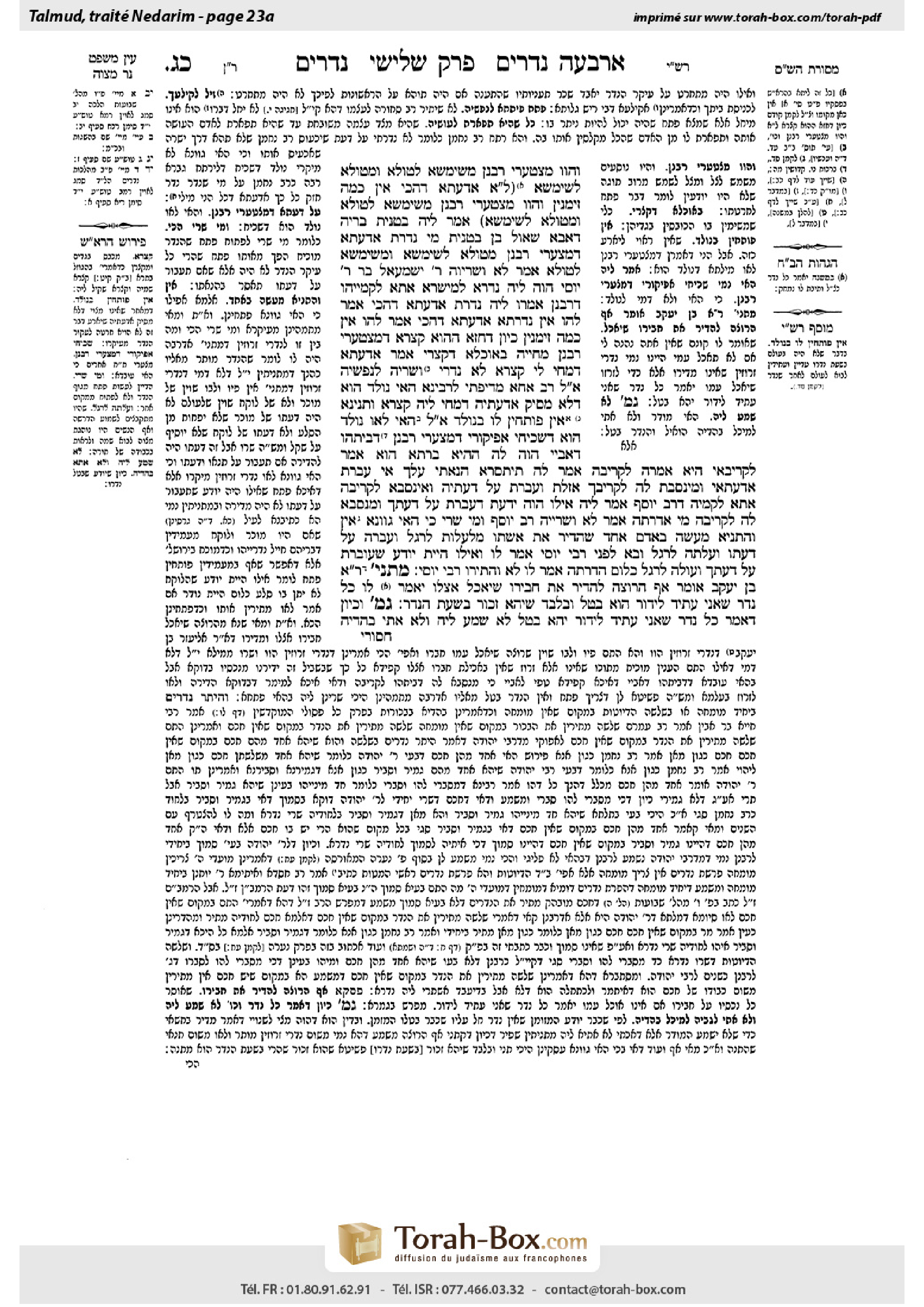
This page of Nedarim includes the Aramaic text, an English translation and an AI-generated French translation, alongside the scan above.
נדרים כ״ג א · Aramaic and Hebrew text
וַהֲווֹ מִצְטַעֲרִי רַבָּנַן מִשִּׁימְשָׁא לְטוּלָּא וּמִטּוּלָּא לְשִׁימְשָׁא.
(לִישָּׁנָא אַחֲרָא: אַדַּעְתָּא דְּהָכִי? אִין. כַּמָּה זִימְנִין, וַהֲווֹ מִצְטַעֲרִי רַבָּנַן מִשִּׁימְשָׁא לְטוּלָּא וּמִטּוּלָּא לְשִׁימְשָׁא.)
אֲמַר לֵיהּ בָּטְנִית בְּרֵיהּ דְּאַבָּא שָׁאוּל בֶּן בָּטְנִית: מִי נְדַרְתְּ אַדַּעְתָּא דְּמִצְטַעֲרִי רַבָּנַן מִטּוּלָּא לְשִׁימְשָׁא וּמִשִּׁימְשָׁא לְטוּלָּא? אֲמַר: לָא, וְשַׁרְיוּהּ.
רַבִּי יִשְׁמָעֵאל בַּר רַבִּי יוֹסֵי הֲוָה לֵיהּ נִדְרָא לְמִישְׁרֵא. אֲתָא לְקַמַּיְיהוּ דְּרַבָּנַן, אָמְרוּ לֵיהּ: נְדַרְתְּ אַדַּעְתָּא דְּהָכִי? אֲמַר לְהוּ: אִין. נְדַרְתָּא אַדַּעְתָּא דְּהָכִי? אֲמַר לְהוּ: אִין. כַּמָּה זִימְנִין. כֵּיוָן דַּחֲזָא הָהוּא קַצָּרָא דְּמִצְטַעֲרִי רַבָּנַן, מַחְיֵיהּ בְּאוּכְלָא דְקַצָּרֵי. אֲמַר: אַדַּעְתָּא דְּמָחֵי לִי קַצָּרָא לָא נְדַרִי, וְשַׁרְיֵהּ לְנַפְשֵׁיהּ.
אֲמַר לֵיהּ רַב אַחָא מִדִּיפְתִּי לְרָבִינָא: הַאי נוֹלָד הוּא, דְּלָא מַסֵּיק אַדַּעְתָּא דְּמָחֵי לֵיהּ קַצָּרָא. וּתְנֵינָא: אֵין פּוֹתְחִין לוֹ בַּנּוֹלָד! אֲמַר לֵיהּ: הַאי לָאו נוֹלָד הוּא, דִּשְׁכִיחִי אַפִּיקוֹרֵי דִּמְצַעֲרִי רַבָּנַן.
דְּבֵיתְהוּ דְּאַבָּיֵי הֲוָה לַהּ הָהִיא בְּרַתָּא. הוּא אָמַר: לְקָרִיבַאי. הִיא אָמְרָה: לְקָרִיבַהּ. אֲמַר לַהּ: תִּיתְּסַר הֲנָאָתִי עֲלָךְ אִי עָבְרַתְּ אַדַּעְתַּאי וּמַינְסְּבַת לַהּ לְקָרִיבָךְ. אֲזַלַת וַעֲבַרַת עַל דַּעְתֵּיהּ וְאִינַּסְבָא לְקָרִיבַהּ. אֲתָא לְקַמֵּיהּ דְּרַב יוֹסֵף. אֲמַר לֵיהּ: אִילּוּ הֲוָה יָדְעַתְּ דַּעֲבַרַת עַל דַּעְתָּךְ וּמַנְסְבָא לַהּ לְקָרִיבַהּ מִי אַדַּרְתַּהּ? אֲמַר: לָא. וְשַׁרְיֵיהּ רַב יוֹסֵף.
וּמִי שְׁרֵי כִּי הַאי גַּוְונָא? אִין, וְהָתַנְיָא: מַעֲשֶׂה בְּאָדָם אֶחָד שֶׁהִדִּיר אֶת אִשְׁתּוֹ מִלַּעֲלוֹת לָרֶגֶל, וְעָבְרָה עַל דַּעְתּוֹ וְעָלְתָה לָרֶגֶל, וּבָא לִפְנֵי רַבִּי יוֹסֵי. אָמַר לוֹ: וְאִילּוּ הָיִיתָ יוֹדֵעַ שֶׁעוֹבֶרֶת עַל דַּעְתְּךָ וְעוֹלָה לָרֶגֶל כְּלוּם הִדַּרְתָּהּ? אָמַר לוֹ: לֹא, וְהִתִּירוֹ רַבִּי יוֹסֵי.
מַתְנִי׳ רַבִּי אֱלִיעֶזֶר בֶּן יַעֲקֹב אוֹמֵר: אַף הָרוֹצֶה לְהַדִּיר אֶת חֲבֵירוֹ שֶׁיֹּאכַל אֶצְלוֹ, יֹאמַר לוֹ: ״כׇּל נֶדֶר שֶׁאֲנִי עָתִיד לִידּוֹר הוּא בָּטֵל״, וּבִלְבַד שֶׁיְּהֵא זָכוּר בִּשְׁעַת הַנֶּדֶר.
גְּמָ׳ וְכֵיוָן דְּאָמַר ״כׇּל נֶדֶר שֶׁאֲנִי עָתִיד לִידּוֹר יְהֵא בָּטֵל״, לָא שָׁמַע לֵיהּ וְלָא אָתֵי בַּהֲדֵיהּ?
Nedarim 23a · English translation
and the Sages were troubled by the fact that they could not dissolve the vow. They spent an extended period of time attempting to do so. During this time, they moved from a location with light from the sun to one with shade, and then moved again from the shade back to the sun.
The Gemara cites another version of the incident: They asked him: Did you vow with knowledge of this particular fact when you vowed? He said to them: Yes. This occurred several times and the Sages were troubled with this problem for an extended period of time, during which they moved from the sun to the shade and from the shade to the sun, but they did not find a solution.
Botnit, son of Abba Shaul ben Botnit, said to him: Would you have vowed with the knowledge that the Sages would be troubled even to the point of going from shade to sun and from sun to shade? He said: No, and they dissolved it.
The Gemara relates another incident: Rabbi Yishmael bar Rabbi Yosei had a vow to dissolve. He came before the Sages. They said to him: Did you vow with knowledge of this particular fact? He said to them: Yes. They asked again: Did you vow with knowledge of this other fact? He said to them: Yes. This occurred several times. When a certain launderer saw that the Sages were troubled because Rabbi Yishmael caused them difficulty in successfully dissolving his vow, he hit Rabbi Yishmael with a launderer’s tool that he had in his hand. Rabbi Yishmael said: Had I known that the launderer would hit me due to my vow I would not have vowed, and he dissolved it.
Rav Aḥa of Difti said to Ravina: This is a case of a new situation, which is not included among those matters that he could have considered at the time of the vow, because it would not enter his mind that the launderer would hit him. And we already learned: We do not broach dissolution with a person using a new situation that did not exist at the time of the vow. Ravina said to him: This is not a new situation that he could not have thought of previously, since it is common to find heretics [appikurei] who deny fundamental Torah principles and who trouble the Sages. Although he would not have considered the possibility that this launderer would attack him, he may have considered the possibility that some heretic would. Therefore, it was permitted to broach dissolution in this manner.
§ The wife of Abaye had a certain daughter. Abaye said: She should get married to my relative. His wife said that she should get married to her relative. He said to his wife: Benefit from me should be forbidden to you, if you defy my will and marry her to your relative. She went and defied his will and married her to her relative. Abaye came before Rav Yosef. Rav Yosef said to him: If you had known that she would ultimately defy your will and marry her to her relative, would you have made the vow? He said: No. And Rav Yosef dissolved the vow for him because Abaye did not think that his wife would actually defy him, and he intended the vow only to serve as a threat.
The Gemara asks: And is it dissolved in a case like this, where the vow was dependent on the daughter not marrying the wife’s relative? The Gemara answers: Yes, and it is taught in the Tosefta (5:1): There was an incident involving one man who vowed, prohibiting his wife from benefiting from him if she were to ascend to Jerusalem for the pilgrimage Festival, and she defied his will and ascended to Jerusalem for the pilgrimage Festival. And when he came before Rabbi Yosei to request dissolution, Rabbi Yosei said to him: And had you known that she would defy your will and ascend to Jerusalem on the pilgrimage Festival, would you have vowed at all? He said to him: No, and Rabbi Yosei dissolved it. This incident indicates that it is permitted to dissolve a vow with such an opening.
MISHNA: Rabbi Eliezer ben Ya’akov says: Even one who wants to take a vow prohibiting another from benefiting from him, but only in order that he should eat with him, not intending to take an actual vow, should say to him at the outset: Any vow that I take in the future is void. And this statement is effective, provided that he remembers at the time of the vow that his intent at the beginning of the year was to render it void.
GEMARA: With regard to Rabbi Eliezer ben Ya’akov’s proposal, the Gemara asks: And since he said: Any vow that I take in the future should be void, the one being invited will not listen to him and will not come to eat with him, since he already knows that the vow is not valid. That being the case, why would the first individual take a vow at all?
Nedarim 23a · Traduction française (IA)
et les Sages étaient perplexes, car ils ne parvenaient pas à annuler le vœu. Ils tentèrent longuement de le faire. Pendant ce temps, ils passèrent d’un endroit ensoleillé à un endroit ombragé, puis de l’ombre au soleil.
La Guemara rapporte une autre version de l’incident : ils lui demandèrent : « Au moment où tu as fait ton vœu, avais-tu à l’esprit ce fait particulier ? » Il leur répondit : « Oui. » Cela se produisit à plusieurs reprises, et les Sages furent perplexes face à ce problème pendant longtemps. Au cours de cette période, ils passèrent du soleil à l’ombre, puis de l’ombre au soleil, sans trouver de solution.
Botnit, fils d’Abba Shaul ben Botnit, lui dit : « Aurais-tu fait ton vœu si tu avais su que les Sages seraient si perplexes qu’ils iraient de l’ombre au soleil et du soleil à l’ombre ? » Il répondit : « Non. » Ils annulèrent alors le vœu.
La Guemara rapporte un autre incident : Rabbi Yishmael bar Rabbi Yosei avait un vœu à faire annuler. Il se présenta devant les Sages. Ils lui dirent : « Au moment où tu as fait ton vœu, avais-tu à l’esprit ce fait particulier ? » Il leur répondit : « Oui. » Ils lui demandèrent de nouveau : « Au moment où tu as fait ton vœu, avais-tu à l’esprit cet autre fait ? » Il leur répondit : « Oui. » Cela se produisit à plusieurs reprises. Un blanchisseur vit que les Sages étaient perplexes, car Rabbi Yishmael leur rendait difficile l’annulation de son vœu. Il frappa alors Rabbi Yishmael avec l’outil de blanchisseur qu’il tenait à la main. Rabbi Yishmael dit : « Si j’avais su que le blanchisseur me frapperait à cause de mon vœu, je ne l’aurais pas fait. » Et il fit annuler le vœu.
Rav Aḥa de Difti dit à Ravina : « Il s’agit d’une circonstance nouvelle, qui ne fait pas partie des choses qu’il aurait pu envisager au moment du vœu, puisqu’il ne lui serait pas venu à l’esprit que le blanchisseur le frapperait. Or, nous avons déjà appris : on ne propose pas à quelqu’un, comme motif d’annulation, une circonstance nouvelle qui n’existait pas au moment du vœu. » Ravina lui répondit : « Ce n’est pas une circonstance nouvelle qu’il n’aurait pas pu envisager auparavant, car il est fréquent de rencontrer des hérétiques [appikurei], qui nient les principes fondamentaux de la Torah et importunent les Sages. Même s’il n’avait pas envisagé que ce blanchisseur l’attaquerait, il aurait pu envisager qu’un hérétique le fasse. Il était donc permis de proposer cette circonstance comme motif d’annulation. »
§ La femme d’Abaye avait une fille. Abaye dit : « Elle devrait épouser l’un de mes parents. » Sa femme dit qu’elle devrait épouser l’un de ses propres parents. Il dit à sa femme : « Que tout bénéfice provenant de moi te soit interdit si tu passes outre à ma volonté et la maries à l’un de tes parents. » Elle passa outre à sa volonté et la maria à l’un de ses parents. Abaye se présenta devant Rav Yosef. Rav Yosef lui dit : « Si tu avais su qu’elle passerait finalement outre à ta volonté et la marierait à l’un de ses parents, aurais-tu fait ce vœu ? » Il répondit : « Non. » Rav Yosef annula le vœu, car Abaye ne pensait pas que sa femme lui désobéirait réellement et n’avait fait ce vœu que pour la menacer.
La Guemara demande : Le vœu est-il annulé dans un cas comme celui-ci, où il dépendait du fait que la fille n’épouse pas un parent de la femme ? La Guemara répond : Oui. Et il est enseigné dans la Tossefta (5:1) : il est arrivé qu’un homme fasse le vœu d’interdire à sa femme de bénéficier de lui si elle se rendait à Jérusalem pour la fête de pèlerinage ; elle passa outre à sa volonté et se rendit à Jérusalem pour cette fête. Lorsqu’il se présenta devant Rabbi Yosei pour demander l’annulation, Rabbi Yosei lui dit : « Si tu avais su qu’elle passerait outre à ta volonté et se rendrait à Jérusalem pour la fête de pèlerinage, aurais-tu fait ce vœu ? » Il lui répondit : « Non. » Rabbi Yosei l’annula. Cet incident montre qu’il est permis d’annuler un vœu en proposant un tel motif.
MICHNA : Rabbi Eliezer ben Ya’akov dit : même celui qui veut faire un vœu interdisant à autrui de bénéficier de lui, uniquement pour que cette personne mange avec lui et sans avoir l’intention de faire un véritable vœu, doit lui dire au préalable : « Tout vœu que je ferai à l’avenir est nul. » Cette déclaration est efficace à condition qu’il se souvienne, au moment du vœu, que son intention, au début de l’année, était de le rendre nul.
GUEMARA : Au sujet de la proposition de Rabbi Eliezer ben Ya’akov, la Guemara demande : puisqu’il a dit : « Tout vœu que je ferai à l’avenir sera nul », la personne qu’il invite ne l’écoutera pas et ne viendra pas manger avec lui, puisqu’elle sait déjà que le vœu n’est pas valide. Dans ce cas, pourquoi le premier homme ferait-il un vœu ?
Traduction française générée par IA à partir de l’édition anglaise de Sefaria. Vérifie toujours un passage avec le texte source.
Text from Sefaria: William Davidson Edition - Vocalized Aramaic (CC BY NC); William Davidson Edition - English (CC BY NC).