Nedarim 23b: Talmud study for Daf Yomi
Daf Yomi is the daily study of one Talmud folio. Explore 37 tractates with scans, Hebrew text, Sefaria English and AI-generated French translations where annotated.
Passage selection and English or AI-generated French translation are available where the scan has annotations. Daf Study is independent of Torah-Box and Sefaria.
Browse Nedarim · נדרים · All tractatesNedarim 23b text and translations
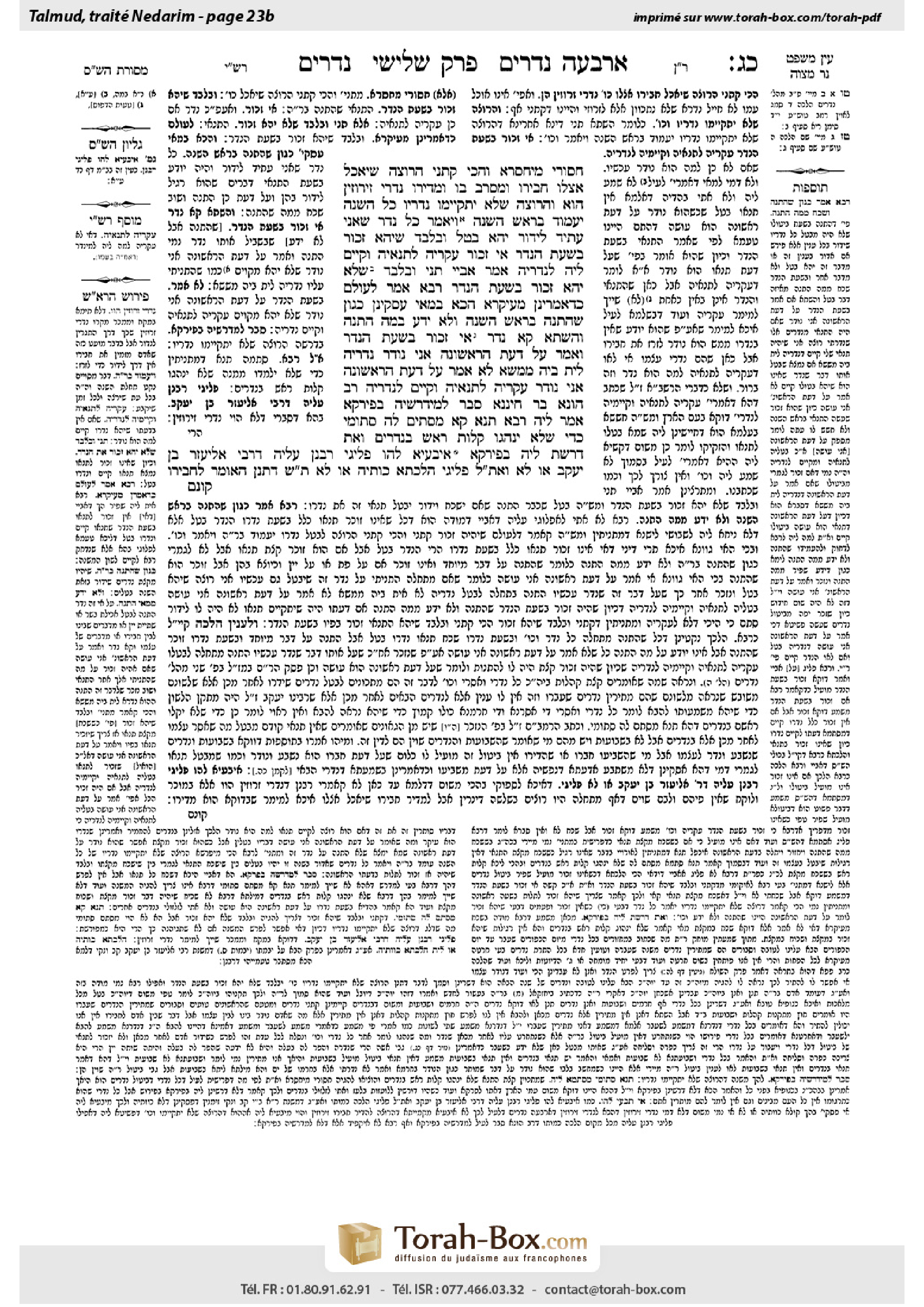
This page of Nedarim includes the Aramaic text, an English translation and an AI-generated French translation, alongside the scan above.
נדרים כ״ג ב · Aramaic and Hebrew text
חַסּוֹרֵי מִיחַסְּרָא וְהָכִי קָתָנֵי: הָרוֹצֶה שֶׁיֹּאכַל אֶצְלוֹ חֲבֵירוֹ וּמְסָרֵב בּוֹ וּמַדִּירוֹ — נִדְרֵי זֵירוּזִין הוּא. וְהָרוֹצֶה שֶׁלֹּא יִתְקַיְּימוּ נְדָרָיו כׇּל הַשָּׁנָה, יַעֲמוֹד בְּרֹאשׁ הַשָּׁנָה וְיֹאמַר: כׇּל נֶדֶר שֶׁאֲנִי עָתִיד לִידּוֹר יְהֵא בָּטֵל, וּבִלְבַד שֶׁיְּהֵא זָכוּר בִּשְׁעַת הַנֶּדֶר.
אִי זָכוּר, עַקְרֵיהּ לִתְנָאֵיהּ, וְקַיֵּים לֵיהּ לְנִדְרֵיהּ! אָמַר אַבָּיֵי, תָּנֵי: וּבִלְבַד שֶׁלֹּא יְהֵא זָכוּר בִּשְׁעַת הַנֶּדֶר.
רָבָא אָמַר: לְעוֹלָם כִּדְאָמְרִינַן מֵעִיקָּרָא. הָכָא בְּמַאי עָסְקִינַן — כְּגוֹן שֶׁהִתְנָה בְּרֹאשׁ הַשָּׁנָה, וְלֹא יָדַע בַּמֶּה הִתְנָה. וְהַשְׁתָּא קָא נָדַר. אִי זָכוּר בִּשְׁעַת הַנֶּדֶר, וְאָמַר ״עַל דַּעַת הָרִאשׁוֹנָה אֲנִי נוֹדֵר״ — נִדְרֵיהּ לֵית בֵּיהּ מַמָּשָׁא. לֹא אָמַר ״עַל דַּעַת הָרִאשׁוֹנָה אֲנִי נוֹדֵר״ — עַקְרֵיהּ לִתְנָאֵיהּ וְקַיֵּים לְנִדְרֵיהּ.
רַב הוּנָא בַּר חִינָּנָא סָבַר לְמִידְרְשֵׁיהּ בְּפִירְקָא. אֲמַר לֵיהּ רָבָא: תַּנָּא קָא מְסַתֵּים לַהּ סַתּוֹמֵי כְּדֵי שֶׁלֹּא יִנְהֲגוּ קַלּוּת רֹאשׁ בִּנְדָרִים, וְאַתְּ דָּרְשַׁתְּ לֵיהּ בְּפִירְקָא?!
אִיבַּעְיָא לְהוּ: פְּלִיגִי רַבָּנַן עֲלֵיהּ דְּרַבִּי אֱלִיעֶזֶר בֶּן יַעֲקֹב, אוֹ לָא? וְאִם תִּמְצָא לוֹמַר פְּלִיגִי, הִלְכְתָא כְּוָתֵיהּ, אוֹ לָא? תָּא שְׁמַע, דִּתְנַן: הָאוֹמֵר לַחֲבֵירוֹ
Nedarim 23b · English translation
The Gemara answers: The mishna is incomplete and is teaching like this: In the case of one who wants another to eat with him, and he urges him to do so and makes a vow with regard to him, this vow is included in the category of vows of exhortation, which do not require dissolution. And in addition, one who desires that his vows not be upheld for the entire year should stand up on Rosh HaShana and say: Any vow that I take in the future should be void. And this statement is effective, provided that he remembers at the time of the vow that his intent at the beginning of the year was to render it void.
The Gemara asks: If he remembers at the time of the vow that his intent at the beginning of the year was to render it void but still makes the vow, then he has uprooted his stipulation that all his vows are void and has upheld his vow. Why, then, does it state that the vows are void in this case? Abaye said: Teach: And this statement is effective, provided that he does not remember at the time of the vow that his intention at the beginning of the year was to render it void.
Rava said: Actually, say as we said initially, that he does remember his stipulation at the time of the vow. With what are we dealing here? It is a case where he stipulated a condition on Rosh HaShana rendering void vows that he would make later in the year, but he did not know with regard to which vows he made the stipulation, and now he makes a vow. If he remembers at the time of the vow and says: I am vowing in accordance with the initial intention, when I stipulated that all vows should be void, his vow has no substance. However, if he did not say: I am vowing in accordance with the initial intention, then he has uprooted his stipulation and upheld his vow.
The Gemara relates that Rav Huna bar Ḥinnana intended to teach this topic at the Festival lecture, so that everyone would learn this manner of rendering vows void on Rosh HaShana. Rava said to him: The tanna of the mishna conceals it and does not say it explicitly, despite the fact that it is studied by Torah scholars, in order that the public not treat vows lightly, and you teach it publicly at the Festival lecture?
§ A dilemma was raised before the scholars: Do the Rabbis disagree with Rabbi Eliezer ben Ya’akov in the mishna or not? And if you say that they disagree with him, is the halakha in accordance with his opinion or not? The Gemara suggests a proof: Come and hear, as we learned in a mishna (63b): One who says to another:
Nedarim 23b · Traduction française (IA)
La Guemara répond : La Michna est incomplète et enseigne ceci : lorsqu’un homme souhaite qu’un autre mange avec lui, l’en presse et prononce un vœu à son sujet, ce vœu relève de la catégorie des vœux d’exhortation, qui ne nécessitent pas d’être déliés. En outre, celui qui souhaite que ses vœux ne soient pas maintenus pendant toute l’année doit se lever à Roch Hachana et dire : « Tout vœu que je prononcerai à l’avenir sera nul. » Cette déclaration est effective, à condition qu’au moment du vœu, il se souvienne qu’au début de l’année, son intention était de le rendre nul.
La Guemara demande : S’il se souvient, au moment du vœu, qu’au début de l’année son intention était de le rendre nul, mais qu’il prononce néanmoins le vœu, il a alors révoqué sa stipulation selon laquelle tous ses vœux seraient nuls et a maintenu son vœu. Pourquoi donc est-il dit que, dans ce cas, les vœux sont nuls ? Abayé dit : Enseigne plutôt : cette déclaration est effective à condition qu’au moment du vœu, il ne se souvienne pas que son intention, au début de l’année, était de le rendre nul.
Rava dit : En réalité, dis comme nous l’avons dit au départ, à savoir qu’il se souvient de sa stipulation au moment du vœu. De quel cas s’agit-il ici ? D’un cas où, à Roch Hachana, il a posé la condition que les vœux qu’il prononcerait plus tard dans l’année seraient nuls, mais qu’il ne sait pas à quels vœux s’appliquait sa stipulation ; et maintenant, il prononce un vœu. S’il s’en souvient au moment du vœu et dit : « Je fais ce vœu conformément à mon intention initiale, lorsque j’ai posé la condition que tous les vœux soient nuls », son vœu est sans effet. En revanche, s’il ne dit pas : « Je fais ce vœu conformément à mon intention initiale », il a alors révoqué sa stipulation et maintenu son vœu.
La Guemara rapporte que Rav Houna bar Ḥinnana avait l’intention d’enseigner ce sujet lors du discours de la fête, afin que tous apprennent cette manière de rendre nuls les vœux à Roch Hachana. Rava lui dit : « Le tanna de la Michna le dissimule et ne l’énonce pas explicitement, alors même que les sages de la Torah l’étudient, afin que le public ne prenne pas les vœux à la légère ; et toi, tu l’enseignes publiquement lors du discours de la fête ? »
§ Une question fut posée aux sages : Les Rabbins sont-ils en désaccord avec Rabbi Eliezer ben Ya’akov dans la Michna, ou non ? Et si tu dis qu’ils sont en désaccord avec lui, la halakha suit-elle son opinion ou non ? La Guemara propose une preuve : Viens et écoute, car nous avons appris dans une Michna (63b) : Celui qui dit à un autre :
Traduction française générée par IA à partir de l’édition anglaise de Sefaria. Vérifie toujours un passage avec le texte source.
Text from Sefaria: William Davidson Edition - Vocalized Aramaic (CC BY NC); William Davidson Edition - English (CC BY NC).