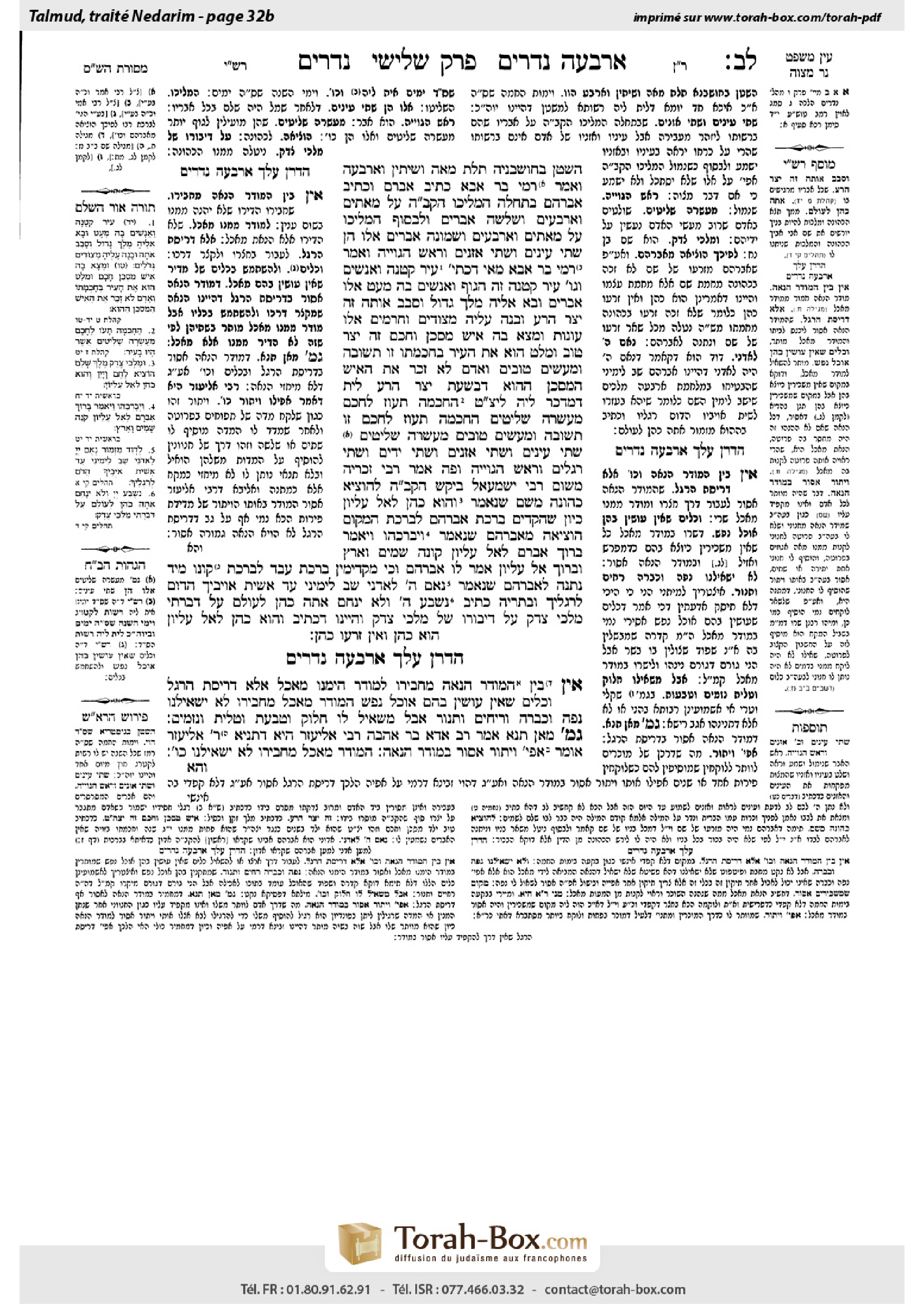
Nedarim 32b: Talmud study for Daf Yomi
Daf Yomi is the daily study of one Talmud folio. Explore 37 tractates with scans, Hebrew text, Sefaria English and AI-generated French translations where annotated.
Passage selection and English or AI-generated French translation are available where the scan has annotations. Daf Study is independent of Torah-Box and Sefaria.
Browse Nedarim · נדרים · All tractatesNedarim 32b text and translations
This page of Nedarim includes the Aramaic text, an English translation and an AI-generated French translation, alongside the scan above.
נדרים ל״ב ב · Aramaic and Hebrew text
״הַשָּׂטָן״ בְּחוּשְׁבָּנֵיהּ תְּלָת מְאָה וְשִׁיתִּין וְאַרְבְּעָה. וְאָמַר רָמֵי בַּר אַבָּא: כְּתִיב ״אַבְרָם״, וּכְתִיב ״אַבְרָהָם״. בַּתְּחִלָּה הִמְלִיכוֹ הַקָּדוֹשׁ בָּרוּךְ הוּא עַל מָאתַיִם וְאַרְבָּעִים וּשְׁלֹשָׁה אֵבָרִים, וּלְבַסּוֹף הִמְלִיכוֹ עַל מָאתַיִם וְאַרְבָּעִים וּשְׁמוֹנֶה אֵבָרִים,
אֵלּוּ הֵן: שְׁתֵּי עֵינַיִם, וּשְׁתֵּי אׇזְנַיִם, וְרֹאשׁ הַגְּוִיָּיה.
וְאָמַר רָמֵי בַּר אַבָּא, מַאי דִּכְתִיב: ״עִיר קְטַנָּה וַאֲנָשִׁים וְגוֹ׳״. ״עִיר קְטַנָּה״ — זֶה הַגּוּף, ״וַאֲנָשִׁים בָּהּ מְעַט״ — אֵלּוּ אֵבָרִים, ״וּבָא אֵלֶיהָ מֶלֶךְ גָּדוֹל וְסָבַב אֹתָהּ״ — זֶה יֵצֶר הָרָע, ״וּבָנָה עָלֶיהָ מְצוֹדִים וַחֲרָמִים״ — אֵלּוּ עֲוֹנוֹת,
״וּמָצָא בָהּ אִישׁ מִסְכֵּן וְחָכָם״ — זֶה יֵצֶר טוֹב, ״וּמִלַּט הוּא אֶת הָעִיר בְּחׇכְמָתוֹ״ — זוֹ תְּשׁוּבָה וּמַעֲשִׂים טוֹבִים. ״וְאָדָם לֹא זָכַר אֶת הָאִישׁ הַמִּסְכֵּן הַהוּא״ — דְּבִשְׁעַת יֵצֶר הָרָע לֵית דְּמִדְּכַר לֵיהּ לְיֵצֶר טוֹב.
״הַחׇכְמָה תָּעֹז לֶחָכָם מֵעֲשָׂרָה שַׁלִּיטִים״. ״הַחׇכְמָה תָּעֹז לֶחָכָם״ — זוֹ תְּשׁוּבָה וּמַעֲשִׂים טוֹבִים, ״מֵעֲשָׂרָה שַׁלִּיטִים״ — שְׁתֵּי עֵינַיִם, וּשְׁתֵּי אׇזְנַיִם, וּשְׁתֵּי יָדַיִם, וּשְׁתֵּי רַגְלַיִם, וְרֹאשׁ הַגְּוִיָּיה, וּפֶה.
אָמַר רַבִּי זְכַרְיָה מִשּׁוּם רַבִּי יִשְׁמָעֵאל: בִּיקֵּשׁ הַקָּדוֹשׁ בָּרוּךְ הוּא לְהוֹצִיא כְּהוּנָּה מִשֵּׁם, שֶׁנֶּאֱמַר: ״וְהוּא כֹהֵן לְאֵל עֶלְיוֹן״. כֵּיוָן שֶׁהִקְדִּים בִּרְכַּת אַבְרָהָם לְבִרְכַּת הַמָּקוֹם — הוֹצִיאָהּ מֵאַבְרָהָם.
שֶׁנֶּאֱמַר: ״וַיְבָרְכֵהוּ וַיֹּאמַר בָּרוּךְ אַבְרָם לְאֵל עֶלְיוֹן קֹנֵה שָׁמַיִם וָאָרֶץ וּבָרוּךְ אֵל עֶלְיוֹן״. אָמַר לוֹ אַבְרָהָם: וְכִי מַקְדִּימִין בִּרְכַּת עֶבֶד לְבִרְכַּת קוֹנוֹ? מִיָּד נְתָנָהּ לְאַבְרָהָם, שֶׁנֶּאֱמַר: ״נְאֻם ה׳ לַאדֹנִי שֵׁב לִימִינִי עַד אָשִׁית אֹיְבֶיךָ הֲדֹם לְרַגְלֶיךָ״, וּבָתְרֵיהּ כְּתִיב: ״נִשְׁבַּע ה׳ וְלֹא יִנָּחֵם אַתָּה כֹהֵן לְעוֹלָם עַל דִּבְרָתִי מַלְכִּי צֶדֶק״. עַל דִּיבּוּרוֹ שֶׁל מַלְכִּי צֶדֶק.
וְהַיְינוּ דִּכְתִיב ״וְהוּא כֹהֵן לְאֵל עֶלְיוֹן״: הוּא כֹּהֵן, וְאֵין זַרְעוֹ כֹּהֵן.
הַדְרָן עֲלָךְ אַרְבָּעָה נְדָרִים
אֵין בֵּין הַמּוּדָּר הֲנָאָה מֵחֲבֵירוֹ לַמּוּדָּר הֵימֶנּוּ מַאֲכָל אֶלָּא דְּרִיסַת הָרֶגֶל וְכֵלִים שֶׁאֵין עוֹשִׂין בָּהֶם אוֹכֶל נֶפֶשׁ.
הַמּוּדָּר מַאֲכָל מֵחֲבֵירוֹ לֹא יַשְׁאִילֶנּוּ נָפָה וּכְבָרָה וְרֵיחַיִם וְתַנּוּר, אֲבָל מַשְׁאִיל לוֹ חָלוּק וְטַבַּעַת וְטַלִּית וּנְזָמִים.
גְּמָ׳ מַאן תְּנָא? אָמַר רַב אַדָּא בַּר אַהֲבָה: רַבִּי אֱלִיעֶזֶר הִיא, דְּתַנְיָא רַבִּי אֱלִיעֶזֶר אוֹמֵר: אֲפִילּוּ וִיתּוּר אָסוּר בְּמוּדַּר הֲנָאָה.
הַמּוּדָּר מַאֲכָל מֵחֲבֵירוֹ לֹא יַשְׁאִילֶנּוּ וְכוּ׳.
Nedarim 32b · English translation
The letters of the term the Satan [haSatan] in numerical value is 364, which equals the number of days of the year, except for Yom Kippur, during which he has no power. And Rami bar Abba said: It is written “Abram,” and after he was commanded to perform circumcision it is written “Abraham” (Genesis 17:5). Initially the Holy One, Blessed be He, enthroned him as ruler over 243 limbs, which is the numerical equivalent of the letters of the word Abram. And in the end, after he was circumcised, He enthroned him as ruler over 248 limbs, which is the numerical equivalent of the letters of the word Abraham.
These are the additional limbs: Two eyes, and two ears, and the tip of the sex organ. Following his circumcision, he had total control over them, and they performed only according to his will.
And Rami bar Abba said: What is the meaning of that which is written: “There was a little city and few men in it, and there came a great king against it, and besieged it, and built great bulwarks against it. Now there was found in it a man poor and wise, and he by his wisdom delivered the city; yet no man remembered that same poor man” (Ecclesiastes 9:14–15)? “A little city,” this is referring to the body; “and few men in it,” this is referring to the limbs; “and there came a great king against it and besieged it,” this is referring to the evil inclination; “and built great bulwarks against it,” these are sins.
The Gemara expounds on the next section of the verse: “Now there was found in it a man poor and wise,” this is referring to the good inclination; “and he by his wisdom delivered the city,” this is referring to repentance and good deeds that are caused by the good inclination. “Yet no man remembered that same poor man” means that when the evil inclination overcomes the good inclination no one remembers the good inclination.
The Gemara interprets the following verse in a similar homiletical manner: “Wisdom is a stronghold to the wise man more than ten rulers that are in a city” (Ecclesiastes 7:19). “Wisdom is a stronghold to the wise man,” this is referring to repentance and good deeds. “More than ten rulers,” these are the two eyes, and two ears, and two hands, and two legs, and the tip of the sex organ, and the mouth, which are the limbs that are used by a person to interact with the world.
Rabbi Zekharya said in the name of Rabbi Yishmael: The Holy One, Blessed be He, wanted the priesthood to emerge from Shem, so that his children would be priests, as it is stated: “And Melchizedek king of Salem brought forth bread and wine; and he was priest of God the Most High” (Genesis 14:18). Once Melchizedek, traditionally identified as Shem, placed the blessing of Abraham before the blessing of the Omnipresent, He had the priesthood emerge from Abraham in particular, and not from any other descendant of Shem.
As it is stated: “And he blessed him and said: Blessed be Abram of God Most High, Maker of heaven and earth, and blessed be God the Most High” (Genesis 14:19–20). Abraham said to him: And does one place the blessing of the servant before the blessing of his master? You should have blessed God first. Immediately the Holy One, Blessed be He, gave the priesthood to Abraham, as it is stated: “The Lord says to my lord: Sit at My right hand, until I make your enemies your footstool” (Psalms 110:1), and afterward it is written: “The Lord has sworn, and will not repent: you shall be a priest forever, because you are a king of righteousness [al divrati malki tzedek]” (Psalms 110:4), which is explained homiletically to mean: Due to the improper words [divrati] of Melchizedek, the offspring of Abraham shall be priests of God forever.
The Gemara comments: And this is as it is written: “And he was priest of God the Most High” (Genesis 14:18), which emphasizes that he, Melchizedek, is a priest, but his children will not be priests.
MISHNA: The difference between one for whom benefit from another is forbidden by vow [hamuddar hana’a meḥaveiro] and one for whom benefit from his food is forbidden by vow concerns only setting foot on the other person’s property and borrowing from that person utensils that one does not use in preparation of food but for other purposes. Those two benefits are forbidden to the former but permitted to the latter.
Therefore, with regard to one for whom benefit from another’s food is forbidden by vow, that person may not lend him utensils used in the preparation of food, e.g., a sieve, or a strainer, or a millstone, or an oven. However, he may lend him a garment, or a finger ring, or a cloak, or nose rings, as these are not used in the preparation of food. However, he may not lend them to one for whom benefit from him is forbidden by vow.
GEMARA: Who is the tanna who taught this mishna? Rav Adda bar Ahava said: It is Rabbi Eliezer, as it is taught in a baraita that Rabbi Eliezer said: Even overlooking [vittur] a matter for which one is typically indifferent to the actions of others, e.g., people setting foot on one’s property, is prohibited in the case of one prohibited by vow from deriving benefit from another.
§ We learned in the mishna: With regard to one for whom benefit from another’s food is forbidden by vow, that person may not lend him utensils used in the preparation of food.
Nedarim 32b · Traduction française (IA)
La valeur numérique des lettres du terme « le Satan » [haSatan] est de 364, ce qui correspond au nombre de jours de l’année, à l’exception de Yom Kippour, durant lequel il n’a aucun pouvoir. Rami bar Abba a dit : Il est écrit « Abram », puis, après qu’il eut reçu l’ordre de se circoncire, « Abraham » (Genèse 17:5). Au début, le Saint, béni soit-Il, l’intronisa comme maître de 243 membres, ce qui correspond à la valeur numérique des lettres du mot « Abram ». Puis, après sa circoncision, Il l’intronisa comme maître de 248 membres, ce qui correspond à la valeur numérique des lettres du mot « Abraham ».
Ces membres supplémentaires sont les deux yeux, les deux oreilles et l’extrémité de l’organe sexuel. Après sa circoncision, il les maîtrisait entièrement et ils n’agissaient que selon sa volonté.
Rami bar Abba a également dit : Que signifie ce qui est écrit : « Il y avait une petite ville, avec peu d’hommes ; un grand roi vint contre elle, l’assiégea et construisit contre elle de grands remparts. Or, on y trouva un homme pauvre et sage, qui, par sa sagesse, délivra la ville ; mais personne ne se souvint de ce pauvre homme » (Ecclésiaste 9:14–15) ? « Une petite ville » désigne le corps ; « avec peu d’hommes » désigne les membres ; « un grand roi vint contre elle et l’assiégea » désigne le mauvais penchant ; « et construisit contre elle de grands remparts » désigne les péchés.
La Guemara développe la suite du verset : « Or, on y trouva un homme pauvre et sage » désigne le bon penchant ; « qui, par sa sagesse, délivra la ville » désigne le repentir et les bonnes actions suscités par le bon penchant. « Mais personne ne se souvint de ce pauvre homme » signifie que, lorsque le mauvais penchant l’emporte sur le bon penchant, personne ne se souvient du bon penchant.
La Guemara interprète de façon homilétique un verset semblable : « La sagesse est une forteresse pour le sage, plus que dix gouvernants qui sont dans une ville » (Ecclésiaste 7:19). « La sagesse est une forteresse pour le sage » désigne le repentir et les bonnes actions. « Plus que dix gouvernants » désigne les deux yeux, les deux oreilles, les deux mains, les deux jambes, l’extrémité de l’organe sexuel et la bouche, c’est-à-dire les membres dont l’homme se sert pour interagir avec le monde.
Rabbi Zekharya a dit au nom de Rabbi Yishmael : Le Saint, béni soit-Il, voulait que la prêtrise provienne de Chem, afin que ses descendants soient prêtres, comme il est dit : « Melchisédek, roi de Salem, apporta du pain et du vin ; il était prêtre du Dieu Très-Haut » (Genèse 14:18). Lorsque Melchisédek, traditionnellement identifié à Chem, plaça la bénédiction d’Abraham avant celle du Tout-Puissant, Il fit provenir la prêtrise d’Abraham en particulier, et non d’un autre descendant de Chem.
Comme il est dit : « Il le bénit et dit : Béni soit Abram par le Dieu Très-Haut, Créateur du ciel et de la terre, et béni soit le Dieu Très-Haut » (Genèse 14:19–20). Abraham lui dit : « Est-il convenable de placer la bénédiction du serviteur avant celle de son maître ? Tu aurais dû bénir Dieu en premier. » Aussitôt, le Saint, béni soit-Il, donna la prêtrise à Abraham, comme il est dit : « L’Éternel dit à mon seigneur : Siège à Ma droite, jusqu’à ce que Je fasse de tes ennemis l’escabeau de tes pieds » (Psaumes 110:1). Puis il est écrit : « L’Éternel l’a juré et ne se rétractera pas : tu es prêtre pour toujours, parce que tu es roi de justice [al divrati malki tzedek] » (Psaumes 110:4). Ce verset est expliqué de façon homilétique ainsi : à cause des paroles déplacées [divrati] de Melchisédek, les descendants d’Abraham seront prêtres de Dieu pour toujours.
La Guemara fait remarquer que c’est ce qu’indique le verset : « Il était prêtre du Dieu Très-Haut » (Genèse 14:18), qui souligne que lui, Melchisédek, est prêtre, mais que ses enfants ne seront pas prêtres.
Michna : La différence entre celui à qui il est interdit par vœu de tirer profit d’autrui [hamuddar hana’a meḥaveiro] et celui à qui il est interdit par vœu de tirer profit de la nourriture d’autrui concerne uniquement le fait de fouler le domaine de l’autre et d’emprunter à cette personne des ustensiles qui ne servent pas à préparer de la nourriture, mais à d’autres fins. Ces deux avantages sont interdits au premier, mais permis au second.
Par conséquent, celui à qui il est interdit par vœu de tirer profit de la nourriture d’autrui ne peut pas lui prêter des ustensiles servant à la préparation des aliments, par exemple un tamis, une passoire, une meule ou un four. En revanche, il peut lui prêter un vêtement, une bague, un manteau ou des anneaux de nez, car ceux-ci ne servent pas à préparer de la nourriture. Toutefois, il ne peut pas les prêter à celui à qui il est interdit par vœu de tirer profit de lui.
Guemara : Qui est le tanna qui a enseigné cette Michna ? Rav Adda bar Ahava a dit : C’est Rabbi Eliezer, car il est enseigné dans une baraïta que Rabbi Eliezer a dit : Même le fait de passer outre [vittur] à une chose à laquelle on ne prête généralement pas attention dans les rapports avec autrui, par exemple lorsque des gens foulent son domaine, est interdit dans le cas d’une personne à qui il est interdit par vœu de tirer profit d’autrui.
§ Nous avons appris dans la Michna : Celui à qui il est interdit par vœu de tirer profit de la nourriture d’autrui ne peut pas lui prêter des ustensiles servant à la préparation des aliments.
Traduction française générée par IA à partir de l’édition anglaise de Sefaria. Vérifie toujours un passage avec le texte source.
Text from Sefaria: William Davidson Edition - Vocalized Aramaic (CC BY NC); William Davidson Edition - English (CC BY NC).