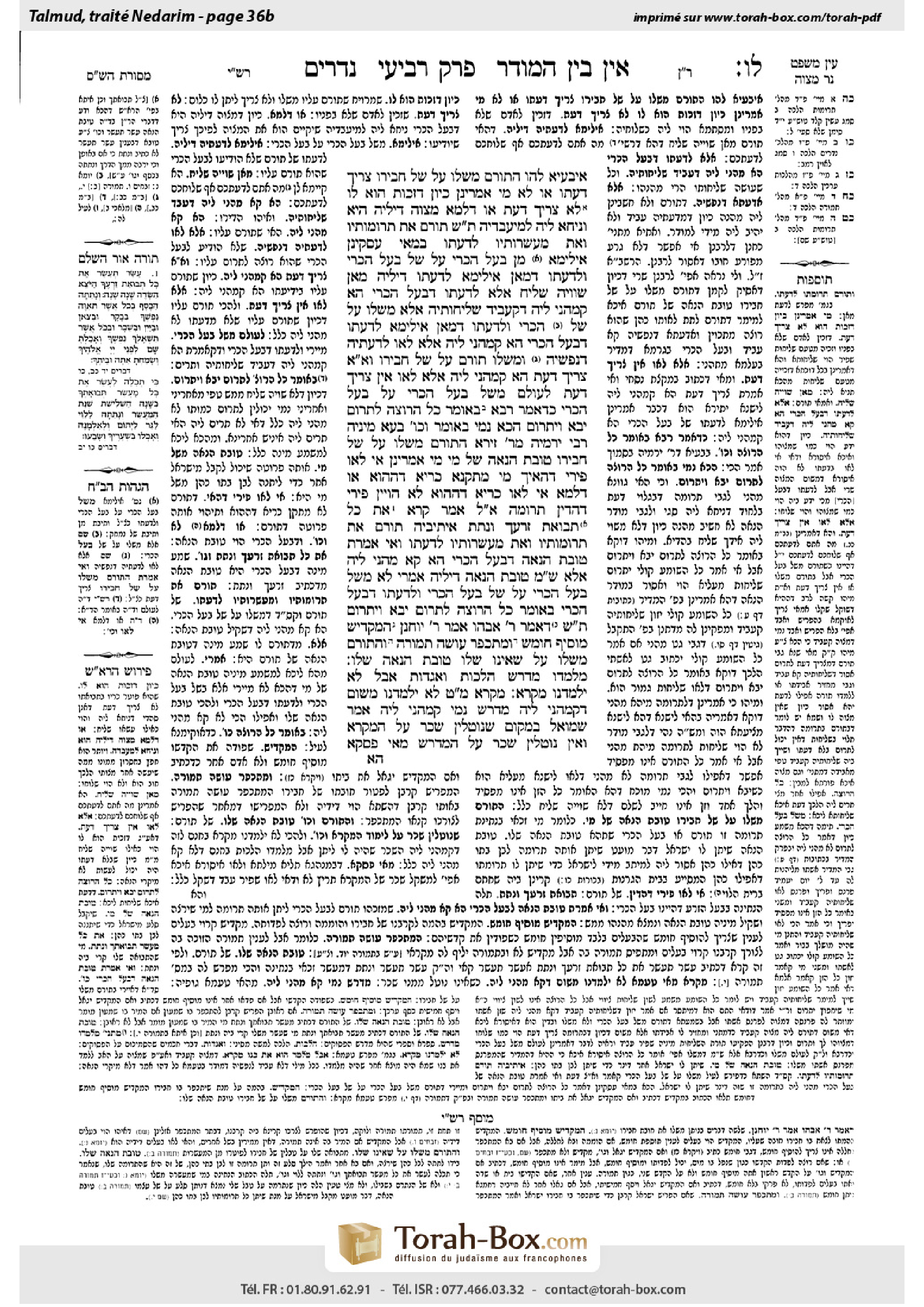
Nedarim 36b: Talmud study for Daf Yomi
Daf Yomi is the daily study of one Talmud folio. Explore 37 tractates with scans, Hebrew text, Sefaria English and AI-generated French translations where annotated.
Passage selection and English or AI-generated French translation are available where the scan has annotations. Daf Study is independent of Torah-Box and Sefaria.
Browse Nedarim · נדרים · All tractatesNedarim 36b text and translations
This page of Nedarim includes the Aramaic text, an English translation and an AI-generated French translation, alongside the scan above.
נדרים ל״ו ב · Aramaic and Hebrew text
אִיבַּעְיָא לְהוּ: הַתּוֹרֵם מִשֶּׁלּוֹ עַל שֶׁל חֲבֵירוֹ, צָרִיךְ דַּעְתּוֹ אוֹ לָא? מִי אָמְרִינַן: כֵּיוָן דִּזְכוּת הוּא לוֹ, לֹא צָרִיךְ דַּעַת. אוֹ דִּלְמָא מִצְוָה דִּילֵיהּ הִיא, וְנִיחָא לֵיהּ לְמִיעְבְּדֵיהּ.
תָּא שְׁמַע: תּוֹרֵם אֶת תְּרוּמוֹתָיו וְאֶת מַעְשְׂרוֹתָיו לְדַעְתּוֹ. בְּמַאי עָסְקִינַן? אִילֵימָא מִן בַּעַל הַכְּרִי עַל שֶׁל בַּעַל הַכְּרִי, וּלְדַעְתּוֹ דְּמַאן? אִילֵּימָא לְדַעְתּוֹ דִּילֵיהּ — מַאן שַׁוְּויֵהּ שָׁלִיחַ?
אֶלָּא לְדַעְתּוֹ דְּבַעַל הַכְּרִי. הָא קָמְהַנֵּי לֵיהּ דְּקָעָבֵיד שְׁלִיחוּתֵיהּ! אֶלָּא מִשֶּׁלּוֹ עַל שֶׁל הַכְּרִי. וּלְדַעְתּוֹ דְּמַאן? אִילֵימָא לְדַעְתּוֹ דְּבַעַל הַכְּרִי — הָא קָמְהַנֵּי לֵיהּ! אֶלָּא לָאו, לְדַעְתֵּיהּ דְּנַפְשֵׁיהּ, וּמִשֶּׁלּוֹ תּוֹרֵם עַל שֶׁל חֲבֵירוֹ. וְאִי אָמְרַתְּ צָרִיךְ דַּעַת — הָא קָמְהַנֵּי לֵיהּ! אֶלָּא לָאו, אֵין צָרִיךְ דַּעַת.
לְעוֹלָם מִשֶּׁל בַּעַל הַכְּרִי עַל בַּעַל הַכְּרִי, כִּדְאָמַר רָבָא: בְּאוֹמֵר ״כׇּל הָרוֹצֶה לִתְרוֹם יָבֹא וְיִתְרוֹם״, הָכָא נָמֵי בְּאוֹמֵר וְכוּ׳.
בְּעָא מִינֵּיהּ רַבִּי יִרְמְיָה מֵרַבִּי זֵירָא: הַתּוֹרֵם מִשֶּׁלּוֹ עַל שֶׁל חֲבֵירוֹ, טוֹבַת הֲנָאָה שֶׁל מִי? מִי אָמְרִינַן: אִי לָאו פֵּירֵי דְּהַאיְךְ, מִי מִתַּקְּנָא כַּרְיָא דְּהָהוּא, אוֹ דִּלְמָא: אִי לָאו כַּרְיָא דְּהָהוּא, לָא הָוְיָין פֵּירֵי דְּהָדֵין תְּרוּמָה?
אֲמַר לֵיהּ, אָמַר קְרָא: ״אֵת כׇּל תְּבוּאַת זַרְעֶךָ ... וְנָתַתָּ״.
אֵיתִיבֵיהּ: תּוֹרֵם אֶת תְּרוּמוֹתָיו וְאֶת מַעְשְׂרוֹתָיו לְדַעְתּוֹ. וְאִי אָמְרַתְּ טוֹבַת הֲנָאָה דְּבַעַל הַכְּרִי, הָא קָא מְהַנֵּי לֵיהּ! אֶלָּא שְׁמַע מִינַּהּ טוֹבַת הֲנָאָה דִּילֵיהּ. אָמְרִי: לֹא, מִשֶּׁל בַּעַל הַכְּרִי עַל שֶׁל בַּעַל הַכְּרִי, וּלְדַעְתּוֹ דְּבַעַל הַכְּרִי, בְּאוֹמֵר ״כֹּל הָרוֹצֶה לִתְרוֹם יָבֹא וְיִתְרוֹם״.
תָּא שְׁמַע, דְּאָמַר רַבִּי אֲבָהוּ אָמַר רַבִּי יוֹחָנָן: הַמַּקְדִּישׁ מוֹסִיף חוֹמֶשׁ, וּמִתְכַּפֵּר — עוֹשֶׂה תְּמוּרָה. וְהַתּוֹרֵם מִשֶּׁלּוֹ עַל שֶׁאֵינוֹ שֶׁלּוֹ — טוֹבַת הֲנָאָה שֶׁלּוֹ.
מְלַמְּדוֹ מִדְרָשׁ הֲלָכוֹת וְאַגָּדוֹת, אֲבָל לֹא יְלַמְּדֶנּוּ מִקְרָא. מִקְרָא מַאי טַעְמָא לֹא יְלַמְּדֶנּוּ — מִשּׁוּם דְּקָמְהַנֵּי לֵיהּ, מִדְרָשׁ נָמֵי קָמְהַנֵּי לֵיהּ! אָמַר שְׁמוּאֵל: בְּמָקוֹם שֶׁנּוֹטְלִין שָׂכָר עַל הַמִּקְרָא וְאֵין נוֹטְלִין שָׂכָר עַל הַמִּדְרָשׁ. מַאי פַּסְקָא?
Nedarim 36b · English translation
A dilemma was raised before the Sages: In the case of one who separates teruma from his own produce on behalf of the produce of another, does he require the knowledge and consent of the owner of the produce or not? Do we say: Since it is a benefit for the other to have his produce tithed, it does not require his knowledge, as one may act in a person’s interest in his absence? Or, perhaps it is his mitzva, and it is preferable for him to perform the mitzva himself, and therefore, it does not benefit him to have the produce tithed on his behalf.
Come and hear a proof from the mishna: For one for whom benefit from him is forbidden by vow, he separates his teruma and his tithes, provided that it is with his knowledge and consent. The Gemara analyzes this statement: With what are we dealing? If we say that he separates teruma from the produce of the owner of the pile for the produce of the same owner of the pile, the question is: And with the knowledge and consent of whom may he do so? If we say it is with the knowledge of the one tithing the produce, who designated him an agent to do so? One cannot tithe another’s produce unless he is designated as an agent.
Rather, it must be that he is tithing with the knowledge of the owner of the pile. However, in that case, by tithing the produce isn’t he benefiting the owner, as he is performing the action in fulfillment of the agency of the owner? Rather, it must be that he separates teruma from his own produce on behalf of the produce of the owner of the pile. The Gemara asks: And with the knowledge and consent of whom is he doing so? If we say it is with the knowledge of the owner of the pile, isn’t he benefiting the owner? He is performing the action in fulfillment of the agency of the owner. Rather, is it not that he is tithing on the basis of his own knowledge, and he is separating from his own produce on behalf of the produce of another? And if you say that in order to tithe from one’s produce on behalf of the produce of the owner, it requires the owner’s knowledge and consent, isn’t he benefiting the owner? Rather, is it not that one may conclude from here that in order to tithe from one’s produce on behalf of the produce of another, one does not require the knowledge and consent of the owner of the pile?
The Gemara rejects that conclusion. Actually, it is a case where he separates teruma from the produce of the owner of the pile for the produce of the same owner of the pile. However, the circumstances here are parallel to those addressed by Rava in another context, as Rava said that there is a case where one says: Anyone who wishes to come and separate teruma may come and separate teruma. Here too, this is a case where one says: Anyone who wishes to come and separate teruma may come and separate teruma. In that case, one may tithe another’s produce without being designated as his agent.
Rabbi Yirmeya raised a dilemma before Rabbi Zeira: In a case where one separates teruma from his own produce for the produce of another, who is entitled to the discretionary benefit, i.e., the right to give the teruma to the priest of his choosing? Do we say: If not for the produce of this one separating the teruma, would the pile of that owner of the produce be properly tithed, and therefore the one separating the teruma is entitled to the discretionary benefit? Or, perhaps we say: If not for the pile of that owner of the pile, the produce of this one separating the teruma would not be teruma, and therefore the owner is entitled to the discretionary benefit.
Rabbi Zeira said to him that as the verse states: “You shall tithe all the produce of your seed…and you shall give” (Deuteronomy 14:22, 26), this indicates that the discretion to give the teruma to the priest of his choosing is the prerogative of the one to whom the pile of the produce belongs.
Rabbi Yirmeya raised an objection to Rabbi Zeira from the mishna: For someone who is prohibited by vow from benefiting from him, he separates his teruma and his tithes, provided that it is with the knowledge and consent of the owner of the produce. And if you say that the right to the discretionary benefit belongs to the owner of the pile, by separating teruma for his produce, isn’t he benefiting the owner? Rather, conclude from the mishna that the right to the discretionary benefit belongs to the one separating the teruma. The Sages say: No, actually this could even be a case where one separates teruma from the produce of the owner of the pile for the produce of the owner of the pile, and he does so with the knowledge of the owner of the pile, where he says: Anyone who wishes to come and separate teruma may come and separate teruma.
Come and hear a resolution of Rabbi Yirmeya’s dilemma, as Rabbi Abbahu said that Rabbi Yoḥanan said: In a case where one consecrates an animal as an offering for another and it becomes blemished, only the one who consecrates the animal adds one-fifth to the cost of redeeming the animal, and the one seeking atonement through this offering does not. And since the body of the animal belongs to the one seeking atonement through the offering, only he renders a non-sacred animal, exchanged for the sacred animal, consecrated as a substitute. And in the case of one who separates teruma from his own produce for produce that is not his, the discretionary benefit is his.
§ We learned in the mishna that one teaches someone who is prohibited by vow from benefiting from him midrash, halakhot, and aggadot, but he may not teach him Bible. The Gemara asks: What is the reason that he may not teach him Bible? Is it due to the fact that the teacher benefits the one for whom benefit from him is forbidden by teaching him Bible? When he teaches him midrash he also benefits him. Shmuel said: The mishna is referring to a place where one takes payment for teaching Bible and one does not take payment for teaching midrash. By teaching him Bible, the one for whom benefit is forbidden - benefits from the fact that he does not pay. The Gemara asks: Why was the halakha stated without qualification? There is no apparent fundamental difference between Bible and midrash. Why did the mishna refer specifically to a case where payment is taken for teaching Bible?
Nedarim 36b · Traduction française (IA)
Une question fut posée aux Sages : dans le cas de celui qui prélève la terouma sur ses propres produits pour les produits d’autrui, faut-il que le propriétaire de ces produits en ait connaissance et y consente, ou non ? Dirons-nous que, puisque le fait que ses produits soient soumis à la dîme est un avantage pour lui, il n’est pas nécessaire qu’il en soit informé, car on peut agir dans l’intérêt d’une personne en son absence ? Ou peut-être est-ce sa mitsva, et vaut-il mieux qu’il l’accomplisse lui-même ; dès lors, il ne tire aucun avantage à ce que ses produits soient soumis à la dîme en son nom.
Viens et entends une preuve tirée de la Michna : pour celui à qui il est interdit, par vœu, de tirer avantage d’une personne, celle-ci prélève sa terouma et ses dîmes, à condition d’agir avec la connaissance et le consentement du propriétaire des produits. La Guemara examine cette déclaration : de quoi s’agit-il ? Si nous disons qu’il prélève la terouma sur les produits du propriétaire du tas pour les produits de ce même propriétaire, la question se pose : avec la connaissance et le consentement de qui peut-il le faire ? Si nous disons qu’il agit avec la connaissance de celui qui prélève les produits, qui l’a désigné comme mandataire ? On ne peut pas prélever la dîme sur les produits d’autrui sans avoir été désigné comme mandataire.
Il faut donc plutôt dire qu’il prélève la dîme avec la connaissance du propriétaire du tas. Toutefois, dans ce cas, en prélevant la dîme sur ses produits, ne procure-t-il pas un avantage au propriétaire, puisqu’il agit en exécution du mandat de celui-ci ? Il faut donc plutôt dire qu’il prélève la terouma sur ses propres produits pour les produits du propriétaire du tas. La Guemara demande : avec la connaissance et le consentement de qui agit-il ? Si nous disons qu’il agit avec la connaissance du propriétaire du tas, ne lui procure-t-il pas un avantage ? Il agit en exécution du mandat du propriétaire. Ne faut-il pas plutôt dire qu’il prélève la dîme de sa propre initiative et qu’il prélève sur ses propres produits pour les produits d’autrui ? Et si tu dis que, pour prélever sur ses propres produits en faveur des produits du propriétaire, il faut la connaissance et le consentement de celui-ci, ne lui procure-t-il pas un avantage ? Ne faut-il pas plutôt en conclure que, pour prélever sur ses propres produits en faveur des produits d’autrui, il n’est pas nécessaire d’obtenir la connaissance et le consentement du propriétaire du tas ?
La Guemara rejette cette conclusion. En réalité, il s’agit du cas où il prélève la terouma sur les produits du propriétaire du tas pour les produits de ce même propriétaire. Toutefois, les circonstances sont analogues à celles que Rava a évoquées dans un autre contexte : Rava a dit qu’il existe un cas où quelqu’un déclare : « Que quiconque souhaite venir prélever la terouma vienne la prélever. » Ici aussi, il s’agit d’un cas où quelqu’un déclare : « Que quiconque souhaite venir prélever la terouma vienne la prélever. » Dans ce cas, on peut prélever la dîme sur les produits d’autrui sans avoir été désigné comme son mandataire.
Rabbi Yirmeya posa une question à Rabbi Zeira : dans le cas où quelqu’un prélève la terouma sur ses propres produits pour les produits d’autrui, à qui revient le droit de choisir le prêtre auquel donner la terouma ? Dirons-nous que, sans les produits de celui qui prélève la terouma, le tas de l’autre propriétaire n’aurait pas été correctement soumis à la dîme, et que ce droit revient donc à celui qui prélève la terouma ? Ou peut-être dirons-nous que, sans le tas de cet autre propriétaire, les produits de celui qui prélève la terouma ne seraient pas devenus de la terouma, et que ce droit revient donc au propriétaire du tas.
Rabbi Zeira lui répondit que, comme le dit le verset : « Tu prélèveras la dîme de tous les produits de tes semailles… et tu donneras » (Deutéronome 14, 22 et 26), cela indique que le droit de choisir le prêtre auquel donner la terouma revient au propriétaire du tas.
Rabbi Yirmeya objecta à Rabbi Zeira en s’appuyant sur la Michna : pour celui à qui il est interdit, par vœu, de tirer avantage d’une personne, celle-ci prélève sa terouma et ses dîmes, à condition d’agir avec la connaissance et le consentement du propriétaire des produits. Or, si tu dis que le droit de choisir le prêtre auquel donner la terouma revient au propriétaire du tas, en prélevant la terouma pour ses produits, ne lui procure-t-il pas un avantage ? Il faut donc conclure de la Michna que ce droit revient à celui qui prélève la terouma. Les Sages répondent : non ; il pourrait en réalité s’agir du cas où quelqu’un prélève la terouma sur les produits du propriétaire du tas pour les produits de ce même propriétaire, avec la connaissance de celui-ci, qui déclare : « Que quiconque souhaite venir prélever la terouma vienne la prélever. »
Viens et entends la résolution de la question de Rabbi Yirmeya : Rabbi Abbahou a dit au nom de Rabbi Yoḥanan que, dans le cas où quelqu’un consacre un animal comme offrande pour autrui et que l’animal devient porteur d’un défaut, seul celui qui consacre l’animal ajoute un cinquième au coût de son rachat, et non celui qui cherche à obtenir l’expiation par cette offrande. Et puisque le corps de l’animal appartient à celui qui cherche à obtenir l’expiation par l’offrande, lui seul rend consacré, comme substitut, un animal non consacré échangé contre l’animal consacré. Et dans le cas où quelqu’un prélève la terouma sur ses propres produits pour des produits qui ne lui appartiennent pas, le droit de choisir le prêtre auquel donner la terouma lui revient.
§ Nous avons appris dans la Michna que l’on peut enseigner le midrach, les halakhot et les aggadot à quelqu’un à qui il est interdit, par vœu, de tirer avantage d’une personne, mais qu’on ne peut pas lui enseigner la Bible. La Guemara demande : pourquoi ne peut-on pas lui enseigner la Bible ? Est-ce parce qu’en lui enseignant la Bible, l’enseignant procure un avantage à celui à qui il est interdit de tirer avantage de lui ? Mais en lui enseignant le midrach, il lui procure également un avantage. Chmouel a dit : la Michna se réfère à un endroit où l’on fait payer l’enseignement de la Bible, mais pas celui du midrach. En lui enseignant la Bible, celui à qui il est interdit de tirer avantage de lui tire avantage du fait qu’il n’a pas à payer. La Guemara demande : pourquoi cette halakha a-t-elle été énoncée sans autre précision ? Il n’y a apparemment aucune différence fondamentale entre la Bible et le midrach. Pourquoi la Michna évoque-t-elle spécifiquement le cas où l’on fait payer l’enseignement de la Bible ?
Traduction française générée par IA à partir de l’édition anglaise de Sefaria. Vérifie toujours un passage avec le texte source.
Text from Sefaria: William Davidson Edition - Vocalized Aramaic (CC BY NC); William Davidson Edition - English (CC BY NC).