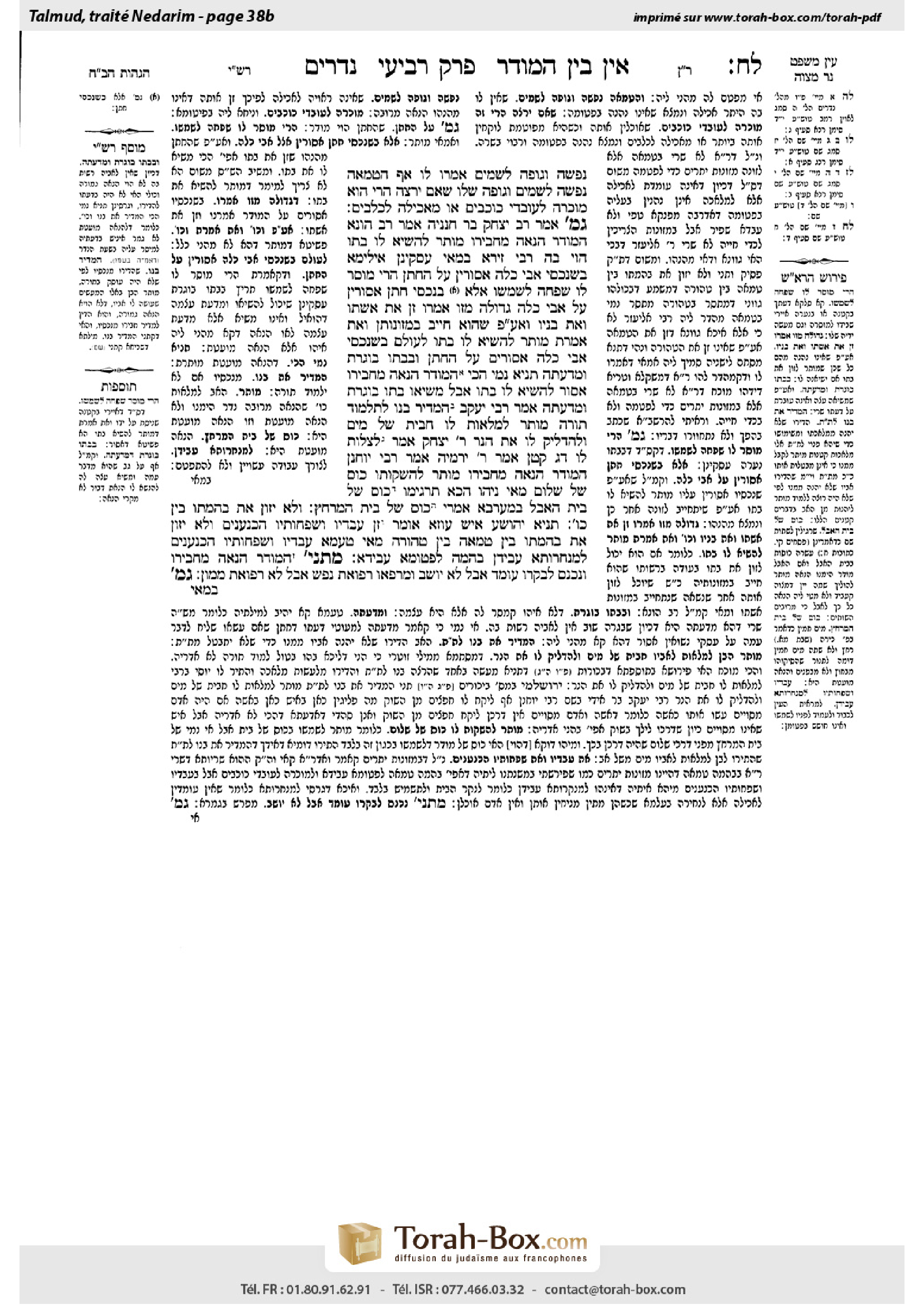
Nedarim 38b: Talmud study for Daf Yomi
Daf Yomi is the daily study of one Talmud folio. Explore 37 tractates with scans, Hebrew text, Sefaria English and AI-generated French translations where annotated.
Passage selection and English or AI-generated French translation are available where the scan has annotations. Daf Study is independent of Torah-Box and Sefaria.
Browse Nedarim · נדרים · All tractatesNedarim 38b text and translations
This page of Nedarim includes the Aramaic text, an English translation and an AI-generated French translation, alongside the scan above.
נדרים ל״ח ב · Aramaic and Hebrew text
נַפְשָׁהּ וְגוּפָהּ לַשָּׁמַיִם. אָמְרוּ לוֹ: אַף הַטְּמֵאָה נַפְשָׁהּ לַשָּׁמַיִם וְגוּפָהּ שֶׁלּוֹ, שֶׁאִם יִרְצֶה הֲרֵי הוּא מוֹכְרָהּ לַגּוֹיִם אוֹ מַאֲכִילָהּ לַכְּלָבִים.
גְּמָ׳ אָמַר רַב יִצְחָק בַּר חֲנַנְיָה אָמַר רַב הוּנָא: הַמּוּדָּר הֲנָאָה מֵחֲבֵירוֹ — מוּתָּר לְהַשִּׂיא לוֹ בִּתּוֹ. הָוֵי בַּהּ רַבִּי זֵירָא: בְּמַאי עָסְקִינַן? אִילֵימָא בְּשֶׁנִּכְסֵי אֲבִי כַלָּה אֲסוּרִין עַל הֶחָתָן, הֲרֵי מוֹסֵר לוֹ שִׁפְחָה לְשַׁמְּשׁוֹ!
אֶלָּא בְּנִכְסֵי חָתָן אֲסוּרִין עַל אֲבִי כַלָּה. גְּדוֹלָה מִזּוֹ אָמְרוּ: זָן אֶת אִשְׁתּוֹ וְאֶת בָּנָיו, וְאַף עַל פִּי שֶׁהוּא חַיָּיב בִּמְזוֹנוֹתָן, וְאַתְּ אָמְרַתְּ מוּתָּר לְהַשִּׂיא לוֹ בִּתּוֹ?!
לְעוֹלָם בְּשֶׁנִּכְסֵי אֲבִי כַלָּה אֲסוּרִין עַל הֶחָתָן, וּבְבִתּוֹ בּוֹגֶרֶת, וּמִדַּעְתָּהּ.
תַּנְיָא נָמֵי הָכִי: הַמּוּדָּר הֲנָאָה מֵחֲבֵירוֹ — אָסוּר לְהַשִּׂיא לוֹ בִּתּוֹ, אֲבָל מַשִּׂיאוֹ בִּתּוֹ בּוֹגֶרֶת וּמִדַּעְתָּהּ.
אָמַר רַבִּי יַעֲקֹב: הַמַּדִּיר בְּנוֹ לְתַלְמוּד תּוֹרָה — מוּתָּר לְמַלּאוֹת לוֹ חָבִית שֶׁל מַיִם, וּלְהַדְלִיק לוֹ אֶת הַנֵּר. רַבִּי יִצְחָק אָמַר: לִצְלוֹת לוֹ דָּג קָטָן. אָמַר רַבִּי יִרְמְיָה אָמַר רַבִּי יוֹחָנָן: הַמּוּדָּר הֲנָאָה מֵחֲבֵירוֹ — מוּתָּר לְהַשְׁקוֹתוֹ כּוֹס שֶׁל שָׁלוֹם. מַאי נִיהוּ? הָכָא תַּרְגִּימוּ: כּוֹס שֶׁל בֵּית הָאֵבֶל. בְּמַעְרְבָא אָמְרִי: כּוֹס שֶׁל בֵּית הַמֶּרְחָץ.
וְלֹא יָזוּן אֶת בְּהֶמְתּוֹ בֵּין כּוּ׳. תַּנְיָא, יְהוֹשֻׁעַ אִישׁ עוּזָּא אוֹמֵר: זָן עֲבָדָיו וְשִׁפְחוֹתָיו הַכְּנַעֲנִים, וְלֹא יָזוּן אֶת בְּהֶמְתּוֹ, בֵּין טְמֵאָה בֵּין טְהוֹרָה. מַאי טַעְמָא? עֲבָדָיו וְשִׁפְחוֹתָיו הַכְּנַעֲנִים — לְמַנְחֲרוּתָא עֲבִידָן, בְּהֵמָה — לְפִטּוּמָא עֲבִידָא.
מַתְנִי׳ הַמּוּדָּר הֲנָאָה מֵחֲבֵירוֹ וְנִכְנַס לְבַקְּרוֹ — עוֹמֵד אֲבָל לֹא יוֹשֵׁב. וּמְרַפְּאוֹ רְפוּאַת נֶפֶשׁ, אֲבָל לֹא רְפוּאַת מָמוֹן.
Nedarim 38b · English translation
both its being and its body belong to Heaven, as it is prohibited for its owner to eat its meat. The Rabbis said to him: The non-kosher animal too, its being belongs to Heaven, and its body is the property of its owner, because if the owner chooses, he sells it to gentiles or feeds it to dogs.
GEMARA: Rav Yitzḥak bar Ḥananya said that Rav Huna said: In the case of one for whom benefit from another is forbidden by vow, he is permitted to marry his daughter to him. Rabbi Zeira discussed it: With what case are we dealing? If we say that it is a case where the property of the father of the bride is forbidden to the groom, this cannot be, as when one marries his daughter to the groom, he provides him a maidservant to serve him and thereby benefits him.
Rather, it is a case where the property of the groom is forbidden to the father of the bride, and although the groom supports the bride, her father is not considered to have benefited from the property of the groom. However, it cannot be this case either, as the Sages stated a halakha with a greater novel element than that in the mishna itself: And with regard to one for whom benefit from another is forbidden by vow, that other person may feed his wife and children, although the one who is bound by the vow is obligated in their support. And you say that it is permitted to marry his daughter to him? Isn’t that obvious?
The Gemara answers: Actually, it is a case where the property of the father of the bride is forbidden to the groom, and where his daughter is a grown woman, and where her father may marry her to another only with her consent. Therefore, it is not from her father that the groom is deriving benefit.
The Gemara comments: That is also taught in a baraita. In the case of one for whom benefit from another is forbidden by vow, it is prohibited for that other person to marry his daughter to him. However, he may marry off his daughter, who is a grown woman, to that other person with her consent.
Similarly, Rabbi Ya’akov said: If one vows that benefit from him is forbidden to his son, in order to induce him to engage in Torah study, the one who took the vow may nevertheless perform actions that provide his son with minor benefit. It is permitted for him to fill a barrel of water for his son and to kindle a lamp for him. Rabbi Yitzḥak said: It is permitted for him to roast a small fish for him. Rabbi Yirmeya said that Rabbi Yoḥanan said: In the case of one for whom benefit from another is forbidden by vow it is permitted for the other to give him a cup of peace to drink. The Gemara asks: What is this cup of peace? Here, in Babylonia, the Sages interpreted this term as referring to a cup of wine given to mourners to drink at the meal of comfort in the house of mourning. In the West, Eretz Yisrael, the Sages said that it is the cup of wine that one drinks upon leaving the bathhouse.
§ We learned in the mishna: And he may not feed the animal of one for whom benefit from him is forbidden, whether it is a kosher animal or whether it is a non-kosher animal. It is taught in a baraita that Yehoshua of Uzza says: One who vows that benefit from him is forbidden to another may feed the other person’s Canaanite slaves and maidservants; however, he may not feed his animal, whether it is a non-kosher animal or whether it is a kosher animal. The Gemara asks: What is the reason for the distinction? The Gemara explains: His Canaanite slaves and maidservants are designated for labor, whereas an animal is designated for fattening. The one bound by the vow derives benefit from the other person feeding the kosher animal when he eats it and derives benefit from the other person feeding the non-kosher animal when he sells it to a gentile.
MISHNA: In the case of one for whom benefit from another is forbidden by vow and he enters his house to visit him, he stands there but does not sit. And that other person heals him with a cure of the nefesh but not a cure of mamon.
Nedarim 38b · Traduction française (IA)
tant son existence que son corps appartiennent au Ciel, puisqu’il est interdit à son propriétaire de manger sa viande. Les Sages lui dirent : Même pour l’animal non cachère, l’existence appartient au Ciel, tandis que le corps est la propriété de son propriétaire, car celui-ci peut, s’il le souhaite, le vendre à des non-Juifs ou le donner à manger à des chiens.
GUEMARA : Rav Yitzḥak bar Ḥananya dit au nom de Rav Huna : lorsqu’un homme a fait le vœu qu’il lui soit interdit de tirer profit d’un autre, il lui est permis de marier sa fille à cet autre. Rabbi Zeira examina cette règle : de quel cas s’agit-il ? Si l’on dit qu’il s’agit du cas où les biens du père de la mariée sont interdits au marié, cela ne peut pas être, car, lorsqu’il marie sa fille au marié, le père lui fournit une servante pour le servir et lui procure ainsi un avantage.
Il s’agit plutôt du cas où les biens du marié sont interdits au père de la mariée et où, bien que le marié entretienne son épouse, on ne considère pas que son père tire profit des biens du marié. Mais il ne peut pas non plus s’agir de ce cas, car les Sages ont énoncé une halakha comportant une nouveauté plus grande que celle de la Michna elle-même : lorsqu’un homme a fait le vœu qu’il lui soit interdit de tirer profit d’un autre, cet autre peut nourrir son épouse et ses enfants, bien que l’homme lié par le vœu soit tenu de subvenir à leurs besoins. Et tu dis qu’il est permis de marier sa fille à cet homme ? N’est-ce pas évident ?
La Guemara répond : en réalité, il s’agit du cas où les biens du père de la mariée sont interdits au marié, et où sa fille est majeure, de sorte que son père ne peut la marier à un autre qu’avec son consentement. Le marié ne tire donc pas avantage des biens de son père.
La Guemara fait remarquer : cela est également enseigné dans une baraïta. Lorsqu’un homme a fait le vœu qu’il lui soit interdit de tirer profit d’un autre, il est interdit à cet autre de marier sa fille à cet homme. Toutefois, il peut marier sa fille majeure à cet autre, avec son consentement.
De même, Rabbi Ya’akov dit : si un homme fait le vœu qu’il soit interdit à son fils de tirer profit de lui, afin de le pousser à étudier la Torah, celui qui a prononcé le vœu peut néanmoins accomplir des actes qui procurent à son fils un léger avantage. Il lui est permis de remplir une cruche d’eau pour son fils et d’allumer une lampe pour lui. Rabbi Yitzḥak dit : il lui est permis de faire rôtir un petit poisson pour lui. Rabbi Yirmeya dit au nom de Rabbi Yoḥanan : lorsqu’un homme a fait le vœu qu’il lui soit interdit de tirer profit d’un autre, il est permis à cet autre de lui offrir une coupe de paix à boire. La Guemara demande : qu’est-ce que cette coupe de paix ? Ici, en Babylonie, les Sages interprètent cette expression comme désignant une coupe de vin offerte aux personnes en deuil lors du repas de consolation dans la maison de deuil. En Occident, c’est-à-dire en Terre d’Israël, les Sages disent qu’il s’agit de la coupe de vin que l’on boit en sortant des bains.
§ Nous avons appris dans la Michna : il ne peut pas nourrir l’animal de celui auquel il est interdit de tirer profit de lui, qu’il s’agisse d’un animal cachère ou d’un animal non cachère. Une baraïta enseigne que Yehoshua d’Uzza dit : celui qui fait le vœu qu’il soit interdit à un autre de tirer profit de lui peut nourrir les esclaves et les servantes cananéens de cet autre ; toutefois, il ne peut pas nourrir son animal, qu’il soit non cachère ou cachère. La Guemara demande : quelle est la raison de cette distinction ? La Guemara explique : ses esclaves et ses servantes cananéens sont destinés au travail, tandis qu’un animal est destiné à être engraissé. Celui qui est lié par le vœu tire profit du fait que l’autre nourrit l’animal cachère lorsqu’il le mange, et tire profit du fait que l’autre nourrit l’animal non cachère lorsqu’il le vend à un non-Juif.
MICHNA : Lorsqu’un homme a fait le vœu qu’il lui soit interdit de tirer profit d’un autre et qu’il entre chez lui pour lui rendre visite, il reste debout et ne s’assied pas. Cet autre le soigne par un remède de nefesh, mais non par un remède de mamon.
Traduction française générée par IA à partir de l’édition anglaise de Sefaria. Vérifie toujours un passage avec le texte source.
Text from Sefaria: William Davidson Edition - Vocalized Aramaic (CC BY NC); William Davidson Edition - English (CC BY NC).