Nedarim 42b: Talmud study for Daf Yomi
Daf Yomi is the daily study of one Talmud folio. Explore 37 tractates with scans, Hebrew text, Sefaria English and AI-generated French translations where annotated.
Passage selection and English or AI-generated French translation are available where the scan has annotations. Daf Study is independent of Torah-Box and Sefaria.
Browse Nedarim · נדרים · All tractatesNedarim 42b text and translations
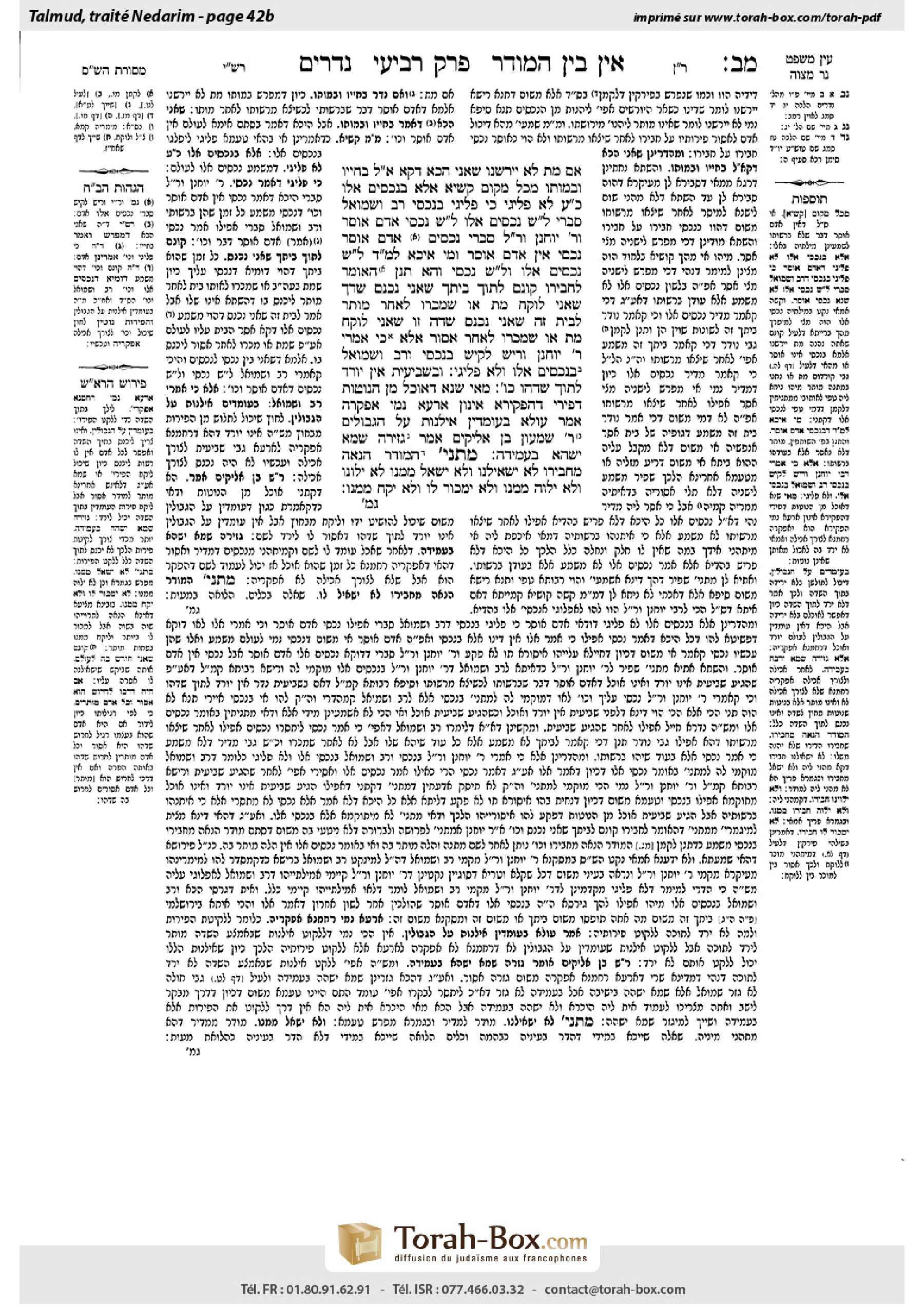
This page of Nedarim includes the Aramaic text, an English translation and an AI-generated French translation, alongside the scan above.
נדרים מ״ב ב · Aramaic and Hebrew text
אִם מֵת — לֹא יִירָשֶׁנּוּ! שָׁאנֵי הָכָא דְּקָא אָמַר לֵיהּ ״בְּחַיָּיו וּבְמוֹתוֹ״.
מִכׇּל מָקוֹם קַשְׁיָא? אֶלָּא: בִּ״נְכָסִים אֵלּוּ״ — כּוּלֵּי עָלְמָא לָא פְּלִיגִי. כִּי פְּלִיגִי בִּ״נְכָסַי״.
רַב וּשְׁמוּאֵל סָבְרִי: לָא שְׁנָא ״נְכָסִים אֵלּוּ״, לָא שְׁנָא ״נְכָסַי״, אָדָם אוֹסֵר. וְרַבִּי יוֹחָנָן וְרֵישׁ לָקִישׁ סָבְרִי: ״נְכָסִים״ — אָדָם אוֹסֵר, ״נְכָסַי״ — אֵין אָדָם אוֹסֵר.
וּמִי אִיכָּא לְמַאן דְּאָמַר לָא שְׁנָא ״נְכָסִים אֵלּוּ״ וְלָא שְׁנָא ״נְכָסַי״? וְהָא תְּנַן: הָאוֹמֵר לַחֲבֵירוֹ ״קֻוֽנָּם לְתוֹךְ בֵּיתְךָ שֶׁאֲנִי נִכְנָס״, ״שָׂדְךָ שֶׁאֲנִי לוֹקֵחַ״, מֵת אוֹ שֶׁמְּכָרוֹ לְאַחֵר — מוּתָּר. ״לְבַיִת זֶה שֶׁאֲנִי נִכְנָס״, ״שָׂדֶה זוֹ שֶׁאֲנִי לוֹקֵחַ״, מֵת אוֹ שֶׁמְּכָרוֹ לְאַחֵר — אָסוּר.
אֶלָּא: כִּי אָמְרִי רַבִּי יוֹחָנָן וְרֵישׁ לָקִישׁ, בִּ״נְכָסַי״. וְרַב וּשְׁמוּאֵל, בִּ״נְכָסִים אֵלּוּ״, וְלָא פְּלִיגִי.
וּבַשְּׁבִיעִית אֵין יוֹרֵד לְתוֹךְ שָׂדֵהוּ כּוּ׳. מַאי שְׁנָא דְּאוֹכֵל מִן הַנּוֹטוֹת — דְּפֵירֵי דְהֶפְקֵירָא אִינּוּן, אַרְעָא נָמֵי אַפְקְרַהּ?!
אָמַר עוּלָּא: בְּעוֹמְדִין אִילָנוֹת עַל הַגְּבוּלִים. רַבִּי שִׁמְעוֹן בֶּן אֶלְיָקִים אָמַר: גְּזֵירָה שֶׁמָּא יִשְׁהֶא בַּעֲמִידָה.
מַתְנִי׳ הַמּוּדָּר הֲנָאָה מֵחֲבֵירוֹ — לֹא יַשְׁאִילֶנּוּ וְלֹא יִשְׁאַל מִמֶּנּוּ, לֹא יַלְוֶנּוּ וְלֹא יִלְוֶה מִמֶּנּוּ, וְלֹא יִמְכּוֹר לוֹ וְלֹא יִקַּח מִמֶּנּוּ.
Nedarim 42b · English translation
then if the father dies, his son does not inherit from him. Apparently, one can render his property forbidden and have it remain forbidden after it is no longer in his possession. The Gemara rejects that proof: It is different here, as he said to him explicitly: During his lifetime and upon his death. There is no proof that in a case where he did not explicitly extend the prohibition to the period after it leaves his possession, the prohibition would not remain in effect.
The second question was answered, but in any case the first question remains difficult: Why didn’t Rabbi Yoḥanan and Reish Lakish disagree in a case where he said: This property, as well? Rather, this is the explanation of their dispute: In the case of one who said: Benefit from this property is forbidden to you, everyone agrees that the prohibition remains in effect even after the item is no longer in his possession. When they disagree, it is in the case of one who said: Benefit from my property is forbidden to you.
Rav and Shmuel hold: It is no different if he said: This property, and it is no different if he said: My property; in both cases, a person renders an item forbidden and the prohibition remains in effect even after the item is no longer in his possession. And Rabbi Yoḥanan and Reish Lakish hold: If one said: Property, a person renders an item forbidden and the prohibition remains in effect. However, if he said: My property, a person does not render an item forbidden for the period after it is no longer in his possession, as the phrase my property means property in my possession.
The Gemara asks: And is there anyone who says that it is no different if he said: This property, and it is no different if he said: My property, and that the prohibition remains in effect even after the item is no longer in his possession? But didn’t we learn in a mishna (46a): If one says to another: Entering into your house is konam for me, or: Buying your field is konam for me, then if the owner died or sold the property to another, it is permitted for the one who vowed to enter the house or buy the field, as the prohibition is in effect only as long as it belongs to that person. However, if he said: Entering this house is konam for me, or: Buying this field is konam for me, then if the owner died or sold the property to another, it remains forbidden. Apparently, there is a difference between a case where he simply renders an item forbidden and a case where he renders an item belonging to a particular individual forbidden.
Rather, this is the explanation of the statements of the amora’im: When Rabbi Yoḥanan and Reish Lakish said that the prohibition is no longer in effect after the item is no longer in his possession, it was in a case where he said: My property. And when Rav and Shmuel said that the prohibition remains in effect after the item is no longer in his possession, it was in a case where he said: This property. And they do not disagree, as each pair of amora’im addressed a different situation.
We learned in the mishna: And during the Sabbatical Year he may not enter his field; however, he eats from the produce that leans out of the field. The Gemara asks: What is different about the Sabbatical Year that he is permitted to eat of the produce that leans out of the field? It is due to the fact that the produce is ownerless. With regard to land as well, the Torah rendered it ownerless, as during the Sabbatical Year, it is permitted for everyone to enter the field and eat the produce.
Ulla said: The mishna is referring to a case where the fruit trees are standing on the borders of the field. Since it is possible to eat the produce without entering the field, it is not permitted for him to enter it. Rabbi Shimon ben Elyakim said: Even in a case where the fruit trees are standing in the middle of the field, it is also prohibited for him to enter the field, due to a rabbinic decree lest he remain standing there longer than necessary for purposes of eating, which is prohibited even during the Sabbatical Year.
MISHNA: In the case of one for whom benefit from another is forbidden by vow, that other person may neither lend an item to him nor borrow an item from him. Similarly, he may neither lend money to him nor borrow money from him. And he may neither sell an item to him nor purchase an item from him.
Nedarim 42b · Traduction française (IA)
Alors, si le père meurt, son fils n’hérite pas de lui. Apparemment, on peut rendre ses biens interdits et faire en sorte que l’interdiction demeure même lorsqu’ils ne sont plus en sa possession. La Guemara rejette cette preuve : le cas est différent ici, car il lui a dit explicitement : « De son vivant et à sa mort. » Rien ne prouve que, dans un cas où il n’aurait pas expressément étendu l’interdiction à la période où les biens ne seraient plus en sa possession, celle-ci resterait en vigueur.
La deuxième question a reçu une réponse, mais la première demeure néanmoins difficile : pourquoi Rabbi Yoḥanan et Reish Lakish ne sont-ils pas en désaccord dans le cas où il aurait dit également : « Ce bien » ? Voici plutôt comment comprendre leur désaccord : dans le cas de celui qui a dit : « Il t’est interdit de tirer profit de ce bien », tous sont d’accord pour que l’interdiction demeure même lorsque le bien n’est plus en sa possession. Leur désaccord porte sur le cas de celui qui a dit : « Il t’est interdit de tirer profit de mes biens. »
Rav et Shmuel soutiennent qu’il n’y a pas de différence entre celui qui a dit : « Ce bien » et celui qui a dit : « Mes biens » ; dans les deux cas, on peut rendre un bien interdit et faire en sorte que l’interdiction demeure même lorsque ce bien n’est plus en sa possession. Rabbi Yoḥanan et Reish Lakish soutiennent, eux, que si quelqu’un a dit : « Un bien », on peut rendre ce bien interdit et faire en sorte que l’interdiction demeure. En revanche, s’il a dit : « Mes biens », on ne peut pas rendre un bien interdit pour la période où il ne serait plus en sa possession, car l’expression « mes biens » désigne les biens qui sont en ma possession.
La Guemara demande : Y a-t-il donc quelqu’un pour affirmer qu’il n’y a pas de différence entre celui qui a dit : « Ce bien » et celui qui a dit : « Mes biens », et que l’interdiction demeure même lorsque le bien n’est plus en sa possession ? N’avons-nous pas appris dans une Michna (46a) : si quelqu’un dit à un autre : « Entrer dans ta maison m’est konam », ou : « Acheter ton champ m’est konam », alors, si le propriétaire meurt ou vend son bien à quelqu’un d’autre, il est permis à celui qui a prononcé le vœu d’entrer dans la maison ou d’acheter le champ, car l’interdiction ne vaut que tant que le bien appartient à cette personne. En revanche, s’il a dit : « Entrer dans cette maison m’est konam », ou : « Acheter ce champ m’est konam », alors, si le propriétaire meurt ou vend le bien à quelqu’un d’autre, l’interdiction reste en vigueur. Apparemment, il y a une différence entre le cas où il rend simplement un bien interdit et celui où il rend interdit un bien appartenant à une personne déterminée.
Voici plutôt comment comprendre les propos des amoraïm : lorsque Rabbi Yoḥanan et Reish Lakish ont dit que l’interdiction cesse lorsque le bien n’est plus en sa possession, il s’agissait d’un cas où il avait dit : « Mes biens. » Et lorsque Rav et Shmuel ont dit que l’interdiction demeure lorsque le bien n’est plus en sa possession, il s’agissait d’un cas où il avait dit : « Ce bien. » Ils ne sont donc pas en désaccord, car chaque paire d’amoraïm a traité d’une situation différente.
Nous avons appris dans la Michna : durant l’année de jachère, il ne peut pas entrer dans son champ ; toutefois, il mange les produits qui dépassent du champ. La Guemara demande : Qu’est-ce qui distingue l’année de jachère, pour qu’il soit autorisé à manger les produits qui dépassent du champ ? C’est parce que ces produits sont sans propriétaire. La Torah a également rendu la terre sans propriétaire, car durant l’année de jachère, chacun est autorisé à entrer dans le champ et à manger les produits.
Oulla a dit : la Michna parle d’un cas où les arbres fruitiers se trouvent aux limites du champ. Puisqu’il est possible de manger les produits sans entrer dans le champ, il ne lui est pas permis d’y entrer. Rabbi Shimon ben Elyakim a dit : même lorsque les arbres fruitiers se trouvent au milieu du champ, il lui est également interdit d’y entrer, en vertu d’un décret rabbinique, de peur qu’il n’y reste plus longtemps qu’il ne faut pour manger, ce qui est interdit même durant l’année de jachère.
MICHNA : Dans le cas d’une personne à qui un vœu interdit de tirer profit d’une autre personne, cette dernière ne peut ni lui prêter un objet ni lui en emprunter un. De même, elle ne peut ni lui prêter de l’argent ni lui en emprunter. Elle ne peut ni lui vendre un objet ni lui en acheter un.
Traduction française générée par IA à partir de l’édition anglaise de Sefaria. Vérifie toujours un passage avec le texte source.
Text from Sefaria: William Davidson Edition - Vocalized Aramaic (CC BY NC); William Davidson Edition - English (CC BY NC).