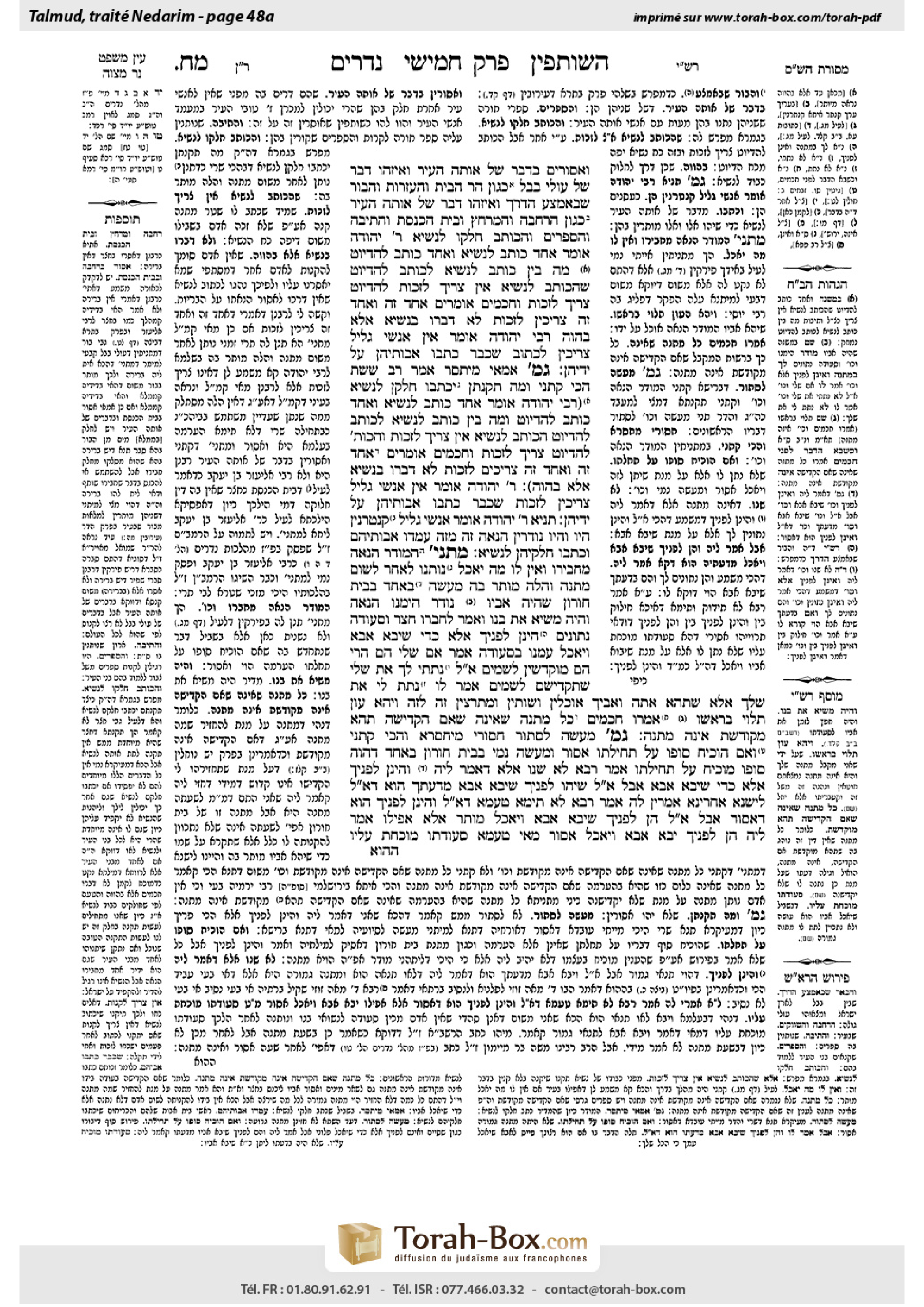
Nedarim 48a: Talmud study for Daf Yomi
Daf Yomi is the daily study of one Talmud folio. Explore 37 tractates with scans, Hebrew text, Sefaria English and AI-generated French translations where annotated.
Passage selection and English or AI-generated French translation are available where the scan has annotations. Daf Study is independent of Torah-Box and Sefaria.
Browse Nedarim · נדרים · All tractatesNedarim 48a text and translations
This page of Nedarim includes the Aramaic text, an English translation and an AI-generated French translation, alongside the scan above.
נדרים מ״ח א · Aramaic and Hebrew text
וַאֲסוּרִים בְּדָבָר שֶׁל אוֹתָהּ הָעִיר. וְאֵיזֶהוּ דָּבָר שֶׁל עוֹלֵי בָּבֶל — כְּגוֹן הַר הַבַּיִת, וְהָעֲזָרוֹת, וְהַבּוֹר שֶׁבְּאֶמְצַע הַדֶּרֶךְ. וְאֵיזֶהוּ דָּבָר שֶׁל אוֹתָהּ הָעִיר — כְּגוֹן הָרְחָבָה, וְהַמֶּרְחָץ, וּבֵית הַכְּנֶסֶת, וְהַתֵּיבָה, וְהַסְּפָרִים. וְהַכּוֹתֵב חֶלְקוֹ לַנָּשִׂיא.
רַבִּי יְהוּדָה אוֹמֵר: אֶחָד כּוֹתֵב לַנָּשִׂיא, וְאֶחָד כּוֹתֵב לַהֶדְיוֹט. מָה בֵּין כּוֹתֵב לַנָּשִׂיא לַכּוֹתֵב לַהֶדְיוֹט? שֶׁהַכּוֹתֵב לַנָּשִׂיא אֵין צָרִיךְ לְזַכּוֹת, לַהֶדְיוֹט צָרִיךְ לְזַכּוֹת. וַחֲכָמִים אוֹמְרִים: אֶחָד זֶה וְאֶחָד זֶה צְרִיכִין לְזַכּוֹת, לֹא דִּבְּרוּ בְּנָשִׂיא אֶלָּא בַּהֹוֶה. רַבִּי יְהוּדָה אוֹמֵר: אֵין אַנְשֵׁי גָלִיל צְרִיכִין לִכְתּוֹב, שֶׁכְּבָר כָּתְבוּ אֲבוֹתֵיהֶן עַל יְדֵיהֶן.
גְּמָ׳ אַמַּאי מִיתְּסַר? אָמַר רַב שֵׁשֶׁת, הָכִי קָתָנֵי: וּמָה תַּקָּנָתָן — יִכְתְּבוּ חֶלְקָן לַנָּשִׂיא.
רַבִּי יְהוּדָה אוֹמֵר: אֶחָד כּוֹתֵב לַנָּשִׂיא וְאֶחָד כּוֹתֵב לַהֶדְיוֹט, וּמָה בֵּין כּוֹתֵב לַנָּשִׂיא לְכוֹתֵב לַהֶדְיוֹט? הַכּוֹתֵב לַנָּשִׂיא אֵין צָרִיךְ לְזַכּוֹת, וְהַכּוֹתֵב לַהֶדְיוֹט צָרִיךְ לְזַכּוֹת. וַחֲכָמִים אוֹמְרִים: אֶחָד זֶה וְאֶחָד זֶה — צְרִיכִים לְזַכּוֹת, לֹא דִּבְּרוּ בְּנָשִׂיא אֶלָּא בַּהֹוֶה.
רַבִּי יְהוּדָה אוֹמֵר: אֵין אַנְשֵׁי גָלִיל צְרִיכִין לְזַכּוֹת, שֶׁכְּבָר כָּתְבוּ אֲבוֹתֵיהֶן עַל יְדֵיהֶן. תַּנְיָא, רַבִּי יְהוּדָה אוֹמֵר: אַנְשֵׁי גָלִיל קַנְטְרָנִין הָיוּ, וְהָיוּ נוֹדְרִין הֲנָאָה זֶה מִזֶּה, עָמְדוּ אֲבוֹתֵיהֶם וְכָתְבוּ חֶלְקֵיהֶן לַנָּשִׂיא.
מַתְנִי׳ הַמּוּדָּר הֲנָאָה מֵחֲבֵירוֹ וְאֵין לוֹ מַה יֹּאכַל — נוֹתְנוֹ לְאַחֵר לְשׁוּם מַתָּנָה, וְהַלָּה מוּתָּר בָּהּ. מַעֲשֶׂה בְּאֶחָד בְּבֵית חוֹרוֹן שֶׁהָיָה אָבִיו נוֹדֵר הֵימֶנּוּ הֲנָאָה, וְהָיָה מַשִּׂיא אֶת בְּנוֹ. וְאָמַר לַחֲבֵרוֹ: חָצֵר וּסְעוּדָה נְתוּנִים הִינָּן לְפָנֶיךָ, אֶלָּא כְּדֵי שֶׁיָּבֹא אַבָּא וְיֹאכַל עִמָּנוּ בִּסְעוּדָה.
אָמַר: אִם שֶׁלִּי הֵם — הֲרֵי הֵם מוּקְדָּשִׁין לַשָּׁמַיִם. אָמַר לוֹ: נָתַתִּי לְךָ אֶת שֶׁלִּי שֶׁתַּקְדִּישֵׁם לַשָּׁמַיִם?! אָמַר לוֹ: נָתַתָּ לִי אֶת שֶׁלְּךָ אֶלָּא שֶׁתְּהֵא אַתָּה וְאָבִיךְ אוֹכְלִין וְשׁוֹתִין וּמִתְרַצִּין זֶה לָזֶה, וִיהֵא עָוֹן תָּלוּי בְּרֹאשׁוֹ. אָמְרוּ חֲכָמִים: כׇּל מַתָּנָה שֶׁאֵינָהּ שֶׁאִם הִקְדִּישָׁהּ תְּהֵא מְקוּדֶּשֶׁת — אֵינָהּ מַתָּנָה.
גְּמָ׳ מַעֲשֶׂה לִסְתּוֹר! חַסּוֹרֵי מִיחַסְּרָא וְהָכִי קָתָנֵי: וְאִם הוֹכִיחַ סוֹפוֹ עַל תְּחִילָּתוֹ — אָסוּר. וּמַעֲשֶׂה נָמֵי בְּבֵית חוֹרוֹן בְּאֶחָד, דַּהֲוָה סוֹפוֹ מוֹכִיחַ עַל תְּחִילָּתוֹ.
אָמַר רָבָא: לֹא שָׁנוּ אֶלָּא דְּאָמַר לֵיהּ ״וְהִינָּן לְפָנֶיךָ אֶלָּא כְּדֵי שֶׁיָּבֹא אַבָּא״. אֲבָל אָמַר לֵיהּ: ״שֶׁיְּהוּ לְפָנֶיךָ, שֶׁיָּבֹא אַבָּא״ — ״מִדַּעְתְּךָ״ הוּא דְּאָמַר לֵיהּ.
לִישָּׁנָא אַחֲרִינָא: אָמְרִין לַהּ, אָמַר רָבָא: לָא תֵּימָא טַעְמָא דְּאָמַר לֵיהּ ״וְהִינָּן לְפָנֶיךָ״ הוּא דְּאָסוּר, אֲבָל אֲמַר לֵיהּ ״הֵן לְפָנֶיךָ שֶׁיָּבֹא אַבָּא וְיֹאכַל״ — מוּתָּר. אֶלָּא אֲפִילּוּ אָמַר לֵיהּ ״הֵן לְפָנֶיךָ יָבֹא אַבָּא וְיֹאכַל״ — אָסוּר. מַאי טַעְמָא — סְעוּדָתוֹ מוֹכַחַת עָלָיו.
Nedarim 48a · English translation
But it is prohibited for them to benefit from objects of that city, which are considered to be jointly owned by all its residents. And what are examples of objects belonging to those who ascended from Babylonia? For example, the Temple Mount, and the Temple Courtyards, and the water cistern in the middle of the road. And what are objects of that city? For example, the city square, and the bathhouse, and the synagogue, and the ark which houses the Torah scrolls, and the Torah scrolls. And one who writes, i.e., signs, his portion of the shared objects of that city over to the Nasi.
Rabbi Yehuda says: This is the halakha with regard to both one who writes his portion over to the Nasi and one who writes it over to a common person. Rabbi Yehuda adds: What is the difference between one who writes it over to the Nasi and one who writes it over to a common person? That one who writes it to the Nasi need not formally confer possession of the item, whereas one who writes it over to a common person must confer possession to him. And the Rabbis say: Both this one and that one must confer possession, and they specifically mentioned the Nasi only so as to speak in the present, addressing situations that were prevalent. Rabbi Yehuda says: The people of Galilee do not have to write their portion over to the Nasi because their fathers already wrote it for them, declaring that all the public property belongs to him.
GEMARA: The mishna appears to teach that one who is prohibited by a vow from benefiting from another may not benefit from property written over to the Nasi. The Gemara asks: Why is it forbidden? Rav Sheshet said: This is what the mishna is teaching: And what is their remedy, i.e., what can be done to enable the forbidden individuals to benefit from communal property? They should write their portion over to the Nasi, thereby relinquishing their shares in the communal property.
The Gemara continues its quotation from the mishna: This is the halakha with regard to both one who writes his portion over to the Nasi and one who writes it over to a common person. Rabbi Yehuda adds: What is the difference between one who writes it over to the Nasi and one who writes it over to a common person? That one who writes it to the Nasi need not formally confer possession of the item, whereas one who writes it over to a common person must confer possession to him. And the Rabbis say: Both this one and that one must confer possession, and they specifically mentioned the Nasi only so as to speak in the present.
§ The mishna teaches: Rabbi Yehuda says: The people of Galilee do not have to confer possession of their portion to the Nasi because their forefathers already wrote it for them. It is taught in a baraita that Rabbi Yehuda says: The people of Galilee were quarrelsome [kanteranin] and would often take vows prohibiting benefit from one another. So their forefathers arose and wrote their portions of the public property over to the Nasi so that they would be able to use communal property.
MISHNA: With regard to one who is prohibited by a vow from deriving benefit from another and he does not have anything to eat, the other may give the food to someone else as a gift and he is then permitted to eat it. The mishna recounts: An incident occurred involving someone in the city of Beit Ḥoron whose father had vowed not to derive benefit from him, and the son was marrying off his own son and wanted his father to be able to participate in the wedding meal. And he therefore said to another: The courtyard where the wedding will take place and the wedding meal are given before you as a gift, but only so that my father will come and eat with us at the meal.
The recipient said: If they are mine, they are all hereby consecrated to Heaven, i.e., the Temple, and are forbidden to everyone. The son said to him in anger: And did I give you my property so that you should consecrate it to Heaven? He, the recipient, said to him: You gave me your property only so that you and your father would eat and drink and thereby appease each other, and the sin of transgressing the vow would be hung on his, i.e., my, head, as I enabled the transgression. The Sages therefore said: Any gift that is not so absolute so that if the recipient were to consecrate the gift it would be consecrated, is not a gift. In other words, in order for it to be a gift, the recipient must have the ability to consecrate it.
GEMARA: The Gemara asks: Was an incident cited to contradict that which was initially stated in the mishna? The mishna explicitly stated that one may give a gift to another in order to bypass the prohibition of a vow. The Gemara answers: The mishna is incomplete and is teaching like this: And if his ultimate actions prove the nature of his initial intent, i.e., if the prior owner protests that he gave the gift only as a technicality in order to bypass the vow, it is forbidden. And to illustrate this point, there was also an incident in Beit Ḥoron concerning someone whose ultimate protest proved that his initial intent was not to give a true gift.
Rava said: They taught this prohibition only in a case where he said to him: And the gifts are given before you only so that my father should come, as he explicitly mentioned that he did not intend to give an absolute gift. But if he said to him less explicitly: That they should be before you that my father should come, there is no prohibition, since he is essentially saying to him: It is up to your judgment whether or not to invite him.
Some say another version of this statement. Rava said: Do not say that the reason for the prohibition is because he said to him: And the gifts are given before you only so that my father will come, and that is why it is forbidden; but if he said to him: They are before you so my father should come and eat, it would be permitted. This is not so. Rather, even if he said to him: They are before you, my father should come and eat, it is forbidden. What is the reason for this? His wedding meal proves about him that his sole intention was to bypass the vow.
Nedarim 48a · Traduction française (IA)
Mais il leur est interdit de tirer profit des biens de cette ville, considérés comme la propriété commune de tous ses habitants. Quels sont, par exemple, les biens appartenant à ceux qui sont montés de Babylonie ? Le mont du Temple, les parvis du Temple et la citerne située au milieu de la route. Et quels sont les biens de cette ville ? La place publique, les bains publics, la synagogue, l’arche qui abrite les rouleaux de la Torah et les rouleaux de la Torah. Quant à celui qui cède, c’est-à-dire signe la cession, de sa part dans les biens communs de cette ville au Nassi…
Rabbi Yehouda dit : Cette halakha s’applique aussi bien à celui qui cède sa part au Nassi qu’à celui qui la cède à un particulier. Rabbi Yehouda ajoute : Quelle est la différence entre celui qui la cède au Nassi et celui qui la cède à un particulier ? Celui qui la cède au Nassi n’a pas besoin de lui transférer formellement la propriété du bien, tandis que celui qui la cède à un particulier doit lui en transférer la propriété. Les Sages disent : Dans les deux cas, il faut transférer la propriété ; le Nassi a été mentionné expressément uniquement pour parler d’une situation courante. Rabbi Yehouda dit : Les habitants de Galilée n’ont pas besoin de céder leur part au Nassi, car leurs pères l’ont déjà fait pour eux, déclarant que tous les biens publics lui appartiennent.
GUEMARA : La Michna semble enseigner que celui à qui un vœu interdit de tirer profit d’autrui ne peut pas tirer profit d’un bien cédé au Nassi. La Guemara demande : Pourquoi cela est-il interdit ? Rav Chéchet dit : Voici ce que la Michna enseigne : quel est leur recours, c’est-à-dire que peut-on faire pour permettre à ces personnes de tirer profit des biens communs ? Elles doivent céder leur part au Nassi et renoncer ainsi à leurs parts dans les biens communs.
La Guemara poursuit sa citation de la Michna : Cette halakha s’applique aussi bien à celui qui cède sa part au Nassi qu’à celui qui la cède à un particulier. Rabbi Yehouda ajoute : Quelle est la différence entre celui qui la cède au Nassi et celui qui la cède à un particulier ? Celui qui la cède au Nassi n’a pas besoin de lui transférer formellement la propriété du bien, tandis que celui qui la cède à un particulier doit lui en transférer la propriété. Les Sages disent : Dans les deux cas, il faut transférer la propriété ; le Nassi a été mentionné expressément uniquement pour parler d’une situation courante.
§ La Michna enseigne que Rabbi Yehouda dit que les habitants de Galilée n’ont pas besoin de transférer leur part au Nassi, car leurs ancêtres l’ont déjà fait pour eux. Une baraïta enseigne que Rabbi Yehouda dit : Les habitants de Galilée étaient querelleurs [kanteranin] et prenaient souvent des vœux leur interdisant de tirer profit les uns des autres. Leurs ancêtres se levèrent donc et cédèrent leurs parts dans les biens publics au Nassi, afin qu’ils puissent utiliser les biens communs.
MICHNA : Celui à qui un vœu interdit de tirer profit d’autrui et qui n’a rien à manger : l’autre peut donner de la nourriture à une tierce personne en cadeau, et celui qui était frappé de l’interdiction est alors autorisé à la manger. La Michna rapporte : Un incident eut lieu à Beit Ḥoron, concernant un homme dont le père avait fait le vœu de ne pas tirer profit de lui. Le fils mariait son propre fils et voulait que son père puisse participer au repas de noces. Il dit donc à un autre : « La cour où aura lieu le mariage et le repas de noces sont mis à ta disposition en cadeau, mais seulement pour que mon père vienne manger avec nous au repas. »
Le bénéficiaire répondit : « Puisqu’ils sont à moi, ils sont dès à présent consacrés au Ciel, c’est-à-dire au Temple, et interdits à tous. » Le fils lui dit avec colère : « Est-ce pour que tu consacres mes biens au Ciel que je te les ai donnés ? » Le bénéficiaire lui répondit : « Tu ne m’as donné tes biens que pour que toi et ton père mangiez et buviez, et vous réconciliiez ainsi ; le péché de transgression du vœu retomberait sur sa tête, c’est-à-dire sur la mienne, puisque j’aurais permis cette transgression. » Les Sages ont donc dit : Tout cadeau qui n’est pas véritablement absolu, au point que le bénéficiaire pourrait le consacrer et qu’il serait alors consacré, n’est pas un cadeau. Autrement dit, pour qu’il s’agisse d’un cadeau, le bénéficiaire doit avoir la possibilité de le consacrer.
GUEMARA : La Guemara demande : A-t-on cité un incident qui contredit ce qui était enseigné au début de la Michna ? La Michna a explicitement dit qu’on peut faire cadeau d’un bien à quelqu’un afin de contourner l’interdiction découlant d’un vœu. La Guemara répond : La Michna est lacunaire et enseigne ceci : si ses actes ultérieurs révèlent la nature de son intention initiale — c’est-à-dire si l’ancien propriétaire proteste en disant qu’il n’a fait ce cadeau que par pure forme, afin de contourner le vœu —, cela est interdit. Pour illustrer ce principe, la Michna rapporte également un incident à Beit Ḥoron, concernant un homme dont la protestation ultérieure révéla que son intention initiale n’était pas de faire un véritable cadeau.
Rava dit : Cette interdiction n’a été enseignée que dans le cas où il lui a dit : « Les biens sont mis à ta disposition uniquement pour que mon père vienne », puisqu’il a expressément indiqué qu’il n’avait pas l’intention de faire un cadeau absolu. Mais s’il lui a dit de manière moins explicite : « Qu’ils soient à ta disposition, afin que mon père vienne », l’interdiction ne s’applique pas, car il lui dit essentiellement : « C’est à toi de décider si tu l’invites ou non. »
Certains rapportent une autre version de cette déclaration. Rava dit : Ne dis pas que la raison de l’interdiction est qu’il lui a dit : « Les biens sont mis à ta disposition uniquement pour que mon père vienne », et que c’est pour cela que cela est interdit, tandis que s’il lui avait dit : « Ils sont à ta disposition pour que mon père vienne manger », cela aurait été permis. Il n’en est pas ainsi. Même s’il lui a dit : « Ils sont à ta disposition ; que mon père vienne manger », cela est interdit. Pour quelle raison ? Le repas de noces prouve que sa seule intention était de contourner le vœu.
Traduction française générée par IA à partir de l’édition anglaise de Sefaria. Vérifie toujours un passage avec le texte source.
Text from Sefaria: William Davidson Edition - Vocalized Aramaic (CC BY NC); William Davidson Edition - English (CC BY NC).