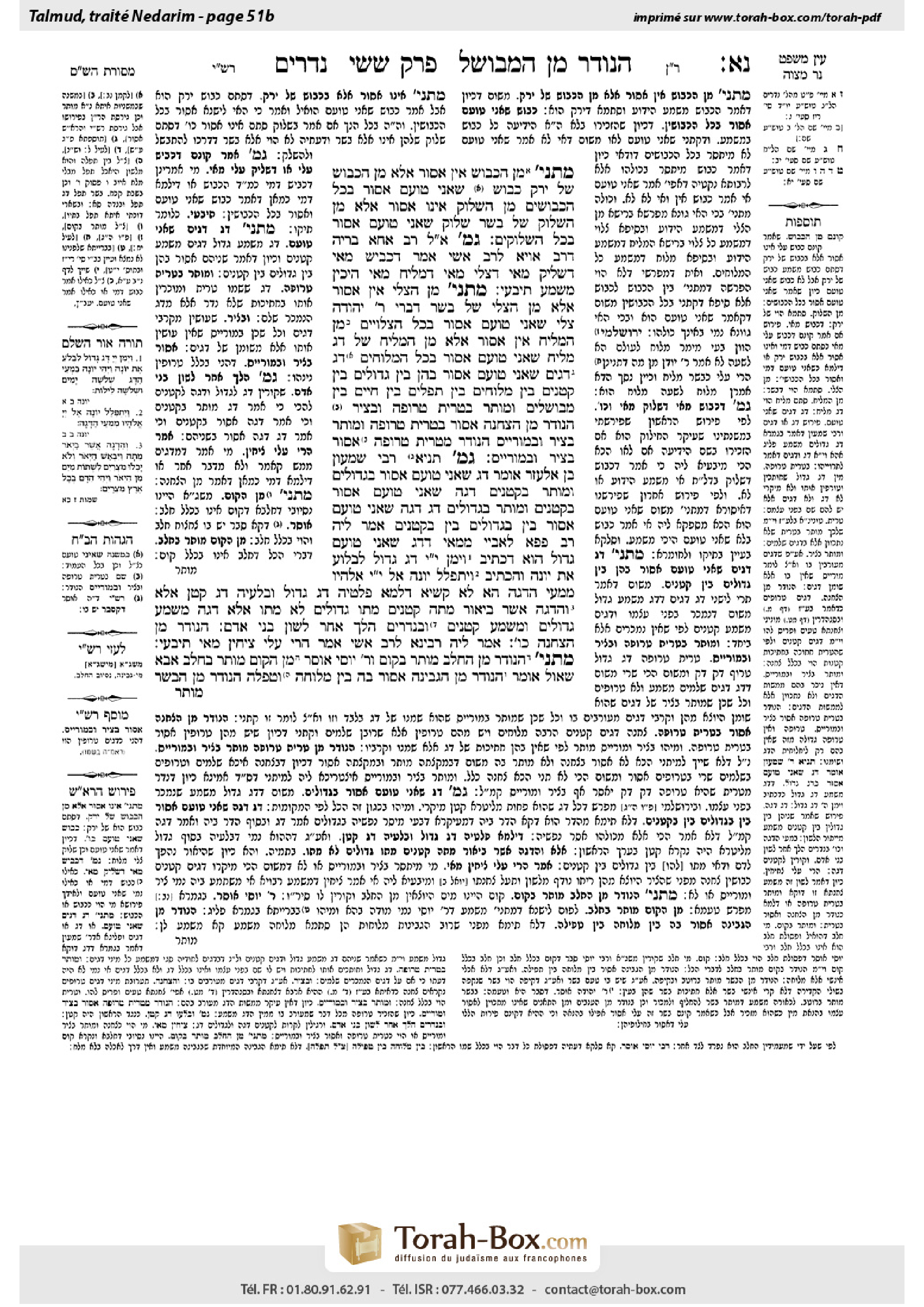
Nedarim 51b: Talmud study for Daf Yomi
Daf Yomi is the daily study of one Talmud folio. Explore 37 tractates with scans, Hebrew text, Sefaria English and AI-generated French translations where annotated.
Passage selection and English or AI-generated French translation are available where the scan has annotations. Daf Study is independent of Torah-Box and Sefaria.
Browse Nedarim · נדרים · All tractatesNedarim 51b text and translations
This page of Nedarim includes the Aramaic text, an English translation and an AI-generated French translation, alongside the scan above.
נדרים נ״א ב · Aramaic and Hebrew text
מַתְנִי׳ ״מִן הַכָּבוּשׁ״ — אֵין אָסוּר אֶלָּא מִן הַכָּבוּשׁ שֶׁל יָרָק. ״כָּבוּשׁ שֶׁאֲנִי טוֹעֵם״ — אָסוּר בְּכׇל הַכְּבוּשִׁים. ״מִן הַשָּׁלוּק״ — אֵינוֹ אָסוּר אֶלָּא מִן הַשָּׁלוּק שֶׁל בָּשָׂר. ״שָׁלוּק שֶׁאֲנִי טוֹעֵם״ — אָסוּר בְּכׇל הַשְּׁלוּקִים.
גְּמָ׳ אֲמַר לֵיהּ רַב אַחָא בְּרֵיהּ דְּרַב אַוְיָא לְרַב אָשֵׁי: אָמַר ״דִּכְבִישׁ״, מַאי? ״דִּשְׁלִיק״, מַאי? ״דִּצְלִי״, מַאי? ״דִּמְלִיחַ״, מַאי? הֵיכֵין מַשְׁמַע? תִּיבְּעֵי.
מַתְנִי׳ ״מִן הַצָּלִי״ — אֵין אָסוּר אֶלָּא מִן הַצָּלִי שֶׁל בָּשָׂר, דִּבְרֵי רַבִּי יְהוּדָה. ״צָלִי שֶׁאֲנִי טוֹעֵם״ — אָסוּר בְּכׇל הַצְּלוּיִים. ״מִן הַמָּלִיחַ״ — אֵין אָסוּר אֶלָּא מִן הַמָּלִיחַ שֶׁל דָּג. ״מָלִיחַ שֶׁאֲנִי טוֹעֵם״ — אָסוּר בְּכׇל הַמְּלוּחִים.
״דָּג דָּגִים שֶׁאֲנִי טוֹעֵם״ — אָסוּר בָּהֶן, בֵּין גְּדוֹלִים בֵּין קְטַנִּים, בֵּין מְלוּחִים בֵּין תְּפֵלִים, בֵּין חַיִּים בֵּין מְבוּשָּׁלִים, וּמוּתָּר בְּטָרִית טְרוּפָה, וּבְצִיר. הַנּוֹדֵר מִן הַצַּחֲנָה — אָסוּר בְּטָרִית טְרוּפָה, וּמוּתָּר בְּצִיר וּבְמוּרְיָיס. הַנּוֹדֵר מִטָּרִית טְרוּפָה — אָסוּר בְּצִיר וּבְמוּרְיָיס.
גְּמָ׳ תַּנְיָא, רַבִּי שִׁמְעוֹן בֶּן אֶלְעָזָר אוֹמֵר: ״דָּג שֶׁאֲנִי טוֹעֵם״ — אָסוּר בִּגְדוֹלִים, וּמוּתָּר בִּקְטַנִּים. ״דָּגָה שֶׁאֲנִי טוֹעֵם״ — אָסוּר בִּקְטַנִּים וּמוּתָּר בִּגְדוֹלִים. ״דָּג דָּגָה שֶׁאֲנִי טוֹעֵם״ — אָסוּר בֵּין בִּגְדוֹלִים בֵּין בִּקְטַנִּים.
אֲמַר לֵיהּ רַב פָּפָּא לְאַבָּיֵי: מִמַּאי דְּ״דָג שֶׁאֲנִי טוֹעֵם״ — גָּדוֹל הוּא, דִּכְתִיב: ״וַיְמַן ה׳ דָּג גָּדוֹל לִבְלוֹעַ אֶת יוֹנָה״. וְהָכְתִיב: ״וַיִּתְפַּלֵּל יוֹנָה אֶל ה׳ אֱלֹהָיו מִמְּעֵי הַדָּגָה״!
הָא לָא קַשְׁיָא: דִּלְמָא פַּלְטֵיהּ דָּג גָּדוֹל, וּבַלְעֵיהּ דָּג קָטָן. אֶלָּא: ״וְהַדָּגָה אֲשֶׁר בַּיְאוֹר מֵתָה״, קְטַנִּים מֵתוּ, גְּדוֹלִים לֹא מֵתוּ?! אֶלָּא: ״דָּגָה״ — מַשְׁמַע גְּדוֹלִים וּמַשְׁמַע קְטַנִּים, וּבִנְדָרִים הַלֵּךְ אַחַר לְשׁוֹן בְּנֵי אָדָם.
הַנּוֹדֵר מִן הַצַּחֲנָה כּוּ׳. אֲמַר לֵיהּ רָבִינָא לְרַב אָשֵׁי, אָמַר: ״הֲרֵי עָלַי צִיחִין״, מַאי? תִּיבְּעֵי.
מַתְנִי׳ הַנּוֹדֵר מִן הֶחָלָב — מוּתָּר בַּקּוֹם, וְרַבִּי יוֹסֵי אוֹסֵר. מִן הַקּוֹם — מוּתָּר בֶּחָלָב. אַבָּא שָׁאוּל אוֹמֵר: הַנּוֹדֵר מִן הַגְּבִינָה — אָסוּר בָּהּ, בֵּין מְלוּחָה וּטְפֵלָה. הַנּוֹדֵר מִן הַבָּשָׂר —
Nedarim 51b · English translation
MISHNA: One who vows that pickled food is forbidden to him is prohibited from eating only pickled vegetables, as that is what people usually mean when referring to pickled food. However, if he says: Pickled food is konam for me, and for that reason I will not taste it, he is prohibited from tasting all pickled foods. Similarly, one who vows that boiled food is forbidden to him is prohibited from eating only boiled meat, as that is the common meaning of the expression boiled food. On the other hand, if he says: Boiled food is konam for me, and for that reason I will not taste it, he is prohibited from eating all boiled foods.
GEMARA: Rav Aḥa, son of Rav Avya, said to Rav Ashi: If one said: That which is pickled is forbidden to me, what is the halakha? If one said: That which is boiled is forbidden to me, what is the halakha? If one said: That which is roasted is forbidden to me, what is the halakha? If one said: That which is salted is forbidden to me, what is the halakha? What do these expressions indicate? Do they refer to specific foods or to all foods prepared in these ways? The dilemma remains unresolved.
MISHNA: One who vows that roasted food is forbidden to him is prohibited from eating only roasted meat; this is the statement of Rabbi Yehuda. However, if one says: Roasted food is konam for me, and for that reason I will not taste it, he is prohibited from eating all roasted foods. One who vows that salted food is forbidden to him is prohibited from eating only salted fish, as that is the common meaning of the expression salted food. If, on the other hand, he says: Salted food is konam for me, and for that reason I will not taste it, he is prohibited from eating all salted foods.
If one says: Fish or fishes are konam for me, and for that reason I will not taste them, he is prohibited from eating all of them, whether large fish or small, whether salted or unsalted, whether raw or cooked. But he is permitted to taste minced sardines and to taste fish brine, as these are not included in the common meaning of the word fish. One who vows that tzaḥana, a concoction of whole and chopped fish, is forbidden to him is prohibited from eating minced sardines as well, but he is permitted to eat fish brine and fish gravy [morays]. One who vows that minced sardines are forbidden to him is prohibited from eating fish brine and from eating fish gravy.
GEMARA: It is taught in a baraita that Rabbi Shimon ben Elazar says: If one says: Fish [dag] is konam for me, and for that reason I will not taste it, he is prohibited from eating large fish and permitted to eat small fish. If one says: Fish [daga] is konam for me, and for that reason I will not taste it, he is prohibited from eating small fish and permitted to eat large ones, as this term is commonly used with regard to small fish. If one says: Fish [dag] or fish [daga] are konam for me, and for that reason I will not taste them, he is prohibited from eating both large and small fish.
Rav Pappa said to Abaye: From where is it derived that the phrase: Fish [dag] is konam for me, and for that reason I will not taste it, a reference to a large fish? As it is written: “And the Lord prepared a great fish [dag] to swallow up Jonah” (Jonah 2:1). The Gemara asks: But isn’t it written in the following verse: “Then Jonah prayed to the Lord his God out of the belly of the fish [daga]” (Jonah 2:2)? This indicates that a large fish can be referred to as a daga as well.
The Gemara answers: This is not difficult, as perhaps a large fish spat him out and a small fish then swallowed him. Rather, the baraita is difficult according to the following verse: “And the fish [daga] that were in the river died” (Exodus 7:21). Is it possible that the small fish died but the large ones did not die? The Gemara answers: Rather, the biblical word daga evidently indicates large fish and also indicates small fish. However, with regard to vows one should follow the language of people, and the word daga is used only in reference to small fish.
The mishna teaches that one who vows that tzaḥana is forbidden to him is prohibited from eating minced sardines as well, but he is permitted to eat fish brine and to eat fish gravy. Ravina said to Rav Ashi: If one said: Tziḥin are hereby forbidden to me, what is the halakha? Is this the same as tzaḥana or not? The dilemma remains unresolved.
MISHNA: One who vows that milk is forbidden to him is permitted to partake of whey [kum], the liquid that separates from milk when it is made into cheese. But Rabbi Yosei prohibits him from partaking of whey. If one vows that whey is forbidden to him, he is permitted to partake of milk. Abba Shaul says: One who vows that cheese is forbidden to him is prohibited from eating it whether it is salted or unsalted. One who vows that meat is forbidden to him
Nedarim 51b · Traduction française (IA)
MICHNA : Celui qui fait vœu de s’interdire les aliments marinés ne peut manger que des légumes marinés, car c’est ce que les gens désignent généralement par l’expression « aliments marinés ». En revanche, s’il dit : « Les aliments marinés sont konam pour moi, et c’est pourquoi je n’y goûterai pas », il lui est interdit de goûter tous les aliments marinés. De même, celui qui fait vœu de s’interdire les aliments bouillis ne peut manger que de la viande bouillie, car c’est le sens courant de l’expression « aliments bouillis ». En revanche, s’il dit : « Les aliments bouillis sont konam pour moi, et c’est pourquoi je n’y goûterai pas », il lui est interdit de manger tous les aliments bouillis.
GUEMARA : Rav Aḥa, fils de Rav Avya, dit à Rav Ashi : Si quelqu’un dit : « Ce qui est mariné m’est interdit », quelle est la halakha ? S’il dit : « Ce qui est bouilli m’est interdit », quelle est la halakha ? S’il dit : « Ce qui est rôti m’est interdit », quelle est la halakha ? S’il dit : « Ce qui est salé m’est interdit », quelle est la halakha ? Que désignent ces expressions ? Des aliments précis ou tous les aliments préparés de ces façons ? Le dilemme reste sans réponse.
MICHNA : Celui qui fait vœu de s’interdire les aliments rôtis ne peut manger que de la viande rôtie ; telle est la déclaration de Rabbi Yehuda. En revanche, s’il dit : « Les aliments rôtis sont konam pour moi, et c’est pourquoi je n’y goûterai pas », il lui est interdit de manger tous les aliments rôtis. Celui qui fait vœu de s’interdire les aliments salés ne peut manger que du poisson salé, car c’est le sens courant de l’expression « aliments salés ». En revanche, s’il dit : « Les aliments salés sont konam pour moi, et c’est pourquoi je n’y goûterai pas », il lui est interdit de manger tous les aliments salés.
Si quelqu’un dit : « Le poisson » ou « les poissons sont konam pour moi, et c’est pourquoi je n’y goûterai pas », il lui est interdit de manger tous les poissons, gros ou petits, salés ou non salés, crus ou cuits. Mais il lui est permis de goûter des sardines hachées et de la saumure de poisson, car ces aliments ne sont pas compris dans le sens courant du mot « poisson ». Celui qui fait vœu de s’interdire le tzaḥana, une préparation composée de poissons entiers et hachés, ne peut pas non plus manger de sardines hachées, mais il lui est permis de manger de la saumure de poisson et du jus de poisson [murènes]. Celui qui fait vœu de s’interdire les sardines hachées ne peut manger ni de la saumure de poisson ni du jus de poisson.
GUEMARA : Une baraïta enseigne que Rabbi Shimon ben Elazar dit : Si quelqu’un dit : « Le poisson [dag] est konam pour moi, et c’est pourquoi je n’y goûterai pas », il lui est interdit de manger des gros poissons, mais il lui est permis de manger des petits poissons. S’il dit : « Le poisson [daga] est konam pour moi, et c’est pourquoi je n’y goûterai pas », il lui est interdit de manger des petits poissons, mais il lui est permis de manger des gros poissons, car ce terme est couramment employé à propos des petits poissons. S’il dit : « Le poisson [dag] ou le poisson [daga] sont konam pour moi, et c’est pourquoi je n’y goûterai pas », il lui est interdit de manger aussi bien les gros que les petits poissons.
Rav Pappa dit à Abaye : D’où déduit-on que l’expression « Le poisson [dag] est konam pour moi, et c’est pourquoi je n’y goûterai pas » désigne un gros poisson ? Car il est écrit : « Et le Seigneur prépara un grand poisson [dag] pour engloutir Jonas » (Jonas 2,1). La Guemara demande : Mais n’est-il pas écrit dans le verset suivant : « Alors Jonas pria le Seigneur son Dieu depuis le ventre du poisson [daga] » (Jonas 2,2) ? Cela indique qu’un gros poisson peut également être désigné par le terme daga.
La Guemara répond : Il n’y a pas de difficulté, car peut-être un gros poisson l’a-t-il recraché et un petit poisson l’a-t-il ensuite avalé. En revanche, le verset suivant pose une difficulté à la baraïta : « Et les poissons [daga] qui étaient dans le fleuve moururent » (Exode 7,21). Est-il possible que les petits poissons soient morts, mais pas les gros ? La Guemara répond : Il faut donc conclure que le mot biblique daga désigne aussi bien les gros poissons que les petits. Toutefois, pour les vœux, il faut s’en tenir au langage des gens, et le mot daga n’est employé qu’à propos des petits poissons.
La Michna enseigne que celui qui fait vœu de s’interdire le tzaḥana ne peut pas non plus manger de sardines hachées, mais qu’il lui est permis de manger de la saumure de poisson et du jus de poisson. Ravina dit à Rav Ashi : Si quelqu’un dit : « Les tziḥin me sont désormais interdits », quelle est la halakha ? Est-ce la même chose que le tzaḥana ou non ? Le dilemme reste sans réponse.
MICHNA : Celui qui fait vœu de s’interdire le lait peut consommer du petit-lait [kum], le liquide qui se sépare du lait lorsqu’on en fait du fromage. Mais Rabbi Yosei lui interdit de consommer du petit-lait. Si quelqu’un fait vœu de s’interdire le petit-lait, il peut consommer du lait. Abba Shaul dit : Celui qui fait vœu de s’interdire le fromage ne peut en manger, qu’il soit salé ou non salé. Celui qui fait vœu de s’interdire la viande
Traduction française générée par IA à partir de l’édition anglaise de Sefaria. Vérifie toujours un passage avec le texte source.
Text from Sefaria: William Davidson Edition - Vocalized Aramaic (CC BY NC); William Davidson Edition - English (CC BY NC).