Nedarim 55b: Talmud study for Daf Yomi
Daf Yomi is the daily study of one Talmud folio. Explore 37 tractates with scans, Hebrew text, Sefaria English and AI-generated French translations where annotated.
Passage selection and English or AI-generated French translation are available where the scan has annotations. Daf Study is independent of Torah-Box and Sefaria.
Browse Nedarim · נדרים · All tractatesNedarim 55b text and translations
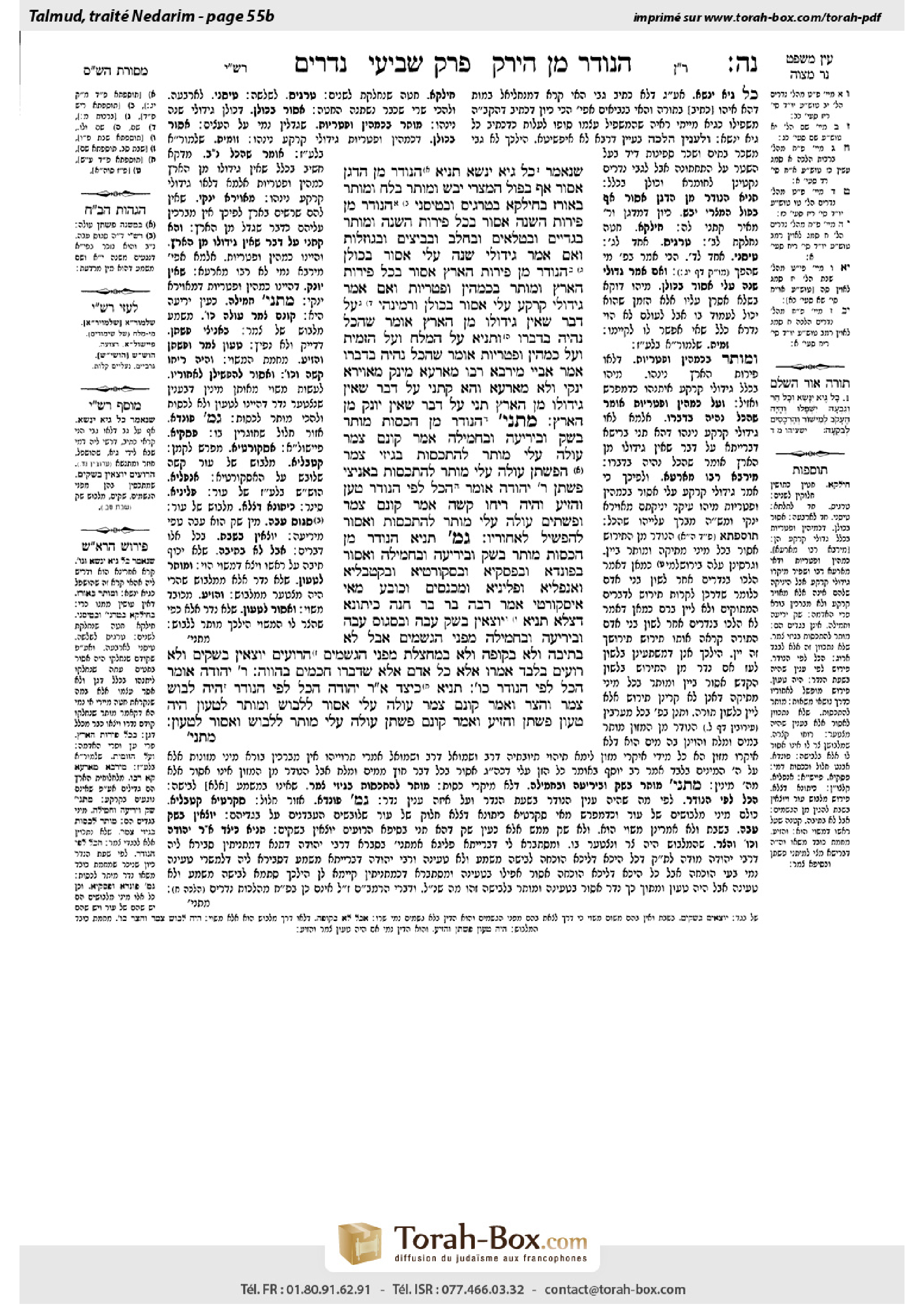
This page of Nedarim includes the Aramaic text, an English translation and an AI-generated French translation, alongside the scan above.
נדרים נ״ה ב · Aramaic and Hebrew text
שֶׁנֶּאֱמַר: ״כׇּל גֶּיא יִנָּשֵׂא״.
תַּנְיָא: הַנּוֹדֵר מִן הַדָּגָן — אָסוּר אַף בְּפוֹל הַמִּצְרִי יָבֵשׁ, וּמוּתָּר בַּלַּח. וּמוּתָּר בְּאוֹרֶז, בְּחִילְקָא, בְּטַרְגִּיס וּבְטִיסְנֵי. הַנּוֹדֵר מִן פֵּירוֹת הַשָּׁנָה — אָסוּר בְּכׇל פֵּירוֹת הַשָּׁנָה, וּמוּתָּר בִּגְדָיִים וּבִטְלָאִים וּבְחָלָב וּבְבֵיצִים וּבְגוֹזָלוֹת. וְאִם אָמַר ״גִּידּוּלֵי שָׁנָה עָלַי״ — אָסוּר בְּכוּלָּן.
הַנּוֹדֵר מִן פֵּירוֹת הָאָרֶץ — אָסוּר בְּכׇל פֵּירוֹת הָאָרֶץ, וּמוּתָּר בִּכְמֵהִין וּפִטְרִיּוֹת. וְאִם אָמַר ״גִּידּוּלֵי קַרְקַע עָלַי״ — אָסוּר בְּכוּלָּן.
וּרְמִינְהִי: עַל דָּבָר שֶׁאֵין גִּידּוּלוֹ מִן הָאָרֶץ — אוֹמֵר ״שֶׁהַכֹּל נִהְיֶה בִּדְבָרוֹ״, וְתַנְיָא: עַל הַמֶּלַח וְעַל הַזָּמִית וְעַל כְּמֵהִין וּפִטְרִיּוֹת — אוֹמֵר ״שֶׁהַכֹּל נִהְיֶה בִּדְבָרוֹ״. אָמַר אַבָּיֵי: מִירְבָּא רָבוּ מֵאַרְעָא, מֵינָק מֵאַוֵּירָא יָנְקִי וְלָא מֵאַרְעָא. וְהָא קָתָנֵי ״עַל דָּבָר שֶׁאֵין גִּידּוּלוֹ מִן הָאָרֶץ״! תְּנִי: עַל דָּבָר שֶׁאֵין יוֹנֵק מִן הָאָרֶץ.
מַתְנִי׳ הַנּוֹדֵר מִן הַכְּסוּת מוּתָּר בְּשַׂק, וּבִירִיעָה, וּבַחֲמִילָה. אָמַר: ״קֻנָּם צֶמֶר עוֹלֶה עָלַי״ — מוּתָּר לְהִתְכַּסּוֹת בְּגִיזֵּי צֶמֶר. ״הַפִּשְׁתָּן עוֹלֶה עָלַי״ — מוּתָּר לְהִתְכַּסּוֹת בַּאֲנִיצֵי פִּשְׁתָּן.
רַבִּי יְהוּדָה אוֹמֵר, הַכֹּל לְפִי הַנּוֹדֵר: טָעַן וְהִזִּיעַ וְהָיָה רֵיחוֹ קָשֶׁה, אָמַר: ״קֻנָּם צֶמֶר וּפִשְׁתִּים עוֹלֶה עָלַי״ — מוּתָּר לְהִתְכַּסּוֹת, וְאָסוּר לְהַפְשִׁיל לַאֲחוֹרָיו.
גְּמָ׳ תַּנְיָא: הַנּוֹדֵר מִן הַכְּסוּת — מוּתָּר בְּשַׂק וּבִירִיעָה וּבַחֲמִילָה, וְאָסוּר בְּפוּנְדָּא וּבִפְסִקְיָא וּבִסְקוּרְטְיָא וּבְקָטָבֻלְיָא וְאַנְפִּלְיָא וּפְלִינְיָא וּמִכְנָסַיִם וְכוֹבַע. מַאי ״אִיסְקוּרְטֵי״? אָמַר רַבָּה בַּר חָנָה: כִּיתּוּנָא דְצַלָּא.
תַּנְיָא: יוֹצְאִין בְּשַׂק עָבֶה וּבְסָגוֹס עָבֶה וּבִירִיעָה וּבַחֲמִילָה מִפְּנֵי הַגְּשָׁמִים, אֲבָל לֹא בְּתֵיבָה וְלֹא בְּקוּפָּה וְלֹא בְּמַחְצֶלֶת מִפְּנֵי הַגְּשָׁמִים. הָרוֹעִים יוֹצְאִין בְּשַׂקִּים. וְלֹא רוֹעִים בִּלְבַד אָמְרוּ, אֶלָּא כׇּל אָדָם, אֶלָּא שֶׁדִּבְּרוּ חֲכָמִים בַּהוֹוֶה.
רַבִּי יְהוּדָה אוֹמֵר הַכֹּל לְפִי הַנּוֹדֵר כּוּ׳. תַּנְיָא: כֵּיצַד אָמַר רַבִּי יְהוּדָה הַכֹּל לְפִי הַנּוֹדֵר? הָיָה לָבוּשׁ צֶמֶר וְהֵצַר, וְאָמַר ״קֻנָּם צֶמֶר עוֹלֶה עָלַי״ — אָסוּר לִלְבּוֹשׁ וּמוּתָּר לִטְעוֹן. הָיָה טָעוּן פִּשְׁתָּן וְהִזִּיעַ, וְאָמַר: ״קֻנָּם פִּשְׁתָּן עוֹלֶה עָלַי״ — מוּתָּר לִלְבּוֹשׁ וְאָסוּר לִטְעוֹן.
Nedarim 55b · English translation
as it is stated: “Every valley shall be lifted” (Isaiah 40:4). When Rav Yosef heard that interpretation, he understood that Rava was aware of the error of his ways in acting arrogantly toward his teacher, and was pacified by Rava’s display of humility.
§ It is taught in a baraita: For one who vows that grain [dagan] is forbidden to him, it is prohibited to partake of the dry cowpea, and it is permitted for him to partake of fresh cowpea. And it is permitted for him to partake of rice, as well as of wheat kernels split into two parts [ḥilka], of wheat kernels crushed into three parts [targeis], and wheat kernels crushed into four parts [tisnei]. For one who vows that produce of the year is forbidden to him, it is prohibited to partake of all produce of the year that grew from the ground or on trees, and it is permitted for him to partake of goats, and of lambs, and of milk, and of eggs, and of chicks born that year, as they are not included in the category of produce. And if he said: Growths of the year are forbidden to me, it is prohibited for him to eat all of them.
For one who vows that produce of the land is forbidden to him, it is prohibited for him to partake of all produce that grows from the land, and it is permitted for him to partake of truffles and mushrooms that are not in the category of produce of the land. But if he said: The growths of the ground are forbidden to me, it is prohibited for him to eat all of them.
And the Gemara raises a contradiction from a mishna (Berakhot 40b): And over a food item whose growth is not from the ground, one recites: By Whose word all things came to be. And it is taught in a baraita: Over salt and over brine [zamit], and over truffles and mushrooms, one recites: By Whose word all things came to be. Apparently, truffles and mushrooms are not in the category of growths of the ground. Abaye said: They grow from the earth, but with regard to sustenance, they draw sustenance from the air and not from the earth. The Gemara asks: Why is that distinction significant? Isn’t it taught: Over a food item whose growth is not from the ground one recites the blessing: By whose word all things came to be? Even according to Abaye, mushrooms grow from the ground. The Gemara answers: Emend the mishna to read: Over a food item that does not draw sustenance from the ground, one recites: By Whose word all things came to be.
MISHNA: For one who vows that a garment is forbidden to him, it is permitted to wear sackcloth, and to wear a sheet, and to wear a coarse curtain [ḥamila], as these are not in the category of garments. For one who said: Wool is konam for me and I will therefore not place it upon myself, it is permitted for him to cover himself with wool fleece, which is not considered a garment, and it is prohibited for him to wear only a woolen fabric. For one who said: Flax is konam for me and I will therefore not place it upon myself, it is permitted for him to cover himself with uncombed flax in bundles, and it is prohibited for him to wear only a flaxen fabric.
Rabbi Yehuda says: Everything is determined according to the one who vows. If one was bearing a burden of wool and linen, and was sweating, and its smell was unpleasant for him, and in reaction, he said: Wool and linen are konam for me and I will therefore not place them upon myself, it is permitted for him to cover himself with wool and linen garments, but it is prohibited for him to sling them over his shoulder behind him as a burden. The circumstances of his vow make it clear that he intends to forswear carrying wool and linen as a burden rather than the wearing of them as a garment.
GEMARA: It is taught in a baraita: For one who vows that a garment is forbidden to him, it is permitted to wear sackcloth, and to wear a sheet and to wear a coarse curtain, and it is prohibited for him to wear a money belt [punda], or to wear a sash [pesakiyya], or to wear a sekurtiyya, or to wear a leather spread [katavliyya], or to wear a leather sock [anpilya] or to wear a leather apron [pelinya], and trousers, and a hat. The Gemara asks: What is the meaning of iskurtei, mentioned in the baraita as sekurtiyya? Rabba bar Ḥana said: It means a tanner’s apron.
It is taught in a baraita: One may go out into the public domain on Shabbat covered in thick sackcloth or in a coarse woolen blanket [sagos], or in a sheet or in a coarse curtain as protection from the rain. They are considered garments, not burdens. However, he may neither go out covered in a box, nor in a basket, nor in a mat as protection from the rain, as they are considered burdens, not garments. Shepherds may go out on Shabbat covered in sackcloth, as they typically go out in sackcloth garments. And the Sages did not say this only with regard to shepherds; rather, they said that all people may go out wearing sackcloth; however, the Sages spoke in the present, addressing situations that were prevalent.
§ We learned in the mishna that Rabbi Yehuda says: Everything is determined according to the one who vows. It is taught in a baraita: How, i.e., in what circumstances, did Rabbi Yehuda say: Everything is according to the one who vows? If one was wearing a woolen garment and it caused him discomfort, and in reaction he said: Wool is konam for me, and I will therefore not place it upon myself, it is prohibited for him to wear woolen garments, but it is permitted to place a burden of woolen garments upon him. If one was burdened with flax and was sweating, and said: Flax is konam for me, and I will therefore not place it upon myself, it is permitted for him to wear flaxen garments and it is prohibited for him to place a burden of flaxen garments upon him.
Nedarim 55b · Traduction française (IA)
comme il est dit : « Toute vallée sera relevée » (Isaïe 40, 4). Lorsque Rav Yosef entendit cette interprétation, il comprit que Rava avait conscience de l’erreur qu’il avait commise en se montrant arrogant envers son maître et fut apaisé par l’humilité dont Rava faisait preuve.
§ Il est enseigné dans une baraïta : Celui qui fait le vœu que le grain [dagan] lui soit interdit ne peut consommer de dolique sec, mais il lui est permis de consommer du dolique frais. Il lui est également permis de consommer du riz, ainsi que des grains de blé fendus en deux [ḥilka], concassés en trois [targeis] et concassés en quatre [tisnei]. Celui qui fait le vœu que les produits de l’année lui soient interdits ne peut consommer aucun produit de l’année ayant poussé dans la terre ou sur des arbres. Il lui est toutefois permis de consommer des chèvres, des agneaux, du lait, des œufs et des poussins nés cette année-là, car ceux-ci ne relèvent pas de la catégorie des produits. S’il a dit : « Les pousses de l’année me sont interdites », il ne peut en consommer aucune.
Celui qui fait le vœu que les produits de la terre lui soient interdits ne peut consommer aucun produit qui pousse dans la terre, mais il lui est permis de consommer des truffes et des champignons, qui ne relèvent pas de la catégorie des produits de la terre. Mais s’il a dit : « Les pousses du sol me sont interdites », il ne peut en consommer aucune.
La Guemara soulève une contradiction à partir d’une Michna (Berakhot 40b) : Pour un aliment qui ne pousse pas dans la terre, on récite : « Par la parole de qui tout est advenu. » Or, il est enseigné dans une baraïta : Sur le sel, la saumure [zamit], les truffes et les champignons, on récite : « Par la parole de qui tout est advenu. » Il semble donc que les truffes et les champignons ne relèvent pas de la catégorie des pousses du sol. Abaye dit : Ils poussent dans la terre, mais, pour se nourrir, ils tirent leur subsistance de l’air et non de la terre. La Guemara demande : Pourquoi cette distinction est-elle importante ? N’est-il pas enseigné que, pour un aliment qui ne pousse pas dans la terre, on récite la bénédiction : « Par la parole de qui tout est advenu » ? Or, même selon Abaye, les champignons poussent dans la terre. La Guemara répond : Il faut corriger la Michna ainsi : Pour un aliment qui ne tire pas sa subsistance de la terre, on récite : « Par la parole de qui tout est advenu. »
MICHNA : Celui qui fait le vœu qu’un vêtement lui soit interdit peut porter un sac en toile de sac, un drap ou une toile grossière [ḥamila], car ces objets ne relèvent pas de la catégorie des vêtements. Celui qui a dit : « La laine est konam pour moi, et je ne la mettrai donc pas sur moi », peut se couvrir d’une toison de laine, qui n’est pas considérée comme un vêtement ; il lui est interdit de porter uniquement un tissu de laine. Celui qui a dit : « Le lin est konam pour moi, et je ne le mettrai donc pas sur moi », peut se couvrir de lin non peigné, en bottes ; il lui est interdit de porter uniquement un tissu de lin.
Rabbi Yehuda dit : Tout dépend de celui qui fait le vœu. Si quelqu’un portait une charge de laine et de lin, qu’il transpirait et que l’odeur lui était désagréable, puis disait en réaction : « La laine et le lin sont konam pour moi, et je ne les mettrai donc pas sur moi », il lui est permis de se couvrir de vêtements en laine et en lin, mais il lui est interdit de les porter sur l’épaule, derrière lui, comme une charge. Les circonstances de son vœu montrent clairement qu’il entend renoncer à porter la laine et le lin comme une charge, et non à les porter comme vêtements.
GUEMARA : Il est enseigné dans une baraïta : Celui qui fait le vœu qu’un vêtement lui soit interdit peut porter un sac en toile de sac, un drap ou une toile grossière, mais il lui est interdit de porter une ceinture à bourse [punda], une ceinture [pesakiyya], un sekurtiyya, une couverture de cuir [katavliyya], une chaussette de cuir [anpilya], un tablier de cuir [pelinya], un pantalon ou un chapeau. La Guemara demande : Que signifie iskurtei, mentionné dans la baraïta sous la forme sekurtiyya ? Rabba bar Ḥana dit : Cela désigne un tablier de tanneur.
Il est enseigné dans une baraïta : On peut sortir dans le domaine public le Chabbat, couvert d’un sac épais en toile de sac, d’une couverture grossière en laine [sagos], d’un drap ou d’une toile grossière pour se protéger de la pluie. Ces objets sont considérés comme des vêtements et non comme des charges. En revanche, on ne peut sortir couvert ni d’une caisse, ni d’un panier, ni d’une natte pour se protéger de la pluie, car ces objets sont considérés comme des charges et non comme des vêtements. Les bergers peuvent sortir le Chabbat couverts de sacs en toile de sac, puisqu’ils sortent habituellement vêtus de tels sacs. Les Sages n’ont pas limité cette règle aux bergers : ils ont dit que tout le monde peut sortir en portant des sacs en toile de sac. Toutefois, les Sages ont parlé de la situation courante, en évoquant les cas qui se présentaient habituellement.
§ Nous avons appris dans la Michna que Rabbi Yehuda dit : Tout dépend de celui qui fait le vœu. Il est enseigné dans une baraïta : Dans quelles circonstances Rabbi Yehuda a-t-il dit que tout dépend de celui qui fait le vœu ? Si quelqu’un portait un vêtement de laine qui le gênait et disait en réaction : « La laine est konam pour moi, et je ne la mettrai donc pas sur moi », il lui est interdit de porter des vêtements de laine, mais il est permis de déposer sur lui une charge de vêtements de laine. Si quelqu’un était chargé de lin, transpirait et disait : « Le lin est konam pour moi, et je ne le mettrai donc pas sur moi », il lui est permis de porter des vêtements de lin, mais il lui est interdit de déposer sur lui une charge de vêtements de lin.
Traduction française générée par IA à partir de l’édition anglaise de Sefaria. Vérifie toujours un passage avec le texte source.
Text from Sefaria: William Davidson Edition - Vocalized Aramaic (CC BY NC); William Davidson Edition - English (CC BY NC).