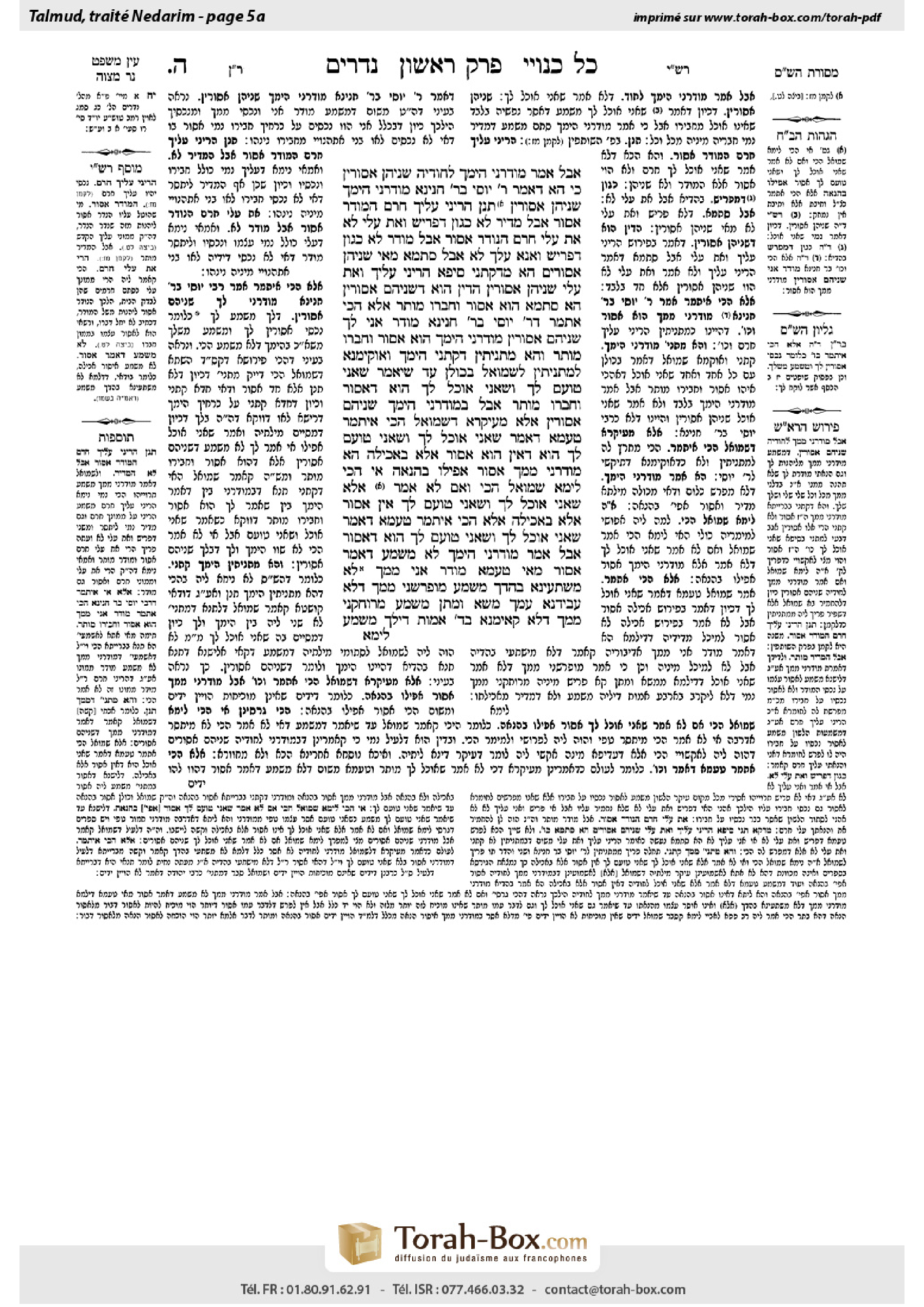
Nedarim 5a: Talmud study for Daf Yomi
Daf Yomi is the daily study of one Talmud folio. Explore 37 tractates with scans, Hebrew text, Sefaria English and AI-generated French translations where annotated.
Passage selection and English or AI-generated French translation are available where the scan has annotations. Daf Study is independent of Torah-Box and Sefaria.
Browse Nedarim · נדרים · All tractatesNedarim 5a text and translations
This page of Nedarim includes the Aramaic text, an English translation and an AI-generated French translation, alongside the scan above.
נדרים ה׳ א · Aramaic and Hebrew text
אֲבָל אָמַר ״מוּדְּרַנִי הֵימָךְ״ לְחוֹדֵיהּ — שְׁנֵיהֶן אֲסוּרִין. כִּי הָא דְּאָמַר רַבִּי יוֹסֵי בְּרַבִּי חֲנִינָא: ״מוּדְּרַנִי הֵימָךְ״ — שְׁנֵיהֶן אֲסוּרִין.
תְּנַן: ״הֲרֵינִי עָלֶיךָ חֵרֶם״ — הַמּוּדָּר אָסוּר, אֲבָל מַדִּיר לָא. כְּגוֹן דְּפָרֵישׁ: ״וְאַתְּ עֲלַי לָא״.
״אַתְּ עָלַי חֵרֶם״ — הַנּוֹדֵר אָסוּר, אֲבָל מוּדָּר לָא. כְּגוֹן דְּפָרֵישׁ: ״וַאֲנָא עֲלָךְ לָא״.
אֲבָל סְתָמָא מַאי? שְׁנֵיהֶן אֲסוּרִים. הָא מִדְּקָתָנֵי סֵיפָא: ״הֲרֵינִי עָלֶיךָ וְאַתְּ עָלַי״, שְׁנֵיהֶן אֲסוּרִים, הָדֵין הוּא דִּשְׁנֵיהֶם אֲסוּרִין, הָא סְתָמָא — הוּא אָסוּר וַחֲבֵרוֹ מוּתָּר!
אֶלָּא הָכִי אִתְּמַר דְּרַבִּי יוֹסֵי בְּרַבִּי חֲנִינָא: ״מוּדָּר אֲנִי לָךְ״ — שְׁנֵיהֶם אֲסוּרִין, ״מוּדְּרַנִי הֵימָךְ״ — הוּא אָסוּר וַחֲבֵרוֹ מוּתָּר.
וְהָא מַתְנִיתִין דְּקָתָנֵי ״הֵימָךְ״, וְאוֹקִימְנָא לְמַתְנִיתִין לִשְׁמוּאֵל: בְּכוּלָּן עַד שֶׁיֹּאמַר ״שֶׁאֲנִי טוֹעֵם לָךְ״ וְ״שֶׁאֲנִי אוֹכֵל לָךְ״, הוּא דְּאָסוּר וַחֲבֵרוֹ מוּתָּר, אֲבָל בְּ״מוּדְּרַנִי הֵימָךְ״, שְׁנֵיהֶם אֲסוּרִין.
אֶלָּא מֵעִיקָּרָא דִּשְׁמוּאֵל הָכִי אִיתְּמַר: טַעְמָא דְּאָמַר ״שֶׁאֲנִי אוֹכֵל לָךְ״ וְ״שֶׁאֲנִי טוֹעֵם לָךְ״ הוּא דְּאֵין הוּא אָסוּר אֶלָּא בַּאֲכִילָה. הָא ״מוּדְּרַנִי מִמְּךָ״ — אָסוּר אֲפִילּוּ בַּהֲנָאָה.
אִי הָכִי, לֵימָא שְׁמוּאֵל הָכִי: וְאִם לָא אָמַר אֶלָּא ״שֶׁאֲנִי אוֹכֵל לָךְ״ וְ״שֶׁאֲנִי טוֹעֵם לָךְ״, אֵין אָסוּר אֶלָּא בַּאֲכִילָה.
אֶלָּא הָכִי אִיתְּמַר: טַעְמָא דְּאָמַר ״שֶׁאֲנִי אוֹכֵל לָךְ״ וְ״שֶׁאֲנִי טוֹעֵם לָךְ״, הוּא דְּאָסוּר. אֲבָל אָמַר ״מוּדְּרַנִי הֵימָךְ״ — לָא מַשְׁמַע דְּאָמַר אָסוּר. מַאי טַעְמָא: ״מוּדָּר אֲנִי מִמָּךְ״ — לָא מִשְׁתַּעֵינָא בַּהֲדָךְ מַשְׁמַע. ״מוּפְרְשַׁנִי מִמָּךְ״ — דְּלָא עָבֵידְנָא עִמָּךְ מַשָּׂא וּמַתָּן מַשְׁמַע. ״מְרוּחֲקַנִי מִמָּךְ״ — דְּלָא קָאֵימְנָא בְּאַרְבַּע אַמּוֹת דִּילָךְ מַשְׁמַע.
Nedarim 5a · English translation
However, if he said only: I am avowed from you, they are both prohibited from deriving benefit from one another. This is like that which Rabbi Yosei, son of Rabbi Ḥanina, said: If one says: I am avowed from you, they are both prohibited.
The Gemara asks: We learned in a mishna (47b) that if one says to another: I am hereby to you like an item dedicated to the Temple, the one to whom the vow was said is prohibited from deriving benefit from the one who made the vow, but the one who made the vow is not prohibited from deriving benefit from the one with regard to whom the vow was said. However, according to Shmuel, both should be prohibited. The Gemara answers: It is referring to a case where he specified this by saying: And you are not like an item dedicated to the Temple for me.
The Gemara asks: That mishna also taught that if one says: You are to me like an item dedicated to the Temple, the one who makes the vow is prohibited to derive benefit from the other, but the one to whom the vow was said is not prohibited from deriving benefit from the one who makes the vow. However, according to Shmuel, both should be prohibited. The Gemara answers: Here too, it is referring to a case where he specified this by saying: And I am not like an item dedicated to the Temple for you.
The Gemara asks: But if he stated his vow in an unspecified manner, what, are they both prohibited from deriving benefit from each other? From the fact that it teaches in the latter clause that if one says to another: I am hereby to you, and you are to me, like an item dedicated to the Temple, they are both prohibited from deriving benefit from each other, it can be derived that it is in this case both are prohibited, but if one stated his vow in an unspecified manner, he is prohibited from deriving benefit from the other individual and the other is permitted to derive benefit from him. This is not in accordance with the opinion of Shmuel.
Rather, this is how the opinion of Rabbi Yosei, son of Rabbi Ḥanina, was stated: If one said to another: I am avowed to you, they are both prohibited from deriving benefit from one another. However, if he says: I am avowed from you, he is prohibited from deriving benefit from the other person and the other is permitted to derive benefit from him.
The Gemara asks: But didn’t the mishna teach a case of one who declared: I am avowed from you, and yet we established the mishna, according to Shmuel, as teaching that in all these cases it is only if he says: That which I taste of yours, or: That which I eat of yours, that he is prohibited from deriving benefit from the other person, and the other is permitted? However, if he merely says: I am avowed from you, they are both prohibited. Consequently, Shmuel does not distinguish between the expressions: I am avowed from you, and: I am avowed to you.
Rather, this is how the opinion of Shmuel was originally stated: The reason is that he said: That which I eat of yours, or: That which I taste of yours. It is for this reason that he is prohibited only from eating anything belonging to the other person. However, if he said: I am avowed from you, without further specification, he is prohibited even from deriving any form of benefit from the other.
The Gemara asks: If so, let Shmuel say as follows: And if he said only: That which I eat of yours, or: That which I taste of yours, he is prohibited only from eating an item belonging to his fellow, but he is permitted to derive benefit from it.
Rather, this is how Shmuel’s opinion was stated: The reason is that he said: That which I eat of yours, or: That which I taste of yours; it is in these cases that he is prohibited from eating any item belonging to his fellow. However, if he said simply: I am avowed from you, that statement does not indicate that he said he is prohibited from eating an item belonging to his fellow. What is the reason for this? The statement: I am avowed from you, indicates: I am not speaking with you. Similarly, the statement: I am separated from you, indicates: I am not doing business with you. The statement: I am distanced from you, indicates that I will not stand within four cubits of you.
Nedarim 5a · Traduction française (IA)
Toutefois, s’il a dit seulement : « Je suis interdit à toi », tous deux ne peuvent tirer profit l’un de l’autre. Cela correspond à ce qu’a dit Rabbi Yosei, fils de Rabbi Ḥanina : si quelqu’un dit : « Je suis interdit à toi », tous deux ne peuvent tirer profit l’un de l’autre.
La Guemara demande : Nous avons appris dans une Michna (47b) que si quelqu’un dit à un autre : « Je suis pour toi comme un objet consacré au Temple », celui à qui le vœu a été adressé ne peut tirer profit de celui qui l’a prononcé, mais celui qui l’a prononcé ne peut tirer profit de celui à l’égard duquel le vœu a été formulé. Or, selon Shmuel, tous deux ne devraient pouvoir tirer profit l’un de l’autre. La Guemara répond : il s’agit d’un cas où il a précisé en disant : « Et toi, tu n’es pas pour moi comme un objet consacré au Temple. »
La Guemara demande : Cette Michna enseigne également que si quelqu’un dit : « Tu es pour moi comme un objet consacré au Temple », celui qui prononce le vœu ne peut tirer profit de l’autre, mais celui à qui le vœu a été adressé peut tirer profit de celui qui l’a prononcé. Or, selon Shmuel, tous deux ne devraient pouvoir tirer profit l’un de l’autre. La Guemara répond : ici aussi, il s’agit d’un cas où il a précisé en disant : « Et moi, je ne suis pas pour toi comme un objet consacré au Temple. »
La Guemara demande : Mais si son vœu a été formulé sans précision, cela signifie-t-il qu’ils ne peuvent tous deux tirer profit l’un de l’autre ? Puisque la dernière partie de la Michna enseigne que si quelqu’un dit à un autre : « Je suis pour toi, et tu es pour moi, comme un objet consacré au Temple », tous deux ne peuvent tirer profit l’un de l’autre, on peut en déduire que c’est dans ce cas qu’ils ne peuvent tous deux en tirer profit ; mais si son vœu a été formulé sans précision, lui seul ne peut tirer profit de l’autre, tandis que l’autre peut tirer profit de lui. Cela ne concorde pas avec l’avis de Shmuel.
Il faut plutôt comprendre ainsi l’avis de Rabbi Yosei, fils de Rabbi Ḥanina : si quelqu’un dit à un autre : « Je suis interdit à toi », tous deux ne peuvent tirer profit l’un de l’autre. En revanche, s’il dit : « Je suis interdit de toi », lui seul ne peut tirer profit de l’autre, tandis que l’autre peut tirer profit de lui.
La Guemara demande : Mais la Michna n’enseigne-t-elle pas le cas de quelqu’un qui a déclaré : « Je suis interdit de toi » ? Pourtant, nous avons établi que, selon Shmuel, dans tous ces cas, c’est uniquement s’il dit : « Ce que je goûterai de ce qui t’appartient » ou « Ce que je mangerai de ce qui t’appartient » qu’il ne peut tirer profit de l’autre, tandis que l’autre le peut. Toutefois, s’il dit simplement : « Je suis interdit de toi », tous deux ne peuvent tirer profit l’un de l’autre. Par conséquent, Shmuel ne distingue pas entre les expressions « Je suis interdit de toi » et « Je suis interdit à toi ».
Il faut plutôt comprendre ainsi l’avis de Shmuel tel qu’il a été formulé initialement : la raison est qu’il a dit : « Ce que je mangerai de ce qui t’appartient » ou « Ce que je goûterai de ce qui t’appartient ». C’est pour cette raison qu’il ne peut manger que ce qui appartient à l’autre. En revanche, s’il a dit : « Je suis interdit de toi », sans autre précision, il ne peut même pas tirer quelque forme de profit que ce soit de l’autre.
La Guemara demande : Si tel est le cas, que Shmuel dise plutôt ceci : s’il a dit seulement : « Ce que je mangerai de ce qui t’appartient » ou « Ce que je goûterai de ce qui t’appartient », il ne peut que manger un objet appartenant à son prochain, mais il peut en tirer profit.
Il faut plutôt comprendre ainsi l’avis de Shmuel : la raison est qu’il a dit : « Ce que je mangerai de ce qui t’appartient » ou « Ce que je goûterai de ce qui t’appartient » ; c’est dans ces cas qu’il ne peut manger aucun objet appartenant à son prochain. En revanche, s’il a simplement dit : « Je suis interdit de toi », cette déclaration n’indique pas qu’il a dit qu’il lui était interdit de manger un objet appartenant à son prochain. Pourquoi ? L’expression « Je suis interdit de toi » signifie : « Je ne te parle pas. » De même, l’expression « Je suis séparé de toi » signifie : « Je ne fais pas d’affaires avec toi. » L’expression « Je suis éloigné de toi » signifie qu’il ne se tiendra pas à moins de quatre coudées de toi.
Traduction française générée par IA à partir de l’édition anglaise de Sefaria. Vérifie toujours un passage avec le texte source.
Text from Sefaria: William Davidson Edition - Vocalized Aramaic (CC BY NC); William Davidson Edition - English (CC BY NC).