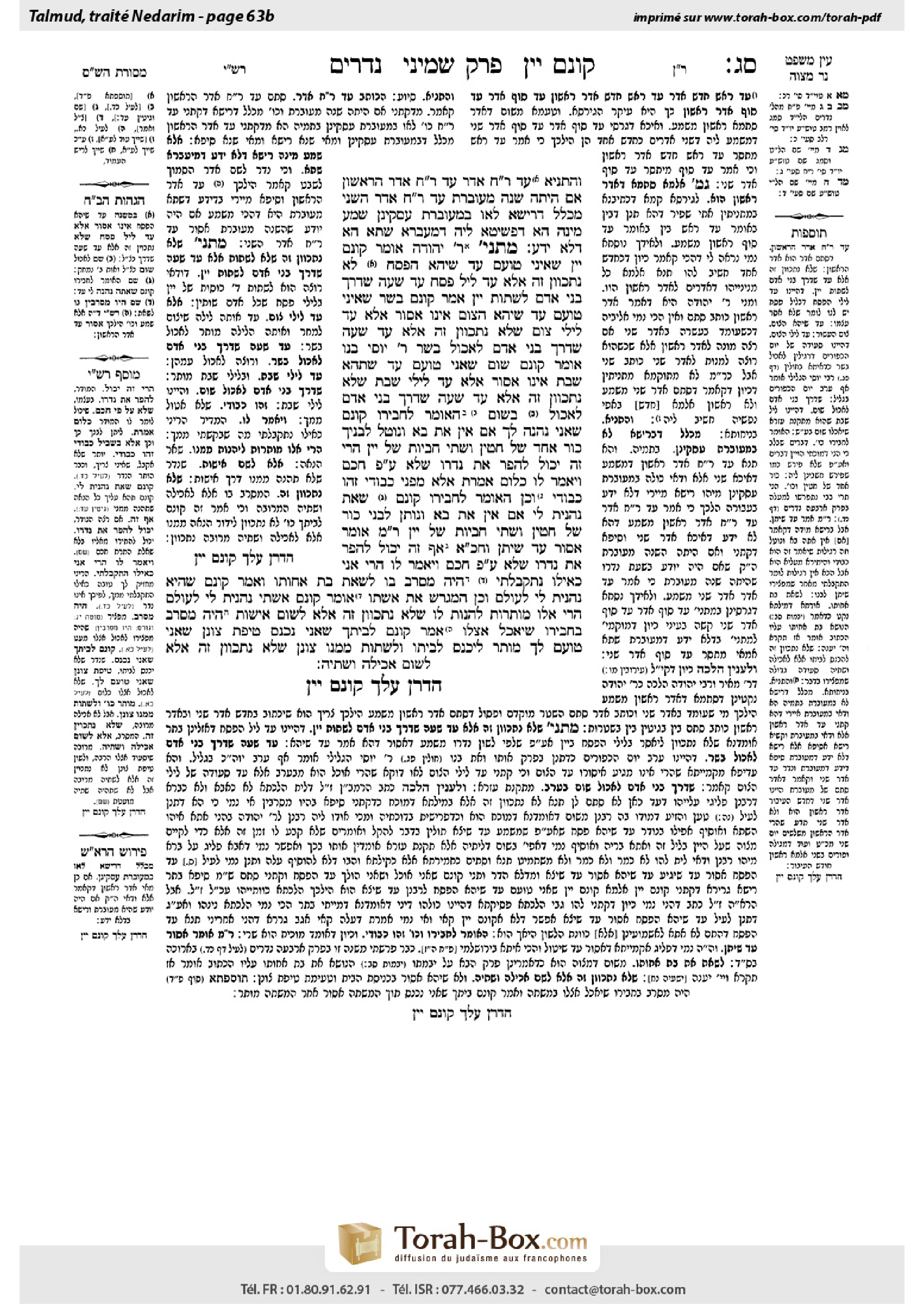
Nedarim 63b: Talmud study for Daf Yomi
Daf Yomi is the daily study of one Talmud folio. Explore 37 tractates with scans, Hebrew text, Sefaria English and AI-generated French translations where annotated.
Passage selection and English or AI-generated French translation are available where the scan has annotations. Daf Study is independent of Torah-Box and Sefaria.
Browse Nedarim · נדרים · All tractatesNedarim 63b text and translations
This page of Nedarim includes the Aramaic text, an English translation and an AI-generated French translation, alongside the scan above.
נדרים ס״ג ב · Aramaic and Hebrew text
וְהָתַנְיָא: ״עַד רֹאשׁ חֹדֶשׁ אֲדָר״ — עַד רֹאשׁ חֹדֶשׁ אֲדָר הָרִאשׁוֹן, אִם הָיְתָה שָׁנָה מְעוּבֶּרֶת — עַד רֹאשׁ חֹדֶשׁ אֲדָר הַשֵּׁנִי.
מִכְּלָל דְּרֵישָׁא לָאו בִּמְעוּבֶּרֶת עָסְקִינַן?! שְׁמַע מִינַּהּ: הָא דִּפְשִׁיטָא לֵיהּ דִּמְעַבְּרָא שַׁתָּא, הָא דְּלָא יָדַע.
מַתְנִי׳ רַבִּי יְהוּדָה אוֹמֵר: ״קֻוֽנָּם יַיִן שֶׁאֵינִי טוֹעֵם עַד שֶׁיְּהֵא הַפֶּסַח״ — לֹא נִתְכַּוֵּון זֶה אֶלָּא עַד לֵיל הַפֶּסַח, עַד שָׁעָה שֶׁדֶּרֶךְ בְּנֵי אָדָם לִשְׁתּוֹת יַיִן.
אָמַר ״קֻוֽנָּם בָּשָׂר שֶׁאֵינִי טוֹעֵם עַד שֶׁיְּהֵא הַצּוֹם״ — אֵינוֹ אָסוּר אֶלָּא עַד לֵילֵי צוֹם, שֶׁלֹּא נִתְכַּוֵּון זֶה אֶלָּא עַד שָׁעָה שֶׁדֶּרֶךְ בְּנֵי אָדָם לֶאֱכוֹל בָּשָׂר. רַבִּי יוֹסֵי בְּנוֹ אוֹמֵר: ״קֻוֽנָּם שׁוּם שֶׁאֲנִי טוֹעֵם עַד שֶׁתְּהֵא שַׁבָּת״, אֵינוֹ אָסוּר אֶלָּא עַד לֵילֵי שַׁבָּת, שֶׁלֹּא נִתְכַּוֵּון זֶה אֶלָּא עַד שָׁעָה שֶׁדֶּרֶךְ בְּנֵי אָדָם לֶאֱכוֹל בְּשׁוּם.
הָאוֹמֵר לַחֲבֵירוֹ ״קֻוֽנָּם שֶׁאֲנִי נֶהֱנֶה לְךָ אִם אֵין אַתְּ בָּא וְנוֹטֵל לְבָנֶיךָ כּוֹר אֶחָד שֶׁל חִטִּין וּשְׁתֵּי חָבִיּוֹת שֶׁל יַיִן״ — הֲרֵי זֶה יָכוֹל לְהָפֵר אֶת נִדְרוֹ שֶׁלֹּא עַל פִּי חָכָם. וְיֹאמַר לוֹ: כְּלוּם אָמַרְתָּ אֶלָּא מִפְּנֵי כְבוֹדִי — זֶהוּ כְּבוֹדִי.
וְכֵן הָאוֹמֵר לַחֲבֵירוֹ ״קֻוֽנָּם שֶׁאַתְּ נֶהֱנֵית לִי אִם אֵין אַתְּ בָּא וְנוֹתֵן לִבְנִי כּוֹר שֶׁל חִטִּין וּשְׁתֵּי חָבִיּוֹת שֶׁל יַיִן״, רַבִּי מֵאִיר אוֹמֵר: אָסוּר עַד שֶׁיִּתֵּן, וַחֲכָמִים אוֹמְרִים: אַף זֶה יָכוֹל לְהָפֵר אֶת נִדְרוֹ שֶׁלֹּא עַל פִּי חָכָם, וְיֹאמַר לוֹ: הֲרֵי אֲנִי כְּאִילּוּ נִתְקַבַּלְתִּי.
הָיָה מְסָרֵב בּוֹ לָשֵׂאת בַּת אֲחוֹתוֹ, וְאָמַר ״קֻוֽנָּם שֶׁהִיא נֶהֱנֵית לִי לְעוֹלָם״, וְכֵן הַמְגָרֵשׁ אֶת אִשְׁתּוֹ, אוֹמֵר ״קֻוֽנָּם אִשְׁתִּי נֶהֱנֵית לִי לְעוֹלָם״ — הֲרֵי אֵלּוּ מוּתָּרוֹת לֵהָנוֹת לוֹ, שֶׁלֹּא נִתְכַּוֵּון זֶה אֶלָּא לְשׁוּם אִישׁוּת.
הָיָה מְסָרֵב בַּחֲבֵירוֹ שֶׁיֹּאכַל אֶצְלוֹ, אָמַר: ״קֻוֽנָּם לְבֵיתְךָ שֶׁאֲנִי נִכְנָס, טִיפַּת צוֹנֵן שֶׁאֲנִי טוֹעֵם לָךְ״ — מוּתָּר לִיכָּנֵס לְבֵיתוֹ וְלִשְׁתּוֹת מִמֶּנּוּ צוֹנֵן, שֶׁלֹּא נִתְכַּוֵּון זֶה אֶלָּא לְשׁוּם אֲכִילָה וּשְׁתִיָּה.
הֲדַרַן עֲלָךְ קֻוֽנָּם יַיִן
Nedarim 63b · English translation
And, so too, it is taught in a baraita: If one vows until the New Moon of Adar, the vow remains in effect until the New Moon of the first Adar, and if it was a leap year, it remains in effect until the New Moon of the second Adar.
The Gemara analyzes this baraita: Does the latter clause prove by inference that in the first clause, we are not dealing with a leap year? In a regular year there is only one month of Adar, so it is impossible to speak of a first or second Adar. Rather, learn from it that this latter clause is referring to a case where it is obvious to him that the year was extended, and therefore when he refers to the month of Adar he means the second Adar, whereas that first clause is referring to a case where he did not know that it was a leap year, in which case he means the first Adar.
MISHNA: Rabbi Yehuda says: In the case of one who says: Wine is konam for me, and for that reason I will not taste it until it will be Passover, it is understood that this individual intended for his vow to apply only until the night of Passover, i.e., until the time when it is customary for people to drink wine in order to fulfill the mitzva of drinking the four cups, but he did not intend to prevent himself from being able to fulfill this mitzva.
Similarly, if he said: Meat is konam for me, and for that reason I will not taste it until it will be the fast of Yom Kippur, he is prohibited from eating meat only until the eve of [leilei] the fast. This is because it is understood that this individual intended for his vow to apply only until the time when it is customary for people to eat meat in the festive meal before the fast, and he did not intend to prevent himself from being able to participate in that meal. Rabbi Yosei, his son, says: One who vows: Garlic is konam for me, and for that reason I will not taste it until it will be Shabbat, it is prohibited for him to eat garlic only until the eve of Shabbat, as it is understood that this individual intended for his vow to apply only until the time when it is customary for people to eat garlic.
In the case of one who says to another: Benefiting from you is konam for me, i.e., I am prohibited from deriving benefit from you, if you do not come and take for your son one kor of wheat and two barrels of wine as a gift, this other individual can dissolve his vow without the consent of a halakhic authority. This is because he can say to him: Did you say your vow for any reason other than due to my honor, in order to convince me to accept a gift for my son? This is my honor, that I refrain from accepting the gift, and consequently the vow is annulled.
And, so too, in the case of one who says to another: Benefiting from me is konam for you, i.e., you are prohibited from deriving benefit from me, if you do not come and give my son one kor of wheat and two barrels of wine, Rabbi Meir says: It is prohibited for the other individual to benefit from the speaker until he gives the gifts to his son. However, the Rabbis say: Even this individual who took the vow can dissolve his own vow without the consent of a halakhic authority. This is because he can say to him: I hereby consider it as though I have received the gift.
If an individual was urging another to marry the daughter of his sister, and in order to deflect the pressure, the other man said: Benefiting from me is konam for her forever, i.e., she is prohibited from deriving any benefit from me forever, and, so too, if there is one who divorces his wife and says: Benefiting from me is konam for my wife forever, these women are permitted to derive benefit from him, as this man intended to take this vow only for the purpose of prohibiting marriage between them, but not to prohibit all forms of benefit.
Similarly, if one was urging another to eat with him, and the latter said: Entering your house is konam for me, as is tasting even a drop of cold liquid of yours, the individual who took the vow is nevertheless permitted to enter his house and to drink a cold beverage of his. This is because this individual intended to take this vow only for the purpose of eating and drinking a meal, but not to prohibit himself from entering the house entirely or from drinking in small quantities (Commentary on Nedarim).
Nedarim 63b · Traduction française (IA)
De même, il est enseigné dans une baraïta : Si quelqu’un fait un vœu jusqu’à la nouvelle lune d’Adar, le vœu reste en vigueur jusqu’à la nouvelle lune du premier Adar ; et, si l’année est embolismique, il reste en vigueur jusqu’à la nouvelle lune du second Adar.
La Guemara analyse cette baraïta : La clause finale permet-elle de déduire que, dans la première clause, il ne s’agit pas d’une année embolismique ? Dans une année ordinaire, il n’y a qu’un seul mois d’Adar ; il est donc impossible de parler d’un premier ou d’un second Adar. Il faut plutôt en déduire que la clause finale se rapporte à un cas où l’intéressé sait que l’année a été prolongée et que, par conséquent, lorsqu’il mentionne le mois d’Adar, il entend le second Adar, tandis que la première clause se rapporte à un cas où il ignorait que l’année était embolismique ; dans ce cas, il entend le premier Adar.
MICHNA : Rabbi Yehuda dit : Si quelqu’un dit : « Le vin m’est interdit comme un konam ; pour cette raison, je n’en goûterai pas jusqu’à Pessa’h », on comprend qu’il entend que son vœu ne s’applique que jusqu’à la nuit de Pessa’h, c’est-à-dire jusqu’au moment où l’on a coutume de boire du vin afin d’accomplir la mitsva des quatre coupes. Il n’entend pas s’empêcher d’accomplir cette mitsva.
De même, s’il dit : « La viande m’est interdite comme un konam ; pour cette raison, je n’en goûterai pas jusqu’au jeûne de Yom Kippour », il lui est interdit d’en manger seulement jusqu’à la veille du jeûne [leilei]. On comprend en effet qu’il entend que son vœu ne s’applique que jusqu’au moment où l’on a coutume de manger de la viande au repas festif précédant le jeûne, et qu’il n’entend pas s’empêcher de prendre part à ce repas. Rabbi Yosei, son fils, dit : Celui qui fait le vœu suivant : « L’ail m’est interdit comme un konam ; pour cette raison, je n’en goûterai pas jusqu’à Chabbat », ne peut manger d’ail que jusqu’à la veille de Chabbat, car on comprend qu’il entend que son vœu ne s’applique que jusqu’au moment où l’on a coutume de manger de l’ail.
Si quelqu’un dit à un autre : « Tirer profit de toi m’est interdit comme un konam si tu ne viens pas prendre, pour ton fils, un kor de blé et deux tonneaux de vin en cadeau », l’autre peut faire annuler le vœu sans l’accord d’une autorité halakhique. Il peut en effet lui dire : « As-tu prononcé ce vœu pour une autre raison que par égard pour moi, afin de me convaincre d’accepter un cadeau pour mon fils ? C’est précisément ce qui m’honore : je m’abstiens d’accepter le cadeau. » Le vœu est donc annulé.
De même, si quelqu’un dit à un autre : « Tirer profit de moi t’est interdit comme un konam si tu ne viens pas donner à mon fils un kor de blé et deux tonneaux de vin », Rabbi Meir dit : Il est interdit à l’autre de tirer profit de celui qui a parlé jusqu’à ce qu’il donne les cadeaux à son fils. Mais les Sages disent : Même celui qui a prononcé le vœu peut faire annuler son propre vœu sans l’accord d’une autorité halakhique. Il peut en effet lui dire : « Je considère que j’ai reçu le cadeau. »
Si quelqu’un pressait un autre homme d’épouser la fille de sa sœur et que, pour échapper à cette pression, l’autre homme dise : « Tirer profit de moi lui est interdit comme un konam pour toujours », c’est-à-dire qu’il lui est interdit de tirer de lui quelque profit que ce soit pour toujours ; de même, si un homme répudie sa femme et dit : « Tirer profit de moi est interdit à ma femme comme un konam pour toujours », ces femmes sont autorisées à tirer profit de lui. En effet, cet homme n’a prononcé ce vœu que dans le but de leur interdire le mariage, et non de leur interdire toute forme de profit.
De même, si quelqu’un pressait un autre de manger avec lui et que ce dernier dise : « Entrer dans ta maison m’est interdit comme un konam, tout comme goûter ne serait-ce qu’une goutte de ton liquide froid », celui qui a prononcé le vœu est néanmoins autorisé à entrer dans sa maison et à y boire une boisson froide. Il entend en effet, par ce vœu, s’interdire seulement de prendre un repas et de boire avec lui, et non de s’interdire complètement d’entrer dans la maison ou de boire en petite quantité (Commentaire sur Nedarim).
Traduction française générée par IA à partir de l’édition anglaise de Sefaria. Vérifie toujours un passage avec le texte source.
Text from Sefaria: William Davidson Edition - Vocalized Aramaic (CC BY NC); William Davidson Edition - English (CC BY NC).