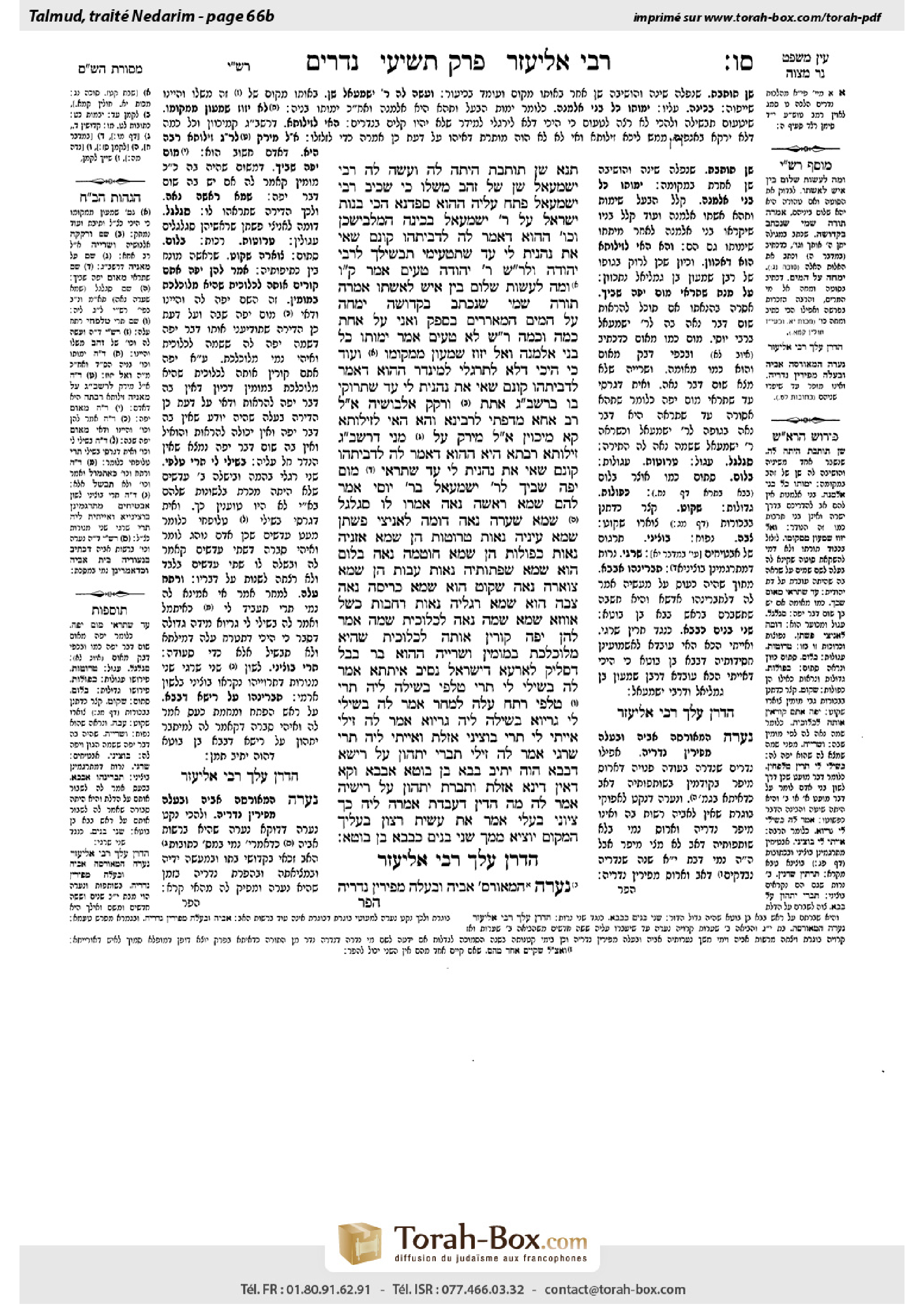
Nedarim 66b: Talmud study for Daf Yomi
Daf Yomi is the daily study of one Talmud folio. Explore 37 tractates with scans, Hebrew text, Sefaria English and AI-generated French translations where annotated.
Passage selection and English or AI-generated French translation are available where the scan has annotations. Daf Study is independent of Torah-Box and Sefaria.
Browse Nedarim · נדרים · All tractatesNedarim 66b text and translations
This page of Nedarim includes the Aramaic text, an English translation and an AI-generated French translation, alongside the scan above.
נדרים ס״ו ב · Aramaic and Hebrew text
תָּנָא: שֵׁן תּוֹתֶבֶת הָיְתָה לָהּ, וְעָשָׂה לָהּ רַבִּי יִשְׁמָעֵאל שֵׁן שֶׁל זָהָב מִשֶּׁלּוֹ. כִּי שְׁכֵיב רַבִּי יִשְׁמָעֵאל, פְּתַח עֲלֵיהּ הַהוּא סַפְדָנָא הָכִי: ״בְּנוֹת יִשְׂרָאֵל עַל רַבִּי יִשְׁמָעֵאל בְּכֶינָה הַמַּלְבִּישְׁכֶן וְכוּ׳״.
הָהוּא דַּאֲמַר לַהּ לִדְבֵיתְהוּ ״קֻוֽנָּם שֶׁאִי אַתְּ נֶהֱנֵית לִי עַד שֶׁתַּטְעִימִי תַּבְשִׁילֵךְ לְרַבִּי יְהוּדָה וּלְרַבִּי שִׁמְעוֹן״. רַבִּי יְהוּדָה טְעֵים, אֲמַר, קַל וָחוֹמֶר: וּמָה לַעֲשׂוֹת שָׁלוֹם בֵּין אִישׁ לְאִשְׁתּוֹ אָמְרָה תּוֹרָה שְׁמִי שֶׁנִּכְתַּב בִּקְדוּשָּׁה יִמָּחֶה עַל הַמַּיִם הַמְאָרְרִים בְּסָפֵק, וַאֲנִי עַל אַחַת כַּמָּה וְכַמָּה.
רַבִּי שִׁמְעוֹן לָא טְעֵים, אֲמַר: יָמוּתוּ כׇּל בְּנֵי אַלְמָנָה, וְאַל יָזוּז שִׁמְעוֹן מִמְּקוֹמוֹ. וְעוֹד: כִּי הֵיכִי דְּלָא לִתְרַגְּלִי לְמִינְדָּר.
הַהוּא דְּאָמַר לִדְבֵיתְהוּ ״קֻוֽנָּם שֶׁאִי אַתְּ נֶהֱנֵית לִי עַד שֶׁתָּרוֹקִּי בּוֹ בְּרַבָּן שִׁמְעוֹן בֶּן גַּמְלִיאֵל״. אֲתָת וּרְקַק אַלְּבוּשֵׁיהּ. אָמַר לֵיהּ רַב אַחָא מִדִּפְתִּי לְרָבִינָא: וְהָא הַאי לְזִילוּתָא קָא מִיכַּוֵּין! אָמַר לֵיהּ: מִירָק עַל מָנֵי דְּרַבָּן שִׁמְעוֹן בֶּן גַּמְלִיאֵל זִילוּתָא רַבְּתָא הִיא.
הָהוּא דַּאֲמַר לִדְבֵיתְהוּ ״קֻוֽנָּם שֶׁאִי אַתְּ נֶהֱנֵית לִי עַד שֶׁתַּרְאִי מוּם יָפֶה שֶׁבִּיךְ לְרַבִּי יִשְׁמָעֵאל בְּרַבִּי יוֹסֵי״.
אָמַר לָהֶם: שֶׁמָּא רֹאשָׁהּ נָאֶה? אָמְרוּ לוֹ: סְגַלְגַּל. שֶׁמָּא שְׂעָרָהּ נָאֶה? דּוֹמֶה לַאֲנִיצֵי פִּשְׁתָּן. שֶׁמָּא עֵינֶיהָ נָאוֹת? טְרוּטוֹת הֵן. שֶׁמָּא אׇזְנֶיהָ נָאוֹת? כְּפוּלוֹת הֵן. שֶׁמָּא חוֹטְמָהּ נָאֶה? בָּלוּם הוּא. שֶׁמָּא שִׂפְתוֹתֶיהָ נָאוֹת? עָבוֹת הֵן. שֶׁמָּא צַוָּארָהּ נָאֶה? שָׁקוּט הוּא. שֶׁמָּא כְּרֵיסָהּ נָאֶה? צָבֶה הוּא. שֶׁמָּא רַגְלֶיהָ נָאוֹת? רְחָבוֹת כְּשֶׁל אֲווֹזָא. שֶׁמָּא שְׁמָהּ נָאֶה? ״לִכְלוּכִית״ שְׁמָהּ. אָמַר לָהֶן: יָפֶה קוֹרִין אוֹתָהּ לִכְלוּכִית, שֶׁהִיא מְלוּכְלֶכֶת בְּמוּמִין, וְשַׁרְיַיהּ.
הָהוּא בַּר בָּבֶל דִּסְלֵיק לְאַרְעָא דְיִשְׂרָאֵל, נְסֵיב אִיתְּתָא. אֲמַר לַהּ: בַּשִּׁילִי לִי תְּרֵי טַלְפֵי. בַּשִּׁילָה לֵיהּ תְּרֵי טַלְפֵי. רְתַח עֲלַהּ. לִמְחַר אֲמַר לַהּ: בַּשִּׁילִי לִי גְּרִיוָא. בַּשִּׁילָה לֵיהּ גְּרִיוָא. אֲמַר לַהּ: זִילִי אַיְיתִי לִי תְּרֵי בוּצִינֵי. אֲזַלַת וְאַיְיתַי לֵיהּ תְּרֵי שְׁרָגֵי.
אֲמַר לַהּ: זִילִי תְּבַרִי יָתְהוֹן עַל רֵישָׁא דְבָבָא. הֲוָה יָתֵיב בָּבָא בֶּן בּוּטָא אַבָּבָא וְקָא דָאֵין דִּינָא. אֲזַלַת וּתְבַרַת יָתְהוֹן עַל רֵישֵׁיהּ. אֲמַר לַהּ: מָה הָדֵין דַּעֲבַדְתְּ? אֲמַרָה לֵיהּ: כָּךְ צִיוַּנִי בַּעְלִי. אֲמַר: אַתְּ עָשִׂית רְצוֹן בַּעְלִיךְ, הַמָּקוֹם יוֹצִיא מִמֵּךְ שְׁנֵי בָּנִים כְּבָבָא בֶּן בּוּטָא.
הַדְרָן עֲלָךְ רַבִּי אֱלִיעֶזֶר
נַעֲרָה הַמְאוֹרָסָה, אָבִיהָ וּבַעְלָהּ מְפִירִין נְדָרֶיהָ.
Nedarim 66b · English translation
It was taught: She had a false tooth [shen totevet], which disfigured her, and Rabbi Yishmael made her a gold tooth from his own money, thereby beautifying her. When Rabbi Yishmael died, a certain eulogizer began his eulogy about him like this: Daughters of Israel, weep for Rabbi Yishmael, who clothed you.
§ The Gemara relates: There was a certain person who said to his wife: Benefiting from me is konam for you until you have given Rabbi Yehuda and Rabbi Shimon your cooked food to taste, so they can see for themselves what a bad cook you are. She brought the food to them, and Rabbi Yehuda tasted it, without concern for his honor. He said: This is an a fortiori inference: And what can be seen, that in order to make peace between a man and his wife, the Torah said: My name, that is written in sanctity, shall be blotted out in the waters that curse, as the words written on a scroll, including the name of God, were blotted out during the ceremony of preparing the water that a sota would drink. And this is so even in a case of where it is uncertain if this will bring peace between them, as she may or not be guilty of adultery. I, all the more so, should waive my honor in order to bring peace to this couple.
Conversely, Rabbi Shimon did not taste. He said: Let all the children of the widow die, and Shimon will not budge from his place. In other words, the husband can die and leave his wife a widow and his children orphans, and let them die too, rather than have people belittle the dignity of Torah scholars by taking such vows. And furthermore, there is another reason for my refusal: So that they should not become used to taking vows.
The Gemara relates: There was a certain person who said to his wife: Benefiting from me is konam for you until you have spat on Rabban Shimon ben Gamliel. She came to Rabban Shimon ben Gamliel and spat on his clothing. Rav Aḥa of Difti said to Ravina: But this man intended the humiliation of Rabban Shimon ben Gamliel, which is not achieved by spitting on his clothing. Ravina said to him: Spittle on the clothing of Rabban Shimon ben Gamliel is a great humiliation for him, and she has thereby fulfilled the vow.
The Gemara relates: There was a certain person who said to his wife: Benefiting from me is konam for you until you show some beautiful [yafeh] part of you to Rabbi Yishmael, son of Rabbi Yosei. Rabbi Yishmael attempted to find something beautiful about the woman.
He said to his students: Perhaps her head is beautiful? They said to him: It is round [segalgal]. Perhaps her hair is beautiful? They replied: Her hair resembles stalks of flax. Perhaps her eyes are beautiful? They are narrow [terutot]. Perhaps her ears are beautiful? They are double in size. Perhaps her nose is beautiful? It is stubby. Perhaps her lips are beautiful? They are thick. Perhaps her neck is beautiful? It is low and short. Perhaps her stomach is beautiful? It is swollen. Perhaps her feet are beautiful? They are as wide as a goose’s. Perhaps her name is beautiful? Her name is Likhlukhit. He said to them: It is fitting [yafeh] that she is called by the name Likhlukhit, as she is dirty [melukhlekhet] with blemishes, and he permitted her to benefit from her husband, because she did have one beautiful feature, her fitting name.
The Gemara cites another incident: There was a certain Babylonian who went up to Eretz Yisrael and married a woman there. He said to her: Cook two lentils, i.e., some lentils, for me. She cooked exactly two lentils for him. He grew angry with her. On the following day, so that she would not repeat what she had done, he said to her: Cook a se’a [geriva] for me, intending: A large amount. She cooked an actual se’a for him, far more than what one person could eat. He said to her: Go and bring me two butzinei, intending small gourds, as butzinei are small gourds in the Aramaic dialect spoken in Babylonia. She went and brought him two lamps [sheraggei], called butzinei in the Aramaic dialect spoken in Eretz Yisrael.
In anger, he said to her: Go and break them on the head of the bava, intending the gate, as bava means a gate in the Aramaic dialect spoken in Babylonia. She did not recognize this word. At that time, the Sage Bava ben Buta was sitting as a judge at the gate. She went and broke them on his head, as his name was Bava. He said to her: What is this you have done? She said to him: This is what my husband commanded me to do. He said: You fulfilled your husband’s desire, may the Omnipresent bring forth from you two sons, corresponding to the two candles, like Bava ben Buta.
MISHNA: With regard to a betrothed young woman, her father and her husband together nullify her vows.
Nedarim 66b · Traduction française (IA)
Il a été enseigné : Elle avait une fausse dent [shen totevet] qui la défigurait, et Rabbi Yishmael lui fit faire, à ses frais, une dent en or, qui l’embellit. Lorsque Rabbi Yishmael mourut, un certain orateur funèbre commença ainsi son éloge : « Filles d’Israël, pleurez Rabbi Yishmael, qui vous vêtait. »
§ La Guemara rapporte : Un homme dit à sa femme : « Tirer profit de moi te sera interdit par konam jusqu’à ce que tu aies fait goûter ton plat à Rabbi Yehuda et à Rabbi Shimon, afin qu’ils constatent eux-mêmes à quel point tu cuisines mal. » Elle leur apporta le plat, et Rabbi Yehuda y goûta, sans se soucier de son honneur. Il dit : « C’est un raisonnement a fortiori : si, afin de rétablir la paix entre un homme et sa femme, la Torah a dit : “Mon nom, écrit dans la sainteté, sera effacé dans les eaux qui maudissent” — c’est-à-dire que les mots inscrits sur un rouleau, y compris le nom de Dieu, étaient effacés lors de la cérémonie de préparation de l’eau que devait boire une sota —, et cela même lorsqu’on ignore si cela rétablira la paix entre eux, puisqu’elle peut être coupable ou non d’adultère, à combien plus forte raison dois-je renoncer à mon honneur afin de rétablir la paix dans ce couple ! »
À l’inverse, Rabbi Shimon n’y goûta pas. Il dit : « Que tous les enfants de la veuve meurent, et Shimon ne bougera pas de sa place. » Autrement dit, que le mari meure et laisse sa femme veuve et ses enfants orphelins, et que ceux-ci meurent eux aussi, plutôt que de laisser les gens rabaisser la dignité des sages de la Torah en prononçant de tels vœux. En outre, il y a une autre raison à mon refus : c’est pour qu’ils ne prennent pas l’habitude de prononcer des vœux.
La Guemara rapporte : Un homme dit à sa femme : « Tirer profit de moi te sera interdit par konam jusqu’à ce que tu craches sur Rabban Shimon ben Gamliel. » Elle se rendit auprès de Rabban Shimon ben Gamliel et cracha sur son vêtement. Rav Aḥa de Difti dit à Ravina : « Mais cet homme voulait humilier Rabban Shimon ben Gamliel, ce qui n’est pas le cas lorsqu’on crache sur son vêtement. » Ravina lui répondit : « Cracher sur le vêtement de Rabban Shimon ben Gamliel constitue une grande humiliation pour lui, et elle a ainsi accompli le vœu. »
La Guemara rapporte : Un homme dit à sa femme : « Tirer profit de moi te sera interdit par konam jusqu’à ce que tu montres une partie belle [yafeh] de toi à Rabbi Yishmael, fils de Rabbi Yosei. » Rabbi Yishmael tenta de trouver quelque chose de beau chez cette femme.
Il dit à ses élèves : « Peut-être sa tête est-elle belle ? » Ils répondirent : « Elle est ronde [segalgal]. » « Peut-être ses cheveux sont-ils beaux ? » Ils répondirent : « Ses cheveux ressemblent à des tiges de lin. » « Peut-être ses yeux sont-ils beaux ? » « Ils sont étroits [terutot]. » « Peut-être ses oreilles sont-elles belles ? » « Elles sont deux fois plus grandes. » « Peut-être son nez est-il beau ? » « Il est retroussé. » « Peut-être ses lèvres sont-elles belles ? » « Elles sont épaisses. » « Peut-être son cou est-il beau ? » « Il est bas et court. » « Peut-être son ventre est-il beau ? » « Il est gonflé. » « Peut-être ses pieds sont-ils beaux ? » « Ils sont aussi larges que ceux d’une oie. » « Peut-être son nom est-il beau ? » « Elle s’appelle Likhlukhit. » Il leur dit : « Il est approprié [yafeh] qu’elle porte le nom de Likhlukhit, puisqu’elle est souillée [melukhlekhet] de défauts. » Il lui permit alors de tirer profit de son mari, car elle avait bien un trait beau : son nom lui convenait.
La Guemara rapporte un autre épisode : Un Babylonien se rendit en Eretz Israël et y épousa une femme. Il lui dit : « Fais-moi cuire deux lentilles », voulant dire un peu de lentilles. Elle lui fit cuire exactement deux lentilles. Il se mit en colère contre elle. Le lendemain, pour qu’elle ne recommence pas, il lui dit : « Fais-moi cuire une séa [geriva] », voulant dire une grande quantité. Elle lui fit cuire une séa entière, bien plus que ce qu’une seule personne pouvait manger. Il lui dit : « Va me chercher deux butzinei », voulant dire de petites courges, car butzinei désigne de petites courges dans le dialecte araméen parlé en Babylonie. Elle partit et lui rapporta deux lampes [sheraggei], appelées butzinei dans le dialecte araméen parlé en Eretz Israël.
Furieux, il lui dit : « Va les briser sur la tête du bava », voulant dire le portail, car bava signifie « portail » dans le dialecte araméen parlé en Babylonie. Elle ne comprit pas ce mot. À ce moment-là, le sage Bava ben Buta siégeait comme juge à la porte. Elle alla briser les lampes sur sa tête, puisqu’il s’appelait Bava. Il lui dit : « Qu’as-tu fait ? » Elle lui répondit : « C’est ce que mon mari m’a ordonné de faire. » Il dit : « Tu as accompli le désir de ton mari ; puisse le Tout-Puissant faire naître de toi deux fils, correspondant aux deux lampes, comme Bava ben Buta. »
Michna : S’agissant d’une jeune fille fiancée, son père et son mari annulent ensemble ses vœux.
Traduction française générée par IA à partir de l’édition anglaise de Sefaria. Vérifie toujours un passage avec le texte source.
Text from Sefaria: William Davidson Edition - Vocalized Aramaic (CC BY NC); William Davidson Edition - English (CC BY NC).