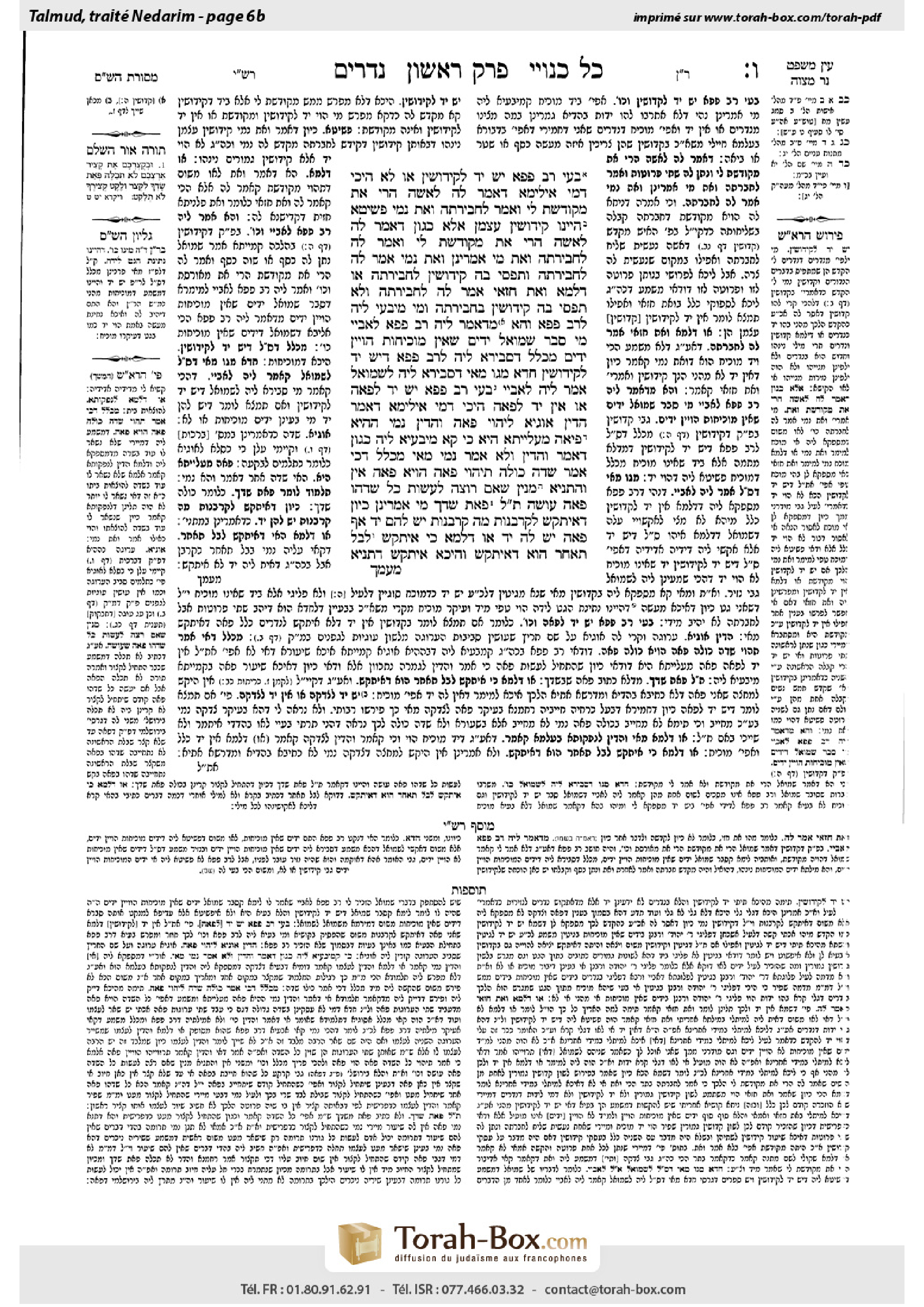
Nedarim 6b: Talmud study for Daf Yomi
Daf Yomi is the daily study of one Talmud folio. Explore 37 tractates with scans, Hebrew text, Sefaria English and AI-generated French translations where annotated.
Passage selection and English or AI-generated French translation are available where the scan has annotations. Daf Study is independent of Torah-Box and Sefaria.
Browse Nedarim · נדרים · All tractatesNedarim 6b text and translations
This page of Nedarim includes the Aramaic text, an English translation and an AI-generated French translation, alongside the scan above.
נדרים ו׳ ב · Aramaic and Hebrew text
בָּעֵי רַב פָּפָּא: יֵשׁ יָד לְקִידּוּשִׁין, אוֹ לָא? הֵיכִי דָמֵי: אִילֵימָא דְּאָמַר לַהּ לְאִשָּׁה ״הֲרֵי אַתְּ מְקוּדֶּשֶׁת לִי״, וְאָמַר לַחֲבֶירְתָּהּ ״וְאַתְּ נָמֵי״ — פְּשִׁיטָא הַיְינוּ קִידּוּשִׁין עַצְמָן! אֶלָּא כְּגוֹן דְּאָמַר לַהּ לְאִשָּׁה ״הֲרֵי אַתְּ מְקוּדֶּשֶׁת לִי״, וְאָמַר לַהּ לַחֲבֶירְתָּהּ ״וְאַתְּ״. מִי אָמְרִינַן ״וְאַתְּ נָמֵי״ אֲמַר לַהּ לַחֲבֶירְתָּהּ, וְתָפְסִי בַּהּ קִידּוּשִׁין לַחֲבֶירְתָּהּ, אוֹ דִּלְמָא: ״וְאַתְּ חֲזַאי״ אֲמַר לַהּ לַחֲבֶירְתַּהּ, וְלָא תָּפְסִי בָּהּ קִידּוּשִׁין בַּחֲבֶירְתַּהּ.
וּמִי מִיבְּעֵי לֵיהּ לְרַב פָּפָּא? וְהָא מִדַּאֲמַר לֵיהּ רַב פָּפָּא לְאַבָּיֵי: מִי סָבַר שְׁמוּאֵל יָדַיִם שֶׁאֵין מוֹכִיחוֹת הָוְיָין יָדַיִם, מִכְּלָל דִּסְבִירָא לֵיהּ לְרַב פָּפָּא דְּיֵשׁ יָד לְקִידּוּשִׁין! חֲדָא מִגּוֹ מַאי דִּסְבִירָא לֵיהּ לִשְׁמוּאֵל אֲמַר לֵיהּ לְאַבָּיֵי.
בָּעֵי רַב פָּפָּא: יֵשׁ יָד לְפֵאָה, אוֹ אֵין יָד לְפֵאָה? הֵיכִי דָמֵי: אִילֵימָא דְּאָמַר ״הָדֵין אוּגְיָא לֶיהֱוֵי פֵּאָה, וְהָדֵין נָמֵי״ — הָהִיא פֵּיאָה מְעַלַּיְיתָא הִיא. כִּי קָא מִיבַּעְיָא לֵיהּ, כְּגוֹן דְּאָמַר ״וְהָדֵין״ וְלָא אָמַר ״נָמֵי״, מַאי?
מִכְּלָל, דְּכִי אָמַר ״שָׂדֶה כּוּלָּהּ תֶּיהְוֵי פֵּאָה״, הָוְיָא פֵּאָה?
אִין, וְהָתַנְיָא: מִנַּיִן שֶׁאִם רוֹצֶה לַעֲשׂוֹת כׇּל שָׂדֵהוּ פֵּאָה — עוֹשֶׂה, תַּלְמוּד לוֹמַר: ״פְּאַת שָׂדְךָ״.
מִי אָמְרִינַן: כֵּיוָן דְּאִיתַּקַּשׁ לְקׇרְבְּנוֹת; מָה קׇרְבָּנוֹת יֵשׁ לָהֶם יָד, אַף פֵּאָה יֵשׁ לָהּ יָד. אוֹ דִלְמָא: כִּי אִיתַּקַּשׁ — לְ״בַל תְּאַחֵר״ הוּא דְּאִיתַּקַּשׁ. וְהֵיכָא אִיתַּקַּשׁ? דְּתַנְיָא:
Nedarim 6b · English translation
§ Rav Pappa raised a dilemma: Is there intimation for betrothal or not? Does betrothal take effect via an incomplete statement? The Gemara asks: What are the circumstances of such a case? If we say it is a case where one said to a woman: You are hereby betrothed to me, and he said to another woman: And you too, isn’t it obvious that this is betrothal itself, and it takes effect? Rather, it is a case where one said to a woman: You are hereby betrothed to me, and he said to another woman: And you. Do we say that he said the other woman: And you too are betrothed, and betrothal takes effect with regard to the other woman, or perhaps he said to the other woman: And you see that I am betrothing this woman, and betrothal does not take effect with regard to the other woman?
The Gemara asks: Did Rav Pappa raise this as a dilemma? But from the fact that Rav Pappa said to Abaye in a case concerning betrothal (see Kiddushin 5b): Does Shmuel hold that ambiguous intimations are valid intimations, it can be proven by inference that Rav Pappa holds that there is intimation for betrothal. The Gemara answers: Rav Pappa spoke to Abaye about one of the opinions that Shmuel held. Shmuel had ruled that even an ambiguous intimation was sufficient in the case of betrothal, and Rav Pappa questioned this ruling without expressing his own opinion that even obvious intimations are not valid with regard to betrothal.
§ Rav Pappa raised another dilemma: Is there intimation for pe’a, the produce in the corner of a field that must be left for the poor, or is there no intimation for pe’a? The Gemara asks: What are the circumstances of the case? If we say it is a case where one said: This furrow [ugeya] shall be pe’a and this one too, this is a full-fledged declaration of pe’a. The Gemara explains: He raises the dilemma with regard to a case where he said: And this, and he did not say: And this one too, and therefore his statement can be interpreted to mean that this other furrow should remain his and not be included in the pe’a (Tosafot). What is the halakha in this case?
The Gemara interrupts this train of thought and wonders: Does this prove by inference that in a case where one said: The entire field shall be pe’a, it would all be rendered pe’a? The case must be one where the first furrow was large enough to serve as pe’a for the entire field, because if that were not the case, it would be clear that he meant that the second furrow should also be pe’a. Consequently, it is clear from Rav Pappa’s question that one can designate as pe’a a larger portion of the field than one is absolutely required to designate.
The Gemara answers: Yes, and it is taught in the following baraita: From where is it derived that if one wants to render his entire field pe’a, he may do so? The verse states: “You shall not wholly reap the corner of your field” (Leviticus 19:9). This is expounded to mean that the entirety of “your field” may be designated as the “corner” that is left for the poor.
The Gemara returns to its discussion of Rav Pappa’s dilemma. Do we say that since pe’a is juxtaposed to offerings, just as offerings have intimation, so too, pe’a has intimation? Or perhaps when pe’a is juxtaposed to offerings, it is juxtaposed to indicate only that it is subject to the prohibition: You shall not delay? The Gemara clarifies: And where is it juxtaposed? As it is taught in a baraita:
Nedarim 6b · Traduction française (IA)
§ Rav Pappa souleva une question : existe-t-il une allusion en matière de fiançailles, ou non ? Les fiançailles prennent-elles effet au moyen d’une déclaration incomplète ? La Guemara demande : Dans quelles circonstances se présente ce cas ? Si l’on suppose qu’un homme a dit à une femme : « Te voici fiancée à moi », puis à une autre femme : « Et toi aussi », n’est-il pas évident qu’il s’agit bien d’une déclaration de fiançailles et qu’elles prennent effet ? Il s’agit donc d’un cas où un homme a dit à une femme : « Te voici fiancée à moi », puis à une autre : « Et toi ». Faut-il comprendre qu’il a voulu dire à cette autre femme : « Toi aussi, tu es fiancée », de sorte que les fiançailles prennent effet à son égard ? Ou peut-être lui a-t-il dit : « Et toi, vois que je fiance cette femme », auquel cas les fiançailles ne prennent pas effet à son égard ?
La Guemara demande : Rav Pappa a-t-il vraiment soulevé cette question ? En effet, du fait que Rav Pappa a demandé à Abaye, à propos d’un cas de fiançailles (voir Kiddouchin 5b) : « Chmouel considère-t-il que les allusions ambiguës sont valables ? », on peut déduire que Rav Pappa estime qu’il existe des allusions en matière de fiançailles. La Guemara répond : Rav Pappa interrogeait Abaye sur l’une des positions de Chmouel. Chmouel avait statué qu’une allusion, même ambiguë, suffisait dans le cas des fiançailles ; Rav Pappa remettait cette décision en question sans pour autant exprimer sa propre opinion selon laquelle même les allusions évidentes ne seraient pas valables en matière de fiançailles.
§ Rav Pappa souleva une autre question : existe-t-il une allusion pour la pe’a, la partie du champ située à l’angle qui doit être laissée aux pauvres, ou n’existe-t-il pas d’allusion pour la pe’a ? La Guemara demande : Dans quelles circonstances se présente ce cas ? Si l’on suppose qu’un homme a dit : « Ce sillon [ugeya] sera la pe’a, et celui-ci aussi », il s’agit d’une déclaration explicite de pe’a. La Guemara explique : Sa question porte sur un cas où il a dit : « Et celui-ci », sans dire : « Et celui-ci aussi » ; sa déclaration peut donc être comprise comme signifiant que cet autre sillon doit lui rester et ne pas être inclus dans la pe’a (Tosafot). Quelle est la halakha dans ce cas ?
La Guemara interrompt ce raisonnement et s’interroge : Peut-on en déduire que, lorsqu’un homme dit : « Tout le champ sera la pe’a », le champ entier est considéré comme pe’a ? Le cas doit être celui où le premier sillon était assez grand pour servir de pe’a pour tout le champ ; sinon, il serait évident qu’il voulait aussi inclure le second sillon dans la pe’a. Par conséquent, la question de Rav Pappa montre clairement qu’on peut désigner comme pe’a une portion du champ plus grande que celle qu’on est tenu de désigner.
La Guemara répond : Oui, et cela est enseigné dans la baraïta suivante : D’où apprend-on que celui qui souhaite désigner tout son champ comme pe’a peut le faire ? Le verset dit : « Tu ne moissonneras pas entièrement l’angle de ton champ » (Lévitique 19,9). On interprète ce verset comme signifiant que la totalité de « ton champ » peut être désignée comme « l’angle » laissé aux pauvres.
La Guemara revient à la question de Rav Pappa. Faut-il dire que, puisque la pe’a est juxtaposée aux offrandes, de même que les offrandes admettent les allusions, la pe’a les admet elle aussi ? Ou peut-être la juxtaposition de la pe’a aux offrandes indique-t-elle seulement qu’elle est soumise à l’interdiction de tarder ? La Guemara précise : Où cette juxtaposition se trouve-t-elle ? Comme l’enseigne une baraïta :
Traduction française générée par IA à partir de l’édition anglaise de Sefaria. Vérifie toujours un passage avec le texte source.
Text from Sefaria: William Davidson Edition - Vocalized Aramaic (CC BY NC); William Davidson Edition - English (CC BY NC).