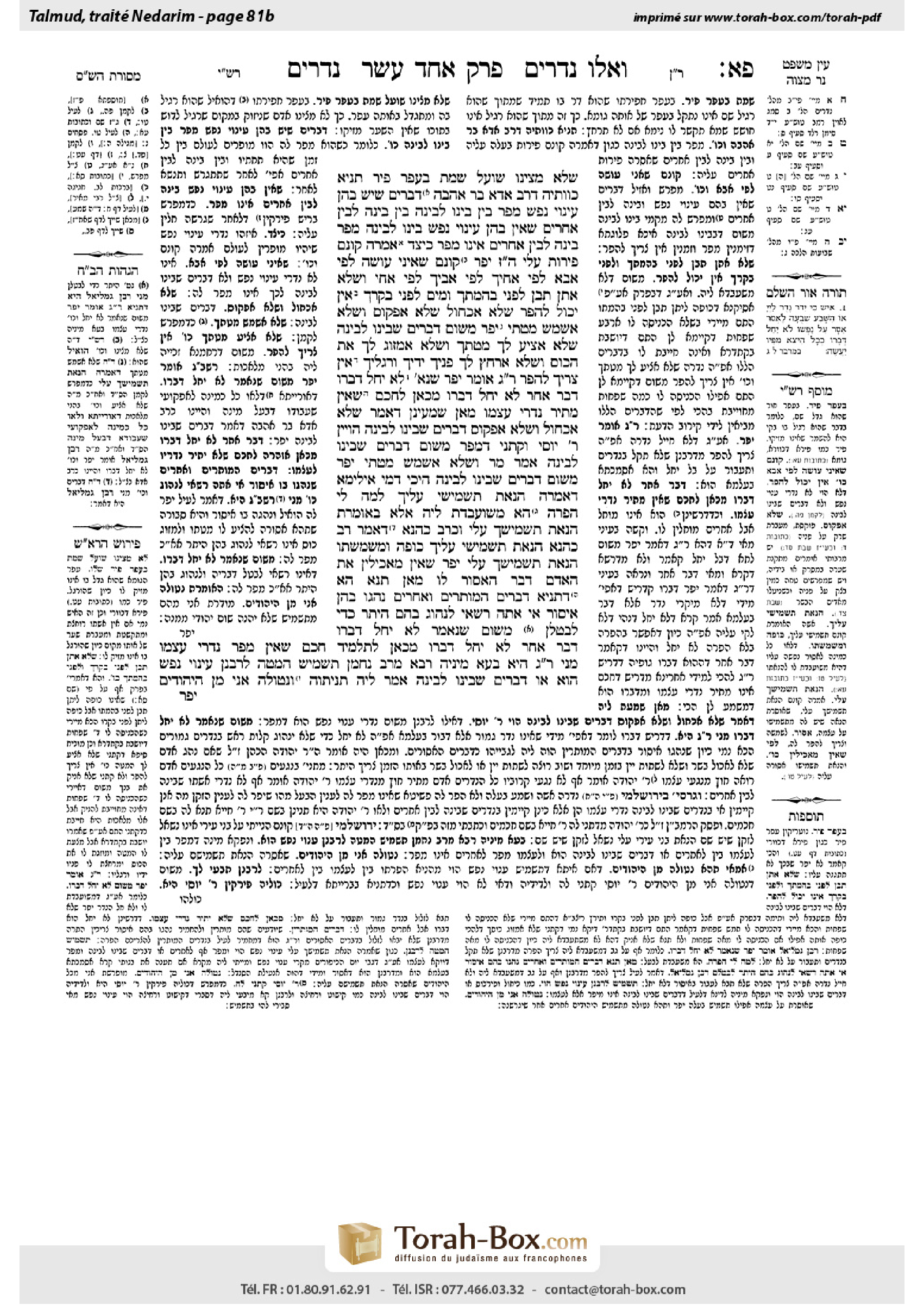
Nedarim 81b: Talmud study for Daf Yomi
Daf Yomi is the daily study of one Talmud folio. Explore 37 tractates with scans, Hebrew text, Sefaria English and AI-generated French translations where annotated.
Passage selection and English or AI-generated French translation are available where the scan has annotations. Daf Study is independent of Torah-Box and Sefaria.
Browse Nedarim · נדרים · All tractatesNedarim 81b text and translations
This page of Nedarim includes the Aramaic text, an English translation and an AI-generated French translation, alongside the scan above.
נדרים פ״א ב · Aramaic and Hebrew text
שֶׁלֹּא מָצִינוּ שׁוּעָל שֶׁמֵּת בַּעֲפַר פִּיר.
תַּנְיָא כְּווֹתֵיהּ דְּרַב אַדָּא בַּר אַהֲבָה: דְּבָרִים שֶׁיֵּשׁ בָּהֶן עִינּוּי נֶפֶשׁ — מֵפֵר, בֵּין בֵּינוֹ לְבֵינָהּ, בֵּין בֵּינָהּ לְבֵין אֲחֵרִים. שֶׁאֵין בָּהֶן עִינּוּי נֶפֶשׁ בֵּינוֹ לְבֵינָהּ — מֵפֵר. בֵּינָהּ לְבֵין אֲחֵרִים — אֵינוֹ מֵפֵר. כֵּיצַד? אָמְרָה ״קֻוֽנָּם פֵּירוֹת עָלַי״ — הֲרֵי זֶה יָפֵר. ״קֻוֽנָּם שֶׁאֵינִי עוֹשָׂה לְפִי אַבָּא״, ״לְפִי אָחִיךָ״, ״לְפִי אָבִיךָ״, ״לְפִי אָחִי״, וְ״שֶׁלֹּא אֶתֵּן תֶּבֶן לִפְנֵי בְּהֶמְתְּךָ וּמַיִם לִפְנֵי בְּקָרֶךָ״ — אֵין יָכוֹל לְהָפֵר.
״שֶׁלֹּא אֶכְחוֹל״, ״שֶׁלֹּא אֶפְקוֹס״, וְ״שֶׁלֹּא אֲשַׁמֵּשׁ מִטָּתִי״ — יָפֵר מִשּׁוּם דְּבָרִים שֶׁבֵּינוֹ לְבֵינָהּ.
״שֶׁלֹּא אַצִּיעַ לָךְ מִטָּתֶךָ״, וְ״שֶׁלֹּא אֶמְזוֹג לְךָ אֶת הַכּוֹס״, וְ״שֶׁלֹּא אֶרְחַץ לָךְ פָּנֶיךָ יָדֶיךָ וְרַגְלֶיךָ״ — אֵין צָרִיךְ לְהָפֵר.
רַבָּן גַּמְלִיאֵל אוֹמֵר: יָפֵר, שֶׁנֶּאֱמַר: ״לֹא יַחֵל דְּבָרוֹ״. דָּבָר אַחֵר: ״לֹא יַחֵל דְּבָרוֹ״ — מִכָּאן לְחָכָם שֶׁאֵין מַתִּיר נִדְרֵי עַצְמוֹ.
מַאן שָׁמְעִינַן דְּאָמַר ״שֶׁלֹּא אֶכְחוֹל וְשֶׁלֹּא אֶפְקוֹס״ דְּבָרִים שֶׁבֵּינוֹ לְבֵינָהּ הָוַיִין — רַבִּי יוֹסֵי, וְקָתָנֵי דְּמֵפַר מִשּׁוּם דְּבָרִים שֶׁבֵּינוֹ לְבֵינָהּ.
אָמַר מָר: ״וְשֶׁלֹּא אֲשַׁמֵּשׁ מִטָּתִי״ — יָפֵר מִשּׁוּם דְּבָרִים שֶׁבֵּינוֹ לְבֵינָהּ. הֵיכִי דָמֵי? אִילֵּימָא דְּאָמְרָה: ״הֲנָאַת תַּשְׁמִישִׁי עָלֶיךָ״, לְמָה לִי הֲפָרָה? הָא מְשׁוּעְבֶּדֶת לֵיהּ! אֶלָּא בְּאוֹמֶרֶת ״הֲנָאַת תַּשְׁמִישְׁךָ עָלַי״, וְכִדְרַב כָּהֲנָא,
דְּאָמַר רַב כָּהֲנָא: ״הֲנָאַת תַּשְׁמִישִׁי עָלֶיךָ״ — כּוֹפָהּ וּמְשַׁמַּשְׁתּוֹ. ״הֲנָאַת תַּשְׁמִישְׁךָ עָלַי״ — יָפֵר, שֶׁאֵין מַאֲכִילִין אֶת הָאָדָם דָּבָר הָאָסוּר לוֹ.
מַאן תְּנָא הָא דְּתַנְיָא: דְּבָרִים הַמּוּתָּרִים וַאֲחֵרִים נָהֲגוּ בָּהֶן אִיסּוּר — אִי אַתָּה רַשַּׁאי לִנְהוֹג בָּהֶם הֶיתֵּר כְּדֵי לְבַטְּלָן, מִשּׁוּם שֶׁנֶּאֱמַר ״לֹא יַחֵל דְּבָרוֹ״, דָּבָר אַחֵר: ״לֹא יַחֵל דְּבָרוֹ״ — מִכָּאן לְתַלְמִיד חָכָם שֶׁאֵין מֵפֵר נִדְרֵי עַצְמוֹ. מַנִּי? רַבָּן גַּמְלִיאֵל הִיא.
בְּעָא מִינֵּיהּ רָבָא מֵרַב נַחְמָן: תַּשְׁמִישׁ הַמִּטָּה לְרַבָּנַן, עִינּוּי נֶפֶשׁ הוּא, אוֹ דְּבָרִים שֶׁבֵּינוֹ לְבֵינָהּ? אֲמַר לֵיהּ: תְּנֵיתוּהָ, ״וּנְטוּלָה אֲנִי מִן הַיְּהוּדִים״,
Nedarim 81b · English translation
And it cannot be argued that if the woman refrains from bathing or adorning herself, it will negatively impact on her relationship with her husband, as we do not find a fox dying in the earth of the lair to which it is accustomed. Similarly, a husband who is accustomed to his wife will not come to avoid engaging in sexual intercourse with her merely because she has not bathed.
The Gemara comments that it is taught in a baraita in accordance with the opinion of Rav Adda bar Ahava: Vows taken by a woman concerning matters that involve affliction the husband can nullify, whether they relate to matters between him and her or to matters between her and others. As for vows concerning matters that do not involve affliction, if they relate to matters between him and her, he can nullify them, but if they relate to matters between her and others, he cannot nullify them. How so? If she said: Produce is konam for me, he can nullify the vow, as it falls into the category of vows of affliction. If, however, she said: I will not prepare anything for my father, as that is konam for me or: For your brother, or: For your father, or: For my brother, or: I will not place straw before your animal, or: I will not place water before your cattle, he cannot nullify such vows, as they do not touch upon the relationship between husband and wife, nor do they cause her affliction.
A wife said: I will not paint my eyes, as that is konam for me; I will not rouge [efkos] my cheeks, as that is konam for me; or: I will not engage in sexual intercourse, as that is konam for me. If she made any of these statements, her husband can nullify them, as they are matters that adversely affect the relationship between him and her.
A wife said: I will not make your bed, as that is konam for me; or: I will not prepare your cup for you, mixing your wine with water, as that is konam for me; or: I will not wash your face, your hands, or your feet, as that is konam for me. If she made these statements, her husband need not nullify these vows. They do not take effect, since she is obligated to perform these tasks as part of her marital duties.
Rabban Gamliel says: He should nevertheless nullify such vows, as it is stated: “He shall not profane his word” (Numbers 30:3), which teaches that it is improper for one to take a vow and not fulfill it. The Gemara presents another interpretation of the verse: Alternatively, the verse states: “He shall not profane his word,” from here it may be derived that a halakhic authority cannot dissolve his own vows.
After having cited the entire baraita, the Gemara proceeds to analyze the relevant component: Of whom have we heard that he said that if a woman says: I will not paint my eyes, as that is konam for me, or: I will not rouge my cheeks, the vows fall into the category of matters that adversely affect the relationship between him and her? It is Rabbi Yosei, as the Rabbis, who disagree with him, maintain that they are vows of affliction, and the baraita teaches that the husband can nullify such vows as matters that adversely affect the relationship between him and her. Therefore, the baraita supports Rav Adda bar Ahava’s understanding of the opinion of Rabbi Yosei.
The Master said in the baraita that if the woman said: I will not engage in sexual intercourse, as that is konam for me, her husband can nullify the vow as an example of matters that adversely affects the relationship between him and her. The Gemara raises a question: What are the circumstances of the case? If we say that she said: The benefit of my engaging in intercourse with you is forbidden to you, why do I need the husband’s nullification at all? She is obligated to engage in intercourse with him by the very nature of their marriage, and it is not within her power to release herself from this duty by means of a vow. Rather, the baraita must refer to a case where she said: The benefit of your engaging in intercourse with me is forbidden to me, and it is in accordance with the opinion of Rav Kahana.
As Rav Kahana said that if a woman says: The benefit of my engaging in intercourse with you is forbidden to you, he can compel her to have relations with him. If, however, she said: The benefit of your engaging in intercourse with me is forbidden to me, he must nullify her vow. Why must the husband nullify it if she is obligated to have relations with him? It is because we do not feed a person something that is forbidden to him. Although she cannot release herself from her duty, since she prohibited herself from deriving pleasure from the act, she may not engage in sexual intercourse, as it would entail forbidden pleasure.
The Gemara asks: Who is the tanna who taught that which is taught in a baraita: With regard to matters that are permitted, but others were accustomed to treat them as a prohibition, you are not allowed to treat them as permitted in a manner that may cause the negation of their custom, as it is stated: “He shall not profane his word” (Numbers 30:3). The verse indicates that any vow in which a person renders a matter forbidden to himself, i.e., “his word,” is considered a quasi-vow, which may not be profaned. The Gemara presents another interpretation of the verse: Alternatively, the verse states: “He shall not profane his word”; from here it may be derived that a halakhic authority cannot dissolve his own vows. Whose opinion is this? It is that of Rabban Gamliel, who maintains that a man should nullify his wife’s vow even if it does not actually take effect.
Rava raised a dilemma before Rav Naḥman: If a woman took a vow that sexual intercourse with her husband is forbidden to her, then, according to the Rabbis, is it a vow of affliction or does it fall within the category of matters that adversely affect the relationship between him and her? Rav Naḥman said to him: You learned the answer to this question in a mishna (90b): And if a woman said: I am removed from the Jews, i.e., the benefit of my engaging in intercourse is forbidden to all Jews,
Nedarim 81b · Traduction française (IA)
On ne peut pas soutenir que si une femme s’abstient de se baigner ou de se parer, cela nuira à sa relation avec son mari, car on ne voit pas un renard mourir dans le terrier auquel il est habitué. De même, un mari habitué à sa femme ne renoncera pas à avoir des relations sexuelles avec elle simplement parce qu’elle ne s’est pas baignée.
La Guemara fait remarquer qu’une baraïta enseigne conformément à l’opinion de Rav Adda bar Ahava : le mari peut annuler les vœux d’une femme concernant des sujets qui entraînent une souffrance, qu’ils portent sur des sujets entre lui et elle ou sur des sujets entre elle et autrui. Quant aux vœux concernant des sujets qui n’entraînent pas de souffrance, il peut les annuler s’ils portent sur des sujets entre lui et elle, mais il ne peut pas les annuler s’ils portent sur des sujets entre elle et autrui. Comment cela ? Si elle a dit : « Les produits me sont interdits comme konam », il peut annuler le vœu, car il relève de la catégorie des vœux de souffrance. En revanche, si elle a dit : « Je ne préparerai rien pour mon père, car cela m’est interdit comme konam », ou : « Pour ton frère », ou : « Pour ton père », ou : « Pour mon frère », ou : « Je ne mettrai pas de paille devant ton animal », ou : « Je ne mettrai pas d’eau devant ton bétail », il ne peut pas annuler de tels vœux, car ils ne concernent pas la relation entre mari et femme et ne lui causent pas non plus de souffrance.
Une femme a dit : « Je ne me maquillerai pas les yeux, car cela m’est interdit comme konam » ; « Je ne me farderai pas [efkos] les joues, car cela m’est interdit comme konam » ; ou : « Je n’aurai pas de relations sexuelles, car cela m’est interdit comme konam. » Si elle a prononcé l’une de ces déclarations, son mari peut les annuler, car il s’agit de sujets qui nuisent à la relation entre lui et elle.
Une femme a dit : « Je ne ferai pas ton lit, car cela m’est interdit comme konam » ; ou : « Je ne préparerai pas ta coupe en mélangeant ton vin avec de l’eau, car cela m’est interdit comme konam » ; ou : « Je ne te laverai pas le visage, les mains ou les pieds, car cela m’est interdit comme konam. » Si elle a prononcé ces déclarations, son mari n’a pas besoin d’annuler ces vœux. Ils ne prennent pas effet, puisqu’elle est tenue d’accomplir ces tâches dans le cadre de ses obligations conjugales.
Rabban Gamliel dit : Il doit néanmoins annuler de tels vœux, comme il est écrit : « Il ne profanera pas sa parole » (Nombres 30,3), ce qui enseigne qu’il est inconvenant de faire un vœu et de ne pas l’accomplir. La Guemara donne une autre interprétation du verset : le verset dit aussi : « Il ne profanera pas sa parole » ; on peut en déduire qu’une autorité halakhique ne peut pas délier ses propres vœux.
Après avoir cité la baraïta dans son intégralité, la Guemara analyse le passage pertinent : De qui avons-nous appris qu’il dit que si une femme déclare : « Je ne me maquillerai pas les yeux, car cela m’est interdit comme konam », ou : « Je ne me farderai pas les joues », ces vœux relèvent de sujets qui nuisent à la relation entre lui et elle ? De Rabbi Yosei, car les Rabbins, qui ne sont pas d’accord avec lui, soutiennent qu’il s’agit de vœux de souffrance, tandis que la baraïta enseigne que le mari peut annuler de tels vœux en tant que sujets qui nuisent à la relation entre lui et elle. La baraïta appuie donc la compréhension de Rav Adda bar Ahava concernant l’opinion de Rabbi Yosei.
Le Maître a dit dans la baraïta que si la femme a déclaré : « Je n’aurai pas de relations sexuelles, car cela m’est interdit comme konam », son mari peut annuler le vœu, comme exemple de sujets qui nuisent à la relation entre lui et elle. La Guemara soulève une question : quelles sont les circonstances du cas ? Si l’on suppose qu’elle a dit : « Le bénéfice de mes relations sexuelles avec toi t’est interdit », pourquoi aurait-elle besoin de l’annulation de son mari ? La nature même de leur mariage l’oblige à avoir des relations avec lui, et elle ne peut pas se libérer de cette obligation par un vœu. Il faut plutôt que la baraïta parle d’un cas où elle a dit : « Le bénéfice de tes relations sexuelles avec moi m’est interdit », et qu’elle soit conforme à l’opinion de Rav Kahana.
Car Rav Kahana a dit que si une femme déclare : « Le bénéfice de mes relations sexuelles avec toi t’est interdit », il peut la contraindre à avoir des relations avec lui. En revanche, si elle a dit : « Le bénéfice de tes relations sexuelles avec moi m’est interdit », il doit annuler son vœu. Pourquoi le mari doit-il l’annuler si elle est tenue d’avoir des relations avec lui ? Parce qu’on ne donne pas à une personne quelque chose qui lui est interdit. Même si elle ne peut pas se libérer de son obligation, puisqu’elle s’est interdit de tirer du plaisir de l’acte, elle ne peut pas avoir de relations sexuelles, car cela impliquerait un plaisir interdit.
La Guemara demande : Qui est le tanna qui a enseigné ce qui est enseigné dans une baraïta : « Concernant des sujets qui sont permis, mais que d’autres ont l’habitude de traiter comme interdits, il ne vous est pas permis de les traiter comme permis d’une manière qui risque d’annuler leur coutume », comme il est écrit : « Il ne profanera pas sa parole » (Nombres 30,3). Le verset indique que tout vœu par lequel une personne rend une chose interdite pour elle-même, c’est-à-dire « sa parole », est considéré comme un quasi-vœu qui ne peut être profané. La Guemara propose une autre interprétation du verset : le verset dit aussi : « Il ne profanera pas sa parole » ; on peut en déduire qu’une autorité halakhique ne peut pas délier ses propres vœux. De qui est cette opinion ? De Rabban Gamliel, qui soutient qu’un homme doit annuler le vœu de sa femme même s’il ne prend pas réellement effet.
Rava souleva une question devant Rav Naḥman : si une femme a fait le vœu que les relations sexuelles avec son mari lui sont interdites, s’agit-il, selon les Rabbins, d’un vœu de souffrance, ou bien entre-t-il dans la catégorie des sujets qui nuisent à la relation entre lui et elle ? Rav Naḥman lui dit : Tu as appris la réponse à cette question dans une Michna (90b) : « Et si une femme a dit : “Je suis séparée des Juifs” », c’est-à-dire que le bénéfice de mes relations sexuelles est interdit à tous les Juifs,
Traduction française générée par IA à partir de l’édition anglaise de Sefaria. Vérifie toujours un passage avec le texte source.
Text from Sefaria: William Davidson Edition - Vocalized Aramaic (CC BY NC); William Davidson Edition - English (CC BY NC).