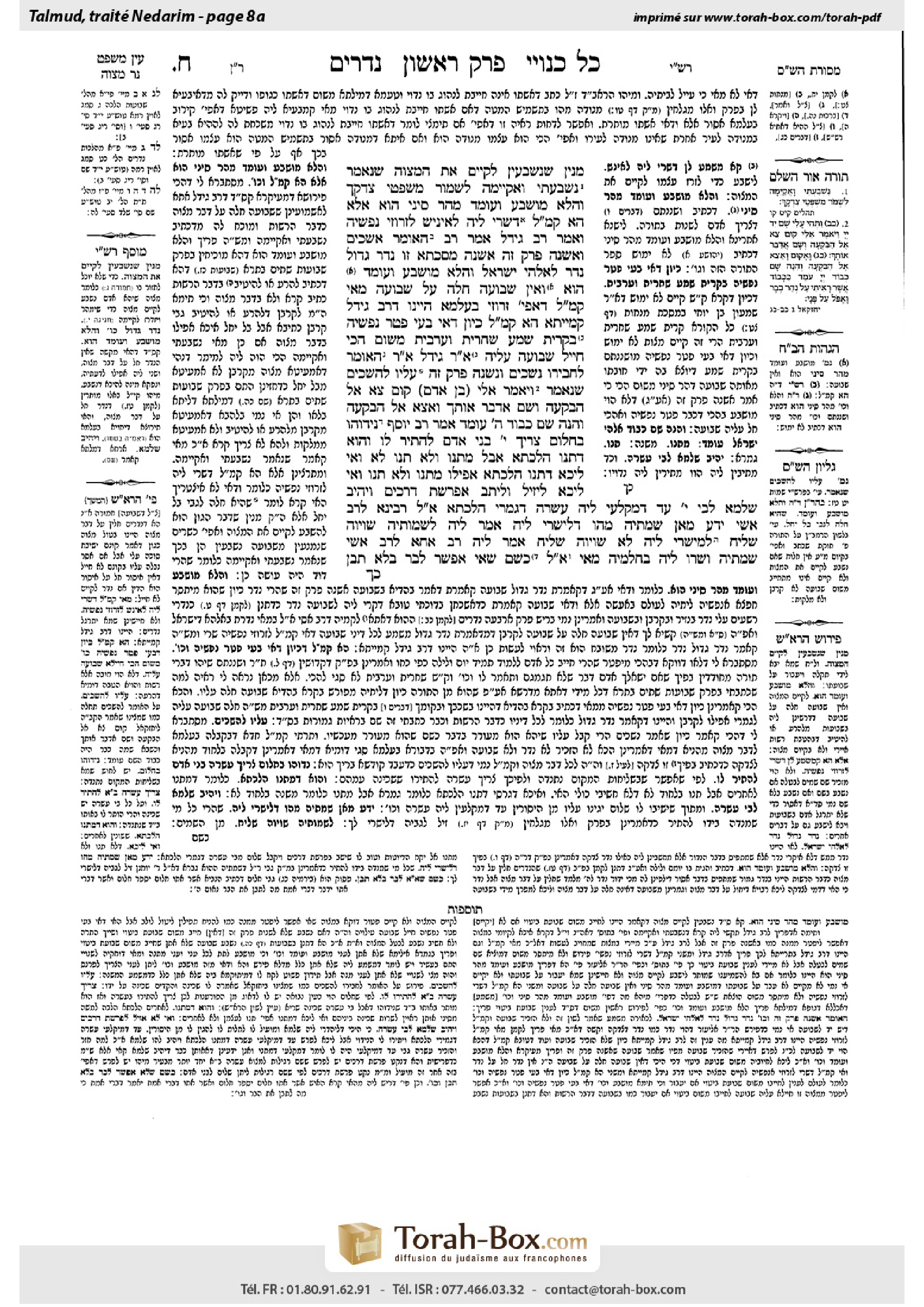
Nedarim 8a: Talmud study for Daf Yomi
Daf Yomi is the daily study of one Talmud folio. Explore 37 tractates with scans, Hebrew text, Sefaria English and AI-generated French translations where annotated.
Passage selection and English or AI-generated French translation are available where the scan has annotations. Daf Study is independent of Torah-Box and Sefaria.
Browse Nedarim · נדרים · All tractatesNedarim 8a text and translations
This page of Nedarim includes the Aramaic text, an English translation and an AI-generated French translation, alongside the scan above.
נדרים ח׳ א · Aramaic and Hebrew text
מִנַּיִן שֶׁנִּשְׁבָּעִין לְקַיֵּים אֶת הַמִּצְוָה, שֶׁנֶּאֱמַר: ״נִשְׁבַּעְתִּי וָאֲקַיֵּמָה לִשְׁמֹר מִשְׁפְּטֵי צִדְקֶךָ״.
וַהֲלֹא מוּשְׁבָּע וְעוֹמֵד מֵהַר סִינַי הוּא. אֶלָּא הָא קָא מַשְׁמַע לַן דְּשָׁרֵי לֵיהּ לְאִינִישׁ לְזָרוֹזֵי נַפְשֵׁיהּ.
וְאָמַר רַב גִּידֵּל אָמַר רַב: הָאוֹמֵר ״אַשְׁכִּים וְאֶשְׁנֶה פֶּרֶק זֶה״ ״אֶשְׁנֶה מַסֶּכְתָּא זוֹ״ — נֶדֶר גָּדוֹל נָדַר לֵאלֹהֵי יִשְׂרָאֵל. וַהֲלֹא מוּשְׁבָּע וְעוֹמֵד הוּא, וְאֵין שְׁבוּעָה חָלָה עַל שְׁבוּעָה! מַאי קָא מַשְׁמַע לַן, דַּאֲפִילּוּ זָרוֹזֵי בְּעָלְמָא — הַיְינוּ דְּרַב גִּידֵּל קַמַּיְיתָא!
הָא קָא מַשְׁמַע לַן: כֵּיוָן דְּאִי בָּעֵי פָּטַר נַפְשֵׁיהּ בִּקְרִיַּת שְׁמַע שַׁחֲרִית וְעַרְבִית, מִשּׁוּם הָכִי חָיֵיל שְׁבוּעָה עֲלֵיהּ.
אָמַר רַב גִּידֵּל אָמַר רַב: הָאוֹמֵר לַחֲבֵירוֹ ״נַשְׁכִּים וְנִשְׁנֶה פֶּרֶק זֶה״ — עָלָיו לְהַשְׁכִּים, שֶׁנֶּאֱמַר: ״וַיֹּאמֶר אֵלַי (בֶּן אָדָם) קוּם צֵא אֶל הַבִּקְעָה וְשָׁם אֲדַבֵּר אוֹתָךְ וָאֵצֵא אֶל הַבִּקְעָה וְהִנֵּה שָׁם כְּבוֹד ה׳ עֹמֵד״.
אָמַר רַב יוֹסֵף: נִידּוּהוּ בַּחֲלוֹם, צָרִיךְ עֲשָׂרָה בְּנֵי אָדָם לְהַתִּיר לוֹ, וְהוּא דְּתָנוּ הִלְכְתָא, אֲבָל מַתְנוּ וְלָא תָּנוּ — לָא. וְאִי לֵיכָּא דְּתָנוּ הִלְכְתָא — אֲפִילּוּ מַתְנוּ וְלָא תָּנוּ.
וְאִי לֵיכָּא — לֵיזִיל וְלִיתֵּב אַפָּרָשַׁת דְּרָכִים וְיָהֵיב שְׁלָמָא לְבֵי עַשְׂרָה, עַד דְּמִקַּלְעִי לֵיהּ עַשְׂרָה דְּגָמְרִי הִלְכְתָא.
אֲמַר לֵיהּ רָבִינָא לְרַב אָשֵׁי: יָדַע מַאן שַׁמְתֵּיהּ, מַהוּ דְּלִישְׁרֵי לֵיהּ? אֲמַר לֵיהּ: לְשַׁמּוֹתֵיהּ שַׁוְּיוּהּ שָׁלִיחַ, לְמִישְׁרֵי לֵיהּ לָא שַׁוְּיוּהּ שָׁלִיחַ.
אֲמַר לֵיהּ רַב אַחָא לְרַב אָשֵׁי: שַׁמְּתֻיהּ וּשְׁרוֹ לֵיהּ בְּחֶלְמֵיהּ, מַאי? אֲמַר לֵיהּ: כְּשֵׁם שֶׁאִי אֶפְשָׁר לַבָּר בְּלֹא תֶּבֶן,
Nedarim 8a · English translation
From where is it derived that one may take an oath to fulfill a mitzva? It is as it is stated: “I have sworn and I have confirmed it, to observe Your righteous ordinances” (Psalms 119:106).
The Gemara asks: Is he not already under oath from when each Jew took an oath at Mount Sinai to fulfill all the mitzvot? An oath cannot take effect if one is already bound by a different oath. Rather, it teaches us this: It is permitted for a man to motivate himself to fulfill the mitzvot in this manner, although the oath is not technically valid.
And Rav Giddel said that Rav said: One who says: I will rise early and study this chapter, or: I will study this tractate, has taken a great vow to the God of Israel. This clearly indicates that the vow takes effect. The Gemara asks: Is he not already under oath due to the general obligation to study Torah? And an oath does not take effect upon a preexisting oath. What is he teaching us? If one claims that Rav Giddel is teaching that such a vow may be made even merely to motivate oneself to study, this is the same as the first statement of Rav Giddel.
The Gemara answers: It teaches us this: Since if he desires he can exempt himself from the obligation to study Torah with the recitation of Shema in the morning and evening, due to that reason the oath takes effect upon him and he is obligated to study the chapter or tractate that he specified.
Rav Giddel said that Rav said: With regard to one who says to another: Let us rise early and study this chapter, and they agree to do so, it is incumbent upon him to rise early and be the first to arrive, because it was his initiative. There is an allusion to this in a verse, as it is stated: “And He said to me: Arise, go forth into the plain, and there I will speak with you. Then I arose and went forth into the plain; and behold, the glory of the Lord stood there” (Ezekiel 3:22–23). God invited Ezekiel to that place, and His glory arrived before Ezekiel did.
§ Rav Yosef said: One who was ostracized in a dream requires ten people to dissolve the ostracism for him. And the ostracism can be dissolved only by those who have studied halakha, i.e., by Torah scholars. However, if they have recited Mishna and have not studied halakha, no, they are not fit to dissolve the ostracism. And if there are not ten people who have studied halakha, then even those who have recited Mishna and have not studied halakha are fit to dissolve the ostracism.
And if there are not even ten people who have studied Mishna, let him go and sit at the crossroads and extend a greeting of shalom, meaning peace, to ten people, who will respond with a similar greeting, until ten individuals who have studied halakha happen to come to him.
Ravina said to Rav Ashi: If he knows who excommunicated him in his dream, what is the halakha? Can that individual dissolve the excommunication for him? Rav Ashi said to him: It is possible that he was appointed by Heaven as an agent to excommunicate him, but he was not appointed as an agent to dissolve the excommunication for him. Consequently, the excommunication can be dissolved only by ten people.
Rav Aḥa said to Rav Ashi: If he was excommunicated and the excommunication was dissolved for him in his dream, what is the halakha? Rav Ashi said to him: Just as it is impossible for the grain to grow without straw,
Nedarim 8a · Traduction française (IA)
D’où sait-on que l’on peut prêter serment pour accomplir une mitsva ? Comme il est dit : « J’ai juré et je l’ai confirmé, afin d’observer tes justes préceptes » (Psaumes 119,106).
La Guemara demande : N’est-il pas déjà lié par un serment depuis que chaque Juif a prêté serment au mont Sinaï d’accomplir toutes les mitsvot ? Un serment ne peut prendre effet si l’on est déjà lié par un autre serment. Cela nous enseigne plutôt qu’il est permis à quelqu’un de se motiver ainsi à accomplir les mitsvot, bien que le serment ne soit pas techniquement valable.
Et Rav Giddel a dit au nom de Rav : Celui qui dit : « Je me lèverai tôt et j’étudierai ce chapitre », ou : « J’étudierai ce traité », a fait un grand vœu au Dieu d’Israël. Cela indique clairement que le vœu prend effet. La Guemara demande : N’est-il pas déjà tenu par l’obligation générale d’étudier la Torah ? Or, un serment ne prend pas effet lorsqu’un serment préexistant s’applique déjà. Que nous enseigne-t-il ? Si l’on prétend que Rav Giddel enseigne qu’un tel vœu peut être fait simplement pour se motiver à étudier, cela revient à la première déclaration de Rav Giddel.
La Guemara répond : Cela nous enseigne ceci : puisqu’il peut, s’il le souhaite, se libérer de l’obligation d’étudier la Torah en récitant le Chéma matin et soir, le serment prend effet à son égard et il est tenu d’étudier le chapitre ou le traité qu’il a précisé.
Rav Giddel a dit au nom de Rav : Celui qui dit à un autre : « Levons-nous tôt et étudions ce chapitre », et auquel l’autre donne son accord, a l’obligation de se lever tôt et d’arriver le premier, car l’initiative venait de lui. Un verset y fait allusion, comme il est dit : « Il me dit : “Lève-toi, va dans la plaine, et là, je te parlerai.” Je me levai et allai dans la plaine ; et voici que la gloire de l’Éternel se tenait là » (Ézéchiel 3,22-23). Dieu avait donné rendez-vous à Ézéchiel en ce lieu, et Sa gloire arriva avant lui.
§ Rav Yosef a dit : Celui qui a été mis au ban dans un rêve a besoin de dix personnes pour lever cette mise au ban. Celle-ci ne peut être levée que par ceux qui ont étudié la halakha, c’est-à-dire par des érudits de la Torah. En revanche, s’ils ont étudié la Michna, mais pas la halakha, ils ne sont pas habilités à lever la mise au ban. Et s’il n’y a pas dix personnes ayant étudié la halakha, même ceux qui ont étudié la Michna sans étudier la halakha sont habilités à lever la mise au ban.
Et s’il n’y a même pas dix personnes ayant étudié la Michna, qu’il aille s’asseoir au carrefour et adresse une salutation de shalom, c’est-à-dire de paix, à dix personnes, qui lui répondront par une salutation semblable, jusqu’à ce que dix personnes ayant étudié la halakha viennent à passer.
Ravina dit à Rav Ashi : S’il sait qui l’a excommunié dans son rêve, quelle est la halakha ? Cet individu peut-il lever l’excommunication ? Rav Ashi lui dit : Il se peut que le Ciel l’ait désigné comme agent pour l’excommunier, mais pas comme agent pour lever son excommunication. Par conséquent, l’excommunication ne peut être levée que par dix personnes.
Rav Aḥa dit à Rav Ashi : S’il a été excommunié et que l’excommunication a été levée pour lui dans son rêve, quelle est la halakha ? Rav Ashi lui dit : De même qu’il est impossible que le grain pousse sans paille,
Traduction française générée par IA à partir de l’édition anglaise de Sefaria. Vérifie toujours un passage avec le texte source.
Text from Sefaria: William Davidson Edition - Vocalized Aramaic (CC BY NC); William Davidson Edition - English (CC BY NC).