Nedarim 8b: Talmud study for Daf Yomi
Daf Yomi is the daily study of one Talmud folio. Explore 37 tractates with scans, Hebrew text, Sefaria English and AI-generated French translations where annotated.
Passage selection and English or AI-generated French translation are available where the scan has annotations. Daf Study is independent of Torah-Box and Sefaria.
Browse Nedarim · נדרים · All tractatesNedarim 8b text and translations
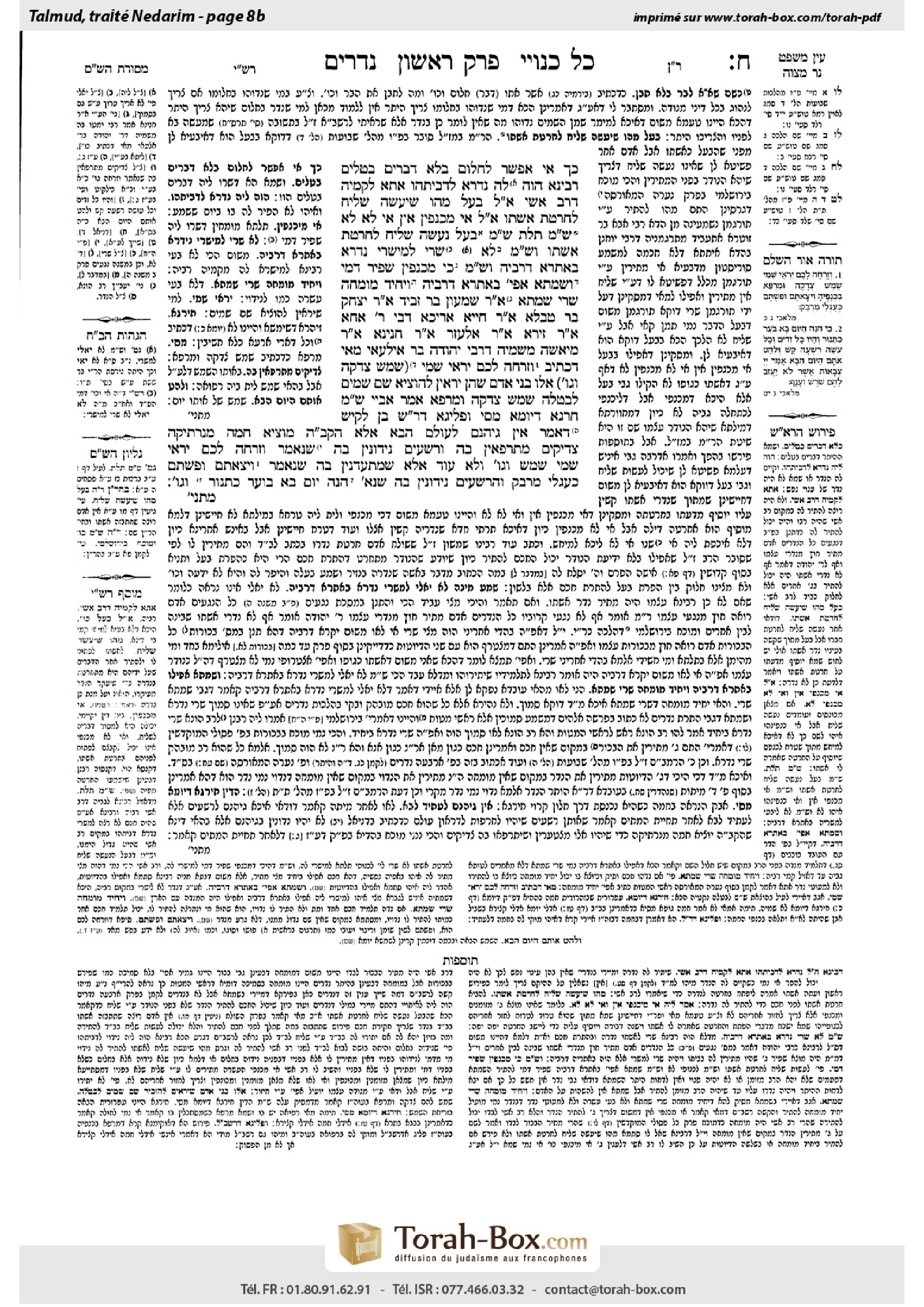
This page of Nedarim includes the Aramaic text, an English translation and an AI-generated French translation, alongside the scan above.
נדרים ח׳ ב · Aramaic and Hebrew text
כָּךְ אִי אֶפְשָׁר לַחֲלוֹם בְּלֹא דְּבָרִים בְּטֵלִים.
רָבִינָא הֲוָה לַהּ נִדְרָא לִדְבֵיתְהוּ. אֲתָא לְקַמֵּיהּ דְּרַב אָשֵׁי, אָמַר לֵיהּ: בַּעַל מַהוּ שֶׁיֵּעָשֶׂה שָׁלִיחַ לַחֲרָטַת אִשְׁתּוֹ? אֲמַר לֵיהּ: אִי מְכַנְּפִין — אִין, אִי לָא — לָא.
שְׁמַע מִינַּהּ תְּלָת. שְׁמַע מִינַּהּ: בַּעַל נַעֲשֶׂה שָׁלִיחַ לַחֲרָטַת אִשְׁתּוֹ. וּשְׁמַע מִינַּהּ: לָא שְׁרֵי לְמִישְׁרֵי נִדְרָא בְּאַתְרָא דְרַבֵּיהּ. וּשְׁמַע מִינַּהּ: כִּי מְכַנְּפִין שַׁפִּיר דָּמֵי.
וְשַׁמְתָּא — אֲפִילּוּ בְּאַתְרָא דְרַבֵּיהּ, וְיָחִיד מוּמְחֶה שָׁרֵי שַׁמְתָּא.
אָמַר רַבִּי שִׁמְעוֹן בַּר זְבִיד, אָמַר רַבִּי יִצְחָק בַּר טַבְלָא, אָמַר רַבִּי חִיָּיא אֲרִיכָא דְּבֵי רַבִּי אַחָא, אָמַר רַבִּי זֵירָא, אָמַר רַבִּי אֶלְעָזָר, אָמַר רַבִּי חֲנִינָא, אָמַר רַבִּי מְיָאשָׁה מִשְּׁמֵיהּ דְּרַבִּי יְהוּדָה בַּר אִילְעַאי: מַאי דִּכְתִיב ״וְזָרְחָה לָכֶם יִרְאֵי שְׁמִי (שֶׁמֶשׁ צְדָקָה וְגוֹ׳)״ אֵלּוּ בְּנֵי אָדָם שֶׁהֵן יְרֵאִין לְהוֹצִיא שֵׁם שָׁמַיִם לְבַטָּלָה. ״שֶׁמֶשׁ צְדָקָה וּמַרְפֵּא״. אָמַר אַבָּיֵי: שְׁמַע מִינַּהּ חִרְגָּא דְיוֹמָא מַסֵּי.
וּפְלִיגָא דְּרַבִּי שִׁמְעוֹן בֶּן לָקִישׁ, דְּאָמַר: אֵין גֵּיהִנָּם לָעוֹלָם הַבָּא, אֶלָּא הַקָּדוֹשׁ בָּרוּךְ הוּא מוֹצִיא חַמָּה מִנַּרְתִּיקָהּ, צַדִּיקִים מִתְרַפְּאִין בָּהּ וּרְשָׁעִים נִידּוֹנִין בָּהּ. שֶׁנֶּאֱמַר: ״וְזָרְחָה לָכֶם יִרְאֵי שְׁמִי שֶׁמֶשׁ וְגוֹ׳״. וְלֹא עוֹד, אֶלָּא שֶׁמִּתְעַדְּנִין בָּהּ, שֶׁנֶּאֱמַר: ״וִיצָאתֶם וּפִשְׁתֶּם כְּעֶגְלֵי מַרְבֵּק״.
וְהָרְשָׁעִים נִידּוֹנִין בָּהּ, שֶׁנֶּאֱמַר: ״הִנֵּה הַיּוֹם בָּא בֹּעֵר כַּתַּנּוּר וְגוֹ׳״.
Nedarim 8b · English translation
so too, it is impossible to dream without idle matter. It is possible that the excommunication was real and the dissolution was not real, and he must have the ostracism dissolved by ten people.
The Gemara relates that Ravina’s wife had taken a vow that he had not immediately nullified as a husband is entitled to do, and she wished to have it dissolved. Ravina came before Rav Ashi and said to him: What is the halakha with regard to whether a husband can become an agent to express his wife’s regret to a court so that they can dissolve her vow? Rav Ashi said to him: If three people who can dissolve the vow were already assembled, yes; if they are not already assembled, no, a husband cannot serve as an agent to express his wife’s regret to the court.
The Gemara comments: Learn from this incident three halakhot: Learn from this that a husband can become an agent to express his wife’s regret. And learn from this that a Sage is not permitted to dissolve a vow in the location of his teacher, which is why Ravina, a distinguished Sage, did not dissolve the vow without consulting Rav Ashi. And learn from this that when three people were already assembled, it seems well for a husband to serve as an agent to express his wife’s regret, but if the three people were not yet assembled he cannot serve as her agent.
The Gemara adds: And one may dissolve excommunication even in the location of his teacher. And an individual Sage who is an expert can dissolve excommunication even without two other judges.
§ Rabbi Shimon bar Zevid said that Rabbi Yitzḥak bar Tavla said that Rabbi Ḥiyya Arikha, the tall, of the school of Rabbi Aḥa said that Rabbi Zeira said that Rabbi Elazar said that Rabbi Ḥanina said that Rabbi Meyasha said in the name of Rabbi Yehuda bar Elai: What is the meaning of that which is written: “But to you that fear My name shall the sun of righteousness arise with healing in its wings; and you shall go forth and leap as calves of the stall” (Malachi 3:20)? “You that fear My name”; these are people who are afraid to mention the name of Heaven in vain. The verse states that a sun of righteousness with healing will arise to heal them. Abaye said: Learn from this verse that the dust [ḥirga] that is illuminated by the rays of the sun during the day heals, as it states: “With healing in its wings.”
The Gemara comments: Abaye disagrees with the opinion of Rabbi Shimon ben Lakish, who said: There is no Gehenna in the World-to-Come. Rather, the Holy One, Blessed be He, will remove the sun from its sheath [minartika], and the righteous will be healed by it and the wicked will be punished by it. The righteous will be healed by it, as it is stated: “But to you that fear My name shall the sun of righteousness arise with healing in its wings”; and moreover, not only will they be healed by it but they will even be rejuvenated by it, as it is stated: “And you shall go forth and leap as calves of the stall.”
And the wicked will be punished by the same sun, as it is stated: “For behold, the day is coming, it burns as a furnace; and all the proud, and all that work wickedness, shall be stubble; and the day that comes shall set them ablaze” (Malachi 3:19). Consequently, Rabbi Shimon ben Lakish holds that the sun heals only in the World-to-Come, whereas Abaye interprets the verse as referring to this world.
Nedarim 8b · Traduction française (IA)
De même, il est impossible de rêver sans qu’il y ait des éléments vains. Il se peut que l’excommunication ait été réelle, mais que sa levée ne l’ait pas été ; il doit donc faire lever l’excommunication par dix personnes.
La Guemara rapporte que la femme de Ravina avait fait un vœu que celui-ci n’avait pas immédiatement annulé, comme un mari est en droit de le faire, et qu’elle souhaitait le faire dénouer. Ravina se présenta devant Rav Ashi et lui demanda : Quelle est la halakha quant à la possibilité pour un mari de servir d’intermédiaire afin d’exprimer devant un tribunal le regret de sa femme, pour que celui-ci puisse dénouer son vœu ? Rav Ashi lui répondit : Si trois personnes capables de dénouer le vœu sont déjà réunies, oui ; si elles ne le sont pas encore, non : un mari ne peut pas servir d’intermédiaire pour exprimer le regret de sa femme devant le tribunal.
La Guemara commente : De cet épisode, apprends trois halakhot. Apprends qu’un mari peut servir d’intermédiaire pour exprimer le regret de sa femme. Apprends également qu’un Sage n’est pas autorisé à dénouer un vœu dans le lieu où se trouve son maître ; c’est pourquoi Ravina, un Sage éminent, n’a pas dénoué le vœu sans consulter Rav Ashi. Enfin, apprends que, si trois personnes sont déjà réunies, un mari peut apparemment servir d’intermédiaire pour exprimer le regret de sa femme ; mais si elles ne sont pas encore réunies, il ne peut pas servir d’intermédiaire.
La Guemara ajoute : On peut faire lever une excommunication même dans le lieu où se trouve son maître. De plus, un Sage expert peut faire lever une excommunication à lui seul, sans deux autres juges.
§ Rabbi Shimon bar Zevid a dit que Rabbi Yitzḥak bar Tavla a dit que Rabbi Ḥiyya Arikha, le grand, de l’école de Rabbi Aḥa, a dit que Rabbi Zeira a dit que Rabbi Elazar a dit que Rabbi Ḥanina a dit que Rabbi Meyasha a dit au nom de Rabbi Yehuda bar Elai : Que signifie ce qui est écrit : « Mais pour vous qui craignez Mon nom, le soleil de justice se lèvera, portant la guérison dans ses ailes ; vous sortirez et bondirez comme des veaux à l’étable » (Malachie 3:20) ? « Vous qui craignez Mon nom » désigne ceux qui craignent de prononcer en vain le nom du Ciel. Le verset indique que le soleil de justice se lèvera pour les guérir. Abaye a dit : Apprends de ce verset que la poussière [ḥirga] illuminée par les rayons du soleil pendant la journée guérit, comme il est écrit : « portant la guérison dans ses ailes ».
La Guemara commente : Abaye est en désaccord avec l’opinion de Rabbi Shimon ben Lakish, qui a dit : Il n’y a pas de Géhenne dans le monde à venir. Au contraire, le Saint, béni soit-Il, retirera le soleil de son étui [minartika] : les justes en seront guéris et les méchants en seront punis. Les justes en seront guéris, comme il est écrit : « Mais pour vous qui craignez Mon nom, le soleil de justice se lèvera, portant la guérison dans ses ailes » ; de plus, non seulement ils en seront guéris, mais ils en seront même rajeunis, comme il est écrit : « Vous sortirez et bondirez comme des veaux à l’étable ».
Et les méchants seront punis par ce même soleil, comme il est écrit : « Car voici que le jour vient, brûlant comme une fournaise ; tous les orgueilleux et tous ceux qui commettent le mal seront comme du chaume ; le jour qui vient les embrasera » (Malachie 3:19). Par conséquent, selon Rabbi Shimon ben Lakish, le soleil ne guérit que dans le monde à venir, tandis qu’Abaye interprète le verset comme se rapportant à ce monde.
Traduction française générée par IA à partir de l’édition anglaise de Sefaria. Vérifie toujours un passage avec le texte source.
Text from Sefaria: William Davidson Edition - Vocalized Aramaic (CC BY NC); William Davidson Edition - English (CC BY NC).