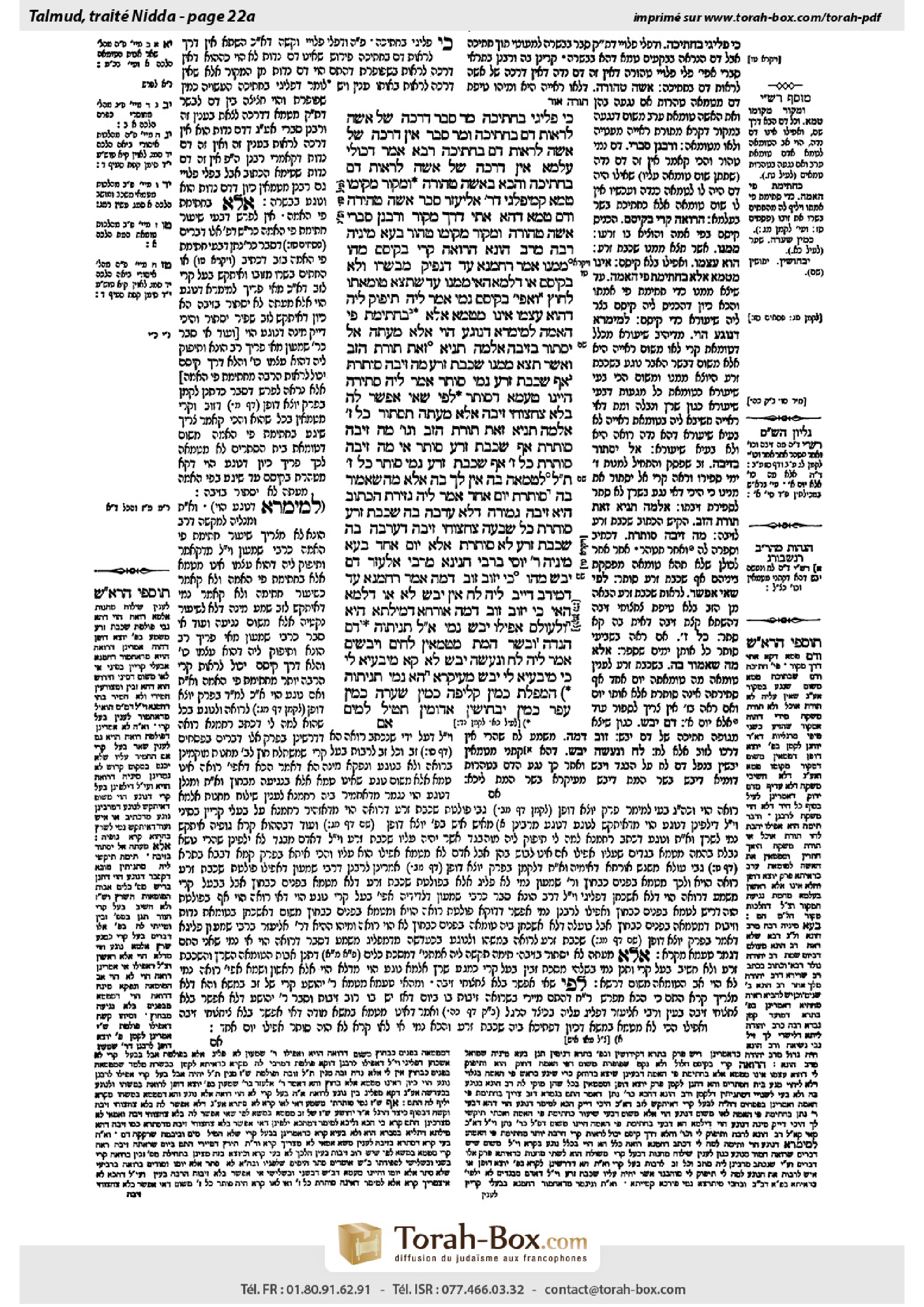
Niddah 22a: Talmud study for Daf Yomi
Daf Yomi is the daily study of one Talmud folio. Explore 37 tractates with scans, Hebrew text, Sefaria English and AI-generated French translations where annotated.
Passage selection and English or AI-generated French translation are available where the scan has annotations. Daf Study is independent of Torah-Box and Sefaria.
Browse Niddah · נידה · All tractatesNiddah 22a text and translations
This page of Niddah includes the Aramaic text, an English translation and an AI-generated French translation, alongside the scan above.
נידה כ״ב א · Aramaic and Hebrew text
כִּי פְּלִיגִי בַּחֲתִיכָה. מָר סָבַר: דַּרְכָּהּ שֶׁל אִשָּׁה לִרְאוֹת דָּם בַּחֲתִיכָה, וּמַר סָבַר: אֵין דַּרְכָּהּ שֶׁל אִשָּׁה לִרְאוֹת דָּם בַּחֲתִיכָה.
רָבָא אָמַר: דְּכוּלֵּי עָלְמָא אֵין דַּרְכָּהּ שֶׁל אִשָּׁה לִרְאוֹת דָּם בַּחֲתִיכָה.
וְהָכָא, בְּאִשָּׁה טְהוֹרָה וּמְקוֹר מְקוֹמוֹ טָמֵא קָמִיפַּלְגִי, דְּרַבִּי אֱלִיעֶזֶר סָבַר: אִשָּׁה טְהוֹרָה וְדָם טָמֵא, דְּהָא אָתֵי דֶּרֶךְ מָקוֹר, וְרַבָּנַן סָבְרִי: אִשָּׁה טְהוֹרָה, וּמָקוֹר מְקוֹמוֹ טָהוֹר.
בְּעָא מִינֵּיהּ רַבָּה מֵרַב הוּנָא: הָרוֹאֶה קֶרִי בְּקֵיסָם מַהוּ? מִמֶּנּוּ אֲמַר רַחֲמָנָא — עַד דְּנָפֵיק מִבְּשָׂרוֹ, וְלֹא בְּקֵיסָם, אוֹ דִלְמָא הַאי ״מִמֶּנּוּ״ — עַד שֶׁתֵּצֵא טוּמְאָתוֹ לַחוּץ, וַאֲפִילּוּ בְּקֵיסָם נָמֵי?
אֲמַר לֵיהּ: תִּיפּוֹק לֵיהּ דְּהוּא עַצְמוֹ אֵינוֹ מְטַמֵּא אֶלָּא בַּחֲתִימַת פִּי הָאַמָּה.
לְמֵימְרָא דְּנוֹגֵעַ הָוֵי? אֶלָּא מֵעַתָּה, אַל יִסְתּוֹר בְּזִיבָה!
אַלְּמָה תַּנְיָא: ״זֹאת תּוֹרַת הַזָּב וַאֲשֶׁר תֵּצֵא מִמֶּנּוּ שִׁכְבַת זָרַע״ — מָה זִיבָה סוֹתֶרֶת, אַף שִׁכְבַת זֶרַע נָמֵי סוֹתֵר?
אֲמַר לֵיהּ: סְתִירָה — הַיְינוּ טַעְמָא דְּסוֹתֵר, לְפִי שֶׁאִי אֶפְשָׁר לָהּ בְּלֹא צִחְצוּחֵי זִיבָה.
אֶלָּא מֵעַתָּה, תִּסְתּוֹר כׇּל שִׁבְעָה? אַלְּמָה תַּנְיָא: ״זֹאת תּוֹרַת הַזָּב וְגוֹ׳״, מָה זִיבָה סוֹתֶרֶת, אַף שִׁכְבַת זֶרַע סוֹתֶרֶת.
אִי מָה זִיבָה סוֹתֶרֶת כׇּל שִׁבְעָה, אַף שִׁכְבַת זֶרַע נָמֵי סוֹתֶרֶת כׇּל שִׁבְעָה? תַּלְמוּד לוֹמַר ״לְטׇמְאָה בָהּ״ — אֵין לְךָ בָּהּ אֶלָּא מָה שֶׁאָמוּר בָּהּ, סוֹתֶרֶת יוֹם אֶחָד.
אֲמַר לֵיהּ: גְּזֵירַת הַכָּתוּב הִיא, זִיבָה גְּמוּרָה דְּלָא עֲרִבָה בַּהּ שִׁכְבַת זֶרַע — סָתְרָא כׇּל שִׁבְעָה, צִחְצוּחֵי זִיבָה דַּעֲרִבָה בַּהּ שִׁכְבַת זֶרַע — לָא סָתְרָא אֶלָּא יוֹם אֶחָד.
בְּעָא מִינֵּיהּ רַבִּי יוֹסֵי בְּרַבִּי חֲנִינָא מֵרַבִּי אֶלְעָזָר: דָּם יָבֵשׁ מַהוּ? ״כִּי יָזוּב זוֹב דָּמָהּ״ אָמַר רַחֲמָנָא — עַד דְּמֵידָב דָּיֵיב לֵיהּ, לַח — אִין, יָבֵשׁ — לָא, אוֹ דִלְמָא: הַאי ״כִּי יָזוּב זָב דָּמָה״ אוֹרְחָא דְּמִילְּתָא הִיא, וּלְעוֹלָם אֲפִילּוּ יָבֵשׁ נָמֵי?
אֲמַר לֵיהּ: תְּנֵיתוּהָ, דַּם הַנִּדָּה וּבְשַׂר הַמֵּת מְטַמְּאִין לַחִים וִיבֵשִׁים. אֲמַר לֵיהּ: לַח וְנַעֲשָׂה יָבֵשׁ — לָא קָא מִיבַּעְיָא לִי, כִּי מִיבַּעְיָא לִי — יָבֵשׁ מֵעִיקָּרָא.
הָא נָמֵי תְּנֵיתוּהָ: הַמַּפֶּלֶת כְּמִין קְלִיפָּה, כְּמִין שְׂעָרָהּ, כְּמִין עָפָר, כְּמִין יַבְחוּשִׁין אֲדוּמִּין — תָּטִיל לַמַּיִם,
Niddah 22a · English translation
When they disagree, it is with regard to the case of blood that is found in a piece of tissue. One Sage, the first tanna, who follows the opinion of Rabbi Eliezer, holds that it is the manner of a woman to see menstrual blood in a piece of tissue that she discharges. Therefore, the term “in her flesh” applies to the blood in the cracks. And one Sage, i.e., the Rabbis, holds that it is not the manner of a woman to see menstrual blood in a piece of tissue that she discharges. Therefore, the blood found in the piece of tissue is not considered menstrual blood, and it does not render the woman impure.
Rava says there is another explanation of this dispute: Everyone, both the first tanna and the Rabbis, agrees that it is not the manner of a woman to see menstrual blood in a piece of tissue that she discharges. Consequently, the blood that emerges from the cracks in the piece of tissue is not considered menstrual blood, and it does not render the woman impure.
And here, they disagree as to whether it is possible that the woman herself is pure but the location of the source, i.e., the uterus, is impure. As Rabbi Eliezer holds that the woman is pure, i.e., she was not rendered a menstruating woman with the discharge of the blood, but the blood is impure, despite the fact that it emerged in a piece of tissue, as it emerged through the source, which is impure. Therefore, when the blood comes into contact with the woman’s body she contracts first-degree impurity, and the woman subsequently transmits impurity to foods that she touches. And the Rabbis hold that the woman is entirely pure, and the location of the source is also pure. Therefore, pure food that she touches is not rendered impure.
§ Rabba asked Rav Huna a similar question to the case of the tube: With regard to a man who sees semen by extracting it from his penis with a sliver of wood, what is the halakha? Does he assume the impurity status of one who experiences a seminal emission? The Gemara explains the question. The verse states: “A man from whom the flow of semen emerges” (Leviticus 22:4). Since the Merciful One states: “From whom,” is it derived that the man is not impure unless the semen emerges from his flesh by itself, and not when it is extracted with a sliver of wood? Or perhaps from this term: “From whom,” it is derived merely that the man is not impure unless his impurity, i.e., his semen, emerges outside his body, but he is impure even if this is achieved with a sliver of wood.
Rav Huna said to Rabba: Derive that the man is pure from the fact that semen itself becomes impure only in a case where the discharge is substantial enough to cause a blockage of the tip of the penis. Since this amount cannot be extracted with a sliver of wood, it is not impure.
Rabba replied to Rav Huna: Since a minimum measure is required for this impurity, is this to say that the reason a man who experiences a seminal emission is impure is that his penis touches the semen after it is emitted? If he was rendered impure merely by the emission of the semen then no minimum measure would apply, as is the halakha with regard to a menstruating woman. But if that is so, then a seminal emission should not negate the count of seven clean days for a man who experienced a gonorrhea-like discharge [ziva]. A zav does not stop his counting when he touches a source of impurity, e.g., the carcass of a creeping animal.
If so, why is it taught in a baraita: It is derived from the verse’s juxtaposition between a zav and one who experienced a seminal emission: “This is the law of the zav, and of one from whom the flow of semen emerges” (Leviticus 15:32), that just as ziva during the seven clean days negates the count, so too, a seminal emission negates the count. If it is not the emission itself that renders the man impure but only his contact with the semen, why does the emission negate the count of seven clean days?
Rav Huna said to Rabba in response: The halakha of negation is not difficult, as this is the reason that a seminal emission negates the count of seven clean days: Because it is impossible for a zav to experience a seminal emission without it containing bits of [tzaḥtzoḥei] ziva.
Rabba further objected: If that is so, then a seminal emission should negate the entire count of seven clean days, just like an emission of ziva, not merely the day on which the seminal emission occurred. But then why is it taught in the baraita: It is derived from the verse: “This is the law of the zav, and of one from whom the flow of semen emerges, so that he is impure by it” (Leviticus 15:32), that just as ziva during the seven clean days negates the count, so too, a seminal emission negates the count.
The baraita continues: If a seminal emission is compared to ziva, then it might be suggested that just as ziva negates the entire count of seven days, so too, a seminal emission should also negate the entire count of seven days. Therefore, the verse states: “So that he is impure by it,” to teach that in the case of a seminal emission you have a negation of the count that is equivalent only to the impurity that is stated by it, i.e., impurity for one day. Accordingly, a seminal emission negates only one day of the count, not the entire count. This apparently contradicts Rav Huna’s statement that the reason a seminal emission negates the count at all is that the seminal emission of a zav always contains ziva.
Rav Huna said to Rabba: It is a Torah edict that an emission that is purely ziva, when semen is not mixed in it, negates the entire count of seven days, whereas bits of ziva in which some semen is mixed negate only one day of the count.
§ Rabbi Yosei, son of Rabbi Ḥanina, asked Rabbi Elazar: If a woman discharges dry blood, what is the halakha? Does she have the status of a menstruating woman? The Gemara explains the dilemma: Since the Merciful One states: “And if a woman has a flow of her blood many days” (Leviticus 15:25), does this indicate that the woman is not impure unless the blood flows, i.e., if it is wet, yes, she is impure, whereas if it is dry she is not impure? Or perhaps this phrase: “If a woman has a flow of her blood,” is merely referring to the normal manner that menstrual blood emerges, but actually even dry blood renders the woman impure.
Rabbi Elazar said to him: You learned the solution to your dilemma in a mishna (54b): The blood of a menstruating woman and the flesh of a corpse impart impurity whether they are wet or dry. Rabbi Yosei, son of Rabbi Ḥanina, said to him in response: I do not raise the dilemma about blood that was wet when it came out and subsequently dried, as such blood is certainly impure. When I raise the dilemma, it is with regard to blood that was dry at the outset, when it emerged.
Rabbi Elazar responded: You learned the solution to this dilemma as well, in the mishna here: In the case of a woman who discharges an item similar to a shell, or similar to a hair, or similar to soil, or similar to mosquitoes, if these are red, she should cast them into water to ascertain their nature.
Niddah 22a · Traduction française (IA)
Lorsqu’ils sont en désaccord, c’est au sujet du cas où du sang est trouvé dans un morceau de tissu. Un Sage, le premier tanna, qui suit l’opinion de Rabbi Eliezer, estime qu’il est courant qu’une femme expulse du sang menstruel dans un morceau de tissu. Par conséquent, l’expression « dans sa chair » s’applique au sang présent dans les interstices. L’autre Sage, c’est-à-dire les rabbins, estime qu’il n’est pas courant qu’une femme expulse du sang menstruel dans un morceau de tissu. Par conséquent, le sang trouvé dans le morceau de tissu n’est pas considéré comme du sang menstruel et ne rend pas la femme impure.
Rava propose une autre explication de ce désaccord : tous, le premier tanna comme les rabbins, conviennent qu’il n’est pas courant qu’une femme expulse du sang menstruel dans un morceau de tissu. Par conséquent, le sang qui sort des interstices du morceau de tissu n’est pas considéré comme du sang menstruel et ne rend pas la femme impure.
Ici, ils sont en désaccord sur la possibilité que la femme elle-même soit pure, tandis que le lieu d’où provient le sang, c’est-à-dire l’utérus, soit impur. Rabbi Eliezer estime que la femme est pure, c’est-à-dire que l’écoulement du sang n’a pas fait d’elle une femme menstruante, mais que le sang est impur, bien qu’il soit sorti dans un morceau de tissu, puisqu’il est passé par la source, qui est impure. Par conséquent, lorsque le sang entre en contact avec le corps de la femme, celle-ci contracte une impureté de premier degré, puis transmet l’impureté aux aliments qu’elle touche. Les rabbins, eux, estiment que la femme est entièrement pure et que le lieu d’où provient le sang est également pur. Par conséquent, les aliments purs qu’elle touche ne deviennent pas impurs.
§ Rabba posa à Rav Houna une question analogue à celle du tube : quelle est la halakha concernant un homme qui voit du sperme en l’extrayant de son pénis au moyen d’un éclat de bois ? Prend-il le statut d’une personne ayant eu une émission séminale ? La Guemara explique la question. Le verset dit : « Un homme dont s’écoule un flux de sperme » (Lévitique 22, 4). Puisque le Miséricordieux dit « dont », en déduit-on que l’homme n’est impur que si le sperme sort de sa chair de lui-même, et non lorsqu’il est extrait au moyen d’un éclat de bois ? Ou peut-être le terme « dont » enseigne-t-il seulement que l’homme n’est impur que si ce qui le rend impur, c’est-à-dire son sperme, sort de son corps, mais qu’il est impur même si cela se fait au moyen d’un éclat de bois.
Rav Houna dit à Rabba : déduis que l’homme est pur du fait que le sperme lui-même ne devient impur que lorsque l’écoulement est assez abondant pour obstruer l’extrémité du pénis. Comme une telle quantité ne peut être extraite au moyen d’un éclat de bois, elle n’est pas impure.
Rabba répondit à Rav Houna : puisqu’une quantité minimale est requise pour cette impureté, faut-il en conclure que la raison pour laquelle un homme ayant eu une émission séminale est impur est que son pénis touche le sperme après son émission ? Si la simple émission du sperme le rendait impur, aucune quantité minimale ne serait requise, comme c’est la halakha pour une femme menstruante. Mais dans ce cas, une émission séminale ne devrait pas interrompre le décompte des sept jours de pureté d’un homme ayant eu un écoulement semblable à la gonorrhée [ziva]. Un zav n’interrompt pas son décompte lorsqu’il touche une source d’impureté, par exemple la carcasse d’un animal rampant.
Si tel est le cas, pourquoi est-il enseigné dans une baraïta que l’on déduit du rapprochement, dans le verset, entre un zav et une personne ayant eu une émission séminale — « Telle est la loi du zav et de celui dont s’écoule un flux de sperme » (Lévitique 15, 32) — que, de même que la ziva pendant les sept jours de pureté interrompt le décompte, une émission séminale l’interrompt également ? Si ce n’est pas l’émission elle-même qui rend l’homme impur, mais seulement son contact avec le sperme, pourquoi l’émission interrompt-elle le décompte des sept jours de pureté ?
Rav Houna répondit à Rabba : la règle de l’interruption ne pose pas de difficulté, car voici pourquoi une émission séminale interrompt le décompte des sept jours de pureté : il est impossible qu’un zav ait une émission séminale sans qu’elle contienne des fragments de [tzaḥtzoḥei] ziva.
Rabba objecta encore : dans ce cas, une émission séminale devrait interrompre tout le décompte des sept jours de pureté, comme un écoulement de ziva, et non seulement le jour où l’émission séminale a eu lieu. Mais pourquoi est-il alors enseigné dans la baraïta que l’on déduit du verset « Telle est la loi du zav et de celui dont s’écoule un flux de sperme, afin qu’il soit impur par celui-ci » (Lévitique 15, 32) que, de même que la ziva pendant les sept jours de pureté interrompt le décompte, une émission séminale l’interrompt également ?
La baraïta poursuit : si l’on compare une émission séminale à la ziva, on pourrait penser que, de même que la ziva interrompt tout le décompte des sept jours, une émission séminale devrait elle aussi interrompre tout le décompte des sept jours. Le verset dit donc : « Afin qu’il soit impur par celui-ci », pour enseigner que, dans le cas d’une émission séminale, l’interruption du décompte équivaut seulement à l’impureté qui y est énoncée, c’est-à-dire une impureté d’un jour. Ainsi, une émission séminale n’interrompt qu’un jour du décompte, et non tout le décompte. Cela semble contredire la déclaration de Rav Houna selon laquelle une émission séminale interrompt le décompte parce que l’émission séminale d’un zav contient toujours de la ziva.
Rav Houna dit à Rabba : c’est un décret de la Torah qu’un écoulement constitué uniquement de ziva, sans mélange de sperme, interrompe tout le décompte des sept jours, tandis que des fragments de ziva mêlés à un peu de sperme n’interrompent qu’un jour du décompte.
§ Rabbi Yossei, fils de Rabbi Ḥanina, demanda à Rabbi Elazar : quelle est la halakha si une femme expulse du sang sec ? A-t-elle le statut d’une femme menstruante ? La Guemara explique le dilemme : puisque le Miséricordieux dit : « Et si une femme a un écoulement de son sang durant de nombreux jours » (Lévitique 15, 25), cela indique-t-il que la femme n’est impure que si le sang s’écoule, c’est-à-dire s’il est liquide : dans ce cas, oui, elle est impure, mais s’il est sec, elle ne l’est pas ? Ou peut-être l’expression « Si une femme a un écoulement de son sang » désigne-t-elle simplement la manière habituelle dont le sang menstruel sort, alors qu’en réalité le sang sec rend également la femme impure.
Rabbi Elazar lui dit : tu as appris la réponse à ton dilemme dans une Michna (54b) : le sang d’une femme menstruante et la chair d’un cadavre transmettent l’impureté, qu’ils soient humides ou secs. Rabbi Yossei, fils de Rabbi Ḥanina, lui répondit : je ne pose pas la question au sujet d’un sang qui était humide lorsqu’il est sorti et qui a séché ensuite, car un tel sang est certainement impur. Ma question porte sur un sang qui était déjà sec au moment de sa sortie.
Rabbi Elazar répondit : tu as aussi appris la réponse à ce dilemme dans la Michna ici : dans le cas d’une femme qui expulse un élément semblable à une coquille, à un cheveu, à de la terre ou à des moustiques, si ces éléments sont rouges, elle doit les jeter dans l’eau afin d’en déterminer la nature.
Traduction française générée par IA à partir de l’édition anglaise de Sefaria. Vérifie toujours un passage avec le texte source.
Text from Sefaria: William Davidson Edition - Vocalized Aramaic (CC BY NC); William Davidson Edition - English (CC BY NC).