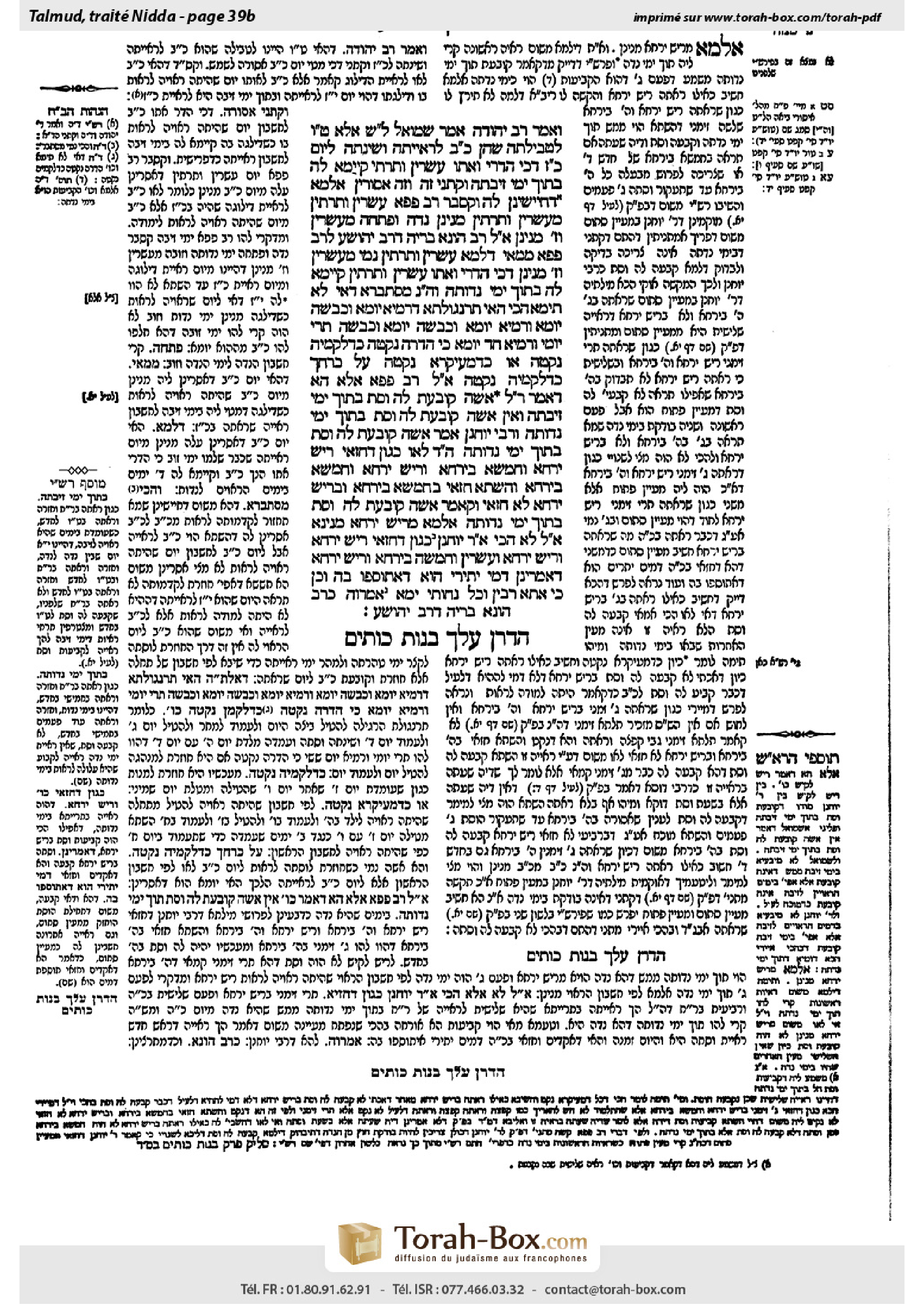
Niddah 39b: Talmud study for Daf Yomi
Daf Yomi is the daily study of one Talmud folio. Explore 37 tractates with scans, Hebrew text, Sefaria English and AI-generated French translations where annotated.
Passage selection and English or AI-generated French translation are available where the scan has annotations. Daf Study is independent of Torah-Box and Sefaria.
Browse Niddah · נידה · All tractatesNiddah 39b text and translations
This page of Niddah includes the Aramaic text, an English translation and an AI-generated French translation, alongside the scan above.
נידה ל״ט ב · Aramaic and Hebrew text
וְאָמַר רַב יְהוּדָה אָמַר שְׁמוּאֵל: לָא שְׁנָא אֶלָּא חֲמִשָּׁה עָשָׂר לִטְבִילָתָהּ, שֶׁהֵן עֶשְׂרִים וּשְׁנַיִם לִרְאִיָּיתָהּ,
וְשִׁינְּתָה לְיוֹם עֶשְׂרִים וְשִׁבְעָה; דְּכִי הָדְרִי וְאָתוּ עֶשְׂרִין וְתַרְתֵּי — קָיְימָא לַהּ בְּתוֹךְ יְמֵי זִיבָתָהּ, וְקָתָנֵי: זֶה וָזֶה אֲסוּרִין — אַלְמָא דְּחָיְישִׁינַן לַהּ.
וְקָסָבַר רַב פָּפָּא: עֶשְׂרִין וְתַרְתֵּין — מֵעֶשְׂרִין וְתַרְתֵּין מָנֵינַן, נִדָּה וּפִתְחָהּ — מֵעֶשְׂרִין וְשִׁבְעָה מָנֵינַן.
אֲמַר לֵיהּ רַב הוּנָא בְּרֵיהּ דְּרַב יְהוֹשֻׁעַ לְרַב פָּפָּא: מִמַּאי? דִּלְמָא עֶשְׂרִין וְתַרְתֵּין נָמֵי מֵעֶשְׂרִין וְשִׁבְעָה מָנֵינַן, דְּכִי הָדְרִי וְאָתוּ עֶשְׂרִין וְתַרְתֵּין — קָיְימָא לַהּ בְּתוֹךְ יְמֵי נִדּוּתָהּ.
וְהָכִי נָמֵי מִסְתַּבְּרָא; דְּאִי לָא תֵּימָא הָכִי, הַאי תַּרְנְגוֹלְתָּא דְּרָמְיָא יוֹמָא וְכָבְשָׁה יוֹמָא, וְרָמְיָא יוֹמָא וְכָבְשָׁה יוֹמָא, וְכָבְשָׁה תְּרֵי יוֹמֵי וְרָמְיָא חַד יוֹמָא,
כִּי הָדְרָה נָקְטָה — כְּדִלְקַמֵּיהּ נָקְטָה, אוֹ כִּדְמֵעִיקָּרָא נָקְטָה? עַל כׇּרְחָךְ כְּדִלְקַמֵּיהּ נָקְטָה.
אֲמַר לֵיהּ רַב פָּפָּא: אֶלָּא הָא דְּאָמַר רֵישׁ לָקִישׁ: אִשָּׁה קוֹבַעַת לָהּ וֶסֶת בְּתוֹךְ יְמֵי זִיבָתָהּ, וְאֵין אִשָּׁה קוֹבַעַת לָהּ וֶסֶת בְּתוֹךְ יְמֵי נִדּוּתָהּ. וְרַבִּי יוֹחָנָן אָמַר: אִשָּׁה קוֹבַעַת לָהּ וֶסֶת בְּתוֹךְ יְמֵי נִדּוּתָהּ — הֵיכִי דָּמֵי?
לָאו כְּגוֹן דַּחֲזַאי רֵישׁ יַרְחָא, וְחַמְשָׁא בְּיַרְחָא, וְרֵישׁ יַרְחָא, וְחַמְשָׁא בְּיַרְחָא, וְהַשְׁתָּא חֲזַאי בְּחַמְשָׁא בְּיַרְחָא, וּבְרֵישׁ יַרְחָא לָא חֲזַאי,
וְקָאָמַר: אִשָּׁה קוֹבַעַת לָהּ וֶסֶת בְּתוֹךְ יְמֵי נִדּוּתָהּ, אַלְמָא מֵרֵישׁ יַרְחָא מָנֵינָא!
אֲמַר לֵיהּ: לָא, הָכִי אָמַר רַבִּי יוֹחָנָן: כְּגוֹן דַּחֲזַאי רֵישׁ יַרְחָא, וְרֵישׁ יַרְחָא, וְעֶשְׂרִין וְחַמְשָׁה בְּיַרְחָא, וְרֵישׁ יַרְחָא, דְּאָמְרִינַן דָּמֵי יַתִּירִי הוּא דְּאִתּוֹסַפוּ בַּהּ.
וְכֵן כִּי אֲתָא רָבִין וְכֹל נָחוֹתֵי יַמָּא, אַמְרוּהָ כְּרַב הוּנָא בְּרֵיהּ דְּרַב יְהוֹשֻׁעַ.
הֲדַרַן עֲלָךְ בְּנוֹת כּוּתִים.
Niddah 39b · English translation
And with regard to this mishna, Rav Yehuda said that Shmuel said: They taught this halakha only with regard to a woman who normally experiences bleeding fifteen days from her immersion, which are twenty-two days from her sighting of menstrual blood, which means that there, she stands in her days of menstruation.
And when the mishna states that she deviated from her cycle and experienced bleeding on the twentieth day, it means she experienced bleeding twenty days from her immersion, i.e., twenty-seven days from her previous sighting, not twenty-two. This means that when twenty-two days again elapse from when she usually experiences bleeding, she stands within what is now the eleven days of her ziva. And the mishna teaches that both this, the twenty-second day, and that, the twenty-seventh day, are prohibited, despite the fact that the twenty-second day now stands during her days of ziva. Evidently, we are concerned for an emission of blood during the days of ziva if she is accustomed to experiencing bleeding on that day.
The Gemara elaborates: And Rav Pappa holds that we count twenty-two days of her menstrual cycle from twenty-two days, i.e., from when she usually begins to menstruate, whereas we count the beginning of the days of menstruation from day twenty-seven, when she actually experiences bleeding. Consequently, the twenty-second day of her normal menstrual cycle falls during the days of ziva, according to the actual day of menstruation.
Rav Huna, son of Rav Yehoshua, said to Rav Pappa: From where do you know this is the correct reckoning of her days? Perhaps one also counts those twenty-two days from day twenty-seven, such that when twenty-two days again arrive from day twenty-seven, she stands within her days of menstruation. Accordingly, there is no proof from the mishna with regard to a sighting during the days of ziva.
Rav Huna, son of Rav Yehoshua, adds: And so too, it is reasonable that the twenty-two days are counted from when she actually experiences bleeding. As if you do not say so, then consider the case of this chicken that normally lays an egg on one day and withholds an egg the next day, and lays an egg on the third day and withholds an egg on the fourth day. And the chicken deviated from its routine, so that after laying eggs on the first day and third day, it withheld an egg for two days and then laid an egg on one day, i.e., on the sixth day.
When this chicken again takes hold of its previous routine and starts laying an egg on one day and withholding an egg on the next, does it take hold of the order of the routine ahead of it, i.e., will it withhold an egg on the next day, or does it take hold of its routine as it was from the outset, so that it will lay an egg on the seventh day, as if there had been no deviation? Perforce it takes hold of the order of the routine ahead of it. Likewise, a woman who deviated from her normal menstrual cycle counts the days of her cycle according to the order of the cycle ahead of her, i.e., from the time that she experiences bleeding.
Rav Pappa said to Rav Huna, son of Rav Yehoshua: But if so, a question arises with regard to that which Reish Lakish said: A woman fixes a menstrual cycle for herself during the days of her ziva, but a woman does not fix a menstrual cycle for herself during the days of her menstruation, i.e., when she is already a menstruating woman. And Rabbi Yoḥanan says: A woman fixes a menstrual cycle for herself during the days of her menstruation. One could ask: What are the circumstances of this dispute? Rabbi Yoḥanan cannot be referring to a case where all her sightings occurred while she was a menstruating woman, as everyone agrees that a woman’s menstrual cycle is not fixed in such a situation (see 11a).
Rather, is it not referring to a case where she saw blood on the first of the month; and then again on the fifth of that same month, when she was a menstruating woman; and subsequently she saw blood on the first of the next month and then again on the fifth of that month; and now in the third month she saw blood on the fifth of the month but on the first of the month she did not see blood? In such a situation, the woman experienced an emission of blood on the fifth of the month for three consecutive months.
Rav Pappa concludes: And it is with regard to this case that Rabbi Yoḥanan says: A woman fixes a menstrual cycle for herself during the days of her menstruation. Although she was not actually a menstruating woman before she experienced bleeding on the fifth day of the third month, this is nevertheless considered a sighting during her days of menstruation. Evidently, one counts her menstrual cycle from the first of the month, despite the fact that she did not actually experience bleeding. Likewise, with regard to the case involving twenty-two days, one counts from when she generally experiences bleeding, not from the day she emitted blood in practice.
Rav Huna, son of Rav Yehoshua, said to Rav Pappa: These are not the circumstances of the dispute. Rather, this is what Rabbi Yoḥanan said: The dispute is referring to a case where she saw blood on the first of the month; and then again on the first of the next month, and then again on the twenty-fifth day of that month; and again on the first of the next month, which occurs during her days of menstruation. Rabbi Yoḥanan maintains that although she is in her days of menstruation, this sighting on the first of the third month serves to fix her menstrual cycle, as we say with regard to the sighting on the twenty-fifth day of the previous month that it is extra blood that gathered inside her. Therefore, it does not negate her regular cycle.
The Gemara notes: And likewise, when Ravin and all the sea-farers came from Eretz Yisrael to Babylonia and transmitted statements of Rabbi Yoḥanan, they said this statement of Rabbi Yoḥanan in accordance with the explanation of Rav Huna, son of Rav Yehoshua.
.
Niddah 39b · Traduction française (IA)
Et à propos de cette Michna, Rav Yehouda dit au nom de Shmuel : Cette halakha n’a été enseignée qu’au sujet d’une femme qui a habituellement ses règles quinze jours après son immersion, soit vingt-deux jours après avoir constaté son précédent écoulement de sang menstruel. Dans ce cas, elle se trouve alors dans ses jours de menstruation.
Lorsque la Michna dit qu’elle a dérogé à son cycle et a eu un écoulement le vingtième jour, cela signifie qu’elle a eu un écoulement vingt jours après son immersion, c’est-à-dire vingt-sept jours après son précédent écoulement, et non vingt-deux. Ainsi, lorsque vingt-deux jours se sont à nouveau écoulés depuis le moment où elle a habituellement ses règles, elle se trouve dans ce qui constitue désormais les onze jours de sa ziva. La Michna enseigne que ces deux jours sont interdits : le vingt-deuxième comme le vingt-septième, bien que le vingt-deuxième jour se situe désormais pendant ses jours de ziva. Il est donc évident que l’on tient compte d’un écoulement de sang pendant les jours de ziva si elle a l’habitude d’avoir ses règles ce jour-là.
La Guemara précise : Rav Pappa considère que l’on compte les vingt-deux jours de son cycle menstruel à partir du vingt-deuxième jour, c’est-à-dire du moment où elle commence habituellement à avoir ses règles, tandis que l’on compte le début de ses jours de menstruation à partir du vingt-septième jour, où elle a effectivement un écoulement. Par conséquent, selon le jour où les règles surviennent effectivement, le vingt-deuxième jour de son cycle habituel tombe pendant les jours de ziva.
Rav Houna, fils de Rav Yehoshoua, dit à Rav Pappa : D’où sais-tu que c’est ainsi qu’il faut compter ses jours ? Peut-être compte-t-on également ces vingt-deux jours à partir du vingt-septième jour, de sorte que, lorsque vingt-deux jours se sont à nouveau écoulés depuis ce jour, elle se trouve dans ses jours de menstruation. Par conséquent, la Michna ne prouve pas qu’un écoulement constaté pendant les jours de ziva soit pris en compte.
Rav Houna, fils de Rav Yehoshoua, ajoute : Il est également raisonnable de compter les vingt-deux jours à partir du moment où elle a effectivement un écoulement. En effet, si l’on ne raisonne pas ainsi, considérons le cas d’une poule qui pond habituellement un œuf un jour, n’en pond pas le lendemain, pond un œuf le troisième jour et n’en pond pas le quatrième. La poule déroge à son habitude : après avoir pondu un œuf le premier jour et un autre le troisième, elle n’en pond pas pendant deux jours, puis pond un œuf un jour, c’est-à-dire le sixième jour.
Lorsque cette poule reprend ensuite son ancien rythme, pondant un œuf un jour et n’en pondant pas le lendemain, reprend-elle l’ordre du rythme qui se présente désormais, c’est-à-dire n’en pondra-t-elle pas le lendemain, ou reprend-elle son rythme initial, de sorte qu’elle pondra un œuf le septième jour, comme si elle n’avait pas dérogé à son habitude ? Nécessairement, elle reprend l’ordre du rythme qui se présente désormais. De même, une femme qui a dérogé à son cycle menstruel normal compte les jours de son cycle selon l’ordre du cycle qui se présente désormais, c’est-à-dire à partir du moment où elle a un écoulement.
Rav Pappa dit à Rav Houna, fils de Rav Yehoshoua : Mais dans ce cas, une question se pose au sujet de ce qu’a dit Reish Lakish : une femme fixe un cycle menstruel pour elle-même pendant les jours de sa ziva, mais elle n’en fixe pas pendant ses jours de menstruation, c’est-à-dire lorsqu’elle est déjà menstruée. Rabbi Yoḥanan dit, quant à lui, qu’une femme fixe un cycle menstruel pour elle-même pendant ses jours de menstruation. On peut demander : Dans quelles circonstances porte ce désaccord ? Rabbi Yoḥanan ne peut pas faire référence à un cas où tous ses écoulements ont été constatés alors qu’elle était menstruée, car tous s’accordent à dire que, dans une telle situation, le cycle menstruel d’une femme n’est pas fixé (voir 11a).
Ne s’agit-il pas plutôt d’un cas où elle a constaté un écoulement de sang le premier du mois, puis de nouveau le cinq de ce même mois, alors qu’elle était menstruée, puis un écoulement le premier du mois suivant et de nouveau le cinq de ce mois ; et où, au troisième mois, elle a constaté un écoulement le cinq, mais pas le premier ? Dans une telle situation, la femme a eu un écoulement de sang le cinq du mois pendant trois mois consécutifs.
Rav Pappa conclut : C’est à propos de ce cas que Rabbi Yoḥanan dit qu’une femme fixe un cycle menstruel pour elle-même pendant ses jours de menstruation. Bien qu’elle n’ait pas été effectivement menstruée avant d’avoir un écoulement le cinq du troisième mois, cet écoulement est néanmoins considéré comme survenu pendant ses jours de menstruation. Il est donc évident que l’on compte son cycle menstruel à partir du premier du mois, bien qu’elle n’ait pas effectivement eu d’écoulement ce jour-là. De même, dans le cas des vingt-deux jours, on compte à partir du moment où elle a habituellement ses règles, et non à partir du jour où elle a effectivement eu un écoulement de sang.
Rav Houna, fils de Rav Yehoshoua, dit à Rav Pappa : Telles ne sont pas les circonstances du désaccord. Voici plutôt ce qu’a dit Rabbi Yoḥanan : le désaccord porte sur un cas où elle a constaté un écoulement de sang le premier du mois, puis de nouveau le premier du mois suivant, et ensuite le vingt-cinq de ce mois, puis de nouveau le premier du mois suivant, qui tombe pendant ses jours de menstruation. Rabbi Yoḥanan estime que, bien qu’elle soit dans ses jours de menstruation, cet écoulement constaté le premier du troisième mois sert à fixer son cycle menstruel, car, au sujet de l’écoulement constaté le vingt-cinq du mois précédent, nous disons qu’il s’agit d’un surplus de sang qui s’était accumulé en elle. Cet écoulement ne remet donc pas en cause son cycle régulier.
La Guemara relève : De même, lorsque Ravin et tous les marins sont venus d’Eretz Yisrael en Babylonie et ont transmis des enseignements de Rabbi Yoḥanan, ils ont rapporté cette déclaration de Rabbi Yoḥanan conformément à l’explication de Rav Houna, fils de Rav Yehoshoua.
Traduction française générée par IA à partir de l’édition anglaise de Sefaria. Vérifie toujours un passage avec le texte source.
Text from Sefaria: William Davidson Edition - Vocalized Aramaic (CC BY NC); William Davidson Edition - English (CC BY NC).