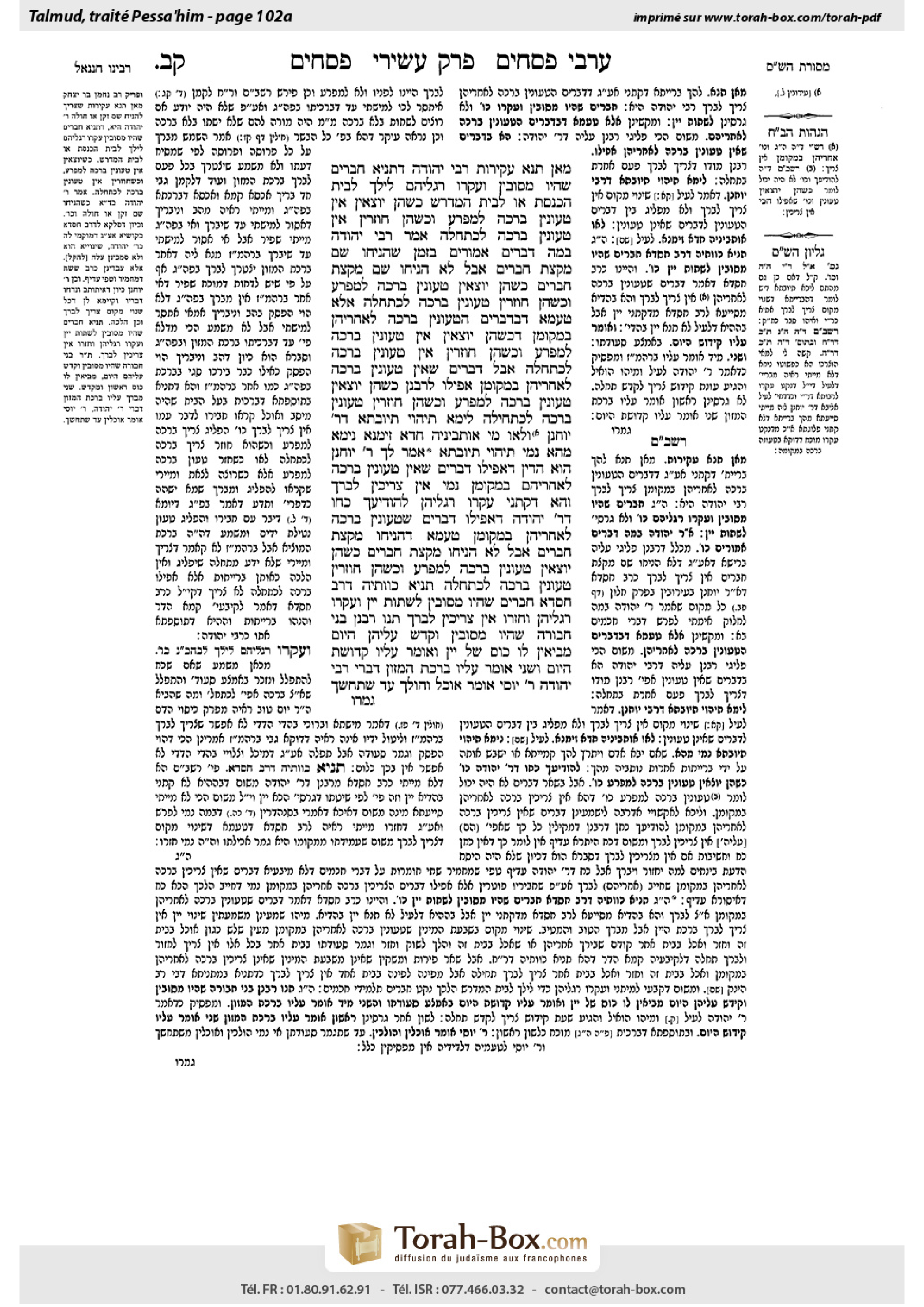
Pesachim 102a: Talmud study for Daf Yomi
Daf Yomi is the daily study of one Talmud folio. Explore 37 tractates with scans, Hebrew text, Sefaria English and AI-generated French translations where annotated.
Passage selection and English or AI-generated French translation are available where the scan has annotations. Daf Study is independent of Torah-Box and Sefaria.
Browse Pesachim · פסחים · All tractatesPesachim 102a text and translations
This page of Pesachim includes the Aramaic text, an English translation and an AI-generated French translation, alongside the scan above.
פסחים ק״ב א · Aramaic and Hebrew text
מַאן תַּנָּא עֲקִירוֹת,
רַבִּי יְהוּדָה, דְּתַנְיָא: חֲבֵרִים שֶׁהָיוּ מְסוּבִּין, וְעָקְרוּ רַגְלֵיהֶם לֵילֵךְ לְבֵית הַכְּנֶסֶת אוֹ לְבֵית הַמִּדְרָשׁ, כְּשֶׁהֵן יוֹצְאִין — אֵין טְעוּנִין בְּרָכָה לְמַפְרֵעַ, וּכְשֶׁהֵן חוֹזְרִין — אֵין טְעוּנִין בְּרָכָה לְכַתְּחִלָּה. אָמַר רַבִּי יְהוּדָה: בַּמֶּה דְּבָרִים אֲמוּרִים — בִּזְמַן שֶׁהִנִּיחוּ שָׁם מִקְצָת חֲבֵרִים, אֲבָל לֹא הִנִּיחוּ שָׁם מִקְצָת חֲבֵרִים, כְּשֶׁהֵן יוֹצְאִין — טְעוּנִין בְּרָכָה לְמַפְרֵעַ, וּכְשֶׁהֵן חוֹזְרִין — טְעוּנִין בְּרָכָה לְכַתְּחִלָּה.
אֶלָּא טַעְמָא דְּבִדְבָרִים הַטְּעוּנִין בְּרָכָה לְאַחֲרֵיהֶן בִּמְקוֹמָן, דִּכְשֶׁהֵן יוֹצְאִין — אֵין טְעוּנִין בְּרָכָה לְמַפְרֵעַ, וּכְשֶׁהֵן חוֹזְרִין — אֵין טְעוּנִין בְּרָכָה לְכַתְּחִלָּה. אֲבָל דְּבָרִים שֶׁאֵין טְעוּנִין בְּרָכָה לְאַחֲרֵיהֶן בִּמְקוֹמָן, אֲפִילּוּ לְרַבָּנַן, כְּשֶׁהֵן יוֹצְאִין — טְעוּנִין בְּרָכָה לְמַפְרֵעַ, וּכְשֶׁהֵן חוֹזְרִין — טְעוּנִין בְּרָכָה לְכַתְּחִילָּה,
לֵימָא תֶּיהְוֵי תְּיוּבְתָּא דְּרַבִּי יוֹחָנָן! וְלָאו מִי אוֹתְבִינֵּיהּ חֲדָא זִימְנָא! נֵימָא מֵהָא נָמֵי תֶּיהְוֵי תְּיוּבְתָּא!
אָמַר לָךְ רַבִּי יוֹחָנָן: הוּא הַדִּין דַּאֲפִילּוּ דְּבָרִים שֶׁאֵין טְעוּנִין בְּרָכָה לְאַחֲרֵיהֶם בִּמְקוֹמָן נָמֵי אֵין צְרִיכִין לְבָרֵךְ, וְהָא דְּקָתָנֵי ״עָקְרוּ רַגְלֵיהֶן״, לְהוֹדִיעֲךָ כֹּחוֹ דְּרַבִּי יְהוּדָה,
דַּאֲפִילּוּ דְּבָרִים שֶׁטְּעוּנִין בְּרָכָה לְאַחֲרֵיהֶן בִּמְקוֹמָן, טַעְמָא דְּהִנִּיחוּ מִקְצָת חֲבֵרִים, אֲבָל לֹא הִנִּיחוּ מִקְצָת חֲבֵרִים, כְּשֶׁהֵן יוֹצְאִין — טְעוּנִין בְּרָכָה לְמַפְרֵעַ, וּכְשֶׁהֵן חוֹזְרִין — טְעוּנִין בְּרָכָה לְכַתְּחִלָּה.
תַּנְיָא כְּווֹתֵיהּ דְּרַב חִסְדָּא: חֲבֵרִים שֶׁהָיוּ מְסוּבִּין לִשְׁתּוֹת יַיִן, וְעָקְרוּ רַגְלֵיהֶן וְחָזְרוּ — אֵין צְרִיכִין לְבָרֵךְ.
תָּנוּ רַבָּנַן: בְּנֵי חֲבוּרָה שֶׁהָיוּ מְסוּבִּין וְקִדֵּשׁ עֲלֵיהֶן הַיּוֹם — מְבִיאִין לוֹ כּוֹס שֶׁל יַיִן וְאוֹמֵר עָלָיו קְדוּשַּׁת הַיּוֹם, וְשֵׁנִי אוֹמֵר עָלָיו בִּרְכַּת הַמָּזוֹן, דִּבְרֵי רַבִּי יְהוּדָה. רַבִּי יוֹסֵי אוֹמֵר: אוֹכֵל וְהוֹלֵךְ עַד שֶׁתֶּחְשַׁךְ.
Pesachim 102a · English translation
Who is the tanna that taught that even in cases of uprooting oneself from a meal that requires a blessing of significance afterward, one nevertheless is required to recite a new blessing before resuming his meal?
It is Rabbi Yehuda, as it was taught in a baraita: With regard to friends who were reclining and eating a meal and uprooted themselves to go to the synagogue or to the study hall, when they exit, these foods do not require a blessing to be recited afterward, and when they return, these foods do not require an introductory blessing before resuming eating. Rabbi Yehuda said: In what case is this statement said? When they left some of the friends there, at the meal. However, if they did not leave some of the friends there, when they exit, these foods require a blessing to be recited afterward, and when they return, these foods require an introductory blessing. According to Rav Naḥman bar Yitzḥak, the baraita that served as the basis of the Gemara’s objection to the explanation of Rav Ḥisda actually represents the minority opinion of Rabbi Yehuda, whereas Rav Ḥisda holds in accordance with the majority opinion of the Rabbis.
The Gemara infers from the above baraita: The reason for this halakha is that it is only with regard to items of food that require a blessing after them in their place, that when the people eating them exit, these foods do not require a blessing to be recited afterward, and when they return, these foods do not require an introductory blessing. However, if they ate items of food that do not require a blessing that must be recited specifically in their place, even according to the opinion of the Rabbis, who disagree with Rabbi Yehuda, when these people exit, these foods require a blessing to be recited afterward, and when they return these foods require an introductory blessing.
The Gemara suggests: Shall we say that this is a conclusive refutation of the opinion of Rabbi Yoḥanan, who holds that a change of location never obligates one to recite a new blessing? The Gemara expresses surprise at this proposition: But didn’t we already refute Rabbi Yoḥanan’s opinion once? Why is it necessary to refute his ruling yet again? The Gemara admits that this is true but adds: Nevertheless, let us say that this baraita is also a conclusive refutation of the opinion of Rabbi Yoḥanan.
The Gemara responds that Rabbi Yoḥanan’s ruling cannot be definitively refuted from this baraita, as Rabbi Yoḥanan could have said to you: The same is true that even with regard to items of food that do not require a blessing afterward in their place, the people who ate them are also not required to recite a new blessing. And with regard to that which the baraita teaches: They uprooted themselves, from which it was inferred that the people were eating foods that require a blessing afterward in the place of eating, this phrase serves to convey the far-reaching nature of Rabbi Yehuda’s stringent opinion.
The Gemara explains the previous statement: According to Rabbi Yehuda, even if they were eating items of food that require a blessing after them in their place, and they will definitely return to the meal, the reason that these foods do not require a new blessing is that they left some of their friends at the meal. However, if they did not leave some of their friends, when they exit, these foods require a blessing to be recited afterward, and when they return, these foods require an introductory blessing. Nevertheless, it is possible that the Rabbis are lenient and do not obligate them to recite a new blessing, even if they are eating food that does not require a blessing afterward in the place in which they ate.
The Gemara points out that it was taught in a baraita in accordance with the opinion of Rav Ḥisda: With regard to friends who were reclining to drink wine together and uprooted themselves from their place and subsequently returned to their original location, they need not recite a new blessing. Wine is considered an important beverage that requires a concluding blessing in the place where it was consumed. This baraita explicitly supports the opinion of Rav Ḥisda, who rules with regard to items of this kind that if one left the place where he was drinking and later returned, no new blessing is necessary.
The Gemara returns to the subject of interrupting one’s meal to recite kiddush. The Sages taught: With regard to members of a group who were reclining and eating a meal, and the day of Shabbat was sanctified, they bring one of the diners a cup of wine and he recites over it the sanctification of the day, i.e., kiddush, and a second cup over which he recites Grace after Meals; this is the statement of Rabbi Yehuda. Rabbi Yosei says: One may continue eating the rest of his meal, even until dark.
Pesachim 102a · Traduction française (IA)
Quel est le tanna qui a enseigné que même lorsqu’on interrompt un repas après lequel il faut réciter une bénédiction finale importante, on doit néanmoins réciter une nouvelle bénédiction avant de reprendre le repas ?
C’est Rabbi Yehuda, comme il est enseigné dans une baraïta : Des convives étaient installés à table et prenaient un repas lorsqu’ils interrompirent leur repas pour se rendre à la synagogue ou à la maison d’étude. En partant, ils n’ont pas à réciter de bénédiction finale pour ces aliments, et, à leur retour, ils n’ont pas à réciter de bénédiction initiale avant de reprendre leur repas. Rabbi Yehuda a dit : Dans quel cas cette règle s’applique-t-elle ? Lorsqu’ils ont laissé certains convives à table. En revanche, s’ils n’ont laissé aucun convive à table, en partant, ils doivent réciter une bénédiction finale pour ces aliments et, à leur retour, une bénédiction initiale. Selon Rav Naḥman bar Yitzḥak, la baraïta qui a servi de fondement à l’objection de la Guemara contre l’explication de Rav Ḥisda représente en réalité l’opinion minoritaire de Rabbi Yehuda, tandis que Rav Ḥisda suit l’opinion majoritaire des Rabbins.
La Guemara déduit de la baraïta précédente que cette halakha ne concerne que les aliments pour lesquels la bénédiction finale doit être récitée à l’endroit où ils ont été consommés : lorsque ceux qui les mangeaient partent, ils n’ont pas à réciter de bénédiction finale et, à leur retour, ils n’ont pas à réciter de bénédiction initiale. En revanche, s’ils ont mangé des aliments pour lesquels la bénédiction finale n’a pas à être récitée spécifiquement à l’endroit où ils ont été consommés, même selon l’opinion des Rabbins, qui sont en désaccord avec Rabbi Yehuda, lorsqu’ils partent, ils doivent réciter une bénédiction finale pour ces aliments et, à leur retour, une bénédiction initiale.
La Guemara propose : Faut-il en conclure que cela réfute définitivement l’opinion de Rabbi Yoḥanan, selon laquelle un changement de lieu n’oblige jamais à réciter une nouvelle bénédiction ? La Guemara s’étonne : Mais n’avons-nous pas déjà réfuté une fois l’opinion de Rabbi Yoḥanan ? Pourquoi est-il nécessaire de réfuter de nouveau sa position ? La Guemara reconnaît que c’est vrai, mais ajoute : Néanmoins, disons que cette baraïta réfute elle aussi définitivement l’opinion de Rabbi Yoḥanan.
La Guemara répond que la position de Rabbi Yoḥanan ne peut pas être définitivement réfutée à partir de cette baraïta, car Rabbi Yoḥanan aurait pu vous répondre : Il en va de même pour les aliments pour lesquels la bénédiction finale n’a pas à être récitée à l’endroit où ils ont été consommés : ceux qui les ont mangés ne sont pas non plus tenus de réciter une nouvelle bénédiction. Quant à l’expression de la baraïta, « ils interrompirent leur repas », dont on a déduit qu’ils mangeaient des aliments pour lesquels la bénédiction finale doit être récitée à l’endroit où ils ont été consommés, elle vise à souligner jusqu’où va la rigueur de l’opinion de Rabbi Yehuda.
La Guemara explique la déclaration précédente : selon Rabbi Yehuda, même s’ils mangeaient des aliments pour lesquels la bénédiction finale doit être récitée à l’endroit où ils ont été consommés et qu’ils sont certains de revenir au repas, ces aliments n’exigent pas de nouvelle bénédiction parce qu’ils ont laissé certains de leurs convives à table. En revanche, s’ils n’ont laissé aucun convive, en partant, ils doivent réciter une bénédiction finale pour ces aliments et, à leur retour, une bénédiction initiale. Il est toutefois possible que les Rabbins soient indulgents et ne les obligent pas à réciter une nouvelle bénédiction, même s’ils mangent des aliments pour lesquels la bénédiction finale n’a pas à être récitée à l’endroit où ils ont été consommés.
La Guemara indique qu’une baraïta a été enseignée conformément à l’opinion de Rav Ḥisda : Des convives étaient installés ensemble pour boire du vin lorsqu’ils quittèrent leur place, puis revinrent à leur emplacement initial ; ils n’ont pas besoin de réciter une nouvelle bénédiction. Le vin est considéré comme une boisson importante, pour laquelle la bénédiction finale doit être récitée à l’endroit où il a été consommé. Cette baraïta confirme explicitement l’opinion de Rav Ḥisda, selon laquelle, pour les boissons de cette catégorie, si l’on quitte l’endroit où l’on buvait puis qu’on y revient, aucune nouvelle bénédiction n’est nécessaire.
La Guemara revient au sujet de l’interruption du repas pour réciter le kiddouch. Les Sages ont enseigné : Des membres d’un groupe étaient installés à table et prenaient un repas lorsque le jour du Chabbat fut sanctifié. On apporte alors à l’un des convives une coupe de vin sur laquelle il récite la sanctification du jour, c’est-à-dire le kiddouch, puis une deuxième coupe sur laquelle il récite le Birkat Hamazon. Telle est la position de Rabbi Yehuda. Rabbi Yosei dit : On peut poursuivre le reste du repas, même jusqu’à la tombée de la nuit.
Traduction française générée par IA à partir de l’édition anglaise de Sefaria. Vérifie toujours un passage avec le texte source.
Text from Sefaria: William Davidson Edition - Vocalized Aramaic (CC BY NC); William Davidson Edition - English (CC BY NC).