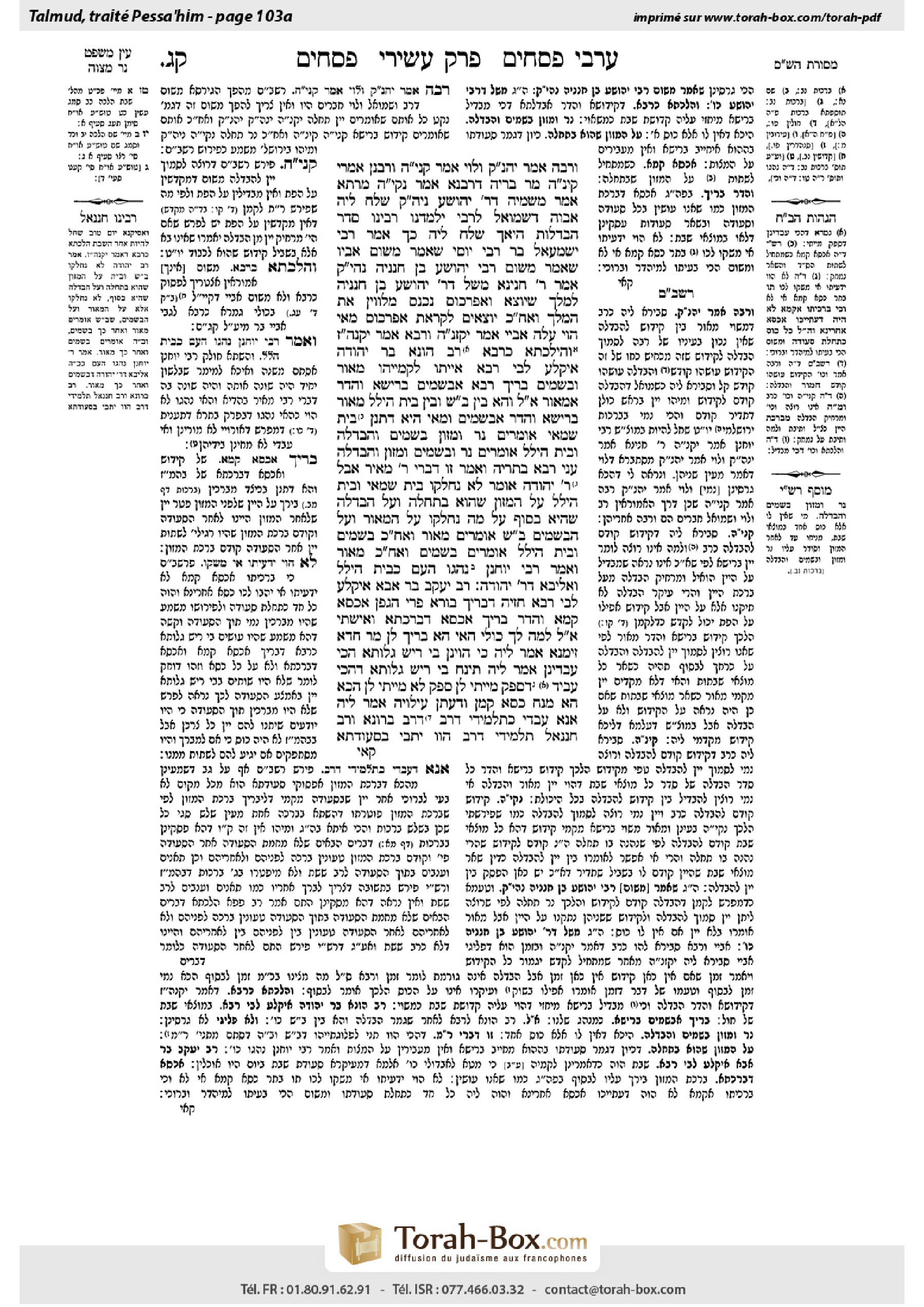
Pesachim 103a: Talmud study for Daf Yomi
Daf Yomi is the daily study of one Talmud folio. Explore 37 tractates with scans, Hebrew text, Sefaria English and AI-generated French translations where annotated.
Passage selection and English or AI-generated French translation are available where the scan has annotations. Daf Study is independent of Torah-Box and Sefaria.
Browse Pesachim · פסחים · All tractatesPesachim 103a text and translations
This page of Pesachim includes the Aramaic text, an English translation and an AI-generated French translation, alongside the scan above.
פסחים ק״ג א · Aramaic and Hebrew text
וְרַבָּה אָמַר: יַהְנֵ״ק. וְלֵוִי אָמַר: קְנִיָּ״ה. וְרַבָּנַן אָמְרִי: קִינָ״ה. מָר בְּרֵיהּ דְּרַבְנָא אָמַר: נְקִיָּ״ה. מָרְתָא אָמַר מִשְּׁמֵיהּ דְּרַבִּי יְהוֹשֻׁעַ: נִיהָ״ק.
שְׁלַח לֵיהּ אֲבוּהּ דִּשְׁמוּאֵל לְרַבִּי: יְלַמְּדֵנוּ רַבֵּינוּ, סֵדֶר הַבְדָּלוֹת הֵיאַךְ. שְׁלַח לֵיהּ: כָּךְ אָמַר רַבִּי יִשְׁמָעֵאל בַּר רַבִּי יוֹסֵי שֶׁאָמַר מִשּׁוּם אָבִיו שֶׁאָמַר מִשּׁוּם רַבִּי יְהוֹשֻׁעַ בֶּן חֲנַנְיָה: נְהִי״ק.
אָמַר רַבִּי חֲנִינָא: מָשָׁל דְּרַבִּי יְהוֹשֻׁעַ בֶּן חֲנַנְיָה לְמֶלֶךְ שֶׁיּוֹצֵא וְאִפַּרְכוֹס נִכְנָס, מְלַוִּוין אֶת הַמֶּלֶךְ וְאַחַר כָּךְ יוֹצְאִים לִקְרַאת אִפַּרְכוֹס.
מַאי הָוֵי עֲלַהּ? אַבָּיֵי אָמַר: יַקְזְנָ״ה, וְרָבָא אָמַר: יַקְנְהָ״ז, וְהִילְכְתָא כְּרָבָא.
רַב הוּנָא בַּר יְהוּדָה אִיקְּלַע לְבֵי רָבָא, אַיְיתוֹ לְקַמַּיְיהוּ מָאוֹר וּבְשָׂמִים. בָּרֵיךְ רָבָא אַבְּשָׂמִים בְּרֵישָׁא וַהֲדַר אַמָּאוֹר. אֲמַר לֵיהּ: וְהָא בֵּין בֵּית שַׁמַּאי וּבֵין בֵּית הִילֵּל — מָאוֹר בְּרֵישָׁא וַהֲדַר אַבְּשָׂמִים.
וּמַאי הִיא? דִּתְנַן, בֵּית שַׁמַּאי אוֹמְרִים: נֵר וּמָזוֹן, בְּשָׂמִים וְהַבְדָּלָה. וּבֵית הִילֵּל אוֹמְרִים: נֵר וּבְשָׂמִים, וּמָזוֹן וְהַבְדָּלָה.
עָנֵי רָבָא בָּתְרֵיהּ וְאָמַר: זוֹ דִּבְרֵי רַבִּי מֵאִיר, אֲבָל רַבִּי יְהוּדָה אוֹמֵר: לֹא נֶחְלְקוּ בֵּית שַׁמַּאי וּבֵית הִילֵּל עַל הַמָּזוֹן שֶׁהוּא בַּתְּחִלָּה וְעַל הַבְדָּלָה שֶׁהִיא בַּסּוֹף,
עַל מָה נֶחְלְקוּ? עַל הַמָּאוֹר וְעַל הַבְּשָׂמִים. בֵּית שַׁמַּאי אוֹמְרִים: מָאוֹר וְאַחַר כָּךְ בְּשָׂמִים, וּבֵית הִילֵּל אוֹמְרִים: בְּשָׂמִים וְאַחַר כָּךְ מָאוֹר. וְאָמַר רַבִּי יוֹחָנָן: נָהֲגוּ הָעָם כְּבֵית הִילֵּל וְאַלִּיבָּא דְּרַבִּי יְהוּדָה.
רַב יַעֲקֹב בַּר אַבָּא אִיקְּלַע לְבֵי רָבָא, חַזְיֵהּ דְּבָרֵיךְ ״בּוֹרֵא פְּרִי הַגֶּפֶן״ אַכָּסָא קַמָּא, וַהֲדַר בָּרֵיךְ אַכָּסָא דְבִרְכְּתָא, וְאִישְׁתִּי. אֲמַר לֵיהּ: לְמָה לָךְ כּוּלֵּי הַאי? הָא בָּרֵיךְ לַן מָר חֲדָא זִימְנָא! אֲמַר לֵיהּ: כִּי הֲוֵינַן בֵּי רֵישׁ גָּלוּתָא הָכִי עָבְדִינַן.
אֲמַר לֵיהּ: תִּינַח בֵּי רֵישׁ גָּלוּתָא דְּהָכִי עָבֵיד, דְּסָפֵק מַיְיתֵי לַן סָפֵק לָא מַיְיתֵי לַן. הָכָא, הָא מַנַּח כָּסָא קַמַּן וְדַעְתַּן עִילָּוֵיהּ? אֲמַר לֵיהּ: אֲנָא עֲבַדִי כְּתַלְמִידֵי דְרַב, דְּרַב בְּרוֹנָא וְרַב חֲנַנְאֵל תַּלְמִידֵי דְרַב הֲווֹ יָתְבִי בִּסְעוֹדְתָּא
Pesachim 103a · English translation
And Rabba said that the correct order is yod, heh, nun, kuf: Wine [yayin], havdala, candle [ner], and kiddush. And Levi said the order is kuf, nun, yod, heh: Kiddush, candle [ner], wine [yayin], and havdala. And the Rabbis say the order is kuf, yod, nun, heh: kiddush, wine [yayin], candle [ner], and havdala. Mar, son of Rabbana, said the order is nun, kuf, yod, heh: Candle [ner], kiddush, wine [yayin], and havdala. The Sage named Marta said in the name of Rabbi Yehoshua that the proper order is nun, yod, heh, kuf: Candle [ner], wine [yayin], havdala, and kiddush.
With regard to this issue, the father of Shmuel, Abba ben Abba, sent a letter to Rabbi Yehuda HaNasi: Teach us, our Rabbi. How should one recite the order of havdala when a Festival occurs after Shabbat? Rabbi sent him the following response: This is what Rabbi Yishmael, son of Rabbi Yosei, said, who said it in the name of his father, who himself said it in the name of Rabbi Yehoshua ben Ḥananya: The proper order of the blessings is nun, heh, yod, kuf: Candle [ner], havdala, wine [yayin], and kiddush.
Rabbi Ḥanina said that the following parable serves to explain the opinion of Rabbi Yehoshua ben Ḥananya: This is comparable to a king who is exiting a city and a governor is entering. Etiquette dictates that the inhabitants of the city first escort the king out of the city to take leave of him in a dignified fashion, and afterward they go out to greet the governor. Similarly, one should first recite havdala, to take leave of Shabbat, and only then recite kiddush over the Festival, whose sanctity is lesser than that of Shabbat.
The Gemara asks: What halakhic conclusion was reached about this matter? What is the proper order of the blessings? The amora’im accept Rav’s opinion that one should recite kiddush before havdala; however, they disagree about the blessing of time, which is generally relevant in such cases and which Rav did not address. Abaye said that the proper order is yod, kuf, zayin, nun, heh: The blessing over wine [yayin], kiddush, the blessing for time [zeman], the blessing over the candle [ner], and havdala. And Rava said the order is yod, kuf, nun, heh, zayin: Wine [yayin], kiddush, candle [ner], havdala, and time [zeman]. The Gemara concludes: And the halakha is in accordance with the opinion of Rava.
With regard to this issue of havdala, the Gemara relates that Rav Huna bar Yehuda happened to come to the house of Rava. After Shabbat, they brought before them a light and spices. Rava recited the blessing over the spices first and then the blessing over the light. Rav Huna bar Yehuda said to him: But both Beit Shammai and Beit Hillel, who dispute the order of the blessings at havdala, agree that the blessing over light is first, and only then comes the blessing over the spices.
And what is this; what is the source that this is the dispute between Beit Shammai and Beit Hillel? As we learned in a mishna: Beit Shammai say that with regard to one who is required to say Grace after Meals and havdala, and he has only one cup of wine, the proper order of the blessings is: The blessing over the candle, and the blessing of Grace After Meals, followed by the blessing over the spices, and finally havdala. And Beit Hillel say: The blessing over the candle comes first, and then the blessing over the spices, and afterward the blessing of Grace After Meals, and last is havdala. Both Beit Shammai and Beit Hillel agree that the blessing over the candle is recited before blessing over the spices.
Rava answered after him and said: This mishna is the statement of Rabbi Meir. However, Rabbi Yehuda says: Beit Shammai and Beit Hillel did not disagree over Grace After Meals, as everyone concurs that it is recited first, nor did they disagree over havdala, as it is recited last.
With regard to what did they disagree? They disagreed over the blessings recited in the middle of havdala, i.e., the blessings over light and over the spices. Beit Shammai say: Light first, and spices thereafter; and Beit Hillel say: Spices first, and light thereafter. And Rabbi Yoḥanan said: The people were accustomed to conduct themselves in accordance with the opinion of Beit Hillel, according to the interpretation of Rabbi Yehuda. Rava acted as dictated by this custom.
The Gemara relates another incident with regard to establishing meals and reciting blessings. Rav Ya’akov bar Abba happened to come to Rava’s house for a Shabbat meal. He saw that Rava recited the blessing: Who creates the fruit of the vine, over the first cup of wine he drank at the meal, and then he recited the same blessing upon the cup of wine he used for the blessing of Grace after Meals and drank it. He said to him: Why do you have to say all this, i.e., why is it necessary to recite a second blessing? The Master has recited a blessing for us once already, at the beginning of the meal, and thereby exempted us from a blessing on all the wine drunk during the meal. Rava said to him: When we were in the house of the Exilarch, this was our practice. It was the custom among the Sages to recite two blessings.
He said to him: It works out well to act this way in the house of the Exilarch, as there is uncertainty as to whether he will bring us another cup of wine to drink, or whether he will not bring us another cup. Since we are dependent upon the host and cannot anticipate in advance whether we will drink more wine, each cup requires its own blessing. Here, however, the cup is resting before us and our attention is on it, i.e., we intend to drink this wine after Grace after Meals. What need is there to recite another blessing? He said to him: I acted in accordance with the opinion of the students of Rav, as Rav Beruna and Rav Ḥananel, the students of Rav, were sitting together at a meal,
Pesachim 103a · Traduction française (IA)
Rabba dit que l’ordre correct est yod, hé, noun, kouf : le vin [yayin], la havdala, la bougie [ner] et le kiddouch. Levi dit que l’ordre est kouf, noun, yod, hé : le kiddouch, la bougie [ner], le vin [yayin] et la havdala. Les Sages disent que l’ordre est kouf, yod, noun, hé : le kiddouch, le vin [yayin], la bougie [ner] et la havdala. Mar, fils de Rabbana, dit que l’ordre est noun, kouf, yod, hé : la bougie [ner], le kiddouch, le vin [yayin] et la havdala. Le Sage nommé Marta dit au nom de Rabbi Yehoshua que l’ordre correct est noun, yod, hé, kouf : la bougie [ner], le vin [yayin], la havdala et le kiddouch.
À ce sujet, le père de Shmuel, Abba ben Abba, envoya une lettre à Rabbi Yehuda HaNasi : « Enseigne-nous, notre maître : dans quel ordre faut-il réciter la havdala lorsqu’une fête tombe après Chabbat ? » Rabbi lui adressa cette réponse : « Voici ce qu’a dit Rabbi Yishmael, fils de Rabbi Yosei, qui l’a dit au nom de son père, lequel l’a lui-même dit au nom de Rabbi Yehoshua ben Ḥananya : l’ordre correct des bénédictions est noun, hé, yod, kouf : la bougie [ner], la havdala, le vin [yayin] et le kiddouch. »
Rabbi Ḥanina dit que la parabole suivante explique l’opinion de Rabbi Yehoshua ben Ḥananya : cela ressemble à un roi qui quitte une ville tandis qu’un gouverneur y entre. Les convenances exigent que les habitants de la ville escortent d’abord le roi hors de la ville, afin de prendre congé de lui avec dignité, puis qu’ils sortent accueillir le gouverneur. De même, il faut d’abord réciter la havdala pour prendre congé du Chabbat, puis réciter le kiddouch de la fête, dont la sainteté est moindre que celle du Chabbat.
La Guemara demande : quelle conclusion halakhique a-t-on tirée à ce sujet ? Quel est l’ordre correct des bénédictions ? Les amoraïm retiennent l’opinion de Rav, selon laquelle il faut réciter le kiddouch avant la havdala ; toutefois, ils sont en désaccord au sujet de la bénédiction du temps, qui est généralement pertinente dans de tels cas et que Rav n’a pas abordée. Abaye dit que l’ordre correct est yod, kouf, zayin, noun, hé : la bénédiction sur le vin [yayin], le kiddouch, la bénédiction du temps [zeman], la bénédiction sur la bougie [ner] et la havdala. Rava dit que l’ordre est yod, kouf, noun, hé, zayin : le vin [yayin], le kiddouch, la bougie [ner], la havdala et le temps [zeman]. La Guemara conclut : la halakha suit l’opinion de Rava.
À propos de cette question de havdala, la Guemara rapporte que Rav Huna bar Yehuda arriva chez Rava. Après Chabbat, on leur apporta une lumière et des aromates. Rava récita d’abord la bénédiction sur les aromates, puis celle sur la lumière. Rav Huna bar Yehuda lui dit : « Pourtant, Beit Shammaï et Beit Hillel, qui sont en désaccord sur l’ordre des bénédictions de la havdala, conviennent tous deux que la bénédiction sur la lumière vient d’abord, et que celle sur les aromates ne vient qu’ensuite. »
Et qu’est-ce donc ? Quelle est la source établissant qu’il s’agit là du désaccord entre Beit Shammaï et Beit Hillel ? Nous avons appris dans une Michna : Beit Shammaï disent qu’à propos de celui qui doit réciter la bénédiction après le repas et la havdala, mais ne dispose que d’une seule coupe de vin, l’ordre correct des bénédictions est le suivant : la bénédiction sur la bougie, la bénédiction après le repas, la bénédiction sur les aromates, et enfin la havdala. Beit Hillel disent : la bénédiction sur la bougie vient d’abord, puis celle sur les aromates, ensuite la bénédiction après le repas et, en dernier, la havdala. Beit Shammaï et Beit Hillel conviennent tous deux que la bénédiction sur la bougie se récite avant celle sur les aromates.
Rava lui répondit : « Cette Michna rapporte l’opinion de Rabbi Meir. Cependant, Rabbi Yehuda dit que Beit Shammaï et Beit Hillel n’étaient pas en désaccord au sujet de la bénédiction après le repas, car tous reconnaissent qu’elle se récite en premier, ni au sujet de la havdala, qui se récite en dernier. »
Sur quoi étaient-ils en désaccord ? Ils étaient en désaccord au sujet des bénédictions récitées au milieu de la havdala, c’est-à-dire celles sur la lumière et sur les aromates. Beit Shammaï disent : la lumière d’abord, puis les aromates ; Beit Hillel disent : les aromates d’abord, puis la lumière. Rabbi Yoḥanan dit que les gens avaient coutume d’agir conformément à l’opinion de Beit Hillel, selon l’interprétation de Rabbi Yehuda. Rava suivit cette coutume.
La Guemara rapporte un autre épisode concernant l’organisation des repas et la récitation des bénédictions. Rav Ya’akov bar Abba arriva chez Rava pour un repas de Chabbat. Il vit que Rava avait récité la bénédiction « Qui crée le fruit de la vigne » sur la première coupe de vin qu’il avait bue au cours du repas, puis récita la même bénédiction sur la coupe de vin qu’il utilisa pour la bénédiction après le repas et qu’il but. Il lui dit : « Pourquoi faut-il faire tout cela, c’est-à-dire pourquoi est-il nécessaire de réciter une deuxième bénédiction ? Le Maître nous a déjà récité une bénédiction au début du repas, nous dispensant ainsi de bénédiction pour tout le vin bu au cours du repas. » Rava lui dit : « Lorsque nous étions chez l’Exilarque, nous agissions ainsi. Les Sages avaient coutume de réciter deux bénédictions. »
Il lui dit : « Il est logique d’agir ainsi chez l’Exilarque, puisqu’on ne sait pas s’il nous apportera une autre coupe de vin à boire ou non. Comme nous dépendons de notre hôte et ne pouvons pas prévoir à l’avance si nous boirons davantage de vin, chaque coupe nécessite sa propre bénédiction. Ici, en revanche, la coupe est devant nous et notre attention se porte sur elle, c’est-à-dire que nous avons l’intention de boire ce vin après la bénédiction après le repas. Pourquoi faudrait-il réciter une autre bénédiction ? » Il lui dit : « J’ai agi conformément à l’opinion des disciples de Rav, puisque Rav Beruna et Rav Ḥananel, les disciples de Rav, étaient assis ensemble à un repas,
Traduction française générée par IA à partir de l’édition anglaise de Sefaria. Vérifie toujours un passage avec le texte source.
Text from Sefaria: William Davidson Edition - Vocalized Aramaic (CC BY NC); William Davidson Edition - English (CC BY NC).