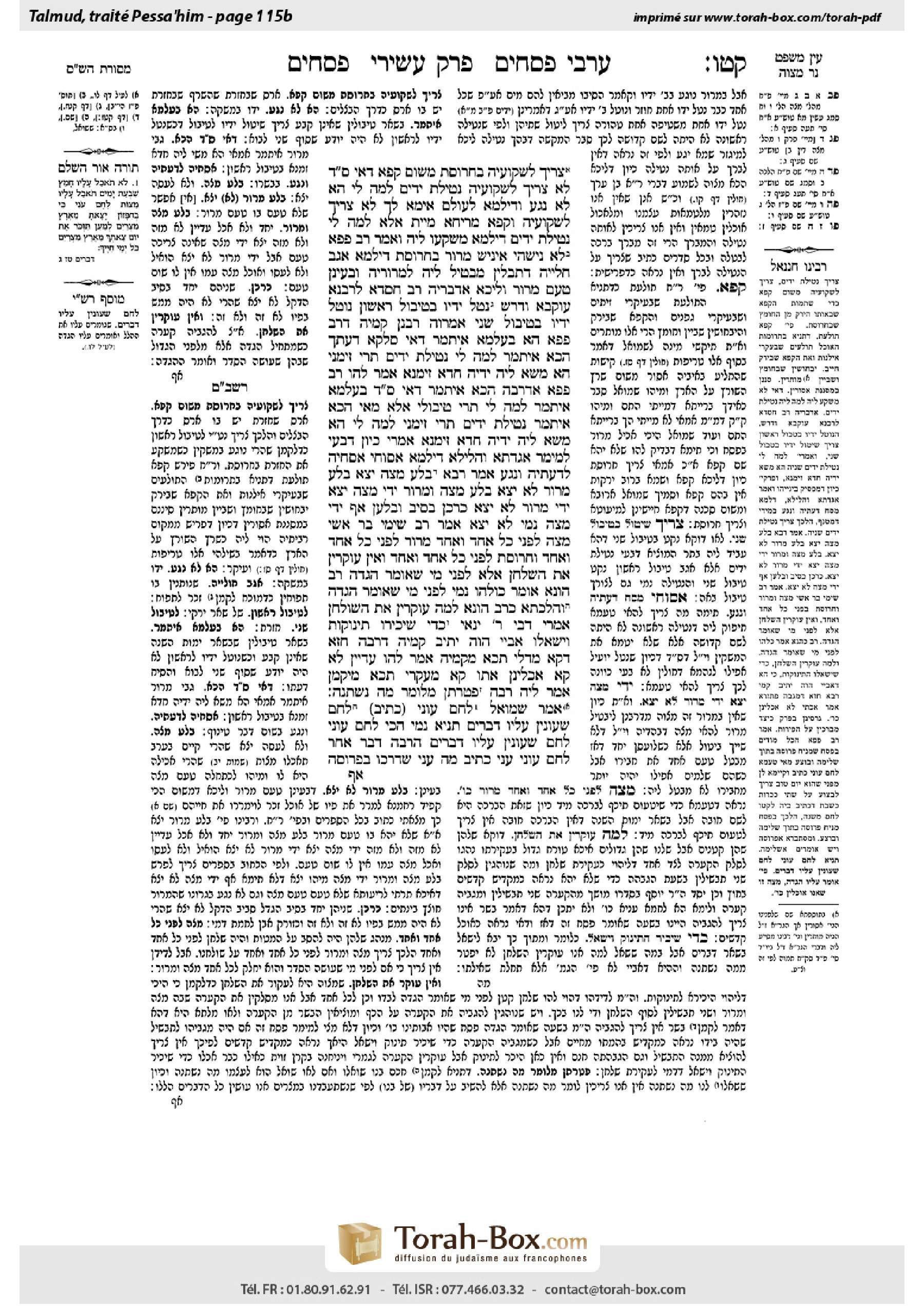
Pesachim 115b: Talmud study for Daf Yomi
Daf Yomi is the daily study of one Talmud folio. Explore 37 tractates with scans, Hebrew text, Sefaria English and AI-generated French translations where annotated.
Passage selection and English or AI-generated French translation are available where the scan has annotations. Daf Study is independent of Torah-Box and Sefaria.
Browse Pesachim · פסחים · All tractatesPesachim 115b text and translations
This page of Pesachim includes the Aramaic text, an English translation and an AI-generated French translation, alongside the scan above.
פסחים קי״ה ב · Aramaic and Hebrew text
צְרִיךְ לְשַׁקּוֹעֵיהּ בַּחֲרוֹסֶת, מִשּׁוּם קָפָא. דְּאִי סָלְקָא דַעְתָּךְ לָא צְרִיךְ לְשַׁקּוֹעֵיהּ — נְטִילַת יָדַיִם לְמָה לִי? הָא לָא נָגַע! וְדִילְמָא לְעוֹלָם אֵימָא לָךְ: לָא צְרִיךְ לְשַׁקּוֹעֵיהּ, וְקָפָא מֵרֵיחָא מָיֵית. אֶלָּא לְמָה לִי נְטִילַת יָדַיִם — דִּילְמָא מְשַׁקְּעוּ לֵיהּ.
וְאָמַר רַב פָּפָּא: לָא נִישַׁהֵי אִינִישׁ מָרוֹר בַּחֲרוֹסֶת, דִּילְמָא אַגַּב חַלְיֵיהּ דְּתַבְלִין מְבַטֵּיל לֵיהּ לִמְרוֹרֵיהּ, וּבָעֵינַן טַעַם מָרוֹר, וְלֵיכָּא. אַדְבְּרֵיהּ רַב חִסְדָּא לְרַבָּנָא עוּקְבָא, וּדְרַשׁ: נָטַל יָדָיו בְּטִיבּוּל רִאשׁוֹן — נוֹטֵל יָדָיו בְּטִיבּוּל שְׁנֵי.
אַמְרוּהָ רַבָּנַן קַמֵּיהּ דְּרַב פָּפָּא: הָא בְּעָלְמָא אִיתְּמַר. דְּאִי סָלְקָא דַעְתָּךְ הָכָא אִיתְּמַר, לְמָה לִי נְטִילַת יָדַיִם תְּרֵי זִימְנֵי? הָא מְשָׁא לֵיהּ יְדֵיהּ חֲדָא זִימְנָא!
אֲמַר לְהוּ רַב פָּפָּא: אַדְּרַבָּה, הָכָא אִיתְּמַר. דְּאִי סָלְקָא דַעְתָּךְ בְּעָלְמָא אִיתְּמַר, לְמָה לִי תְּרֵי טִיבּוּלֵי?
אֶלָּא מַאי, הָכָא אִיתְּמַר? נְטִילַת יָדַיִם תְּרֵי זִימְנֵי לְמָה לִי? הָא מְשָׁא לֵיהּ יְדֵיהּ חֲדָא זִימְנָא! אָמְרִי: כֵּיוָן דְּבָעֵי לְמֵימַר אַגָּדְתָּא וְהַלֵּילָא, דִּילְמָא אַסּוֹחֵי אַסְּחֵיהּ לְדַעְתֵּיהּ וּנְגַע.
אָמַר רָבָא: בָּלַע מַצָּה — יָצָא, בָּלַע מָרוֹר — לֹא יָצָא. בָּלַע מַצָּה וּמָרוֹר, יְדֵי מַצָּה — יָצָא, יְדֵי מָרוֹר — לֹא יָצָא. כְּרָכָן בְּסִיב וּבְלָעָן — אַף יְדֵי מַצָּה נָמֵי לֹא יָצָא.
אָמַר רַב שִׁימִי בַּר אָשֵׁי: מַצָּה לִפְנֵי כׇּל אֶחָד וְאֶחָד, מָרוֹר לִפְנֵי כׇּל אֶחָד וְאֶחָד, וַחֲרוֹסֶת לִפְנֵי כׇּל אֶחָד וְאֶחָד. וְאֵין עוֹקְרִין אֶת הַשֻּׁלְחָן אֶלָּא לִפְנֵי מִי שֶׁאוֹמֵר הַגָּדָה.
רַב הוּנָא אוֹמֵר: כּוּלְּהוּ נָמֵי לִפְנֵי מִי שֶׁאוֹמֵר הַגָּדָה. וְהִלְכְתָא כְּרַב הוּנָא.
לָמָּה עוֹקְרִין אֶת הַשּׁוּלְחָן? אָמְרִי דְּבֵי רַבִּי יַנַּאי: כְּדֵי שֶׁיַּכִּירוּ תִּינוֹקוֹת וְיִשְׁאֲלוּ. אַבָּיֵי הֲוָה יָתֵיב קַמֵּיהּ דְּרַבָּה, חֲזָא דְּקָא מַדְלִי תַּכָּא מִקַּמֵּיהּ, אֲמַר לְהוּ: עֲדַיִין לָא קָא אָכְלִינַן, אָתוּ קָא מְעַקְּרִי תַּכָּא מִיקַּמַּן?! אֲמַר לֵיהּ רַבָּה: פְּטַרְתַּן מִלּוֹמַר ״מָה נִּשְׁתַּנָּה״.
אָמַר שְׁמוּאֵל: ״לֶחֶם עוֹנִי״ כְּתִיב — לֶחֶם שֶׁעוֹנִין עָלָיו דְּבָרִים. תַּנְיָא נָמֵי הָכִי: ״לֶחֶם עוֹנִי״ — לֶחֶם שֶׁעוֹנִין עָלָיו דְּבָרִים הַרְבֵּה. דָּבָר אַחֵר: ״לֶחֶם עוֹנִי״ — ״עֹנִי״ כְּתִיב, מָה עָנִי שֶׁדַּרְכּוֹ בִּפְרוּסָה,
Pesachim 115b · English translation
one must submerge it in the ḥaroset, due to the bitterness and poison in the lettuce. For if it could enter your mind that one need not thoroughly submerge the lettuce in ḥaroset, why do I need him to wash hands before eating bitter herbs? He did not touch the liquid with his hands, and therefore he did not render it ritually impure. The Gemara rejects this contention: Actually, I will say to you: According to the halakha, one need not submerge the lettuce in ḥaroset and the poison dies. The poison is nullified from the smell of the ḥaroset. The Gemara asks: But in that case, why do I need the washing of hands before dipping? The Gemara answers: Perhaps one will submerge the lettuce, and it is therefore necessary to wash one’s hands to avoid the possible transfer of ritual impurity.
And Rav Pappa said: A person should not leave bitter herbs in the ḥaroset for a lengthy period of time, lest the sweetness of the spices in the ḥaroset nullify its bitterness. And the bitter herbs require a bitter taste, and they are not bitter when marinated in ḥaroset. The Gemara reports: Rav Ḥisda authorized Rabbana Ukva to deliver a lecture, and he taught: If one washed his hands for the first dipping, he should wash his hands again for the second dipping.
The Sages said this halakha before Rav Pappa and added: This halakha was stated generally, i.e., concerning one who dips food twice anytime, not with regard to Passover night. For if it could enter your mind that this was stated here, concerning Passover, why do I need washing of the hands twice? This person has already washed his hands once. As he knows he will dip again, he will be careful to preserve his hands in a state of ritual purity and consequently there is no need for him to wash his hands a second time. This is not the case with regard to dipping throughout the rest of the year, when one does not know at the start that he will dip again.
Rav Pappa said to them: On the contrary, this halakha was stated specifically here, with regard to Passover night. For if it could enter your mind that it was stated in general, why do I need two dippings? A person usually dips only once, either at the beginning or in the middle of his meal.
The Gemara asks: Rather, what will you say; this halakha was stated specifically here, with regard to Passover night? If so, why do I need two washings of the hands? He has already washed his hands once. They say in response: Since he needs to recite the Haggadah and hallel in between the two dippings, perhaps he will divert his thoughts and his hands will touch a ritually impure object.
Rava said: If one swallowed matza without chewing it, he has fulfilled the obligation to eat matza, as he has consumed it. However, if one swallowed bitter herbs without chewing them, he has not fulfilled his obligation, as he did not taste their bitterness. Furthermore, if one swallowed matza and bitter herbs together, he has fulfilled the obligation of eating matza, but he has not fulfilled the obligation of eating bitter herbs. If one wrapped matza and bitter herbs in a palm net, the thin interlacing of vines that sprouts around a palm tree, and swallowed them, he has not fulfilled his obligation even of eating matza. When matza and bitter herbs are consumed in this fashion, the matza does not touch one’s mouth. This is not considered eating.
Rav Shimi bar Ashi said: Matza must be placed before each and every participant at the seder. Each participant in a seder would recline on a couch at his own personal table. Likewise, bitter herbs must be placed before each and every participant, and ḥaroset must be placed before each and every participant. And during the seder, before the meal, one shall remove the table only from before the one reciting the Haggadah. The other tables, which correspond to the seder plates used nowadays, are left in their place.
Rav Huna says: All of the aforementioned foods, i.e., matza, bitter herbs, and ḥaroset, must also be placed only before the one who recites the Haggadah. When the time comes to eat these items, all the other participants receive a portion from him. The Gemara comments: And the halakha is in accordance with the opinion of Rav Huna.
The Gemara asks: Why does one remove the table? The school of Rabbi Yannai say: So that the children will notice that something is unusual and they will ask: Why is this night different from all other nights? The Gemara relates: Abaye was sitting before Rabba when he was still a child. He saw that they were removing the table from before him, and he said to those removing it: We have not yet eaten, and you are taking the table away from us? Rabba said to him: You have exempted us from reciting the questions of: Why is this night different [ma nishtana], as you have already asked what is special about the seder night.
Shmuel said that the phrase: “The bread of affliction [leḥem oni]” (Deuteronomy 16:3) means bread over which one answers [onim] matters, i.e., one recites the Haggadah over matza. That was also taught in a baraita: Leḥem oni is bread over which one answers many matters. Alternatively, in the verse, “leḥem oni” is actually written without a vav, which means a poor person. Just as it is the manner of a poor person to eat a piece of bread, for lack of a whole loaf,
Pesachim 115b · Traduction française (IA)
Il faut l’immerger dans le ḥaroset, à cause de l’amertume et du poison contenus dans la laitue. En effet, si l’on pouvait penser qu’il n’est pas nécessaire d’immerger soigneusement la laitue dans le ḥaroset, pourquoi faudrait-il se laver les mains avant de manger les herbes amères ? Il n’a pas touché le liquide avec ses mains et ne l’a donc pas rendu rituellement impur. La Guemara rejette cette argumentation : En réalité, je te dirai que, selon la halakha, il n’est pas nécessaire d’immerger la laitue dans le ḥaroset, et que le poison meurt. Le poison est neutralisé par l’odeur du ḥaroset. La Guemara demande : Dans ce cas, pourquoi faut-il se laver les mains avant de tremper ? La Guemara répond : Peut-être immergera-t-on la laitue ; il faut donc se laver les mains afin d’éviter un éventuel transfert d’impureté rituelle.
Et Rav Pappa dit : On ne doit pas laisser les herbes amères dans le ḥaroset trop longtemps, de peur que la douceur des épices du ḥaroset n’annule leur amertume. Or les herbes amères doivent avoir un goût amer, et elles ne le sont plus lorsqu’elles ont macéré dans le ḥaroset. La Guemara rapporte : Rav Ḥisda autorisa Rabbana Ukva à donner un enseignement, et celui-ci enseigna : Si quelqu’un s’est lavé les mains pour le premier trempage, il doit se les laver de nouveau pour le second trempage.
Les Sages exposèrent cette halakha devant Rav Pappa et ajoutèrent : Cette halakha a été énoncée de manière générale, c’est-à-dire au sujet de quelqu’un qui trempe des aliments deux fois, à n’importe quel moment, et non à propos de la nuit de Pessaḥ. En effet, si l’on pouvait penser qu’elle a été énoncée ici, à propos de Pessaḥ, pourquoi faudrait-il se laver les mains deux fois ? Cette personne s’est déjà lavé les mains une fois. Puisqu’elle sait qu’elle trempera de nouveau, elle veillera à garder ses mains en état de pureté rituelle ; il n’est donc pas nécessaire qu’elle se les lave une seconde fois. Il n’en va pas ainsi des trempages effectués pendant le reste de l’année, car on ne sait pas d’avance que l’on trempera de nouveau.
Rav Pappa leur dit : Au contraire, cette halakha a précisément été énoncée ici, à propos de la nuit de Pessaḥ. En effet, si l’on pouvait penser qu’elle a été énoncée de manière générale, pourquoi faudrait-il deux trempages ? En général, une personne ne trempe qu’une seule fois, soit au début, soit au milieu de son repas.
La Guemara demande : Alors, que diras-tu ? Cette halakha a précisément été énoncée ici, à propos de la nuit de Pessaḥ ? Si tel est le cas, pourquoi faudrait-il se laver les mains deux fois ? Il s’est déjà lavé les mains une fois. Ils répondent : Puisqu’il doit réciter la Haggada et le Hallel entre les deux trempages, il se peut qu’il se laisse distraire et que ses mains touchent un objet rituellement impur.
Rava dit : Si quelqu’un a avalé de la matsa sans la mâcher, il s’est acquitté de l’obligation de manger de la matsa, puisqu’il l’a consommée. En revanche, s’il a avalé des herbes amères sans les mâcher, il ne s’est pas acquitté de son obligation, car il n’en a pas goûté l’amertume. De plus, s’il a avalé ensemble de la matsa et des herbes amères, il s’est acquitté de l’obligation de manger de la matsa, mais pas de celle de manger des herbes amères. Si quelqu’un a enveloppé la matsa et les herbes amères dans un filet de fibres de palmier — le fin entrelacement de lianes qui pousse autour d’un palmier — et les a avalées, il ne s’est même pas acquitté de l’obligation de manger de la matsa. Lorsque la matsa et les herbes amères sont consommées de cette façon, la matsa ne touche pas la bouche. Cela n’est pas considéré comme le fait de manger.
Rav Shimi bar Ashi dit : Il faut placer de la matsa devant chacun des participants au séder. Chaque participant au séder était accoudé sur un divan, à sa propre table. De même, il faut placer des herbes amères devant chacun des participants, ainsi que du ḥaroset devant chacun d’eux. Pendant le séder, avant le repas, on ne retire la table que de devant celui qui récite la Haggada. Les autres tables, qui correspondent aux plateaux du séder utilisés de nos jours, restent à leur place.
Rav Huna dit : Tous les aliments mentionnés précédemment, c’est-à-dire la matsa, les herbes amères et le ḥaroset, doivent également être placés uniquement devant celui qui récite la Haggada. Au moment de manger ces aliments, tous les autres participants en reçoivent une portion de sa part. La Guemara fait remarquer : La halakha est conforme à l’opinion de Rav Huna.
La Guemara demande : Pourquoi retire-t-on la table ? Les Sages de l’école de Rabbi Yannai disent : Afin que les enfants remarquent que quelque chose est inhabituel et demandent : « En quoi cette nuit est-elle différente de toutes les autres nuits ? » La Guemara rapporte : Abaye était assis devant Rabba alors qu’il était encore enfant. Il vit qu’on retirait la table de devant lui et dit à ceux qui la retiraient : « Nous n’avons pas encore mangé, et vous nous enlevez la table ? » Rabba lui dit : « Tu nous as dispensés de réciter les questions de “En quoi cette nuit est-elle différente ?” [ma nishtana], puisque tu as déjà demandé ce qui distingue la nuit du séder. »
Shmuel dit que l’expression « pain de misère [leḥem oni] » (Deutéronome 16:3) signifie le pain au sujet duquel on répond [onim] à des questions, c’est-à-dire que l’on récite la Haggada sur la matsa. Cela a également été enseigné dans une baraïta : « Leḥem oni » désigne le pain au sujet duquel on répond à de nombreuses questions. Autre interprétation : dans le verset, « leḥem oni » est en réalité écrit sans vav, ce qui signifie « pain du pauvre ». De même qu’un pauvre a l’habitude de manger un morceau de pain, faute de disposer d’un pain entier,
Traduction française générée par IA à partir de l’édition anglaise de Sefaria. Vérifie toujours un passage avec le texte source.
Text from Sefaria: William Davidson Edition - Vocalized Aramaic (CC BY NC); William Davidson Edition - English (CC BY NC).