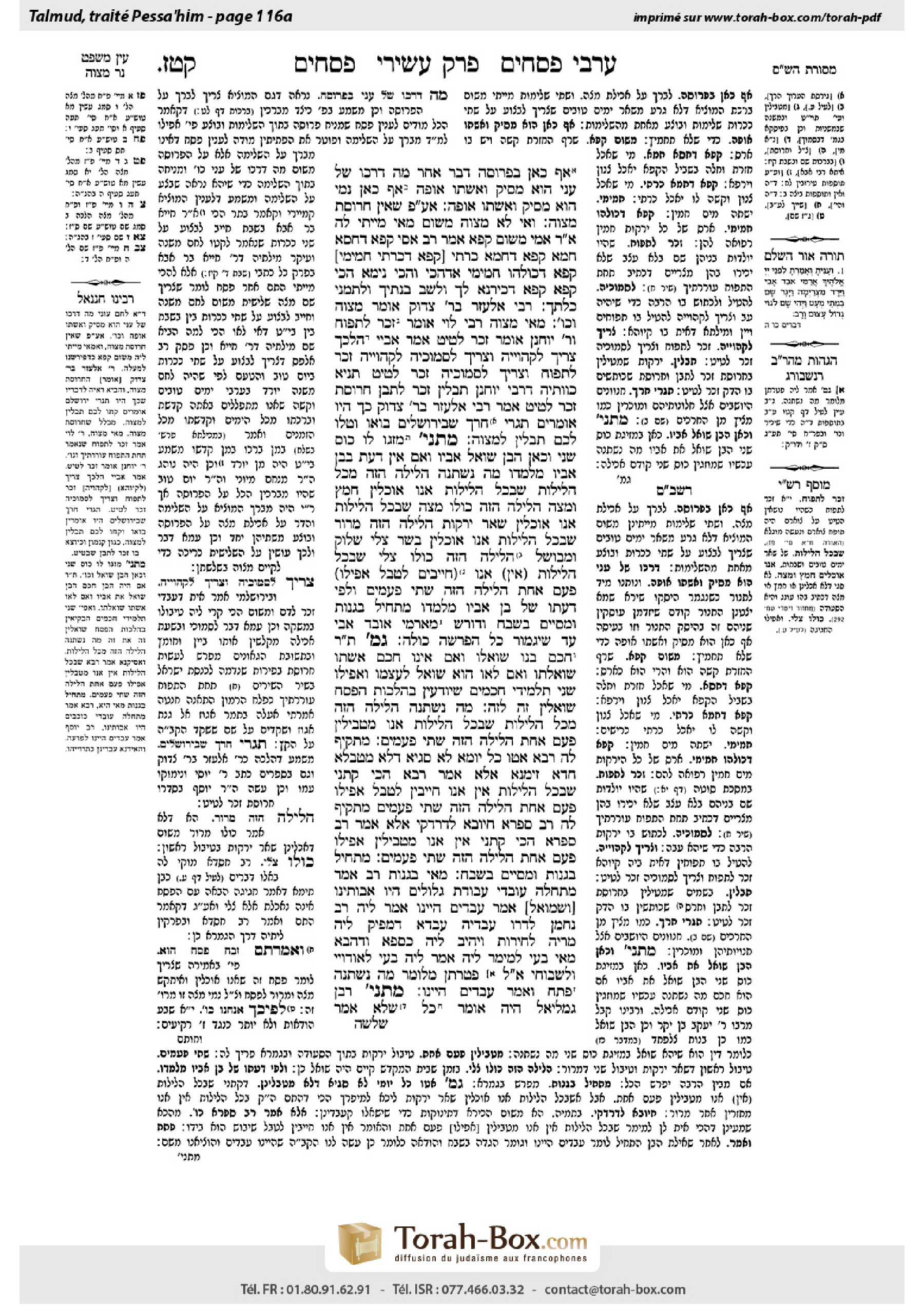
Pesachim 116a: Talmud study for Daf Yomi
Daf Yomi is the daily study of one Talmud folio. Explore 37 tractates with scans, Hebrew text, Sefaria English and AI-generated French translations where annotated.
Passage selection and English or AI-generated French translation are available where the scan has annotations. Daf Study is independent of Torah-Box and Sefaria.
Browse Pesachim · פסחים · All tractatesPesachim 116a text and translations
This page of Pesachim includes the Aramaic text, an English translation and an AI-generated French translation, alongside the scan above.
פסחים קי״ו א · Aramaic and Hebrew text
אַף כָּאן בִּפְרוּסָה. דָּבָר אַחֵר: מָה דַּרְכּוֹ שֶׁל עָנִי הוּא מַסִּיק וְאִשְׁתּוֹ אוֹפָה, אַף כָּאן נָמֵי — הוּא מַסִּיק וְאִשְׁתּוֹ אוֹפָה.
אַף עַל פִּי שֶׁאֵין חֲרוֹסֶת מִצְוָה. וְאִי לָא מִצְוָה, מִשּׁוּם מַאי מַיְיתֵי לַהּ? אָמַר רַבִּי אַמֵּי: מִשּׁוּם קָפָא. אָמַר רַב אַסִּי: קָפָא דְחַסָּא — חָמָא. קָפָא דְּחָמָא — כַּרָּתֵי. [קָפָא דְכַרָּתֵי — חַמִּימֵי.] קָפָא דְּכוּלְּהוּ — חַמִּימֵי. אַדְּהָכִי וְהָכִי, נֵימָא הָכִי: ״קָפָא קָפָא, דְּכִירְנָא לָךְ וּלְשַׁב בְּנָתָיךְ וּלְתַמְנֵי כַּלָּתָךְ״.
רַבִּי אֶלְעָזָר בְּרַבִּי צָדוֹק אוֹמֵר מִצְוָה וְכוּ׳. מַאי מִצְוָה? רַבִּי לֵוִי אוֹמֵר: זֵכֶר לַתַּפּוּחַ. וְרַבִּי יוֹחָנָן אוֹמֵר: זֵכֶר לַטִּיט. אָמַר אַבָּיֵי: הִלְכָּךְ צְרִיךְ לְקַהוֹיֵיהּ וּצְרִיךְ לְסַמּוֹכֵיהּ. לְקַהוֹיֵיהּ — זֵכֶר לַתַּפּוּחַ, וּצְרִיךְ לְסַמּוֹכֵיהּ — זֵכֶר לַטִּיט.
תַּנְיָא כְּווֹתֵיהּ דְּרַבִּי יוֹחָנָן: תַּבְלִין זֵכֶר לַתֶּבֶן, חֲרוֹסֶת זֵכֶר לַטִּיט. אָמַר רַבִּי אֶלְעָזָר בְּרַבִּי צָדוֹק, כָּךְ הָיוּ אוֹמְרִים תַּגָּרֵי חָרָךְ שֶׁבִּירוּשָׁלַיִם: בּוֹאוּ וּטְלוּ לָכֶם תַּבְלִין לְמִצְוָה.
מַתְנִי׳ מָזְגוּ לוֹ כּוֹס שֵׁנִי וְכָאן הַבֵּן שׁוֹאֵל אָבִיו. וְאִם אֵין דַּעַת בַּבֵּן אָבִיו מְלַמְּדוֹ.
מָה נִשְׁתַּנָּה הַלַּיְלָה הַזֶּה מִכׇּל הַלֵּילוֹת. שֶׁבְּכָל הַלֵּילוֹת אָנוּ אוֹכְלִין חָמֵץ וּמַצָּה, הַלַּיְלָה הַזֶּה — כּוּלּוֹ מַצָּה. שֶׁבְּכָל הַלֵּילוֹת אָנוּ אוֹכְלִין שְׁאָר יְרָקוֹת, הַלַּיְלָה הַזֶּה — מָרוֹר. שֶׁבְּכָל הַלֵּילוֹת אָנוּ אוֹכְלִין בָּשָׂר צָלִי שָׁלוּק וּמְבוּשָּׁל, הַלַּיְלָה הַזֶּה — כּוּלּוֹ צָלִי. שֶׁבְּכָל הַלֵּילוֹת אָנוּ מַטְבִּילִין פַּעַם אֶחָת, הַלַּיְלָה הַזֶּה — שְׁתֵּי פְעָמִים.
וּלְפִי דַּעְתּוֹ שֶׁל בֵּן אָבִיו מְלַמְּדוֹ. מַתְחִיל בִּגְנוּת וּמְסַיֵּים בְּשֶׁבַח. וְדוֹרֵשׁ מֵ״אֲרַמִּי אוֹבֵד אָבִי״, עַד שֶׁיִּגְמוֹר כׇּל הַפָּרָשָׁה כּוּלָּהּ.
גְּמָ׳ תָּנוּ רַבָּנַן: חָכָם בְּנוֹ — שׁוֹאֲלוֹ. וְאִם אֵינוֹ חָכָם — אִשְׁתּוֹ שׁוֹאַלְתּוֹ, וְאִם לָאו — הוּא שׁוֹאֵל לְעַצְמוֹ, וַאֲפִילּוּ שְׁנֵי תַּלְמִידֵי חֲכָמִים שֶׁיּוֹדְעִין בְּהִלְכוֹת הַפֶּסַח — שׁוֹאֲלִין זֶה לָזֶה.
מָה נִשְׁתַּנָּה הַלַּיְלָה הַזֶּה מִכׇּל הַלֵּילוֹת, שֶׁבְּכָל הַלֵּילוֹת אָנוּ מַטְבִּילִין פַּעַם אֶחָת, הַלַּיְלָה הַזֶּה — שְׁתֵּי פְעָמִים. מַתְקֵיף לַהּ רָבָא: אַטּוּ כׇּל יוֹמָא לָא סַגִּיא דְּלָא מְטַבְּלָא חֲדָא זִימְנָא? אֶלָּא אָמַר רָבָא, הָכִי קָתָנֵי: שֶׁבְּכָל הַלֵּילוֹת אֵין אָנוּ חַיָּיבִין לְטַבֵּל אֲפִילּוּ פַּעַם אֶחָת, הַלַּיְלָה הַזֶּה — שְׁתֵּי פְעָמִים.
מַתְקֵיף לַהּ רַב סָפְרָא: חִיּוּבָא לְדַרְדְּקֵי?! אֶלָּא אָמַר רַב סָפְרָא, הָכִי קָתָנֵי: אֵין אָנוּ מַטְבִּילִין אֲפִילּוּ פַּעַם אֶחָת, הַלַּיְלָה הַזֶּה — שְׁתֵּי פְעָמִים.
מַתְחִיל בִּגְנוּת וּמְסַיֵּים בְּשֶׁבַח. מַאי בִּגְנוּת? רַב אָמַר: ״מִתְּחִלָּה עוֹבְדֵי עֲבוֹדָה זָרָה הָיוּ אֲבוֹתֵינוּ״. [וּשְׁמוּאֵל] אָמַר: ״עֲבָדִים הָיִינוּ״.
אֲמַר לֵיהּ רַב נַחְמָן לְדָרוּ עַבְדֵּיהּ: עַבְדָּא דְּמַפֵּיק לֵיהּ מָרֵיהּ לְחֵירוּת, וְיָהֵיב לֵיהּ כַּסְפָּא וְדַהֲבָא, מַאי בָּעֵי לְמֵימַר לֵיהּ? אֲמַר לֵיהּ: בָּעֵי לְאוֹדוֹיֵי וּלְשַׁבּוֹחֵי, אֲמַר לֵיהּ: פְּטַרְתַּן מִלּוֹמַר ״מָה נִשְׁתַּנָּה״. פָּתַח וְאָמַר ״עֲבָדִים הָיִינוּ״.
מַתְנִי׳ רַבָּן גַּמְלִיאֵל הָיָה אוֹמֵר: כֹּל שֶׁלֹּא אָמַר
Pesachim 116a · English translation
so too, here he should use a piece of matza. Alternatively: Just as the manner of a poor person is that he heats the oven and his wife bakes quickly, before the small amount of wood they have is used up, so too here; when baking matza, he heats the oven and his wife bakes quickly so the dough doesn’t rise. This is why matza is called the poor man’s bread.
The mishna states that they bring the ḥaroset to the leader of the seder, although eating ḥaroset is not a mitzva. The Gemara asks: And if it is not a mitzva, for what reason does one bring it to the seder? Rabbi Ami said: It is brought due to the poison in the bitter herbs, which is neutralized by the ḥaroset. In this regard, Rav Asi said: The remedy for one who ate the poison in lettuce is to eat a radish. The remedy for the poison in a radish is leeks. The remedy for the poison in leeks is hot water. A remedy for the poison in all vegetables is hot water. The Gemara comments: In the meantime, while one is waiting for someone to bring him the remedy, let him say the following incantation: Poison, poison, I remember you, and your seven daughters, and your eight daughters-in-law.
The mishna states: Rabbi Elazar, son of Rabbi Tzadok, says that eating ḥaroset is a mitzva. The Gemara asks: What is the nature of this mitzva? The Gemara answers: Rabbi Levi says: It is in remembrance of the apple, as apple is one of the ingredients in ḥaroset. The verse states: “Who is this who comes up from the wilderness, reclining upon her beloved? Under the apple tree I awakened you” (Song of Songs 8:5), which is an allusion to the Jewish people leaving Egypt. And Rabbi Yoḥanan says: The ḥaroset is in remembrance of the mortar used by the Jews for their slave labor in Egypt. Abaye said: Therefore, to fulfill both opinions, one must prepare it tart and one must prepare it thick. One must prepare it tart in remembrance of the apple, and one must prepare it thick in remembrance of the mortar.
It was taught in a baraita in accordance with the opinion of Rabbi Yoḥanan: The spices used in the ḥaroset are in remembrance of the hay that our forefathers used for building in Egypt, and the ḥaroset itself is in remembrance of the mortar. Rabbi Elazar, son of Rabbi Tzadok, said: When selling ḥaroset, the small shopkeepers in Jerusalem would say as follows: Come and take spices for yourselves for the mitzva.
MISHNA: The attendants poured the second cup for the leader of the seder, and here the son asks his father the questions about the differences between Passover night and a regular night. And if the son does not have the intelligence to ask questions on his own, his father teaches him the questions.
The mishna lists the questions: Why is this night different from all other nights? As on all other nights we eat leavened bread and matza as preferred; on this night all our bread is matza. As on all other nights we eat other vegetables; on this night we eat bitter herbs. The mishna continues its list of the questions. When the Temple was standing one would ask: As on all other nights we eat either roasted, stewed, or cooked meat, but on this night all the meat is the roasted meat of the Paschal lamb. The final question was asked even after the destruction of the Temple: As on all other nights we dip the vegetables in a liquid during the meal only once; however, on this night we dip twice.
And according to the intelligence and the ability of the son, his father teaches him about the Exodus. When teaching his son about the Exodus. He begins with the Jewish people’s disgrace and concludes with their glory. And he expounds from the passage: “An Aramean tried to destroy my father” (Deuteronomy 26:5), the declaration one recites when presenting his first fruits at the Temple, until he concludes explaining the entire section.
GEMARA: The Sages taught: If his son is wise and knows how to inquire, his son asks him. And if he is not wise, his wife asks him. And if even his wife is not capable of asking or if he has no wife, he asks himself. And even if two Torah scholars who know the halakhot of Passover are sitting together and there is no one else present to pose the questions, they ask each other.
The mishna states that one of the questions is: Why is this night different from all other nights? As on all other nights we dip once; however, on this night we dip twice. Rava strongly objects to this statement of the mishna: Is that to say that on every other day there is no alternative but to dip once? Is there an obligation to dip at all on other days, as indicated by the wording of the mishna? Rather, Rava said that this is what the mishna is teaching: As on all other nights we are not obligated to dip even once; however, on this night we are obligated to dip twice.
Rav Safra strongly objects to this explanation: Is it obligatory for the children? As previously mentioned, the reason one dips twice is to encourage the children to ask questions. How can this be called an obligation? Rather, Rav Safra said that this is what the mishna is teaching: We do not normally dip even once; however, on this night we dip twice. This wording is preferable, as it indicates the performance of an optional act.
It was taught in the mishna that the father begins his answer with disgrace and concludes with glory. The Gemara asks: What is the meaning of the term: With disgrace? Rav said that one should begin by saying: At first our forefathers were idol worshippers, before concluding with words of glory. And Shmuel said: The disgrace with which one should begin his answer is: We were slaves.
Rav Naḥman said to his servant, Daru: With regard to a slave who is freed by his master, who gives him gold and silver, what should the slave say to him? Daru said to him: He must thank and praise his master. He said to him: If so, you have exempted us from reciting the questions of: Why is this night different, as you have stated the essence of the seder night. Rav Naḥman immediately began to recite: We were slaves.
MISHNA: Rabban Gamliel would say: Anyone who did not say
Pesachim 116a · Traduction française (IA)
De même, ici, il doit utiliser un morceau de matsa. Autre explication : de même qu’un pauvre a l’habitude de chauffer le four et que sa femme cuit rapidement, avant que ne soit épuisée la petite quantité de bois dont ils disposent, de même ici, lorsqu’on cuit la matsa, il chauffe le four et sa femme cuit rapidement, afin que la pâte ne lève pas. C’est pourquoi la matsa est appelée le pain du pauvre.
La Michna dit qu’on apporte le ḥaroset au responsable du seder, bien que manger du ḥaroset ne soit pas une mitsva. La Guemara demande : Et si ce n’est pas une mitsva, pourquoi l’apporte-t-on au seder ? Rabbi Ami dit : On l’apporte à cause du poison contenu dans les herbes amères, que le ḥaroset neutralise. À ce propos, Rav Asi dit : Le remède au poison de la laitue, pour celui qui en a mangé, est de manger un radis. Le remède au poison du radis est le poireau. Le remède au poison du poireau est l’eau chaude. L’eau chaude est le remède au poison de tous les légumes. La Guemara ajoute : En attendant qu’on lui apporte le remède, qu’il récite l’incantation suivante : « Poison, poison, je me souviens de toi, de tes sept filles et de tes huit belles-filles. »
La Michna dit que Rabbi Elazar, fils de Rabbi Tsadok, affirme que manger du ḥaroset est une mitsva. La Guemara demande : En quoi consiste cette mitsva ? La Guemara répond : Rabbi Levi dit : C’est en souvenir de la pomme, qui est l’un des ingrédients du ḥaroset. Le verset dit : « Qui est celle qui monte du désert, appuyée sur son bien-aimé ? Sous le pommier, je t’ai réveillée » (Cantique des Cantiques 8,5), allusion au départ du peuple juif d’Égypte. Rabbi Yoḥanan dit : Le ḥaroset rappelle le mortier dont les Juifs se servaient pour leurs travaux forcés en Égypte. Abaye dit : Par conséquent, pour satisfaire les deux opinions, il faut le préparer aigre et épais. On le prépare aigre en souvenir de la pomme, et épais en souvenir du mortier.
Une baraïta a été enseignée conformément à l’opinion de Rabbi Yoḥanan : les épices utilisées dans le ḥaroset rappellent le foin que nos ancêtres utilisaient pour construire en Égypte, et le ḥaroset lui-même rappelle le mortier. Rabbi Elazar, fils de Rabbi Tsadok, dit : Lorsqu’ils vendaient du ḥaroset, les petits commerçants de Jérusalem disaient : « Venez prendre des épices pour la mitsva. »
MICHNA : Les serviteurs versaient la deuxième coupe au responsable du seder, et c’est alors que le fils posait à son père des questions sur les différences entre la nuit de Pessaḥ et une nuit ordinaire. Si le fils n’a pas la capacité de poser lui-même des questions, son père les lui enseigne.
La Michna énumère les questions : « En quoi cette nuit est-elle différente de toutes les autres nuits ? Toutes les autres nuits, nous mangeons du pain levé ou de la matsa, selon notre préférence ; cette nuit, tout notre pain est de la matsa. Toutes les autres nuits, nous mangeons d’autres légumes ; cette nuit, nous mangeons des herbes amères. » La Michna poursuit l’énumération des questions. Lorsque le Temple était debout, on demandait : « Toutes les autres nuits, nous mangeons de la viande rôtie, mijotée ou cuite ; cette nuit, toute la viande est celle de l’agneau pascal rôti. » La dernière question était posée même après la destruction du Temple : « Toutes les autres nuits, nous trempons les légumes dans un liquide une seule fois au cours du repas ; cette nuit, nous les trempons deux fois. »
Selon la capacité et l’intelligence du fils, son père lui enseigne l’Exode. Lorsqu’il lui enseigne l’Exode, il commence par l’humiliation du peuple juif et conclut par sa gloire. Il commente le passage : « Un Araméen a voulu faire périr mon père » (Deutéronome 26,5), déclaration que l’on récite lorsqu’on présente les prémices au Temple, et poursuit jusqu’à expliquer toute la section.
GUEMARA : Les Sages ont enseigné : Si son fils est intelligent et sait poser des questions, c’est son fils qui les lui pose. S’il n’est pas intelligent, sa femme les lui pose. Si même sa femme n’est pas capable de les poser, ou s’il n’a pas de femme, il se les pose lui-même. Et même si deux érudits en Torah qui connaissent les halakhot de Pessaḥ sont assis ensemble et que personne d’autre n’est présent pour poser les questions, ils se les posent l’un à l’autre.
La Michna dit que l’une des questions est : « En quoi cette nuit est-elle différente de toutes les autres nuits ? Toutes les autres nuits, nous trempons une fois ; cette nuit, nous trempons deux fois. » Rava s’oppose vivement à cette formulation de la Michna : Cela signifie-t-il que, tous les autres jours, on n’a pas d’autre choix que de tremper une fois ? Est-il obligatoire de tremper les aliments les autres jours, comme le suggère la formulation de la Michna ? Rava dit plutôt que voici ce que la Michna enseigne : « Toutes les autres nuits, nous ne sommes pas tenus de tremper les aliments, même une seule fois ; cette nuit, nous sommes tenus de les tremper deux fois. »
Rav Safra s’oppose vivement à cette explication : Est-ce obligatoire pour les enfants ? Comme cela a été mentionné précédemment, on trempe deux fois afin d’inciter les enfants à poser des questions. Comment cela peut-il être appelé une obligation ? Rav Safra dit plutôt que voici ce que la Michna enseigne : « D’ordinaire, nous ne trempons pas les aliments, même une seule fois ; cette nuit, nous les trempons deux fois. » Cette formulation est préférable, car elle indique l’accomplissement d’un acte facultatif.
Il a été enseigné dans la Michna que le père commence sa réponse par l’humiliation et la conclut par la gloire. La Guemara demande : Que signifie l’expression « par l’humiliation » ? Rav dit qu’il faut commencer en disant : « Au début, nos ancêtres étaient idolâtres », avant de conclure par des paroles de gloire. Shmouel dit que l’humiliation par laquelle il faut commencer la réponse est : « Nous étions esclaves. »
Rav Naḥman dit à son serviteur Darou : À propos d’un esclave que son maître affranchit en lui donnant de l’or et de l’argent, que doit lui dire cet esclave ? Darou lui répond : Il doit remercier son maître et faire son éloge. Rav Naḥman lui dit : Si c’est le cas, tu nous as dispensés de réciter les questions « En quoi cette nuit est-elle différente ? », puisque tu as énoncé l’essentiel du seder. Rav Naḥman se mit aussitôt à réciter : « Nous étions esclaves. »
MICHNA : Rabban Gamliel disait : Quiconque n’a pas dit
Traduction française générée par IA à partir de l’édition anglaise de Sefaria. Vérifie toujours un passage avec le texte source.
Text from Sefaria: William Davidson Edition - Vocalized Aramaic (CC BY NC); William Davidson Edition - English (CC BY NC).