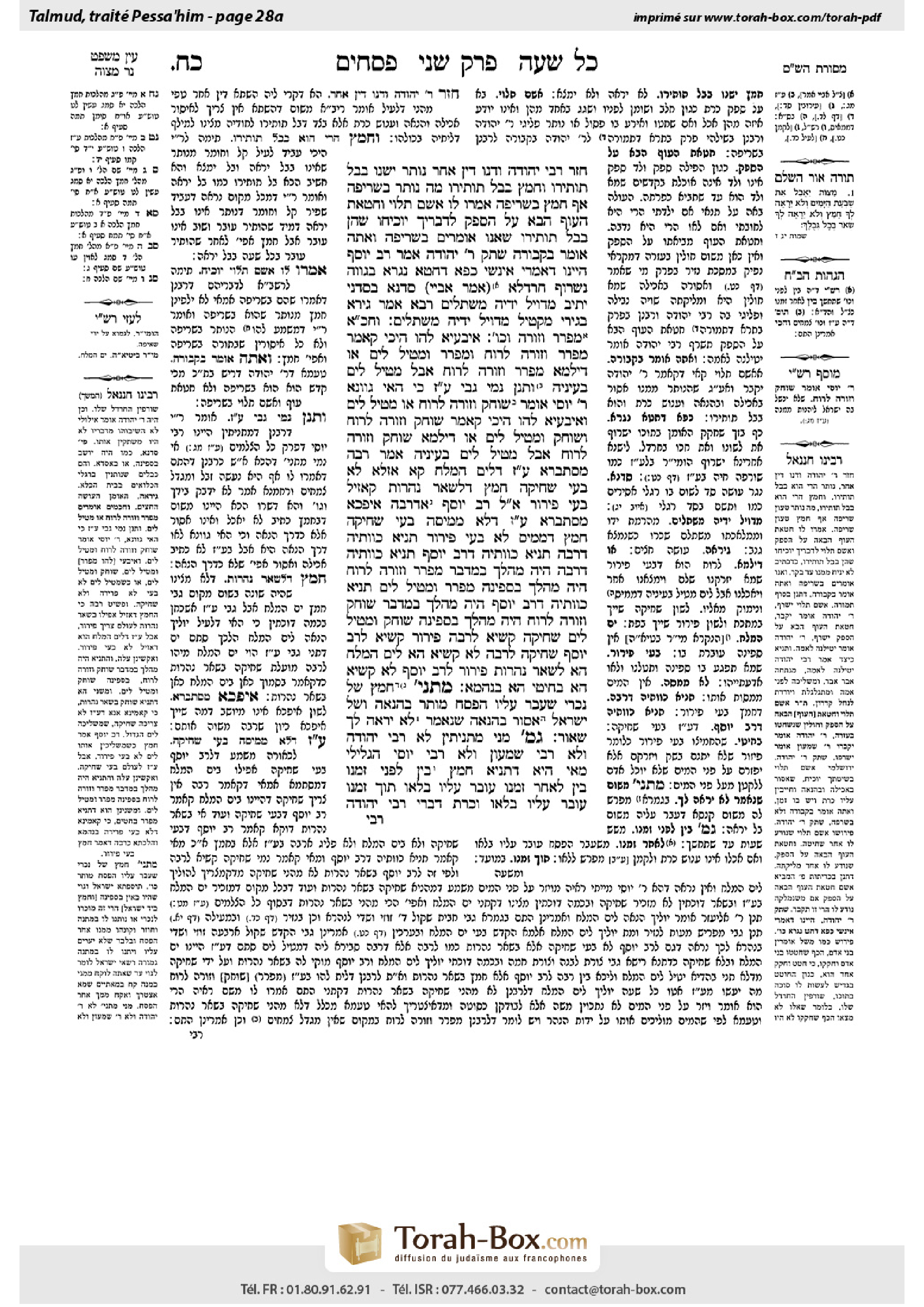
Pesachim 28a: Talmud study for Daf Yomi
Daf Yomi is the daily study of one Talmud folio. Explore 37 tractates with scans, Hebrew text, Sefaria English and AI-generated French translations where annotated.
Passage selection and English or AI-generated French translation are available where the scan has annotations. Daf Study is independent of Torah-Box and Sefaria.
Browse Pesachim · פסחים · All tractatesPesachim 28a text and translations
This page of Pesachim includes the Aramaic text, an English translation and an AI-generated French translation, alongside the scan above.
פסחים כ״ח א · Aramaic and Hebrew text
חָזַר רַבִּי יְהוּדָה וְדָנוֹ דִּין אַחֵר: נוֹתָר יֶשְׁנוֹ בְּ״בַל תּוֹתִירוּ״, וְחָמֵץ בְּ״בַל תּוֹתִירוּ״. מָה נוֹתָר בִּשְׂרֵיפָה — אַף חָמֵץ בִּשְׂרֵיפָה.
אָמְרוּ לוֹ: אָשָׁם תָּלוּי וְחַטַּאת הָעוֹף הַבָּא עַל הַסָּפֵק לִדְבָרֶיךָ יוֹכִיחוּ, שֶׁהֵן בְּ״בַל תּוֹתִירוּ״. שֶׁאָנוּ אוֹמְרִים בִּשְׂרֵיפָה, וְאַתָּה אוֹמֵר בִּקְבוּרָה! שָׁתַק רַבִּי יְהוּדָה.
אָמַר רַב יוֹסֵף, הַיְינוּ דְּאָמְרִי אִינָשֵׁי: כַּפָּא דַּחֲטָא נַגָּרָא — בְּגַוַּוהּ נִשְׂרוֹף חַרְדְּלָא.
(אָמַר אַבָּיֵי:) סַדָּנָא בְּסַדָּנֵי יְתֵיב — מִדְּוִיל יְדֵיהּ מִשְׁתַּלֵּים.
רָבָא אָמַר: גִּירָאָה בְּגִירֵיהּ מִקְּטִיל — מִדְּוִיל יְדֵיהּ מִשְׁתַּלֵּים.
וַחֲכָמִים אוֹמְרִים מְפָרֵר וְזוֹרֶה וְכוּ׳. אִיבַּעְיָא לְהוּ, הֵיכִי קָאָמַר: מְפָרֵר וְזוֹרֶה לָרוּחַ, וּמְפָרֵר וּמֵטִיל לַיָּם. אוֹ דִילְמָא: מְפָרֵר וְזוֹרֶה לָרוּחַ, אֲבָל מֵטִיל לַיָּם בְּעֵינֵיהּ. תְּנַן נָמֵי גַּבֵּי עֲבוֹדָה זָרָה כִּי הַאי גַוְונָא, רַבִּי יוֹסֵי אוֹמֵר: שׁוֹחֵק וְזוֹרֶה לָרוּחַ, אוֹ מֵטִיל לַיָּם. וְאִיבַּעְיָא לְהוּ: הֵיכִי קָאָמַר? שׁוֹחֵק וְזוֹרֶה לָרוּחַ, וְשׁוֹחֵק וּמֵטִיל לַיָּם. אוֹ דִילְמָא שׁוֹחֵק וְזוֹרֶה לָרוּחַ, אֲבָל מֵטִיל לַיָּם בְּעֵינֵיהּ.
אָמַר רַבָּה: מִסְתַּבְּרָא עֲבוֹדָה זָרָה דִּלְיָם הַמֶּלַח קָא אָזְלָא — לָא בָּעֵי שְׁחִיקָה. חָמֵץ דְּלִשְׁאָר נְהָרוֹת קָאָזֵיל — בָּעֵי פֵּירוּר. אֲמַר לֵיהּ רַב יוֹסֵף: אַדְּרַבָּה, אִיפְּכָא מִסְתַּבְּרָא: עֲבוֹדָה זָרָה דְּלָא מִמִּיסָּה — בָּעֵי שְׁחִיקָה. חָמֵץ דְּמִמִּיס — לָא בָּעֵי פֵּירוּר.
תַּנְיָא כְּווֹתֵיהּ דְּרַבָּה, תַּנְיָא כְּווֹתֵיהּ דְּרַב יוֹסֵף. תַּנְיָא כְּווֹתֵיהּ דְּרַבָּה: הָיָה מְהַלֵּךְ בַּמִּדְבָּר — מְפָרֵר וְזוֹרֶה לָרוּחַ. הָיָה מְהַלֵּךְ בִּסְפִינָה — מְפָרֵר וּמֵטִיל לַיָּם. תַּנְיָא כְּווֹתֵיהּ דְּרַב יוֹסֵף: הָיָה מְהַלֵּךְ בַּמִּדְבָּר — שׁוֹחֵק וְזוֹרֶה לָרוּחַ. הָיָה מְהַלֵּךְ בִּסְפִינָה — שׁוֹחֵק וּמֵטִיל לַיָּם.
שְׁחִיקָה קַשְׁיָא לְרַבָּה, פֵּירוּר קַשְׁיָא לְרַב יוֹסֵף. שְׁחִיקָה לְרַבָּה לָא קַשְׁיָא: הָא — לְיָם הַמֶּלַח, הָא — לִשְׁאָר נְהָרוֹת. פֵּירוּר לְרַב יוֹסֵף לָא קַשְׁיָא: הָא — בְּחִיטֵּי, הָא — בְּנַהֲמָא.
מַתְנִי׳ חָמֵץ שֶׁל גּוֹי שֶׁעָבַר עָלָיו הַפֶּסַח — מוּתָּר בַּהֲנָאָה, וְשֶׁל יִשְׂרָאֵל — אָסוּר בַּהֲנָאָה, שֶׁנֶּאֱמַר: ״לֹא יֵרָאֶה לְךָ שְׂאוֹר״.
גְּמָ׳ מַנִּי מַתְנִיתִין? לָא רַבִּי יְהוּדָה וְלָא רַבִּי שִׁמְעוֹן וְלָא רַבִּי יוֹסֵי הַגְּלִילִי. מַאי הִיא? דְּתַנְיָא: חָמֵץ, בֵּין לִפְנֵי זְמַנּוֹ בֵּין לְאַחַר זְמַנּוֹ — עוֹבֵר עָלָיו בְּלָאו. תּוֹךְ זְמַנּוֹ — עוֹבֵר עָלָיו בְּלָאו וְכָרֵת, דִּבְרֵי רַבִּי יְהוּדָה.
Pesachim 28a · English translation
Then Rabbi Yehuda presented a different logical derivation: The prohibition against eating and deriving benefit from leftover sacrificial meat is clearly included in the prohibition of: And you shall not leave over. And leavened bread is also included, in a sense, in the prohibition of: And you shall not leave over, as once the time it may be eaten expires, one violates the prohibitions of: It shall not be seen, and: It shall not be found, by owning it. Just as leftover sacrificial meat is subject to burning, so too, leavened bread is subject to burning.
They said to him: According to your opinion, an uncertain guilt-offering and a bird sacrificed as a sin-offering in a case of doubt will prove that this comparison is not valid, as they are also included in the prohibition of: And you shall not leave over, since these offerings are prohibited after the time in which they may be eaten has expired. As we say that they are subject to burning, but you say that an uncertain guilt-offering is subject to burial. Rabbi Yehuda was silent, as he had no response.
Rav Yosef said: This is as people say: In the spoon that the carpenter made, the mustard will burn his palate. In other words, one can be harmed by his own actions. Similarly, in this case the strongest proof against Rabbi Yehuda’s opinion is the one based on Rabbi Yehuda’s own statement.
Abaye said another folk expression: He who made the stocks [saddana] shall sit in the stocks; he is repaid through his own handiwork.
Rava said another similar saying: He who made the arrows shall be killed with his own arrows; he is repaid through his own handiwork.
It was taught in the mishna: And the Rabbis say that leavened bread need not be burned; rather, one may even crumble it and throw it into the wind or the sea. A dilemma was raised before the Sages: With regard to what case are they speaking? Do they mean that he must specifically crumble it and throw it into the wind or crumble it and throw it into the sea? Or perhaps one may crumble it and throw it into the wind, but he may cast it into the sea in its pure, unadulterated form, without crumbling it first. We also learned in a mishna with regard to idolatry in a case like this that Rabbi Yosei says: He may grind the idol and throw the dust into the wind or cast it into the sea. And a dilemma was raised before the Sages: With regard to what case are they speaking? Must one specifically grind it and throw it into the wind or grind it and throw it into the sea? Or perhaps he may grind it and throw it into the wind; however, he may throw it into the sea in its pure, unadulterated form.
Rabba said: It stands to reason that since idols are thrown into the Dead Sea, they do not need grinding, as there is no concern that they will be removed and used again. However, leavened bread that may be thrown into other rivers, needs crumbling before being cast away. Rav Yosef said to him: On the contrary, the opposite is more reasonable. Idols, which do not normally disintegrate in the water, need grinding. However, leavened bread, which disintegrates in the water on its own, does not need crumbling.
A baraita was taught in accordance with the opinion of Rabba and a baraita was taught in accordance with the opinion of Rav Yosef. The Gemara explains: A baraita was taught in accordance with the opinion of Rabba: If one was walking in the desert with leavened bread in his hand and the time came on the eve of Passover to remove it, then he must crumble the leavened bread and throw it into the wind. If he was traveling on a ship, he must crumble the leavened bread and throw it into the sea. And a baraita was taught in accordance with the opinion of Rav Yosef: If one was walking in the desert and found an idol, he must grind it and throw it into the wind. If he was traveling on a ship, he must grind it and throw it into the sea.
The Gemara comments: The requirement of grinding in one baraita is difficult for Rabba, since according to his opinion there is no need to grind idols before throwing them into the sea. And the requirement of crumbling leavened bread mentioned in the other baraita is difficult for Rav Yosef, as in his opinion leavened bread need not be crumbled before it is thrown into the sea. The Gemara answers: The requirement of grinding is not difficult for Rabba. This case, where one is not required to grind it, is where he throws it into the Dead Sea. That case, where he is required to grind it before throwing it, is where he throws it into other rivers. Similarly, the requirement of crumbling is not difficult for Rav Yosef. This case is dealing with a bag of wheat that became leavened. Since wheat does not disintegrate on its own, one must grind it up and scatter it into the water. That case is referring to bread. Since bread will disintegrate in the water on its own, there is no need to crumble it.
MISHNA: It is permitted for a Jew to derive benefit from leavened bread of a gentile over which Passover has elapsed, i.e., leavened bread that remains after the conclusion of Passover. However, it is prohibited to derive benefit from leaven of a Jew over which Passover has elapsed, as it is stated: “And no leavened bread shall be seen with you, neither shall there be leaven seen with you, in all your borders” (Exodus 13:7).
GEMARA: The Gemara begins by asking: Who is the author of the mishna? It is not in accordance with the opinion of Rabbi Yehuda, and it is not in accordance with the opinion of Rabbi Shimon, and it is not in accordance with the opinion of Rabbi Yosei HaGelili. The Gemara clarifies this question: What is the case about which these Sages disagree, and what are their opinions on this issue? The Gemara explains: As it was taught in a baraita: One who eats or derives benefit from leavened bread, whether before its time, starting at midday on Passover eve, or after its time, i.e., leavened bread over which Passover has elapsed, transgresses a negative mitzva. During its time, on Passover itself, one who eats leavened bread transgresses a negative mitzva and is liable to receive karet. This is the statement of Rabbi Yehuda.
Pesachim 28a · Traduction française (IA)
Rabbi Yehouda présenta alors une autre déduction logique : l’interdiction de manger la viande sacrificielle restante ou d’en tirer profit est clairement incluse dans l’interdiction : « Vous ne laisserez rien de ce qui en reste. » Le pain levé est lui aussi, en un sens, inclus dans cette interdiction : « Vous ne laisserez rien de ce qui en reste », car, dès que le délai pendant lequel il peut être consommé est expiré, celui qui le possède transgresse les interdictions : « Il ne sera pas vu » et « Il ne sera pas trouvé ». De même que la viande sacrificielle restante doit être brûlée, le pain levé doit lui aussi être brûlé.
Ils lui dirent : selon ton opinion, le sacrifice de culpabilité en cas de doute et l’oiseau offert en sacrifice expiatoire en cas de doute prouvent que cette comparaison n’est pas valable, car eux aussi sont inclus dans l’interdiction : « Vous ne laisserez rien de ce qui en reste », puisque ces offrandes sont interdites après l’expiration du délai pendant lequel elles peuvent être consommées. Or, nous disons qu’elles doivent être brûlées, tandis que toi, tu dis que le sacrifice de culpabilité en cas de doute doit être enterré. Rabbi Yehouda garda le silence, car il n’avait pas de réponse.
Rav Yossef dit : c’est comme le dit le proverbe : « Dans la cuillère fabriquée par le menuisier, la moutarde lui brûlera le palais. » Autrement dit, on peut être victime de ses propres actes. De même, ici, la preuve la plus forte contre l’opinion de Rabbi Yehouda est celle qui s’appuie sur sa propre déclaration.
Abayé cita un autre proverbe : « Que celui qui a fabriqué les entraves [saddana] s’y assoie lui-même » ; il est ainsi payé de sa propre œuvre.
Rava cita une autre formule analogue : « Que celui qui a fabriqué les flèches soit tué par ses propres flèches » ; il est ainsi payé de sa propre œuvre.
Il est enseigné dans la Michna que les Sages disent qu’il n’est pas nécessaire de brûler le pain levé ; on peut plutôt le réduire en miettes et le jeter au vent ou dans la mer. Les Sages soulevèrent une question : de quel cas parlent-ils ? Veulent-ils dire qu’il faut nécessairement le réduire en miettes avant de le jeter au vent comme avant de le jeter dans la mer ? Ou bien peut-on le réduire en miettes et le jeter au vent, mais le jeter dans la mer intact, sans l’avoir d’abord réduit en miettes ? Nous avons également appris dans une Michna, à propos de l’idolâtrie, dans un cas analogue, que Rabbi Yossi dit : on peut broyer l’idole et jeter sa poussière au vent ou la jeter dans la mer. Les Sages soulevèrent une question : de quel cas parlent-ils ? Faut-il nécessairement la broyer avant de la jeter au vent comme avant de la jeter dans la mer ? Ou bien peut-on la broyer et la jeter au vent, mais la jeter dans la mer intacte, sans l’avoir d’abord broyée ?
Rabba dit : il est logique que, puisque les idoles sont jetées dans la mer Morte, il ne soit pas nécessaire de les broyer, car on ne craint pas qu’elles soient repêchées et réutilisées. En revanche, le pain levé, qui peut être jeté dans d’autres fleuves, doit être réduit en miettes avant d’être jeté. Rav Yossef lui dit : au contraire, c’est l’inverse qui est plus logique. Les idoles, qui ne se désagrègent généralement pas dans l’eau, doivent être broyées. En revanche, le pain levé, qui se désagrège spontanément dans l’eau, n’a pas besoin d’être réduit en miettes.
Une baraïta a été enseignée conformément à l’opinion de Rabba, et une autre conformément à celle de Rav Yossef. La Guemara explique : une baraïta a été enseignée conformément à l’opinion de Rabba : si quelqu’un marchait dans le désert avec du pain levé à la main et que, la veille de Pessa’h, le moment était venu de s’en débarrasser, il devait réduire le pain levé en miettes et le jeter au vent. S’il voyageait sur un bateau, il devait réduire le pain levé en miettes et le jeter dans la mer. Une baraïta a été enseignée conformément à l’opinion de Rav Yossef : si quelqu’un marchait dans le désert et trouvait une idole, il devait la broyer et la jeter au vent. S’il voyageait sur un bateau, il devait la broyer et la jeter dans la mer.
La Guemara fait remarquer que l’obligation de broyer, dans une baraïta, pose une difficulté à Rabba, car, selon son opinion, il n’est pas nécessaire de broyer les idoles avant de les jeter dans la mer. L’obligation de réduire le pain levé en miettes, mentionnée dans l’autre baraïta, pose une difficulté à Rav Yossef, car, selon lui, il n’est pas nécessaire de le réduire en miettes avant de le jeter dans la mer. La Guemara répond : l’obligation de broyer ne pose pas de difficulté à Rabba. Dans le cas où il n’est pas nécessaire de le broyer, on le jette dans la mer Morte. Dans l’autre cas, où il faut le broyer avant de le jeter, on le jette dans d’autres fleuves. De même, l’obligation de réduire en miettes ne pose pas de difficulté à Rav Yossef. Un cas concerne un sac de blé qui a levé. Puisque le blé ne se désagrège pas spontanément, il faut le broyer et le disperser dans l’eau. L’autre cas concerne du pain. Puisque le pain se désagrège spontanément dans l’eau, il n’est pas nécessaire de le réduire en miettes.
Michna : Il est permis à un Juif de tirer profit du pain levé d’un non-Juif après Pessa’h, c’est-à-dire du pain levé qui subsiste à la fin de Pessa’h. En revanche, il est interdit de tirer profit du pain levé d’un Juif après Pessa’h, ainsi qu’il est dit : « On ne verra chez toi aucun pain levé, et on ne verra chez toi aucun levain, dans tout ton territoire » (Exode 13, 7).
Guemara : La Guemara commence par demander : qui est l’auteur de la Michna ? Elle n’est conforme ni à l’opinion de Rabbi Yehouda, ni à celle de Rabbi Chimon, ni à celle de Rabbi Yossi HaGelili. La Guemara précise la question : sur quel cas ces Sages sont-ils en désaccord, et quelles sont leurs opinions sur ce sujet ? La Guemara explique : comme il a été enseigné dans une baraïta : celui qui mange du pain levé ou en tire profit, que ce soit avant son heure, à partir de midi la veille de Pessa’h, ou après son heure, c’est-à-dire du pain levé qui subsiste après Pessa’h, transgresse une mitsva négative. Pendant son heure, c’est-à-dire à Pessa’h même, celui qui mange du pain levé transgresse une mitsva négative et est passible de karet. Telle est la déclaration de Rabbi Yehouda.
Traduction française générée par IA à partir de l’édition anglaise de Sefaria. Vérifie toujours un passage avec le texte source.
Text from Sefaria: William Davidson Edition - Vocalized Aramaic (CC BY NC); William Davidson Edition - English (CC BY NC).