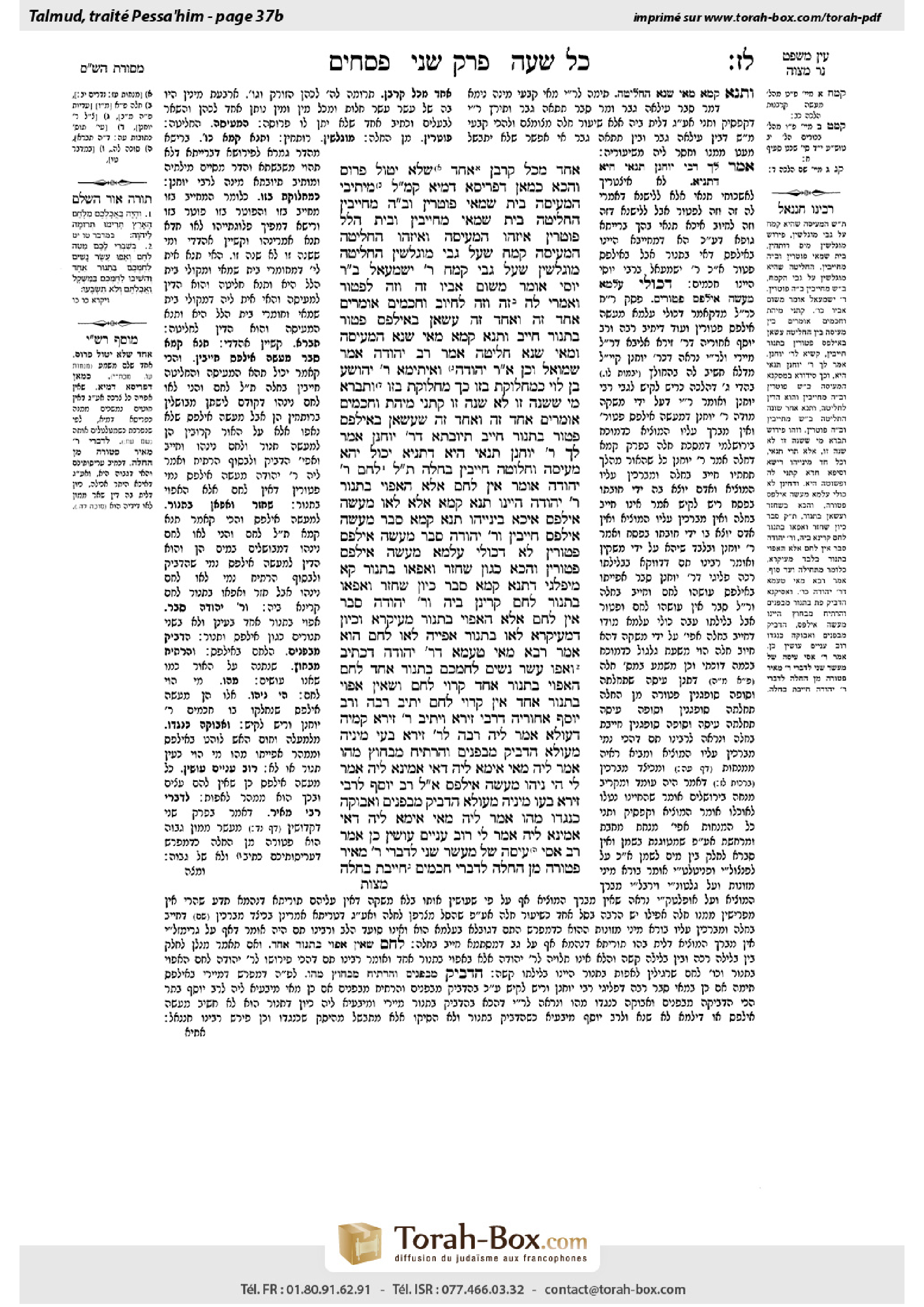
Pesachim 37b: Talmud study for Daf Yomi
Daf Yomi is the daily study of one Talmud folio. Explore 37 tractates with scans, Hebrew text, Sefaria English and AI-generated French translations where annotated.
Passage selection and English or AI-generated French translation are available where the scan has annotations. Daf Study is independent of Torah-Box and Sefaria.
Browse Pesachim · פסחים · All tractatesPesachim 37b text and translations
This page of Pesachim includes the Aramaic text, an English translation and an AI-generated French translation, alongside the scan above.
פסחים ל״ז ב · Aramaic and Hebrew text
אֶחָד מִכׇּל קׇרְבָּן״, ״אֶחָד״ — שֶׁלֹּא יִטּוֹל פָּרוּס, וְהָכָא כְּמַאן דִּפְרִיסָא דָּמְיָא, קָא מַשְׁמַע לַן.
מֵיתִיבִי: הַמְּעִיסָּה — בֵּית שַׁמַּאי פּוֹטְרִין, וּבֵית הִלֵּל מְחַיְּיבִין. הַחֲלִיטָה — בֵּית שַׁמַּאי מְחַיְּיבִין, וּבֵית הִלֵּל פּוֹטְרִין. אֵיזֶהוּ הַמְּעִיסָּה וְאֵיזֶהוּ הַחֲלִיטָה? הַמְּעִיסָּה — קֶמַח שֶׁעַל גַּבֵּי מוּגְלָשִׁין, הַחֲלִיטָה — מוּגְלָשִׁין שֶׁעַל גַּבֵּי קֶמַח.
רַבִּי יִשְׁמָעֵאל בְּרַבִּי יוֹסֵי אוֹמֵר מִשּׁוּם אָבִיו: זֶה וָזֶה לִפְטוּר, וְאָמְרִי לַהּ: זֶה וָזֶה לְחִיּוּב, וַחֲכָמִים אוֹמְרִים: אֶחָד זֶה וְאֶחָד זֶה, עֲשָׂאָן בְּאִילְפָּס — פָּטוּר, בְּתַנּוּר — חַיָּיב.
וְתַנָּא קַמָּא, מַאי שְׁנָא הַמְּעִיסָּה וּמַאי שְׁנָא חֲלִיטָה? אָמַר רַב יְהוּדָה אָמַר שְׁמוּאֵל, וְכֵן אָמַר רַב יְהוּדָה וְאִיתֵּימָא רַבִּי יְהוֹשֻׁעַ בֶּן לֵוִי: כְּמַחֲלוֹקֶת בְּזוֹ כָּךְ מַחֲלוֹקֶת בְּזוֹ, וְתַבְרָא, מִי שֶׁשָּׁנָה זוֹ לֹא שָׁנָה זוֹ.
קָתָנֵי מִיהַת: וַחֲכָמִים אוֹמְרִים אֶחָד זֶה וְאֶחָד זֶה שֶׁעֲשָׂאָן בְּאִילְפָּס — פָּטוּר, בְּתַנּוּר — חַיָּיב, תְּיוּבְתָּא דְּרַבִּי יוֹחָנָן! אָמַר לָךְ רַבִּי יוֹחָנָן: תַּנָּאֵי הִיא. דְּתַנְיָא: יָכוֹל יְהֵא מְעִיסָּה וַחֲלוּטָה חַיָּיבִין בַּחַלָּה, תַּלְמוּד לוֹמַר: ״לֶחֶם״.
רַבִּי יְהוּדָה אוֹמֵר: אֵין לֶחֶם אֶלָּא הָאָפוּי בְּתַנּוּר. רַבִּי יְהוּדָה הַיְינוּ תַּנָּא קַמָּא! אֶלָּא לָאו, מַעֲשֵׂה אִילְפָּס אִיכָּא בֵּינַיְיהוּ, תַּנָּא קַמָּא סָבַר: מַעֲשֵׂה אִילְפָּס חַיָּיבִין, וְרַבִּי יְהוּדָה סָבַר: מַעֲשֵׂה אִילְפָּס פְּטוּרִין.
לָא, דְּכוּלֵּי עָלְמָא מַעֲשֵׂה אִילְפָּס פְּטוּרִין, וְהָכָא כְּגוֹן שֶׁחָזַר וַאֲפָאוֹ בְּתַנּוּר קָא מִיפַּלְגִי. דְּתַנָּא קַמָּא סָבַר: כֵּיוָן שֶׁחָזַר וַאֲפָאוֹ בְּתַנּוּר — לֶחֶם קָרֵינַן בֵּיהּ, וְרַבִּי יְהוּדָה סָבַר: אֵין לֶחֶם אֶלָּא הָאָפוּי בְּתַנּוּר מֵעִיקָּרָא, וְכֵיוָן דְּמֵעִיקָּרָא לָאו בְּתַנּוּר אֲפִיָּיה — לָאו לֶחֶם הוּא.
אָמַר רָבָא: מַאי טַעְמָא דְּרַבִּי יְהוּדָה, דִּכְתִיב: ״וְאָפוּ עֶשֶׂר נָשִׁים לַחְמְכֶם בְּתַנּוּר אֶחָד״. לֶחֶם הָאָפוּי בְּתַנּוּר אֶחָד — קָרוּי לֶחֶם, וְשֶׁאֵין אָפוּי בְּתַנּוּר אֶחָד — אֵין קָרוּי לֶחֶם.
יָתֵיב רַבָּה וְרַב יוֹסֵף אֲחוֹרֵיהּ דְּרַבִּי זֵירָא, וְיָתֵיב רַבִּי זֵירָא קַמֵּיהּ דְּעוּלָּא. אֲמַר לֵיהּ רַבָּה לְרַבִּי זֵירָא, בְּעִי מִינֵּיהּ מֵעוּלָּא: הִדְבִּיק מִבִּפְנִים וְהִרְתִּיחַ מִבַּחוּץ, מַהוּ? אֲמַר לֵיהּ: מַאי אֵימָא לֵיהּ? דְּאִי אָמֵינָא לֵיהּ, אָמַר לִי: הֵי נִיהוּ מַעֲשֵׂה אִילְפָּס!
אֲמַר לֵיהּ רַב יוֹסֵף לְרַבִּי זֵירָא, בְּעוֹ מִינֵּיהּ מֵעוּלָּא: הִדְבִּיק מִבִּפְנִים וַאֲבוּקָה כְּנֶגְדּוֹ, מַהוּ? אֲמַר לֵיהּ: מַאי אֵימָא לֵיהּ? דְּאִי אָמֵינָא לֵיהּ, אָמַר לִי: רוֹב עֲנִיִּים עוֹשִׂין כֵּן.
אָמַר רַב אַסִּי: עִיסָּה שֶׁל מַעֲשֵׂר שֵׁנִי, לְדִבְרֵי רַבִּי מֵאִיר — פְּטוּרָה מִן הַחַלָּה, לְדִבְרֵי חֲכָמִים — חַיֶּיבֶת בְּחַלָּה.
Pesachim 37b · English translation
one out of each offering for a gift to the Lord; it shall belong to the priest who sprinkles the blood of the peace-offerings” (Leviticus 7:14), and the word “one” indicates that it must be a whole loaf, i.e., that one should not take a broken piece, and here the bread has not been properly baked, it might therefore have been thought that it is considered as though it were broken. Consequently, the baraita teaches us that this is nevertheless classified as bread.
The Gemara raises an objection: With regard to me’isa, dough that was boiled in water, Beit Shammai exempt one from separating ḥalla, and Beit Hillel obligate one to do so. As for dough that has undergone the process of ḥalita, Beit Shammai obligate one to separate ḥalla from it, and Beit Hillel exempt. The Gemara asks: What is me’isa and what is ḥalita? The Gemara explains: Me’isa is dough prepared by pouring flour on boiling water [muglashin], whereas ḥalita is formed by pouring boiling water on flour.
Rabbi Yishmael, son of Rabbi Yosei, said in the name of his father: From both this, me’isa, and that, ḥalita, one is exempt from separating ḥalla. And some say that he said: With regard to both this and that, one is obligated to separate ḥalla. And the Rabbis say: With regard to both this and that, if one prepared them in a pot, he is exempt from the mitzva of ḥalla; however, if he prepared the bread in an oven, he is obligated to separate ḥalla.
The Gemara asks: And according to the first tanna, who taught that Beit Shammai and Beit Hillel disagree with regard to these two cases, what is different about me’isa and what is different about ḥalita? Why do Beit Shammai and Beit Hillel reverse their opinions with regard to these types of bread? Rav Yehuda said that Shmuel said, and likewise Rabbi Yehuda said, and some say it was Rabbi Yehoshua ben Levi who said: As is the dispute with regard to this type of bread, so is the dispute with regard to that one; i.e., Beit Hillel are either lenient or stringent in both cases. And the variation in the baraita is due to a break in its text, which is actually a combination of two sources, because he who taught this baraita did not teach that one, as the two statements were taught by different Sages.
The Gemara now states the objection: In any event, the baraita is teaching that the Rabbis say: With regard to both this and that, me’isa and ḥalita, if one prepared them in a pot he is exempt from the mitzva of ḥalla, but if he prepared them in an oven he is obligated to separate ḥalla. This is apparently a conclusive refutation of Rabbi Yoḥanan, who claims that one is obligated to separate ḥalla from bread cooked in a pot. The Gemara answers: Rabbi Yoḥanan could have said to you: It is a dispute between tanna’im, as it was taught in a baraita: I might have thought that one is obligated to separate ḥalla from me’isa and ḥaluta; therefore, the verse states “bread” to inform us that this is not the case.
Rabbi Yehuda says: Bread is nothing other than that which is baked in an oven. The Gemara asks: The opinion of Rabbi Yehuda is the same as that of the first tanna. Rather, is it not the case that the practical difference between them is in the case of bread prepared as pot-boiled stew? The first tanna maintains that one is obligated to separate ḥalla from bread prepared as pot-boiled stew, unlike bread prepared by me’isa and ḥalita. And Rabbi Yehuda maintains: Similar to me’isa and ḥalita, one is exempt from separating ḥalla from bread prepared as pot-boiled stew, as it was not baked in an oven.
The Gemara rejects this suggestion: No, it is possible to say that everyone agrees that the owner of bread prepared as pot-boiled stew is exempt from ḥalla, and here they disagree with regard to a case where one subsequently baked it in the oven. The first tanna maintains that since one subsequently baked it in the oven, it is called bread, and one must separate ḥalla from it. And Rabbi Yehuda maintains that bread is nothing other than that which is initially baked in an oven, and since this food was not initially baked in an oven, it is not classified as bread.
Rava said: What is the reason of Rabbi Yehuda? As it is written: “And ten women shall bake your bread in one oven” (Leviticus 26:26). Rava learns from this verse that bread baked in one oven is called bread, and that which is not baked in one oven, but rather in several different vessels, is not called bread.
Rabba and Rav Yosef sat behind Rabbi Zeira and Rabbi Zeira sat before Ulla to hear him teach Torah. Rabba said to Rabbi Zeira: Raise the following dilemma of Ulla: If one pasted bread inside a pot and heated it from the outside, what is the halakha? Is one obligated to separate ḥalla from this bread? He said to him: Why should I say this question to Ulla? For if I say this to him, he will say to me: What is the halakha with regard to bread prepared as pot-boiled stew? In other words, he will reply that my question is effectively the same as that well-known case.
Rav Yosef further said to Rabbi Zeira: Raise the following dilemma of Ulla: If one pasted bread inside a pot and lit a torch opposite it, what is the halakha? He again said to him: Why should I say this question to Ulla? As if I say this to him, he will say to me: The majority of poor people do this when they use a pot for cooking, and therefore this too should be considered the same as bread prepared like pot-boiled stew.
Rav Asi said: With regard to dough of second-tithe produce, in accordance with the statement of Rabbi Meir, one is exempt from separating ḥalla from it. The reason is that Rabbi Meir considers second tithe to be consecrated property, which means that although its owner is entitled to use this produce, it does not in fact belong to him. By contrast, in accordance with the statement of the Rabbis, who maintain that second-tithe produce is the property of its owner, one is obligated to separate ḥalla from it.
Pesachim 37b · Traduction française (IA)
« Une de chaque offrande, pour en faire un don à l’Éternel ; elle appartiendra au prêtre qui répand le sang des sacrifices de paix » (Lévitique 7,14). Le mot « une » indique qu’il doit s’agir d’un pain entier, c’est-à-dire qu’on ne doit pas prendre un morceau brisé. Or, ici, le pain n’a pas été correctement cuit ; on aurait donc pu penser qu’il est considéré comme brisé. La baraïta nous enseigne par conséquent qu’il est néanmoins considéré comme du pain.
La Guemara soulève une objection : au sujet de la me’isa, une pâte bouillie dans l’eau, Beit Shammaï dispense de prélever la ḥalla, tandis que Beit Hillel l’impose. Quant à la pâte qui a subi le procédé de la ḥalita, Beit Shammaï impose d’en prélever la ḥalla, tandis que Beit Hillel en dispense. La Guemara demande : qu’est-ce que la me’isa et qu’est-ce que la ḥalita ? La Guemara explique : la me’isa est une pâte préparée en versant de la farine dans de l’eau bouillante [muglashin], tandis que la ḥalita est obtenue en versant de l’eau bouillante sur la farine.
Rabbi Yishmaël, fils de Rabbi Yosei, a dit au nom de son père : pour ces deux préparations, la me’isa comme la ḥalita, on est dispensé de prélever la ḥalla. Certains rapportent qu’il a dit : pour les deux, on est tenu de prélever la ḥalla. Les Sages disent : pour les deux, si on les a préparées dans une marmite, on est dispensé de la mitsva de prélever la ḥalla ; toutefois, si on les a préparées dans un four, on est tenu d’en prélever la ḥalla.
La Guemara demande : et selon le premier tanna, qui enseigne que Beit Shammaï et Beit Hillel sont en désaccord dans ces deux cas, en quoi la me’isa diffère-t-elle de la ḥalita ? Pourquoi Beit Shammaï et Beit Hillel inverseraient-ils leurs avis au sujet de ces types de pain ? Rav Yehouda a dit au nom de Shmouel, et Rabbi Yehouda a dit de même ; certains rapportent que c’est Rabbi Yehoshoua ben Lévi qui l’a dit : le désaccord au sujet de ce type de pain est le même que celui au sujet de l’autre ; autrement dit, Beit Hillel sont soit indulgents dans les deux cas, soit rigoureux dans les deux cas. La variation dans la baraïta s’explique par une rupture dans le texte : celui-ci combine en réalité deux sources, car celui qui a enseigné cette baraïta n’a pas enseigné l’autre ; les deux déclarations ont été enseignées par des Sages différents.
La Guemara formule maintenant l’objection : quoi qu’il en soit, la baraïta enseigne que les Sages disent que, pour ces deux préparations, la me’isa et la ḥalita, si on les a préparées dans une marmite, on est dispensé de la mitsva de prélever la ḥalla, mais que si on les a préparées dans un four, on est tenu d’en prélever la ḥalla. Cela réfute apparemment de façon décisive Rabbi Yoḥanan, qui affirme qu’on est tenu de prélever la ḥalla sur du pain cuit dans une marmite. La Guemara répond : Rabbi Yoḥanan aurait pu te dire que c’est un désaccord entre tannaïm, comme on l’a enseigné dans une baraïta : j’aurais pu penser qu’on est tenu de prélever la ḥalla sur la me’isa et la ḥaluta ; le verset dit donc « pain » pour nous apprendre que ce n’est pas le cas.
Rabbi Yehouda dit : le pain n’est rien d’autre que ce qui est cuit dans un four. La Guemara demande : l’avis de Rabbi Yehouda est le même que celui du premier tanna. N’est-ce pas plutôt dans le cas du pain préparé comme un ragoût dans une marmite que réside leur différence pratique ? Le premier tanna soutient qu’on est tenu de prélever la ḥalla sur le pain préparé comme un ragoût dans une marmite, contrairement au pain préparé par me’isa ou ḥalita. Rabbi Yehouda, lui, soutient que, comme pour la me’isa et la ḥalita, on est dispensé de prélever la ḥalla sur le pain préparé comme un ragoût dans une marmite, puisqu’il n’a pas été cuit dans un four.
La Guemara rejette cette proposition : non, il est possible de dire que tous s’accordent à dispenser de la ḥalla le propriétaire d’un pain préparé comme un ragoût dans une marmite, et que leur désaccord porte ici sur le cas où on l’a ensuite fait cuire au four. Le premier tanna soutient que, puisqu’on l’a ensuite fait cuire au four, on l’appelle pain et qu’on doit en prélever la ḥalla. Rabbi Yehouda soutient que le pain n’est rien d’autre que ce qui est d’abord cuit dans un four ; puisque cet aliment n’a pas été initialement cuit dans un four, il n’est pas considéré comme du pain.
Rava a dit : quelle est la raison de Rabbi Yehouda ? Car il est écrit : « Dix femmes cuiront votre pain dans un seul four » (Lévitique 26,26). Rava déduit de ce verset que ce qui est cuit dans un seul four est appelé pain, tandis que ce qui n’est pas cuit dans un seul four, mais plutôt dans plusieurs récipients différents, n’est pas appelé pain.
Rabba et Rav Yosef étaient assis derrière Rabbi Zeira, qui était assis devant Oulla pour l’entendre enseigner la Torah. Rabba dit à Rabbi Zeira : soumets à Oulla le dilemme suivant : si quelqu’un colle du pain à l’intérieur d’une marmite et chauffe celle-ci de l’extérieur, quelle est la halakha ? Est-on tenu de prélever la ḥalla sur ce pain ? Rabbi Zeira lui répondit : pourquoi poserais-je cette question à Oulla ? Si je la lui pose, il me dira : quelle est la halakha concernant le pain préparé comme un ragoût dans une marmite ? Autrement dit, il répondra que ma question revient en fait à ce cas bien connu.
Rav Yosef dit encore à Rabbi Zeira : soumets à Oulla le dilemme suivant : si quelqu’un colle du pain à l’intérieur d’une marmite et allume une torche en face, quelle est la halakha ? Rabbi Zeira lui répondit de nouveau : pourquoi poserais-je cette question à Oulla ? Si je la lui pose, il me dira : la plupart des pauvres font cela lorsqu’ils utilisent une marmite pour cuisiner ; ce cas doit donc lui aussi être considéré comme identique à celui du pain préparé comme un ragoût dans une marmite.
Rav Assi a dit : pour une pâte faite à partir de produits de la seconde dîme, selon l’avis de Rabbi Meïr, on est dispensé d’en prélever la ḥalla. La raison en est que Rabbi Meïr considère la seconde dîme comme un bien consacré ; ainsi, bien que son propriétaire ait le droit d’utiliser ces produits, ceux-ci ne lui appartiennent pas réellement. En revanche, selon l’avis des Sages, qui soutiennent que les produits de la seconde dîme sont la propriété de leur propriétaire, on est tenu d’en prélever la ḥalla.
Traduction française générée par IA à partir de l’édition anglaise de Sefaria. Vérifie toujours un passage avec le texte source.
Text from Sefaria: William Davidson Edition - Vocalized Aramaic (CC BY NC); William Davidson Edition - English (CC BY NC).