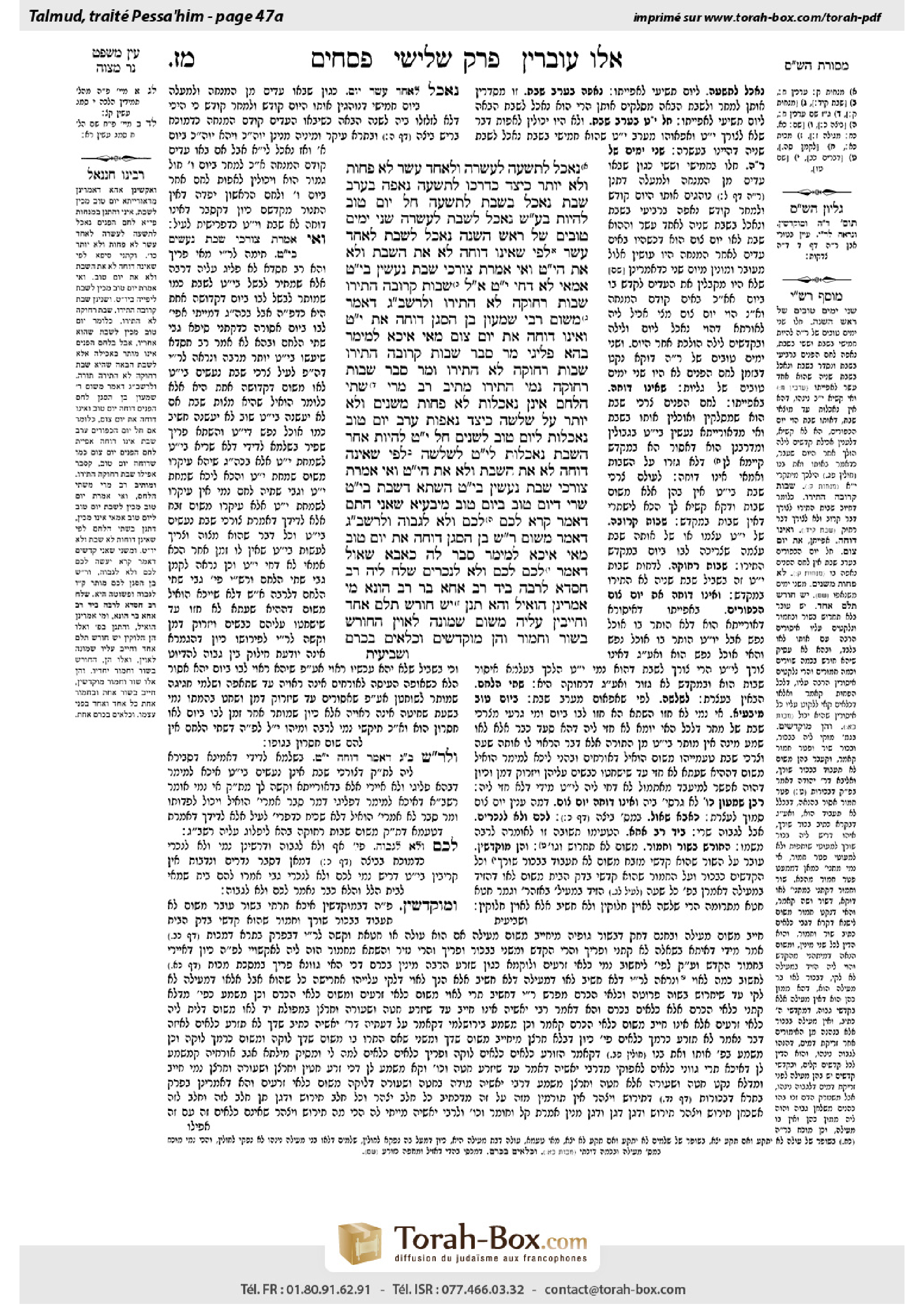
Pesachim 47a: Talmud study for Daf Yomi
Daf Yomi is the daily study of one Talmud folio. Explore 37 tractates with scans, Hebrew text, Sefaria English and AI-generated French translations where annotated.
Passage selection and English or AI-generated French translation are available where the scan has annotations. Daf Study is independent of Torah-Box and Sefaria.
Browse Pesachim · פסחים · All tractatesPesachim 47a text and translations
This page of Pesachim includes the Aramaic text, an English translation and an AI-generated French translation, alongside the scan above.
פסחים מ״ז א · Aramaic and Hebrew text
נֶאֱכָל לְתִשְׁעָה, לַעֲשָׂרָה, וּלְאַחַד עָשָׂר — לֹא פָּחוֹת וְלֹא יוֹתֵר. כֵּיצַד? כְּדַרְכּוֹ, לְתִשְׁעָה. נֶאֱפֶה בְּעֶרֶב שַׁבָּת — נֶאֱכָל בְּשַׁבָּת לְתִשְׁעָה. חָל יוֹם טוֹב לִהְיוֹת בְּעֶרֶב שַׁבָּת — נֶאֱכָל לְשַׁבָּת לַעֲשָׂרָה. שְׁנֵי יָמִים טוֹבִים שֶׁל רֹאשׁ הַשָּׁנָה — נֶאֱכָל לְשַׁבָּת לְאַחַד עָשָׂר, לְפִי שֶׁאֵינוֹ דּוֹחֶה לֹא אֶת הַשַּׁבָּת וְלֹא אֶת הַיּוֹם טוֹב. וְאִי אָמְרַתְּ צוֹרְכֵי שַׁבָּת נַעֲשִׂין בְּיוֹם טוֹב, אַמַּאי לָא דָּחֵי יוֹם טוֹב?
אֲמַר לֵיהּ: שְׁבוּת קְרוֹבָה — הִתִּירוּ. שְׁבוּת רְחוֹקָה — לֹא הִתִּירוּ.
וּלְרַבָּן שִׁמְעוֹן בֶּן גַּמְלִיאֵל, דְּאָמַר מִשּׁוּם רַבִּי שִׁמְעוֹן בֶּן הַסְּגָן: דּוֹחֶה אֶת יוֹם טוֹב וְאֵינוֹ דּוֹחֶה אֶת יוֹם צוֹם, מַאי אִיכָּא לְמֵימַר?
בְּהָא פְּלִיגִי: מָר סָבַר שְׁבוּת קְרוֹבָה הִתִּירוּ, שְׁבוּת רְחוֹקָה לֹא הִתִּירוּ. וּמָר סָבַר: שְׁבוּת רְחוֹקָה נָמֵי הִתִּירוּ.
מֵתִיב רַב מָרִי: שְׁתֵּי הַלֶּחֶם אֵינָן נֶאֱכָלוֹת לֹא פָּחוֹת מִשְּׁנַיִם, וְלֹא יוֹתֵר עַל שְׁלֹשָׁה. כֵּיצַד? נֶאֱפוֹת עֶרֶב יוֹם טוֹב — נֶאֱכָלוֹת לְיוֹם טוֹב לִשְׁנַיִם. חָל יוֹם טוֹב לִהְיוֹת אַחַר הַשַּׁבָּת — נֶאֱכָלוֹת לְיוֹם טוֹב לִשְׁלֹשָׁה, לְפִי שֶׁאֵינָהּ דּוֹחָה לֹא אֶת הַשַּׁבָּת וְלֹא אֶת הַיּוֹם טוֹב. וְאִי אָמְרַתְּ צוֹרְכֵי שַׁבָּת נַעֲשִׂין בְּיוֹם טוֹב, הַשְׁתָּא דְּשַׁבָּת בְּיוֹם טוֹב שְׁרֵי, דְּיוֹם טוֹב בְּיוֹם טוֹב מִיבַּעְיָא?!
שָׁאנֵי הָתָם דְּאָמַר קְרָא ״לָכֶם״ — ״לָכֶם״ וְלֹא לְגָבוֹהַּ.
וּלְרַבָּן שִׁמְעוֹן בֶּן גַּמְלִיאֵל, דְּאָמַר מִשּׁוּם רַבִּי שִׁמְעוֹן בֶּן הַסְּגָן: דּוֹחֶה אֶת יוֹם טוֹב, מַאי אִיכָּא לְמֵימַר? סָבַר לַהּ כְּאַבָּא שָׁאוּל, דְּאָמַר: ״לָכֶם״ — ״לָכֶם״ וְלֹא לְגוֹיִם.
שְׁלַח לֵיהּ רַב חִסְדָּא לְרַבָּה בְּיַד רַב אַחָא בַּר רַב הוּנָא: מִי אָמְרִינַן ״הוֹאִיל״? וְהָא תְּנַן: יֵשׁ חוֹרֵשׁ תֶּלֶם אֶחָד וְחַיָּיבִין עָלֶיהָ מִשּׁוּם שְׁמוֹנָה לָאוִין: הַחוֹרֵשׁ בְּשׁוֹר וַחֲמוֹר, וְהֵן מוּקְדָּשִׁים, וְכִלְאַיִם בַּכֶּרֶם,
Pesachim 47a · English translation
may be eaten on the ninth, tenth, or eleventh days from when it is baked, no less and no more. How so? In its usual manner it is eaten on the ninth day after it was baked, as it is baked on Shabbat eve and it is eaten on the next Shabbat, on the ninth day from when it was baked. If a Festival occurs on Shabbat eve, the shewbread is not baked on the Festival day but rather on Thursday, the eve of the Festival. Consequently, it is eaten on Shabbat of the next week, on the tenth day from when it was baked. If the two Festival days of Rosh HaShana preceded Shabbat, the shewbread is baked on Wednesday, Rosh HaShana eve, and it is eaten on the next Shabbat, on the eleventh day from when it was baked, because baking the shewbread does not override Shabbat or a Festival. Rabba asks: If you say that whatever one needs for Shabbat may be done on a Festival, why doesn’t the baking of this bread override the Festival? Since the shewbread is eaten on Shabbat, it should be considered food that one is permitted to prepare during the Festival.
Rav Ḥisda said to him: They permitted one to override the rabbinic decree in the Temple only with regard to baking on a Festival for the proximate Shabbat, i.e., Shabbat that immediately follows the Festival. However, they did not permit one to override the rabbinic decree to prepare for a distant Shabbat, namely Shabbat of the next week.
The Gemara asks: And according to Rabban Shimon ben Gamliel, who said in the name of Rabbi Shimon, son of the deputy High Priest, that the baking of the shewbread overrides a Festival but does not override the fast day of Yom Kippur, what can be said? Apparently, the issue is the subject of a tannaitic dispute between Rabbi Shimon, son of the deputy High Priest, who contends that it is permissible to prepare the shewbread during a Festival, and the Rabbis, who prohibit it.
The Gemara explains that they do not dispute the basic principle. Rather, this is the point over which they disagree: One Sage, i.e., the Rabbis, holds that they permitted one to override the rabbinic decree only to prepare for the proximate Shabbat, but they did not permit one to override the rabbinic decree to prepare for a distant Shabbat. Therefore, the baking of the shewbread does not override the Festival. And one Sage, Rabbi Shimon, holds that they also permitted one to override the rabbinic decree in order to prepare for a distant Shabbat.
Rav Mari raised an objection: The two loaves of bread that are brought as a communal offering on Shavuot are eaten by the priests no sooner than the second day and no later than the third day from when they are baked. How so? They are generally baked on the eve of the Festival and eaten on the Festival, the second day from their baking. If the Festival occurs after Shabbat, they are baked on Friday and they are eaten on the third day from the baking, because the baking of the two loaves does not override Shabbat or the Festival. Rav Mari asks: If you say that whatever one needs for Shabbat may be done on a Festival, now that it is permitted to engage in the necessary preparations for Shabbat on a Festival, is it necessary to mention that it is permitted to bake for the Festival itself on the Festival? As such, why doesn’t the baking of the two loaves override the Festival?
The Gemara answers: It is different there, in the case of the two loaves, as the verse says: “No kind of labor shall be done on them, save that which every man must eat, that only may be done for you” (Exodus 12:16). This indicates that it is permitted to cook and bake only “for you,” i.e., for human consumption, and not for the One above, namely for the Temple service.
The Gemara asks: And according to Rabban Shimon ben Gamliel, who said in the name of Rabbi Shimon, son of the deputy High Priest, that baking the shewbread overrides the Festival, what can be said? How does he understand the term: For you? The Gemara answers: He holds in accordance with the opinion of Abba Shaul, who said that this verse should be understood in the following manner: Cooking and baking are permitted for you, and not for gentiles; for the sake of the Temple service, however, they are permitted.
Rav Ḥisda sent a question to Rabba with Rav Aḥa bar Rav Huna: Do we say the principle: Since, etc.? Didn’t we learn in a mishna: There is a case in which one plows one furrow and is liable for violating eight prohibitions with this single act? The mishna explains that this applies to one who plows with an ox and a donkey, thereby violating the prohibition: “You shall not plow with an ox and a donkey together” (Deuteronomy 22:10), and they were consecrated, in which case plowing with them constitutes misuse of consecrated property. If his plowing aids the growth of food crops in a vineyard, he has transgressed a third prohibition.
Pesachim 47a · Traduction française (IA)
peut être consommé le neuvième, le dixième ou le onzième jour après sa cuisson, ni plus tôt ni plus tard. Comment cela ? Dans le cas habituel, il est consommé le neuvième jour après sa cuisson, puisqu’il est cuit la veille de Chabbat et consommé le Chabbat suivant, soit le neuvième jour après sa cuisson. Si une fête tombe la veille de Chabbat, le pain de proposition n’est pas cuit le jour de la fête, mais le jeudi, veille de la fête. Il est donc consommé le Chabbat de la semaine suivante, soit le dixième jour après sa cuisson. Si les deux jours de fête de Roch Hachana précèdent Chabbat, le pain de proposition est cuit le mercredi, veille de Roch Hachana, et consommé le Chabbat suivant, soit le onzième jour après sa cuisson, car sa cuisson ne repousse ni Chabbat ni une fête. Rabba demande : Si tu dis que tout ce dont on a besoin pour Chabbat peut être préparé un jour de fête, pourquoi la cuisson de ce pain ne repousse-t-elle pas la fête ? Puisque le pain de proposition est consommé Chabbat, il devrait être considéré comme un aliment qu’il est permis de préparer pendant la fête.
Rav Ḥisda lui dit : Dans le Temple, on a permis de passer outre au décret rabbinique uniquement pour cuire, un jour de fête, ce qui est destiné au Chabbat proche, c’est-à-dire au Chabbat qui suit immédiatement la fête. En revanche, on n’a pas permis de passer outre au décret rabbinique pour préparer ce qui est destiné à un Chabbat éloigné, à savoir celui de la semaine suivante.
La Guemara demande : Et selon Rabban Chimon ben Gamliel, qui a dit au nom de Rabbi Chimon, fils du vice-grand prêtre, que la cuisson du pain de proposition repousse une fête, mais ne repousse pas le jeûne de Yom Kippour, que peut-on répondre ? Il semble que la question fasse l’objet d’une controverse entre tannaïm : Rabbi Chimon, fils du vice-grand prêtre, soutient qu’il est permis de préparer le pain de proposition pendant une fête, tandis que les Rabbins l’interdisent.
La Guemara explique qu’ils ne contestent pas le principe fondamental. Leur désaccord porte plutôt sur le point suivant : un Sage, c’est-à-dire les Rabbins, estime qu’on a permis de passer outre au décret rabbinique uniquement pour préparer ce qui est destiné au Chabbat proche, mais pas pour un Chabbat éloigné. Par conséquent, la cuisson du pain de proposition ne repousse pas la fête. L’autre Sage, Rabbi Chimon, estime qu’on a également permis de passer outre au décret rabbinique pour préparer ce qui est destiné à un Chabbat éloigné.
Rav Mari soulève une objection : les deux pains apportés comme offrande communautaire à Chavouot sont consommés par les prêtres au plus tôt le deuxième jour et au plus tard le troisième jour après leur cuisson. Comment cela ? Habituellement, ils sont cuits la veille de la fête et consommés le jour de la fête, soit le deuxième jour après leur cuisson. Si la fête tombe après Chabbat, ils sont cuits le vendredi et consommés le troisième jour après leur cuisson, car la cuisson des deux pains ne repousse ni Chabbat ni la fête. Rav Mari demande : Si tu dis que tout ce dont on a besoin pour Chabbat peut être préparé un jour de fête, maintenant qu’il est permis d’effectuer les préparatifs nécessaires pour Chabbat un jour de fête, faut-il préciser qu’il est permis de cuire, le jour de la fête, ce qui est destiné à la fête elle-même ? Dès lors, pourquoi la cuisson des deux pains ne repousse-t-elle pas la fête ?
La Guemara répond : Le cas des deux pains est différent, car le verset dit : « Aucun travail ne sera accompli en ces jours, sauf ce dont chacun a besoin pour manger ; cela seul pourra être fait pour vous » (Exode 12:16). Cela indique qu’il est permis de cuire et de faire bouillir uniquement « pour vous », c’est-à-dire pour la consommation humaine, et non pour Celui qui est en haut, autrement dit pour le service du Temple.
La Guemara demande : Et selon Rabban Chimon ben Gamliel, qui a dit au nom de Rabbi Chimon, fils du vice-grand prêtre, que la cuisson du pain de proposition repousse la fête, que peut-on répondre ? Comment comprend-il l’expression « pour vous » ? La Guemara répond : Il suit l’opinion d’Abba Chaoul, qui dit qu’il faut comprendre le verset ainsi : cuire et faire bouillir sont permis pour vous, et non pour les non-Juifs ; en revanche, ces activités sont permises pour le service du Temple.
Rav Ḥisda fit transmettre une question à Rabba par Rav Aḥa bar Rav Huna : Applique-t-on le principe « puisque, etc. » ? N’avons-nous pas appris dans une Michna qu’il existe un cas où l’on laboure un seul sillon et où l’on est passible pour huit interdictions transgressées par ce seul acte ? La Michna explique que cela concerne celui qui laboure avec un bœuf et un âne, transgressant ainsi l’interdiction : « Tu ne laboureras pas avec un bœuf et un âne attelés ensemble » (Deutéronome 22:10), alors que ces animaux avaient été consacrés ; labourer avec eux constitue donc un usage profane de biens consacrés. Si son labour favorise la croissance de cultures alimentaires dans une vigne, il transgresse une troisième interdiction.
Traduction française générée par IA à partir de l’édition anglaise de Sefaria. Vérifie toujours un passage avec le texte source.
Text from Sefaria: William Davidson Edition - Vocalized Aramaic (CC BY NC); William Davidson Edition - English (CC BY NC).