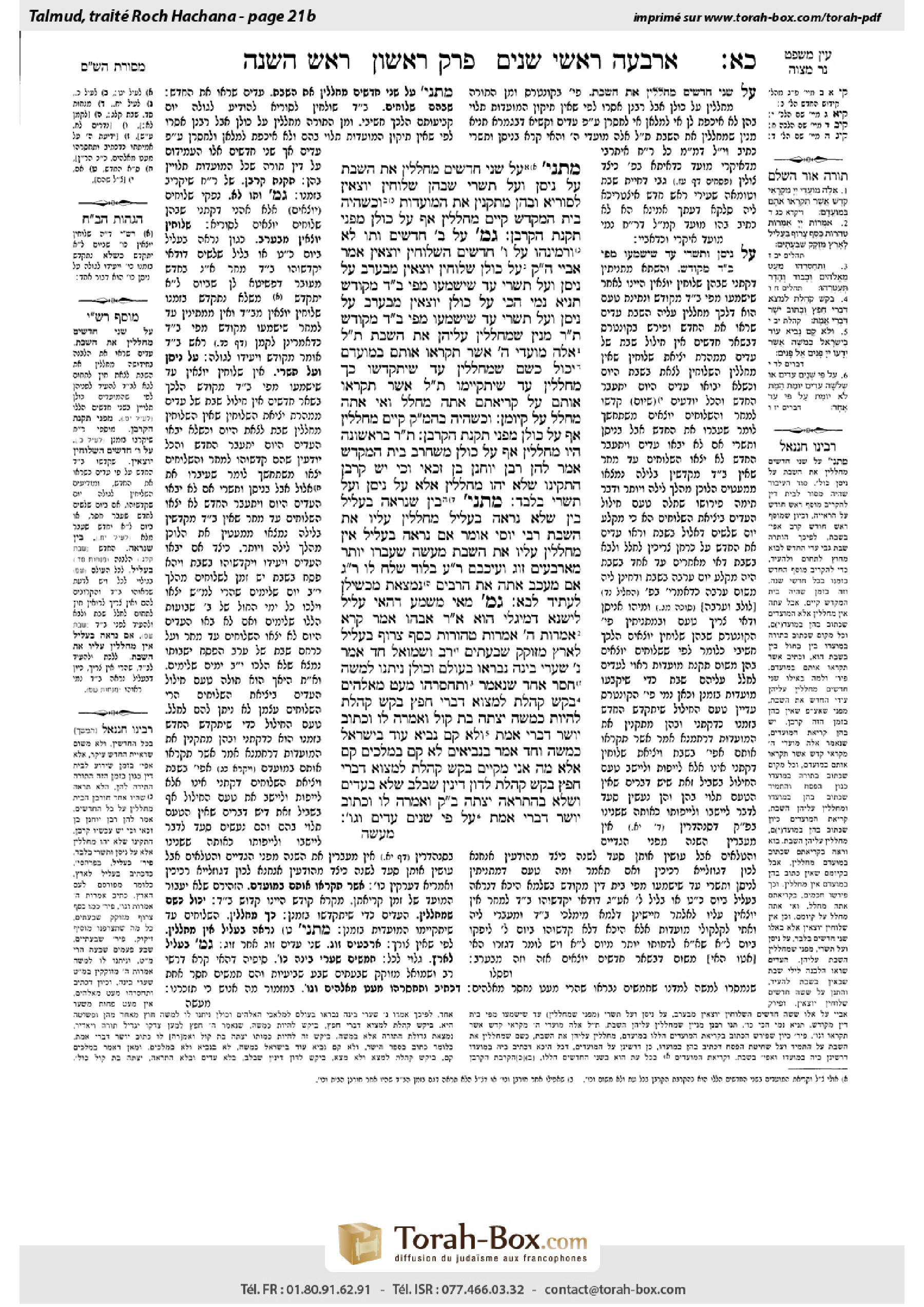
Rosh Hashanah 21b: Talmud study for Daf Yomi
Daf Yomi is the daily study of one Talmud folio. Explore 37 tractates with scans, Hebrew text, Sefaria English and AI-generated French translations where annotated.
Passage selection and English or AI-generated French translation are available where the scan has annotations. Daf Study is independent of Torah-Box and Sefaria.
Browse Rosh Hashanah · ראש השנה · All tractatesRosh Hashanah 21b text and translations
This page of Rosh Hashanah includes the Aramaic text, an English translation and an AI-generated French translation, alongside the scan above.
ראש השנה כ״א ב · Aramaic and Hebrew text
מַתְנִי׳ עַל שְׁנֵי חֳדָשִׁים מְחַלְּלִין אֶת הַשַּׁבָּת — עַל נִיסָן וְעַל תִּשְׁרִי, שֶׁבָּהֶן שְׁלוּחִין יוֹצְאִין לְסוּרְיָא, וּבָהֶן מְתַקְּנִין אֶת הַמּוֹעֲדוֹת. וּכְשֶׁהָיָה בֵּית הַמִּקְדָּשׁ קַיָּים — מְחַלְּלִין אַף עַל כּוּלָּן, מִפְּנֵי תַּקָּנַת הַקׇּרְבָּן.
גְּמָ׳ עַל שְׁנֵי חֳדָשִׁים וְתוּ לָא?! וּרְמִינְהוּ: עַל שִׁשָּׁה חֳדָשִׁים הַשְּׁלוּחִין יוֹצְאִין!
אָמַר אַבָּיֵי, הָכִי קָאָמַר: עַל כּוּלָּן שְׁלוּחִין יוֹצְאִין מִבָּעֶרֶב — עַל נִיסָן וְעַל תִּשְׁרִי, עַד שֶׁיִּשְׁמְעוּ מִפִּי בֵּית דִּין: ״מְקוּדָּשׁ״.
תַּנְיָא נָמֵי הָכִי: עַל כּוּלָּן יוֹצְאִין מִבָּעֶרֶב — עַל נִיסָן וְעַל תִּשְׁרִי, עַד שֶׁיִּשְׁמְעוּ מִפִּי בֵּית דִּין: ״מְקוּדָּשׁ״.
תָּנוּ רַבָּנַן: מִנַּיִן שֶׁמְּחַלְּלִין עֲלֵיהֶן אֶת הַשַּׁבָּת? תַּלְמוּד לוֹמַר: ״אֵלֶּה מוֹעֲדֵי ה׳ אֲשֶׁר תִּקְרְאוּ אוֹתָם בְּמוֹעֲדָם״.
יָכוֹל כְּשֵׁם שֶׁמְּחַלְּלִין עַד שֶׁיִּתְקַדְּשׁוּ, כָּךְ מְחַלְּלִין עַד שֶׁיִּתְקַיְּימוּ — תַּלְמוּד לוֹמַר: ״אֲשֶׁר תִּקְרְאוּ אוֹתָם״, עַל קְרִיאָתָם אַתָּה מְחַלֵּל, וְאִי אַתָּה מְחַלֵּל עַל קִיּוּמָן.
וּכְשֶׁהָיָה בֵּית הַמִּקְדָּשׁ קַיָּים — מְחַלְּלִין אַף עַל כּוּלָּן, מִפְּנֵי תַּקָּנַת הַקׇּרְבָּן. תָּנוּ רַבָּנַן: בָּרִאשׁוֹנָה הָיוּ מְחַלְּלִין אַף עַל כּוּלָּן. מִשֶּׁחָרַב בֵּית הַמִּקְדָּשׁ, אָמַר לָהֶן רַבָּן יוֹחָנָן בֶּן זַכַּאי: וְכִי יֵשׁ קׇרְבָּן? הִתְקִינוּ שֶׁלֹּא יְהוּ מְחַלְּלִין אֶלָּא עַל נִיסָן וְעַל תִּשְׁרִי בִּלְבַד.
מַתְנִי׳ בֵּין שֶׁנִּרְאָה בַּעֲלִיל, בֵּין שֶׁלֹּא נִרְאָה בַּעֲלִיל — מְחַלְּלִין עָלָיו אֶת הַשַּׁבָּת. רַבִּי יוֹסֵי אוֹמֵר: אִם נִרְאָה בַּעֲלִיל — אֵין מְחַלְּלִין עָלָיו אֶת הַשַּׁבָּת.
מַעֲשֶׂה שֶׁעָבְרוּ יוֹתֵר מֵאַרְבָּעִים זוּג, וְעִיכְּבָם רַבִּי עֲקִיבָא בְּלוֹד. שָׁלַח לוֹ רַבָּן גַּמְלִיאֵל: אִם מְעַכֵּב אַתָּה אֶת הָרַבִּים — נִמְצֵאתָ מַכְשִׁילָן לֶעָתִיד לָבֹא.
גְּמָ׳ מַאי מַשְׁמַע דְּהַאי ״עֲלִיל״ לִישָּׁנָא דְּמִיגַּלֵּי הוּא? אָמַר רַבִּי אֲבָהוּ, אָמַר קְרָא: ״אִמְרוֹת ה׳ אֲמָרוֹת טְהוֹרוֹת כֶּסֶף צָרוּף בַּעֲלִיל לָאָרֶץ מְזוּקָּק שִׁבְעָתָיִם״.
רַב וּשְׁמוּאֵל. חַד אָמַר: חֲמִשִּׁים שַׁעֲרֵי בִינָה נִבְרְאוּ בָּעוֹלָם, וְכוּלָּן נִיתְּנוּ לְמֹשֶׁה, חָסֵר אֶחָד, שֶׁנֶּאֱמַר: ״וַתְּחַסְּרֵהוּ מְעַט מֵאֱלֹהִים״.
״בִּקֵּשׁ קֹהֶלֶת לִמְצוֹא דִּבְרֵי חֵפֶץ״ — בִּקֵּשׁ קֹהֶלֶת לִהְיוֹת כְּמֹשֶׁה, יָצְתָה בַּת קוֹל וְאָמְרָה לוֹ: ״וְכָתוּב יוֹשֶׁר דִּבְרֵי אֱמֶת״ — ״וְלֹא קָם נָבִיא עוֹד בְּיִשְׂרָאֵל כְּמֹשֶׁה״.
וְחַד אָמַר: בַּנְּבִיאִים לֹא קָם, בִּמְלָכִים קָם. אֶלָּא מָה אֲנִי מְקַיֵּים ״בִּקֵּשׁ קֹהֶלֶת לִמְצוֹא דִּבְרֵי חֵפֶץ״ — בִּקֵּשׁ קֹהֶלֶת לָדוּן דִּינִין שֶׁבַּלֵּב, שֶׁלֹּא בְּעֵדִים וְשֶׁלֹּא בְּהַתְרָאָה. יָצְתָה בַּת קוֹל וְאָמְרָה לוֹ: ״וְכָתוּב יוֹשֶׁר דִּבְרֵי אֱמֶת״ — ״עַל פִּי שְׁנַיִם עֵדִים וְגוֹ׳״.
Rosh Hashanah 21b · English translation
MISHNA: Only for the sake of two months may witnesses who saw the new moon desecrate Shabbat, should that be necessary in order for them to offer testimony before the court: For the month of Nisan and for the month of Tishrei, for in these months messengers are sent out to Syria, and by them, i.e., these months, the dates of the major Festivals are set: Yom Kippur, Sukkot, Passover, and Shavuot. And when the Temple was standing, the witnesses desecrated Shabbat for the fixing of the New Moon of all the months, due to the imperative of fixing the proper offering of the New Moon at the correct time.
GEMARA: The mishna taught that messengers were sent out for two months. The Gemara asks: For only two months and no more? And the Gemara raises a contradiction from the previous mishna, which teaches: For six months of the year messengers go out, not only for two months.
Abaye said: This is what the mishna is saying: For all the other months the messengers go out already in the evening, if the new moon was clearly seen and if it is certain that the court will proclaim the day as the New Moon. But for Nisan and for Tishrei the messengers do not go out until they hear from the court that the day is declared as the New Moon, by saying: It is sanctified, so that they can offer proper testimony. The court convenes only during the daytime.
This is also taught in a baraita: For all the other months the messengers go out already in the evening, but for the month of Nisan and for the month of Tishrei they do not go out until they have heard the court formally proclaim the day as the New Moon, by saying: It is sanctified.
The Sages taught in a baraita: From where is it derived that the witnesses who saw the new moon may desecrate Shabbat in order to testify before the court? The verse states: “These are the Festivals of the Lord, sacred gatherings, which you shall declare in their seasons” (Leviticus 23:4), thereby emphasizing that the Festivals must be set at their proper times. To ensure that they occur at the proper times, it is even permitted to desecrate Shabbat.
One might have thought that just as Shabbat may be desecrated by the witnesses so that the months may be sanctified at the proper time, so too, Shabbat may be desecrated by the messengers who go to inform the people in Eretz Yisrael and the Diaspora which day was sanctified as the New Moon, so that the Festivals may be observed at the proper time. Therefore, the verse states: “Which you shall declare,” from which is derived that for the declaration of the New Moon you may desecrate Shabbat, but you may not desecrate Shabbat for the observance of the Festivals in their proper time.
§ It was taught in the mishna: And when the Temple was standing, the witnesses desecrated Shabbat for the fixing of the New Moon of all the months, due to the imperative of fixing the proper offering of the New Moon at the correct time. The Sages taught in a baraita: At first, they would desecrate Shabbat for all of the months. When the Temple was destroyed, Rabban Yoḥanan ben Zakkai said to the Sages: Is there now some offering due, for which it is necessary to desecrate Shabbat? Consequently, they instituted that the witnesses may desecrate Shabbat only for the months of Nisan and Tishrei.
MISHNA: Whether the new moon was seen clearly [ba’alil] by everyone or whether it was not clearly seen, one may desecrate Shabbat in order to testify before the court. Rabbi Yosei says: If the moon was clearly seen, they may not desecrate Shabbat for it, since other witnesses, located nearer to the court, will certainly testify. If these distant witnesses go to court to testify, they will desecrate Shabbat unnecessarily.
There was once an incident where more than forty pairs of witnesses were passing through on their way to Jerusalem to testify about the new moon, and Rabbi Akiva detained them in Lod, telling them that there was no need for them to desecrate Shabbat for this purpose. Rabban Gamliel sent a message to him: If you detain the many people who wish to testify about the new moon, you will cause them to stumble in the future. They will say: Why should we go, seeing that our testimony is unnecessary? At some point they will be needed, and no witnesses will come to the court.
GEMARA: From where may it be inferred that the term alil denotes that the new moon is clearly revealed? Rabbi Abbahu said: The verse states: “The words of the Lord are pure words; silver refined in the clear sight [ba’alil] of the earth, purified seven times” (Psalms 12:7).
The aforementioned verse states: “The words of the Lord are pure words…purified seven times [shivatayim].” Rav and Shmuel disagreed about a matter relating to this verse: One of them said: Fifty gates of understanding were created in the world, and all of them were given to Moses, except for one gate, for it is stated: “The words of the Lord are purified shivatayim,” which he understands to mean seven times seven, i.e., forty-nine, and it is stated: “And You have made him a little less than God” (Psalms 8:6). God created fifty gates of understanding, but He made man a little lower than God, giving him only forty-nine of them.
“Kohelet sought to find out words of delight” (Ecclesiastes 12:10), which indicates that he sought to find the fiftieth gate but failed to do so. Kohelet, King Solomon, sought to be like Moses, but a Divine Voice issued forth and said to him: “And that which was written uprightly, even words of truth” (Ecclesiastes 12:10). This is referring to the words of the Torah; and what is written there? “And there has not arisen a prophet since in Israel like Moses, whom the Lord knew face-to-face” (Deuteronomy 34:10).
And the other one said: Among the prophets there has not arisen one like Moses, but among the kings, one did arise, Solomon, who was as wise as Moses. How do I uphold the words “Kohelet sought to find words of delight”? Kohelet, King Solomon, sought to issue judgments of the heart, based solely on his intuition, without witnesses and without warning. But a Divine Voice issued forth and said to him: “And that which was written uprightly, even words of truth.” Which words is this referring to? “At the mouth of two witnesses, or three witnesses, shall he that is worthy of death be put to death; but at the mouth of one witness he shall not be put to death” (Deuteronomy 17:6). Punishment can be administered only based on the testimony of two witnesses.
Rosh Hashanah 21b · Traduction française (IA)
MICHNA : Ce n’est que pour deux mois que les témoins ayant vu la nouvelle lune peuvent profaner le Chabbat, si cela est nécessaire pour déposer devant le tribunal : le mois de Nissan et le mois de Tishri. En effet, pour ces mois, des messagers sont envoyés en Syrie et, grâce à eux, c’est-à-dire à ces mois, les dates des grandes fêtes sont fixées : Yom Kippour, Soukkot, Pessa’h et Chavouot. Lorsque le Temple était debout, les témoins profanaient le Chabbat pour fixer la nouvelle lune de tous les mois, afin que l’offrande de la nouvelle lune soit fixée au moment voulu.
GUEMARA : La Michna enseigne que des messagers étaient envoyés pour deux mois. La Guemara demande : Seulement pour deux mois, et pas davantage ? La Guemara soulève une contradiction à partir de la Michna précédente, qui enseigne que, pendant six mois de l’année, des messagers sont envoyés, et non seulement pour deux mois.
Abayé dit : Voici ce que dit la Michna : pour tous les autres mois, les messagers partent dès le soir, si la nouvelle lune a été clairement aperçue et s’il est certain que le tribunal proclamera ce jour comme étant la nouvelle lune. Mais pour Nissan et Tishri, les messagers ne partent qu’après avoir appris du tribunal que le jour a été déclaré nouvelle lune, par la formule : « Elle est sanctifiée », afin qu’ils puissent témoigner comme il convient. Le tribunal ne siège que pendant la journée.
Ceci est également enseigné dans une baraïta : pour tous les autres mois, les messagers partent dès le soir, mais pour les mois de Nissan et de Tishri, ils ne partent qu’après avoir entendu le tribunal proclamer officiellement que le jour est la nouvelle lune, par la formule : « Elle est sanctifiée ».
Les Sages ont enseigné dans une baraïta : D’où déduit-on que les témoins ayant vu la nouvelle lune peuvent profaner le Chabbat afin de déposer devant le tribunal ? Le verset dit : « Telles sont les fêtes de l’Éternel, les saintes convocations, que vous proclamerez en leurs temps fixés » (Lévitique 23, 4), soulignant ainsi que les fêtes doivent être fixées à leur date appropriée. Pour garantir qu’elles aient lieu au moment voulu, il est même permis de profaner le Chabbat.
On aurait pu penser que, de même que les témoins peuvent profaner le Chabbat pour que les mois soient sanctifiés au moment voulu, les messagers chargés d’informer les habitants de la Terre d’Israël et de la Diaspora du jour qui a été sanctifié comme nouvelle lune peuvent eux aussi profaner le Chabbat, afin que les fêtes soient célébrées au moment voulu. Le verset dit donc : « que vous proclamerez », d’où l’on déduit qu’on peut profaner le Chabbat pour la proclamation de la nouvelle lune, mais non pour que les fêtes soient célébrées au moment voulu.
§ La Michna enseigne : lorsque le Temple était debout, les témoins profanaient le Chabbat pour fixer la nouvelle lune de tous les mois, afin que l’offrande de la nouvelle lune soit fixée au moment voulu. Les Sages ont enseigné dans une baraïta : Au début, on profanait le Chabbat pour tous les mois. Lorsque le Temple fut détruit, Rabban Yoḥanan ben Zakkaï dit aux Sages : Y a-t-il à présent une offrande à apporter, pour laquelle il serait nécessaire de profaner le Chabbat ? Par conséquent, ils instituèrent que les témoins ne peuvent profaner le Chabbat que pour les mois de Nissan et de Tishri.
MICHNA : Que la nouvelle lune ait été clairement aperçue [ba’alil] par tous ou qu’elle n’ait pas été clairement aperçue, on peut profaner le Chabbat pour déposer devant le tribunal. Rabbi Yossi dit : Si la lune a été clairement aperçue, ils ne peuvent pas profaner le Chabbat à son sujet, car d’autres témoins, situés plus près du tribunal, viendront certainement témoigner. Si ces témoins éloignés se rendent au tribunal pour déposer, ils profaneront le Chabbat inutilement.
Un jour, plus de quarante paires de témoins passaient par là en route vers Jérusalem pour déposer au sujet de la nouvelle lune, et Rabbi Akiva les retint à Lod, leur disant qu’il n’était pas nécessaire qu’ils profanent le Chabbat à cette fin. Rabban Gamliel lui envoya un message : Si tu retiens les nombreuses personnes qui souhaitent témoigner au sujet de la nouvelle lune, tu les feras trébucher à l’avenir. Elles diront : « Pourquoi partir, puisque notre témoignage est inutile ? » Un jour, on aura besoin d’elles, et aucun témoin ne viendra au tribunal.
GUEMARA : D’où déduit-on que le terme alil désigne une nouvelle lune clairement visible ? Rabbi Abbahou dit : Le verset dit : « Les paroles de l’Éternel sont des paroles pures ; de l’argent affiné à la vue [ba’alil] de la terre, purifié sept fois » (Psaumes 12, 7).
Le verset cité dit : « Les paroles de l’Éternel sont des paroles pures… purifiées sept fois [shivatayim]. » Rav et Shmouel sont en désaccord sur un point lié à ce verset : l’un d’eux dit que cinquante portes de l’intelligence furent créées dans le monde et qu’elles furent toutes accordées à Moïse, à l’exception d’une seule, car il est dit : « Les paroles de l’Éternel sont purifiées shivatayim », ce qu’il comprend comme signifiant sept fois sept, c’est-à-dire quarante-neuf ; et il est dit : « Tu l’as fait de peu inférieur à Dieu » (Psaumes 8, 6). Dieu créa cinquante portes de l’intelligence, mais fit l’homme de peu inférieur à Lui, ne lui en accordant que quarante-neuf.
« Qohelet chercha à trouver des paroles de délice » (Ecclésiaste 12, 10), ce qui indique qu’il chercha à trouver la cinquantième porte, mais n’y parvint pas. Qohelet, le roi Salomon, chercha à égaler Moïse, mais une Voix céleste se fit entendre et lui dit : « Et ce qui fut écrit avec droiture, ce sont des paroles de vérité » (Ecclésiaste 12, 10). Cela désigne les paroles de la Torah ; et qu’y est-il écrit ? « Il ne s’est plus levé en Israël de prophète semblable à Moïse, que l’Éternel connaissait face à face » (Deutéronome 34, 10).
L’autre dit : Parmi les prophètes, nul ne s’est élevé qui soit semblable à Moïse, mais parmi les rois, l’un d’eux s’est élevé : Salomon, qui était aussi sage que Moïse. Comment interpréter les mots « Qohelet chercha à trouver des paroles de délice » ? Qohelet, le roi Salomon, chercha à prononcer des jugements fondés uniquement sur son intuition, sans témoins ni avertissement. Mais une Voix céleste se fit entendre et lui dit : « Et ce qui fut écrit avec droiture, ce sont des paroles de vérité. » À quelles paroles cela fait-il référence ? « Sur la déposition de deux témoins ou de trois témoins, celui qui mérite la mort sera mis à mort ; il ne sera pas mis à mort sur la déposition d’un seul témoin » (Deutéronome 17, 6). Une peine ne peut être infligée que sur la base du témoignage de deux témoins.
Traduction française générée par IA à partir de l’édition anglaise de Sefaria. Vérifie toujours un passage avec le texte source.
Text from Sefaria: William Davidson Edition - Vocalized Aramaic (CC BY NC); William Davidson Edition - English (CC BY NC).