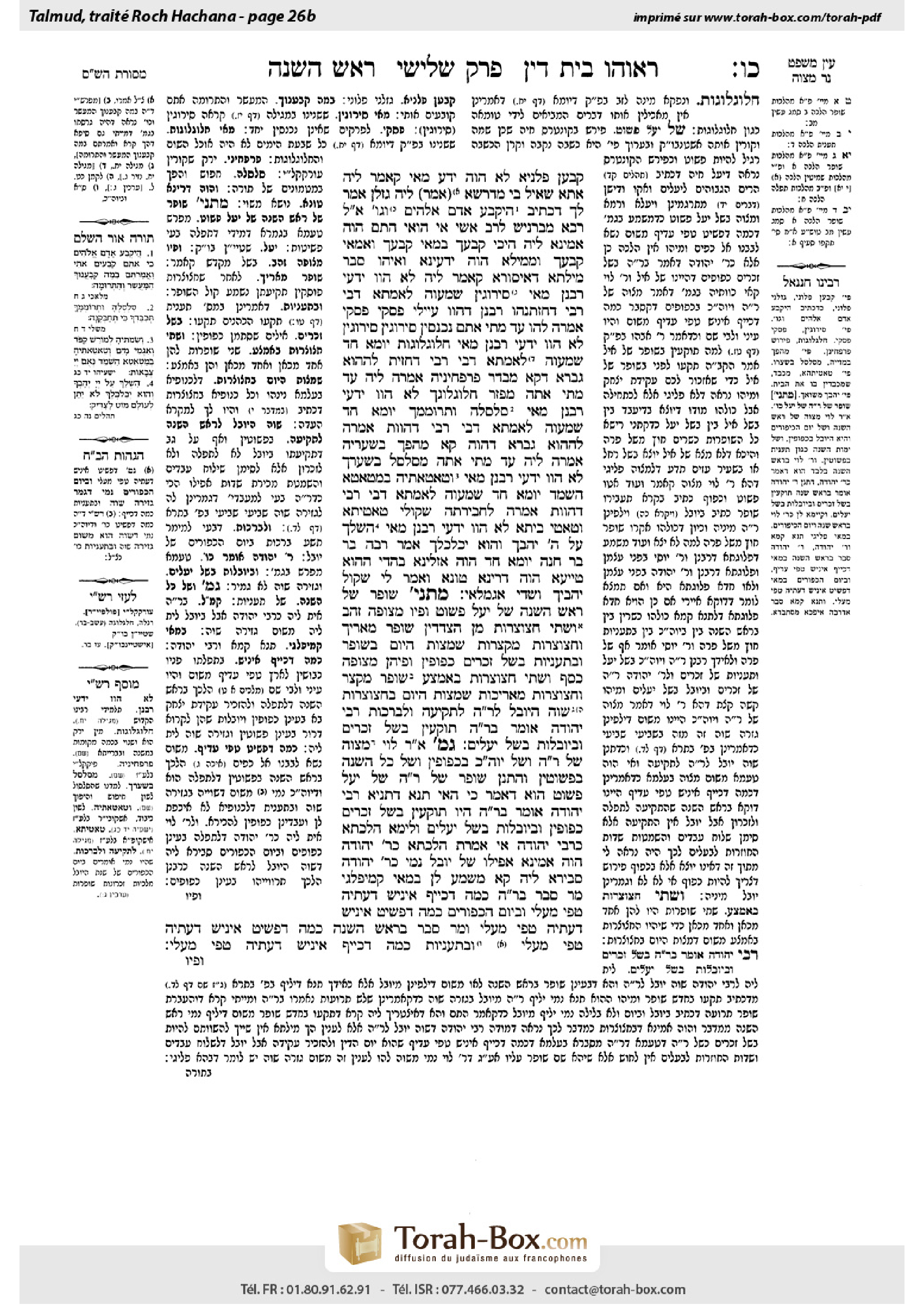
Rosh Hashanah 26b: Talmud study for Daf Yomi
Daf Yomi is the daily study of one Talmud folio. Explore 37 tractates with scans, Hebrew text, Sefaria English and AI-generated French translations where annotated.
Passage selection and English or AI-generated French translation are available where the scan has annotations. Daf Study is independent of Torah-Box and Sefaria.
Browse Rosh Hashanah · ראש השנה · All tractatesRosh Hashanah 26b text and translations
This page of Rosh Hashanah includes the Aramaic text, an English translation and an AI-generated French translation, alongside the scan above.
ראש השנה כ״ו ב · Aramaic and Hebrew text
קַבְעַן פְּלָנְיָא. לָא הֲוָה יָדַע מַאי קָאָמַר לֵיהּ. אֲתָא שְׁאֵיל בֵּי מִדְרְשָׁא, אֲמַר לֵיהּ: גַּזְלַן אֲמַר לָךְ, דִּכְתִיב: ״הֲיִקְבַּע אָדָם אֱלֹהִים וְגוֹ׳״. אֲמַר לֵיהּ רָבָא מִבַּרְנִישׁ לְרַב אָשֵׁי: אִי הֲוַאי הָתָם, הֲוָה אָמֵינָא לֵיהּ: הֵיכִי קַבְעָךְ? בְּמַאי קַבְעָךְ? וְאַמַּאי קַבְעָךְ? וּמִמֵּילָא הֲוָה יָדְעִינָא. וְאִיהוּ סָבַר: מִילְּתָא דְאִיסּוּרָא קָאָמַר לֵיהּ.
לָא הֲווֹ יָדְעִי רַבָּנַן מַאי ״סֵירוּגִין״. שַׁמְעוּהָ לְאַמְּתָא דְבֵי רַבִּי דַּחֲזָתִנְהוּ רַבָּנַן דַּהֲווֹ עָיְילִי פִּסְקֵי פִּסְקֵי, אֲמַרָה לְהוּ: עַד מָתַי אַתֶּם נִכְנָסִין סֵירוּגִין סֵירוּגִין.
לָא הֲווֹ יָדְעִי רַבָּנַן מַאי ״חֲלוֹגְלוֹגוֹת״. יוֹמָא חַד שַׁמְעוּהָ לְאַמְּתָא דְבֵי רַבִּי דַּחֲזָית לְהָהוּא גַּבְרָא דְּקָא מְבַדַּר פַּרְפְּחִינֵיהּ, אֲמַרָה לֵיהּ: עַד מָתַי אַתָּה מְפַזֵּר חֲלוֹגְלוֹגְךָ.
לָא הֲווֹ יָדְעִי רַבָּנַן מַאי: ״סַלְסְלֶהָ וּתְרוֹמְמֶךָּ״. יוֹמָא חַד שַׁמְעוּהָ לְאַמְּתָא דְבֵי רַבִּי דַּהֲווֹת אָמְרָה לְהָהוּא גַּבְרָא דַּהֲוָה קָא מְהַפֵּךְ בְּשַׂעְרֵיהּ, אָמְרָה לֵיהּ: עַד מָתַי אַתָּה מְסַלְסֵל בִּשְׂעָרְךָ.
לָא הֲווֹ יָדְעִי רַבָּנַן מַאי ״וְטֵאטֵאתִיהָ בְּמַטְאֲטֵא הַשְׁמֵד״. יוֹמָא חַד שַׁמְעוּהָ לְאַמְּתָא דְבֵי רַבִּי דַּהֲווֹת אָמְרָה לַחֲבֶירְתַּהּ: שְׁקוּלִי טָאטִיתָא וְטַאטִי בֵּיתָא.
לָא הֲווֹ יָדְעִי רַבָּנַן מַאי ״הַשְׁלֵךְ עַל ה׳ יְהָבְךָ וְהוּא יְכַלְכְּלֶךָ״. אָמַר רַבָּה בַּר בַּר חָנָה: יוֹמָא חַד הֲוָה אָזְלִינָא בַּהֲדֵי הָהוּא טַיָּיעָא, הֲוָה דָּרֵינָא טוּנָא וַאֲמַר לִי: שְׁקוֹל יַהְבָּיךְ וּשְׁדִי אַגַּמְלַאי.
מַתְנִי׳ שׁוֹפָר שֶׁל רֹאשׁ הַשָּׁנָה שֶׁל יָעֵל פָּשׁוּט וּפִיו מְצוּפֶּה זָהָב, וּשְׁתֵּי חֲצוֹצְרוֹת מִן הַצְּדָדִין. שׁוֹפָר מַאֲרִיךְ וַחֲצוֹצְרוֹת מְקַצְּרוֹת, שֶׁמִּצְוַת הַיּוֹם בְּשׁוֹפָר.
וּבְתַעֲנִיּוֹת בְּשֶׁל זְכָרִים כְּפוּפִין, וּפִיהֶן מְצוּפֶּה כֶּסֶף, וּשְׁתֵּי חֲצוֹצְרוֹת בָּאֶמְצַע. שׁוֹפָר מְקַצֵּר וַחֲצוֹצְרוֹת מַאֲרִיכוֹת, שֶׁמִּצְוַת הַיּוֹם בַּחֲצוֹצְרוֹת.
שָׁוֶה הַיּוֹבֵל לְרֹאשׁ הַשָּׁנָה לַתְּקִיעָה וְלַבְּרָכוֹת. רַבִּי יְהוּדָה אוֹמֵר: בְּרֹאשׁ הַשָּׁנָה תּוֹקְעִין בְּשֶׁל זְכָרִים וּבַיּוֹבְלוֹת בְּשֶׁל יְעֵלִים.
גְּמָ׳ אָמַר רַבִּי לֵוִי: מִצְוָה שֶׁל רֹאשׁ הַשָּׁנָה וְשֶׁל יוֹם הַכִּפּוּרִים בִּכְפוּפִין, וְשֶׁל כׇּל הַשָּׁנָה בִּפְשׁוּטִין. וְהָתְנַן: שׁוֹפָר שֶׁל רֹאשׁ הַשָּׁנָה שֶׁל יָעֵל פָּשׁוּט! הוּא דְּאָמַר כִּי הַאי תַּנָּא דְּתַנְיָא, רַבִּי יְהוּדָה אוֹמֵר: בְּרֹאשׁ הַשָּׁנָה הָיוּ תּוֹקְעִין בְּשֶׁל זְכָרִים כְּפוּפִין, וּבַיּוֹבְלוֹת בְּשֶׁל יְעֵלִים.
וְלֵימָא הִלְכְתָא כְּרַבִּי יְהוּדָה! אִי אָמְרַתְּ הִלְכְתָא כְּרַבִּי יְהוּדָה, הֲוָה אָמֵינָא: אֲפִילּוּ שֶׁל יוֹבֵל נָמֵי כְּרַבִּי יְהוּדָה סְבִירָא לֵיהּ, קָא מַשְׁמַע לַן.
בְּמַאי קָמִיפַּלְגִי? מָר סָבַר: בְּרֹאשׁ הַשָּׁנָה — כַּמָּה דְּכָיֵיף אִינִישׁ דַּעְתֵּיהּ, טְפֵי מְעַלֵּי; וּבְיוֹם הַכִּפּוּרִים — כַּמָּה דְּפָשֵׁיט אִינִישׁ דַּעְתֵּיהּ, טְפֵי מְעַלֵּי. וּמָר סָבַר: בְּרֹאשׁ הַשָּׁנָה — כַּמָּה דְּפָשֵׁיט אִינִישׁ דַּעְתֵּיהּ, טְפֵי מְעַלֵּי; וּבְתַעֲנִיּוֹת — כַּמָּה דְּכָיֵיף אִינִישׁ דַּעְתֵּיהּ, טְפֵי מְעַלֵּי.
Rosh Hashanah 26b · English translation
So-and-so keva’a from me. Levi did not understand what that man was saying to him, as he did not know the meaning of the word kava. So he went and asked in the study hall. They said to him: That man said to you: He robbed me, as it is written: “Will a man rob [hayikba] God?” (Malachi 3:8). Rava from a place called Barnish said to Rav Ashi: Had I been there in Levi’s place I would have tried to uncover the meaning of the word in a different way, for I would have said to him: How did he keva’a you? With what did he keva’a you? And why did he keva’a you? And from his answers I would have understood on my own what was being said. The Gemara comments: And Levi, who did not do this, thought that the man was talking about a matter of prohibition and not a monetary matter, and so asking the man these questions would not have helped, as they are relevant only to monetary matters.
The Gemara continues its discussion of unusual words: The Sages did not know the meaning of the word seirugin, which is found in a mishna. One day they heard the maidservant in Rabbi Yehuda HaNasi’s house say to the Sages whom she saw entering the house not all at once, but intermittently: How long shall you enter seirugin seirugin? and from this they understood that the word seirugin means: At intervals.
It is similarly recounted that the Sages did not know the meaning of the word ḥaloglogot, which is mentioned in various mishnayot and baraitot. One day they heard the maidservant in Rabbi Yehuda HaNasi’s house say to a certain man whom she saw scattering his purslane plants: How long shall you scatter your ḥaloglogot? So they understood that ḥaloglogot means purslane.
The Sages also did not know the meaning of the word salseleha in the verse: “Salseleha and it will exalt you” (Proverbs 4:8). One day they heard the maidservant in Rabbi Yehuda HaNasi’s house say to a certain man who was curling his hair: How long shall you mesalsel your hair? And from this they understood that the verse means: Turn wisdom about, and it will exalt you.
It is further related that the Sages did not know the meaning of the words in the verse: “And sweep it [vetetetiha] with the broom [matatei] of destruction” (Isaiah 14:23). One day they heard the maidservant in Rabbi Yehuda HaNasi’s house saying to her workmate: Take a broom [tateita] and sweep [ta’ati] the house,” and they understood the meaning of these words.
The Sages also did not know the meaning of the word yehavkha in the verse: “Cast your load [yehavkha] upon the Lord and He will sustain you” (Psalms 55:23). Rabba bar bar Ḥana said: One day I was traveling with a certain Arab [Tayya’a], and I was carrying a load, and he said to me: Take your yehav and cast it on my camel, and from this I understood that yehav means a load.
MISHNA: The shofar that was used on Rosh HaShana in the Temple was made from the straight horn of an ibex, and its mouth, the mouthpiece into which one blows, was plated with gold. And there were two trumpets, one on each of the two sides of the person sounding the shofar. The shofar would sound a long blast, whereas the trumpets would sound a short blast, because the mitzva of the day is with the shofar.
And in contrast, the shofarot used on public fast days were made from the curved horns of rams, and their mouths were plated with silver. There were two trumpets in the middle between the shofarot, and the shofar would sound a short blast, whereas the trumpets would sound a long blast, for the mitzva of the day is with the trumpets.
Yom Kippur of the Jubilee Year is the same as Rosh HaShana with regard to both the shofar blasts that are sounded and the additional blessings that are recited in the Amida prayer. Rabbi Yehuda disagrees and says: There is a difference between the two days: On Rosh HaShana one blows with horns of rams, whereas in Jubilee Years one blows with horns of ibexes.
GEMARA: Rabbi Levi said: The mitzva of Rosh HaShana and of Yom Kippur of the Jubilee Year is to blow with curved shofarot, and that of the rest of the year, on fast days, is to blow with straight shofarot. The Gemara raises a difficulty: But didn’t we learn differently in the mishna: The shofar that was used on Rosh HaShana was made from the straight horn of an ibex? The Gemara answers: Rabbi Levi said his statement in accordance with the opinion of that tanna, Rabbi Yehuda, as it was taught in a baraita: Rabbi Yehuda says: On Rosh HaShana they would blow with the curved horns of rams, and on the Days of Atonement of the Jubilee Years with the horns of ibexes.
The Gemara asks: If so, let it simply say that the halakha is in accordance with the opinion of Rabbi Yehuda. Why was it necessary to quote the baraita in full, as if it provided new information? The Gemara explains: If you had said that the halakha is in accordance with the opinion of Rabbi Yehuda, I would have said that he, Rabbi Levi, holds in accordance with the opinion of Rabbi Yehuda even with regard to the shofar used in the Jubilee Year, i.e., that one must blow with the horn of ibexes at that time. Therefore, the Gemara teaches us that he agrees with Rabbi Yehuda only with regard to Rosh HaShana, and not with regard to any other matter.
The Gemara asks: With regard to what principle do these tanna’im disagree? One Sage, Rabbi Yehuda, holds that on Rosh HaShana the more a person bends his mind and humbles himself by bending in prayer, the better. Therefore, a curved shofar is sounded as an allusion to our bent minds and bodies. But on Yom Kippur, the more a person straightens his mind and prays with simplicity, the better. Therefore, a straight shofar is sounded. The other Sage, the anonymous tanna of the mishna, maintains the opposite: On Rosh HaShana, the more a person straightens his mind and avoids any crookedness, the better. On fasts, on the other hand, the more a person bends his mind and humbles himself, the better.
Rosh Hashanah 26b · Traduction française (IA)
« Untel keva’a chez moi. » Lévi ne comprit pas ce que cet homme lui disait, car il ignorait le sens du mot kava. Il alla donc se renseigner à la maison d’étude. On lui dit : « Cet homme t’a dit : “Il m’a volé”, comme il est écrit : “Un homme peut-il voler [hayikba] Dieu ?” » (Malachie 3:8). Rava, originaire d’un lieu appelé Barnish, dit à Rav Ashi : « Si j’avais été à la place de Lévi, j’aurais essayé de découvrir le sens du mot autrement : je lui aurais demandé : “Comment t’a-t-il keva’a ? Avec quoi t’a-t-il keva’a ? Et pourquoi t’a-t-il keva’a ?” À partir de ses réponses, j’aurais compris par moi-même ce qu’il voulait dire. » La Guemara fait remarquer que Lévi, qui ne procéda pas ainsi, pensait que l’homme parlait d’une question d’interdit et non d’une affaire d’argent ; lui poser ces questions n’aurait donc pas aidé, car elles ne sont pertinentes que pour les affaires d’argent.
La Guemara poursuit son examen des mots inhabituels : les Sages ne connaissaient pas le sens du mot seirugin, qui figure dans une Michna. Un jour, ils entendirent la servante de la maison de Rabbi Yehouda HaNassi dire aux Sages qu’elle voyait entrer dans la maison non pas tous ensemble, mais à intervalles : « Combien de temps allez-vous entrer seirugin seirugin ? » Ils comprirent ainsi que seirugin signifie « à intervalles ».
De même, il est rapporté que les Sages ne connaissaient pas le sens du mot ḥaloglogot, mentionné dans diverses Michnayot et baraïtot. Un jour, ils entendirent la servante de la maison de Rabbi Yehouda HaNassi dire à un homme qu’elle voyait disperser ses plants de pourpier : « Combien de temps vas-tu disperser tes ḥaloglogot ? » Ils comprirent alors que ḥaloglogot signifie « pourpier ».
Les Sages ne connaissaient pas non plus le sens du mot salseleha dans le verset : « Salseleha et elle t’élèvera » (Proverbes 4:8). Un jour, ils entendirent la servante de la maison de Rabbi Yehouda HaNassi dire à un homme qui se frisait les cheveux : « Combien de temps vas-tu mesalsel tes cheveux ? » Ils comprirent ainsi que le verset signifie : « Fais tourner la sagesse, et elle t’élèvera. »
Il est également rapporté que les Sages ne connaissaient pas le sens des mots du verset : « Et je la balaierai [vetetetiha] avec le balai [matatei] de la destruction » (Isaïe 14:23). Un jour, ils entendirent la servante de la maison de Rabbi Yehouda HaNassi dire à sa collègue : « Prends un balai [tateita] et balaie [ta’ati] la maison », et ils comprirent le sens de ces mots.
Les Sages ne connaissaient pas non plus le sens du mot yehavkha dans le verset : « Dépose ton fardeau [yehavkha] sur le Seigneur, et Il te soutiendra » (Psaumes 55:23). Rabba bar bar Ḥana dit : « Un jour, je voyageais avec un certain Arabe [Tayya’a] et je portais un fardeau. Il me dit : “Prends ton yehav et jette-le sur mon chameau.” Je compris ainsi que yehav signifie “fardeau”. »
MICHNA : Le chofar utilisé à Roch Hachana dans le Temple était fait de la corne droite d’un bouquetin, et son embouchure, là où l’on souffle, était plaquée d’or. Il y avait deux trompettes, une de chaque côté de la personne qui sonnait du chofar. Le chofar émettait un son prolongé, tandis que les trompettes émettaient un son bref, car la mitsva du jour s’accomplit avec le chofar.
À l’inverse, les chofarot utilisés lors des jeûnes publics étaient faits de cornes recourbées de béliers, et leurs embouchures étaient plaquées d’argent. Il y avait deux trompettes au milieu, entre les chofarot ; le chofar émettait un son bref, tandis que les trompettes émettaient un son prolongé, car la mitsva du jour s’accomplit avec les trompettes.
Yom Kippour de l’année jubilaire est identique à Roch Hachana en ce qui concerne à la fois les sonneries du chofar et les bénédictions supplémentaires récitées dans la prière de la Amida. Rabbi Yehouda n’est pas d’accord et dit : « Il y a une différence entre les deux jours : à Roch Hachana, on sonne avec des cornes de béliers, tandis que pendant les années jubilaires, on sonne avec des cornes de bouquetins. »
GUEMARA : Rabbi Lévi dit : « La mitsva à Roch Hachana et à Yom Kippour de l’année jubilaire consiste à sonner avec des chofarot recourbés ; le reste de l’année, les jours de jeûne, elle consiste à sonner avec des chofarot droits. » La Guemara soulève une difficulté : N’avons-nous pas appris autrement dans la Michna : « Le chofar utilisé à Roch Hachana était fait de la corne droite d’un bouquetin » ? La Guemara répond : Rabbi Lévi a formulé son propos conformément à l’opinion de ce tanna, Rabbi Yehouda, comme cela a été enseigné dans une baraïta : Rabbi Yehouda dit : « À Roch Hachana, on sonnait avec les cornes recourbées de béliers, et à Yom Kippour des années jubilaires, avec des cornes de bouquetins. »
La Guemara demande : Dans ce cas, qu’il se contente de dire que la halakha est conforme à l’opinion de Rabbi Yehouda. Pourquoi était-il nécessaire de citer intégralement la baraïta, comme si elle apportait une information nouvelle ? La Guemara explique : Si tu avais dit que la halakha est conforme à l’opinion de Rabbi Yehouda, j’aurais pensé que Rabbi Lévi adopte l’opinion de Rabbi Yehouda même au sujet du chofar utilisé pendant l’année jubilaire, c’est-à-dire qu’il faut alors sonner avec une corne de bouquetin. La Guemara nous enseigne donc qu’il est d’accord avec Rabbi Yehouda uniquement au sujet de Roch Hachana, et non sur un autre point.
La Guemara demande : Sur quel principe ces tannaim sont-ils en désaccord ? Rabbi Yehouda estime qu’à Roch Hachana, plus une personne incline son esprit et s’humilie en s’inclinant dans la prière, mieux c’est. C’est pourquoi on sonne avec un chofar recourbé, en allusion à nos esprits et à nos corps courbés. Mais à Yom Kippour, plus une personne redresse son esprit et prie avec simplicité, mieux c’est. C’est pourquoi on sonne avec un chofar droit. L’autre Sage, le tanna anonyme de la Michna, soutient l’inverse : à Roch Hachana, plus une personne redresse son esprit et évite toute torsion, mieux c’est. En revanche, lors des jeûnes, plus une personne incline son esprit et s’humilie, mieux c’est.
Traduction française générée par IA à partir de l’édition anglaise de Sefaria. Vérifie toujours un passage avec le texte source.
Text from Sefaria: William Davidson Edition - Vocalized Aramaic (CC BY NC); William Davidson Edition - English (CC BY NC).