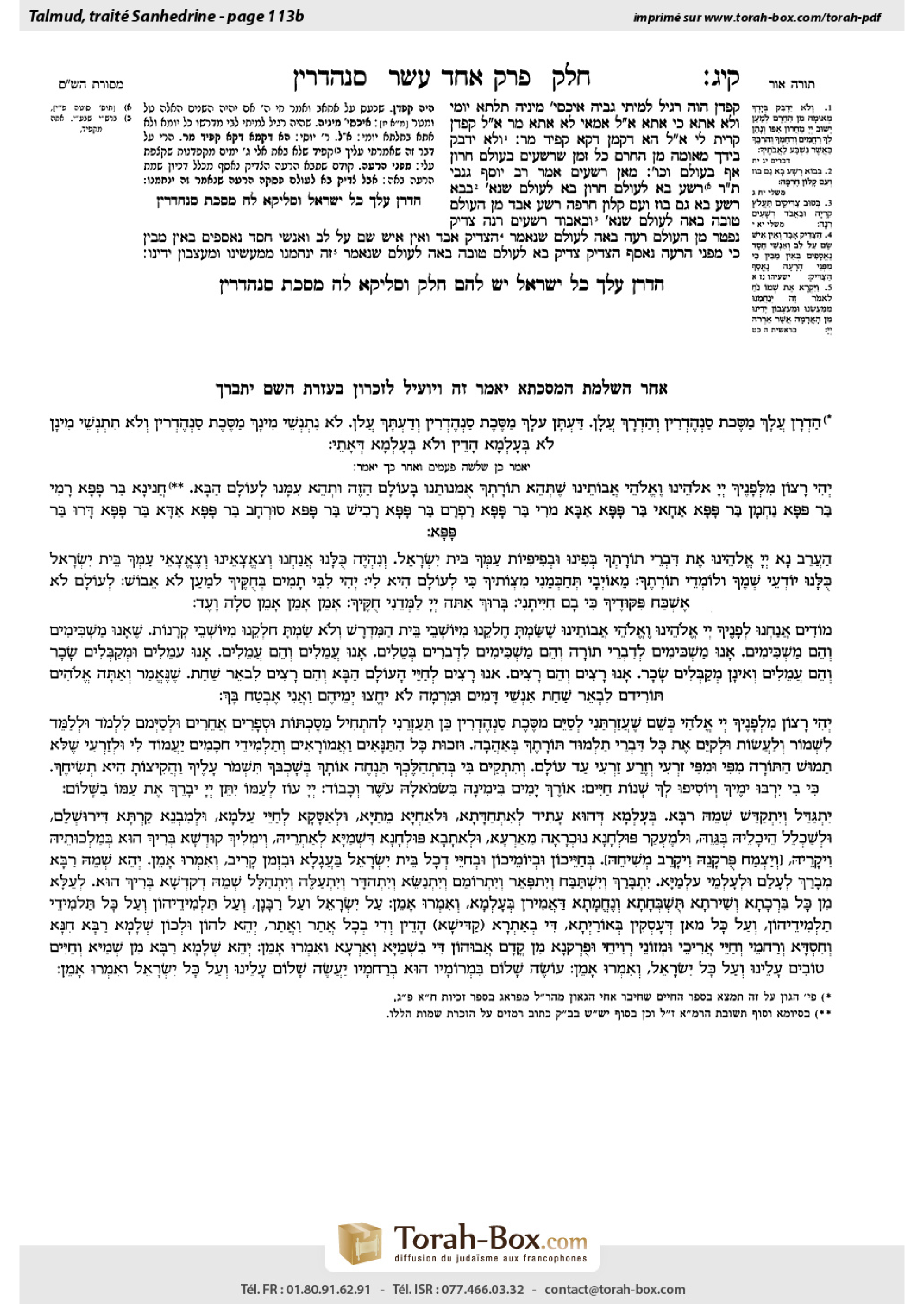
Sanhedrin 113b: Talmud study for Daf Yomi
Daf Yomi is the daily study of one Talmud folio. Explore 37 tractates with scans, Hebrew text, Sefaria English and AI-generated French translations where annotated.
Passage selection and English or AI-generated French translation are available where the scan has annotations. Daf Study is independent of Torah-Box and Sefaria.
Browse Sanhedrin · סנהדרין · All tractatesSanhedrin 113b text and translations
This page of Sanhedrin includes the Aramaic text, an English translation and an AI-generated French translation, alongside the scan above.
סנהדרין קי״ג ב · Aramaic and Hebrew text
קַפְּדָן הֲוָה. רְגִיל לְמֵיתֵי גַּבֵּיהּ. אִיכַּסִּי מִינֵּיהּ תְּלָתָא יוֹמֵי, וְלָא אֲתָא. כִּי אֲתָא, אֲמַר לֵיהּ: אַמַּאי לָא אֲתָא מָר? אֲמַר לֵיהּ: קַפְּדָן קָרֵית לִי! אֲמַר לֵיהּ: הָא דְּקַמַּן, דְּקָא קָפֵיד מָר!
״וְלֹא יִדְבַּק בְּיָדְךָ מְאוּמָה מִן הַחֵרֶם״ – כׇּל זְמַן שֶׁרְשָׁעִים בָּעוֹלָם, חֲרוֹן אַף בָּעוֹלָם וְכוּ׳. מַאן רְשָׁעִים? אָמַר רַב יוֹסֵף: גַּנָּבֵי.
תָּנוּ רַבָּנַן: רָשָׁע בָּא לָעוֹלָם – חָרוֹן בָּא לְעוֹלָם, שֶׁנֶּאֱמַר: ״בְּבוֹא רָשָׁע בָּא גַם בּוּז וְעִם קָלוֹן חֶרְפָּה״. רָשָׁע אָבֵד מִן הָעוֹלָם – טוֹבָה בָּאָה לְעוֹלָם, שֶׁנֶּאֱמַר: ״וּבַאֲבֹד רְשָׁעִים רִנָּה״. צַדִּיק נִפְטָר מִן הָעוֹלָם – רָעָה בָּאָה לְעוֹלָם, שֶׁנֶּאֱמַר: ״הַצַּדִּיק אָבָד וְאֵין אִישׁ שָׂם עַל לֵב וְאַנְשֵׁי חֶסֶד נֶאֱסָפִים בְּאֵין מֵבִין כִּי מִפְּנֵי הָרָעָה נֶאֱסַף הַצַּדִּיק״. צַדִּיק בָּא לָעוֹלָם – טוֹבָה בָּאָה לְעוֹלָם, שֶׁנֶּאֱמַר: ״זֶה יְנַחֲמֵנוּ מִמַּעֲשֵׂנוּ וּמֵעִצְּבוֹן יָדֵינוּ״.
הֲדַרַן עֲלָךְ כׇּל יִשְׂרָאֵל יֵשׁ לָהֶם חֵלֶק וּסְלִיקָא לַהּ מַסֶּכֶת סַנְהֶדְרִין
Sanhedrin 113b · English translation
was difficult. Elijah was accustomed to coming and revealing himself before Rabbi Yosei each day. He was obscured from him for three days and did not come. When he came again, Rabbi Yosei said to him: Why did the Master not come? Elijah said to him: You denigrated me when you called me difficult. Rabbi Yosei said to Elijah: This example that is before us illustrates the point, as my Master was being difficult by not coming during those days.
§ The mishna teaches with regard to the verse: “And there shall cleave nothing of that which was devoted to your hand” (Deuteronomy 13:18), as long as the wicked exist in the world, there is wrath in the world. The Gemara asks: Who are these wicked people mentioned in the mishna? Rav Yosef said: They are thieves.
The Sages taught in a baraita: When a wicked person comes into the world, wrath comes into the world, as it is stated: “When the wicked comes into the world, contempt also comes, and with ignominy, reproach” (Proverbs 18:3). When a wicked person is eliminated from the world, good comes into the world, as it is stated: “And when the wicked perish there is jubilation” (Proverbs 11:10). When a righteous person passes from the world, evil comes into the world, as it is stated: “The righteous perishes and no man lays it to heart; and merciful men are taken, none understand that due to the evil the righteous is taken” (Isaiah 57:1) When a righteous person comes into the world, good comes into the world with him, as it is stated with regard to Noah: “This is one who shall comfort us for our work and the toil of our hands” (Genesis 5:29).
Sanhedrin 113b · Traduction française (IA)
était difficile. Élie avait coutume de venir se révéler chaque jour à Rabbi Yossi. Il se déroba à lui pendant trois jours et ne vint pas. Lorsqu’il revint, Rabbi Yossi lui dit : « Pourquoi le Maître n’est-il pas venu ? » Élie lui répondit : « Tu m’as dénigré en me qualifiant de difficile. » Rabbi Yossi dit à Élie : « Cet exemple qui se présente à nous illustre bien le propos, puisque mon Maître s’est montré difficile en ne venant pas ces jours-là. »
§ La Michna enseigne, à propos du verset : « Qu’il ne reste rien de ce qui a été voué entre tes mains » (Deutéronome 13:18) : tant que les méchants existent dans le monde, la colère règne dans le monde. La Guemara demande : Qui sont ces méchants mentionnés dans la Michna ? Rav Yosef dit : Ce sont les voleurs.
Les Sages ont enseigné dans une baraïta : Lorsqu’un méchant vient au monde, la colère vient au monde, comme il est dit : « Quand le méchant vient au monde, le mépris vient aussi, et avec l’ignominie, le reproche » (Proverbes 18:3). Lorsqu’un méchant est éliminé du monde, le bien vient au monde, comme il est dit : « Quand les méchants périssent, c’est la jubilation » (Proverbes 11:10). Lorsqu’un juste quitte le monde, le mal vient au monde, comme il est dit : « Le juste périt, et nul ne le prend à cœur ; les hommes miséricordieux sont enlevés, et nul ne comprend que le juste est enlevé à cause du mal » (Isaïe 57:1). Lorsqu’un juste vient au monde, le bien vient au monde avec lui, comme il est dit au sujet de Noé : « Celui-ci nous consolera de notre travail et de la peine de nos mains » (Genèse 5:29).
Traduction française générée par IA à partir de l’édition anglaise de Sefaria. Vérifie toujours un passage avec le texte source.
Text from Sefaria: William Davidson Edition - Vocalized Aramaic (CC BY NC); William Davidson Edition - English (CC BY NC).