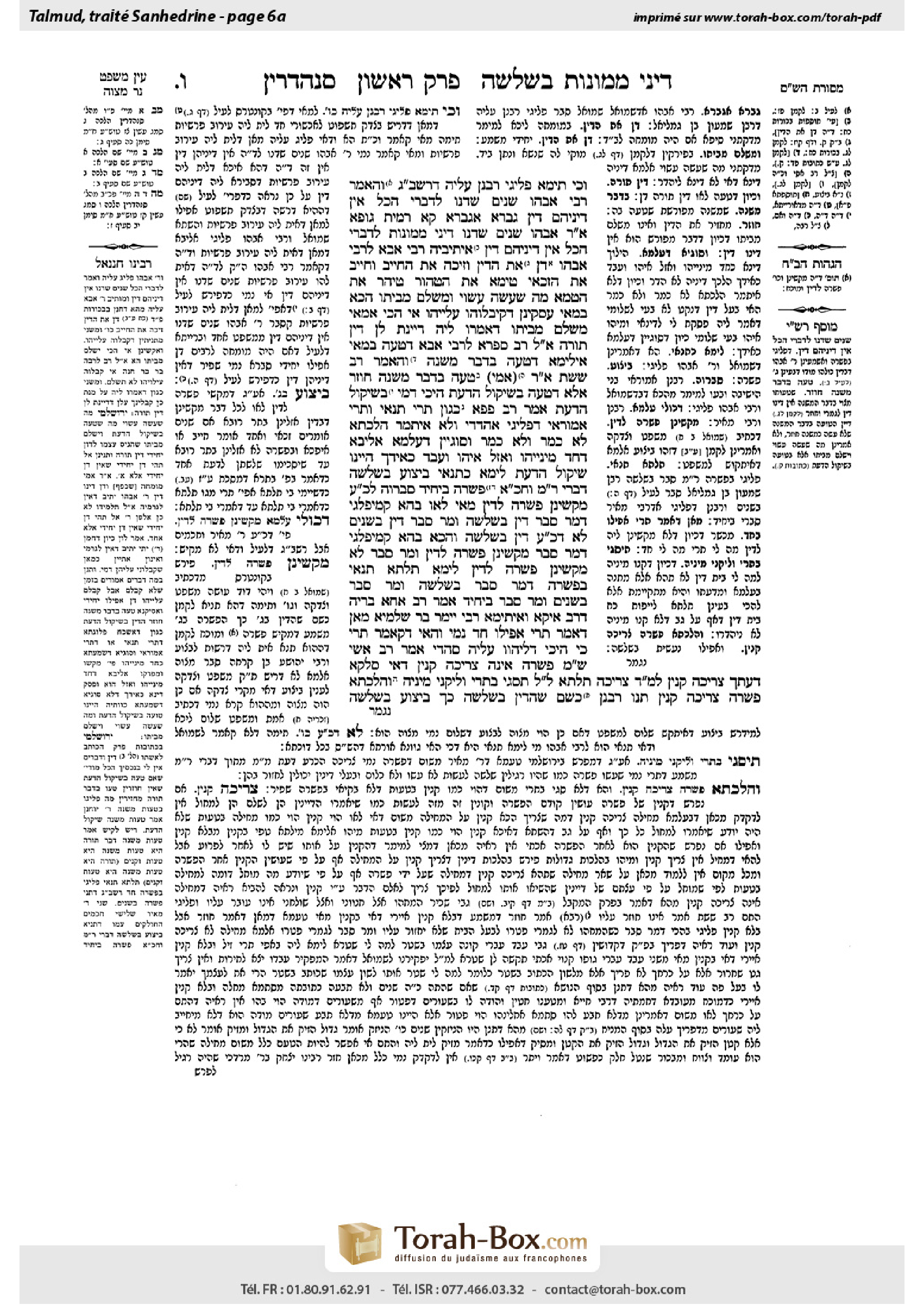
Sanhedrin 6a: Talmud study for Daf Yomi
Daf Yomi is the daily study of one Talmud folio. Explore 37 tractates with scans, Hebrew text, Sefaria English and AI-generated French translations where annotated.
Passage selection and English or AI-generated French translation are available where the scan has annotations. Daf Study is independent of Torah-Box and Sefaria.
Browse Sanhedrin · סנהדרין · All tractatesSanhedrin 6a text and translations
This page of Sanhedrin includes the Aramaic text, an English translation and an AI-generated French translation, alongside the scan above.
סנהדרין ו׳ א · Aramaic and Hebrew text
וְכִי תֵּימָא: פְּלִיגִי רַבָּנַן עֲלֵיהּ דְּרַבָּן שִׁמְעוֹן בֶּן גַּמְלִיאֵל, וְהָאָמַר רַבִּי אֲבָהוּ: שְׁנַיִם שֶׁדָּנוּ – לְדִבְרֵי הַכֹּל אֵין דִּינֵיהֶם דִּין! גַּבְרָא אַגַּבְרָא קָא רָמֵית?
גּוּפָא, אָמַר רַבִּי אֲבָהוּ: שְׁנַיִם שֶׁדָּנוּ דִּינֵי מָמוֹנוֹת – לְדִבְרֵי הַכֹּל אֵין דִּינֵיהֶם דִּין. אֵיתִיבֵיהּ רַבִּי אַבָּא לְרַבִּי אֲבָהוּ: דָּן אֶת הַדִּין וְזִיכָּה אֶת הַחַיָּיב, וְחִיֵּיב אֶת הַזַּכַּאי, טִימֵּא אֶת הַטָּהוֹר, טִיהֵר אֶת הַטָּמֵא – מַה שֶּׁעָשָׂה עָשׂוּי, וּמְשַׁלֵּם מִבֵּיתוֹ.
הָכָא בְּמַאי עָסְקִינַן? דְּקַיבְּלוּהוּ עֲלַיְיהוּ. אִי הָכִי, אַמַּאי מְשַׁלֵּם מִבֵּיתוֹ? דְּאָמְרוּ לֵיהּ: דָּיְינַתְּ לַן דִּין תּוֹרָה.
אֲמַר לֵיהּ רַב סָפְרָא לְרַבִּי אַבָּא: דִּטְעָה בְּמַאי? אִילֵימָא דִּטְעָה בִּדְבַר מִשְׁנָה, וְהָאָמַר רַב שֵׁשֶׁת אָמַר רַבִּי אַמֵּי: טָעָה בִּדְבַר מִשְׁנָה חוֹזֵר? אֶלָּא דִּטְעָה בְּשִׁיקּוּל הַדַּעַת.
הֵיכִי דָּמֵי בְּשִׁיקּוּל הַדַּעַת? אָמַר רַב פָּפָּא: כְּגוֹן תְּרֵי תַנָּאֵי וּתְרֵי אָמוֹרָאֵי דִּפְלִיגִי אַהֲדָדֵי, וְלָא אִיתְּמַר הִלְכְתָא לָא כְּמָר וְלָא כְּמָר, וְסוּגְיַין דְּעָלְמָא אַלִּיבָּא דְּחַד מִינַּיְיהוּ, וַאֲזַל אִיהוּ וַעֲבַד כְּאִידַּךְ – הַיְינוּ שִׁיקּוּל הַדַּעַת.
לֵימָא כְּתַנָּאֵי: בִּיצּוּעַ בִּשְׁלֹשָׁה, דִּבְרֵי רַבִּי מֵאִיר. וַחֲכָמִים אוֹמְרִים: פְּשָׁרָה בְּיָחִיד. סַבְרוּהָ, לְכוּלֵּי עָלְמָא מַקְּשִׁינַן פְּשָׁרָה לְדִין.
מַאי לָאו בְּהָא קָמִיפַּלְגִי, דְּמָר סָבַר: דִּין בִּשְׁלֹשָׁה, וּמָר סָבַר: דִּין בִּשְׁנַיִם? לָא, דְּכוּלֵּי עָלְמָא דִּין בִּשְׁלֹשָׁה, וְהָכָא בְּהָא קָמִיפַּלְגִי: דְּמָר סָבַר מַקְּשִׁינַן פְּשָׁרָה לְדִין, וּמָר סָבַר לָא מַקְּשִׁינַן פְּשָׁרָה לְדִין.
לֵימָא: תְּלָתָא תַּנָּאֵי בִּפְשָׁרָה, דְּמָר סָבַר בִּשְׁלֹשָׁה, וּמָר סָבַר בִּשְׁנַיִם, וּמָר סָבַר בְּיָחִיד. אָמַר רַב אַחָא בְּרֵיהּ דְּרַב אִיקָא, וְאִיתֵּימָא רַבִּי יֵימַר בַּר שֶׁלֶמְיָא: מַאן דְּאָמַר תְּרֵי – אֲפִילּוּ חַד נָמֵי, וְהַאי דְּקָאָמַר תְּרֵי – כִּי הֵיכִי דְּלִיהְווֹ עֲלֵיהּ סָהֲדִי.
אָמַר רַב אָשֵׁי: שְׁמַע מִינַּהּ פְּשָׁרָה אֵינָהּ צְרִיכָה קִנְיָן, דְּאִי סָלְקָא דַעְתָּךְ צְרִיכָה קִנְיָן, לְמַאן דְּאָמַר צְרִיכָה – תְּלָתָא לְמָה לִי? תִּסְגֵּי בִּתְרֵי וְלִיקְנֵי מִינֵּיהּ! וְהִלְכְתָא: פְּשָׁרָה צְרִיכָה קִנְיָן.
תָּנוּ רַבָּנַן: כְּשֵׁם שֶׁהַדִּין בִּשְׁלֹשָׁה, כָּךְ בִּיצּוּעַ בִּשְׁלֹשָׁה.
Sanhedrin 6a · English translation
And if you would say the Rabbis disagree with Rabban Shimon ben Gamliel with regard to the minimum number of judges necessary to adjudicate, but doesn’t Rabbi Abbahu say: With regard to a court of two judges that adjudicated cases of monetary law of any type, which would include cases of admissions and loans, everyone agrees that their judgment is not a valid judgment, as a court with fewer than three judges is invalid? The Gemara rejects this question: Are you setting the statement of one man against the statement of another man? Although Rabbi Abbahu asserts that all agree that two judges cannot issue a binding judgment, Shmuel differs. According to Shmuel, the Rabbis hold that the judgment of two judges is considered binding.
§ Since it was mentioned incidentally, the Gemara discusses the matter itself: Rabbi Abbahu says: With regard to a court of two judges that adjudicated cases of monetary law of any type, which would include cases of admissions and loans, everyone agrees that their judgment is not a valid judgment. Rabbi Abba raised an objection to Rabbi Abbahu from a mishna (Bekhorot 28b): If a single judge adjudicated a case of monetary law and erroneously exonerated the litigant who should have been deemed liable, or deemed liable the litigant who should have been deemed exempt, or if one issued a halakhic ruling whereby he deemed ritually impure that which is actually pure, or deemed pure that which is impure, what he did is done, i.e., his ruling is binding. And the judge nevertheless pays from his house, i.e., from his own pocket, for the loss he has caused. Evidently, the ruling of even a single judge constitutes a valid judgment.
The Gemara responds: Here we are dealing with a case in which the litigants accepted the singular judge upon themselves, and it is for that reason that his ruling is binding. Otherwise, it would not be binding, as a halakhic court must contain a minimum of three judges. The Gemara asks: If so, that the litigants agreed to accept whatever ruling the judge issued, why must the judge pay from his own house? The Gemara answers: The judge is liable because the case is where they said to him: Adjudicate the case for us according to Torah law. Since he did not issue a halakhically proper judgment, he is liable.
Rav Safra said to Rabbi Abba: This ruling applies when he erred in what respect? If we say that he erred in a matter that appears in the Mishna, and he mistakenly ruled against an explicitly stated halakha, that is difficult. But doesn’t Rav Sheshet say that Rabbi Ami says: If the judge erred in a matter that appears in the Mishna, the decision is revoked and the case retried? Rather, the case is where he erred in his deliberation.
The Gemara asks: What are the circumstances of an error in deliberation? Rav Pappa said: The circumstances of an error in deliberation are where, for example, there are two tanna’im or two amora’im who disagree with one another, and the halakha was not stated in accordance with the opinion of one Sage or with the opinion of the other Sage; and the standard practice is in accordance with the opinion of one of them, and he went and executed the judgment in accordance with the other opinion; this is an error in deliberation.
§ The Gemara suggests: Let us say that the dispute between Shmuel and Rabbi Abbahu about a court composed of two judges is parallel to a dispute between tanna’im, as detailed in the following baraita: Mediation can be performed by a panel of three judges; this is the statement of Rabbi Meir. And the Rabbis say: Compromise can be performed by even a single judge. The Sages assumed that everyone agrees that we compare compromise to judgment, and require the same amount of judges for each process.
What, is it not that they disagree in this matter, that one Sage, Rabbi Meir, holds that judgment and compromise can be performed by a minimum of three judges, and one Sage, the Rabbis, holds that judgment and compromise can be performed even by two judges? The Gemara rejects this analysis: No, it is that everyone holds that judgment must be performed by a minimum of three judges, and here, they disagree with regard to this matter: One Sage, Rabbi Meir, holds that we compare compromise to judgment, and one Sage, the Rabbis, holds that we do not compare compromise to judgment.
The Gemara suggests: Let us say that there are three opinions of tanna’im with regard to mediation leading to compromise, as one Sage, Rabbi Meir, holds that mediation must be performed by a panel of three judges; and one Sage, Rabban Shimon ben Gamliel, holds that it can be performed by two judges; and one Sage, the Rabbis, holds that it can be performed by a single judge. The Gemara rejects this suggestion. Rav Aḥa, son of Rav Ika, and some say Rabbi Yeimar bar Shelamya, said: The one who says mediation must be performed by two judges would say that it may even be performed by one. And the reason that he says two is merely that there would be two witnesses to the proceedings, who could testify about them if necessary. In that way, neither side could later deny the terms of the compromise.
Rav Ashi says: Learn from that discussion that compromise does not require a formal act of acquisition, which would legally transfer rights to the settlement payment to the other party. As if it enters your mind that compromise requires an act of acquisition to finalize its terms, according to the one who says it requires an act of acquisition, why do I need a formal court of three judges? Let it suffice with two judges, and let one litigant perform an act of acquisition with the other litigant to signify their commitment to abide by the compromise. If a formal act is required to grant halakhic force to the compromise, there is no advantage to having a panel of three judges with the status of a formal court. The Gemara concludes: But nevertheless, the halakha is that a compromise requires an act of acquisition to finalize its terms.
§ The Sages taught in a baraita (Tosefta 1:2–8): Just as judgment is performed by three judges, so too, mediation is performed by three judges.
Sanhedrin 6a · Traduction française (IA)
Et si tu dis que les Rabbins sont en désaccord avec Rabban Shimon ben Gamliel sur le nombre minimal de juges requis pour statuer, Rabbi Abbahou ne dit-il pas : lorsqu’un tribunal composé de deux juges statue dans une affaire de droit pécuniaire, quelle qu’elle soit — y compris une affaire d’aveux ou de prêts —, tous conviennent que son jugement n’est pas valable, puisqu’un tribunal de moins de trois juges est invalide ? La Guemara rejette cette question : Opposes-tu la déclaration d’un homme à celle d’un autre ? Bien que Rabbi Abbahou affirme que tous conviennent que deux juges ne peuvent rendre un jugement contraignant, Shmuel est d’un autre avis. Selon Shmuel, les Rabbins considèrent que le jugement rendu par deux juges est contraignant.
§ Puisque cela a été mentionné incidemment, la Guemara examine la question elle-même : Rabbi Abbahou dit : lorsqu’un tribunal composé de deux juges statue dans une affaire de droit pécuniaire, quelle qu’elle soit — y compris une affaire d’aveux ou de prêts —, tous conviennent que son jugement n’est pas valable. Rabbi Abba soulève une objection à Rabbi Abbahou à partir d’une Michna (Bekhorot 28b) : Si un juge unique a statué dans une affaire de droit pécuniaire et a, par erreur, acquitté le plaideur qui aurait dû être déclaré responsable, ou déclaré responsable celui qui aurait dû être exempté, ou s’il a rendu une décision halakhique déclarant rituellement impur ce qui est en réalité pur, ou pur ce qui est impur, ce qu’il a fait est fait, c’est-à-dire que sa décision est contraignante. Le juge doit néanmoins payer de sa propre poche pour la perte qu’il a causée. Il apparaît donc que la décision d’un juge unique constitue un jugement valable.
La Guemara répond : Il s’agit ici d’un cas où les plaideurs ont accepté le juge unique, et c’est pour cette raison que sa décision est contraignante. Sinon, elle ne le serait pas, car un tribunal halakhique doit compter au moins trois juges. La Guemara demande : Si les plaideurs ont accepté d’avance toute décision que rendrait le juge, pourquoi celui-ci doit-il payer de sa propre poche ? La Guemara répond : Le juge est responsable parce qu’il s’agit d’un cas où ils lui ont dit : « Statue pour nous selon la loi de la Torah. » Puisqu’il n’a pas rendu un jugement conforme à la halakha, il est responsable.
Rav Safra dit à Rabbi Abba : En quoi s’est-il trompé pour que cette règle s’applique ? Si nous supposons qu’il s’est trompé sur un point mentionné dans la Michna et qu’il a rendu par erreur une décision contraire à une halakha explicitement énoncée, cela pose problème. Rav Sheshet ne dit-il pas que Rabbi Ami dit : si le juge s’est trompé sur un point mentionné dans la Michna, la décision est annulée et l’affaire est rejugée ? Il s’agit donc plutôt d’un cas où il s’est trompé dans son raisonnement.
La Guemara demande : Dans quelles circonstances y a-t-il erreur de raisonnement ? Rav Pappa dit : Par exemple, lorsque deux tannaïm ou deux amoraïm sont en désaccord, que la halakha n’a été établie selon l’opinion ni de l’un ni de l’autre Sage, et que la pratique habituelle suit l’opinion de l’un d’eux, mais que le juge rend son jugement conformément à l’autre opinion. Voilà une erreur de raisonnement.
§ La Guemara propose : Disons que le désaccord entre Shmuel et Rabbi Abbahou au sujet d’un tribunal composé de deux juges correspond à un désaccord entre tannaïm, exposé dans la baraïta suivante : La conciliation peut être menée par un tribunal composé de trois juges ; telle est l’opinion de Rabbi Meïr. Les Rabbins disent : Un compromis peut être conclu même par un juge unique. Les Sages supposaient que tous conviennent qu’on établit une analogie entre le compromis et le jugement et qu’il faut donc le même nombre de juges pour les deux procédures.
N’est-ce pas là leur désaccord : un Sage, Rabbi Meïr, considère que le jugement et le compromis doivent être rendus par au moins trois juges, tandis qu’un autre Sage, les Rabbins, considère qu’ils peuvent être rendus même par deux juges ? La Guemara rejette cette analyse : Non, tous considèrent que le jugement doit être rendu par au moins trois juges. Leur désaccord porte sur un autre point : Rabbi Meïr considère qu’on établit une analogie entre le compromis et le jugement, tandis que les Rabbins considèrent qu’on ne l’établit pas.
La Guemara propose : Disons qu’il existe trois opinions parmi les tannaïm au sujet de la conciliation menant à un compromis : Rabbi Meïr considère qu’elle doit être menée par un tribunal composé de trois juges ; Rabban Shimon ben Gamliel considère qu’elle peut être menée par deux juges ; et les Rabbins considèrent qu’elle peut être menée par un juge unique. La Guemara rejette cette proposition. Rav Aḥa, fils de Rav Ika — et certains disent Rabbi Yeimar bar Shelamya — dit : Celui qui affirme que la conciliation doit être menée par deux juges dirait qu’elle peut même être menée par un seul. S’il dit deux, c’est uniquement parce qu’il y aurait ainsi deux témoins de la procédure, qui pourraient en témoigner si nécessaire. De cette manière, aucune des deux parties ne pourrait nier par la suite les termes du compromis.
Rav Ashi dit : Il ressort de cette discussion qu’un compromis n’exige pas d’acte d’acquisition formel pour transférer juridiquement à l’autre partie les droits au paiement prévu par l’accord. En effet, si tu penses qu’un compromis exige un acte d’acquisition pour que ses modalités deviennent définitives, pourquoi, selon celui qui affirme qu’un tel acte est requis, faudrait-il un tribunal formel de trois juges ? Deux juges suffiraient, et l’un des plaideurs pourrait effectuer avec l’autre un acte d’acquisition pour marquer leur engagement à respecter le compromis. Si un acte formel est nécessaire pour conférer une force halakhique au compromis, la présence d’un tribunal de trois juges ayant le statut d’un tribunal formel n’apporte aucun avantage. La Guemara conclut : Néanmoins, la halakha est qu’un compromis exige un acte d’acquisition pour que ses modalités deviennent définitives.
§ Les Sages ont enseigné dans une baraïta (Tossefta 1:2–8) : De même que le jugement est rendu par trois juges, la conciliation est elle aussi menée par trois juges.
Traduction française générée par IA à partir de l’édition anglaise de Sefaria. Vérifie toujours un passage avec le texte source.
Text from Sefaria: William Davidson Edition - Vocalized Aramaic (CC BY NC); William Davidson Edition - English (CC BY NC).