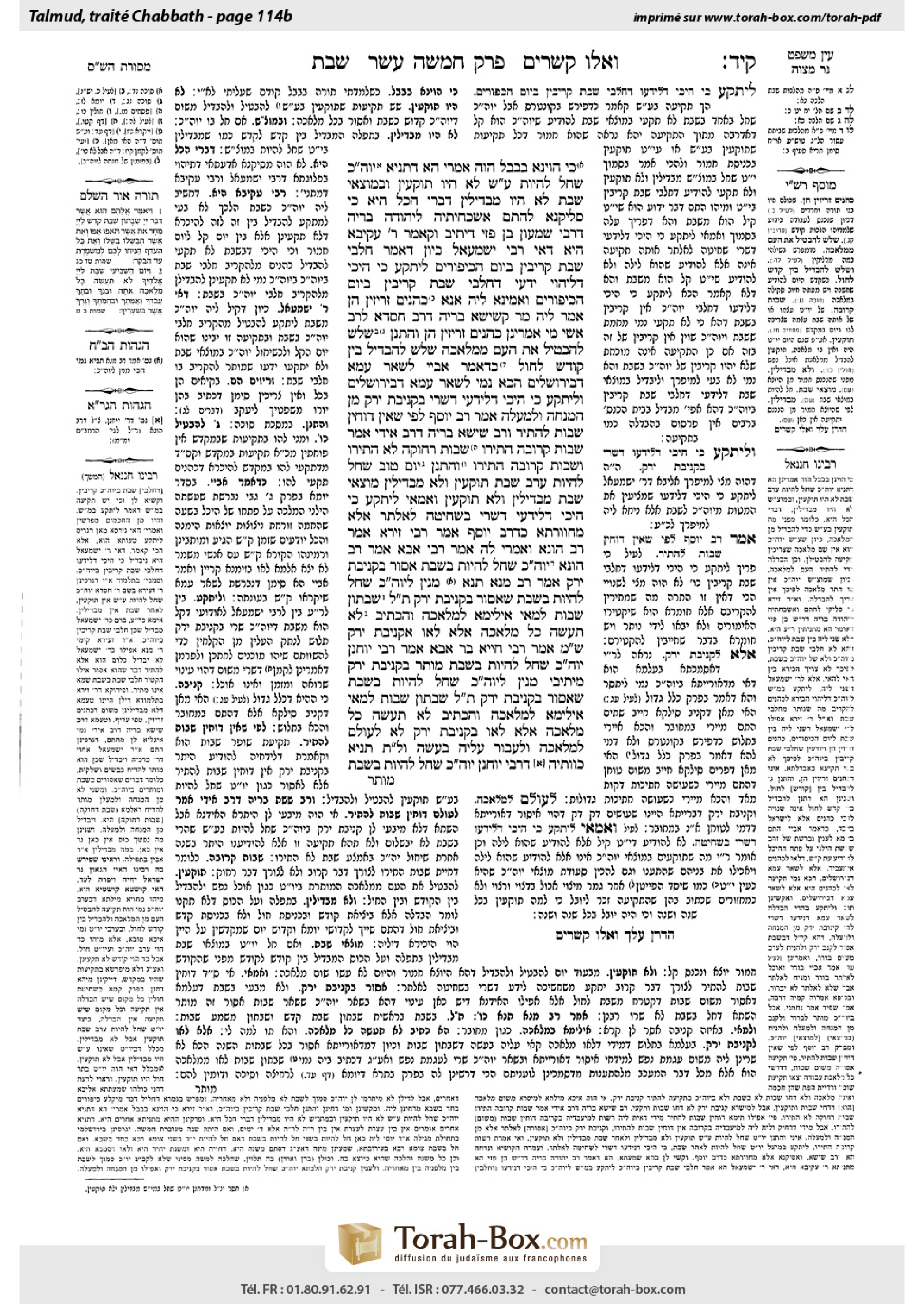
Shabbat 114b: Talmud study for Daf Yomi
Daf Yomi is the daily study of one Talmud folio. Explore 37 tractates with scans, Hebrew text, Sefaria English and AI-generated French translations where annotated.
Passage selection and English or AI-generated French translation are available where the scan has annotations. Daf Study is independent of Torah-Box and Sefaria.
Browse Shabbat · שבת · All tractatesShabbat 114b text and translations
This page of Shabbat includes the Aramaic text, an English translation and an AI-generated French translation, alongside the scan above.
שבת קי״ד ב · Aramaic and Hebrew text
כִּי הֲוֵינָא בְּבָבֶל הֲוָה אָמְרִינַן: הָא דְּתַנְיָא יוֹם הַכִּיפּוּרִים שֶׁחָל לִהְיוֹת עֶרֶב שַׁבָּת — לֹא הָיוּ תּוֹקְעִין, וּבְמוֹצָאֵי שַׁבָּת — לֹא הָיוּ מַבְדִּילִין, דִּבְרֵי הַכֹּל הִיא. כִּי סְלֵיקְנָא לְהָתָם, אַשְׁכְּחִיתֵיהּ לִיהוּדָה בְּרֵיהּ דְּרַבִּי שִׁמְעוֹן בֶּן פַּזִּי דְּיָתֵיב וְקָאָמַר: רַבִּי עֲקִיבָא הִיא, דְּאִי רַבִּי יִשְׁמָעֵאל, כֵּיוָן דְּאָמַר חֶלְבֵי שַׁבָּת קְרֵיבִין בְּיוֹם הַכִּיפּוּרִים, לִיתְקַע, כִּי הֵיכִי דְּלֶיהְוֵי יָדְעִי דְּחֶלְבֵי שַׁבָּת קְרֵיבִין בְּיוֹם הַכִּיפּוּרִים. וְאָמֵינָא לֵיהּ אֲנָא: כֹּהֲנִים זְרִיזִין הֵן.
אֲמַר לֵיהּ מָר קַשִּׁישָׁא בְּרֵיהּ דְּרַב חִסְדָּא לְרַב אָשֵׁי: מִי אָמְרִינַן כֹּהֲנִים זְרִיזִין הֵן? וְהָתְנַן: שָׁלֹשׁ לְהַבְטִיל אֶת הָעָם מִמְּלָאכָה, שָׁלֹשׁ לְהַבְדִּיל בֵּין קוֹדֶשׁ לְחוֹל. כְּדַאֲמַר אַבָּיֵי: לִשְׁאָר עַמָּא דְּבִירוּשְׁלֶם, הָכָא נָמֵי לִשְׁאָר עַמָּא דְּבִירוּשְׁלֶם.
וְלִיתְקַע, כִּי הֵיכִי דְּלִידְּעוּ דִּשְׁרֵי בִּקְנִיבַת יָרָק מִן הַמִּנְחָה וּלְמַעְלָה. אָמַר רַב יוֹסֵף: לְפִי שֶׁאֵין דּוֹחִין שְׁבוּת לְהַתִּיר.
וְרַב שִׁישָׁא בְּרֵיהּ דְּרַב אִידִי אָמַר: שְׁבוּת קְרוֹבָה — הִתִּירוּ, שְׁבוּת רְחוֹקָה — לֹא הִתִּירוּ.
וּשְׁבוּת קְרוֹבָה הִתִּירוּ? וְהָתְנַן: יוֹם טוֹב שֶׁחָל לִהְיוֹת עֶרֶב שַׁבָּת — תּוֹקְעִין וְלֹא מַבְדִּילִין. מוֹצָאֵי שַׁבָּת — מַבְדִּילִין וְלֹא תּוֹקְעִין. וְאַמַּאי? לִיתְקַע, כִּי הֵיכִי דְּלִידְּעוּ דִּשְׁרֵי בִּשְׁחִיטָה לְאַלְתַּר! אֶלָּא מְחַוַּורְתָּא כִּדְרַב יוֹסֵף.
אָמַר רַבִּי זֵירָא אָמַר רַב הוּנָא, וְאָמְרִי לַהּ אָמַר רַבִּי אַבָּא אָמַר רַב הוּנָא: יוֹם הַכִּיפּוּרִים שֶׁחָל לִהְיוֹת בְּשַׁבָּת — אָסוּר בִּקְנִיבַת יָרָק. אָמַר רַב מָנָא, תָּנָא: מִנַּיִן לְיוֹם הַכִּיפּוּרִים שֶׁחָל לִהְיוֹת בְּשַׁבָּת שֶׁאָסוּר בִּקְנִיבַת יָרָק — תַּלְמוּד לוֹמַר: ״שַׁבָּתוֹן״, שְׁבוּת. לְמַאי? אִילֵימָא לִמְלָאכָה — וְהָכְתִיב: ״לֹא תַעֲשֶׂה כׇל מְלָאכָה״! אֶלָּא לָאו, אַקְּנִיבַת יָרָק! שְׁמַע מִינַּהּ.
אָמַר רַבִּי חִיָּיא בַּר אַבָּא אָמַר רַבִּי יוֹחָנָן: יוֹם הַכִּיפּוּרִים שֶׁחָל לִהְיוֹת בְּשַׁבָּת — מוּתָּר בִּקְנִיבַת יָרָק. מֵיתִיבִי: מִנַּיִן לְיוֹם הַכִּיפּוּרִים שֶׁחָל לִהְיוֹת בְּשַׁבָּת שֶׁאָסוּר בִּקְנִיבַת יָרָק — תַּלְמוּד לוֹמַר: ״שַׁבָּתוֹן״, שְׁבוּת. לְמַאי? אִילֵימָא לִמְלָאכָה — וְהָכְתִיב: ״לֹא תַעֲשֶׂה כׇל מְלָאכָה״ אֶלָּא לָאו, בִּקְנִיבַת יָרָק! לָא, לְעוֹלָם לִמְלָאכָה, וְלַעֲבוֹר עָלֶיהָ בַּ״עֲשֵׂה״ וְ״לֹא תַעֲשֶׂה״.
תַּנְיָא כְּווֹתֵיהּ דְּרַבִּי יוֹחָנָן: יוֹם הַכִּיפּוּרִים שֶׁחָל לִהְיוֹת בְּשַׁבָּת
Shabbat 114b · English translation
When I was in Babylonia, I said with regard to that which was taught in a baraita: If Yom Kippur occurred on Shabbat eve, they would not sound the shofar as they did every Friday to herald the start of Shabbat; and if Yom Kippur occurred at the conclusion of Shabbat, they would not recite havdala to mark the end of the sanctity of Shabbat and the start of the sanctity of Yom Kippur, is a statement accepted by all. When I went to Eretz Yisrael, I found Yehuda, son of Rabbi Shimon ben Pazi, who sat and said: This baraita is in accordance with the opinion of Rabbi Akiva, as it equates the sanctity of Yom Kippur with that of Shabbat. As, if you say that it is in accordance with the opinion of Rabbi Yishmael, then, since Rabbi Yishmael said that fats from Shabbat are offered on Yom Kippur, let them sound the shofar so that the priests will know that the fats from Shabbat are offered on Yom Kippur and they may begin offering them (Rav Hai Gaon). And I said to him: You cannot prove this from here, because priests are vigilant and can be trusted to know this on their own, and there is no need to sound the shofar.
Mar Kashisha, the son of Rav Ḥisda, said to Rav Ashi: Do we say that priests are vigilant in that regard? Didn’t we learn in a mishna that three blasts were sounded in the Temple on Friday to stop the people from work, and three more were sounded to demarcate between sacred and profane? Apparently, even priests required the blasts to alert them to the beginning and end of Shabbat. The Gemara answers: As Abaye said in a different context, that certain matters were undertaken for the rest of the people in Jerusalem, so too here, these blasts were sounded for the rest of the people in Jerusalem and not for the priests.
The Gemara asks: In any event, Let them sound the shofar so that they will know that trimming the vegetables, i.e., removing the leaf heads from vegetables in preparation for cutting them, is permitted from the late afternoon and onward. On Yom Kippur, it is permitted, starting at a certain point of the day, to prepare vegetables for the meal following the fast. However, this is not permitted on Shabbat, when it is prohibited to perform any action in preparation for the weekdays after Shabbat. Rav Yosef said: This is because a rabbinic prohibition [shevut] is not overridden in order to permit another action. Although sounding the shofar is not prohibited by Torah law on Shabbat, it is prohibited by rabbinic law on Shabbat and Yom Kippur, and this prohibition is not overridden to permit another action.
And Rav Sheisha, son of Rav Idi, said: The Sages permitted doing so for an immediate rabbinic prohibition, e.g., sounding the shofar to permit prohibited actions immediately. They did not permit doing so for a more remote rabbinic prohibition, such as trimming vegetables, which is allowed only beginning late in the afternoon, several hours after the start of Yom Kippur (Rabbeinu Ḥananel).
The Gemara asks: And did they permit doing so for an immediate rabbinic prohibition? Didn’t we learn in a mishna that if a Festival occurs on Shabbat eve, one sounds the shofar to announce that Shabbat has begun, but one does not recite havdala over wine to mark the conclusion of the Festival, because the sanctity of Shabbat is greater than the sanctity of the Festival? And if a Festival occurs at the conclusion of Shabbat, one recites havdala to demarcate between the sanctity of Shabbat and the sanctity of the Festival, but one does not sound the shofar. And why does one not sound the shofar? Let them sound the shofar at the beginning of the Festival, so that people will know that slaughtering is permitted immediately on the Festival, although it was prohibited on Shabbat. Rather, it is clear that this must be explained in accordance with the opinion of Rav Yosef, who says that a rabbinic prohibition is not overridden to permit the performance of actions that were prohibited.
With regard to trimming vegetables on Yom Kippur, the Gemara cites that which Rabbi Zeira said that Rav Huna said, and some say Rabbi Abba said that Rav Huna said: If Yom Kippur occurs on Shabbat, trimming vegetables is prohibited. Rav Mana said: It was taught in a baraita: From where is it derived that on Yom Kippur that occurs on Shabbat trimming vegetables is prohibited? The verse states: “A solemn rest [shabbaton], a holy Shabbat unto the Lord” (Exodus 16:23), which means that there is an obligation to issue a rabbinic prohibition on this day. Issue a rabbinic prohibition for what activity? If you say this refers to prohibiting actual labor, isn’t it written explicitly: “But the seventh day is Shabbat for the Lord your God; you shall not perform any labor” (Exodus 20:9)? Rather, does it not refer to trimming vegetables, which is prohibited on Shabbat even though it is not a full-fledged prohibited labor? The Gemara concludes: Indeed, learn from it that trimming vegetables is prohibited.
Rabbi Ḥiyya bar Abba said that Rabbi Yoḥanan said: If Yom Kippur occurs on Shabbat, trimming vegetables is permitted. The Gemara raised an objection from what we learned in the baraita cited earlier: From where is it derived that on Yom Kippur that occurs on Shabbat trimming vegetables is prohibited? The verse states: “A solemn rest [shabbaton], a holy Shabbat unto the Lord” (Exodus 16:23), which means that there is an obligation to issue a rabbinic prohibition on this day. Issue a rabbinic prohibition for what activity? If you say this refers to prohibiting actual labor, isn’t it written explicitly: “But the seventh day is Shabbat for the Lord your God; you shall not perform any labor” (Exodus 20:9)? Rather, is it not referring to trimming vegetables, which is prohibited on Shabbat? The Gemara answers: No, that is not; rather, solemn rest actually refers to labor. It is a positive commandment to rest on Shabbat. Although the verse says explicitly: “But the seventh day is Shabbat for the Lord your God; you shall not perform any labor,” this adds that one who performs a prohibited labor violates both a positive mitzva and a prohibition.
It was taught in a baraita in accordance with the opinion of Rabbi Yoḥanan: If Yom Kippur occurs on Shabbat,
Shabbat 114b · Traduction française (IA)
Lorsque j’étais en Babylonie, j’ai dit, au sujet de ce qui a été enseigné dans une baraïta — si Yom Kippour tombait la veille de Chabbat, on ne sonnait pas du chofar comme chaque vendredi pour annoncer le début de Chabbat, et si Yom Kippour tombait à la fin de Chabbat, on ne récitait pas la havdala pour marquer la fin de la sainteté de Chabbat et le début de celle de Yom Kippour — que cette affirmation était admise par tous. Lorsque je suis allé en Eretz Israël, j’ai trouvé Yehuda, fils de Rabbi Shimon ben Pazi, assis et disant que cette baraïta était conforme à l’opinion de Rabbi Akiva, puisqu’elle assimile la sainteté de Yom Kippour à celle de Chabbat. En effet, si tu dis qu’elle est conforme à l’opinion de Rabbi Yishmael, alors, puisque Rabbi Yishmael a dit que les graisses des sacrifices de Chabbat sont offertes à Yom Kippour, qu’ils sonnent du chofar afin que les prêtres sachent que ces graisses sont offertes à Yom Kippour et puissent commencer à les offrir (Rav Hai Gaon). Je lui ai répondu : tu ne peux pas le prouver à partir de là, car les prêtres sont vigilants et peuvent le savoir par eux-mêmes ; il n’est donc pas nécessaire de sonner du chofar.
Mar Kashisha, fils de Rav Ḥisda, dit à Rav Ashi : Disons-nous que les prêtres sont vigilants à cet égard ? N’avons-nous pas appris dans une Michna que trois sonneries étaient faites dans le Temple le vendredi pour faire cesser le travail du peuple, puis trois autres pour marquer la séparation entre le sacré et le profane ? Il apparaît donc que même les prêtres avaient besoin de ces sonneries pour être avertis du début et de la fin de Chabbat. La Guemara répond : comme Abaye l’a dit dans un autre contexte, à savoir que certaines mesures étaient prises pour le reste de la population de Jérusalem, de même ici, ces sonneries étaient faites pour le reste de la population de Jérusalem, et non pour les prêtres.
La Guemara demande : Quoi qu’il en soit, qu’ils sonnent du chofar afin que l’on sache qu’il est permis d’équeuter les légumes — c’est-à-dire d’en retirer les extrémités feuillues avant de les couper — à partir de la fin de l’après-midi. À Yom Kippour, il est permis, à partir d’un certain moment de la journée, de préparer les légumes pour le repas qui suit le jeûne. Cependant, cela n’est pas permis à Chabbat, où il est interdit d’accomplir une action en vue des jours de semaine qui suivent Chabbat. Rav Yosef dit : c’est parce qu’une interdiction rabbinique [shevut] n’est pas écartée pour permettre une autre action. Bien que sonner du chofar ne soit pas interdit par la Torah à Chabbat, cela est interdit par décret rabbinique à Chabbat et à Yom Kippour, et cette interdiction n’est pas écartée pour permettre une autre action.
Et Rav Sheisha, fils de Rav Idi, dit : les Sages l’ont permis pour une interdiction rabbinique immédiate, par exemple sonner du chofar afin de permettre aussitôt des actions interdites. Ils ne l’ont pas permis pour une interdiction rabbinique plus éloignée, comme l’équeutage des légumes, qui n’est autorisé qu’à partir de la fin de l’après-midi, plusieurs heures après le début de Yom Kippour (Rabbeinu Ḥananel).
La Guemara demande : Et l’ont-ils permis pour une interdiction rabbinique immédiate ? N’avons-nous pas appris dans une Michna que, si un jour de fête tombe la veille de Chabbat, on sonne du chofar pour annoncer que Chabbat a commencé, mais on ne récite pas la havdala sur le vin pour marquer la fin du jour de fête, car la sainteté de Chabbat est supérieure à celle du jour de fête ? Et si un jour de fête tombe à la fin de Chabbat, on récite la havdala pour marquer la séparation entre la sainteté de Chabbat et celle du jour de fête, mais on ne sonne pas du chofar. Pourquoi ne sonne-t-on pas du chofar ? Qu’ils sonnent du chofar au début du jour de fête, afin que les gens sachent que l’abattage rituel est immédiatement permis ce jour-là, alors qu’il était interdit à Chabbat. Il est donc clair qu’il faut plutôt expliquer cela conformément à l’opinion de Rav Yosef, qui dit qu’une interdiction rabbinique n’est pas écartée pour permettre l’accomplissement d’actions interdites.
Au sujet de l’équeutage des légumes à Yom Kippour, la Guemara rapporte ce que Rabbi Zeira a dit au nom de Rav Huna — et certains disent que Rabbi Abba l’a dit au nom de Rav Huna : si Yom Kippour tombe à Chabbat, il est interdit d’équeuter les légumes. Rav Mana dit : il a été enseigné dans une baraïta : d’où apprend-on que, si Yom Kippour tombe à Chabbat, il est interdit d’équeuter les légumes ? Le verset dit : « Un repos solennel [shabbaton], un saint Chabbat pour le Seigneur » (Exode 16, 23), ce qui signifie qu’il y a l’obligation d’édicter une interdiction rabbinique pour ce jour. Quelle activité faut-il ainsi interdire par décret rabbinique ? Si tu dis qu’il s’agit d’interdire les travaux proprement dits, n’est-il pas écrit explicitement : « Mais le septième jour est un Chabbat pour le Seigneur ton Dieu ; tu n’accompliras aucun travail » (Exode 20, 9) ? Ne s’agit-il pas plutôt de l’équeutage des légumes, qui est interdit à Chabbat bien qu’il ne constitue pas un travail interdit à part entière ? La Guemara conclut : en effet, déduis-en que l’équeutage des légumes est interdit.
Rabbi Ḥiyya bar Abba a dit au nom de Rabbi Yoḥanan : si Yom Kippour tombe à Chabbat, il est permis d’équeuter les légumes. La Guemara soulève une objection à partir de ce que nous avons appris dans la baraïta citée précédemment : d’où apprend-on que, si Yom Kippour tombe à Chabbat, il est interdit d’équeuter les légumes ? Le verset dit : « Un repos solennel [shabbaton], un saint Chabbat pour le Seigneur » (Exode 16, 23), ce qui signifie qu’il y a l’obligation d’édicter une interdiction rabbinique pour ce jour. Quelle activité faut-il ainsi interdire par décret rabbinique ? Si tu dis qu’il s’agit d’interdire les travaux proprement dits, n’est-il pas écrit explicitement : « Mais le septième jour est un Chabbat pour le Seigneur ton Dieu ; tu n’accompliras aucun travail » (Exode 20, 9) ? Ne s’agit-il pas plutôt de l’équeutage des légumes, qui est interdit à Chabbat ? La Guemara répond : non, il ne s’agit pas de cela ; le repos solennel désigne en réalité le travail. C’est un commandement positif de se reposer à Chabbat. Bien que le verset dise explicitement : « Mais le septième jour est un Chabbat pour le Seigneur ton Dieu ; tu n’accompliras aucun travail », il ajoute que celui qui accomplit un travail interdit transgresse à la fois une mitsva positive et une interdiction.
Il a été enseigné dans une baraïta conformément à l’opinion de Rabbi Yoḥanan : si Yom Kippour tombe à Chabbat,
Traduction française générée par IA à partir de l’édition anglaise de Sefaria. Vérifie toujours un passage avec le texte source.
Text from Sefaria: William Davidson Edition - Vocalized Aramaic (CC BY NC); William Davidson Edition - English (CC BY NC).