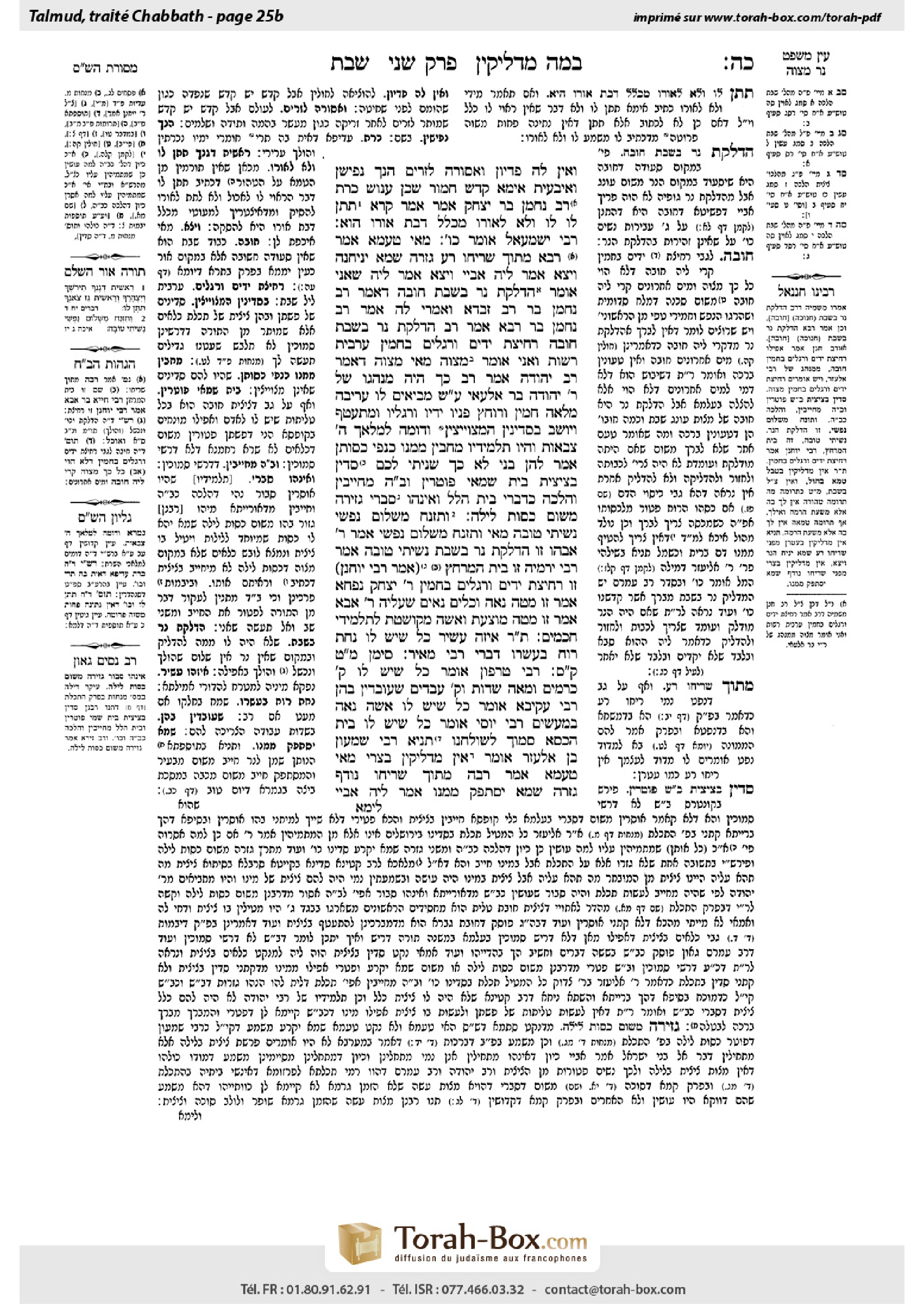
Shabbat 25b: Talmud study for Daf Yomi
Daf Yomi is the daily study of one Talmud folio. Explore 37 tractates with scans, Hebrew text, Sefaria English and AI-generated French translations where annotated.
Passage selection and English or AI-generated French translation are available where the scan has annotations. Daf Study is independent of Torah-Box and Sefaria.
Browse Shabbat · שבת · All tractatesShabbat 25b text and translations
This page of Shabbat includes the Aramaic text, an English translation and an AI-generated French translation, alongside the scan above.
שבת כ״ה ב · Aramaic and Hebrew text
וְאֵין לָהּ פִּדְיוֹן, וַאֲסוּרָה לְזָרִים. הָנָךְ נְפִישָׁן.
וְאִיבָּעֵית אֵימָא: קֹדֶשׁ חָמוּר שֶׁכֵּן עָנוּשׁ כָּרֵת. רַב נַחְמָן בַּר יִצְחָק אָמַר, אָמַר קְרָא: ״תִּתֵּן לוֹ״. ״לוֹ״ — וְלֹא לְאוּרוֹ. מִכְּלָל דְּבַת אוּרוֹ הוּא.
רַבִּי יִשְׁמָעֵאל אוֹמֵר כּוּ׳: מַאי טַעְמָא? אָמַר רָבָא: מִתּוֹךְ שֶׁרֵיחוֹ רַע גְּזֵרָה שֶׁמָּא יַנִּיחֶנָּה וְיֵצֵא. אֲמַר לֵיהּ אַבָּיֵי: וְיֵצֵא! אֲמַר לֵיהּ: שֶׁאֲנִי אוֹמֵר הַדְלָקַת נֵר בְּשַׁבָּת חוֹבָה. דְּאָמַר רַב נַחְמָן בַּר רַב זַבְדָּא, וְאָמְרִי לַהּ אָמַר רַב נַחְמָן בַּר רָבָא אָמַר רַב: הַדְלָקַת נֵר בְּשַׁבָּת חוֹבָה, רְחִיצַת יָדַיִם וְרַגְלַיִם בְּחַמִּין עַרְבִית, רְשׁוּת. וַאֲנִי אוֹמֵר: מִצְוָה.
מַאי מִצְוָה? דְּאָמַר רַב יְהוּדָה אָמַר רַב: כָּךְ הָיָה מִנְהָגוֹ שֶׁל רַבִּי יְהוּדָה בַּר אִלְעַאי, עֶרֶב שַׁבָּת מְבִיאִים לוֹ עֲרֵיבָה מְלֵאָה חַמִּין וְרוֹחֵץ פָּנָיו יָדָיו וְרַגְלָיו וּמִתְעַטֵּף, וְיוֹשֵׁב בִּסְדִינִין הַמְצוּיָּיצִין, וְדוֹמֶה לְמַלְאַךְ ה׳ צְבָאוֹת. וְהָיוּ תַּלְמִידָיו מְחַבִּין מִמֶּנּוּ כַּנְפֵי כְסוּתָן. אָמַר לָהֶן: בָּנַי, לֹא כָּךְ שָׁנִיתִי לָכֶם: סָדִין בְּצִיצִית, בֵּית שַׁמַּאי פּוֹטְרִין וּבֵית הִלֵּל מְחַיְּיבִין — וַהֲלָכָה כְּדִבְרֵי בֵּית הִלֵּל. וְאִינְהוּ סָבְרִי, גְּזֵירָה מִשּׁוּם כְּסוּת לַיְלָה.
״וַתִּזְנַח מִשָּׁלוֹם נַפְשִׁי נָשִׁיתִי טוֹבָה״. מַאי ״וַתִּזְנַח מִשָּׁלוֹם נַפְשִׁי״ — אָמַר רַבִּי אֲבָהוּ: זוֹ הַדְלָקַת נֵר בְּשַׁבָּת. ״נָשִׁיתִי טוֹבָה״ — אָמַר רַבִּי יִרְמְיָה: זוֹ בֵּית הַמֶּרְחָץ. אָמַר רַבִּי יוֹחָנָן זוֹ רְחִיצַת יָדַיִם וְרַגְלַיִם בְּחַמִּין. רַבִּי יִצְחָק נַפָּחָא אָמַר: זוֹ מִטָּה נָאָה וְכֵלִים נָאִים שֶׁעָלֶיהָ. רַבִּי אַבָּא אָמַר: זוֹ מִטָּה מוּצַּעַת וְאִשָּׁה מְקוּשֶּׁטֶת לְתַלְמִידֵי חֲכָמִים.
תָּנוּ רַבָּנַן: אֵיזֶהוּ עָשִׁיר? — כׇּל שֶׁיֵּשׁ לוֹ נַחַת רוּחַ בְּעׇשְׁרוֹ, דִּבְרֵי רַבִּי מֵאִיר. סִימָן מטק״ס. רַבִּי טַרְפוֹן אוֹמֵר: כׇּל שֶׁיֵּשׁ לוֹ מֵאָה כְּרָמִים וּמֵאָה שָׂדוֹת וּמֵאָה עֲבָדִים שֶׁעוֹבְדִין בָּהֶן. רַבִּי עֲקִיבָא אוֹמֵר: כֹּל שֶׁיֵּשׁ לוֹ אִשָּׁה נָאָה בְּמַעֲשִׂים. רַבִּי יוֹסֵי אוֹמֵר: כֹּל שֶׁיֵּשׁ לוֹ בֵּית הַכִּסֵּא סָמוּךְ לְשׁוּלְחָנוֹ.
תַּנְיָא רַבִּי שִׁמְעוֹן בֶּן אֶלְעָזָר אוֹמֵר: אֵין מַדְלִיקִין בִּצְרִי. מַאי טַעְמָא? — אָמַר רַבָּה: מִתּוֹךְ שֶׁרֵיחוֹ נוֹדֵף גְּזֵרָה שֶׁמָּא יִסְתַּפֵּק מִמֶּנּוּ. אֲמַר לֵיהּ אַבָּיֵי:
Shabbat 25b · English translation
And, teruma does not have the possibility of pidyon: redemption, as, once it is sanctified, it may not be redeemed and rendered non-sacred. And it is prohibited to zarim: non-priests may not eat it. These stringencies do not apply to consecrated items. The Gemara answers: Nevertheless, those stringencies that apply to consecrated items are more numerous than those that apply to teruma. Therefore, it is appropriate to be more stringent with consecrated items and exclude impure teruma from the prohibition against deriving benefit when burning it.
And if you wish, say instead a different reason, without counting the number of stringencies: Consecrated items are more stringent because one who eats them while ritually impure is punishable by karet, while in the case of teruma the punishment is death at the hand of Heaven. In this regard, the Torah is more stringent vis-à-vis consecrated items than it is vis-à-vis teruma. Rav Naḥman bar Yitzḥak said that there is a different proof that one is permitted to benefit from teruma while it is burning. As the verse said: “The first fruits of your grain, of your wine, and of your oil, and the first of the fleece of your sheep shall you give him” (Deuteronomy 18:4). The Sages derived from this verse: Give the priest teruma that is ritually pure, that is fit for him to consume, and do not give the priest teruma that is suitable only for his fire, to be burned. By inference, ritually impure teruma is suitable for his fire, i.e., a priest may derive benefit from it.
We learned in the mishna that Rabbi Yishmael says that kindling a lamp on Shabbat with tar is prohibited. The Gemara asks: What is the reason for this? Rava said: Because its odor is bad the Sages issued a decree prohibiting the use of tar, lest one forsake the light and leave. Abaye said to him: And let him leave. What obligation is there to sit next to the light? Rava said to him: Because I say that kindling Shabbat lights is an obligation, and one is required to eat specifically by that light in deference to Shabbat. As Rav Naḥman bar Rav Zavda said, and others say that it was Rav Naḥman bar Rava who said that Rav said: Kindling the Shabbat lamps is an obligation, whereas washing one’s hands and feet with hot water in the evening prior to Shabbat is merely optional. And I say: Washing is not merely optional; it is a mitzva even though it is not an obligation.
The Gemara asks: What mitzva is there? The Gemara explains that Rav Yehuda said that Rav said: This was the custom of Rabbi Yehuda bar Elai: On Shabbat eve, they would bring him a bowl full of hot water and he would use it to wash his face, hands, and feet, and he would wrap himself, and sit in linen cloaks with ritual fringes, and he was like an angel of the Lord of hosts. He did all this in deference to Shabbat. And the Gemara relates that his students, who also sat wrapped in linen cloaks, would conceal the corners of their garments from him so that he would not see that they did not have ritual fringes on their garments. He said to them: My sons, did I not teach you with regard to the obligation to attach ritual fringes to a linen cloak: Beit Shammai exempt the linen sheet because at least part of the ritual fringes is always made from wool, and there is a Torah prohibition against a mixture of wool and linen that applies even to ritual fringes? And Beit Hillel obligate linen sheets in the mitzva of ritual fringes, as they hold that the positive mitzva of ritual fringes overrides the prohibition of mixing wool and linen. The halakha is in accordance with the opinion of Beit Hillel, and therefore the sheets require ritual fringes. And the students held: Although it is permitted by Torah law to attach ritual fringes to a linen garment, the Sages issued a decree that one may not do so due to garments worn at night. The Sages were concerned lest a person wear this cloak at night. Since one is not obligated in the mitzva of ritual fringes at night, he would be wearing the prohibited mixture of wool and linen at a time when he is not fulfilling the mitzva of ritual fringes. Therefore, attaching ritual fringes made of wool to a linen garment is prohibited, even to a garment worn during the day.
Since bathing as preparation for enjoyment of Shabbat was discussed, the Gemara cites the homiletic interpretation of the verse describing those heading into exile: “And my soul is removed far off from peace, I forgot prosperity” (Lamentations 3:17). What is: And my soul is removed far off from peace? Rabbi Abbahu said: That is the lack of opportunity to engage in kindling the Shabbat lights, which a refugee is unable to do. I forgot prosperity, Rabbi Yirmeya said: That is the lack of opportunity to bathe in the bathhouse. Rabbi Yoḥanan said: That is the lack of opportunity to engage in washing one’s hands and feet in hot water. Rabbi Yitzḥak Nappaḥa said: Prosperity is a pleasant bed and the pleasant bedclothes that are on it, which are not available in exile. Rabbi Abba said: That is a made bed, and a wife adorned, i.e., worthy of and suitable (Rashba) for Torah scholars.
Incidental to the discussion of prosperity, the Gemara mentions that on a similar topic, the Sages taught: Who is wealthy? Anyone who gets pleasure from his wealth, that is the statement of Rabbi Meir. The letters mem (Meir), tet (Tarfon), kuf (Akiva), samekh (Yosei) are a mnemonic for the tannaim who expressed opinions on this matter. Rabbi Tarfon says: A wealthy person is anyone who has one hundred vineyards, and one hundred fields, and one hundred slaves working in them. Rabbi Akiva says: Anyone who has a wife whose actions are pleasant. Rabbi Yosei says: Anyone who has a bathroom close to his table.
It was taught in a baraita that Rabbi Shimon ben Elazar says: One may not light on Shabbat with sap from balsam trees [tzori]. The Gemara asks: What is the reason for this? Rabba said: Since its pleasant smell diffuses, the Sages were concerned lest one forget and come to take some sap from it on Shabbat. That is tantamount to extinguishing the lamp, as removing oil from a burning lamp curtails the amount of time that it will burn. Abaye said to him:
Shabbat 25b · Traduction française (IA)
Et la terouma ne peut pas faire l’objet d’un pidyon, c’est-à-dire d’un rachat : une fois consacrée, elle ne peut pas être rachetée et redevenir profane. De plus, il est interdit aux zarim, c’est-à-dire aux non-prêtres, d’en manger. Ces rigueurs ne s’appliquent pas aux biens consacrés. La Guemara répond : néanmoins, les rigueurs qui s’appliquent aux biens consacrés sont plus nombreuses que celles qui s’appliquent à la terouma. Il convient donc d’être plus strict à l’égard des biens consacrés et d’exclure la terouma impure de l’interdiction de tirer profit de sa combustion.
Et si tu le souhaites, donne une autre raison, sans compter le nombre de rigueurs : les biens consacrés sont soumis à une règle plus stricte, car celui qui en mange alors qu’il est rituellement impur est passible de karet, tandis que, dans le cas de la terouma, la peine est la mort infligée par le Ciel. À cet égard, la Torah est plus stricte envers les biens consacrés qu’envers la terouma. Rav Naḥman bar Yitzḥak dit qu’une autre preuve montre qu’il est permis de tirer profit de la terouma pendant sa combustion. En effet, le verset dit : « Les prémices de ton blé, de ton vin et de ton huile, ainsi que les prémices de la toison de tes brebis, tu les lui donneras » (Deutéronome 18:4). Les Sages ont déduit de ce verset : donne au prêtre une terouma rituellement pure, qu’il peut consommer, et ne lui donne pas une terouma qui ne convient qu’à être brûlée pour son feu. On en déduit que la terouma rituellement impure convient à son feu, c’est-à-dire qu’un prêtre peut en tirer profit.
Nous avons appris dans la Michna que Rabbi Yishmael dit qu’il est interdit d’allumer une lampe pendant Chabbat avec du goudron. La Guemara demande : quelle en est la raison ? Rava dit : parce que son odeur est mauvaise, les Sages ont décrété qu’il est interdit d’utiliser du goudron, de peur qu’on abandonne la lumière et qu’on s’en aille. Abaye lui dit : « Et qu’il s’en aille ! Quelle obligation y a-t-il à rester assis près de la lumière ? » Rava lui dit : « Parce que je dis que l’allumage des lumières de Chabbat est une obligation, et qu’il faut manger précisément à cette lumière, en l’honneur de Chabbat. » Comme l’a dit Rav Naḥman bar Rav Zavda — d’autres disent que c’est Rav Naḥman bar Rava qui l’a dit — au nom de Rav : « L’allumage des lampes de Chabbat est une obligation, tandis que se laver les mains et les pieds à l’eau chaude le soir, avant Chabbat, est seulement facultatif. » Et moi, je dis que ce n’est pas seulement facultatif : c’est une mitsva, même si ce n’est pas une obligation.
La Guemara demande : quelle mitsva y a-t-il ? La Guemara explique que Rav Yehuda a dit au nom de Rav : telle était la coutume de Rabbi Yehuda bar Elai : la veille de Chabbat, on lui apportait un bassin rempli d’eau chaude, avec laquelle il se lavait le visage, les mains et les pieds ; puis il s’enveloppait et s’asseyait vêtu de manteaux de lin munis de franges rituelles, et il ressemblait à un ange du Seigneur des armées. Il faisait tout cela en l’honneur de Chabbat. La Guemara rapporte que ses élèves, qui étaient eux aussi assis enveloppés dans des manteaux de lin, en dissimulaient les coins pour qu’il ne voie pas que leurs vêtements n’étaient pas munis de franges rituelles. Il leur dit : « Mes fils, ne vous ai-je pas enseigné, au sujet de l’obligation de fixer des franges rituelles à un vêtement de lin, que Beit Shammaï dispense le drap de lin, car au moins une partie des franges rituelles est toujours en laine, et qu’il existe une interdiction de la Torah concernant le mélange de laine et de lin, qui s’applique même aux franges rituelles ? Beit Hillel, quant à lui, soumet les draps de lin à la mitsva des franges rituelles, car ses membres considèrent que la mitsva positive des franges rituelles l’emporte sur l’interdiction de mélanger laine et lin. La halakha suit l’opinion de Beit Hillel ; les draps doivent donc être munis de franges rituelles. » Les élèves, eux, estimaient que, bien que la Torah permette de fixer des franges rituelles à un vêtement de lin, les Sages l’avaient interdit par décret, en raison des vêtements portés la nuit. Les Sages craignaient qu’une personne porte ce manteau la nuit. Comme on n’est pas tenu d’accomplir la mitsva des franges rituelles la nuit, elle porterait alors le mélange interdit de laine et de lin à un moment où elle n’accomplirait pas cette mitsva. C’est pourquoi il est interdit de fixer des franges rituelles en laine à un vêtement de lin, même s’il est porté le jour.
À propos du bain pris en préparation au plaisir de Chabbat, la Guemara cite l’interprétation homilétique du verset décrivant ceux qui partent en exil : « Mon âme est éloignée de la paix, j’ai oublié le bonheur » (Lamentations 3:17). Que signifie : « Mon âme est éloignée de la paix » ? Rabbi Abbahu dit : cela désigne l’impossibilité d’allumer les lumières de Chabbat, dont un réfugié est privé. « J’ai oublié le bonheur » : Rabbi Yirmeya dit que cela désigne l’impossibilité de se baigner dans un bain public. Rabbi Yoḥanan dit que cela désigne l’impossibilité de se laver les mains et les pieds à l’eau chaude. Rabbi Yitzḥak Nappaḥa dit que le bonheur, c’est un lit agréable et les belles couvertures qui le recouvrent, dont on ne dispose pas en exil. Rabbi Abba dit que cela désigne un lit fait et une épouse parée, c’est-à-dire digne des érudits de la Torah et qui leur convient (Rashba).
À propos du bonheur, la Guemara mentionne que, sur un sujet voisin, les Sages ont enseigné : « Qui est riche ? Celui qui prend plaisir à sa richesse. » Telle est l’opinion de Rabbi Meïr. Les lettres mem (Meïr), tet (Tarfon), kuf (Akiva), samekh (Yosei) forment un moyen mnémotechnique pour les tannaïm qui ont exprimé des opinions sur cette question. Rabbi Tarfon dit : « Est riche celui qui possède cent vignobles, cent champs et cent esclaves qui y travaillent. » Rabbi Akiva dit : « Celui qui a une épouse dont les actes sont agréables. » Rabbi Yosei dit : « Celui qui a des toilettes près de sa table. »
Il a été enseigné dans une baraïta que Rabbi Shimon ben Elazar dit : « Il est interdit d’allumer pendant Chabbat avec la sève des arbres à baume [tzori]. » La Guemara demande : quelle en est la raison ? Rabba dit : comme son agréable odeur se répand, les Sages ont craint qu’on l’oublie et qu’on prélève de cette sève pendant Chabbat. Cela équivaut à éteindre la lampe, car retirer de l’huile d’une lampe allumée réduit la durée pendant laquelle elle brûlera. Abaye lui dit :
Traduction française générée par IA à partir de l’édition anglaise de Sefaria. Vérifie toujours un passage avec le texte source.
Text from Sefaria: William Davidson Edition - Vocalized Aramaic (CC BY NC); William Davidson Edition - English (CC BY NC).