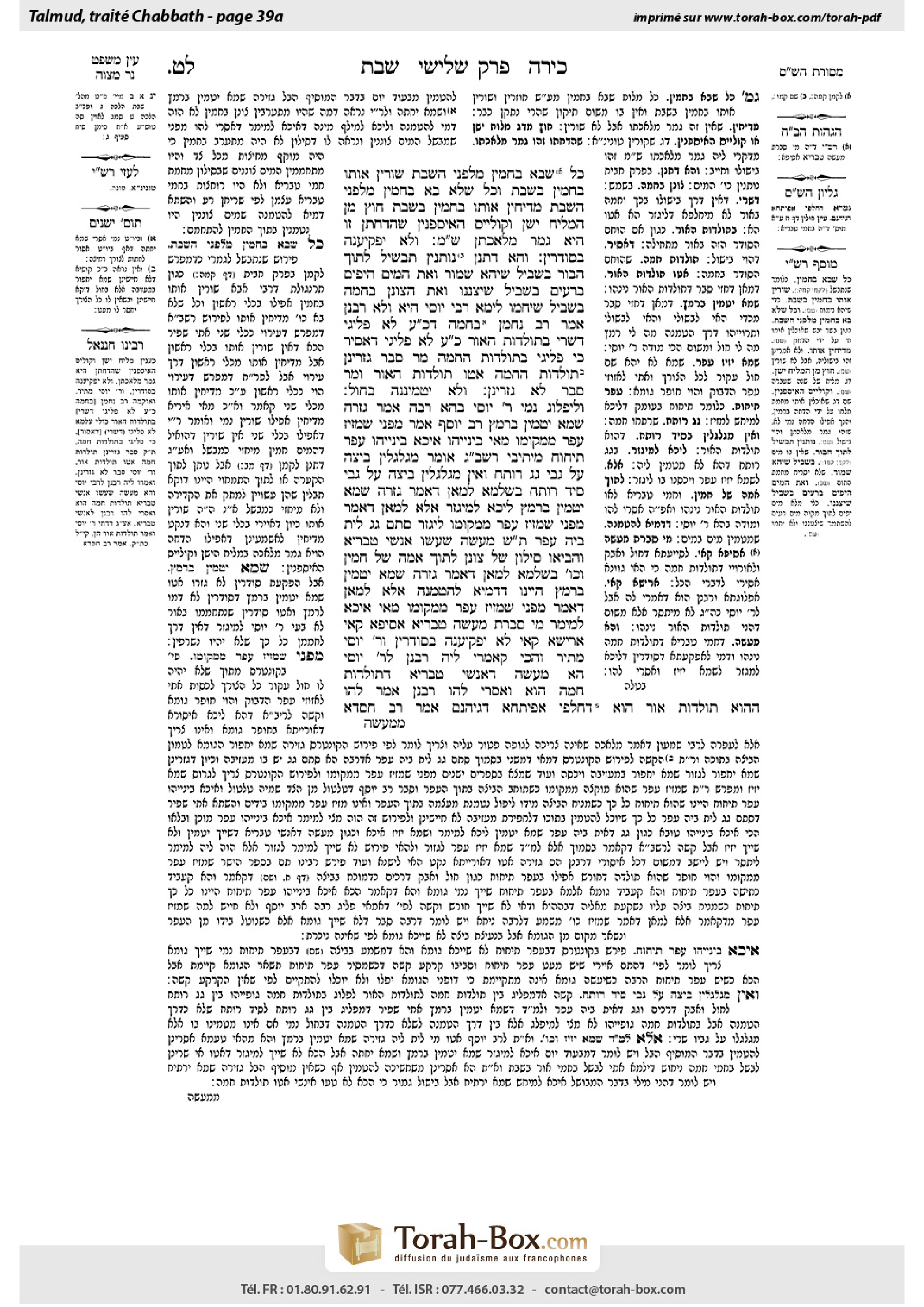
Shabbat 39a: Talmud study for Daf Yomi
Daf Yomi is the daily study of one Talmud folio. Explore 37 tractates with scans, Hebrew text, Sefaria English and AI-generated French translations where annotated.
Passage selection and English or AI-generated French translation are available where the scan has annotations. Daf Study is independent of Torah-Box and Sefaria.
Browse Shabbat · שבת · All tractatesShabbat 39a text and translations
This page of Shabbat includes the Aramaic text, an English translation and an AI-generated French translation, alongside the scan above.
שבת ל״ט א · Aramaic and Hebrew text
כׇּל שֶׁבָּא בְּחַמִּין מִלִּפְנֵי הַשַּׁבָּת — שׁוֹרִין אוֹתוֹ בְּחַמִּין בְּשַׁבָּת, וְכׇל שֶׁלֹּא בָּא בְּחַמִּין מִלִּפְנֵי הַשַּׁבָּת — מְדִיחִין אוֹתוֹ בְּחַמִּין בַּשַּׁבָּת. חוּץ מִן הַמָּלִיחַ יָשָׁן וְקוֹלְיָיס הָאִיסְפָּנִין, שֶׁהַדָּחָתָן זוֹ הִיא גְּמַר מְלַאכְתָּן. שְׁמַע מִינַּהּ.
וְלֹא יַפְקִיעֶנָּה בְּסוּדָרִין: וְהָא דִּתְנַן נוֹתְנִין תַּבְשִׁיל לְתוֹךְ הַבּוֹר בִּשְׁבִיל שֶׁיְּהֵא שָׁמוּר, וְאֶת הַמַּיִם הַיָּפִים בָּרָעִים בִּשְׁבִיל שֶׁיִּצָּנְנוּ, וְאֶת הַצּוֹנֵן בַּחַמָּה בִּשְׁבִיל שֶׁיֵּחַמּוּ — לֵימָא רַבִּי יוֹסֵי הִיא וְלָא רַבָּנַן?
אָמַר רַב נַחְמָן: בְּחַמָּה — דְּכוּלֵּי עָלְמָא לָא פְּלִיגִי דִּשְׁרֵי. בְּתוֹלְדוֹת הָאוּר — כּוּלֵּי עָלְמָא לָא פְּלִיגִי דַּאֲסִיר. כִּי פְּלִיגִי בְּתוֹלְדוֹת הַחַמָּה: מָר סָבַר גָּזְרִינַן תּוֹלְדוֹת הַחַמָּה אַטּוּ תּוֹלְדוֹת הָאוּר, וּמָר סָבַר לָא גָּזְרִינַן.
וְלֹא יַטְמִינֶנָּה בְּחוֹל: וְלִיפְלוֹג נָמֵי רַבִּי יוֹסֵי בְּהָא! רַבָּה אָמַר: גְּזֵרָה שֶׁמָּא יַטְמִין בְּרֶמֶץ. רַב יוֹסֵף אָמַר: מִפְּנֵי שֶׁמֵּזִיז עָפָר מִמְּקוֹמוֹ. מַאי בֵּינַיְיהוּ? אִיכָּא בֵּינַיְיהוּ עָפָר תִּיחוּחַ.
מֵיתִיבִי, רַבָּן שִׁמְעוֹן בֶּן גַּמְלִיאֵל אוֹמֵר: מְגַלְגְּלִין בֵּיצָה עַל גַּבֵּי גַּג רוֹתֵחַ, וְאֵין מְגַלְגְּלִין בֵּיצָה עַל גַּבֵּי סִיד רוֹתֵחַ. בִּשְׁלָמָא לְמַאן דְּאָמַר גְּזֵרָה שֶׁמָּא יַטְמִין בְּרֶמֶץ — לֵיכָּא לְמִיגְזַר. אֶלָּא לְמַאן דְּאָמַר מִפְּנֵי שֶׁמֵּזִיז עָפָר מִמְּקוֹמוֹ, לִיגְזַר? — סְתָם גַּג לֵית בֵּיהּ עָפָר.
תָּא שְׁמַע: מַעֲשֶׂה שֶׁעָשׂוּ אַנְשֵׁי טְבֶרְיָא וְהֵבִיאוּ סִילוֹן שֶׁל צוֹנֵן לְתוֹךְ אַמָּה שֶׁל חַמִּין וְכוּ׳. בִּשְׁלָמָא לְמַאן דְּאָמַר גְּזֵרָה שֶׁמָּא יַטְמִין בְּרֶמֶץ — הַיְינוּ דְּדָמְיָא לְהַטְמָנָה. אֶלָּא לְמַאן דְּאָמַר מִפְּנֵי שֶׁמֵּזִיז עָפָר מִמְּקוֹמוֹ — מַאי אִיכָּא לְמֵימַר?
מִי סָבְרַתְּ מַעֲשֶׂה טְבֶרְיָא אַסֵּיפָא קָאֵי? אַרֵישָׁא קָאֵי: לֹא יַפְקִיעֶנָּה בְּסוּדָרִין וְרַבִּי יוֹסֵי מַתִּיר, וְהָכִי קָאָמְרִי לֵיהּ רַבָּנַן לְרַבִּי יוֹסֵי: הָא מַעֲשֶׂה דְּאַנְשֵׁי טְבֶרְיָא דְּתוֹלְדוֹת חַמָּה הוּא, וְאָסְרִי לְהוּ רַבָּנַן! אֲמַר לְהוּ: הַהוּא תּוֹלְדוֹת אוּר הוּא, דְּחָלְפִי אַפִּיתְחָא דְגֵיהִנָּם.
אָמַר רַב חִסְדָּא:
Shabbat 39a · English translation
Any salted food item that was already placed in hot water, i.e., cooked, before Shabbat, one may soak it in hot water even on Shabbat. And anything that was not placed in hot water before Shabbat, one may rinse it in hot water on Shabbat, but may not soak it, with the exception of old salted fish or the colias of the Spaniards [kolyas ha’ispanin] fish, for which rinsing with hot water itself is completion of the prohibited labor of cooking. Once it is rinsed in hot water, it does not require any additional cooking. The same is true with regard to an egg that was slightly cooked. Since it thereby becomes edible, one who brought it to that state has violated the prohibition of cooking. The Gemara sums up: Indeed, conclude from it that this is its meaning.
We also learned in the mishna according to the first tanna: And one may not wrap an egg in cloths that were heated by the sun in order to heat up the egg, and Rabbi Yosei permits doing so. And with regard to that which we learned in a mishna that one may place cooked food into a pit on Shabbat to protect it from the heat; and one may place good, potable water into bad, non-potable water so that it will cool; and one may put cold water out in the sun to heat it, the Gemara asks: Let us say that this mishna is in accordance with the opinion of Rabbi Yosei in our mishna and not the opinion of the Rabbis as represented by the first tanna in the mishna. The Rabbis prohibited heating food with the heat of the sun.
Rav Naḥman said: With regard to heating food in the sun itself, everyone agrees that one is permitted to place food in the sun to heat it, as it is certainly neither fire nor a typical form of cooking. Likewise, with derivatives of fire, i.e., objects that were heated by fire, everyone agrees that it is prohibited to heat food with them, as heating with them is tantamount to heating with fire itself. Where they argue is with regard to heating with derivatives of the sun, i.e., objects heated with the heat of the sun. This Sage, who represents the opinion of the Rabbis, holds that we issue a decree prohibiting a person to heat with derivatives of the sun due to derivatives of fire, which are prohibited. People have no way of knowing how the cooking vessel was heated. If the Sages permit the use of objects heated in the sun, people will come to permit use of objects heated by fire as well. And this Sage, Rabbi Yosei, holds that we do not issue a decree. Even though it is prohibited to heat with derivatives of fire, heating with derivatives of the sun is permitted.
We learned in the mishna: And one may not insulate it in sand or in road dust that was heated in the sun. The Gemara asks: And let Rabbi Yosei disagree with this halakha as well. If he holds that one is permitted to cook on Shabbat using objects heated by the sun, the same should apply with regard to sand. The Gemara cites two answers. Rabba said: Rabbi Yosei agrees with the opinion of the Rabbis in this case. The Sages issued a decree in this case due to concern lest one come to insulate it in hot ashes, which is certainly prohibited, if he is permitted to insulate food in sand or road dust. Insulating in sand and insulating in hot ashes appear to be very similar. Rav Yosef said: Rabbi Yosei prohibits it in this case because when insulating it in the sand, he displaces dirt. It is as if he dug a hole in the sand, which is prohibited. The Gemara asks: What is the practical difference between the answers proposed by Rabba and Rav Yosef? Apparently, the two answers lead to the same practical conclusion. The Gemara answers: There is a practical difference between them in the case of loose earth. Loose earth does not require digging a hole. According to Rav Yosef’s explanation, there is no reason to prohibit insulating food in loose earth, as displacing loose earth involves no prohibition. However, if the decree was issued lest one insulate an egg in hot ashes, then it applies even in the case of loose earth.
The Gemara raises an objection from that which was taught in a baraita: Rabban Shimon ben Gamliel says: One may slightly roast an egg on a hot rooftop heated by the sun; however, one may not slightly roast an egg on top of boiling limestone. Granted, this works out well according to the opinion of the one who said that insulating an egg in sand is prohibited due to a decree lest he come insulate it in hot ashes. There is no reason to issue a decree on a hot rooftop, as it is not at all similar to hot ashes. However, according to the opinion of the one who said that the reason is because he is displacing dirt, let him issue a decree and prohibit warming an egg on the rooftop as well because there is sometimes dirt on the roof. The Gemara answers: This is not difficult because, in general, a rooftop does not have dirt, and there is no reason to issue a decree in uncommon cases.
Come and hear a different objection to the opinion of the amora from our mishna: The Sages prohibited the people of the city of Tiberias, who ran a cold-water pipe through a canal of hot water from the Tiberias hot springs, from using the water. Granted, according to the opinion of the one who said that the prohibition is due to a decree lest one insulate food in hot ashes, that is the reason that this was prohibited, as it is similar to insulating. The cold-water pipe was placed inside the hot water and was surrounded by it. However, according to the opinion of the one who said that the reason is because one displaces dirt, what is there to say to explain the prohibition?
The Gemara answers: Do you think that the story about Tiberias refers to the latter clause of the mishna? No, it refers to the first clause of the mishna, and it should be understood as follows: The Rabbis and Rabbi Yosei disagree with regard to wrapping an egg in cloths. The Rabbis say: One may not wrap it in cloths and Rabbi Yosei permits doing so. And the Rabbis said the following to Rabbi Yosei: Wasn’t the incident involving the people of Tiberias with derivatives of the sun, as the hot springs of Tiberias are not heated by fire, and nevertheless the Sages prohibited them from using the water? Rabbi Yosei said to them: That is not so. That incident involved derivatives of fire, as the hot springs of Tiberias are hot because they pass over the entrance to Gehenna. They are heated by hellfire, which is a bona fide underground fire. That is not the case with derivatives of the sun, which are not heated by fire at all.
On the same topic, Rav Hisda said:
Shabbat 39a · Traduction française (IA)
Tout aliment salé qui avait déjà été placé dans de l’eau chaude, c’est-à-dire qui avait été cuit, avant Chabbat, on peut le tremper dans de l’eau chaude même pendant Chabbat. Tout aliment qui n’avait pas été placé dans de l’eau chaude avant Chabbat, on peut le rincer à l’eau chaude pendant Chabbat, mais on ne peut pas le tremper, à l’exception du vieux poisson salé ou du poisson kolias des Espagnols [kolyas ha’ispanin], pour lesquels le simple rinçage à l’eau chaude achève le travail interdit de cuisson. Une fois rincé à l’eau chaude, il n’a besoin d’aucune cuisson supplémentaire. Il en va de même pour un œuf qui a été légèrement cuit. Puisqu’il devient ainsi comestible, celui qui l’a amené à cet état a transgressé l’interdiction de cuire. La Guemara conclut : En effet, déduis-en que tel en est le sens.
Nous avons également appris dans la Michna, selon le premier tanna : On ne peut pas envelopper un œuf dans des linges chauffés par le soleil afin de le réchauffer, mais Rabbi Yossei le permet. Et concernant ce que nous avons appris dans une Michna — on peut placer un aliment cuit dans une fosse pendant Chabbat afin de le protéger de la chaleur ; on peut placer de l’eau potable dans de l’eau impropre à la consommation afin de la refroidir ; et on peut exposer de l’eau froide au soleil pour la chauffer —, la Guemara demande : Ne peut-on pas dire que cette Michna suit l’avis de Rabbi Yossei dans notre Michna, et non celui des rabbins, représentés par le premier tanna de la Michna ? Les rabbins ont interdit de chauffer des aliments au moyen de la chaleur du soleil.
Rav Naḥman dit : Pour chauffer des aliments au soleil même, tous sont d’accord qu’il est permis de les y placer pour les réchauffer, car il ne s’agit certainement ni de feu ni d’une forme habituelle de cuisson. De même, concernant les dérivés du feu, c’est-à-dire les objets chauffés par le feu, tous sont d’accord qu’il est interdit de chauffer des aliments avec eux, car les utiliser pour chauffer revient à les chauffer avec le feu lui-même. Leur désaccord porte sur le chauffage au moyen des dérivés du soleil, c’est-à-dire des objets chauffés par la chaleur du soleil. Ce Sage, qui représente l’avis des rabbins, estime que l’on décrète qu’il est interdit de chauffer au moyen des dérivés du soleil, de crainte que l’on ne chauffe au moyen des dérivés du feu, qui sont interdits. Les gens ne savent pas comment le récipient de cuisson a été chauffé. Si les Sages autorisent l’usage d’objets chauffés au soleil, les gens finiront aussi par autoriser l’usage d’objets chauffés par le feu. Quant à Rabbi Yossei, il estime que l’on ne décrète pas cela. Bien qu’il soit interdit de chauffer au moyen des dérivés du feu, chauffer au moyen des dérivés du soleil est permis.
Nous avons appris dans la Michna : On ne peut pas non plus l’isoler dans du sable ou dans de la poussière de la route chauffés au soleil. La Guemara demande : Rabbi Yossei ne devrait-il pas également être en désaccord sur cette halakha ? S’il estime qu’il est permis de cuire pendant Chabbat au moyen d’objets chauffés par le soleil, cela devrait aussi s’appliquer au sable. La Guemara apporte deux réponses. Rabba dit : Dans ce cas, Rabbi Yossei est d’accord avec l’avis des rabbins. Les Sages ont décrété cela par crainte que, si l’on permet d’isoler un aliment dans du sable ou dans de la poussière de la route, on en vienne à l’isoler dans des cendres chaudes, ce qui est certainement interdit. Isoler dans du sable et isoler dans des cendres chaudes sont des pratiques très semblables. Rav Yossef dit : Rabbi Yossei l’interdit dans ce cas parce qu’en l’isolant dans le sable, on déplace de la terre. C’est comme si l’on creusait un trou dans le sable, ce qui est interdit. La Guemara demande : Quelle est la différence pratique entre les explications de Rabba et de Rav Yossef ? Apparemment, les deux explications mènent à la même conclusion pratique. La Guemara répond : Il existe une différence pratique entre elles dans le cas d’une terre meuble. La terre meuble ne nécessite pas de creuser un trou. Selon l’explication de Rav Yossef, il n’y a aucune raison d’interdire d’isoler un aliment dans de la terre meuble, puisque la déplacer n’implique aucune interdiction. En revanche, si le décret a été pris par crainte que l’on n’isole un œuf dans des cendres chaudes, il s’applique même à la terre meuble.
La Guemara soulève une objection à partir de ce qui a été enseigné dans une baraïta : Rabban Shimon ben Gamliel dit : On peut faire cuire légèrement un œuf sur un toit chauffé par le soleil ; toutefois, on ne peut pas faire cuire légèrement un œuf sur du calcaire en ébullition. Cela se comprend bien selon l’avis de celui qui dit qu’il est interdit d’isoler un œuf dans du sable par crainte que l’on en vienne à l’isoler dans des cendres chaudes. Il n’y a aucune raison de décréter quoi que ce soit à propos d’un toit chauffé par le soleil, car il ne ressemble aucunement à des cendres chaudes. Mais selon l’avis de celui qui dit que la raison est que l’on déplace de la terre, qu’il décrète donc aussi qu’il est interdit de réchauffer un œuf sur un toit, puisqu’il y a parfois de la terre sur le toit. La Guemara répond : Cela ne pose pas de difficulté, car, en général, un toit ne comporte pas de terre ; il n’y a donc pas lieu de décréter une interdiction pour des cas inhabituels.
Viens et entends une autre objection à l’avis de l’amora, tirée de notre Michna : Les Sages ont interdit aux habitants de la ville de Tibériade, qui faisaient passer une conduite d’eau froide dans un canal d’eau chaude provenant des sources chaudes de Tibériade, d’utiliser cette eau. Cela se comprend selon l’avis de celui qui dit que l’interdiction découle d’un décret pris par crainte que l’on n’isole un aliment dans des cendres chaudes : telle est la raison de l’interdiction, car cela ressemble à l’isolation. La conduite d’eau froide était placée dans l’eau chaude et entourée par celle-ci. Mais selon l’avis de celui qui dit que la raison est que l’on déplace de la terre, que peut-on répondre pour expliquer l’interdiction ?
La Guemara répond : Penses-tu que le récit de Tibériade se rapporte à la dernière partie de la Michna ? Non, il se rapporte à la première partie de la Michna et doit être compris ainsi : Les rabbins et Rabbi Yossei sont en désaccord au sujet du fait d’envelopper un œuf dans des linges. Les rabbins disent : On ne peut pas l’envelopper dans des linges, tandis que Rabbi Yossei le permet. Les rabbins dirent à Rabbi Yossei : L’incident concernant les habitants de Tibériade ne portait-il pas sur des dérivés du soleil, puisque les sources chaudes de Tibériade ne sont pas chauffées par le feu ? Pourtant, les Sages leur ont interdit d’utiliser l’eau. Rabbi Yossei leur répondit : Il n’en est pas ainsi. Cet incident portait sur des dérivés du feu, car les sources chaudes de Tibériade sont chaudes parce qu’elles passent au-dessus de l’entrée du Guéhenne. Elles sont chauffées par le feu de l’enfer, qui est véritablement un feu souterrain. Il n’en va pas de même des dérivés du soleil, qui ne sont nullement chauffés par le feu.
Sur le même sujet, Rav Ḥisda dit :
Traduction française générée par IA à partir de l’édition anglaise de Sefaria. Vérifie toujours un passage avec le texte source.
Text from Sefaria: William Davidson Edition - Vocalized Aramaic (CC BY NC); William Davidson Edition - English (CC BY NC).