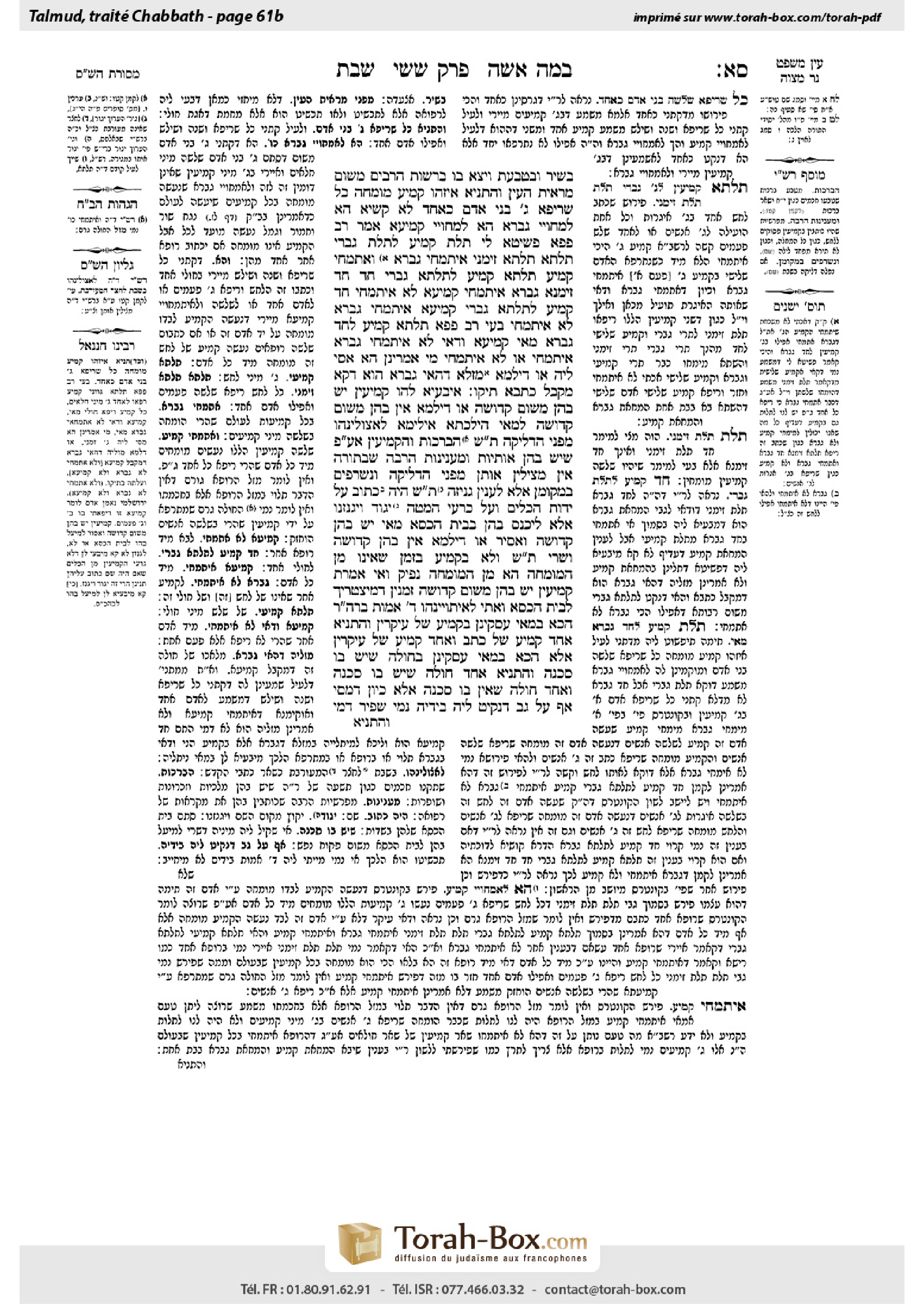
Shabbat 61b: Talmud study for Daf Yomi
Daf Yomi is the daily study of one Talmud folio. Explore 37 tractates with scans, Hebrew text, Sefaria English and AI-generated French translations where annotated.
Passage selection and English or AI-generated French translation are available where the scan has annotations. Daf Study is independent of Torah-Box and Sefaria.
Browse Shabbat · שבת · All tractatesShabbat 61b text and translations
This page of Shabbat includes the Aramaic text, an English translation and an AI-generated French translation, alongside the scan above.
שבת ס״א ב · Aramaic and Hebrew text
בְּשֵׁיר וּבְטַבַּעַת וְיֵצֵא בּוֹ בִּרְשׁוּת הָרַבִּים. מִשּׁוּם מַרְאִית הָעַיִן.
וְהָתַנְיָא: אֵיזֶהוּ קָמֵיעַ מוּמְחֶה — כֹּל שֶׁרִיפֵּא שְׁלֹשָׁה בְּנֵי אָדָם כְּאֶחָד!
לָא קַשְׁיָא: הָא — לִמְּחוֹיֵי גַּבְרָא, הָא — לִמְּחוֹיֵי קְמִיעָא.
אָמַר רַב פָּפָּא: פְּשִׁיטָא לִי תְּלָתָא קְמֵיעֵי לִתְלָתָא גַּבְרֵי תְּלָתָא תְּלָתָא זִימְנֵי — אִיתְמַחִי גַּבְרָא וְאִתְמַחִי קָמֵיעַ. תְּלָתָא קְמֵיעֵי לִתְלָתָא גַּבְרֵי חַד חַד זִימְנָא — גַּבְרָא אִיתְמַחִי, קְמִיעָא לָא אִיתְמַחִי. חַד קָמֵיעַ לִתְלָתָא גַּבְרֵי — קְמִיעָא אִיתְמַחִי, גַּבְרָא לָא אִיתְמַחִי.
בָּעֵי רַב פָּפָּא: תְּלָתָא קְמֵיעֵי לְחַד גַּבְרָא מַאי? קְמִיעָא וַדַּאי לָא אִיתְמַחִי. גַּבְרָא אִיתְמַחִי, אוֹ לָא אִיתְמַחִי? מִי אָמְרִינַן הָא אַסִּי לֵיהּ, אוֹ דִילְמָא מַזָּלָא דְּהַאי גַּבְרָא הוּא דְּקָא מְקַבֵּל כְּתָבָא. תֵּיקוּ.
אִיבַּעְיָא לְהוּ: קְמֵיעִין יֵשׁ בָּהֶן מִשּׁוּם קְדוּשָּׁה, אוֹ דִילְמָא אֵין בָּהֶן מִשּׁוּם קְדוּשָּׁה? לְמַאי הִילְכְתָא? אִילֵּימָא לְאַצּוֹלִינְהוּ מִפְּנֵי הַדְּלֵיקָה, תָּא שְׁמַע: הַבְּרָכוֹת וְהַקְּמֵיעִין, אַף עַל פִּי שֶׁיֵּשׁ בָּהֶן אוֹתִיּוֹת וּמֵעִנְיָנוֹת הַרְבֵּה שֶׁבַּתּוֹרָה — אֵין מַצִּילִין אוֹתָן מִפְּנֵי הַדְּלֵיקָה, וְנִשְׂרָפִים בִּמְקוֹמָן!
אֶלָּא לְעִנְיַן גְּנִיזָה. תָּא שְׁמַע: הָיָה כָּתוּב עַל יְדוֹת הַכֵּלִים וְעַל כַּרְעֵי הַמִּטָּה — יָגוֹד וְיִגְנְזֶנּוּ!
אֶלָּא לִיכָּנֵס בָּהֶן בְּבֵית הַכִּסֵּא. מַאי? יֵשׁ בָּהֶן קְדוּשָּׁה — וַאֲסִיר, אוֹ דִילְמָא אֵין בָּהֶן קְדוּשָּׁה — וּשְׁרֵי? תָּא שְׁמַע וְלֹא בְּקָמֵיעַ בִּזְמַן שֶׁאֵינוֹ מִן הַמּוּמְחֶה: הָא מִן הַמּוּמְחֶה — נָפֵיק.
וְאִי אָמְרַתְּ קְמֵיעִין יֵשׁ בָּהֶן מִשּׁוּם קְדוּשָּׁה, זִמְנִין דְּמִיצְטְרִיךְ לְבֵית הַכִּסֵּא, וְאָתֵי לְאֵיתוֹיִינְהוּ אַרְבַּע אַמּוֹת בִּרְשׁוּת הָרַבִּים. הָכָא בְמַאי עָסְקִינַן — בְּקָמֵיעַ שֶׁל עִיקָּרִין.
וְהָתַנְיָא: אֶחָד קָמֵיעַ שֶׁל כְּתָב וְאֶחָד קָמֵיעַ שֶׁל עִיקָּרִין! אֶלָּא הָכָא בְמַאי עָסְקִינַן — בְּחוֹלֶה שֶׁיֵּשׁ בּוֹ סַכָּנָה. וְהָתַנְיָא: אֶחָד חוֹלֶה שֶׁיֵּשׁ בּוֹ סַכָּנָה וְאֶחָד חוֹלֶה שֶׁאֵין בּוֹ סַכָּנָה.
אֶלָּא כֵּיוָן דְּמַסֵּי, אַף עַל גַּב דְּנָקֵיט לֵיהּ בִּידֵיהּ — (נָמֵי) שַׁפִּיר דָּמֵי.
Shabbat 61b · English translation
to a bracelet or a ring and go out with it into the public domain. The reason for the prohibition is due to the appearance of transgression, as, in that case, it appears that he is wearing the amulet strictly for ornamental purposes, which is prohibited.
With regard to the definition of an effective amulet as one which healed one person three times, the Gemara raises an objection. Wasn’t it taught in a baraita: Which is an effective amulet; any amulet that healed three people as one?
The Gemara answers: This is not difficult. This, where it was taught in the baraita that the amulet must have healed three different people, is referring to proving the expertise of the man who wrote it. Once his amulets have proven themselves by healing three different people stricken with different illnesses, clearly the one who wrote them is an expert. That, where it was taught in the Tosefta that even if the amulet healed one person three times, is referring to proving that the amulet is effective in fulfilling its designated purpose.
Rav Pappa said: It is obvious to me in a case where three amulets were written for three people and effectively healed each three times that both the man who wrote them is proven an expert and the amulet is proven effective. Likewise, it is obvious to me that in the case of one who writes three amulets for three people and healed each one time, the man is proven to be an expert; however, the amulet is not proven effective. Similarly, if one wrote one amulet for three people and it healed them, the amulet is proven effective, while the man who wrote it is not thereby proven an expert.
Rav Pappa raised a dilemma: Three amulets for one person, what is the status of the amulet and the one who wrote it in that case? The amulet is certainly not proven effective; however, with regard to the man who wrote it, is he proven an expert or is he not proven an expert? This is the dilemma: Do we say that the person is an expert since the amulet that he wrote healed the person who was ill? Or, perhaps we say that it was the fortune of that sick man who received the influence of the writing of the amulet, but a different person would not be healed? The Gemara concludes: Let this dilemma stand unresolved.
A dilemma was raised before the Sages: Do amulets have an element of sanctity, or perhaps they have no element of sanctity? The Gemara asks: With regard to what halakha is this dilemma relevant? If you say it is relevant with regard to rescuing them from fire on Shabbat, there is a clear resolution to the dilemma. Come and hear what was taught: The blessings and the amulets, even though there are letters of holy names and many matters that are in the Torah written in them, one may not rescue them from the fire, and they burn in their place.
Rather, the dilemma is relevant with regard to the matter of interment of sacred documents. Must an amulet no longer in use be buried, or may it be discarded? However, with regard to the matter of interment as well, come and hear a resolution from what was taught: If one of the names of God was written even on the handles of the vessels and even on legs of the bed, he must cut off the name and bury it, as one must be exacting with regard to the name of God, wherever it is written.
Rather, the dilemma was raised with regard to whether or not it is permitted to enter the bathroom with them. What is the halakha? Do they have sanctity, and it is therefore prohibited? Or, perhaps they have no sanctity, and it is permitted? Come and hear a resolution from that which we learned in our mishna: Nor with an amulet, when it is not from an expert. By inference: If it is from an expert, he may go out with it.
And, if you say that amulets have an element of sanctity, at times he will need to go to the bathroom, will be required to remove the amulets, forget that he removed them, and come to carry them four cubits in the public domain. Since the mishna did not address these complications, apparently amulets do not have an element of sanctity in that regard and one may enter the bathroom with them. The Gemara rejects this: With what we are dealing here? With an amulet made of herbal roots that certainly has no sanctity.
The Gemara asks: Wasn’t it taught in a baraita: This is the case with regard to both a written amulet and an amulet of herbal roots, indicating that their halakhot are equal? Rather, with what we are dealing here? With a person who is dangerously ill. Because of the life-threatening situation, he is permitted to enter the bathroom with his amulet, despite the resulting degradation of the Holy Name. Wasn’t it taught in the same baraita that the halakha applies to both a sick person who is dangerously ill and a sick person who is not dangerously ill, indicating that they share the same status in this regard?
Rather, since the amulet heals, even though he holds it in his hand, he may well go out with it too. In terms of healing, there is no difference whether the amulet is hanging around his neck or whether it is in his hand; just as they permitted him to wear it around his neck on Shabbat, so too they permitted him to carry it in his hand.
Shabbat 61b · Traduction française (IA)
à un bracelet ou à une bague et sortir avec cet objet dans le domaine public. L’interdiction tient à l’apparence de transgression : dans ce cas, il semble qu’il porte l’amulette à des fins purement ornementales, ce qui est interdit.
À propos de la définition d’une amulette efficace, à savoir une amulette qui a guéri une même personne trois fois, la Guemara soulève une objection. N’est-il pas enseigné dans une baraïta : « Qu’est-ce qu’une amulette efficace ? Toute amulette qui a guéri trois personnes à la fois. »
La Guemara répond : Il n’y a pas de difficulté. Le cas où la baraïta enseigne que l’amulette doit avoir guéri trois personnes différentes concerne la preuve de l’expertise de celui qui l’a écrite. Dès lors que ses amulettes ont fait leurs preuves en guérissant trois personnes différentes atteintes de maladies différentes, il est clair que leur auteur est un expert. Le cas où la Tosefta enseigne qu’il suffit que l’amulette ait guéri une même personne trois fois concerne la preuve de l’efficacité de l’amulette pour remplir la fonction qui lui est assignée.
Rav Pappa dit : Il m’est évident que, dans le cas où trois amulettes ont été écrites pour trois personnes et ont effectivement guéri chacune d’elles trois fois, l’expertise de leur auteur est établie et l’efficacité des amulettes l’est également. De même, il m’est évident que, dans le cas où quelqu’un écrit trois amulettes pour trois personnes et que chacune guérit une personne une fois, l’expertise de cet homme est établie ; toutefois, l’efficacité des amulettes ne l’est pas. De même, si quelqu’un a écrit une seule amulette pour trois personnes et qu’elle les a guéries, l’efficacité de l’amulette est établie, tandis que son auteur n’est pas pour autant reconnu comme expert.
Rav Pappa soulève un dilemme : quel est le statut de l’amulette et de son auteur si trois amulettes ont été écrites pour une seule personne ? L’efficacité des amulettes n’est certainement pas établie ; mais, en ce qui concerne leur auteur, son expertise est-elle établie ou non ? Le dilemme est le suivant : doit-on dire que cet homme est un expert puisque les amulettes qu’il a écrites ont guéri le malade ? Ou bien doit-on dire que cela tient à la chance de ce malade, qui a bénéficié de l’influence de l’écriture des amulettes, mais qu’une autre personne ne serait pas guérie ? La Guemara conclut : laissons ce dilemme sans réponse.
Une question fut posée aux Sages : les amulettes comportent-elles un élément de sainteté, ou n’en comportent-elles peut-être aucun ? La Guemara demande : Pour quelle halakha cette question est-elle pertinente ? Si tu dis qu’elle concerne la possibilité de les sauver d’un incendie pendant Chabbat, la réponse est claire. Écoute ce qui a été enseigné : « Les bénédictions et les amulettes, même si elles contiennent des lettres de noms sacrés et de nombreux passages de la Torah écrite, on ne peut pas les sauver de l’incendie ; elles brûlent là où elles se trouvent. »
La question concerne plutôt l’obligation d’ensevelir les écrits sacrés. Une amulette qui n’est plus utilisée doit-elle être enterrée, ou peut-on la jeter ? Cependant, même à propos de l’ensevelissement, écoute la réponse tirée de ce qui a été enseigné : « Si l’un des noms de Dieu a été écrit, même sur les poignées des ustensiles ou sur les pieds du lit, il faut découper le nom et l’enterrer », car il faut traiter le nom de Dieu avec le plus grand soin, où qu’il soit écrit.
La question porte plutôt sur la permission d’entrer aux toilettes avec ces amulettes. Quelle est la halakha ? Sont-elles dotées de sainteté, ce qui rendrait cela interdit ? Ou bien n’ont-elles peut-être aucune sainteté, auquel cas cela serait permis ? Écoute la réponse tirée de ce que nous avons appris dans notre Michna : « ni avec une amulette qui ne provient pas d’un expert ». On peut en déduire que, si elle provient d’un expert, il peut sortir avec elle.
Or, si tu dis que les amulettes comportent un élément de sainteté, il pourra parfois avoir besoin d’aller aux toilettes, devra retirer les amulettes, oublier qu’il les a retirées et finir par les transporter sur quatre coudées dans le domaine public. Puisque la Michna ne mentionne pas ces complications, il semble que les amulettes ne comportent pas de sainteté à cet égard et qu’on puisse entrer aux toilettes avec elles. La Guemara rejette cette conclusion : de quoi parlons-nous ici ? D’une amulette faite de racines de plantes, qui, à l’évidence, ne comporte aucune sainteté.
La Guemara demande : N’est-il pas enseigné dans une baraïta : « Cela vaut aussi bien pour une amulette écrite que pour une amulette faite de racines de plantes », ce qui indique que les règles les concernant sont identiques ? Il faut donc dire que le cas dont nous parlons ici est celui d’une personne gravement malade. En raison du danger de mort, elle est autorisée à entrer aux toilettes avec son amulette, malgré la profanation qui en résulte pour le Nom sacré. N’est-il pas enseigné dans la même baraïta que cette halakha s’applique aussi bien à un malade en danger qu’à un malade qui n’est pas en danger, ce qui indique qu’ils ont le même statut à cet égard ?
Il faut plutôt dire que, puisque l’amulette guérit, il peut aussi sortir avec elle, même s’il la tient dans sa main. Du point de vue de la guérison, peu importe que l’amulette soit suspendue à son cou ou qu’il la tienne dans sa main ; de même qu’on lui a permis de la porter autour du cou pendant Chabbat, de même on lui a permis de la porter dans sa main.
Traduction française générée par IA à partir de l’édition anglaise de Sefaria. Vérifie toujours un passage avec le texte source.
Text from Sefaria: William Davidson Edition - Vocalized Aramaic (CC BY NC); William Davidson Edition - English (CC BY NC).