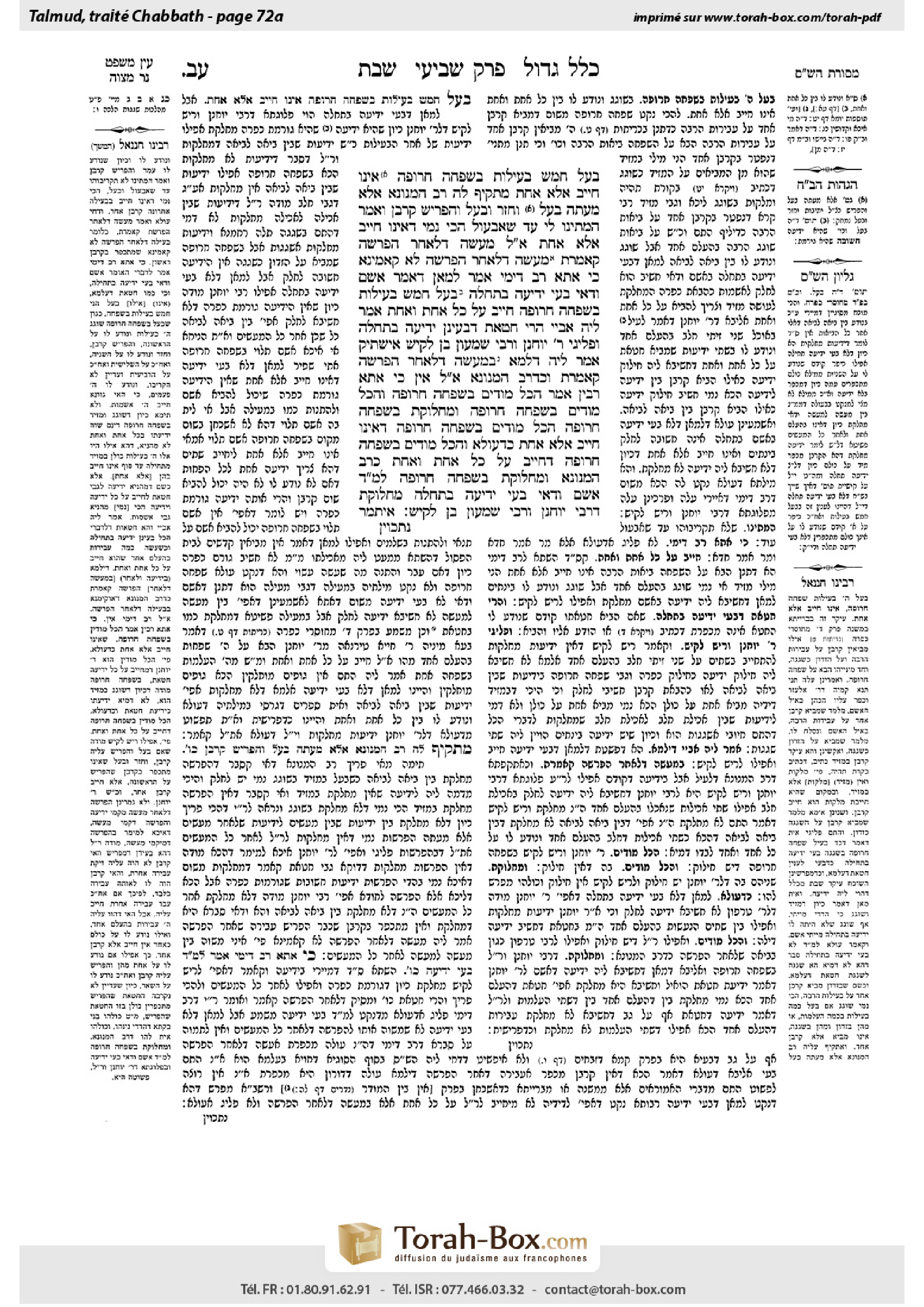
Shabbat 72a: Talmud study for Daf Yomi
Daf Yomi is the daily study of one Talmud folio. Explore 37 tractates with scans, Hebrew text, Sefaria English and AI-generated French translations where annotated.
Passage selection and English or AI-generated French translation are available where the scan has annotations. Daf Study is independent of Torah-Box and Sefaria.
Browse Shabbat · שבת · All tractatesShabbat 72a text and translations
This page of Shabbat includes the Aramaic text, an English translation and an AI-generated French translation, alongside the scan above.
שבת ע״ב א · Aramaic and Hebrew text
בָּעַל חָמֵשׁ בְּעִילוֹת בְּשִׁפְחָה חֲרוּפָה — אֵינוֹ חַיָּיב אֶלָּא אַחַת. מַתְקִיף לַהּ רַב הַמְנוּנָא: אֶלָּא מֵעַתָּה בָּעַל וְחָזַר וּבָעַל וְהִפְרִישׁ קׇרְבָּן, וְאָמַר: הַמְתִּינוּ לִי עַד שֶׁאֶבְעוֹל, הָכִי נָמֵי דְּאֵינוֹ חַיָּיב אֶלָּא אַחַת? אֲמַר לֵיהּ: מַעֲשֶׂה דִּלְאַחַר הַפְרָשָׁה קָאָמְרַתְּ?! מַעֲשֶׂה דִּלְאַחַר הַפְרָשָׁה לָא קָאָמֵינָא.
כִּי אֲתָא רַב דִּימִי אָמַר: לְמַאן דְּאָמַר אָשָׁם וַדַּאי בָּעֵי יְדִיעָה בַּתְּחִלָּה, בָּעַל חָמֵשׁ בְּעִילוֹת בְּשִׁפְחָה חֲרוּפָה — חַיָּיב עַל כׇּל אַחַת וְאַחַת. אֲמַר לֵיהּ אַבָּיֵי: הֲרֵי חַטָּאת, דְּבָעֵינַן יְדִיעָה בַּתְּחִלָּה, וּפְלִיגִי רַבִּי יוֹחָנָן וְרַבִּי שִׁמְעוֹן בֶּן לָקִישׁ! אִישְׁתִּיק. אֲמַר לֵיהּ: דִּלְמָא בְּמַעֲשֶׂה דִּלְאַחַר הַפְרָשָׁה קָאָמְרַתְּ, וְכִדְרַב הַמְנוּנָא? אֲמַר לֵיהּ: אִין.
כִּי אֲתָא רָבִין, אָמַר: הַכֹּל מוֹדִים בְּשִׁפְחָה חֲרוּפָה, וְהַכֹּל מוֹדִים בְּשִׁפְחָה חֲרוּפָה, וּמַחְלוֹקֶת בְּשִׁפְחָה חֲרוּפָה. הַכֹּל מוֹדִים בְּשִׁפְחָה חֲרוּפָה דְּאֵינוֹ חַיָּיב אֶלָּא אַחַת — כִּדְעוּלָּא. וְהַכֹּל מוֹדִים בְּשִׁפְחָה חֲרוּפָה דְּחַיָּיב עַל כׇּל אַחַת וְאַחַת — כְּרַב הַמְנוּנָא. וּמַחְלוֹקֶת בְּשִׁפְחָה חֲרוּפָה — לְמַאן דְּאָמַר אָשָׁם וַדַּאי בָּעֵי יְדִיעָה בַּתְּחִלָּה, מַחֲלוֹקֶת דְּרַבִּי יוֹחָנָן וְרַבִּי שִׁמְעוֹן בֶּן לָקִישׁ.
אִיתְּמַר:
Shabbat 72a · English translation
one who had relations with a designated maidservant five times is only liable to bring one guilt-offering, even if he became aware of his transgression between each instance of relations with her. Because awareness is insignificant with regard to this sacrifice, it does not demarcate in terms of the number of guilt-offerings that he is liable to bring. Rav Hamnuna strongly objects to this halakha: But if what you say is so, one who had relations with a designated maidservant, and again had relations, and designated an animal for the offering, and said: Wait for me before sacrificing the offering until I have relations again, so that the guilt-offering will atone for this transgression as well, would you say that the same applies in that case too, that he is only liable to bring one guilt-offering? Ulla said to him: You referred to an action performed after designation of an animal for the guilt-offering. I did not say that halakha with regard to an action that was performed after designation.
When Rav Dimi came from Eretz Yisrael to Babylonia, he said: According to the one who said that in order to designate a definite guilt-offering one requires prior knowledge that he definitely sinned, one who had relations five times with a designated maidservant is liable to bring a guilt-offering for each and every one. Because awareness is significant with regard to guilt-offerings, the awareness between the acts of cohabitation renders each a separate transgression. Abaye said to Rav Dimi: That is not so, as with regard to a sin-offering for which we require prior knowledge, Rabbi Yoḥanan and Rabbi Shimon ben Lakish disagree whether or not awareness following an unwitting sin demarcates one transgression from another. Rav Dimi was silent and had no response. In an attempt to resolve the problem, Abaye said to him: Perhaps you said your statement with regard to an act that the sinner seeks to commit after designating an animal as a guilt-offering but wants to attain atonement for by means of that same designated sacrifice. That statement is in accordance with the statement of Rav Hamnuna. Rav Dimi remembered and said to Abaye: Yes, that was what was originally stated.
When Ravin came from Eretz Yisrael to Babylonia, he cited several disputes concerning the halakhot of guilt-offerings and said: Everyone agrees with regard to a designated maidservant, and everyone agrees with regard to a designated maidservant, and there is a dispute with regard to a designated maidservant. The Gemara elaborates: Everyone agrees with regard to a designated maidservant; one is liable to bring only one guilt-offering, even for many acts of cohabitation, in accordance with the opinion of Ulla. Ulla said that since prior knowledge is not required for liability to bring a guilt-offering, even if one became aware of his transgression between each time he had relations, he brings only one sacrifice. And everyone agrees with regard to a designated maidservant; one is liable for each and every act of cohabitation, if it occurred after designation of an animal for a guilt-offering for the previous transgression, in accordance with the opinion of Rav Hamnuna. And there is a dispute with regard to a designated maidservant; this refers to the one who said that, in order to designate a definite guilt-offering, one requires prior knowledge that he definitely sinned. In that case, the legal status of the guilt-offering is equal to that of the sin-offering and is the subject of a dispute between Rabbi Yoḥanan and Rabbi Shimon ben Lakish, who disagree whether awareness between two unwitting transgressions demarcates and requires two offerings.
It was stated that amora’im disagreed with regard to the halakha in the following case:
Shabbat 72a · Traduction française (IA)
Celui qui a eu cinq fois des relations avec une servante désignée n’est tenu d’apporter qu’un seul sacrifice de culpabilité, même s’il a pris conscience de sa faute entre chacun de ces rapports. Puisque la prise de conscience est sans importance pour ce sacrifice, elle ne sépare pas les transgressions de manière à augmenter le nombre de sacrifices de culpabilité qu’il doit apporter. Rav Hamnouna soulève une objection vigoureuse contre cette halakha : Mais si ce que tu dis est exact, celui qui a eu des relations avec une servante désignée, puis a de nouveau eu des relations avec elle, a désigné un animal pour le sacrifice et a dit : « Attends avant d’offrir le sacrifice, jusqu’à ce que j’aie de nouveau des relations avec elle, afin que le sacrifice de culpabilité expie aussi cette transgression », dirais-tu que la même règle s’applique dans ce cas aussi, et qu’il n’est tenu d’apporter qu’un seul sacrifice de culpabilité ? Oulla lui répondit : Tu as parlé d’un acte accompli après la désignation d’un animal pour le sacrifice de culpabilité. Je n’ai pas énoncé cette halakha au sujet d’un acte accompli après la désignation.
Lorsque Rav Dimi vint d’Eretz Israël en Babylonie, il dit : Selon celui qui affirme que, pour désigner un sacrifice de culpabilité certain, il faut savoir au préalable que l’on a effectivement péché, celui qui a eu cinq fois des relations avec une servante désignée est tenu d’apporter un sacrifice de culpabilité pour chacune d’elles. Puisque la prise de conscience est déterminante pour les sacrifices de culpabilité, la prise de conscience entre les rapports fait de chacun une transgression distincte. Abayé dit à Rav Dimi : Il n’en est pas ainsi, car au sujet d’un sacrifice expiatoire pour lequel nous exigeons une prise de conscience préalable, Rabbi Yoḥanan et Rabbi Shimon ben Lakish sont en désaccord sur la question de savoir si la prise de conscience après une faute involontaire sépare ou non une transgression d’une autre. Rav Dimi garda le silence et n’eut pas de réponse. Pour tenter de résoudre la difficulté, Abayé lui dit : Peut-être as-tu énoncé cette règle au sujet d’un acte que le pécheur veut accomplir après avoir désigné un animal comme sacrifice de culpabilité, mais pour lequel il souhaite obtenir l’expiation au moyen de ce même sacrifice déjà désigné. Cette règle concorde avec l’opinion de Rav Hamnouna. Rav Dimi s’en souvint et dit à Abayé : Oui, c’est bien ce qui avait été dit initialement.
Lorsque Ravin vint d’Eretz Israël en Babylonie, il cita plusieurs controverses concernant les halakhot des sacrifices de culpabilité et dit : Tout le monde est d’accord au sujet d’une servante désignée ; tout le monde est d’accord au sujet d’une servante désignée ; et il y a une controverse au sujet d’une servante désignée. La Guemara développe : Tout le monde est d’accord au sujet d’une servante désignée : on n’est tenu d’apporter qu’un seul sacrifice de culpabilité, même pour de nombreux rapports, conformément à l’opinion d’Oulla. Oulla a dit que, puisque la prise de conscience préalable n’est pas exigée pour être tenu d’apporter un sacrifice de culpabilité, même si l’on a pris conscience de sa transgression entre chaque rapport, on n’apporte qu’un seul sacrifice. Et tout le monde est d’accord au sujet d’une servante désignée : on est tenu d’apporter un sacrifice pour chaque rapport si celui-ci a eu lieu après la désignation d’un animal comme sacrifice de culpabilité pour la transgression précédente, conformément à l’opinion de Rav Hamnouna. Et il y a une controverse au sujet d’une servante désignée : cela désigne celui qui affirme que, pour désigner un sacrifice de culpabilité certain, il faut savoir au préalable que l’on a effectivement péché. Dans ce cas, le statut du sacrifice de culpabilité est identique à celui du sacrifice expiatoire et fait l’objet d’une controverse entre Rabbi Yoḥanan et Rabbi Shimon ben Lakish, qui ne s’accordent pas sur la question de savoir si la prise de conscience entre deux transgressions involontaires les sépare et impose d’apporter deux sacrifices.
Il a été enseigné que les amoraïm sont en désaccord sur la halakha dans le cas suivant :
Traduction française générée par IA à partir de l’édition anglaise de Sefaria. Vérifie toujours un passage avec le texte source.
Text from Sefaria: William Davidson Edition - Vocalized Aramaic (CC BY NC); William Davidson Edition - English (CC BY NC).