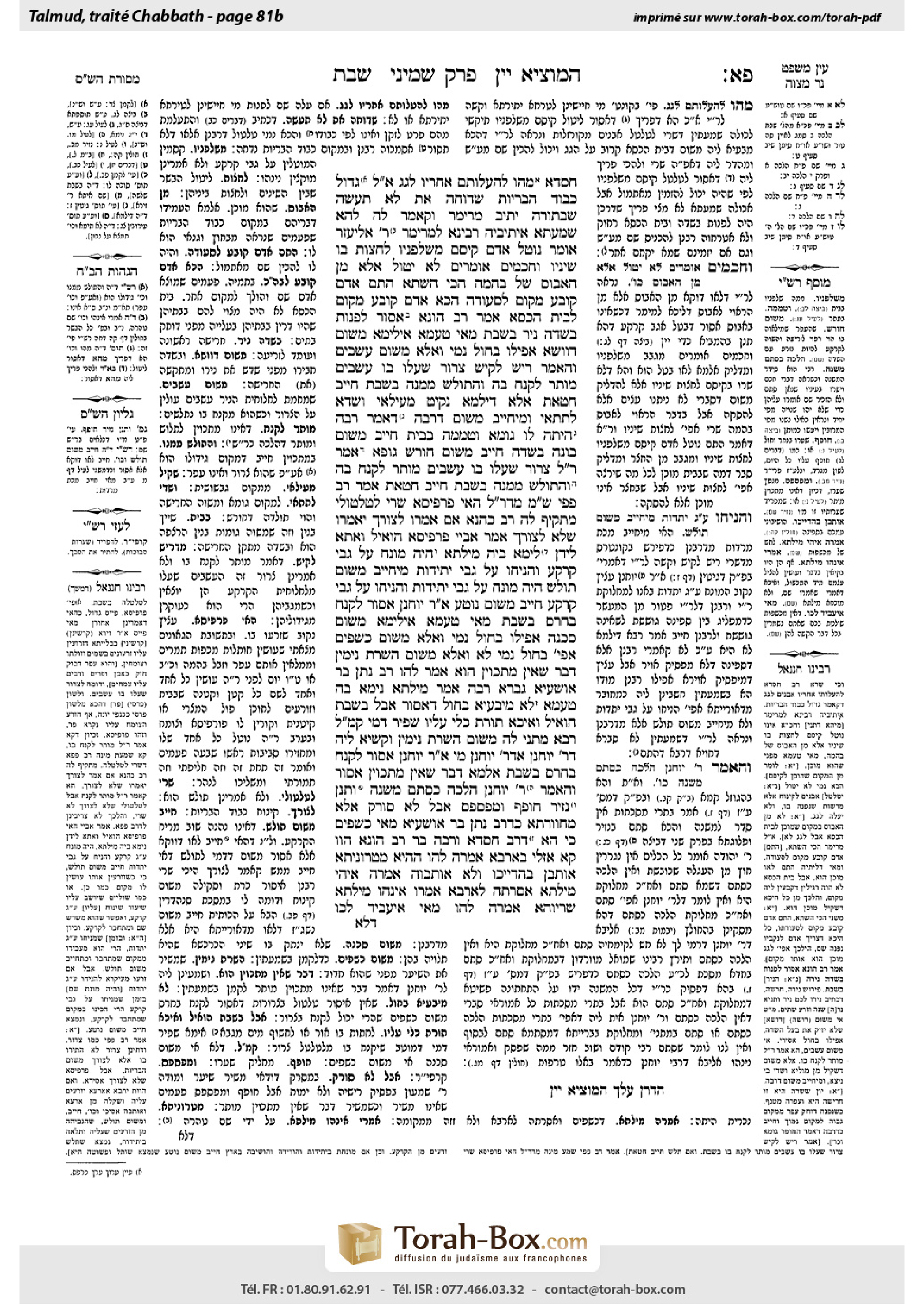
Shabbat 81b: Talmud study for Daf Yomi
Daf Yomi is the daily study of one Talmud folio. Explore 37 tractates with scans, Hebrew text, Sefaria English and AI-generated French translations where annotated.
Passage selection and English or AI-generated French translation are available where the scan has annotations. Daf Study is independent of Torah-Box and Sefaria.
Browse Shabbat · שבת · All tractatesShabbat 81b text and translations
This page of Shabbat includes the Aramaic text, an English translation and an AI-generated French translation, alongside the scan above.
שבת פ״א ב · Aramaic and Hebrew text
חִסְדָּא: מַהוּ לְהַעֲלוֹתָם אַחֲרָיו לַגַּג? אֲמַר לֵיהּ: גָּדוֹל כְּבוֹד הַבְּרִיּוֹת שֶׁדּוֹחֶה אֶת ״לֹא תַעֲשֶׂה״ שֶׁבַּתּוֹרָה. יָתֵיב מָרִימָר וְקָאָמַר לַהּ לְהָא שְׁמַעְתָּא. אֵיתִיבֵיהּ רָבִינָא לְמָרִימָר: רַבִּי אֱלִיעֶזֶר אוֹמֵר נוֹטֵל אָדָם קֵיסָם מִשֶּׁלְּפָנָיו לַחֲצוֹת בּוֹ שִׁינָּיו, וַחֲכָמִים אוֹמְרִים לֹא יִטּוֹל אֶלָּא מִן הָאֵבוּס שֶׁל בְּהֵמָה! הָכִי הַשְׁתָּא?! הָתָם — אָדָם קוֹבֵעַ מָקוֹם לִסְעוּדָה, הָכָא — אָדָם קוֹבֵעַ מָקוֹם לְבֵית הַכִּסֵּא?
אָמַר רַב הוּנָא: אָסוּר לִפָּנוֹת בִּשְׂדֵה נִיר בְּשַׁבָּת. מַאי טַעְמָא? אִילֵּימָא מִשּׁוּם דַּוְושָׁא — אֲפִילּוּ בְּחוֹל נָמֵי! וְאֶלָּא מִשּׁוּם עֲשָׂבִים, וְהָאָמַר רֵישׁ לָקִישׁ: צְרוֹר שֶׁעָלוּ בּוֹ עֲשָׂבִים — מוּתָּר לְקַנֵּחַ בּוֹ. וְהַתּוֹלֵשׁ מִמֶּנָּה בְּשַׁבָּת — חַיָּיב חַטָּאת. אֶלָּא דִילְמָא נָקֵיט מֵעִילַּאי וְשָׁדֵי לְתַתַּאי, וּמִיחַיַּיב מִשּׁוּם דְּרַבָּה. דְּאָמַר רַבָּה: הָיְתָה לוֹ גּוּמָּא וּטְמָמָהּ, בַּבַּיִת — חַיָּיב מִשּׁוּם בּוֹנֶה, בַּשָּׂדֶה — חַיָּיב מִשּׁוּם חוֹרֵשׁ.
גּוּפָא, אָמַר רֵישׁ לָקִישׁ: צְרוֹר שֶׁעָלוּ בּוֹ עֲשָׂבִים — מוּתָּר לְקַנֵּחַ בּוֹ. וְהַתּוֹלֵשׁ מִמֶּנָּה בְּשַׁבָּת — חַיָּיב חַטָּאת. אָמַר רַב פַּפֵּי: שְׁמַע מִינַּהּ מִדְּרֵישׁ לָקִישׁ, הַאי פַּרְפִּיסָא — שְׁרֵי לְטַלְטוֹלֵיהּ. מַתְקִיף לַהּ רַב כָּהֲנָא: אִם אָמְרוּ לְצוֹרֶךְ, יֹאמְרוּ שֶׁלֹּא לְצוֹרֶךְ?! אָמַר אַבָּיֵי: פַּרְפִּיסָא, הוֹאִיל וַאֲתָא לְיָדָן לֵימָא בֵּיהּ מִילְּתָא: הָיָה מוּנָּח עַל גַּבֵּי קַרְקַע וְהִנִּיחוֹ עַל גַּבֵּי יְתֵידוֹת — חַיָּיב מִשּׁוּם תּוֹלֵשׁ. הָיָה מוּנָּח עַל גַּבֵּי יְתֵידוֹת וְהִנִּיחוֹ עַל גַּבֵּי קַרְקַע — חַיָּיב מִשּׁוּם נוֹטֵעַ.
אָמַר רַבִּי יוֹחָנָן: אָסוּר לְקַנֵּחַ בְּחֶרֶס בְּשַׁבָּת. מַאי טַעְמָא? אִילֵּימָא מִשּׁוּם סַכָּנָה — אֲפִילּוּ בְּחוֹל נָמֵי! וְאֶלָּא מִשּׁוּם כְּשָׁפִים — אֲפִילּוּ בְּחוֹל נָמֵי לָא! וְאֶלָּא מִשּׁוּם הַשָּׁרַת נִימִין — דָּבָר שֶׁאֵין מִתְכַּוֵּין הוּא. אֲמַר לְהוּ רַב נָתָן בַּר אוֹשַׁעְיָא: גַּבְרָא רַבָּה אֲמַר מִילְּתָא, נֵימָא בָּהּ טַעְמָא: לָא מִיבַּעְיָא בְּחוֹל — דְּאָסוּר, אֲבָל בְּשַׁבָּת — הוֹאִיל וְאִיכָּא תּוֹרַת כְּלִי עָלָיו, שַׁפִּיר דָּמֵי. קָא מַשְׁמַע לַן.
רָבָא מַתְנֵי לַהּ מִשּׁוּם הַשָּׁרַת נִימִין, וְקַשְׁיָא לֵיהּ דְּרַבִּי יוֹחָנָן אַדְּרַבִּי יוֹחָנָן: מִי אָמַר רַבִּי יוֹחָנָן אָסוּר לְקַנֵּחַ בַּחֶרֶס בְּשַׁבָּת? אַלְמָא דָּבָר שֶׁאֵין מִתְכַּוֵּין — אָסוּר. וְהָאָמַר רַבִּי יוֹחָנָן: הֲלָכָה כִּסְתַם מִשְׁנָה. וּתְנַן: נָזִיר חוֹפֵף וּמְפַסְפֵּס, אֲבָל לֹא סוֹרֵק! אֶלָּא מְחַוַּורְתָּא כִּדְרַב נָתָן בַּר אוֹשַׁעְיָא.
מַאי כְּשָׁפִים? כִּי הָא דְּרַב חִסְדָּא וְרַבָּה בַּר רַב הוּנָא הֲווֹ קָא אָזְלִי בְּאַרְבָּא, אֲמַרָה לְהוּ הָהִיא מַטְרוֹנִיתָא: אוֹתְבַן בַּהֲדַיְיכוּ! וְלָא אוֹתְבוּהָ. אֲמַרָה אִיהִי מִילְּתָא — אֲסַרְתַּהּ לְאַרְבָּא. אֲמַרוּ אִינְהוּ מִילְּתָא — שַׁרְיוּהָא. אֲמַרָה לְהוּ: מַאי אֶיעְבֵּיד לְכוּ?
Shabbat 81b · English translation
Ḥisda: What is the halakha with regard to taking those stones up with him to the roof if his bathroom is there? Is it permitted or is it prohibited due to the exertion involved? He said to him: It is permitted; great is human dignity as it overrides a prohibition in the Torah. The Gemara relates: Mareimar sat and stated this halakha. Ravina raised an objection to the statement of Mareimar from a baraita where Rabbi Eliezer says: A person may take a wood chip from the ground before him to clean his teeth on Shabbat. And the Rabbis say one may take a wood chip only from the animal’s trough, which is already designated for the animal’s use, but not from wood on the ground, which is set-aside. Apparently, despite the fact that using the wood chip enhances human dignity, it is nevertheless prohibited due to the prohibition of set-aside. The Gemara rejects this: How can you compare? There, a person determines the place for his meal. Since he knows where he will eat he should have prepared toothpicks beforehand. Here, does a person determine the place for a bathroom? He relieves himself wherever he finds a discreet place to do so.
Rav Huna said: It is prohibited to defecate in a plowed field on Shabbat. The Gemara asks: What is the reason for that prohibition? If you say it is due to the fact that in doing so he treads on the furrows and destroys them, it should be prohibited even on weekdays. Rather, it is due to the concern that he will clean himself with a clod of earth on which grasses have grown. Didn’t Reish Lakish say that it is permitted to wipe with a stone upon which grasses have grown even though the grasses will be detached as a result? And that is the halakha even though one who unwittingly detaches grasses from it on Shabbat is liable to bring a sin-offering. Rather, the concern is lest he take a clod of earth from a high place, a pile of dirt, and throw it to a low place, into a hole in the ground. And in that case, he would be liable due to that which Rabba said, as Rabba said: If one had a hole and filled it, in the house, he is liable due to the prohibited labor of building; in the field, he is liable due to plowing.
With regard to the matter itself, Reish Lakish said: It is permitted to wipe with a stone upon which grasses have grown. And one who detaches grasses from it unwittingly on Shabbat is liable to bring a sin-offering. Rav Pappi said: Learn from that which Reish Lakish said that it is permitted to carry this perforated flowerpot on Shabbat. Rav Kahana strongly objects to this: If they said that it is permitted to carry a stone with weeds on it for a purpose, will they say it is permitted to carry a flowerpot for no purpose? Abaye said: Since the topic of a perforated pot has come to our hands, let us say something with regard to it: If it had been placed on the ground and one lifted it and placed it on top of pegs on Shabbat, he is liable for the labor of detaching. The roots of the plant could have protruded through the holes to draw sustenance from the ground, and when one lifts it he detaches it from that sustenance. Similarly, if it had been placed on pegs and one placed it on the ground, he is liable for the labor of planting.
Rabbi Yoḥanan said: It is prohibited to wipe with an earthenware shard on Shabbat. The Gemara asks: What is the reason for that prohibition? If you say that it is due to the danger that he might injure himself with the sharp edges of the shard, it should be prohibited also on weekdays. Rather, it is due to the fact that it invites witchcraft. If so, he should also not do so on weekdays. Rather, the concern is lest he remove hairs with the earthenware shard. However, that is an unintentional act, which is permitted. Rav Natan bar Oshaya said to those who raised the question: A great man said something, let us say a reason for it, and explain Rabbi Yoḥanan’s statement as follows: It is not necessary to say that it is prohibited on a weekday for the aforementioned reasons because he has the option of using a stone. However, with regard to Shabbat we would have said that since this shard has the status of a utensil and is not set-aside, he may well use it, as it is preferable to a stone, which is set-aside. Therefore, he teaches us that it is prohibited.
Rava taught that Rabbi Yoḥanan ruled that it is prohibited due to the removal of hairs, and he raised a difficulty between that which Rabbi Yoḥanan said here and that which Rabbi Yoḥanan said elsewhere. Did Rabbi Yoḥanan say it is forbidden to wipe with an earthenware shard on Shabbat? Apparently, he holds that an unintentional act is prohibited. Didn’t Rabbi Yoḥanan state a principle: The halakha is ruled in accordance with an unattributed mishna? And we learned in a mishna: A nazirite, for whom it is prohibited to cut his hair, may wash his hair on a weekday with sand and natron and separate it with his fingers; however, he may not comb it, which would certainly pull out some hair. Apparently, the unintentional act of removing hair while shampooing is permitted. Rather, it is clearly in accordance with the explanation of Rav Natan bar Oshaya.
The Gemara asks: What is the witchcraft involved with wiping with an earthenware shard? The Gemara explains: It is as that which transpired when Rav Ḥisda and Rabba bar Rav Huna were going on a boat. A certain matron [matronita] said to them: Let me sit with you, and they did not let her sit. She said something, an incantation of witchcraft, and stopped the boat. They said something, the Holy Name, and freed it. She said to them: What will I do to you, to enable me to harm you with witchcraft,
Shabbat 81b · Traduction française (IA)
Ḥisda dit : Quelle est la halakha concernant le fait d’emporter ces pierres avec soi sur le toit, si les latrines s’y trouvent ? Est-ce permis ou interdit en raison de l’effort que cela implique ? Il lui répondit : C’est permis, car la dignité humaine est si grande qu’elle permet de passer outre une interdiction de la Torah. La Guemara rapporte que Mareimar était assis et enseignait cette halakha. Ravina objecta à l’enseignement de Mareimar à partir d’une baraïta dans laquelle Rabbi Eliezer dit : Une personne peut prendre un copeau de bois qui se trouve devant elle pour se nettoyer les dents pendant Chabbat. Les Sages disent qu’on ne peut prendre un copeau que dans la mangeoire de l’animal, puisqu’elle est déjà destinée à son usage, mais pas dans le bois qui se trouve au sol, car celui-ci est mouktsé. Apparemment, bien que l’utilisation du copeau contribue à la dignité humaine, elle est néanmoins interdite en raison de l’interdiction du mouktsé. La Guemara rejette cette objection : Comment comparer ? Là-bas, une personne détermine le lieu de son repas. Puisqu’elle sait où elle mangera, elle aurait dû préparer des cure-dents à l’avance. Ici, une personne détermine-t-elle le lieu où elle ira aux latrines ? Elle se soulage partout où elle trouve un endroit discret.
Rav Houna dit : Il est interdit de déféquer dans un champ labouré pendant Chabbat. La Guemara demande : Quelle est la raison de cette interdiction ? Si tu dis que c’est parce qu’en agissant ainsi, il piétine les sillons et les détruit, cela devrait être interdit même en semaine. C’est plutôt par crainte qu’il ne se nettoie avec une motte de terre sur laquelle ont poussé des herbes. Mais Rech Lakich n’a-t-il pas dit qu’il est permis de s’essuyer avec une pierre sur laquelle ont poussé des herbes, même si celles-ci s’en détachent de ce fait ? Et telle est la halakha, bien que celui qui détache involontairement des herbes de cette pierre pendant Chabbat soit passible d’apporter un sacrifice expiatoire. C’est plutôt par crainte qu’il ne prenne une motte de terre d’un endroit élevé, c’est-à-dire d’un tas de terre, et ne la jette dans un endroit bas, dans un trou du sol. Dans ce cas, il serait passible en vertu de ce que Rabba a dit, car Rabba a dit : Si quelqu’un a un trou et le comble, dans la maison, il est passible au titre du travail interdit de construire ; dans un champ, il est passible au titre du labourage.
À propos de cette question, Rech Lakich dit : Il est permis de s’essuyer avec une pierre sur laquelle ont poussé des herbes. Celui qui détache involontairement des herbes de cette pierre pendant Chabbat est passible d’apporter un sacrifice expiatoire. Rav Pappi dit : On peut déduire de ce que Rech Lakich a dit qu’il est permis de transporter pendant Chabbat ce pot de fleurs percé. Rav Kahana s’y oppose vivement : S’ils ont dit qu’il est permis de transporter une pierre portant des herbes pour un besoin, diront-ils qu’il est permis de transporter un pot de fleurs sans aucun besoin ? Abayé dit : Puisque la question du pot percé s’est présentée à nous, disons quelque chose à son propos : s’il avait été posé sur le sol et que quelqu’un l’a soulevé pour le placer sur des piquets pendant Chabbat, il est passible au titre du travail consistant à déraciner. Les racines de la plante auraient pu passer par les trous afin de puiser leur nourriture dans le sol ; en soulevant le pot, on la sépare de cette source de nourriture. De même, s’il avait été posé sur des piquets et que quelqu’un l’a placé sur le sol, il est passible au titre du travail de planter.
Rabbi Yoḥanan dit : Il est interdit de s’essuyer avec un tesson de terre cuite pendant Chabbat. La Guemara demande : Quelle est la raison de cette interdiction ? Si tu dis que c’est en raison du danger de se blesser avec les bords tranchants du tesson, cela devrait également être interdit en semaine. C’est plutôt parce que cela attire la sorcellerie. Si tel est le cas, il ne devrait pas non plus le faire en semaine. C’est plutôt par crainte qu’il ne s’arrache des poils avec le tesson. Toutefois, il s’agit d’un acte involontaire, qui est permis. Rav Natan bar Oshaya dit à ceux qui avaient soulevé la question : « Un grand homme a dit quelque chose ; trouvons-en la raison et expliquons ainsi la déclaration de Rabbi Yoḥanan : Il n’est pas nécessaire de dire que c’est interdit en semaine pour les raisons susmentionnées, puisqu’il peut utiliser une pierre. Mais, concernant Chabbat, nous aurions dit que, puisque ce tesson a le statut d’un ustensile et n’est pas mouktsé, il peut bien l’utiliser, car il est préférable à une pierre, qui est mouktsé. Rabbi Yoḥanan nous enseigne donc que cela est interdit. »
Rava enseigna que Rabbi Yoḥanan avait statué que cela était interdit en raison de l’arrachage des poils, et souleva une difficulté entre ce que Rabbi Yoḥanan avait dit ici et ce qu’il avait dit ailleurs. Rabbi Yoḥanan a-t-il dit qu’il est interdit de s’essuyer avec un tesson de terre cuite pendant Chabbat ? Apparemment, il considère qu’un acte involontaire est interdit. Rabbi Yoḥanan n’a-t-il pas énoncé un principe : la halakha est tranchée conformément à une Michna anonyme ? Or, nous avons appris dans une Michna : Un nazir, à qui il est interdit de se couper les cheveux, peut se laver les cheveux en semaine avec du sable et du natron, puis les séparer avec les doigts ; cependant, il ne peut pas les peigner, car cela arracherait certainement quelques cheveux. Apparemment, arracher involontairement des cheveux en se lavant les cheveux est permis. Il faut donc manifestement retenir l’explication de Rav Natan bar Oshaya.
La Guemara demande : En quoi consiste la sorcellerie liée au fait de s’essuyer avec un tesson de terre cuite ? La Guemara explique : Cela ressemble à ce qui arriva lorsque Rav Ḥisda et Rabba bar Rav Houna voyageaient en bateau. Une certaine matrone [matronita] leur dit : « Laissez-moi m’asseoir avec vous », mais ils ne la laissèrent pas s’asseoir. Elle prononça quelque chose, une incantation de sorcellerie, et immobilisa le bateau. Ils prononcèrent quelque chose, le Nom sacré, et le libérèrent. Elle leur dit : « Que puis-je faire contre vous pour pouvoir vous nuire par la sorcellerie,
Traduction française générée par IA à partir de l’édition anglaise de Sefaria. Vérifie toujours un passage avec le texte source.
Text from Sefaria: William Davidson Edition - Vocalized Aramaic (CC BY NC); William Davidson Edition - English (CC BY NC).