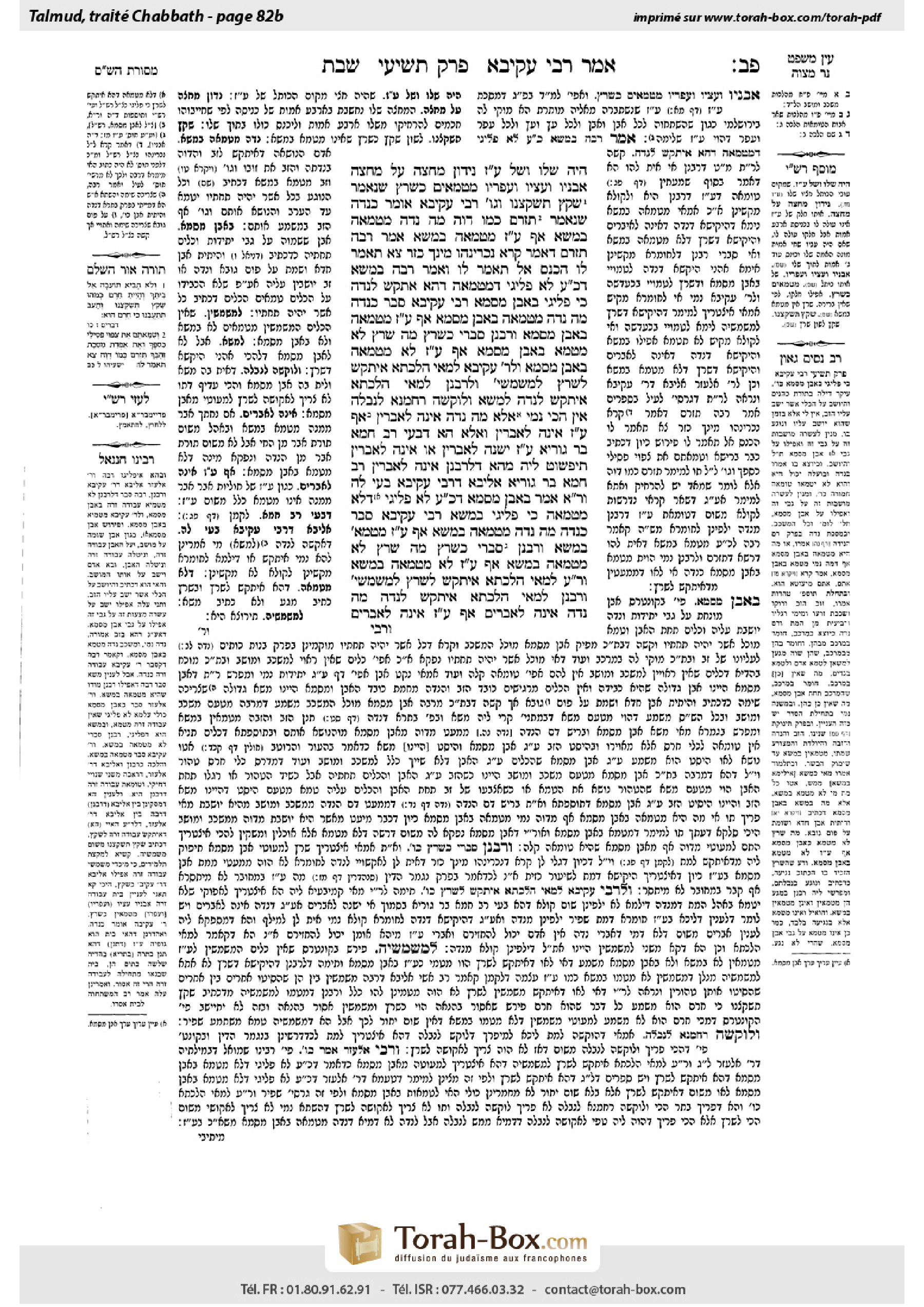
Shabbat 82b: Talmud study for Daf Yomi
Daf Yomi is the daily study of one Talmud folio. Explore 37 tractates with scans, Hebrew text, Sefaria English and AI-generated French translations where annotated.
Passage selection and English or AI-generated French translation are available where the scan has annotations. Daf Study is independent of Torah-Box and Sefaria.
Browse Shabbat · שבת · All tractatesShabbat 82b text and translations
This page of Shabbat includes the Aramaic text, an English translation and an AI-generated French translation, alongside the scan above.
שבת פ״ב ב · Aramaic and Hebrew text
הָיָה שֶׁלּוֹ וְשֶׁל עֲבוֹדָה זָרָה, נִידּוֹן מֶחֱצָה עַל מֶחֱצָה. אֲבָנָיו וְעֵצָיו וַעֲפָרָיו מְטַמְּאִים כְּשֶׁרֶץ, שֶׁנֶּאֱמַר: ״שַׁקֵּץ תְּשַׁקְּצֶנּוּ וְגוֹ׳״. רַבִּי עֲקִיבָא אוֹמֵר כְּנִדָּה, שֶׁנֶּאֱמַר: ״תִּזְרֵם כְּמוֹ דָוָה״ — מָה נִדָּה מְטַמְּאָה בְּמַשָּׂא, אַף עֲבוֹדָה זָרָה מְטַמְּאָה בְּמַשָּׂא. אָמַר רַבָּה: ״תִּזְרֵם״ דְּאָמַר קְרָא, נַכְּרִינְהוּ מִינָּךְ כְּזָר. ״צֵא תֹּאמַר לוֹ״ — הִכָּנֵס אַל תֹּאמַר לוֹ.
וְאָמַר רַבָּה: בְּמַשָּׂא דְּכוּלֵּי עָלְמָא לָא פְּלִיגִי דִּמְטַמְּאָה, דְּהָא אִתַּקַּשׁ לְנִדָּה. כִּי פְּלִיגִי בְּאֶבֶן מְסָמָא. רַבִּי עֲקִיבָא סָבַר כְּנִדָּה: מָה נִדָּה מְטַמְּאָה בְּאֶבֶן מְסָמָא — אַף עֲבוֹדָה זָרָה מְטַמְּאָה בְּאֶבֶן מְסָמָא. וְרַבָּנַן סָבְרִי כְּשֶׁרֶץ: מָה שֶׁרֶץ לֹא מְטַמֵּא בְּאֶבֶן מְסָמָא — אַף עֲבוֹדָה זָרָה לֹא מְטַמְּאָה בְּאֶבֶן מְסָמָא.
וּלְרַבִּי עֲקִיבָא, לְמַאי הִלְכְתָא אִיתַּקַּשׁ לְשֶׁרֶץ? — לִמְשַׁמְּשֶׁיהָ. וּלְרַבָּנַן, לְמַאי הִלְכְתָא אִיתַּקַּשׁ לְנִדָּה? — לְמַשָּׂא. וְלַקְּשֵׁיהּ רַחֲמָנָא לִנְבֵלָה! אִין הָכִי נָמֵי, אֶלָּא: מָה נִדָּה אֵינָהּ לְאֵבָרִין, אַף עֲבוֹדָה זָרָה אֵינָהּ לְאֵבָרִין. וְאֶלָּא הָא דְּבָעֵי רַב חָמָא בַּר גּוּרְיָא: עֲבוֹדָה זָרָה יֶשְׁנָהּ לְאֵבָרִין אוֹ אֵינָהּ לְאֵבָרִין? תִּיפְשׁוֹט לֵיהּ מֵהָא, דִּלְרַבָּנַן אֵינָהּ לְאֵבָרִין! רַב חָמָא בַּר גּוּרְיָא אַלִּיבָּא דְרַבִּי עֲקִיבָא בָּעֵי לַהּ.
וְרַבִּי אֶלְעָזָר אָמַר: בְּאֶבֶן מְסָמָא דְּכוּלֵּי עָלְמָא לָא פְּלִיגִי דְּלָא מְטַמְּאָה. כִּי פְּלִיגִי בְּמַשָּׂא: רַבִּי עֲקִיבָא סָבַר כְּנִדָּה, מָה נִדָּה מְטַמְּאָה בְּמַשָּׂא — אַף עֲבוֹדָה זָרָה מְטַמְּאָה בְּמַשָּׂא. וְרַבָּנַן סָבְרִי כְּשֶׁרֶץ, מָה שֶׁרֶץ לֹא מְטַמֵּא בְּמַשָּׂא — אַף עֲבוֹדָה זָרָה לֹא מְטַמְּאָה בְּמַשָּׂא. וְרַבִּי עֲקִיבָא, לְמַאי הִלְכְתָא אִיתַּקַּשׁ לְשֶׁרֶץ? לִמְשַׁמְּשֶׁיהָ. וְרַבָּנַן לְמַאי הִלְכְתָא אִיתַּקַּשׁ לְנִדָּה? מָה נִדָּה אֵינָהּ לָאֵבָרִים, אַף עֲבוֹדָה זָרָה אֵינָהּ לְאֵבָרִים.
Shabbat 82b · English translation
If the wall stood upon ground that belonged to him and to the house of idolatry, the area is calculated as half and half as far as moving into his property before rebuilding the wall, and one may build the wall four cubits from the middle of the wall. Its stones and its wood and its dust from the house of idolatry transmit impurity like creeping animals, and by rabbinic decree, one who touches them becomes impure like one who touches a creeping animal, as it is stated: “And you shall not bring an abomination into your house and become banned like it, you shall utterly detest it [shaketz teshaketzenu] and you shall utterly abhor it, for it is a banned object” (Deuteronomy 7:26). Shaketz is a term used with regard to creeping animals. Rabbi Akiva says: Idolatry transmits impurity like a menstruating woman, as it is stated: “You will cast them away as you would a menstruating woman [dava]” (Isaiah 30:22). Just as a menstruating woman transmits impurity imparted by carrying, as one who moves a menstruating woman without touching her becomes impure, so too, idolatry transmits impurity imparted by carrying. Rabba said in explanation of that which the verse said: “You will cast them away”: Make them foreign to you like a stranger. The end of the same verse: “You will tell it, get out” means that under no circumstances can you say to it, come in.
And to the essence of the dispute, Rabba said: With regard to impurity imparted by carrying, everyone agrees that idol worship transmits impurity, as it is juxtaposed to a menstruating woman in the verse. Where they argue, it is with regard to the halakha of a very heavy stone. There is a special law with regard to the ritual impurity of a zav and a menstruating woman. If they sit on an object, even if it is an object that cannot become ritually impure, and beneath that object is a vessel, even though the weight of the zav and the menstruating woman has no effect on the vessel, it becomes ritually impure. Rabbi Akiva holds that the impurity of idolatry is like the impurity of a menstruating woman in all respects; just as a menstruating woman transmits impurity via a very heavy stone, so too, idolatry transmits impurity via a very heavy stone. And the Rabbis hold that in this regard, the impurity of idolatry is like the impurity of a creeping animal; just as a creeping animal does not transmit impurity via a very heavy stone, so too, idolatry does not transmit impurity via a very heavy stone.
The Gemara asks: And according to Rabbi Akiva, who holds that the impurity of idolatry is similar to that of a menstruating woman in all respects, for what halakha was it juxtaposed to a creeping animal? The Gemara explains: In his opinion, it was not stated in reference to idolatry itself, but rather to its accessories, objects used for the purposes of idolatry. The Gemara asks further: And according to the Rabbis, for what halakha was it juxtaposed to a menstruating woman? To teach that it transmits impurity through carrying. And instead of juxtaposing idolatry to both a menstruating woman and to creeping animals, let the Torah juxtapose it to an animal carcass, which transmits impurity through carrying and does not transmit impurity via a very heavy stone, since according to the Rabbis the law is the same for idolatry. The Gemara answers: Yes, it is indeed so. In that sense, juxtaposition to an animal carcass would suffice. However, the juxtaposition to a menstruating woman teaches: Just as a menstruating woman does not transmit impurity through limbs, as if the limb of a menstruating woman is supported by a vessel, the vessel does not become ritually impure (Ra’avad), so too, idolatry does not transmit impurity through limbs, as a severed part of an idol does not transmit impurity. The Gemara is puzzled by this: But that which Rav Ḥama bar Guria raised as a dilemma: Does idolatry have the capacity to transmit impurity through limbs or does it not have the capacity to transmit impurity through limbs? Resolve the dilemma from this, as according to the opinion of the Rabbis, it does not transmit impurity through limbs. And the Gemara replies: Although that is so, Rav Ḥama bar Guria raised the dilemma in accordance with the opinion of Rabbi Akiva and the dilemma is unresolved.
And in another approach to this dispute, Rabbi Elazar said: With regard to a very heavy stone, everyone agrees that idolatry does not transmit impurity in that manner. Where they disagree is with regard to impurity imparted by carrying. Rabbi Akiva holds that the legal status of idolatry is like that of a menstruating woman: Just as a menstruating woman transmits impurity through carrying, so too, idolatry transmits impurity through carrying. And the Rabbis hold that the legal status of idolatry is like that of a creeping animal: Just as a creeping animal does not transmit impurity through carrying, so too, idolatry does not transmit impurity through carrying. The Gemara asks: And according to Rabbi Akiva’s opinion, with regard to what halakha was idolatry juxtaposed to a creeping animal? The Gemara answers: With regard to the halakha that its accessories do not transmit impurity through carrying. The Gemara asks: And according to the Rabbis, with regard to what halakha was idolatry juxtaposed to a menstruating woman? The Gemara answers: Just as a menstruating woman does not transmit impurity through her limbs, so too, idolatry does not transmit impurity through its limbs.
Shabbat 82b · Traduction française (IA)
Si le mur se dressait sur un terrain qui lui appartenait ainsi qu’à la maison d’idolâtrie, la surface était évaluée pour moitié de chaque côté en ce qui concerne l’empiétement sur son terrain avant la reconstruction du mur ; il pouvait construire le nouveau mur à quatre coudées du milieu de l’ancien. Les pierres, le bois et la poussière provenant de la maison d’idolâtrie transmettent l’impureté comme les animaux rampants. Par décret rabbinique, celui qui les touche devient impur comme celui qui touche un animal rampant, ainsi qu’il est dit : « Tu ne feras pas entrer une abomination dans ta maison, de peur d’être voué à l’interdit comme elle ; tu l’auras en horreur [shaketz teshaketzenu] et tu l’auras en dégoût, car c’est un objet voué à l’interdit » (Deutéronome 7,26). Shaketz est un terme employé à propos des animaux rampants. Rabbi Akiva dit : L’idolâtrie transmet l’impureté comme une femme menstruée, ainsi qu’il est dit : « Tu les rejetteras comme une femme menstruée [dava] » (Isaïe 30,22). De même qu’une femme menstruée transmet l’impureté par portage — celui qui la déplace sans la toucher devient impur —, de même l’idolâtrie transmet l’impureté par portage. Rabba expliqua ainsi les mots du verset : « Tu les rejetteras » : rends-les étrangers à tes yeux, comme un étranger. La fin du même verset, « tu lui diras : Sors ! », signifie qu’en aucune circonstance tu ne peux lui dire : « Entre ! »
Quant au fond du désaccord, Rabba dit : En ce qui concerne l’impureté transmise par portage, tous s’accordent à dire que l’idolâtrie transmet l’impureté, puisqu’elle est rapprochée d’une femme menstruée dans le verset. Leur désaccord porte sur la halakha de la pierre très lourde. Une règle particulière s’applique à l’impureté rituelle d’un zav et d’une femme menstruée. S’ils s’assoient sur un objet, même s’il ne peut pas devenir rituellement impur, et qu’un récipient se trouve sous cet objet, le récipient devient rituellement impur, bien que le poids du zav et de la femme menstruée n’ait aucun effet sur lui. Rabbi Akiva estime que l’impureté de l’idolâtrie est semblable en tous points à celle d’une femme menstruée : de même qu’une femme menstruée transmet l’impureté par l’intermédiaire d’une pierre très lourde, de même l’idolâtrie transmet l’impureté par l’intermédiaire d’une pierre très lourde. Les Sages estiment qu’à cet égard, l’impureté de l’idolâtrie est semblable à celle d’un animal rampant : de même qu’un animal rampant ne transmet pas l’impureté par l’intermédiaire d’une pierre très lourde, de même l’idolâtrie ne transmet pas l’impureté par l’intermédiaire d’une pierre très lourde.
La Guemara demande : Selon Rabbi Akiva, qui estime que l’impureté de l’idolâtrie est semblable en tous points à celle d’une femme menstruée, en vue de quelle halakha l’idolâtrie a-t-elle été rapprochée d’un animal rampant ? La Guemara explique : Selon lui, cela ne concerne pas l’idolâtrie elle-même, mais ses accessoires, c’est-à-dire les objets utilisés à des fins idolâtres. La Guemara demande encore : Selon les Sages, en vue de quelle halakha l’idolâtrie a-t-elle été rapprochée d’une femme menstruée ? Pour enseigner qu’elle transmet l’impureté par portage. Et au lieu de rapprocher l’idolâtrie à la fois d’une femme menstruée et d’animaux rampants, pourquoi la Torah ne la rapproche-t-elle pas d’une carcasse d’animal, qui transmet l’impureté par portage mais ne la transmet pas par l’intermédiaire d’une pierre très lourde, puisque, selon les Sages, la règle est la même pour l’idolâtrie ? La Guemara répond : Oui, c’est bien ainsi. En ce sens, le rapprochement avec une carcasse d’animal aurait suffi. Toutefois, le rapprochement avec une femme menstruée enseigne ceci : de même qu’une femme menstruée ne transmet pas l’impureté par ses membres — si le membre d’une femme menstruée est soutenu par un récipient, celui-ci ne devient pas rituellement impur (Ra’avad) —, de même l’idolâtrie ne transmet pas l’impureté par ses membres, car une partie détachée d’une idole ne transmet pas l’impureté. La Guemara s’interroge : Mais le dilemme soulevé par Rav Ḥama bar Guria — l’idolâtrie peut-elle transmettre l’impureté par ses membres ou non ? — peut être résolu ainsi : selon l’opinion des Sages, elle ne transmet pas l’impureté par ses membres. La Guemara répond : Bien que cela soit ainsi, Rav Ḥama bar Guria a soulevé ce dilemme selon l’opinion de Rabbi Akiva, et celui-ci reste sans réponse.
Dans une autre approche de ce désaccord, Rabbi Elazar dit : En ce qui concerne la pierre très lourde, tous s’accordent à dire que l’idolâtrie ne transmet pas l’impureté de cette manière. Leur désaccord porte sur l’impureté transmise par portage. Rabbi Akiva estime que le statut juridique de l’idolâtrie est semblable à celui d’une femme menstruée : de même qu’une femme menstruée transmet l’impureté par portage, de même l’idolâtrie transmet l’impureté par portage. Les Sages estiment que le statut juridique de l’idolâtrie est semblable à celui d’un animal rampant : de même qu’un animal rampant ne transmet pas l’impureté par portage, de même l’idolâtrie ne transmet pas l’impureté par portage. La Guemara demande : Selon l’opinion de Rabbi Akiva, en vue de quelle halakha l’idolâtrie a-t-elle été rapprochée d’un animal rampant ? La Guemara répond : Pour enseigner que ses accessoires ne transmettent pas l’impureté par portage. La Guemara demande : Selon les Sages, en vue de quelle halakha l’idolâtrie a-t-elle été rapprochée d’une femme menstruée ? La Guemara répond : De même qu’une femme menstruée ne transmet pas l’impureté par ses membres, de même l’idolâtrie ne transmet pas l’impureté par ses membres.
Traduction française générée par IA à partir de l’édition anglaise de Sefaria. Vérifie toujours un passage avec le texte source.
Text from Sefaria: William Davidson Edition - Vocalized Aramaic (CC BY NC); William Davidson Edition - English (CC BY NC).