Shevuot 2b: Talmud study for Daf Yomi
Daf Yomi is the daily study of one Talmud folio. Explore 37 tractates with scans, Hebrew text, Sefaria English and AI-generated French translations where annotated.
Passage selection and English or AI-generated French translation are available where the scan has annotations. Daf Study is independent of Torah-Box and Sefaria.
Browse Shevuot · שבועות · All tractatesShevuot 2b text and translations
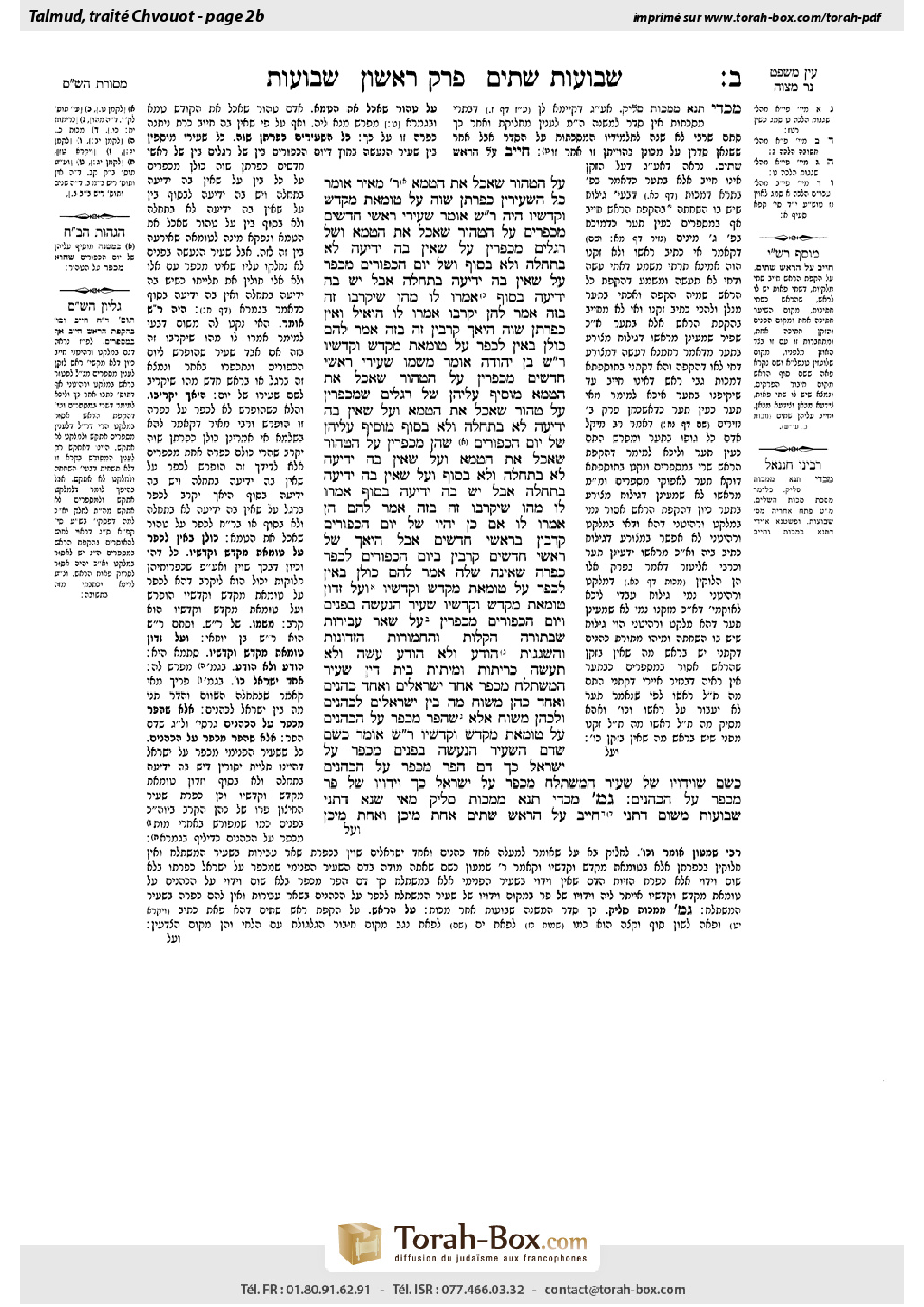
This page of Shevuot includes the Aramaic text, an English translation and an AI-generated French translation, alongside the scan above.
שבועות ב׳ ב · Aramaic and Hebrew text
עַל הַטָּהוֹר שֶׁאָכַל אֶת הַטָּמֵא.
רַבִּי מֵאִיר אוֹמֵר: כָּל הַשְׂעִירִין כַּפָּרָתָן שָׁוָה, עַל טוּמְאַת מִקְדָּשׁ וְקָדָשָׁיו.
הָיָה רַבִּי שִׁמְעוֹן אוֹמֵר: שְׂעִירֵי רָאשֵׁי חֳדָשִׁים מְכַפְּרִים עַל הַטָּהוֹר שֶׁאָכַל אֶת הַטָּמֵא, וְשֶׁל רְגָלִים מְכַפְּרִין עַל שֶׁאֵין בָּהּ יְדִיעָה לֹא בַּתְּחִלָּה וְלֹא בַּסּוֹף, וְשֶׁל יוֹם הַכִּפּוּרִים מְכַפֵּר עַל שֶׁאֵין בָּהּ יְדִיעָה בַּתְּחִלָּה אֲבָל יֵשׁ בָּהּ יְדִיעָה בַּסּוֹף.
אָמְרוּ לוֹ: מַהוּ שֶׁיִּקְרְבוּ זֶה בָּזֶה? אָמַר לָהֶן: יִקְרְבוּ. אָמְרוּ לוֹ: הוֹאִיל וְאֵין כַּפָּרָתָן שָׁוָה, הֵיאַךְ קְרֵבִין זֶה בְּזֶה? אָמַר לָהֶם: כּוּלָּן בָּאִין לְכַפֵּר עַל טוּמְאַת מִקְדָּשׁ וְקָדָשָׁיו.
רַבִּי שִׁמְעוֹן בֶּן יְהוּדָה אוֹמֵר מִשְּׁמוֹ: שְׂעִירֵי רָאשֵׁי חֳדָשִׁים – מְכַפְּרִין עַל הַטָּהוֹר שֶׁאָכַל אֶת הַטָּמֵא. מוֹסִיף עֲלֵיהֶן שֶׁל רְגָלִים – שֶׁמְּכַפְּרִין עַל טָהוֹר שֶׁאָכַל אֶת הַטָּמֵא, וְעַל שֶׁאֵין בָּהּ יְדִיעָה לֹא בַּתְּחִלָּה וְלֹא בַּסּוֹף.
מוֹסִיף עֲלֵיהֶן שֶׁל יוֹם הַכִּפּוּרִים – שֶׁהֵן מְכַפְּרִין עַל הַטָּהוֹר שֶׁאָכַל אֶת הַטָּמֵא, וְעַל שֶׁאֵין בָּהּ יְדִיעָה לֹא בַּתְּחִלָּה וְלֹא בַּסּוֹף, וְעַל שֶׁאֵין בָּהּ יְדִיעָה בַּתְּחִלָּה אֲבָל יֵשׁ בָּהּ יְדִיעָה בַּסּוֹף.
אָמְרוּ לוֹ: מַהוּ שֶׁיִּקְרְבוּ זֶה בָּזֶה? אָמַר לָהֶם: הֵן. אָמְרוּ לוֹ: אִם כֵּן, יִהְיוּ שֶׁל יוֹם הַכִּפּוּרִים קְרֵבִין בְּרָאשֵׁי חֳדָשִׁים; אֲבָל הֵיאַךְ שֶׁל רָאשֵׁי חֳדָשִׁים קְרֵבִין בְּיוֹם הַכִּפּוּרִים – לְכַפֵּר כַּפָּרָה שֶׁאֵינָהּ שֶׁלָּהּ? אָמַר לָהֶם: כּוּלָּן בָּאִין לְכַפֵּר עַל טוּמְאַת מִקְדָּשׁ וְקָדָשָׁיו.
וְעַל זְדוֹן טוּמְאַת מִקְדָּשׁ וְקָדָשָׁיו – שָׂעִיר הַנַּעֲשֶׂה בִּפְנִים וְיוֹם הַכִּפּוּרִים מְכַפְּרִין.
עַל שְׁאָר עֲבֵירוֹת שֶׁבַּתּוֹרָה; הַקַּלּוֹת וְהַחֲמוּרוֹת, הַזְּדוֹנוֹת וְהַשְּׁגָגוֹת, הוֹדַע וְלֹא הוֹדַע, עֲשֵׂה וְלֹא תַעֲשֶׂה, כָּרֵיתוֹת וּמִיתוֹת בֵּית דִּין – שָׂעִיר הַמִּשְׁתַּלֵּחַ מְכַפֵּר.
אֶחָד יִשְׂרְאֵלִים וְאֶחָד כֹּהֲנִים וְאֶחָד כֹּהֵן מָשׁוּחַ. מָה בֵּין יִשְׂרְאֵלִים לְכֹהֲנִים וּלְכֹהֵן מָשׁוּחַ? אֶלָּא שֶׁהַפָּר מְכַפֵּר עַל הַכֹּהֲנִים – עַל טוּמְאַת מִקְדָּשׁ וְקָדָשָׁיו.
רַבִּי שִׁמְעוֹן אוֹמֵר: כְּשֵׁם שֶׁדַּם הַשָּׂעִיר הַנַּעֲשֶׂה בִּפְנִים מְכַפֵּר עַל יִשְׂרָאֵל, כָּךְ דַּם הַפָּר מְכַפֵּר עַל הַכֹּהֲנִים; כְּשֵׁם שֶׁוִּידּוּיוֹ שֶׁל שָׂעִיר הַמִּשְׁתַּלֵּחַ מְכַפֵּר עַל יִשְׂרָאֵל, כָּךְ וִידּוּיוֹ שֶׁל פָּר מְכַפֵּר עַל הַכֹּהֲנִים.
גְּמָ׳ מִכְּדֵי תַּנָּא מִמַּכּוֹת סָלֵיק, מַאי שְׁנָא דְּתָנֵי שְׁבוּעוֹת? מִשּׁוּם דְּתָנֵי: חַיָּיב עַל הָרֹאשׁ שְׁתַּיִם – אַחַת מִיכָּן וְאַחַת מִיכָּן,
Shevuot 2b · English translation
They atone for a ritually pure person who unwittingly partook of ritually impure sacrificial food.
Rabbi Meir says: With regard to all the goats offered as additional offerings, those of the New Moons, Festivals, and Yom Kippur, their atonement, i.e., the atonement that they effect, is the same; they all atone for the defiling of the Temple by entering it while impure, or for the defiling of its sacrificial foods by partaking of them while impure.
Rabbi Shimon would say, delineating his opinion as the mishna expresses it above: The goats of the New Moons atone for a ritually pure person who unwittingly partook of ritually impure sacrificial food. And with regard to the defiling of the Temple or its sacrificial foods, the goats of the Festivals atone for cases in which one did not have awareness, neither at the beginning nor at the end, and the goats of the additional offerings of Yom Kippur atone for cases in which one did not have awareness at the beginning but did have awareness at the end.
The Rabbis said to him: What is the halakha with regard to whether goats consecrated for different days may be sacrificed, this one in place of that one? For example, if a goat was initially consecrated to be sacrificed as part of the Yom Kippur additional offerings, may it be sacrificed as part of the Festival additional offerings instead? Rabbi Shimon said to them: They may be sacrificed. They said to him: Since, according to you, their atonement is not the same, how could they possibly be sacrificed, this one in place of that one? Rabbi Shimon said to them: They can be interchanged, since ultimately all of them come to atone for the defiling of the Temple or its sacrificial foods.
Rabbi Shimon ben Yehuda says in the name of Rabbi Shimon a tradition of his opinion that differs from the way the mishna expresses it above: The goats of the New Moons atone for a ritually pure person who unwittingly partook of ritually impure sacrificial food. The goats of the Festivals exceed them, as they atone both for a pure person who partook of impure sacrificial food and also for cases of defiling the Temple or its sacrificial foods in which one did not have awareness, neither at the beginning nor at the end.
The goats of Yom Kippur further exceed them, as they atone both for a ritually pure person who partook of ritually impure sacrificial food and for cases of defiling the Temple or its sacrificial foods in which one did not have awareness, neither at the beginning nor at the end; and they also atone for cases in which one did not have awareness at the beginning but did have awareness at the end.
The Rabbis said to him: What is the halakha with regard to whether goats consecrated for different days may be sacrificed, this one in place of that one? Rabbi Shimon said to them: Yes, they can be interchanged. They said to him: If what you say is so, granted that the goats of Yom Kippur may be sacrificed on the New Moons, but how could the goats of the New Moons be sacrificed on Yom Kippur when they will need to effect atonement for that which they were not consecrated for? Rabbi Shimon said to them: They can all be interchanged, since ultimately all of them come to atone for the defiling of the Temple or its sacrificial foods, even if each one atones for a different case.
§ And for the intentional defiling of the Temple or its sacrificial foods, both the goat whose blood presentation is performed inside the Sanctuary on Yom Kippur, and Yom Kippur itself, atone.
The mishna delineates how atonement is effected for other transgressions: For all other transgressions that are stated in the Torah, whether they are the minor ones or the major ones, whether they were intentional or unwitting, whether one became aware of them before Yom Kippur or did not become aware of them until after Yom Kippur, whether they involve a positive mitzva or a prohibition, whether the transgressors are subject to excision from the World-to-Come [karet] or to one of the court-imposed death penalties, the scapegoat sent to Azazel on Yom Kippur atones.
Israelites and priests and the anointed priest, i.e., the High Priest, achieve atonement from the scapegoat equally. What is the difference between Israelites, priests, and the anointed priest? The difference is only that the priests achieve atonement for their defiling of the Temple or its sacrificial foods through the bull that the High Priest offers on Yom Kippur, whereas the Israelites achieve atonement for defiling caused by them through the goats that are sacrificed on Yom Kippur.
Rabbi Shimon says: With regard to the defiling of the Temple or its sacrificial foods, just as the blood of the goat, whose blood presentation is performed inside the Sanctuary, atones for Israelites, so too, the blood of the bull of the High Priest, whose blood presentation is also performed inside the Sanctuary, atones for the priests. And for all other transgressions, just as the confession made over the scapegoat atones for Israelites, so too, the confession made over the bull atones for the priests.
GEMARA: The Gemara inquires: Now, the tanna is leaving tractate Makkot, the tractate that precedes tractate Shevuot in the mishnaic order. What is distinctive about tractate Shevuot that he teaches tractate Shevuot after tractate Makkot? The Gemara answers: It is due to the fact that he teaches in a mishna at the end of tractate Makkot (20a): For rounding the edges of his head one is liable to receive two sets of lashes: One from here, the hair adjacent to one ear, and one from there, the hair adjacent to the other ear.
Shevuot 2b · Traduction française (IA)
Ils expient pour une personne rituellement pure qui a consommé par inadvertance des aliments sacrificiels rituellement impurs.
Rabbi Meïr dit : Tous les boucs offerts en sacrifices supplémentaires — ceux des nouvelles lunes, des fêtes et de Yom Kippour — ont la même fonction expiatoire : ils expient tous la profanation du Temple, lorsqu’on y pénètre en état d’impureté, ou celle de ses aliments sacrificiels, lorsqu’on les consomme en état d’impureté.
Rabbi Shimon énonce son opinion, telle que la Michna l’exprime plus haut : les boucs des nouvelles lunes expient pour une personne rituellement pure qui a consommé par inadvertance des aliments sacrificiels rituellement impurs. Quant à la profanation du Temple ou de ses aliments sacrificiels, les boucs des fêtes expient les cas où l’on n’en a eu connaissance ni au début ni à la fin, et les boucs des sacrifices supplémentaires de Yom Kippour expient les cas où l’on n’en a pas eu connaissance au début, mais où l’on en a eu connaissance à la fin.
Les Sages lui dirent : Quelle est la halakha concernant la possibilité de sacrifier des boucs consacrés pour des jours différents, l’un à la place de l’autre ? Par exemple, si un bouc a d’abord été consacré pour être sacrifié parmi les sacrifices supplémentaires de Yom Kippour, peut-on le sacrifier plutôt parmi les sacrifices supplémentaires de la fête ? Rabbi Shimon leur répondit : Ils peuvent être sacrifiés l’un à la place de l’autre. Ils lui dirent : Puisque, selon toi, leur fonction expiatoire n’est pas la même, comment pourraient-ils être sacrifiés l’un à la place de l’autre ? Rabbi Shimon leur répondit : Ils peuvent être échangés, puisque, en définitive, ils expient tous la profanation du Temple ou de ses aliments sacrificiels.
Rabbi Shimon ben Yehuda rapporte au nom de Rabbi Shimon une tradition de son opinion qui diffère de la manière dont la Michna l’exprime plus haut : les boucs des nouvelles lunes expient pour une personne rituellement pure qui a consommé par inadvertance des aliments sacrificiels rituellement impurs. Les boucs des fêtes vont plus loin : ils expient à la fois pour une personne rituellement pure qui a consommé des aliments sacrificiels impurs et pour les cas de profanation du Temple ou de ses aliments sacrificiels où l’on n’en a eu connaissance ni au début ni à la fin.
Les boucs de Yom Kippour vont encore plus loin : ils expient à la fois pour une personne rituellement pure qui a consommé des aliments sacrificiels rituellement impurs et pour les cas de profanation du Temple ou de ses aliments sacrificiels où l’on n’en a eu connaissance ni au début ni à la fin ; ils expient également les cas où l’on n’en a pas eu connaissance au début, mais où l’on en a eu connaissance à la fin.
Les Sages lui dirent : Quelle est la halakha concernant la possibilité de sacrifier des boucs consacrés pour des jours différents, l’un à la place de l’autre ? Rabbi Shimon leur répondit : Oui, ils peuvent être échangés. Ils lui dirent : Si ce que tu dis est exact, on peut admettre que les boucs de Yom Kippour soient sacrifiés aux nouvelles lunes ; mais comment les boucs des nouvelles lunes pourraient-ils être sacrifiés à Yom Kippour, alors qu’ils devraient expier une faute pour laquelle ils n’ont pas été consacrés ? Rabbi Shimon leur répondit : Ils peuvent tous être échangés, puisque, en définitive, ils expient tous la profanation du Temple ou de ses aliments sacrificiels, même si chacun expie un cas différent.
§ La profanation intentionnelle du Temple ou de ses aliments sacrificiels est expiée à la fois par le bouc dont le sang est présenté à l’intérieur du Sanctuaire à Yom Kippour et par Yom Kippour lui-même.
La Michna précise comment l’expiation est obtenue pour les autres transgressions : pour toutes les autres transgressions énoncées dans la Torah, qu’elles soient mineures ou majeures, commises intentionnellement ou par inadvertance, que l’on en ait pris connaissance avant Yom Kippour ou seulement après, qu’elles relèvent d’une mitsva positive ou d’une interdiction, et que leurs auteurs soient passibles du retranchement du monde à venir [karet] ou de l’une des peines capitales prononcées par le tribunal, le bouc émissaire envoyé à Azazel à Yom Kippour expie.
Les Israélites, les prêtres et le prêtre oint, c’est-à-dire le Grand Prêtre, obtiennent tous également l’expiation grâce au bouc émissaire. Quelle différence y a-t-il entre les Israélites, les prêtres et le prêtre oint ? La seule différence est que les prêtres obtiennent l’expiation pour la profanation du Temple ou de ses aliments sacrificiels qu’ils ont commise grâce au taureau que le Grand Prêtre offre à Yom Kippour, tandis que les Israélites obtiennent l’expiation pour la profanation qu’ils ont commise grâce aux boucs sacrifiés à Yom Kippour.
Rabbi Shimon dit : concernant la profanation du Temple ou de ses aliments sacrificiels, de même que le sang du bouc, présenté à l’intérieur du Sanctuaire, expie pour les Israélites, de même le sang du taureau du Grand Prêtre, lui aussi présenté à l’intérieur du Sanctuaire, expie pour les prêtres. Et pour toutes les autres transgressions, de même que la confession faite sur le bouc émissaire expie pour les Israélites, de même la confession faite sur le taureau expie pour les prêtres.
GUEMARA : La Guemara demande : Or, le tanna quitte le traité Makkot, qui précède le traité Shevuot dans l’ordre de la Michna. Qu’y a-t-il de particulier dans le traité Shevuot pour qu’il l’enseigne après le traité Makkot ? La Guemara répond : C’est parce qu’il enseigne dans une Michna à la fin du traité Makkot (20a) : Pour s’être rasé les tempes, on est passible de deux séries de coups : l’une de ce côté, les cheveux près d’une oreille, et l’autre de l’autre côté, les cheveux près de l’autre oreille.
Traduction française générée par IA à partir de l’édition anglaise de Sefaria. Vérifie toujours un passage avec le texte source.
Text from Sefaria: William Davidson Edition - Vocalized Aramaic (CC BY NC); William Davidson Edition - English (CC BY NC).