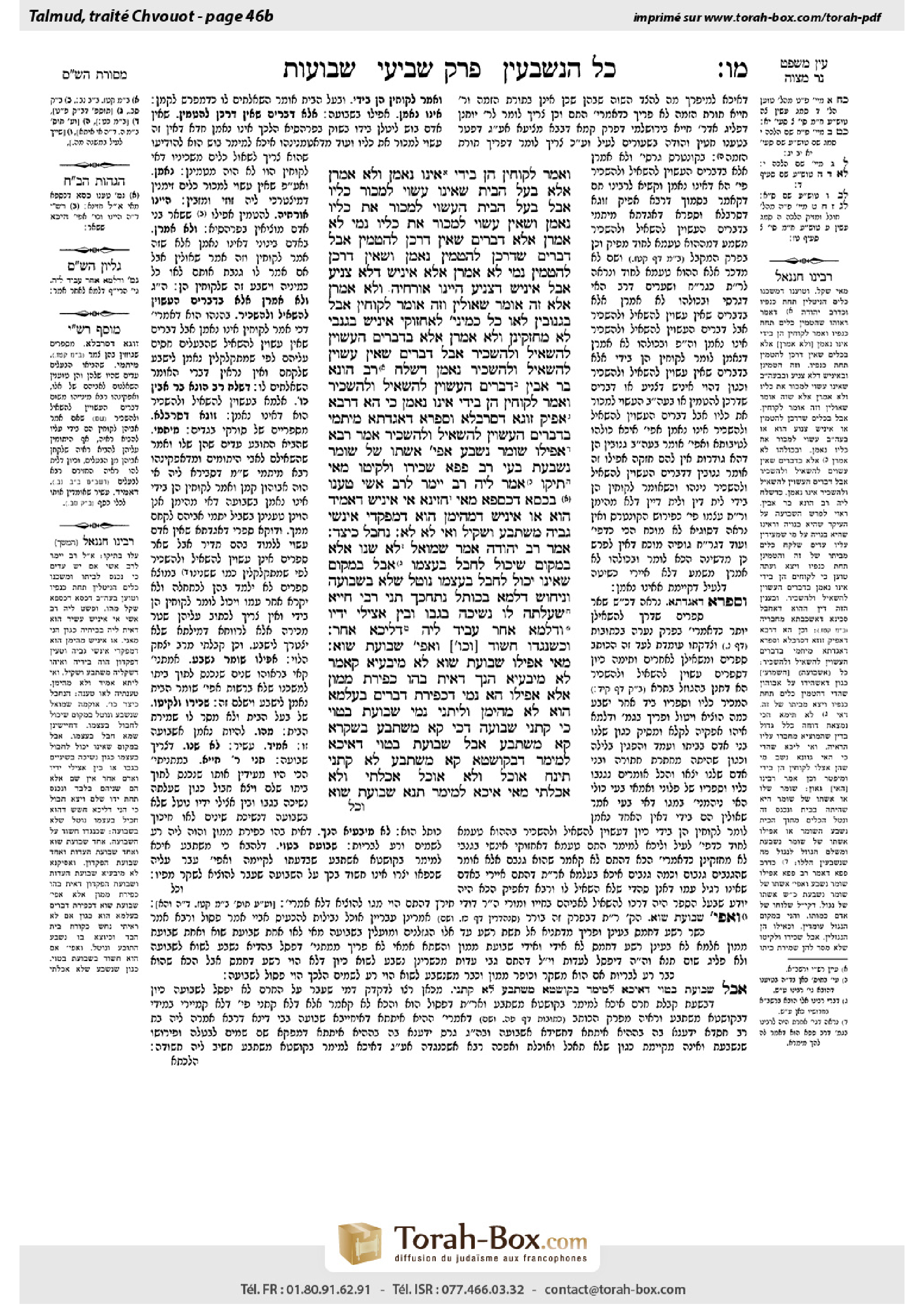
Shevuot 46b: Talmud study for Daf Yomi
Daf Yomi is the daily study of one Talmud folio. Explore 37 tractates with scans, Hebrew text, Sefaria English and AI-generated French translations where annotated.
Passage selection and English or AI-generated French translation are available where the scan has annotations. Daf Study is independent of Torah-Box and Sefaria.
Browse Shevuot · שבועות · All tractatesShevuot 46b text and translations
This page of Shevuot includes the Aramaic text, an English translation and an AI-generated French translation, alongside the scan above.
שבועות מ״ו ב · Aramaic and Hebrew text
וְאָמַר ״לְקוּחִין הֵן בְּיָדִי״ – אֵינוֹ נֶאֱמָן. וְלָא אֲמַרַן אֶלָּא בַּעַל הַבַּיִת שֶׁאֵינוֹ עָשׂוּי לִמְכּוֹר כֵּלָיו, אֲבָל בַּעַל הַבַּיִת הֶעָשׂוּי לִמְכּוֹר אֶת כֵּלָיו – נֶאֱמָן. וְשֶׁאֵין עָשׂוּי לִמְכּוֹר אֶת כֵּלָיו נָמֵי – לָא אֲמַרַן אֶלָּא דְּבָרִים שֶׁאֵין דַּרְכָּן לְהַטְמִין, אֲבָל דְּבָרִים שֶׁדַּרְכָּן לְהַטְמִין – נֶאֱמָן.
וְשֶׁאֵין דַּרְכָּן לְהַטְמִין נָמֵי – לָא אֲמַרַן אֶלָּא אִינִישׁ דְּלָא צְנִיעַ, אֲבָל אִינִישׁ דִּצְנִיעַ – הַיְינוּ אוֹרְחֵיהּ. וְלָא אֲמַרַן אֶלָּא זֶה אוֹמֵר ״שְׁאוּלִין״ וְזֶה אוֹמֵר ״לְקוּחִין״, אֲבָל בִּגְנוּבִין – לָאו כֹּל כְּמִינֵּיהּ; לְאַחְזוֹקֵי אִינִישׁ בְּגַנָּבֵי לָא מַחְזְקִינַן.
וְלָא אֲמַרַן אֶלָּא בִּדְבָרִים הָעֲשׂוּיִן לְהַשְׁאִיל וּלְהַשְׂכִּיר, אֲבָל דְּבָרִים שֶׁאֵין עֲשׂוּיִן לְהַשְׁאִיל וּלְהַשְׂכִּיר – נֶאֱמָן. דִּשְׁלַח רַב הוּנָא בַּר אָבִין: דְּבָרִים הָעֲשׂוּיִן לְהַשְׁאִיל וּלְהַשְׂכִּיר, וְאָמַר ״לְקוּחִין הֵן בְּיָדִי״ – אֵינוֹ נֶאֱמָן. כִּי הָא דְּרָבָא אַפֵּיק זוּגָא דְּסַרְבָּלָא וְסִפְרָא דְּאַגַּדְתָּא מִיַּתְמֵי, בִּדְבָרִים הָעֲשׂוּיִן לְהַשְׁאִיל וּלְהַשְׂכִּיר.
אָמַר רָבָא: אֲפִילּוּ שׁוֹמֵר נִשְׁבָּע, אֲפִילּוּ אִשְׁתּוֹ שֶׁל שׁוֹמֵר נִשְׁבַּעַת. בָּעֵי רַב פָּפָּא: שְׂכִירוֹ וּלְקִיטוֹ מַאי? תֵּיקוּ.
אֲמַר לֵיהּ רַב יֵימַר לְרַב אָשֵׁי: טְעָנוֹ בְּכָסָא דְּכַסְפָּא, מַאי? חֲזֵינָא: אִי אִינִישׁ דַּאֲמִיד הוּא, אוֹ אִינִישׁ דִּמְהֵימַן הוּא דְּמַפְקְדִי אִינָשֵׁי גַּבֵּיהּ – מִשְׁתְּבַע וְשָׁקֵיל. וְאִי לָא – לָא.
נֶחְבָּל כֵּיצַד. אָמַר רַב יְהוּדָה אָמַר שְׁמוּאֵל: לֹא שָׁנוּ אֶלָּא בִּמְקוֹם שֶׁיָּכוֹל לְחַבֵּל בְּעַצְמוֹ, אֲבָל בִּמְקוֹם שֶׁאֵינוֹ יָכוֹל לְחַבֵּל בְּעַצְמוֹ – נוֹטֵל שֶׁלֹּא בִּשְׁבוּעָה.
וְנֵיחוּשׁ דִּלְמָא בְּכוֹתֶל נִתְחַכֵּךְ! תָּנֵי רַבִּי חִיָּיא: שֶׁעָלְתָה לוֹ נְשִׁיכָה בְּגַבּוֹ וּבֵין אַצִּילֵי יָדָיו. וְדִלְמָא אַחֵר עָבֵיד לֵיהּ? דְּלֵיכָּא אַחֵר.
וּכְשֶׁנֶּגְדּוֹ חָשׁוּד [וְכוּ׳], וַאֲפִילּוּ שְׁבוּעַת שָׁוְא. מַאי ״אֲפִילּוּ שְׁבוּעַת שָׁוְא״?
לָא מִיבַּעְיָא קָאָמַר: לָא מִיבַּעְיָא הָנָךְ, דְּאִית בְּהוּ כְּפִירַת מָמוֹן; אֶלָּא אֲפִילּוּ הָא נָמֵי, דִּכְפִירַת דְּבָרִים בְּעָלְמָא הוּא – לָא מְהֵימַן.
וְלִיתְנֵי נָמֵי שְׁבוּעַת בִּטּוּי! כִּי קָתָנֵי, שְׁבוּעָה דְּכִי קָא מִשְׁתְּבַע – בְּשִׁקְרָא קָא מִשְׁתְּבַע; אֲבָל שְׁבוּעַת בִּטּוּי, דְּאִיכָּא לְמֵימַר דִּבְקוּשְׁטָא קָא מִשְׁתְּבַע – לָא קָתָנֵי.
תִּינַח ״אוֹכַל״ וְ״לֹא אוֹכַל״; ״אָכַלְתִּי״ וְ״לֹא אָכַלְתִּי״ מַאי אִיכָּא לְמֵימַר? תָּנָא שְׁבוּעַת שָׁוְא
Shevuot 46b · English translation
and then that person says: They were purchased and that is why they are in my possession, he is not deemed credible. And we said this only with regard to items taken from a homeowner who is not apt to sell his items; but with regard to a homeowner who is apt to sell his items, the one taking the items is deemed credible. And even with regard to a homeowner who is not apt to sell his items, we said that the one carrying the items is not deemed credible only with regard to items that are not typically concealed; but with regard to items that are typically concealed, he is deemed credible.
And even with regard to items that are not typically concealed, we said that he is not deemed credible only with regard to a person who is not generally secretive, but with regard to a person who is generally secretive, that is his manner, i.e., he would be likely to conceal items beneath his clothing, and he is deemed credible. And we said this only when this one, the homeowner, says: The items are borrowed, and that one who took the items, says: They are purchased, but in a case where the homeowner claims that the items are stolen, it is not in his power to have his accusation accepted, as we do not presume a person to be a thief.
Furthermore, we said that the one who claims he purchased the items is not deemed credible only with regard to items that are typically lent or rented, where the homeowner’s claim that they must now be returned is more reasonable; but for items that are not typically lent or rented, the person who took them is deemed credible. As Rav Huna bar Avin sent a ruling to the Sages: With regard to items that are typically lent or rented that someone took and said: They were purchased and that is why they are in my possession, he is not deemed credible. This is like that incident where Rava ruled to expropriate fabric scissors and a book of aggada from orphans whose father had taken them, as they were items that are typically lent or rented.
The oath of one who was robbed can be taken by others as well. Rava says: Even a watchman at the house can take the oath, and even the wife of the watchman can take the oath. Rav Pappa asks: With regard to the employer’s regular hired worker or his regular harvester, who are not appointed to safeguard the employer’s property, what is the halakha? The Gemara responds: The question shall stand unresolved.
Rav Yeimar said to Rav Ashi: If one states a claim against another that he left his house with a silver cup and is liable to return it, what is the halakha? Rav Ashi replied: We see if the owner of the house is an affluent person, or if he is a trustworthy person with whom people deposit their valuables, as those are people who would typically have a silver cup. If the homeowner is in these categories he takes an oath and receives payment of his claim; but if he is not, he does not receive the benefit of taking an oath in order to prove his claim.
§ The mishna teaches: How does this halakha apply to one who was injured? If witnesses testified about the injured person that he entered into the domain of the defendant whole, but left injured, the injured party may take an oath and receive compensation. Rav Yehuda says that Shmuel says: The Sages taught that he needs to take an oath in order to receive compensation only if he was injured in a place where he is able to injure himself, but if he was injured in a place where he is unable to injure himself, he receives compensation without taking an oath.
The Gemara challenges: And let us be concerned that perhaps he scraped against a wall and caused the injury himself. The Gemara explains: Rabbi Ḥiyya teaches that the mishna is referring to a case where, for example, he has a bite on his back or on his elbows, which must have been caused by someone else. The Gemara challenges: And perhaps a different person did it to him, and not the defendant. The Gemara explains: This is a case where there is no other person with him besides the defendant.
§ The mishna teaches: How does this halakha apply to one whose opposing litigant is suspect with regard to the taking of an oath and therefore is not permitted to take the oath? One is suspected if he had been found to have taken a false oath, whether it was an oath of testimony or an oath on a deposit, which are prescribed by Torah law, or even an oath taken in vain. The Gemara asks: For what reason does the mishna emphasize: Even an oath taken in vain?
The Gemara explains: The mishna is speaking utilizing the style of: It is not necessary. It is not necessary to state that one who is suspected of falsifying these oaths is disqualified from taking oaths, as they entail the denial of a monetary claim, i.e., due to the false oath someone incurs financial loss, but it is necessary to state that even that oath, an oath taken in vain, which involves merely the repudiation of one’s verbal commitment, nevertheless grants one the status of a person who is not credible and who is disqualified from taking oaths.
The Gemara suggests: And let the tanna also teach that falsifying an oath on an utterance, which is also an oath without monetary consequences, disqualifies one from taking oaths. The Gemara responds: When the tanna teaches which types of false oaths disqualify a person, it includes only oaths with regard to which when one takes the oath, he is at that time falsely taking the oath. But with regard to an oath on an utterance, such as an oath that he will eat a specific fruit that day, where it can be said that he took the oath with true intention and intended to eat that fruit, but ultimately failed to do so, the tanna does not teach, as one who does not fulfill such an oath retains his credibility to take oaths, since he did not consciously lie.
The Gemara raises a difficulty: It works out well to make this distinction for one who is liable for an oath on an utterance like: I will eat, or: I will not eat, where it is possible that he was not lying when he took the oath. But with regard to oaths about the past like: I ate, or: I did not eat, what can be said, since he certainly took a false oath? The Gemara answers: Teach the mishna, i.e., understand it to mean: An oath taken in vain
Shevuot 46b · Traduction française (IA)
et que cette personne affirme alors : « Je les ai achetés, c’est pourquoi ils sont en ma possession », elle n’est pas tenue pour crédible. Nous avons dit cela uniquement au sujet d’objets pris chez un propriétaire qui n’a pas l’habitude de vendre ses biens ; mais, si le propriétaire a l’habitude de vendre ses biens, celui qui les a pris est tenu pour crédible. Même au sujet d’un propriétaire qui n’a pas l’habitude de vendre ses biens, nous avons dit que celui qui porte les objets n’est pas tenu pour crédible uniquement lorsqu’il s’agit d’objets qu’on ne dissimule pas habituellement ; mais, s’il s’agit d’objets qu’on dissimule habituellement, il est tenu pour crédible.
Même lorsqu’il s’agit d’objets qu’on ne dissimule pas habituellement, nous avons dit qu’il n’est pas tenu pour crédible uniquement s’il s’agit d’une personne qui n’a pas coutume de se montrer discrète ; mais, s’il s’agit d’une personne qui a coutume de se montrer discrète, c’est dans sa manière d’agir : elle est susceptible de dissimuler des objets sous ses vêtements, et elle est tenue pour crédible. Nous avons dit cela uniquement lorsque celui-ci, le propriétaire, affirme : « Ces objets ont été empruntés », tandis que celui qui les a pris affirme : « Je les ai achetés » ; mais, si le propriétaire prétend que les objets ont été volés, il ne peut faire accepter son accusation, car nous ne présumons pas qu’une personne soit un voleur.
En outre, nous avons dit que celui qui prétend avoir acheté les objets n’est pas tenu pour crédible uniquement s’il s’agit d’objets qu’on prête ou loue habituellement, auquel cas l’affirmation du propriétaire selon laquelle ils doivent à présent être rendus est plus plausible ; mais, s’il s’agit d’objets qu’on ne prête ni ne loue habituellement, celui qui les a pris est tenu pour crédible. Car Rav Houna bar Avin transmit aux Sages la décision suivante : à propos d’objets qu’on prête ou loue habituellement, si quelqu’un les prend et dit : « Je les ai achetés, c’est pourquoi ils sont en ma possession », il n’est pas tenu pour crédible. Cela correspond à l’affaire où Rava ordonna de reprendre des ciseaux à tissu et un livre d’aggada à des orphelins, dont le père les avait pris, car il s’agissait d’objets qu’on prête ou loue habituellement.
D’autres peuvent également prêter serment à la place de celui qui a été volé. Rava dit : même un gardien de maison peut prêter serment, et même la femme du gardien peut prêter serment. Rav Pappa demande : quelle est la halakha concernant le salarié habituel de l’employeur ou son moissonneur habituel, qui ne sont pas chargés de veiller sur les biens de l’employeur ? La Guemara répond : la question reste sans réponse.
Rav Yeimar dit à Rav Ashi : si quelqu’un affirme à propos d’un autre qu’il est sorti de sa maison avec une coupe en argent et qu’il est tenu de la rendre, quelle est la halakha ? Rav Ashi répondit : nous vérifions si le propriétaire de la maison est fortuné ou s’il est digne de confiance et que les gens lui confient leurs objets de valeur, car ces personnes possèdent généralement une coupe en argent. Si le propriétaire de la maison appartient à l’une de ces catégories, il prête serment et reçoit le montant réclamé ; sinon, il ne peut pas bénéficier de la possibilité de prêter serment pour établir sa réclamation.
§ La Michna enseigne : comment cette halakha s’applique-t-elle à celui qui a été blessé ? Si des témoins attestent que la personne blessée est entrée indemne dans le domaine du défendeur, mais qu’elle en est ressortie blessée, la partie lésée peut prêter serment et recevoir une indemnisation. Rav Yehouda dit au nom de Shmouel : les Sages ont enseigné qu’elle doit prêter serment pour recevoir une indemnisation uniquement si elle a été blessée dans un endroit où elle pouvait se blesser elle-même ; mais, si elle a été blessée dans un endroit où elle ne pouvait pas se blesser elle-même, elle reçoit une indemnisation sans prêter serment.
La Guemara objecte : ne faut-il pas craindre qu’il se soit frotté contre un mur et se soit ainsi blessé lui-même ? La Guemara explique : Rabbi Ḥiyya enseigne que la Michna parle, par exemple, d’une morsure dans le dos ou sur les coudes, qui a nécessairement été causée par quelqu’un d’autre. La Guemara objecte : peut-être est-ce une autre personne, et non le défendeur, qui lui a fait cela ? La Guemara explique : il s’agit d’un cas où personne d’autre que le défendeur ne se trouve avec lui.
§ La Michna enseigne : comment cette halakha s’applique-t-elle lorsque son adversaire est suspect en matière de serment et n’est donc pas autorisé à prêter serment ? Une personne est suspecte si l’on a constaté qu’elle a prêté un faux serment, qu’il s’agisse d’un serment de témoignage ou d’un serment relatif à un dépôt, prescrits par la Torah, ou même d’un serment vain. La Guemara demande : pourquoi la Michna insiste-t-elle sur la mention d’un serment vain ?
La Guemara explique : la Michna emploie la tournure « il n’est pas nécessaire ». Il n’est pas nécessaire d’enseigner qu’une personne soupçonnée d’avoir prêté ces faux serments est disqualifiée pour prêter serment, puisqu’ils impliquent la négation d’une créance financière, c’est-à-dire qu’en raison du faux serment, quelqu’un subit une perte d’argent ; mais il est nécessaire d’enseigner que même ce serment, le serment vain, qui implique seulement le reniement d’un engagement verbal, confère néanmoins à la personne le statut de quelqu’un qui n’est pas crédible et qui est disqualifié pour prêter serment.
La Guemara propose : que le tanna enseigne aussi que le fait de prêter un faux serment sur une déclaration, qui est également un serment sans conséquence financière, disqualifie une personne pour prêter serment. La Guemara répond : lorsque le tanna enseigne quels types de faux serments disqualifient une personne, il n’inclut que les serments pour lesquels, au moment où elle les prête, elle prête déjà un faux serment. Mais il n’enseigne pas le cas d’un serment sur une déclaration, tel que le serment de manger un fruit déterminé ce jour-là : on peut dire que la personne a prêté serment avec une intention sincère et avait l’intention de manger ce fruit, mais qu’elle n’a finalement pas réussi à le faire. Celui qui ne tient pas un tel serment conserve sa crédibilité pour prêter serment, puisqu’il n’a pas menti sciemment.
La Guemara soulève une difficulté : cette distinction convient pour celui qui est passible en raison d’un serment sur une déclaration telle que : « Je mangerai » ou « Je ne mangerai pas », car il est possible qu’il ne mente pas au moment où il prête serment. Mais qu’en est-il des serments portant sur le passé, tels que : « J’ai mangé » ou « Je n’ai pas mangé », puisqu’il a certainement prêté un faux serment ? La Guemara répond : enseigne la Michna, c’est-à-dire comprends-la ainsi : un serment vain
Traduction française générée par IA à partir de l’édition anglaise de Sefaria. Vérifie toujours un passage avec le texte source.
Text from Sefaria: William Davidson Edition - Vocalized Aramaic (CC BY NC); William Davidson Edition - English (CC BY NC).