Sotah 15a: Talmud study for Daf Yomi
Daf Yomi is the daily study of one Talmud folio. Explore 37 tractates with scans, Hebrew text, Sefaria English and AI-generated French translations where annotated.
Passage selection and English or AI-generated French translation are available where the scan has annotations. Daf Study is independent of Torah-Box and Sefaria.
Browse Sotah · סוטה · All tractatesSotah 15a text and translations
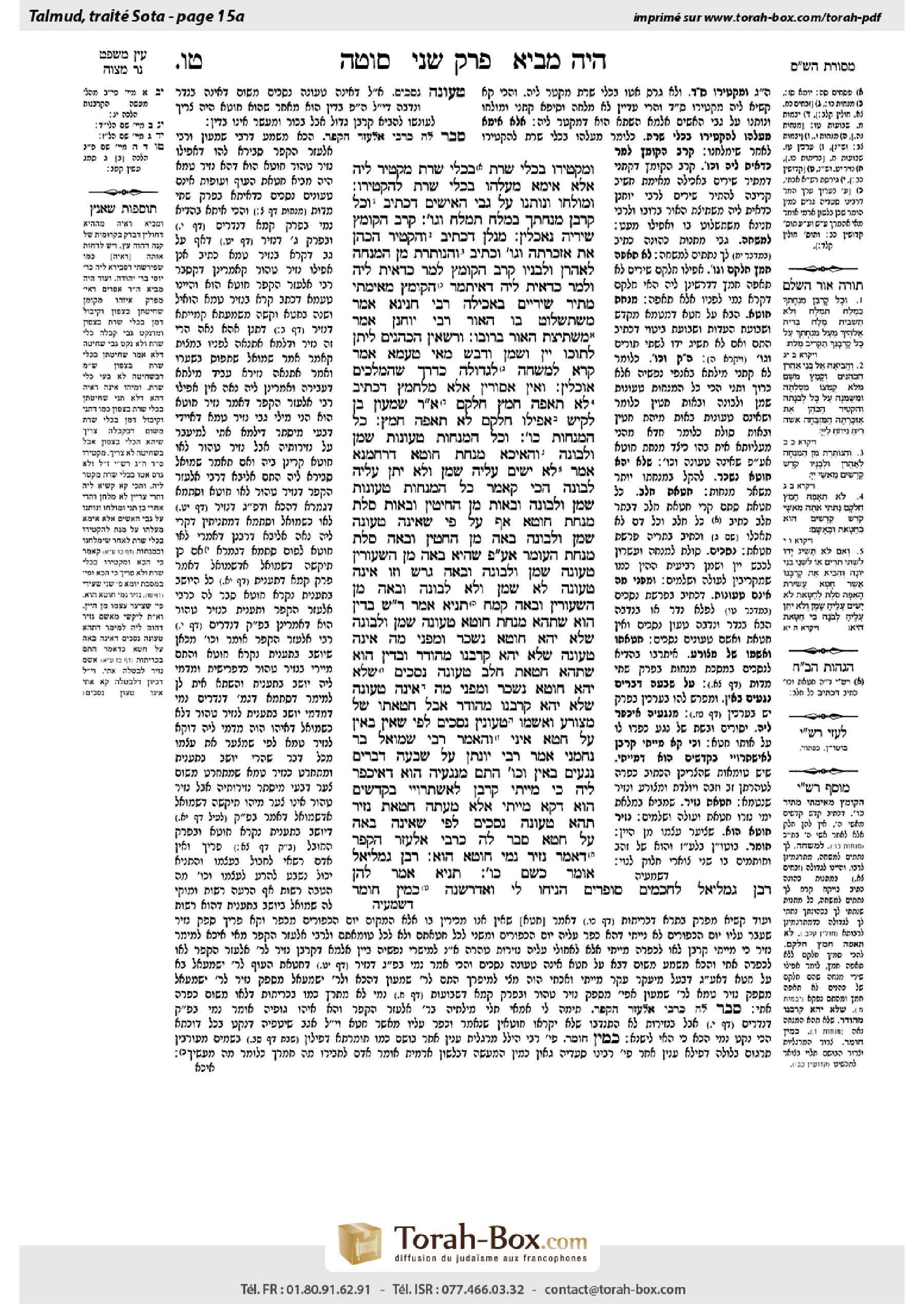
This page of Sotah includes the Aramaic text, an English translation and an AI-generated French translation, alongside the scan above.
סוטה י״ה א · Aramaic and Hebrew text
וּמַקְטִירוֹ בִּכְלִי שָׁרֵת. בִּכְלִי שָׁרֵת מַקְטֵיר לֵיהּ? אֶלָּא אֵימָא: מַעֲלֵהוּ בִּכְלִי שָׁרֵת לְהַקְטִירוֹ.
וּמוֹלְחוֹ וְנוֹתְנוֹ עַל גַּבֵּי הָאִישִּׁים, דִּכְתִיב: ״וְכׇל קׇרְבַּן מִנְחָתְךָ בַּמֶּלַח תִּמְלָח וְגוֹ׳״.
קָרַב הַקּוֹמֶץ שְׁיָרֶיהָ נֶאֱכָלִין. מְנָלַן — דִּכְתִיב: ״וְהִקְטִיר הַכֹּהֵן אֶת אַזְכָּרָתָהּ וְגוֹ׳״, וּכְתִיב: ״וְהַנּוֹתֶרֶת מִן הַמִּנְחָה לְאַהֲרֹן וּלְבָנָיו״.
קָרַב הַקּוֹמֶץ. לְמָר כִּדְאִית לֵיהּ וּלְמָר כִּדְאִית לֵיהּ. דְּאִיתְּמַר: הַקּוֹמֶץ, מֵאֵימָתַי מַתִּיר שִׁירַיִים בַּאֲכִילָה? רַבִּי חֲנִינָא אָמַר: מִשֶּׁתִּשְׁלוֹט בּוֹ הָאוּר, רַבִּי יוֹחָנָן אָמַר: מִשֶּׁתִּיצַּת הָאוּר בְּרוּבּוֹ.
וְרַשָּׁאִין הַכֹּהֲנִים לִיתֵּן לְתוֹכוֹ יַיִן וְשֶׁמֶן וּדְבַשׁ. מַאי טַעְמָא? אָמַר קְרָא: ״לְמׇשְׁחָה״ — לִגְדוּלָּה, כְּדֶרֶךְ שֶׁהַמְּלָכִים אוֹכְלִין.
וְאֵין אֲסוּרִין אֶלָּא מִלְּחַמֵּץ, דִּכְתִיב: ״לֹא תֵאָפֶה חָמֵץ חֶלְקָם״, אָמַר רַבִּי שִׁמְעוֹן בֶּן לָקִישׁ: אֲפִילּוּ חֶלְקָם לֹא תֵאָפֶה חָמֵץ.
כׇּל הַמְּנָחוֹת כּוּ׳. וְכׇל הַמְּנָחוֹת טְעוּנוֹת שֶׁמֶן וּלְבוֹנָה? וְהָאִיכָּא מִנְחַת חוֹטֵא, דְּרַחֲמָנָא אָמַר: ״לֹא יָשִׂים עָלֶיהָ שֶׁמֶן וְלֹא יִתֵּן עָלֶיהָ לְבֹנָה״!
הָכִי קָאָמַר: כׇּל הַמְּנָחוֹת טְעוּנוֹת שֶׁמֶן וּלְבוֹנָה, וּבָאוֹת מִן הַחִיטִּין, וּבָאוֹת סֹלֶת. מִנְחַת חוֹטֵא, אַף עַל פִּי שֶׁאֵינָהּ טְעוּנָה שֶׁמֶן וּלְבוֹנָה — בָּאָה מִן הַחִטִּין וּבָאָה סֹלֶת. מִנְחַת הָעוֹמֶר, אַף עַל פִּי שֶׁהִיא בָּאָה מִן הַשְּׂעוֹרִין — טְעוּנָה שֶׁמֶן וּלְבוֹנָה וּבָאָה גֶּרֶשׂ. וְזוֹ, אֵינָהּ טְעוּנָה לֹא שֶׁמֶן וְלֹא לְבוֹנָה, וּבָאָה מִן הַשְּׂעוֹרִין, וּבָאָה קֶמַח.
תַּנְיָא, אָמַר רַבִּי שִׁמְעוֹן: בְּדִין הוּא שֶׁתְּהֵא מִנְחַת חוֹטֵא טְעוּנָה שֶׁמֶן וּלְבוֹנָה, שֶׁלֹּא יְהֵא חוֹטֵא נִשְׂכָּר. וּמִפְּנֵי מָה אֵינָהּ טְעוּנָה — שֶׁלֹּא יְהֵא קׇרְבָּנוֹ מְהוּדָּר.
וּבְדִין הוּא שֶׁתְּהֵא חַטַּאת חֵלֶב טְעוּנָה נְסָכִים, שֶׁלֹּא יְהֵא חוֹטֵא נִשְׂכָּר. וּמִפְּנֵי מָה אֵינָהּ טְעוּנָה — שֶׁלֹּא יְהֵא קׇרְבָּנוֹ מְהוּדָּר.
אֲבָל חַטָּאתוֹ שֶׁל מְצוֹרָע וַאֲשָׁמוֹ טְעוּנִין נְסָכִים, לְפִי שֶׁאֵין בָּאִין עַל חֵטְא. אִינִי? וְהָאָמַר רַבִּי שְׁמוּאֵל בַּר נַחְמָנִי אָמַר רַבִּי יוֹנָתָן: עַל שִׁבְעָה דְּבָרִים נְגָעִים בָּאִין וְכוּ׳! הָתָם מִנִּגְעֵיהּ הוּא דְּאִיכַּפַּר לֵיהּ, כִּי מַיְיתֵי קׇרְבָּן — לְאִשְׁתְּרוֹיֵי בְּקָדָשִׁים הוּא דְּקָא מַיְיתֵי.
אֶלָּא מֵעַתָּה, חַטַּאת נָזִיר תְּהֵא טְעוּנָה נְסָכִים, לְפִי שֶׁאֵינָהּ בָּאָה עַל חֵטְא! סָבַר לַהּ כְּרַבִּי אֶלְעָזָר הַקַּפָּר, דְּאָמַר: נָזִיר נָמֵי חוֹטֵא הוּא.
רַבָּן גַּמְלִיאֵל אוֹמֵר: כְּשֵׁם כּוּ׳. תַּנְיָא, אָמַר לָהֶן רַבָּן גַּמְלִיאֵל לַחֲכָמִים: סוֹפְרִים, הַנִּיחוּ לִי וְאֶדְרְשֶׁנָּה כְּמִין חוֹמֶר.
Sotah 15a · English translation
and burns it in the service vessel. The Gemara asks: Does he really burn it in a service vessel? Rather, say: He brings it up to the altar in a service vessel in order to burn it.
The baraita continues: And he salts it and places it on the fires. The Gemara cites the source: As it is written: “And every meal-offering of yours you shall season with salt” (Leviticus 2:13).
The baraita continues: After the handful is sacrificed, the remainders of the meal-offering are eaten. The Gemara asks: From where do we derive this? As it is written: “And he shall bring it to Aaron’s sons, the priests…and the priest shall make the memorial part thereof smoke upon the altar” (Leviticus 2:2). The memorial part is the handful. And it is written afterward: “But that which is left of the meal-offering shall be for Aaron and his sons” (Leviticus 2:3).
The baraita uses the phrase: After the handful is sacrificed. This phrase can be understood according to one Sage as he holds, and according to another Sage as he holds. As it is stated that there is a dispute between the Sages: From when does the sacrifice of the handful render the remainder of the meal-offering permitted for consumption by the priests? Rabbi Ḥanina says: It is when the fire takes hold of it, i.e., when it ignites. Rabbi Yoḥanan says: It is when the fire consumes most of the handful. Each of these amora’im understands the baraita in accordance with his opinion.
The baraita continues: And the priests are permitted to put wine and oil and honey in the remainder of the meal-offering. What is the reason? The verse states with regard to the gifts given to the priests: “And I, behold, I have given you the charge of My terumot…for a consecrated portion” (Numbers 18:8). The phrase “for a consecrated portion” indicates that the gifts are given as a mark of greatness and should be eaten in the manner that the kings eat.
The baraita concludes: And they are prohibited only from allowing the meal-offering to become leavened. The Gemara cites the source: As it is written with regard to meal-offerings: “It shall not be baked with leaven. Their portion I have given it of My offerings made by fire” (Leviticus 6:10). Rabbi Shimon ben Lakish says: One should read the verse as if the phrase “their portion” is part of the same phrase as the prohibition of baking with leaven. This teaches that even their portion, i.e., the portion given to the priests, shall not be baked with leaven.
§ The mishna states: All other meal-offerings require oil and frankincense. The Gemara asks: But do all other meal-offerings actually require oil and frankincense? But isn’t there the meal-offering of a sinner, with regard to which the Merciful One states: “He shall put no oil upon it, neither shall he put any frankincense thereon; for it is a sin-offering” (Leviticus 5:11).
The Gemara responds: This is what the mishna is saying: All meal-offerings other than that of the sota require oil and frankincense, and they are brought from wheat; and they are also brought from fine flour. However, the meal-offering of a sinner, even though it does not require oil and frankincense, must still be brought from wheat and brought from fine flour. Similarly, the omer meal-offering, even though it is brought from barley, requires oil and frankincense, and it is brought as groats. But this one, the sota meal-offering, requires neither oil nor frankincense, and it is brought from barley and brought as unsifted flour. While the meal-offering of a sinner and the omer meal-offering are similar to other meal-offerings in one of these respects, the sota meal-offering is different in both respects.
It is taught in a baraita (Tosefta 1:10) that Rabbi Shimon said: By right, it should have been the halakha that the meal-offering of a sinner requires oil and frankincense, so that a sinner should not stand to gain by not having to pay for them. For what reason does the verse not require them? It is so that his offering will not be of superior quality.
And by right, it should have been the halakha that a sin-offering brought for transgression of a prohibition punishable by karet, e.g., consumption of forbidden fat, requires fine flour and libations of oil, and wine. Just as burnt-offerings and peace-offerings require these, a sin-offering should require them as well so that a sinner should not stand to gain by not having to pay for them. For what reason does it not require them? It is so that his offering will not be of superior quality.
But the sin-offering of a leper and his guilt-offering require libations, as they are not brought on account of a sin. The Gemara asks: Is that so? But didn’t Rabbi Shmuel bar Naḥmani say that Rabbi Yonatan says: Leprosy comes on account of seven matters. Leprosy develops on account of sin, so by extension the leper’s offerings are also brought on account of sin. The Gemara answers: There, from the time he contracts his leprosy he gains atonement for his sin through the plague of leprosy itself. Consequently, when he brings the offering, he brings it only in order to permit him to eat sacrificial food.
The Gemara asks: If that is so, then the sin-offering of a nazirite should require libations, because it is not brought on account of a sin. The Gemara answers: Rabbi Shimon holds in accordance with the opinion of Rabbi Elazar HaKappar, who says: The nazirite is also a sinner, since he denies himself wine unnecessarily.
The mishna states that Rabban Gamliel says: Just as her actions were the actions of an animal, so too, her offering is animal food. It is taught in a baraita that Rabban Gamliel said to the Sages: Scribes, permit me, and I will explain it as a type of decorative wreath [ḥomer], i.e., an allegory.
Sotah 15a · Traduction française (IA)
et le brûle dans un récipient de service. La Guemara demande : Le brûle-t-il vraiment dans un récipient de service ? Il faut plutôt dire : il le porte sur l’autel dans un récipient de service afin de le brûler.
La baraïta poursuit : Il le sale et le place sur les foyers. La Guemara en cite la source : comme il est écrit : « Tu saleras de sel toute offrande végétale que tu présenteras » (Lévitique 2,13).
La baraïta poursuit : Une fois la poignée offerte en sacrifice, le reste de l’offrande végétale est consommé. La Guemara demande : D’où le déduisons-nous ? Comme il est écrit : « Il l’apportera aux fils d’Aaron, les prêtres […] et le prêtre en fera fumer la partie mémoriale sur l’autel » (Lévitique 2,2). La partie mémoriale est la poignée. Et il est écrit ensuite : « Ce qui reste de l’offrande végétale sera pour Aaron et ses fils » (Lévitique 2,3).
La baraïta emploie l’expression : « Une fois la poignée offerte en sacrifice. » Cette expression peut être comprise selon la position de l’un des Sages, comme selon celle d’un autre Sage. En effet, les Sages sont en désaccord sur la question suivante : à partir de quel moment le sacrifice de la poignée rend-il le reste de l’offrande végétale permis à la consommation des prêtres ? Rabbi Ḥanina dit : lorsque le feu s’en empare, c’est-à-dire lorsqu’il s’enflamme. Rabbi Yoḥanan dit : lorsque le feu a consumé la majeure partie de la poignée. Chacun de ces amoraïm comprend la baraïta conformément à son opinion.
La baraïta poursuit : Les prêtres ont le droit d’ajouter du vin, de l’huile et du miel au reste de l’offrande végétale. Pour quelle raison ? Le verset dit à propos des dons remis aux prêtres : « Et moi, voici que je vous ai donné la charge de mes teroumot […] comme part consacrée » (Nombres 18,8). L’expression « comme part consacrée » indique que ces dons leur sont remis en signe de grandeur et doivent être consommés à la manière des rois.
La baraïta conclut : Il leur est seulement interdit de laisser l’offrande végétale devenir levée. La Guemara en cite la source : à propos des offrandes végétales, il est écrit : « Elle ne sera pas cuite avec du levain. Je la leur ai donnée comme leur part de mes offrandes consumées par le feu » (Lévitique 6,10). Rabbi Shimon ben Lakish dit : Il faut lire le verset comme si l’expression « leur part » était rattachée à la même proposition que l’interdiction de cuire avec du levain. Cela enseigne que même leur part, c’est-à-dire la part remise aux prêtres, ne doit pas être cuite avec du levain.
§ La Michna affirme : Toutes les autres offrandes végétales requièrent de l’huile et de l’encens. La Guemara demande : Mais toutes les autres offrandes végétales requièrent-elles vraiment de l’huile et de l’encens ? N’y a-t-il pas l’offrande végétale d’un pécheur, au sujet de laquelle le Miséricordieux dit : « Il n’y mettra pas d’huile et n’y mettra pas d’encens, car c’est un sacrifice expiatoire » (Lévitique 5,11) ?
La Guemara répond : Voici ce que dit la Michna : toutes les offrandes végétales, à l’exception de celle de la sota, requièrent de l’huile et de l’encens, et sont apportées à base de blé ; elles sont également apportées sous forme de farine fine. Toutefois, l’offrande végétale d’un pécheur, bien qu’elle ne requière ni huile ni encens, doit tout de même être apportée à base de blé et sous forme de farine fine. De même, l’offrande végétale de l’omer, bien qu’elle soit apportée à base d’orge, requiert de l’huile et de l’encens, et est apportée sous forme de gruau. Mais celle-ci, l’offrande végétale de la sota, ne requiert ni huile ni encens ; elle est apportée à base d’orge et sous forme de farine non tamisée. L’offrande végétale d’un pécheur et celle de l’omer ressemblent aux autres offrandes végétales sous l’un de ces aspects, tandis que l’offrande végétale de la sota diffère sous les deux aspects.
Il est enseigné dans une baraïta (Tosefta 1:10) que Rabbi Shimon a dit : À juste titre, la halakha aurait dû être que l’offrande végétale d’un pécheur requière de l’huile et de l’encens, afin qu’un pécheur ne tire pas avantage du fait de ne pas avoir à les payer. Pour quelle raison le verset ne les exige-t-il pas ? Afin que son offrande ne soit pas de qualité supérieure.
Et à juste titre, la halakha aurait dû être qu’un sacrifice expiatoire apporté pour la transgression d’un interdit passible de karet, par exemple la consommation de graisse interdite, requière de la farine fine ainsi que des libations d’huile et de vin. De même que les holocaustes et les sacrifices de paix requièrent ces éléments, un sacrifice expiatoire aurait dû les requérir lui aussi, afin qu’un pécheur ne tire pas avantage du fait de ne pas avoir à les payer. Pour quelle raison ne les requiert-il pas ? Afin que son offrande ne soit pas de qualité supérieure.
Mais le sacrifice expiatoire d’un lépreux et son sacrifice de culpabilité requièrent des libations, car ils ne sont pas apportés à cause d’un péché. La Guemara demande : Est-ce vraiment le cas ? Rabbi Shmuel bar Naḥmani n’a-t-il pas dit au nom de Rabbi Yonatan : La lèpre survient à cause de sept fautes ? La lèpre se développe à cause du péché ; par extension, les offrandes du lépreux sont donc elles aussi apportées à cause d’un péché. La Guemara répond : Dans ce cas, dès qu’il contracte la lèpre, il obtient l’expiation de son péché par le fléau de la lèpre lui-même. Par conséquent, lorsqu’il apporte l’offrande, il ne le fait que pour être autorisé à consommer des aliments consacrés.
La Guemara demande : Si c’est ainsi, le sacrifice expiatoire d’un nazir devrait requérir des libations, puisqu’il n’est pas apporté à cause d’un péché. La Guemara répond : Rabbi Shimon suit l’opinion de Rabbi Elazar HaKappar, qui dit que le nazir est lui aussi un pécheur, puisqu’il se prive inutilement de vin.
La Michna rapporte que Rabban Gamliel dit : De même que ses actes étaient ceux d’un animal, son offrande est elle aussi une nourriture pour animal. Il est enseigné dans une baraïta que Rabban Gamliel dit aux Sages : Scribes, permettez-moi de l’expliquer sous la forme d’une couronne décorative [ḥomer], c’est-à-dire d’une allégorie.
Traduction française générée par IA à partir de l’édition anglaise de Sefaria. Vérifie toujours un passage avec le texte source.
Text from Sefaria: William Davidson Edition - Vocalized Aramaic (CC BY NC); William Davidson Edition - English (CC BY NC).