Sotah 22b: Talmud study for Daf Yomi
Daf Yomi is the daily study of one Talmud folio. Explore 37 tractates with scans, Hebrew text, Sefaria English and AI-generated French translations where annotated.
Passage selection and English or AI-generated French translation are available where the scan has annotations. Daf Study is independent of Torah-Box and Sefaria.
Browse Sotah · סוטה · All tractatesSotah 22b text and translations
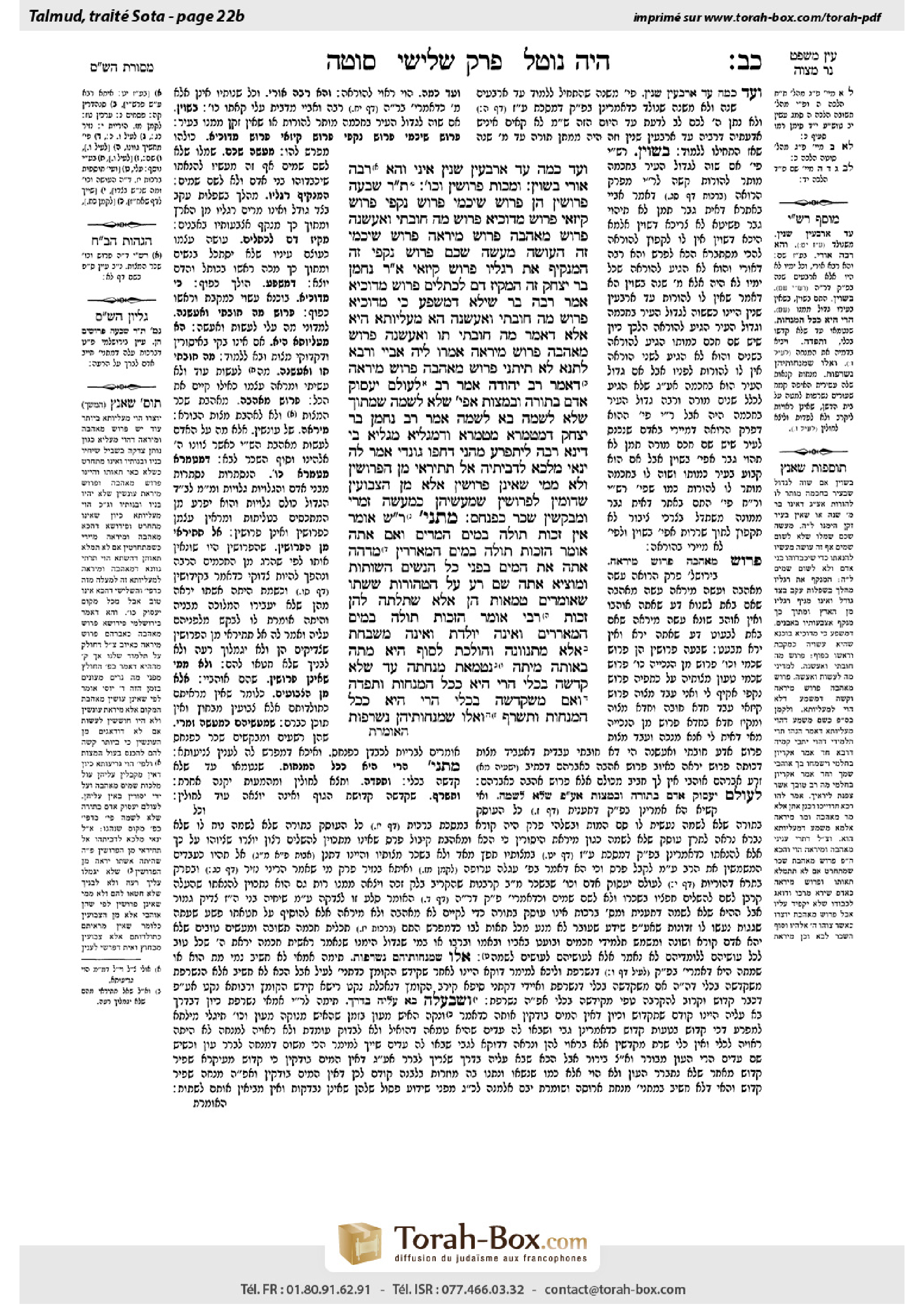
This page of Sotah includes the Aramaic text, an English translation and an AI-generated French translation, alongside the scan above.
סוטה כ״ב ב · Aramaic and Hebrew text
וְעַד כַּמָּה — עַד אַרְבְּעִין שְׁנִין. אִינִי? וְהָא רַבָּה אוֹרִי! בְּשָׁוִין.
וּמַכּוֹת פְּרוּשִׁין וְכוּ׳. תָּנוּ רַבָּנַן, שִׁבְעָה פְּרוּשִׁין הֵן: פָּרוּשׁ שִׁיכְמִי, פָּרוּשׁ נִקְפִּי, פָּרוּשׁ קִיזַּאי, פָּרוּשׁ מְדוּכְיָא, פָּרוּשׁ ״מָה חוֹבָתִי וְאֶעֱשֶׂנָּה״, פָּרוּשׁ מֵאַהֲבָה, פָּרוּשׁ מִיִּרְאָה.
פָּרוּשׁ שִׁיכְמִי — זֶה הָעוֹשֶׂה מַעֲשֵׂה שְׁכֶם. פָּרוּשׁ נִקְפִּי — זֶה הַמְנַקֵּיף אֶת רַגְלָיו. פָּרוּשׁ קִיזַּאי — אָמַר רַב נַחְמָן בַּר יִצְחָק: זֶה הַמַּקִּיז דָּם לַכְּתָלִים. פָּרוּשׁ מְדוּכְיָא — אָמַר רַבָּה בַּר שֵׁילָא: דִּמְשַׁפַּע כִּי מְדוּכְיָא.
פָּרוּשׁ ״מָה חוֹבָתִי וְאֶעֱשֶׂנָּה״. הָא מְעַלְּיוּתָא הִיא! אֶלָּא דְּאָמַר ״מָה חוֹבָתִי תּוּ וְאֶעֱשֶׂנָּה״.
פָּרוּשׁ מֵאַהֲבָה, פָּרוּשׁ מִיִּרְאָה. אֲמַרוּ לֵיהּ אַבָּיֵי וְרָבָא לְתַנָּא: לָא תִּיתְּנֵי פָּרוּשׁ מֵאַהֲבָה פָּרוּשׁ מִיִּרְאָה, דְּאָמַר רַב יְהוּדָה אָמַר רַב: לְעוֹלָם יַעֲסוֹק אָדָם בַּתּוֹרָה וּבְמִצְוֹת אֲפִילּוּ שֶׁלֹּא לִשְׁמָהּ, שֶׁמִּתּוֹךְ שֶׁלֹּא לִשְׁמָהּ בָּא לִשְׁמָהּ.
אָמַר רַב נַחְמָן בַּר יִצְחָק: דְּמִטַּמְּרָא מִטַּמְּרָא, וּדְמִגַּלְּיָא מִגַּלְּיָא, בֵּי דִינָא רַבָּה לִיתְפְּרַע מֵהָנֵי דְּחָפוּ גּוּנְדֵי. אֲמַר לַהּ יַנַּאי מַלְכָּא לִדְבֵיתֵיהּ: אַל תִּתְיָרְאִי מִן הַפְּרוּשִׁין, וְלֹא מִמִּי שֶׁאֵינָן פְּרוּשִׁין, אֶלָּא מִן הַצְּבוּעִין שֶׁדּוֹמִין לִפְרוּשִׁין, שֶׁמַּעֲשֵׂיהֶן כְּמַעֲשֵׂה זִמְרִי וּמְבַקְּשִׁין שָׂכָר כְּפִנְחָס.
מַתְנִי׳ רַבִּי שִׁמְעוֹן אוֹמֵר: אֵין זְכוּת תּוֹלָה בְּמַיִם הַמָּרִים. וְאִם אַתָּה אוֹמֵר הַזְּכוּת תּוֹלָה בַּמַּיִם הַמְאָרְרִין — מַדְהֶה אַתָּה אֶת הַמַּיִם בִּפְנֵי כׇּל הַנָּשִׁים הַשּׁוֹתוֹת. וּמוֹצִיא אַתָּה שֵׁם רַע עַל הַטְּהוֹרוֹת שֶׁשָּׁתוּ, שֶׁאוֹמְרִים: טְמֵאוֹת הֵן, אֶלָּא שֶׁתָּלְתָה לָהֶן זְכוּת. רַבִּי אוֹמֵר: הַזְּכוּת תּוֹלָה בְּמַיִם הַמְאָרְרִים, וְאֵינָהּ יוֹלֶדֶת וְאֵינָהּ מַשְׁבַּחַת, אֶלָּא מִתְנַוְּונָה וְהוֹלֶכֶת, לְסוֹף הִיא מֵתָה בְּאוֹתָהּ מִיתָה.
נִטְמֵאת מִנְחָתָהּ עַד שֶׁלֹּא קָדְשָׁה בִּכְלִי — הֲרֵי הִיא כְּכׇל הַמְּנָחוֹת, וְתִפָּדֶה. וְאִם מִשֶּׁקָּדְשָׁה בִּכְלִי — הֲרֵי הִיא כְּכׇל הַמְּנָחוֹת, וְתִשָּׂרֵף. וְאֵלּוּ שֶׁמִּנְחוֹתֵיהֶן נִשְׂרָפוֹת:
Sotah 22b · English translation
And until when is it considered too premature for a scholar to issue halakhic rulings? It is until forty years. The Gemara asks: Is that so? But didn’t Rabba issue rulings, even though he lived for only forty years? The Gemara answers: It is permitted for a scholar who has not studied for so long to issue rulings when his knowledge reaches the level of the foremost scholar in his city and they are equals.
§ It states in the mishna: And those who injure themselves out of false abstinence [perushin] are people who erode the world. The Sages taught: There are seven pseudo-righteous people who erode the world: The righteous of Shechem, the self-flagellating righteous, the bloodletting righteous, the pestle-like righteous, the righteous who say: Tell me what my obligation is and I will perform it, those who are righteous due to love, and those who are righteous due to fear.
The Gemara explains: The righteous of Shechem [shikhmi]; this is one who performs actions comparable to the action of the people of Shechem, who agreed to circumcise themselves for personal gain (see Genesis, chapter 34); so too, he behaves righteously only in order to be honored. The self-flagellating righteous; this is one who injures his feet, as he walks slowly, dragging his feet on the ground in an attempt to appear humble, and injures his feet in the process. The bloodletting righteous; Rav Naḥman bar Yitzḥak says that this is one who lets blood by banging his head against the walls because he walks with his eyes shut, ostensibly out of modesty. The pestle-like righteous; Rabba bar Sheila says that this is one who walks bent over like the pestle of a mortar.
With regard to the righteous one who says: Tell me what my obligation is and I will perform it, the Gemara asks: Isn’t this virtuous behavior, as he desires to be aware of his obligations? Rather, this is referring to one who says: Tell me what further obligations are incumbent upon me and I will perform them, indicating that he fulfills all of his mitzvot perfectly and therefore seeks additional obligations.
The baraita also includes in the list of pseudo-righteous people those who are righteous due to love and those who are righteous due to fear, i.e., one who performs mitzvot due to love of their reward or due to fear of punishment. Abaye and Rava said to the tanna who transmitted this baraita: Do not teach in the baraita: Those who are righteous due to love and those who are righteous due to fear, as Rav Yehuda says that Rav says: A person should always engage in Torah study and in performance of the mitzvot even if he does not do so for their own sake, as through performing them not for their own sake, one comes to perform them for their own sake.
Rav Naḥman bar Yitzḥak said: That which is hidden is hidden, and that which is revealed is revealed, but in Heaven everything is known, and the great court in Heaven will exact payment from those who wear the cloak of the righteous but are in fact unworthy. The Gemara relates: King Yannai said to his wife before he died: Do not be afraid of the Pharisees [perushin], and neither should you fear from those who are not Pharisees, i.e., the Sadducees; rather, beware of the hypocrites who appear like Pharisees, as their actions are like the act of the wicked Zimri and they request a reward like that of the righteous Pinehas (see Numbers, chapter 25).
MISHNA: Rabbi Shimon says: Merit does not delay the punishment of the bitter water of a sota, and if you say that merit does delay the punishment of the water that causes the curse, as stated earlier by the Rabbis (20a), you weaken [madhe] the power of the bitter water before all the women who drink the water, who will no longer be afraid of it, as they will rely on their merit to save them. And you defame the untainted women who drank the water and survived, as people say: They are defiled but it is their merit that delayed the punishment for them. Rabbi Yehuda HaNasi says: Merit delays the punishment of the water that causes the curse, but a woman whose punishment is delayed does not give birth and does not flourish; rather, she progressively deteriorates. Ultimately she dies by the same death as a sota who dies immediately.
§ If the meal-offering of the sota is rendered impure before it has been sanctified in the service vessel, its status is like that of all the other meal-offerings that are rendered impure before being sanctified in a service vessel, and it is redeemed. But if it is rendered impure after it has been sanctified in the service vessel, its status is like that of all the other meal-offerings that are rendered impure after being sanctified in a service vessel, and it is burned. And these are the sota women whose meal-offerings are burned if they have already been sanctified in a service vessel:
Sotah 22b · Traduction française (IA)
Jusqu’à quel âge est-il considéré comme prématuré pour un érudit de rendre des décisions halakhiques ? Jusqu’à quarante ans. La Guemara demande : Est-ce bien le cas ? Pourtant, Rabba rendait des décisions, alors qu’il n’a vécu que quarante ans. La Guemara répond : Un érudit qui n’a pas étudié aussi longtemps est autorisé à rendre des décisions lorsque son savoir atteint le niveau de l’érudit le plus éminent de sa ville et qu’ils sont de force égale.
§ La Michna enseigne : Ceux qui se blessent par abstinence feinte [perushin] sont des gens qui sapent le monde. Les Sages ont enseigné : Il existe sept sortes de pseudo-justes qui sapent le monde : les justes de Sichem, les justes qui se flagellent, les justes qui se font saigner, les justes semblables à des pilons, les justes qui disent : « Dis-moi quelle est mon obligation et je l’accomplirai », ceux qui sont justes par amour et ceux qui sont justes par crainte.
La Guemara explique : Les justes de Sichem [shikhmi] : il s’agit de celui dont les actes ressemblent à ceux des habitants de Sichem, qui acceptèrent de se faire circoncire par intérêt personnel (voir Genèse, chapitre 34). De même, il ne se comporte en juste que pour être honoré. Les justes qui se flagellent : il s’agit de celui qui se blesse les pieds en marchant lentement, les traînant sur le sol pour paraître humble. Les justes qui se font saigner : Rav Naḥman bar Yitzḥak dit qu’il s’agit de celui qui se fait saigner en se cognant la tête contre les murs parce qu’il marche les yeux fermés, ostensiblement par pudeur. Les justes semblables à des pilons : Rabba bar Sheila dit qu’il s’agit de celui qui marche courbé, comme le pilon d’un mortier.
Au sujet du juste qui dit : « Dis-moi quelle est mon obligation et je l’accomplirai », la Guemara demande : N’est-ce pas là un comportement vertueux, puisqu’il désire connaître ses obligations ? Il s’agit plutôt de celui qui dit : « Dis-moi quelles autres obligations m’incombent et je les accomplirai », laissant entendre qu’il accomplit parfaitement toutes ses mitsvot et cherche donc à s’imposer des obligations supplémentaires.
La baraïta inclut également dans la liste des pseudo-justes ceux qui sont justes par amour et ceux qui sont justes par crainte, c’est-à-dire celui qui accomplit les mitsvot par amour de leur récompense ou par crainte du châtiment. Abaye et Rava dirent au tanna qui transmit cette baraïta : « N’enseigne pas dans la baraïta : “Ceux qui sont justes par amour et ceux qui sont justes par crainte”, car Rav Yehouda dit au nom de Rav : Il faut toujours s’adonner à l’étude de la Torah et à l’accomplissement des mitsvot, même si l’on ne le fait pas pour elles-mêmes, car en les accomplissant sans le faire pour elles-mêmes, on en vient à les accomplir pour elles-mêmes. »
Rav Naḥman bar Yitzḥak dit : « Ce qui est caché est caché, et ce qui est révélé est révélé, mais dans les Cieux tout est connu ; le grand tribunal céleste fera payer ceux qui revêtent le manteau des justes alors qu’ils en sont indignes. » La Guemara rapporte : Le roi Yannai dit à son épouse avant de mourir : « Ne crains pas les Pharisiens [perushin], et ne crains pas non plus ceux qui ne sont pas des Pharisiens, c’est-à-dire les Sadducéens ; méfie-toi plutôt des hypocrites qui ressemblent aux Pharisiens, car leurs actes sont ceux du méchant Zimri et ils réclament une récompense semblable à celle du juste Pinḥas (voir Nombres, chapitre 25). »
MICHNA : Rabbi Shimon dit : Le mérite ne retarde pas le châtiment des eaux amères de la sota. Si tu dis que le mérite retarde le châtiment des eaux qui provoquent la malédiction, comme l’ont enseigné précédemment les Rabbins (20a), tu affaiblis [madhe] la puissance des eaux amères aux yeux de toutes les femmes qui les boivent ; elles n’en auront alors plus peur, puisqu’elles compteront sur leur mérite pour les sauver. Et tu diffames les femmes irréprochables qui ont bu les eaux et ont survécu, car les gens disent : « Elles sont souillées, mais c’est leur mérite qui a retardé leur châtiment. » Rabbi Yehouda HaNassi dit : Le mérite retarde le châtiment des eaux qui provoquent la malédiction, mais la femme dont le châtiment est retardé ne donne pas naissance et ne s’épanouit pas ; au contraire, son état se dégrade progressivement. À la fin, elle meurt de la même mort qu’une sota qui meurt immédiatement.
§ Si l’offrande de farine de la sota devient impure avant d’avoir été sanctifiée dans le récipient de service, elle a le même statut que toutes les autres offrandes de farine qui deviennent impures avant d’être sanctifiées dans un récipient de service, et elle est rachetée. Mais si elle devient impure après avoir été sanctifiée dans le récipient de service, elle a le même statut que toutes les autres offrandes de farine qui deviennent impures après avoir été sanctifiées dans un récipient de service, et elle est brûlée. Voici les femmes sota dont les offrandes de farine sont brûlées si elles ont déjà été sanctifiées dans un récipient de service :
Traduction française générée par IA à partir de l’édition anglaise de Sefaria. Vérifie toujours un passage avec le texte source.
Text from Sefaria: William Davidson Edition - Vocalized Aramaic (CC BY NC); William Davidson Edition - English (CC BY NC).