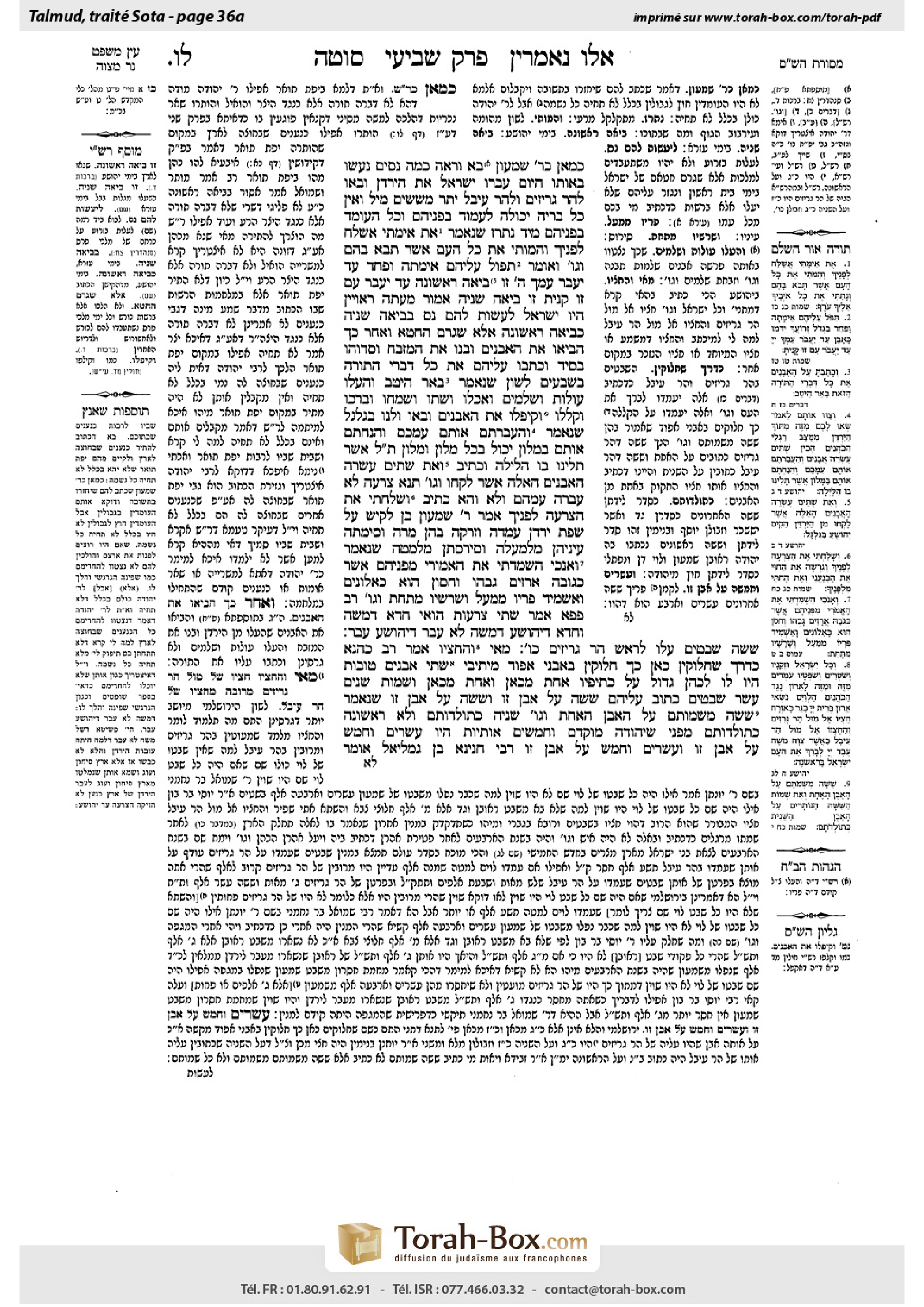
Sotah 36a: Talmud study for Daf Yomi
Daf Yomi is the daily study of one Talmud folio. Explore 37 tractates with scans, Hebrew text, Sefaria English and AI-generated French translations where annotated.
Passage selection and English or AI-generated French translation are available where the scan has annotations. Daf Study is independent of Torah-Box and Sefaria.
Browse Sotah · סוטה · All tractatesSotah 36a text and translations
This page of Sotah includes the Aramaic text, an English translation and an AI-generated French translation, alongside the scan above.
סוטה ל״ו א · Aramaic and Hebrew text
כְּמַאן — כְּרַבִּי שִׁמְעוֹן.
בֹּא וּרְאֵה כַּמָּה נִסִּים נַעֲשׂוּ בְּאוֹתוֹ הַיּוֹם: עָבְרוּ יִשְׂרָאֵל אֶת הַיַּרְדֵּן, וּבָאוּ לְהַר גְּרִיזִים וּלְהַר עֵיבָל יָתֵר מִשִּׁשִּׁים מִיל, וְאֵין כׇּל בְּרִיָּה יְכוֹלָה לַעֲמוֹד בִּפְנֵיהֶם, וְכׇל הָעוֹמֵד בִּפְנֵיהֶם מִיָּד נִתְרָז, שֶׁנֶּאֱמַר: ״אֶת אֵימָתִי אֲשַׁלַּח לְפָנֶיךָ וְהַמֹּתִי אֶת כׇּל הָעָם אֲשֶׁר תָּבֹא בָּהֶם וְגוֹ׳״.
וְאוֹמֵר ״תִּפֹּל עֲלֵיהֶם אֵימָתָה וָפַחַד ... עַד יַעֲבֹר עַמְּךָ ה׳״ — זוֹ בִּיאָה רִאשׁוֹנָה, ״עַד יַעֲבֹר עַם זוּ קָנִיתָ״ — זוֹ בִּיאָה שְׁנִיָּה.
אֱמוֹר מֵעַתָּה: רְאוּיִין הָיוּ יִשְׂרָאֵל לַעֲשׂוֹת לָהֶם נֵס בְּבִיאָה שְׁנִיָּה כְּבִיאָה רִאשׁוֹנָה, אֶלָּא שֶׁגָּרַם הַחֵטְא.
וְאַחַר כָּךְ הֵבִיאוּ אֶת הָאֲבָנִים, וּבָנוּ אֶת הַמִּזְבֵּחַ, וְסָדוּהוּ בְּסִיד, וְכָתְבוּ עֲלֵיהֶם אֶת כׇּל דִּבְרֵי הַתּוֹרָה בְּשִׁבְעִים לָשׁוֹן, שֶׁנֶּאֱמַר: ״בַּאֵר הֵיטֵב״,
וְהֶעֱלוּ עוֹלוֹת וּשְׁלָמִים, וְאָכְלוּ וְשָׁתוּ וְשָׂמְחוּ, וּבֵרְכוּ וְקִלְּלוּ, וְקִיפְּלוּ אֶת הָאֲבָנִים, וּבָאוּ וְלָנוּ בַּגִּלְגָּל, שֶׁנֶּאֱמַר: ״וְהַעֲבַרְתֶּם אוֹתָם עִמָּכֶם וְהִנַּחְתֶּם אוֹתָם בַּמָּלוֹן״.
יָכוֹל בְּכׇל מָלוֹן וּמָלוֹן — תַּלְמוּד לוֹמַר: ״אֲשֶׁר תָּלִינוּ בוֹ הַלָּיְלָה״, וּכְתִיב: ״וְאֶת שְׁתֵּים עֶשְׂרֵה הָאֲבָנִים הָאֵלֶּה אֲשֶׁר לָקְחוּ וְגוֹ׳״.
תָּנָא: צִרְעָה לֹא עָבְרָה עִמָּהֶם. וְלָא? וְהָא כְּתִיב: ״וְשָׁלַחְתִּי אֶת הַצִּרְעָה לְפָנֶיךָ״.
אָמַר רַבִּי שִׁמְעוֹן בֶּן לָקִישׁ: עַל שְׂפַת יַרְדֵּן עָמְדָה, וְזָרְקָה בָּהֶן מָרָה. וְסִימְּתָה עֵינֵיהֶן מִלְּמַעְלָה, וְסֵירְסָתַן מִלְּמַטָּה, שֶׁנֶּאֱמַר: ״וְאָנֹכִי הִשְׁמַדְתִּי אֶת הָאֱמֹרִי מִפְּנֵיהֶם אֲשֶׁר כְּגֹבַהּ אֲרָזִים גׇּבְהוֹ וְחָסֹן הוּא כָּאַלּוֹנִים וָאַשְׁמִיד פִּרְיוֹ מִמַּעַל וְשׇׁרָשָׁיו מִתָּחַת וְגוֹ׳״.
רַב פָּפָּא אָמַר: שְׁתֵּי צְרָעוֹת הֲוַאי, חֲדָא דְּמֹשֶׁה וַחֲדָא דִּיהוֹשֻׁעַ. דְּמֹשֶׁה לָא עֲבַר, דִּיהוֹשֻׁעַ עֲבַר.
שִׁשָּׁה שְׁבָטִים עָלוּ לְרֹאשׁ הַר גְּרִיזִים כּוּ׳. מַאי ״וְהַחֶצְיוֹ״? אָמַר רַב כָּהֲנָא: כְּדֶרֶךְ שֶׁחֲלוּקִין כָּאן — כָּךְ חֲלוּקִין בְּאַבְנֵי אֵפוֹד.
מֵיתִיבִי: שְׁתֵּי אֲבָנִים טוֹבוֹת הָיוּ לוֹ לְכֹהֵן גָּדוֹל עַל כְּתֵיפָיו, אַחַת מִכָּאן וְאַחַת מִכָּאן, וּשְׁמוֹת שְׁנֵים עָשָׂר שְׁבָטִים כָּתוּב עֲלֵיהֶם, שִׁשָּׁה עַל אֶבֶן זוֹ וְשִׁשָּׁה עַל אֶבֶן זוֹ, שֶׁנֶּאֱמַר: ״שִׁשָּׁה מִשְּׁמוֹתָם עַל הָאֶבֶן הָאֶחָת וְגוֹ׳״.
שְׁנִיָּה כְּתוֹלְדוֹתָם, וְלֹא רִאשׁוֹנָה כְּתוֹלְדוֹתָם — מִפְּנֵי שֶׁיְּהוּדָה מוּקְדָּם. וַחֲמִשִּׁים אוֹתִיּוֹת הָיוּ, עֶשְׂרִים וְחָמֵשׁ עַל אֶבֶן זוֹ וְעֶשְׂרִים וְחָמֵשׁ עַל אֶבֶן זוֹ.
רַבִּי חֲנִינָא בֶּן גַּמְלִיאֵל אוֹמֵר:
Sotah 36a · English translation
In accordance with whose opinion is the baraita? It is in accordance with the opinion of Rabbi Shimon, who holds that the verse: “You shall keep alive no one who breathes” (Deuteronomy 20:16), is not referring to the gentiles living outside of Eretz Yisrael, because there is no concern that the Jewish people will learn “to do like all their abominations” (Deuteronomy 20:18), as these Canaanites are not located in Eretz Yisrael.
§ The Gemara continues to discuss the entrance of the Jewish people into Eretz Yisrael: Come and see how many miracles were performed on that day: The Jewish people crossed the Jordan, and they arrived at Mount Gerizim and Mount Ebal, which are more than sixty mil from the river, and on that day no entity was able to stand before them. And anyone who stood before them was immediately struck with diarrhea, as it is stated: “I will send My terror before you, and will confound all the people that you encounter” (Exodus 23:27).
And similarly, the verse says: “Terror and dread falls upon them; by the greatness of Your arm they are as still as a stone; till Your people pass over, Lord” (Exodus 15:16). This alludes to the first arrival of the Jewish people in Eretz Yisrael, during the period of Joshua. The verse continues: “Till the people that You have gotten pass over” (Exodus 15:16). This alludes to the second arrival, when the Jews returned to Eretz Yisrael from Babylonia after the destruction of the First Temple.
Accordingly, say from now that the Jewish people were worthy of having a miracle performed for them during the second arrival, just like they were worthy of having miracles performed for them during the first arrival, but their sin caused them to enter Eretz Yisrael through a natural process, with the permission of the kings of other nations.
The Gemara continues its description of the entrance into Eretz Yisrael during the period of Joshua: And afterward they brought the stones and built the altar on Mount Ebal, and plastered it over with plaster, and wrote on the stones all of the words of the Torah in seventy languages, as it is stated: “And you shall write on the stones all of the words of this law clearly elucidated” (Deuteronomy 27:8).
And they sacrificed burnt-offerings and peace-offerings, and they ate and drank and celebrated, and they uttered the blessings, and they uttered the curses, and they took [kippelu] the stones with them, and they arrived and slept in Gilgal, as it is stated: “And carry them over with you, and lay them down in the lodging place, where you shall lodge this night” (Joshua 4:3).
One might have thought that they were required to place these stones at each and every lodging place where they stayed. Therefore, the verse states: “Where you shall lodge this night,” meaning only on that night. And it is written: “And those twelve stones, which they took out of the Jordan, Joshua set up in Gilgal” (Joshua 4:20).
It is taught in a baraita (Tosefta 11:10): The hornet [tzira] did not cross the Jordan with them. The Gemara asks: And did it not? But isn’t it written: “And I will send the hornet before you, which shall drive out the Hivites, and the Canaanites” (Exodus 23:28)?
Rabbi Shimon ben Lakish says: The hornet stood on the banks of the Jordan and threw its venom at the inhabitants of the land and it blinded their eyes from above and castrated them from below, as it is stated: “Yet I destroyed the Amorites before them, whose height was like the height of the cedars, and they were strong as the oaks; yet I destroyed their fruit from above, and their roots from beneath” (Amos 2:9).
Rav Pappa said: There were two hornets. One was the hornet of Moses, which helped conquer the eastern side of the Jordan, and one was the hornet of Joshua. The hornet of Moses did not cross the Jordan, but the hornet of Joshua did cross.
§ It is stated in the mishna: Six tribes ascended to the top of Mount Gerizim, as it is stated: “Half of them in front of Mount Gerizim and the half of them in front of Mount Ebal” (Joshua 8:33). The Gemara asks: What is the meaning of the term “and the half of them”? It seems to be referring to a division that already existed. Rav Kahana says: The same way that the tribes were divided up here on the mountains, so too were they divided on the stones of the ephod, a garment of the High Priest.
The Gemara raises an objection to this answer: The High Priest had two precious stones on the part of the ephod that rested on his shoulders, one on this side and one on that side, and the names of the twelve tribes were written on them, six on this stone and six on that stone, as it is stated: “Six of their names on the one stone, and the names of the six that remain on the other stone, according to their birth” (Exodus 28:10).
It is derived from the verse that only the names on the second stone were written according to the order of their birth: Gad, Asher, Issachar, Zebulun, Joseph, Benjamin. But the names on the first stone were not written according to the order of their birth, as Judah was written first, and afterward came Reuben, Simeon, Levi, Dan, and Naphtali. And there were fifty letters on the two stones of the ephod, twenty-five letters on this stone and twenty-five on that stone.
Rabbi Ḥanina ben Gamliel says:
Sotah 36a · Traduction française (IA)
Selon l’opinion de qui la baraïta a-t-elle été enseignée ? Selon Rabbi Shimon, qui considère que le verset « Tu ne laisseras en vie personne qui respire » (Deutéronome 20:16) ne concerne pas les nations vivant hors d’Eretz Yisrael, car il n’y a pas lieu de craindre que le peuple juif apprenne « à agir selon toutes leurs abominations » (Deutéronome 20:18), puisque ces Cananéens ne se trouvent pas en Eretz Yisrael.
§ La Guemara poursuit son récit de l’entrée du peuple juif en Eretz Yisrael : Venez voir combien de miracles furent accomplis ce jour-là. Le peuple juif traversa le Jourdain et arriva au mont Garizim et au mont Ebal, situés à plus de soixante mil du fleuve ; ce jour-là, aucune force ne put lui résister. Quiconque se dressait devant lui était aussitôt frappé de diarrhée, comme il est dit : « J’enverrai Ma terreur devant toi et je mettrai en déroute tous les peuples que tu rencontreras » (Exode 23:27).
De même, le verset dit : « La terreur et l’effroi tombent sur eux ; par la grandeur de Ton bras, ils restent immobiles comme une pierre, jusqu’à ce que Ton peuple passe, Seigneur » (Exode 15:16). Cela fait allusion à la première arrivée du peuple juif en Eretz Yisrael, à l’époque de Josué. Le verset poursuit : « Jusqu’à ce que passe le peuple que Tu as acquis » (Exode 15:16). Cela fait allusion à la seconde arrivée, lorsque les Juifs revinrent en Eretz Yisrael depuis la Babylonie, après la destruction du Premier Temple.
Il faut donc dire désormais que le peuple juif méritait qu’un miracle soit accompli pour lui lors de la seconde arrivée, tout comme il méritait que des miracles soient accomplis pour lui lors de la première arrivée ; mais sa faute le conduisit à entrer en Eretz Yisrael par des voies naturelles, avec l’autorisation des rois des autres nations.
La Guemara poursuit son récit de l’entrée en Eretz Yisrael à l’époque de Josué : Ensuite, ils apportèrent les pierres, bâtirent l’autel sur le mont Ebal, le recouvrirent de plâtre et inscrivirent sur les pierres toutes les paroles de la Torah en soixante-dix langues, comme il est dit : « Tu écriras sur les pierres toutes les paroles de cette loi, clairement explicitées » (Deutéronome 27:8).
Ils offrirent des holocaustes et des sacrifices de paix, mangèrent, burent et célébrèrent ; ils prononcèrent les bénédictions et les malédictions, puis emportèrent [kippelu] les pierres avec eux. Ils arrivèrent à Guilgal et y passèrent la nuit, comme il est dit : « Faites-les passer avec vous et déposez-les au lieu où vous passerez la nuit » (Josué 4:3).
On aurait pu penser qu’ils devaient déposer ces pierres dans chacun des lieux où ils passaient la nuit. C’est pourquoi le verset précise : « Où vous passerez la nuit », ce qui signifie : cette nuit-là seulement. Et il est écrit : « Ces douze pierres qu’ils avaient retirées du Jourdain, Josué les dressa à Guilgal » (Josué 4:20).
Il est enseigné dans une baraïta (Tosefta 11:10) : Le frelon [tzira] ne traversa pas le Jourdain avec eux. La Guemara demande : Ne le traversa-t-il pas ? Pourtant, n’est-il pas écrit : « J’enverrai le frelon devant toi, qui chassera les Hivvites et les Cananéens » (Exode 23:28) ?
Rabbi Shimon ben Lakish dit : Le frelon se tenait sur les rives du Jourdain et lançait son venin sur les habitants du pays ; il les rendait aveugles par le haut et les châtrait par le bas, comme il est dit : « Pourtant, J’ai détruit devant eux les Amoréens, dont la taille était comme celle des cèdres et la force comme celle des chênes ; pourtant, J’ai détruit leurs fruits par le haut et leurs racines par le bas » (Amos 2:9).
Rav Pappa dit : Il y avait deux frelons. L’un était le frelon de Moïse, qui contribua à conquérir la rive orientale du Jourdain, et l’autre était le frelon de Josué. Le frelon de Moïse ne traversa pas le Jourdain, mais celui de Josué le traversa.
§ Il est dit dans la Michna : Six tribus montèrent au sommet du mont Garizim, comme il est écrit : « La moitié d’entre eux se tenait devant le mont Garizim et l’autre moitié devant le mont Ebal » (Josué 8:33). La Guemara demande : Que signifie l’expression « et l’autre moitié » ? Elle semble renvoyer à une division déjà établie. Rav Kahana dit : De même que les tribus furent réparties ici, sur les montagnes, elles furent également réparties sur les pierres de l’éphod, vêtement du grand prêtre.
La Guemara soulève une objection contre cette réponse : Le grand prêtre avait deux pierres précieuses sur la partie de l’éphod qui reposait sur ses épaules, l’une de chaque côté, et les noms des douze tribus y étaient inscrits, six sur une pierre et six sur l’autre, comme il est dit : « Six de leurs noms sur une pierre, et les noms des six autres sur l’autre pierre, selon leur ordre de naissance » (Exode 28:10).
On déduit du verset que seuls les noms inscrits sur la seconde pierre l’étaient selon l’ordre de naissance : Gad, Asher, Issachar, Zebouloun, Joseph, Benjamin. Mais les noms inscrits sur la première pierre ne l’étaient pas selon l’ordre de naissance, car Juda était inscrit en premier, puis venaient Ruben, Siméon, Lévi, Dan et Nephtali. Les deux pierres de l’éphod portaient en tout cinquante lettres, vingt-cinq sur cette pierre et vingt-cinq sur l’autre.
Rabbi Ḥanina ben Gamliel dit :
Traduction française générée par IA à partir de l’édition anglaise de Sefaria. Vérifie toujours un passage avec le texte source.
Text from Sefaria: William Davidson Edition - Vocalized Aramaic (CC BY NC); William Davidson Edition - English (CC BY NC).