Sotah 39a: Talmud study for Daf Yomi
Daf Yomi is the daily study of one Talmud folio. Explore 37 tractates with scans, Hebrew text, Sefaria English and AI-generated French translations where annotated.
Passage selection and English or AI-generated French translation are available where the scan has annotations. Daf Study is independent of Torah-Box and Sefaria.
Browse Sotah · סוטה · All tractatesSotah 39a text and translations
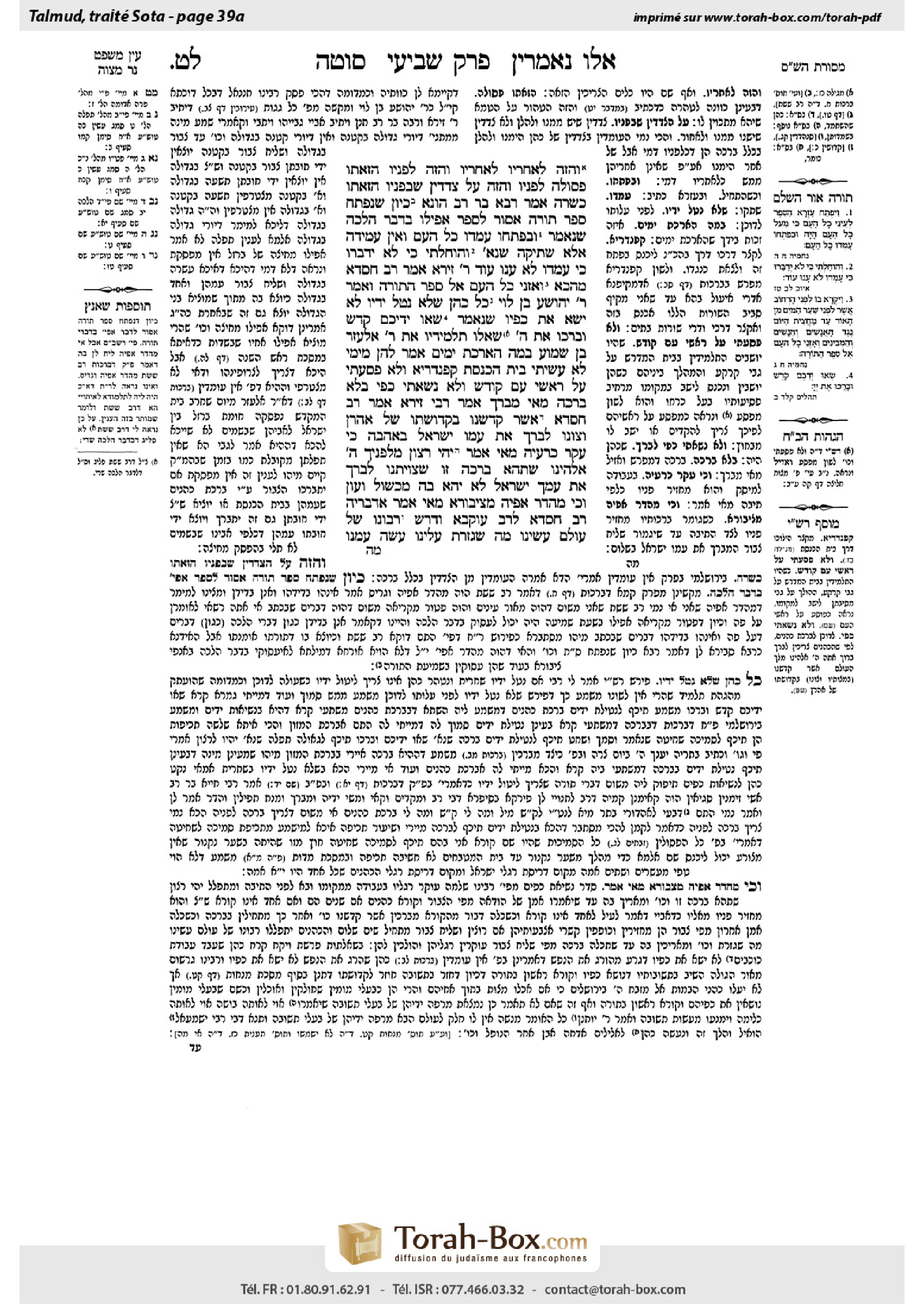
This page of Sotah includes the Aramaic text, an English translation and an AI-generated French translation, alongside the scan above.
סוטה ל״ט א · Aramaic and Hebrew text
וְהִזָּה לְאַחֲרָיו, לְאַחֲרָיו וְהִזָּה לְפָנָיו — הַזָּאָתוֹ פְּסוּלָה. לְפָנָיו וְהִזָּה עַל צְדָדִין שֶׁבְּפָנָיו — הַזָּאָתוֹ כְּשֵׁרָה.
אָמַר רָבָא בַּר רַב הוּנָא: כֵּיוָן שֶׁנִּפְתַּח סֵפֶר תּוֹרָה אָסוּר לְסַפֵּר אֲפִילּוּ בִּדְבַר הֲלָכָה, שֶׁנֶּאֱמַר: ״וּבְפִתְחוֹ עָמְדוּ כׇּל הָעָם״, וְאֵין עֲמִידָה אֶלָּא שְׁתִיקָה, שֶׁנֶּאֱמַר: ״וְהוֹחַלְתִּי כִּי לֹא יְדַבֵּרוּ כִּי עָמְדוּ לֹא עָנוּ עוֹד״. רַבִּי זֵירָא אָמַר רַב חִסְדָּא, מֵהָכָא: ״וְאׇזְנֵי כׇל הָעָם אֶל סֵפֶר הַתּוֹרָה״.
וְאָמַר רַבִּי יְהוֹשֻׁעַ בֶּן לֵוִי: כׇּל כֹּהֵן שֶׁלֹּא נָטַל יָדָיו — לֹא יִשָּׂא אֶת כַּפָּיו, שֶׁנֶּאֱמַר: ״שְׂאוּ יְדֵיכֶם קֹדֶשׁ וּבָרְכוּ אֶת ה׳״.
שָׁאֲלוּ תַּלְמִידָיו אֶת רַבִּי אֶלְעָזָר בֶּן שַׁמּוּעַ: בַּמָּה הֶאֱרַכְתָּ יָמִים? אָמַר לָהֶן: מִיָּמַי לֹא עָשִׂיתִי בֵּית הַכְּנֶסֶת קַפֶּנְדַּרְיָא, וְלֹא פָּסַעְתִּי עַל רָאשֵׁי עַם קוֹדֶשׁ, וְלֹא נָשָׂאתִי כַּפַּי בְּלֹא בְּרָכָה.
מַאי מְבָרֵךְ? אָמַר רַבִּי זֵירָא אָמַר רַב חִסְדָּא: ״אֲשֶׁר קִדְּשָׁנוּ בִּקְדוּשָּׁתוֹ שֶׁל אַהֲרֹן וְצִוָּנוּ לְבָרֵךְ אֶת עַמּוֹ יִשְׂרָאֵל בְּאַהֲבָה״.
כִּי עָקַר כַּרְעֵיהּ מַאי אָמַר? יְהִי רָצוֹן מִלְּפָנֶיךָ ה׳ אֱלֹהֵינוּ שֶׁתְּהֵא בְּרָכָה זוֹ שֶׁצִּוִּיתָנוּ לְבָרֵךְ אֶת עַמְּךָ יִשְׂרָאֵל, לֹא יְהֵא בָּהּ מִכְשׁוֹל וְעָוֹן. וְכִי מַהְדַּר אַפֵּיהּ מִצִּיבּוּרָא מַאי אָמַר? אַדְבְּרֵיהּ רַב חִסְדָּא לְרַב עוּקְבָא וּדְרַשׁ: ״רִבּוֹנוֹ שֶׁל עוֹלָם עָשִׂינוּ מַה שֶּׁגָּזַרְתָּ עָלֵינוּ עֲשֵׂה עִמָּנוּ
Sotah 39a · English translation
and instead he sprinkled it backward, or if he intended to sprinkle the water backward and instead he sprinkled it forward, even if the water lands on vessels that require purification, his sprinkling is invalid. However, if one intended to sprinkle the water forward and instead he sprinkled it forward to the sides, his sprinkling is valid. It is derived from here that one’s sides are considered as though they were in front of him.
§ Rava bar Rav Huna says: Once a Torah scroll has been opened, it is prohibited to converse, even about a matter of halakha. As it is stated: “And Ezra opened the book in the sight of all the people, for he was above all the people, and when he opened it, all the people stood up” (Nehemiah 8:5), and standing is referring to nothing other than silence, as it is stated: “And shall I wait, because they do not speak, because they stand still, and answer no more?” (Job 32:16). Rabbi Zeira said that Rav Ḥisda said: The prohibition against conversing is derived from here: “And the ears of all the people were attentive to the book of the law” (Nehemiah 8:3). They were not listening to any other voice.
And Rabbi Yehoshua ben Levi says: Any priest who did not first wash his hands may not lift his hands to recite the Priestly Benediction; as it is stated: “Lift up [se’u] your hands in sanctity and bless the Lord” (Psalms 134:2), which teaches that before reciting the benediction one must sanctify his hands by washing them.
§ Rabbi Elazar ben Shammua was once asked by his disciples: To what do you attribute your longevity? He said to them: In all my days, I never made a shortcut [kappendarya] through a synagogue. Nor did I ever stride over the heads of the sacred people, i.e., I never stepped over people sitting in the study hall in order to reach my place, so as not to appear scornful of them. And I never lifted my hands for the Priestly Benediction without first reciting a blessing.
The Gemara asks: What blessing do the priests recite before the benediction? Rabbi Zeira says that Rav Ḥisda says: Blessed are You, Lord our God, King of the universe, Who has sanctified us with the sanctity of Aaron and commanded us to bless His people, Israel, with love.
The Gemara continues: When the priest begins walking to the platform to recite the benediction, what does he say? The Gemara answers: May it be Your will, Lord our God, that this blessing with which You have commanded us to bless Your people, Israel, shall not contain any stumbling block or iniquity. And when the benediction has been completed, when he turns his face away from the congregation, what does he say? Rav Ḥisda instructed Rav Ukva and taught him that this is what he would say: Master of the Universe, we have performed that which You decreed upon us. Do unto us
Sotah 39a · Traduction française (IA)
et qu’au lieu de cela, il l’asperge vers l’arrière, ou s’il avait l’intention d’asperger l’eau vers l’arrière, mais qu’il l’asperge vers l’avant, même si l’eau atteint des ustensiles qui doivent être purifiés, son aspersion est invalide. Cependant, si l’on avait l’intention d’asperger l’eau vers l’avant et qu’on l’asperge vers l’avant, mais sur les côtés, son aspersion est valide. On apprend de là que ses côtés sont considérés comme s’ils se trouvaient devant lui.
§ Rava bar Rav Houna dit : Dès qu’un rouleau de Torah a été ouvert, il est interdit de converser, même au sujet d’une question de halakha. Comme il est dit : « Ezra ouvrit le livre à la vue de tout le peuple, car il se tenait au-dessus de tout le peuple ; et lorsqu’il l’ouvrit, tout le peuple se leva » (Néhémie 8:5). Or, se tenir debout ne peut désigner que le silence, comme il est dit : « Et dois-je attendre, puisqu’ils ne parlent pas, puisqu’ils restent immobiles et ne répondent plus ? » (Job 32:16). Rabbi Zeïra dit au nom de Rav Ḥisda : l’interdiction de converser se déduit de ce verset : « Les oreilles de tout le peuple étaient attentives au livre de la Torah » (Néhémie 8:3). Ils n’écoutaient aucune autre voix.
Et Rabbi Yehoshoua ben Lévi dit : Tout prêtre qui ne s’est pas d’abord lavé les mains ne peut lever les mains pour réciter la bénédiction sacerdotale, comme il est dit : « Levez [se’u] vos mains dans la sainteté et bénissez l’Éternel » (Psaumes 134:2). Cela enseigne qu’avant de réciter la bénédiction, il faut sanctifier ses mains en les lavant.
§ Les disciples demandèrent un jour à Rabbi Elazar ben Shammoua : « À quoi attribuez-vous votre longévité ? » Il leur répondit : « De toute ma vie, je n’ai jamais pris de raccourci [kappendarya] en traversant une synagogue. Je n’ai jamais non plus enjambé les têtes du peuple saint, c’est-à-dire que je n’ai jamais enjambé les personnes assises dans la salle d’étude pour rejoindre ma place, afin de ne pas donner l’impression de les mépriser. Et je n’ai jamais levé les mains pour la bénédiction sacerdotale sans avoir d’abord récité une bénédiction. »
La Guemara demande : Quelle bénédiction les prêtres récitent-ils avant la bénédiction sacerdotale ? Rabbi Zeïra dit au nom de Rav Ḥisda : « Béni sois-Tu, Éternel, notre Dieu, Roi de l’univers, qui nous as sanctifiés par la sainteté d’Aaron et nous as ordonné de bénir avec amour Son peuple, Israël. »
La Guemara poursuit : Lorsque le prêtre commence à marcher vers l’estrade pour réciter la bénédiction sacerdotale, que dit-il ? La Guemara répond : « Que ce soit Ta volonté, Éternel, notre Dieu, que cette bénédiction par laquelle Tu nous as ordonné de bénir Ton peuple, Israël, ne comporte aucun obstacle ni aucune faute. » Et lorsque la bénédiction est achevée, au moment où il détourne son visage de l’assemblée, que dit-il ? Rav Ḥisda donna ses instructions à Rav Oukva et lui enseigna que voici ce qu’il avait l’habitude de dire : « Maître de l’univers, nous avons accompli ce que Tu nous as prescrit. Agis envers nous
Traduction française générée par IA à partir de l’édition anglaise de Sefaria. Vérifie toujours un passage avec le texte source.
Text from Sefaria: William Davidson Edition - Vocalized Aramaic (CC BY NC); William Davidson Edition - English (CC BY NC).