Sotah 5b: Talmud study for Daf Yomi
Daf Yomi is the daily study of one Talmud folio. Explore 37 tractates with scans, Hebrew text, Sefaria English and AI-generated French translations where annotated.
Passage selection and English or AI-generated French translation are available where the scan has annotations. Daf Study is independent of Torah-Box and Sefaria.
Browse Sotah · סוטה · All tractatesSotah 5b text and translations
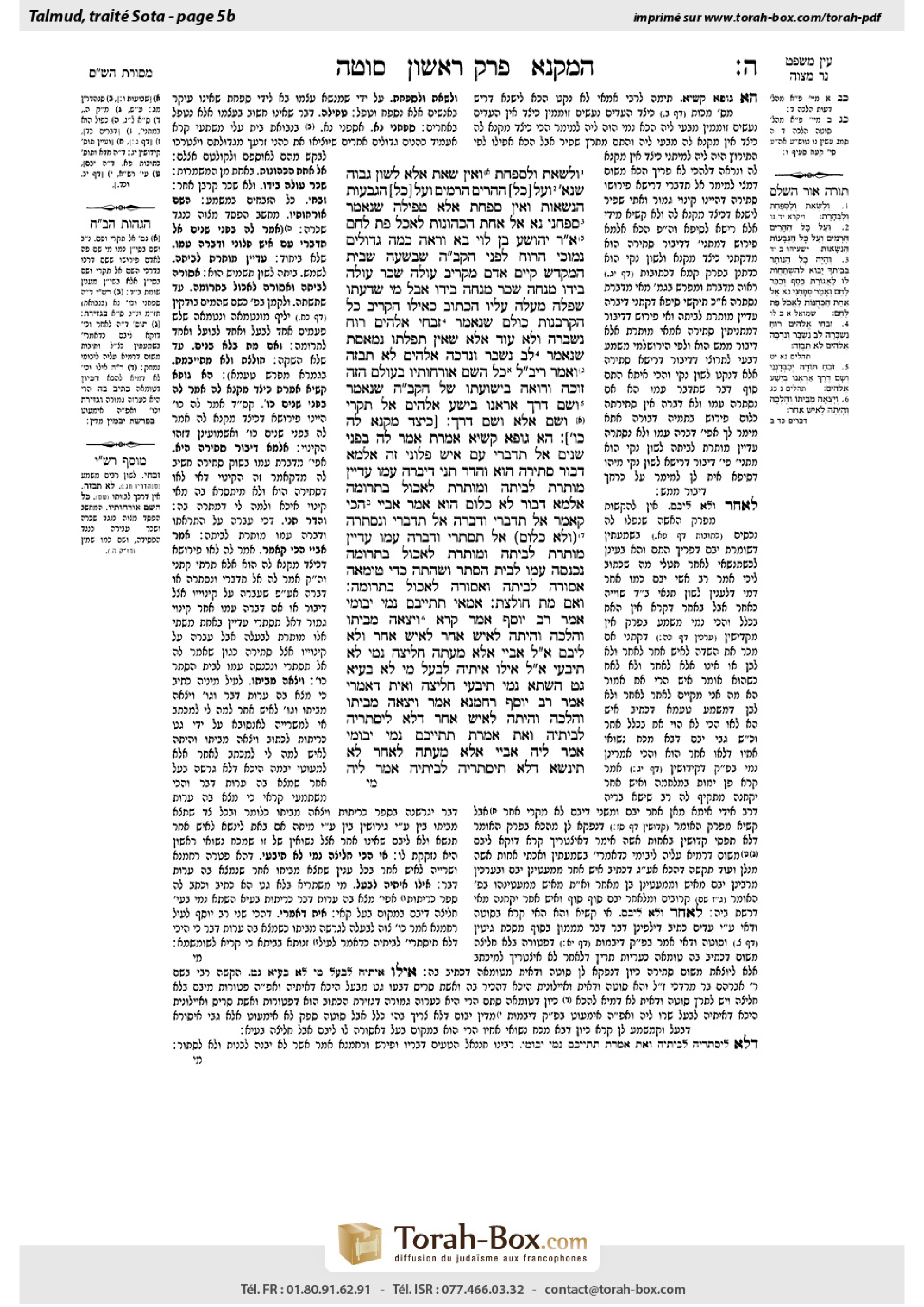
This page of Sotah includes the Aramaic text, an English translation and an AI-generated French translation, alongside the scan above.
סוטה ה׳ ב · Aramaic and Hebrew text
״וְלַשְׂאֵת וְלַסַּפַּחַת״, וְאֵין ״שְׂאֵת״ אֶלָּא לְשׁוֹן גָּבוֹהַּ, שֶׁנֶּאֱמַר: ״וְעַל [כׇּל] הֶהָרִים הָרָמִים וְעַל [כׇּל] הַגְּבָעוֹת הַנִּשָּׂאוֹת״, וְאֵין ״סַפַּחַת״ אֶלָּא טְפֵילָה, שֶׁנֶּאֱמַר: ״סְפָחֵנִי נָא אֶל אַחַת הַכְּהֻנּוֹת לֶאֱכֹל פַּת לָחֶם״.
אָמַר רַבִּי יְהוֹשֻׁעַ בֶּן לֵוִי: בֹּא וּרְאֵה כַּמָּה גְּדוֹלִים נְמוּכֵי הָרוּחַ לִפְנֵי הַקָּדוֹשׁ בָּרוּךְ הוּא, שֶׁבְּשָׁעָה שֶׁבֵּית הַמִּקְדָּשׁ קַיָּים אָדָם מַקְרִיב עוֹלָה — שְׂכַר עוֹלָה בְּיָדוֹ. מִנְחָה — שְׂכַר מִנְחָה בְּיָדוֹ. אֲבָל מִי שֶׁדַּעְתּוֹ שְׁפָלָה, מַעֲלֶה עָלָיו הַכָּתוּב כְּאִילּוּ הִקְרִיב כׇּל הַקָּרְבָּנוֹת כּוּלָּם, שֶׁנֶּאֱמַר: ״זִבְחֵי אֱלֹהִים רוּחַ נִשְׁבָּרָה״. וְלֹא עוֹד, אֶלָּא שֶׁאֵין תְּפִלָּתוֹ נִמְאֶסֶת, שֶׁנֶּאֱמַר: ״לֵב נִשְׁבָּר וְנִדְכֶּה אֱלֹהִים לֹא תִבְזֶה״.
וְאָמַר רַבִּי יְהוֹשֻׁעַ בֶּן לֵוִי: כׇּל הַשָּׁם אוֹרְחוֹתָיו בָּעוֹלָם הַזֶּה — זוֹכֶה וְרוֹאֶה בִּישׁוּעָתוֹ שֶׁל הַקָּדוֹשׁ בָּרוּךְ הוּא, שֶׁנֶּאֱמַר: ״וְשָׂם דֶּרֶךְ אַרְאֶנּוּ בְּיֵשַׁע אֱלֹהִים״, אַל תִּקְרֵי ״וְשָׂם״, אֶלָּא ״וְשָׁם דֶּרֶךְ״.
[כֵּיצַד מְקַנֵּא לָהּ כּוּ׳.] הָא גוּפָא קַשְׁיָא: אָמְרַתְּ, אָמַר לָהּ בִּפְנֵי שְׁנַיִם אַל תְּדַבְּרִי עִם אִישׁ פְּלוֹנִי זֶה, אַלְמָא דִּבּוּר סְתִירָה הוּא,
וַהֲדַר תָּנֵי: דִּיבְּרָה עִמּוֹ — עֲדַיִין מוּתֶּרֶת לְבֵיתָהּ וּמוּתֶּרֶת לֶאֱכוֹל בִּתְרוּמָה, אַלְמָא דִּבּוּר לָא כְּלוּם הוּא!
אָמַר אַבָּיֵי, הָכִי קָאָמַר: ״אַל תְּדַבְּרִי״ וְדִבְּרָה, ״אַל תְּדַבְּרִי״ וְנִסְתְּרָה — וְלֹא כְּלוּם. ״אַל תִּסָּתְרִי״ וְדִבְּרָה עִמּוֹ — עֲדַיִין מוּתֶּרֶת לְבֵיתָהּ וּמוּתֶּרֶת לֶאֱכוֹל בִּתְרוּמָה. נִכְנְסָה עִמּוֹ לְבֵית הַסֵּתֶר וְשָׁהֲתָה כְּדֵי טוּמְאָה, אֲסוּרָה לְבֵיתָהּ וַאֲסוּרָה לֶאֱכוֹל בִּתְרוּמָה.
וְאִם מֵת חוֹלֶצֶת. אַמַּאי? תִּתְיַיבֵּם נָמֵי יַבּוֹמֵי?
אָמַר רַב יוֹסֵף, אָמַר קְרָא: ״וְיָצְאָה מִבֵּיתוֹ וְהָלְכָה וְהָיְתָה לְאִישׁ אַחֵר״. לְאִישׁ אַחֵר, וְלֹא לַיָּבָם.
אֲמַר לֵיהּ אַבָּיֵי: אֶלָּא מֵעַתָּה — חֲלִיצָה נָמֵי לָא תִּיבְעֵי! אֲמַר לֵיהּ: אִילּוּ אִיתֵיהּ לְבַעַל, מִי לָא בָּעֲיָא גֵּט? הַשְׁתָּא נָמֵי תִּיבְעֵי חֲלִיצָה.
וְאִית דְּאָמְרִי, אָמַר רַב יוֹסֵף: רַחֲמָנָא אָמַר ״וְיָצְאָה מִבֵּיתוֹ וְהָלְכָה וְהָיְתָה לְאִישׁ אַחֵר״ — דְּלָא לִיסְתְּרֵיהּ לְבֵיתֵיהּ, וְאַתְּ אָמְרַתְּ תִּתְיַיבֵּם נָמֵי יַבּוֹמֵי?!
אֲמַר לֵיהּ אַבָּיֵי: אֶלָּא מֵעַתָּה, לְאַחֵר לָא תִּינָּשֵׂא, דְּלָא תִּיסְתְּרֵיהּ לְבֵיתֵיהּ!
אֲמַר לֵיהּ:
Sotah 5b · English translation
“And for a sore [se’et] and for a scab [sappaḥat]” (Leviticus 14:56), and se’et means nothing other than elevated, as it is stated: “And upon all the high mountains, and upon all the hills that are lifted up [nissaot]” (Isaiah 2:14). And sappaḥat means nothing other than an appendage, as it is stated in the context of the curse given to the descendants of Eli: “Put me [sefaḥeni], I pray of you, into one of the priests’ offices, that I may eat a morsel of bread” (I Samuel 2:36). They will have to be joined with another priestly family to receive their priestly gifts. One can therefore interpret the verses discussing leprosy as teaching that one who initially is arrogant, se’et, will eventually become a sappaḥat, diminished in stature.
Rabbi Yehoshua ben Levi says: Come and see how great the lowly in spirit are before the Holy One, Blessed be He. For when the Temple was standing, a person would sacrifice a burnt-offering and the merit of a burnt-offering would be his; he would sacrifice a meal-offering and the merit of a meal-offering would be his. But with regard to one whose spirit is lowly, the verse ascribes him credit as if he had sacrificed all the sacrificial offerings, as it is stated: “The sacrifices of God are a broken spirit” (Psalms 51:19), indicating that one who is humble of spirit is regarded as if he offered all the “sacrifices of God.” And not only that, but his prayer is not despised by God, as it is stated at the end of that verse: “A broken and contrite heart, O God, You will not despise.”
And Rabbi Yehoshua ben Levi also says: Whoever appraises his ways in this world, i.e., whoever carefully considers all his actions before deciding on the proper mode of conduct, merits and sees the salvation of the Holy One, Blessed be He, as it is stated: “And to him that orders his way aright [vesam derekh] will I show the salvation of God” (Psalms 50:23). Do not read it as “vesam,” “that orders”; rather, read it as vesham derekh, that appraises his way.
§ The mishna teaches: How does he issue a warning to her in an effective manner? If he says to her in the presence of two witnesses: Do not speak with the man called so-and-so, and she nevertheless spoke with him, she is still permitted to engage in sexual intercourse with her husband. However, if after he told her not to speak with so-and-so, she entered into a secluded place and remained with that man for sufficient time to engage in sexual intercourse, she is forbidden to her home, i.e., to engage in sexual intercourse with her husband, from that moment until she undergoes the sota rite. The Gemara notes the apparent contradiction in the mishna: This matter itself is difficult: You said in detailing the wording of the warning that he said to her in the presence of two witnesses: Do not speak with the man called so-and-so, apparently indicating that speaking is tantamount to seclusion. Therefore, speaking with that man should result in the woman becoming forbidden to her husband.
But then the mishna teaches: If she nevertheless spoke with him, she is still permitted to her home, i.e., to engage in sexual intercourse with her husband, and if she is the wife of a priest she is still permitted to partake of teruma, apparently indicating that speaking is nothing. Therefore, issuing a warning to her not to speak with a particular man should not qualify as an effective warning.
Abaye said an explanation: This is what the mishna is saying: If he said to her: Do not speak with so-and-so, and she later spoke with him; or if the husband said to her: Do not speak with so-and-so, and she later secluded herself with him, it is nothing, as this was not an effective warning. Similarly, if he said to her: Do not seclude yourself with so-and-so, and then she spoke with him without secluding herself with him, she is still permitted to her home, i.e., her husband, and she is still permitted to partake of teruma. However, if after he issued a warning to her not to seclude herself with someone, she entered with that man into a secluded place and remained there with him for a period of time sufficient for defilement, then she is forbidden to her home, i.e., her husband, and forbidden to partake of teruma.
§ The mishna teaches that after a woman who was warned by her husband not to seclude herself with another man, nevertheless secludes herself with another man, she becomes forbidden to her husband, and if her husband dies childless before she drank the bitter water, she performs ḥalitza with her late husband’s brother and does not enter into levirate marriage. The Gemara asks: Why must she perform ḥalitza? Let her enter into levirate marriage. After all, although she secluded herself with the other man after the warning, there is only an unverified suspicion of adultery. Why should it be prohibited for her to enter into levirate marriage with her deceased husband’s brother, the yavam?
Rav Yosef said: With regard to a man who divorces his wife because: “He has found some unseemly matter about her” (Deuteronomy 24:1), i.e., he suspects her of sexual impropriety, the verse states: “And she departs out of his house, and goes and becomes another man’s wife” (Deuteronomy 24:2). It is inferred from this that she is free to marry another man, but she is not permitted to marry the yavam. The yavam is not considered “another man,” as he takes the place of his brother.
Abaye said to him: If that is so, that the Torah explicitly prohibits levirate marriage in this case, then she should not require ḥalitza as well, as the verse explicitly permitted her to marry another man, seemingly abrogating the need for ḥalitza to free her from the bond to the yavam. Rav Yosef said to him in response: If the husband were alive, would she not require a bill of divorce to permit her to remarry, even though she was forbidden to him? Now, as well, she should require ḥalitza in order to release her bond with the yavam, even though, as the verse indicates, it remains prohibited for them to enter into levirate marriage.
And there are those who say that in answer to Abaye’s question Rav Yosef said: The Merciful One said with regard to a man who divorces his wife because he has found some unseemly matter about her: “And she departs out of his house, and goes and becomes another man’s wife,” indicating that the man should divorce her so that his house not be destroyed by his continuing to dwell with her, and you want to say that she should enter into levirate marriage? How can it be that the same verse instructing the husband to divorce her would also instruct the yavam to marry her? However, there is no reason to exempt her from performing ḥalitza.
Abaye said to him: If that is so, that the verse would not tell the yavam to marry her, she should not marry another man either, so that the second husband’s house not be destroyed. How can it be that the same verse instructing the husband to divorce her would also instruct another man to marry her?
Rav Yosef said to him:
Sotah 5b · Traduction française (IA)
« Et pour une tumeur [se’et] et pour une dartre [sappaḥat] » (Lévitique 14,56). Se’et ne signifie rien d’autre qu’« élevée », comme il est dit : « Sur toutes les hautes montagnes et sur toutes les collines élevées [nissaot] » (Isaïe 2,14). Et sappaḥat ne signifie rien d’autre qu’une adjonction, comme il est dit dans le contexte de la malédiction prononcée contre les descendants d’Éli : « Mets-moi [sefaḥeni], je te prie, à l’un des offices des prêtres, afin que je mange un morceau de pain » (I Samuel 2,36). Ils devront être rattachés à une autre famille sacerdotale pour recevoir leurs dons sacerdotaux. On peut donc comprendre les versets traitant de la lèpre comme enseignant que celui qui, au départ, est arrogant, se’et, finira par devenir une sappaḥat, diminué dans son statut.
Rabbi Yehoshua ben Levi dit : « Viens voir combien ceux qui sont humbles d’esprit sont grands aux yeux du Saint, béni soit-Il. » En effet, lorsque le Temple était debout, celui qui offrait un holocauste en recevait le mérite ; celui qui offrait une offrande végétale en recevait le mérite. Mais celui qui est humble d’esprit, le verset lui attribue le mérite comme s’il avait offert tous les sacrifices, comme il est dit : « Les sacrifices de Dieu sont un esprit brisé » (Psaumes 51,19), ce qui indique que celui qui est humble d’esprit est considéré comme s’il avait offert tous les « sacrifices de Dieu ». Et ce n’est pas tout : Dieu ne méprise pas sa prière, comme il est dit à la fin de ce verset : « Un cœur brisé et contrit, ô Dieu, tu ne le mépriseras pas. »
Rabbi Yehoshua ben Levi dit également : Quiconque évalue ses voies dans ce monde, c’est-à-dire examine attentivement toutes ses actions avant de décider de la conduite à tenir, mérite de voir le salut du Saint, béni soit-Il, comme il est dit : « À celui qui ordonne sa voie avec droiture [vesam derekh], je ferai voir le salut de Dieu » (Psaumes 50,23). Ne lis pas « vesam », « qui ordonne », mais plutôt « vesham derekh », « qui évalue sa voie ».
§ La Michna enseigne : Comment lui adresse-t-il un avertissement efficace ? S’il lui dit en présence de deux témoins : « Ne parle pas avec l’homme appelé untel », et qu’elle lui parle néanmoins, elle reste autorisée à avoir des relations avec son mari. Mais si, après qu’il lui a dit de ne pas parler avec untel, elle entre dans un lieu retiré et demeure avec cet homme assez longtemps pour avoir des relations sexuelles, elle est interdite à son foyer, c’est-à-dire qu’elle ne peut pas avoir de relations avec son mari, à partir de ce moment et jusqu’à ce qu’elle accomplisse le rituel de la sota. La Guemara relève l’apparente contradiction dans la Michna : cette affirmation même pose difficulté. Tu as dit, en détaillant la formulation de l’avertissement, qu’il lui a dit en présence de deux témoins : « Ne parle pas avec l’homme appelé untel », ce qui semble indiquer que parler équivaut à s’isoler. Par conséquent, parler avec cet homme devrait rendre la femme interdite à son mari.
Mais la Michna enseigne ensuite que, si elle lui a néanmoins parlé, elle reste autorisée à retourner auprès de son foyer, c’est-à-dire à avoir des relations avec son mari, et que, si elle est l’épouse d’un prêtre, elle reste autorisée à consommer de la terouma. Cela semble indiquer que parler n’a aucune conséquence. Par conséquent, lui adresser un avertissement de ne pas parler avec un homme en particulier ne devrait pas constituer un avertissement efficace.
Abaye donna cette explication : voici ce que dit la Michna : s’il lui a dit : « Ne parle pas avec untel », et qu’elle lui a ensuite parlé ; ou si le mari lui a dit : « Ne parle pas avec untel », et qu’elle s’est ensuite isolée avec lui, cela n’a aucune conséquence, car il ne s’agissait pas d’un avertissement efficace. De même, s’il lui a dit : « Ne t’isole pas avec untel », puis qu’elle lui a parlé sans s’isoler avec lui, elle reste autorisée à retourner auprès de son foyer, c’est-à-dire auprès de son mari, et à consommer de la terouma. Mais si, après qu’il l’a avertie de ne pas s’isoler avec quelqu’un, elle entre avec cet homme dans un lieu retiré et y demeure avec lui le temps nécessaire pour être souillée, elle est alors interdite à son foyer, c’est-à-dire à son mari, et à la consommation de terouma.
§ La Michna enseigne qu’après qu’une femme, avertie par son mari de ne pas s’isoler avec un autre homme, s’est néanmoins isolée avec lui, elle devient interdite à son mari ; et si son mari meurt sans enfant avant qu’elle ait bu l’eau amère, elle accomplit la ḥalitsa avec le frère de son mari défunt et ne contracte pas de mariage léviratique. La Guemara demande : Pourquoi doit-elle accomplir la ḥalitsa ? Qu’elle contracte un mariage léviratique ! Après tout, bien qu’elle se soit isolée avec l’autre homme après l’avertissement, il n’y a qu’un soupçon non vérifié d’adultère. Pourquoi lui serait-il interdit de contracter un mariage léviratique avec le frère de son mari défunt, le yavam ?
Rav Yosef dit : À propos d’un homme qui répudie sa femme parce qu’« il a trouvé en elle quelque chose d’inconvenant » (Deutéronome 24,1), c’est-à-dire parce qu’il la soupçonne d’inconduite sexuelle, le verset dit : « Elle sortira de sa maison, s’en ira et deviendra la femme d’un autre homme » (Deutéronome 24,2). On en déduit qu’elle est libre d’épouser un autre homme, mais qu’elle n’est pas autorisée à épouser le yavam. Le yavam n’est pas considéré comme « un autre homme », puisqu’il prend la place de son frère.
Abaye lui dit : S’il en est ainsi, si la Torah interdit explicitement le mariage léviratique dans ce cas, elle ne devrait pas non plus devoir accomplir la ḥalitsa, puisque le verset l’a explicitement autorisée à épouser un autre homme, ce qui semble supprimer la nécessité de la ḥalitsa pour la libérer du lien qui l’unit au yavam. Rav Yosef lui répondit : Si son mari était vivant, n’aurait-elle pas besoin d’un acte de divorce pour être autorisée à se remarier, même si elle lui était interdite ? De même, maintenant, elle devrait avoir besoin de la ḥalitsa pour être libérée du lien qui l’unit au yavam, même si, comme l’indique le verset, le mariage léviratique entre eux reste interdit.
Et certains disent que, pour répondre à la question d’Abaye, Rav Yosef dit : Le Miséricordieux a dit, au sujet d’un homme qui répudie sa femme parce qu’il a trouvé en elle quelque chose d’inconvenant : « Elle sortira de sa maison, s’en ira et deviendra la femme d’un autre homme », ce qui indique que l’homme doit la répudier afin que son foyer ne soit pas détruit s’il continue à vivre avec elle. Et tu veux dire qu’elle devrait contracter un mariage léviratique ? Comment le même verset pourrait-il ordonner au mari de la répudier et au yavam de l’épouser ? Toutefois, rien ne justifie de la dispenser d’accomplir la ḥalitsa.
Abaye lui dit : S’il en est ainsi, si le verset ne devait pas dire au yavam de l’épouser, elle ne devrait pas non plus épouser un autre homme, afin que le foyer du second mari ne soit pas détruit. Comment le même verset pourrait-il ordonner au mari de la répudier et à un autre homme de l’épouser ?
Rav Yosef lui dit :
Traduction française générée par IA à partir de l’édition anglaise de Sefaria. Vérifie toujours un passage avec le texte source.
Text from Sefaria: William Davidson Edition - Vocalized Aramaic (CC BY NC); William Davidson Edition - English (CC BY NC).