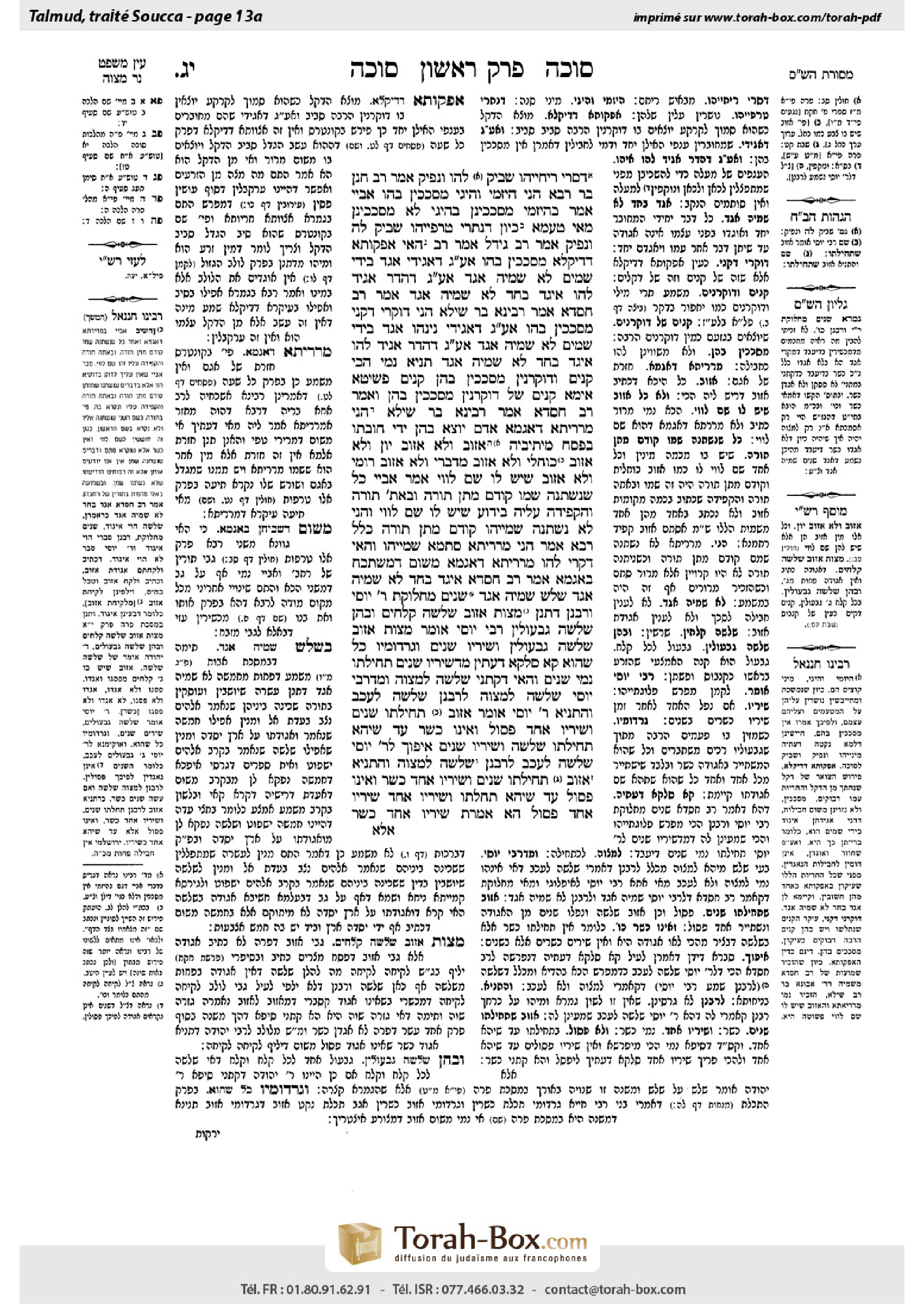
Sukkah 13a: Talmud study for Daf Yomi
Daf Yomi is the daily study of one Talmud folio. Explore 37 tractates with scans, Hebrew text, Sefaria English and AI-generated French translations where annotated.
Passage selection and English or AI-generated French translation are available where the scan has annotations. Daf Study is independent of Torah-Box and Sefaria.
Browse Sukkah · סוכה · All tractatesSukkah 13a text and translations
This page of Sukkah includes the Aramaic text, an English translation and an AI-generated French translation, alongside the scan above.
סוכה י״ג א · Aramaic and Hebrew text
דְּסָרֵי רֵיחַיְיהוּ — שָׁבֵיק לְהוּ וְנָפֵיק.
אָמַר רַב חָנָן בַּר רָבָא: הָנֵי הִיזְמֵי וְהִיגֵי מְסַכְּכִין בְּהוּ. אַבָּיֵי אָמַר: בְּהִיזְמֵי — מְסַכְּכִינַן, בְּהִיגֵי — לָא מְסַכְּכִינַן. מַאי טַעְמָא — כֵּיוָן דְּנָתְרִי טַרְפַיְיהוּ, שָׁבֵיק לַהּ וְנָפֵיק.
אָמַר רַב גִּידֵּל אָמַר רַב: הַאי אַפָּקוּתָא דְּדִיקְלָא מְסַכְּכִין בְּהוּ. אַף עַל גַּב דַּאֲגִידִי, אֶגֶד בִּידֵי שָׁמַיִם לָא שְׁמֵיהּ אֶגֶד. אַף עַל גַּב דַּהֲדַר אָגֵיד לְהוּ, אֶיגֶד בְּחַד לָא שְׁמֵיהּ אֶגֶד.
אָמַר רַב חִסְדָּא אָמַר רָבִינָא בַּר שֵׁילָא: הָנֵי דּוּקְרֵי דְקָנֵי מְסַכְּכִין בְּהוּ. אַף עַל גַּב דַּאֲגִידִי נִינְהוּ — אֶגֶד בִּידֵי שָׁמַיִם לָא שְׁמֵיהּ אֶגֶד. אַף עַל גַּב דַּהֲדַר אָגֵיד לְהוּ — אֶיגֶד בְּחַד לָא שְׁמֵיהּ אֶגֶד.
תַּנְיָא נָמֵי הָכִי: קָנִים וְדוּקְרָנִין מְסַכְּכִין בָּהֶן. קָנִים פְּשִׁיטָא! אֵימָא: קָנִים שֶׁל דּוּקְרָנִין מְסַכְּכִין בָּהֶן.
וְאָמַר רַב חִסְדָּא אָמַר רָבִינָא בַּר שֵׁילָא: הָנֵי מְרָרְיָתָא דְאַגְמָא — אָדָם יוֹצֵא בָּהֶן יְדֵי חוֹבָתוֹ בַּפֶּסַח.
מֵיתִיבִי: אֵזוֹב, וְלֹא אֵזוֹב יוֹן, וְלֹא אֵזוֹב כּוֹחֳלִי, וְלֹא אֵזוֹב מִדְבָּרִי, וְלֹא אֵזוֹב רוֹמִי, וְלֹא אֵזוֹב שֶׁיֵּשׁ לוֹ שֵׁם לְוַוי.
אָמַר אַבָּיֵי: כֹּל שֶׁנִּשְׁתַּנָּה שְׁמוֹ קוֹדֶם מַתַּן תּוֹרָה, וּבָאתָה תּוֹרָה וְהִקְפִּידָה עָלָיו — בְּיָדוּעַ שֶׁיֵּשׁ לוֹ שֵׁם לְוַוי. וְהָנֵי לֹא נִשְׁתַּנָּה שְׁמַיְיהוּ קוֹדֶם מַתַּן תּוֹרָה כְּלָל.
רָבָא אָמַר: הָנֵי — מְרָרְיָתָא סְתָמָא שְׁמַיְיהוּ, וְהַאי דְּקָרֵי לְהוּ מְרָרְיָתָא דְאַגְמָא — מִשּׁוּם דְּמִשְׁתְּכַח בְּאַגְמָא.
אָמַר רַב חִסְדָּא: אֶיגֶד בְּחַד — לָא שְׁמֵיהּ אֶגֶד. שָׁלֹשׁ — שְׁמֵיהּ אֶגֶד. שְׁנַיִם — מַחְלוֹקֶת רַבִּי יוֹסֵי וְרַבָּנַן. דִּתְנַן: מִצְוַת אֵזוֹב, שְׁלֹשָׁה קְלָחִים וּבָהֶן שְׁלֹשָׁה גִבְעוֹלִין. רַבִּי יוֹסֵי אוֹמֵר: מִצְוַת אֵזוֹב שְׁלֹשָׁה גִּבְעוֹלִין, וּשְׁיָרָיו שְׁנַיִם, וְגַרְדּוּמָּיו כׇּל שֶׁהוּא.
קָא סָלְקָא דַּעְתִּין מִדִּשְׁיָרָיו שְׁנַיִם, תְּחִילָּתוֹ נָמֵי שְׁנַיִם, וְהַאי דְּקָתָנֵי שְׁלֹשָׁה — לְמִצְוָה. וּמִדְּרַבִּי יוֹסֵי שְׁלֹשָׁה לְמִצְוָה, לְרַבָּנַן שְׁלֹשָׁה לְעַכֵּב.
וְהָתַנְיָא, רַבִּי יוֹסֵי אוֹמֵר: אֵזוֹב תְּחִילָּתוֹ שְׁנַיִם וּשְׁיָרָיו אֶחָד פָּסוּל, וְאֵינוֹ כָּשֵׁר עַד שֶׁיְּהֵא תְּחִילָּתוֹ שְׁלֹשָׁה וּשְׁיָרָיו שְׁנַיִם! אֵיפוֹךְ: לְרַבִּי יוֹסֵי שְׁלֹשָׁה לְעַכֵּב, לְרַבָּנַן שְׁלֹשָׁה לְמִצְוָה.
וְהָתַנְיָא: אֵזוֹב תְּחִילָּתוֹ שְׁנַיִם וּשְׁיָרָיו אֶחָד — כָּשֵׁר, וְאֵינוֹ פָּסוּל עַד שֶׁיְּהֵא תְּחִלָּתוֹ וּשְׁיָרָיו אֶחָד.
שְׁיָרָיו אֶחָד פָּסוּל? הָא אָמְרַתְּ שְׁיָרָיו אֶחָד כָּשֵׁר!
Sukkah 13a · English translation
their odor grows offensive over time, one abandons the sukka and exits. It is inappropriate to establish a sukka in which it is impossible to remain.
Similarly, Rav Ḥanan bar Rava said: With regard to these thorns and shrubs, one may roof the sukka with them. Abaye said: With thorns, one may roof his sukka; with shrubs, one may not roof his sukka. What is the reason for this distinction? Since their leaves fall over time and they are apt to fall into the food and disturb those in the sukka, one abandons the sukka and exits.
Rav Giddel said that Rav said: With regard to this offshoot of the trunk of the palm tree, from which several branches emerge; one may roof the sukka with it. Although the branches are naturally bound, a binding at the hand of Heaven is not considered a binding. Furthermore, although one then binds the branches together at the end removed from the trunk, where they grow apart into separate branches, and roofs with them, the sukka is fit, since if one binds a bundle that is already bound into one unit it is not considered a binding.
Likewise, Rav Ḥisda said that Ravina bar Sheila said: With regard to these offshoots of reeds, one may roof the sukka with them. Although the branches are naturally bound, a binding at the hand of Heaven is not considered a binding. Furthermore, although one then binds the reeds together at the other end, the sukka is fit, since if one binds a bundle that is already bound into one unit it is not considered a binding.
The Gemara notes that this opinion is also taught in a baraita: With regard to reeds and spades, one may roof a sukka with them. The Gemara asks: The fact that one may roof his sukka with reeds is obvious. After all, they meet all the criteria of fit roofing. Rather, say: With regard to these offshoots of reeds, one may roof the sukka with them.
§ Apropos the above halakha, the Gemara cites another statement that Rav Ḥisda said that Ravina bar Sheila said: With these bitter herbs of a marsh, a person fulfills his obligation on Passover.
The Gemara raises an objection to his opinion. With regard to every mitzva that requires use of hyssop, one takes standard hyssop and neither a hyssop that grows in Greece, nor stibium hyssop, nor desert hyssop, nor Roman hyssop, nor any other kind of hyssop whose name is accompanied by a modifier. The same should hold true for the mitzva of bitter herbs; bitter herbs of the marsh, whose name is accompanied by a modifier, are not the bitter herbs mentioned in the Torah.
Abaye said in response: There is a distinction between the cases. Every species whose name was differentiated prior to the giving of the Torah, i.e., the distinction between its different subspecies predated the Revelation at Sinai, and the Torah then came and was particular about one specific subspecies, it is known that the species has other subspecies identified with a modifier that are unfit for use in fulfilling the mitzva. And these bitter herbs, their names were not differentiated prior to the giving of the Torah at all; all the subspecies were known simply as bitter herbs. Therefore, when the Torah requires bitter herbs, one may fulfill the mitzva with all subspecies of bitter herbs.
Rava said a different explanation. Actually, the name of this plant is merely bitter herbs without a modifier. And the fact that one calls them bitter herbs of the marsh is because they are typically found in the marsh. Therefore, there is no reason that they may not be used to fulfill the mitzva on Passover.
§ Rav Ḥisda said: If one bound one item, even if he did so with a knot, it is not considered a binding. If one bound three items together, everyone agrees that it is considered a binding. If one bound two items, it is the subject of a dispute between Rabbi Yosei and the Rabbis, as we learned in a mishna: With regard to all matters that involve the mitzva of hyssop, the requirement is to have three stalks with their roots, and on them three stems, one on each stalk. Rabbi Yosei says: The mitzva of hyssop fundamentally requires three stems. If the bundle of hyssop was rendered incomplete, its remnants are fit for use with two stems. If all the stems broke, the hyssop is fit for use, as long as the stumps of its central stem remain any size.
It enters our minds to say: From the fact that Rabbi Yosei said that for the bundle of hyssop to be fit for the mitzva after the fact its remnants are two, apparently its origins were also two stalks. And the fact that the mishna teaches that the binding includes three plants, that is the requirement for the mitzva to be performed ab initio. And from the fact that Rabbi Yosei requires three plants only for the mitzva to be performed ab initio, conclude that the Rabbis, who disagree with him, hold that failure to include three stalks in the bundle renders it unfit for the mitzva. Apparently, the Rabbis and Rabbi Yosei dispute whether it is two or three items that are necessary to be considered a binding.
The Gemara questions that understanding of the dispute. But wasn’t it taught in a baraita that Rabbi Yosei said: With regard to the hyssop bundle, if its origins were two stalks and its remnants are one, it is unfit. And it is fit only when its origins were three and its remnants are two. Rather, reverse the opinions in the mishna: According to Rabbi Yosei, failure to include three stalks in the bundle renders it unfit for the mitzva; according to the Rabbis, three is the requirement for the mitzva to be performed ab initio.
The Gemara cites a baraita supporting this understanding. And this was taught in a baraita: With regard to the hyssop bundle, if its origins were two stalks and its remnants are one, it is fit. And it is unfit only when its origins and its remnants are one. Clearly, this is the opinion of the Rabbis.
The Gemara questions the end of the baraita: If its remnants are one, it is unfit? Didn’t you say in the first clause of the baraita that if its remnants are one it is fit?
Sukkah 13a · Traduction française (IA)
Leur odeur devient désagréable avec le temps ; on abandonne alors la soukka et on en sort. Il ne convient pas d’aménager une soukka dans laquelle il est impossible de rester.
De même, Rav Ḥanan bar Rava a dit : Avec ces épines et ces arbustes, on peut couvrir la soukka. Abaye a dit : On peut couvrir sa soukka avec des épines, mais pas avec des arbustes. Quelle est la raison de cette distinction ? Leurs feuilles tombent avec le temps et risquent de tomber dans la nourriture et de gêner ceux qui se trouvent dans la soukka ; on abandonne alors la soukka et on en sort.
Rav Giddel a dit au nom de Rav : Avec cette ramification du tronc du palmier, d’où émergent plusieurs branches, on peut couvrir la soukka. Bien que les branches soient naturellement liées, une liaison faite par le Ciel n’est pas considérée comme une liaison. En outre, même si l’on lie ensuite les branches ensemble à l’extrémité opposée au tronc, là où elles se séparent en branches distinctes, et qu’on les utilise pour couvrir la soukka, celle-ci est valide, car lier ensemble des éléments déjà liés en une seule unité n’est pas considéré comme une liaison.
De même, Rav Ḥisda a dit au nom de Ravina bar Sheila : Avec ces ramifications de roseaux, on peut couvrir la soukka. Bien que les branches soient naturellement liées, une liaison faite par le Ciel n’est pas considérée comme une liaison. En outre, même si l’on lie ensuite les roseaux ensemble à l’autre extrémité, la soukka est valide, car lier ensemble des éléments déjà liés en une seule unité n’est pas considéré comme une liaison.
La Guemara note que cette opinion est également enseignée dans une baraïta : Avec des roseaux et des pelles, on peut couvrir une soukka. La Guemara demande : Il est évident que l’on peut couvrir sa soukka avec des roseaux. Après tout, ils remplissent tous les critères d’un revêtement apte à servir de sekhakh. Il faut plutôt dire : Avec ces ramifications de roseaux, on peut couvrir la soukka.
§ À propos de la halakha qui précède, la Guemara cite une autre déclaration de Rav Ḥisda, qui a dit au nom de Ravina bar Sheila : Avec ces herbes amères des marais, on s’acquitte de son obligation à Pessaḥ.
La Guemara soulève une objection contre son opinion. Pour toute mitsva qui exige l’usage de l’hysope, on prend de l’hysope ordinaire, et non de l’hysope qui pousse en Grèce, de l’hysope stibium, de l’hysope du désert, de l’hysope romain, ni aucune autre sorte d’hysope dont le nom est accompagné d’un qualificatif. Il devrait en être de même pour la mitsva des herbes amères : les herbes amères des marais, dont le nom est accompagné d’un qualificatif, ne sont pas les herbes amères mentionnées dans la Torah.
Abaye répondit : Il existe une différence entre les cas. Lorsqu’une espèce était déjà subdivisée en différentes variétés avant le don de la Torah — c’est-à-dire que la distinction entre ses sous-espèces précédait la révélation au Sinaï — et que la Torah a ensuite spécifié une sous-espèce particulière, on sait que cette espèce possède d’autres sous-espèces désignées par un qualificatif, qui ne conviennent pas à l’accomplissement de la mitsva. Or, les noms de ces herbes amères n’étaient nullement différenciés avant le don de la Torah ; toutes les sous-espèces étaient simplement appelées « herbes amères ». Par conséquent, lorsque la Torah exige des herbes amères, on peut s’acquitter de la mitsva avec toutes leurs sous-espèces.
Rava donna une autre explication. En réalité, le nom de cette plante est simplement « herbes amères », sans qualificatif. Si on les appelle « herbes amères des marais », c’est parce qu’on les trouve généralement dans les marais. Il n’y a donc aucune raison de ne pas les utiliser pour s’acquitter de la mitsva à Pessaḥ.
§ Rav Ḥisda a dit : Si l’on lie un seul élément, même en faisant un nœud, cela n’est pas considéré comme une liaison. Si l’on lie trois éléments ensemble, tous s’accordent à dire que cela est considéré comme une liaison. Si l’on en lie deux, cela fait l’objet d’un désaccord entre Rabbi Yosei et les Rabbins, comme nous l’avons appris dans une Michna : pour tout ce qui concerne la mitsva de l’hysope, il faut trois tiges avec leurs racines, et trois rameaux, un sur chaque tige. Rabbi Yosei dit : la mitsva de l’hysope exige fondamentalement trois rameaux. Si le faisceau d’hysope est devenu incomplet, ses restes conviennent s’ils comptent deux rameaux. Si tous les rameaux se sont brisés, l’hysope reste valide tant qu’il subsiste un moignon, de quelque taille que ce soit, de sa tige centrale.
On pourrait penser que, puisque Rabbi Yosei a dit que, pour que le faisceau d’hysope reste valide pour la mitsva a posteriori, il doit en rester deux, il comptait donc également deux tiges à l’origine. Si la Michna enseigne que le faisceau comprend trois plantes, c’est que ce nombre est exigé pour accomplir la mitsva a priori. Puisque Rabbi Yosei n’exige trois plantes que pour l’accomplissement a priori de la mitsva, déduisons que les Rabbins, qui sont en désaccord avec lui, considèrent que l’absence de trois tiges dans le faisceau le rend invalide pour la mitsva. Apparemment, les Rabbins et Rabbi Yosei sont en désaccord sur la question de savoir s’il faut deux ou trois éléments pour que cela soit considéré comme une liaison.
La Guemara remet en question cette interprétation du désaccord. Mais n’a-t-on pas enseigné dans une baraïta que Rabbi Yosei a dit : Pour le faisceau d’hysope, s’il comptait deux tiges à l’origine et qu’il n’en reste qu’une, il est invalide ; il n’est valide que s’il en comptait trois à l’origine et qu’il en reste deux. Il faut plutôt inverser les opinions dans la Michna : selon Rabbi Yosei, l’absence de trois tiges dans le faisceau le rend invalide pour la mitsva ; selon les Rabbins, trois est le nombre exigé pour accomplir la mitsva a priori.
La Guemara cite une baraïta qui appuie cette interprétation. En effet, il a été enseigné dans une baraïta : Pour le faisceau d’hysope, s’il comptait deux tiges à l’origine et qu’il n’en reste qu’une, il est valide. Il n’est invalide que si le faisceau ne comptait qu’une tige à l’origine et qu’il n’en reste qu’une. C’est clairement l’opinion des Rabbins.
La Guemara remet en question la fin de la baraïta : S’il n’en reste qu’une, il est invalide ? N’as-tu pas dit, dans la première partie de la baraïta, que s’il n’en reste qu’une, il est valide ?
Traduction française générée par IA à partir de l’édition anglaise de Sefaria. Vérifie toujours un passage avec le texte source.
Text from Sefaria: William Davidson Edition - Vocalized Aramaic (CC BY NC); William Davidson Edition - English (CC BY NC).